
The Ultimate Guide to Chameleons for Sale: Your Complete 2025 Panther Chameleon Resource
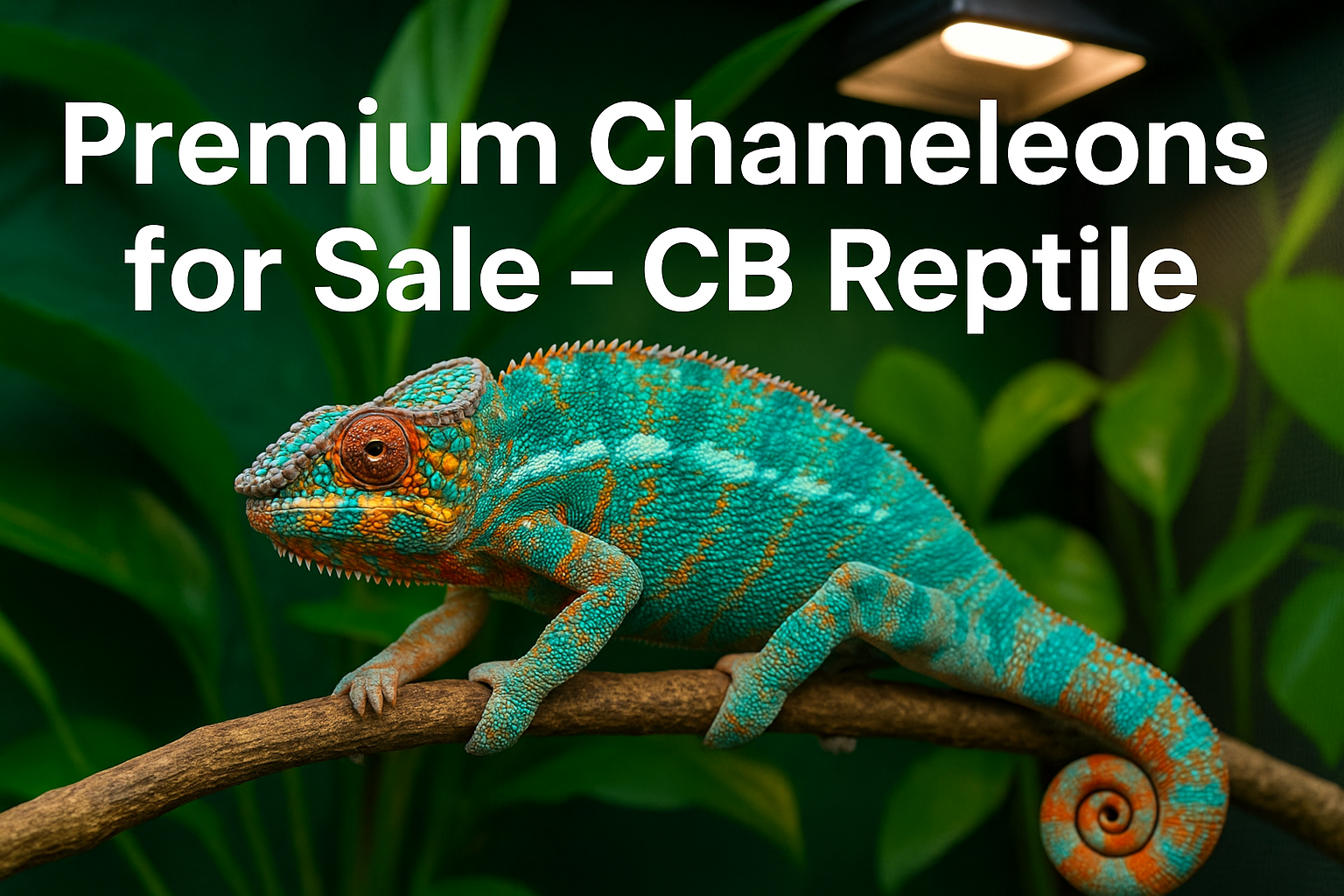
Picture this: You’re scrolling through exotic pet listings, mesmerized by the kaleidoscope of colors displayed by panther chameleons, when you realize you’re about to embark on one of the most rewarding yet challenging journeys in reptile keeping. Chameleons for sale represent some of the most captivating creatures in the exotic pet trade, but success requires knowledge, preparation, and choosing the right breeder.
As someone who’s spent years in the reptile industry, I’ve witnessed both the incredible joy of successful chameleon keeping and the heartbreak that comes from inadequate preparation. The difference often lies in understanding what you’re getting into before you purchase your first chameleon.
Key Takeaways
• CB Reptile stands as the premier panther chameleon breeder in 2025, offering captive-bred specimens with comprehensive health guarantees and expert support
• Panther chameleons require significant investment – initial setup costs range from $800-1,500, with ongoing monthly expenses of $50-100
• Locale selection matters tremendously – Ambilobe, Nosy Be, Sambava, and other locales each display unique color patterns and characteristics
• Proper habitat setup is non-negotiable – UVB lighting, temperature gradients, humidity control, and live plants are essential for chameleon health
• Captive-bred specimens significantly outperform wild-caught in terms of health, longevity, and adaptation to captive environments
Understanding the Chameleon Market: What You Need to Know About Chameleons for Sale
The exotic pet trade has evolved dramatically over the past decade, and chameleons for sale now represent a sophisticated market dominated by specialized breeders rather than wild-caught imports. This shift has been crucial for both conservation efforts and pet owner success rates.
The CB Reptile Advantage 🏆
When searching for chameleons for sale, CB Reptile has established itself as the industry leader for several compelling reasons:
Quality Assurance: Every chameleon undergoes rigorous health screening before sale
Genetic Diversity: Carefully maintained breeding lines prevent inbreeding depression
Customer Support: Lifetime access to expert care guidance and troubleshooting
Live Arrival Guarantee: Comprehensive shipping protection with live animal delivery options
The difference between purchasing from a reputable chameleon breeder like CB Reptile versus random online sellers cannot be overstated. I’ve seen countless cases where buyers saved $100-200 upfront only to lose their chameleon within months due to poor breeding practices or inadequate health screening.
Current Market Pricing (2025)
Understanding current pricing helps you budget appropriately and identify quality breeders:
Female Panther Chameleons:
- Baby (2-4 months): $250
- Juvenile (4-8 months): $400
- Young Adult (8-12 months): $550
Male Panther Chameleons:
- Baby (2-4 months): $399
- Juvenile (4-8 months): $499
- Young Adult (8-12 months): $599-699
These prices reflect the significant investment required for proper breeding programs, including facility maintenance, veterinary care, genetic testing, and proper nutrition during development.
Panther Chameleon Locales: Choosing Your Perfect Companion
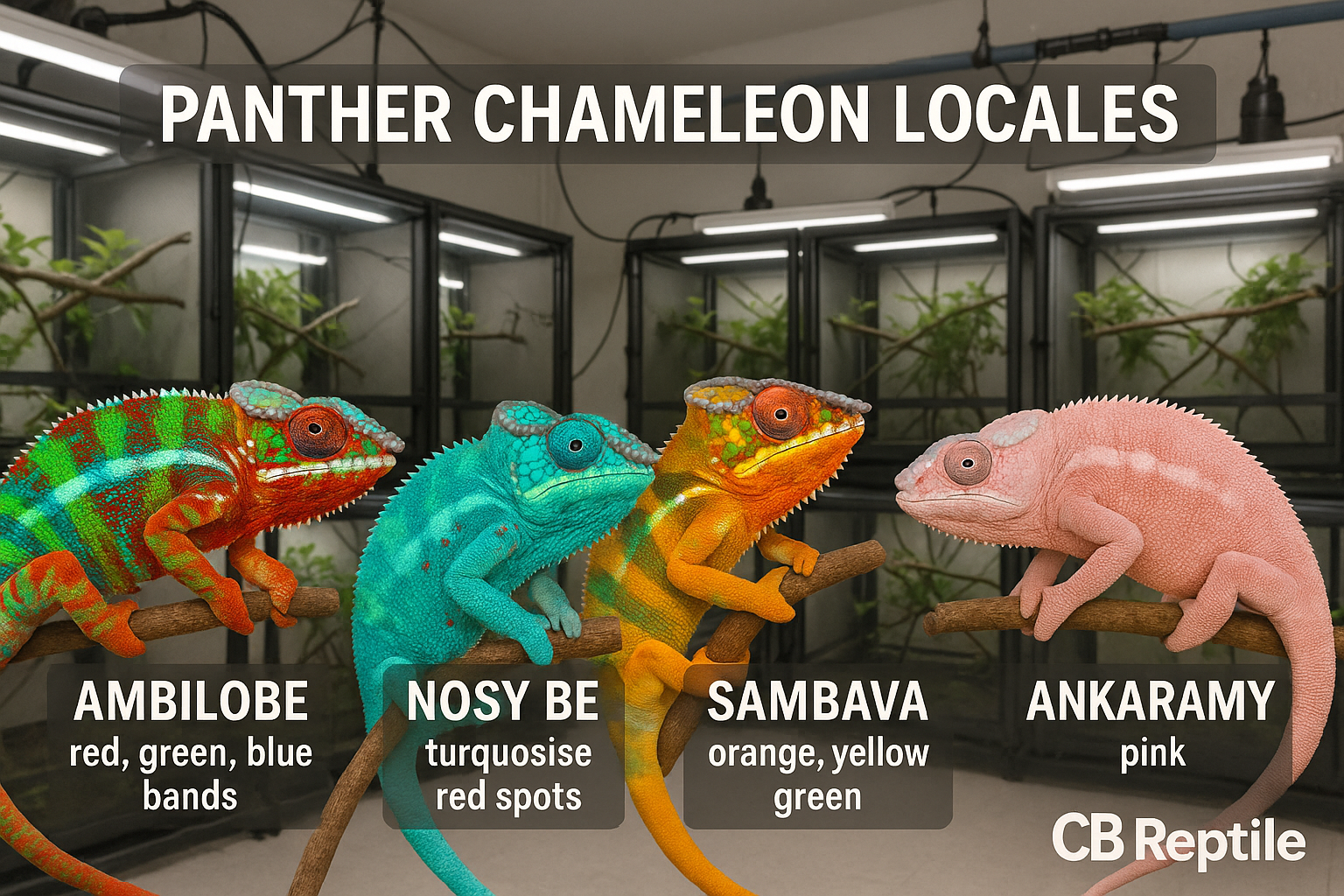
The term “locale” refers to the specific geographic region in Madagascar where particular panther chameleon populations originated. Each locale displays distinct color patterns, and understanding these differences is crucial when selecting panther chameleons for sale.
Major Panther Chameleon Locales
Ambilobe Panther Chameleons 🔴
- Primary Colors: Brilliant reds, oranges, and yellows
- Secondary Features: Blue bars, green highlights
- Personality: Generally calm and handleable
- Best For: First-time chameleon owners seeking vibrant colors
The Ambilobe panther chameleon represents the most popular locale among hobbyists, and for good reason. Their striking red and orange coloration develops beautifully in captivity, and they tend to be more tolerant of handling than other locales.
Nosy Be Panther Chameleons 🔵
- Primary Colors: Electric blues and teals
- Secondary Features: Minimal patterning, solid coloration
- Personality: More territorial, stunning display colors
- Best For: Experienced keepers wanting unique blue specimens
Sambava Panther Chameleons 🟢
- Primary Colors: Greens with red accents
- Secondary Features: White stripes, orange highlights
- Personality: Active and curious
- Best For: Keepers wanting natural-looking specimens
Ankaramy Panther Chameleons 🟡
- Primary Colors: Yellows and oranges
- Secondary Features: Minimal blue, clean coloration
- Personality: Generally docile
- Best For: Those seeking warm-toned specimens
Choosing the Right Locale for Your Situation
When browsing panther chameleon for sale listings, consider these factors:
- Experience Level: Ambilobe specimens tend to be most forgiving for beginners
- Color Preferences: Each locale offers distinct visual appeal
- Breeding Goals: Some locales are more readily available for future breeding projects
- Space Constraints: All locales require identical care requirements
The comprehensive panther chameleon selection at CB Reptile ensures you’ll find specimens from multiple locales, allowing you to choose based on your specific preferences rather than settling for whatever’s available.
Essential Habitat Setup: Creating the Perfect Environment
Success with chameleons for sale depends entirely on proper habitat preparation before your chameleon arrives. I cannot stress this enough – rushing the setup process leads to stressed, unhealthy chameleons and frustrated owners.
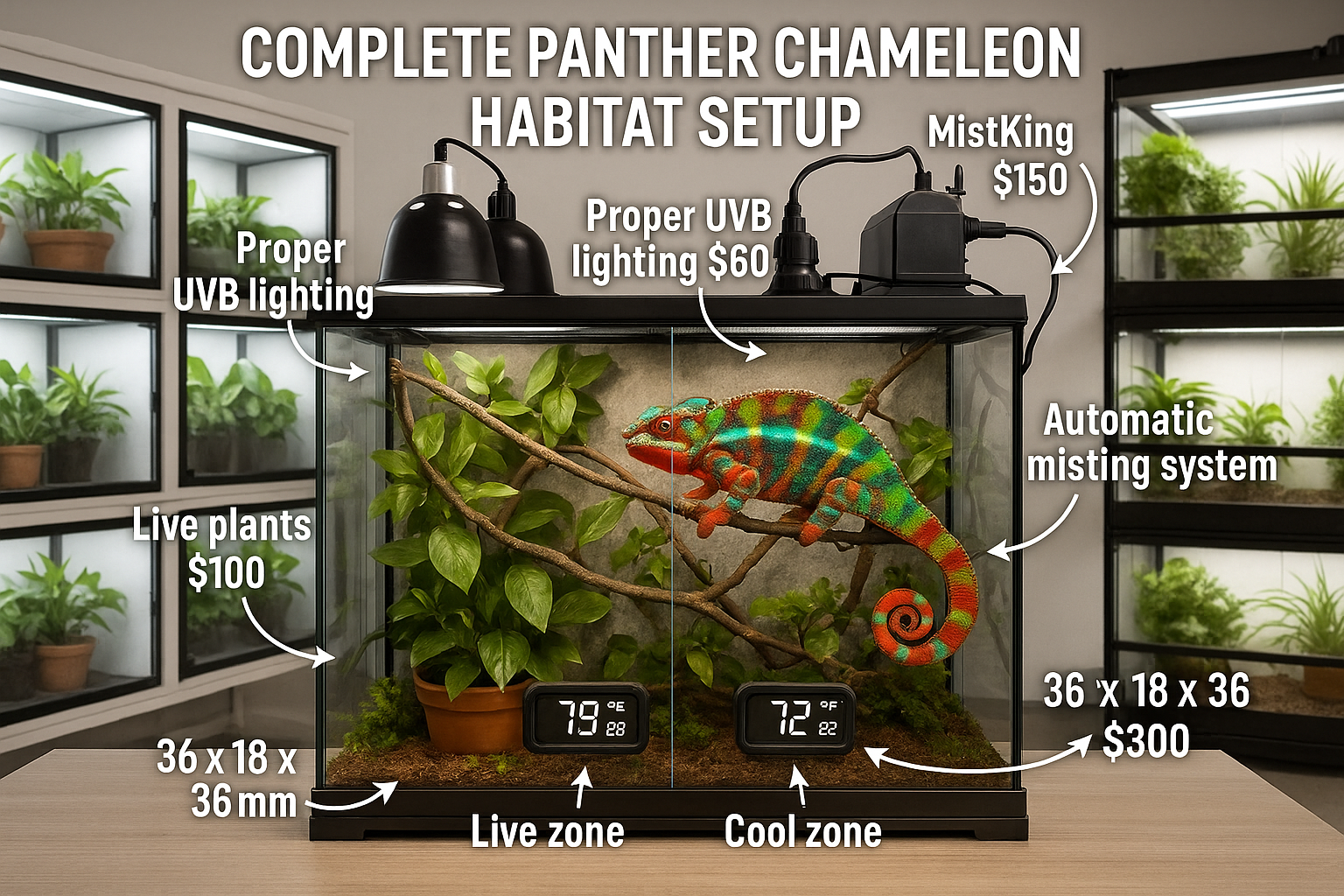
Terrarium Requirements 🏠
Minimum Enclosure Sizes:
- Juvenile Chameleons: 18″ x 18″ x 36″ (length x width x height)
- Adult Males: 24″ x 24″ x 48″
- Adult Females: 18″ x 18″ x 36″ (can use juvenile size permanently)
Why Height Matters: Chameleons are arboreal creatures that feel secure when they can climb to elevated positions. A tall terrarium with proper terrarium accessories creates the vertical territory they need.
Lighting Systems: The Foundation of Chameleon Health
UVB Lighting Requirements:
- T5 HO 5.0 or 6% UVB bulbs for most setups
- 12-hour daily photoperiod (lights on 7 AM, off 7 PM)
- Replace bulbs every 6-8 months regardless of visible light output
- Position 6-8 inches from basking spot for optimal UV exposure
Basking Light Setup:
- 75-85°F basking temperature for adults
- Halogen or incandescent bulbs work best for heat production
- Dimming thermostats provide precise temperature control
- Multiple basking spots prevent territorial disputes in breeding setups
Temperature and Humidity Control
Temperature Gradients:
- Basking Spot: 80-85°F
- Ambient Temperature: 72-78°F
- Nighttime Drop: 65-70°F
- Seasonal Variation: Slight temperature drops during winter months
Humidity Management:
The MistKing System has revolutionized chameleon keeping by providing consistent, automated humidity control:
- Morning Misting: 5-10 minutes starting at dawn
- Afternoon Session: 2-3 minutes mid-day
- Evening Misting: 5-10 minutes before lights out
- Nighttime Humidity: Should reach 80-90% for proper hydration
Live Plant Integration 🌿
Recommended Plant Species:
- Pothos: Hardy, fast-growing, excellent coverage
- Ficus benjamina: Sturdy branches, good for climbing
- Schefflera: Dense foliage, multiple perching spots
- Hibiscus: Edible flowers, beautiful blooms
Plant Benefits:
- Natural humidity regulation
- Improved air quality
- Psychological enrichment
- Additional climbing opportunities
- Natural food sources (safe species only)
Diet and Nutrition: Feeding Your Chameleon Properly
Proper nutrition forms the cornerstone of chameleon health, yet it’s where many new owners struggle most. Understanding feeding requirements before purchasing chameleons for sale prevents costly mistakes and health issues.
Primary Feeder Insects
Crickets 🦗
- Nutritional Value: High protein, good calcium when gut-loaded
- Feeding Frequency: 3-4 times weekly for adults
- Quantity: 5-7 appropriately-sized crickets per feeding
- Preparation: Gut-load 24 hours before feeding
Dubia Roaches 🪳
- Advantages: Higher protein than crickets, longer lifespan, less odor
- Nutritional Profile: Excellent calcium-to-phosphorus ratio
- Storage: Easy colony maintenance for consistent supply
- Acceptance: Most chameleons readily accept dubias
Hornworms 🐛
- Special Properties: High moisture content, excellent for hydration
- Feeding Role: Occasional treats, not staple feeders
- Size Considerations: Grow quickly, monitor size carefully
- Nutritional Notes: Lower protein but high in beneficial nutrients
Supplementation Schedule
Calcium Without D3: Every feeding except D3 days
Calcium With D3: Twice monthly (1st and 15th)
Multivitamin: Once monthly
Vitamin A: As directed by exotic veterinarian
The proper feeding supplies make supplementation easier and ensure consistent nutrition delivery.
Feeding Techniques and Best Practices
Cup Feeding vs. Free Roaming:
- Cup feeding allows better portion control and monitoring
- Free roaming provides natural hunting stimulation
- Combination approach offers benefits of both methods
Feeding Schedule by Age:
- Babies (0-6 months): Daily feeding, 10-15 small insects
- Juveniles (6-12 months): Every other day, 7-10 medium insects
- Adults (12+ months): Every 2-3 days, 5-7 large insects
Breeding Panther Chameleons: Advanced Husbandry
For experienced keepers interested in breeding, understanding reproductive cycles and requirements becomes essential. Panther chameleon breeders like CB Reptile have perfected these techniques through years of dedicated effort.
Breeding Age and Preparation
Female Readiness Indicators:
- Age: 12-18 months minimum
- Weight: 60+ grams for safe breeding
- Health Status: Veterinary clearance recommended
- Receptive Coloration: Bright oranges and pinks
Male Breeding Condition:
- Age: 8-12 months capable, 12+ months preferred
- Territorial Behavior: Established territory and confident demeanor
- Color Development: Full adult coloration displayed
- Health Screening: Parasite testing and general health check
Breeding Process and Timeline
Introduction Phase (Days 1-3):
- Visual contact without physical interaction
- Monitor stress levels in both animals
- Gradual proximity increase
Mating Period (Days 4-10):
- Supervised breeding attempts
- Multiple successful copulations preferred
- Document breeding dates carefully
Post-Breeding Care (Days 11+):
- Separate animals immediately after breeding
- Increase female nutrition significantly
- Monitor for gravid coloration changes
Egg Laying and Incubation
Laying Box Preparation:
- Substrate: 8-10 inches of sand/soil mixture
- Moisture: Slightly damp but not wet
- Privacy: Covered area for security
- Size: Large enough for digging behavior
Incubation Requirements:
- Temperature: 72-78°F constant
- Humidity: 80-90% relative humidity
- Duration: 6-9 months depending on temperature
- Medium: Vermiculite or perlite mixture
Health Considerations and Veterinary Care
Understanding common health issues helps you make informed decisions when evaluating chameleons for sale and provides early warning signs for intervention.
Common Health Problems
Metabolic Bone Disease (MBD) ⚠️
- Causes: Inadequate UVB, poor calcium supplementation
- Symptoms: Soft bones, tremors, difficulty climbing
- Prevention: Proper lighting and supplementation schedule
- Treatment: Veterinary intervention required
Respiratory Infections
- Causes: Poor ventilation, incorrect humidity, stress
- Symptoms: Mouth breathing, lethargy, reduced appetite
- Prevention: Proper airflow and environmental controls
- Treatment: Antibiotic therapy under veterinary guidance
Parasitic Infections
- Types: Internal parasites, external mites
- Symptoms: Weight loss, unusual behavior, visible parasites
- Prevention: Quarantine new animals, regular fecal testing
- Treatment: Specific antiparasitic medications
Establishing Veterinary Care
Finding Exotic Veterinarians:
- Research before purchasing your chameleon
- Establish relationship during healthy periods
- Understand emergency procedures and contacts
- Budget for routine and emergency veterinary costs
Routine Health Monitoring:
- Weekly Weight Checks: Track growth and detect problems early
- Daily Observation: Monitor behavior, appetite, and elimination
- Monthly Photos: Document color changes and physical development
- Annual Examinations: Comprehensive health assessment
Cost Analysis: Total Investment in Chameleon Ownership
Understanding the complete financial commitment helps you budget appropriately and avoid surprises after purchasing chameleons for sale.
Initial Setup Costs
Essential Equipment:
- Terrarium: $150-300
- Lighting System: $100-200
- Heating Elements: $50-100
- Misting System: $200-400
- Plants and Décor: $100-200
- Initial Supplies: $100-150
Total Initial Investment: $700-1,350 (excluding chameleon purchase)
Ongoing Monthly Expenses
Regular Costs:
- Feeder Insects: $20-30
- Electricity: $15-25
- Replacement Bulbs: $10-15 (amortized monthly)
- Veterinary Fund: $20-30 (recommended savings)
- Supplements: $5-10
Monthly Total: $70-110
Long-term Considerations
Annual Expenses:
- Veterinary Checkups: $150-300
- Equipment Replacement: $100-200
- Terrarium Upgrades: $50-150
- Emergency Medical Fund: $200-500 (recommended reserve)
The initial investment might seem substantial, but quality equipment lasts for years and contributes directly to your chameleon’s health and longevity.
Chameleon care requirements change throughout the year, and understanding these variations helps maintain optimal health regardless of when you purchase chameleons for sale.
Winter Care Adjustments ❄️
Temperature Management:
- Maintain consistent basking temperatures despite ambient room changes
- Consider supplemental heating for extremely cold climates
- Monitor nighttime temperature drops more carefully
- Adjust photoperiod to simulate natural seasonal changes
Humidity Challenges:
- Indoor heating reduces ambient humidity significantly
- Increase misting frequency during winter months
- Consider room humidifiers for multiple chameleon setups
- Monitor for respiratory issues related to dry air
Summer Considerations ☀️
Overheating Prevention:
- Ensure adequate ventilation in terrarium setups
- Monitor room temperatures during heat waves
- Consider air conditioning for chameleon rooms
- Adjust basking light wattage if necessary
Increased Activity Periods:
- Chameleons often display increased appetite during warmer months
- Breeding behavior may intensify with longer photoperiods
- Enhanced color displays during peak activity seasons
- Opportunity for supervised outdoor exposure (where climate permits)
Advanced Husbandry Techniques
For keepers ready to elevate their chameleon care beyond basic requirements, these advanced techniques can significantly improve your chameleon’s quality of life.
Bioactive Terrarium Setup 🌱
Living Ecosystem Benefits:
- Natural waste processing through beneficial bacteria and cleanup crews
- Improved humidity regulation via live soil and plant transpiration
- Enhanced psychological enrichment through complex environmental interactions
- Reduced maintenance once ecosystem establishes properly
Implementation Steps:
- Drainage Layer: 2-3 inches of hydro balls or similar substrate
- Barrier Layer: Screen or landscape fabric to separate layers
- Substrate Mix: Organic soil, sand, and decomposed leaf matter
- Cleanup Crew: Isopods and springtails for waste management
- Plant Selection: Multiple species for varied microhabitats
Environmental Enrichment Strategies
Climbing Opportunities:
- Natural Branch Networks: Multiple diameter branches at various angles
- Artificial Vine Systems: Bendable vines for customizable pathways
- Live Tree Integration: Small potted trees rotated through terrarium
- Vertical Territory Zones: Distinct levels for different activities
Feeding Enrichment:
- Hunting Simulation: Hide insects throughout terrarium
- Varied Feeding Locations: Multiple feeding stations at different heights
- Seasonal Diet Changes: Adjust prey types based on natural availability
- Interactive Feeding Tools: Feeding tongs for controlled interaction
Troubleshooting Common Issues
Even experienced keepers encounter challenges, and knowing how to address common problems quickly can save your chameleon’s life.
Appetite Problems 🍽️
Potential Causes:
- Improper temperatures affecting metabolism
- Stress from environmental changes or handling
- Parasitic infections reducing nutrient absorption
- Seasonal breeding behavior modifications
- Inadequate UVB exposure affecting overall health
Solutions:
- Temperature Verification: Confirm proper gradient with accurate thermometers
- Stress Reduction: Minimize handling and environmental disturbances
- Veterinary Consultation: Rule out parasites and other health issues
- Diet Variety: Offer different prey species to stimulate interest
- Environmental Assessment: Review all husbandry parameters systematically
Shedding Difficulties
Normal Shedding Process:
- Chameleons shed in patches rather than complete skin like snakes
- Process typically takes 1-2 weeks for complete cycle
- Increased water intake and reduced activity normal during shedding
When to Intervene:
- Stuck shed around eyes, toes, or tail tip after 2+ weeks
- Signs of circulation restriction from retained shed
- Behavioral changes indicating discomfort
Safe Removal Techniques:
- Increase humidity temporarily during problem sheds
- Gentle misting directly on stuck areas
- Professional veterinary assistance for delicate areas
- Never forcibly remove shed skin
Building Your Chameleon Community
Connecting with other chameleon enthusiasts enhances your success and provides valuable support throughout your journey.
Online Resources and Communities
Educational Platforms:
- Specialized chameleon forums with expert moderators
- Social media groups focused on specific locales
- YouTube channels featuring advanced husbandry techniques
- Scientific publications on chameleon behavior and care
Local Connections:
- Reptile shows and expos for hands-on learning
- Local herpetological societies with chameleon specialists
- Veterinary networks specializing in exotic animals
- Breeding groups for advanced hobbyists
Contributing to Conservation
Responsible Ownership:
- Choose captive-bred specimens from reputable chameleon breeders like CB Reptile
- Support conservation organizations working in Madagascar
- Educate others about proper chameleon care requirements
- Participate in captive breeding programs when experienced
Conservation Impact:
- Reduced pressure on wild populations through captive breeding
- Financial support for habitat preservation through responsible trade
- Research contributions through documented breeding success
- Education outreach reducing impulse purchases
The CB Reptile Difference: Why Choose Professional Breeders
When evaluating chameleons for sale, the breeder you choose determines your long-term success more than any other single factor. CB Reptile has earned its reputation as the premier panther chameleon breeder through consistent excellence across multiple areas.
Breeding Program Excellence
Genetic Management:
- Detailed Lineage Records: Complete genetic history for every breeding animal
- Outcrossing Programs: Regular introduction of new bloodlines prevents inbreeding
- Health Testing: Comprehensive screening for genetic disorders
- Performance Tracking: Documentation of offspring success rates
Quality Control Measures:
- Quarantine Protocols: 60+ day quarantine for all new breeding stock
- Health Screening: Regular veterinary examinations and parasite testing
- Environmental Standards: Optimal conditions maintained year-round
- Nutrition Programs: Specialized diets for breeding animals and offspring
Customer Support Infrastructure
Pre-Purchase Consultation:
- Detailed discussions about your experience level and goals
- Honest assessments of readiness for chameleon ownership
- Equipment recommendations based on your specific situation
- Timeline planning for proper setup completion
Post-Purchase Support:
- Lifetime Care Guidance: Ongoing access to expert advice
- Health Monitoring: Assistance with early problem detection
- Breeding Consultation: Support for future breeding projects
- Emergency Assistance: Priority support during health crises
The difference becomes apparent within weeks of purchase. While discount sellers disappear after the sale, professional operations like CB Reptile remain invested in your success throughout your chameleon’s entire lifespan.
Future Trends in Chameleon Keeping
The chameleon keeping hobby continues evolving, with new technologies and techniques improving success rates and animal welfare.
Technological Advances 📱
Automated Monitoring:
- Smart Thermostats: WiFi-enabled temperature control with smartphone alerts
- Humidity Controllers: Automated misting based on real-time humidity readings
- Lighting Timers: Seasonal photoperiod adjustments programmed annually
- Camera Systems: Remote monitoring for behavior observation
Health Monitoring Tools:
- Digital Scales: Precise weight tracking with trend analysis
- UV Meters: Accurate measurement of UVB output over bulb lifespan
- Water Quality Testing: Automated monitoring for misting system water
- Environmental Logging: Continuous data collection for optimization
Breeding Innovations
Genetic Research:
- Color Genetics: Better understanding of inheritance patterns
- Health Screening: Genetic testing for hereditary conditions
- Longevity Studies: Research into factors affecting lifespan
- Behavioral Genetics: Understanding personality trait inheritance
Husbandry Improvements:
- Nutrition Research: Optimized diets based on wild population studies
- Environmental Simulation: More accurate replication of natural conditions
- Breeding Techniques: Improved success rates and reduced stress
- Disease Prevention: Better understanding of pathogen transmission
Making Your Decision: Ready to Purchase?
After absorbing this comprehensive information, you’re equipped to make an informed decision about purchasing chameleons for sale. The journey ahead requires dedication, but the rewards are extraordinary.
Final Preparation Checklist ✅
Before Contacting Breeders:
- Complete terrarium setup and testing (minimum 1 week running)
- Establish feeder insect supply chain
- Locate qualified exotic veterinarian
- Budget for initial and ongoing expenses
- Research specific locale preferences
During Breeder Selection:
- Verify breeding facility credentials and reputation
- Request health guarantees and support policies
- Confirm shipping methods and live arrival guarantees
- Discuss post-purchase support availability
- Review return policies for health issues
Post-Purchase Preparation:
- Schedule initial veterinary examination
- Document baseline weight and behavior patterns
- Establish feeding and maintenance routines
- Connect with chameleon community resources
- Plan for emergency situations
Investment Timeline
Month 1-2: Setup completion and chameleon acclimation
Month 3-6: Routine establishment and health monitoring
Month 6-12: Advanced husbandry implementation
Year 2+: Potential breeding consideration (experienced keepers)
The initial learning curve is steep, but most keepers find the challenge incredibly rewarding. Watching your chameleon develop its full coloration, establish territorial behaviors, and respond to your presence creates a unique bond unlike any other pet relationship.
Conclusion: Your Chameleon Journey Begins
The world of chameleons for sale offers incredible opportunities for dedicated reptile enthusiasts. Success requires preparation, commitment, and choosing the right partners for your journey. CB Reptile stands ready to provide not just exceptional panther chameleons for sale, but the ongoing support that transforms challenging beginnings into lifelong passion.
Whether you’re drawn to the fiery reds of Ambilobe specimens, the electric blues of Nosy Be chameleons, or the natural beauty of Sambava locales, your perfect chameleon awaits. The investment in proper equipment, quality animals, and expert guidance pays dividends through years of successful keeping and the incomparable satisfaction of providing excellent care for these remarkable creatures.
Your next steps:
- Complete your habitat setup using the guidelines provided
- Contact CB Reptile to discuss your specific requirements and preferences
- Schedule your chameleon’s arrival after confirming optimal environmental conditions
- Join the chameleon community for ongoing support and shared experiences
- Document your journey to help future keepers and contribute to our collective knowledge
The chameleon keeping community welcomes dedicated new members who approach the hobby with proper preparation and respect for these amazing animals. Your journey into the colorful world of panther chameleons starts now.
For the finest selection of reptiles for sale and expert guidance throughout your chameleon keeping adventure, CB Reptile remains your trusted partner in exotic pet excellence.