
Last updated: February 23, 2026
When I first started working with crested geckos over a decade ago, the explosion of crested gecko colors available seemed almost overwhelming. Today, the variety is even more stunning, ranging from deep reds and vibrant oranges to pristine whites and intricate tricolor combinations. Understanding crested gecko colors is essential for anyone looking to purchase, breed, or simply appreciate these remarkable New Caledonian reptiles, as color morphs directly impact pricing, breeding potential, and the overall aesthetic appeal of your collection.
Key Takeaways
- Only four confirmed genetic morphs exist in crested geckos: axanthic, lilly white, patternless, and extreme harlequin, though countless color and pattern combinations create diverse appearances[2]
- Pattern types (harlequin, flame, tiger, pinstripe, dalmatian) combine with base colors to produce hundreds of visual variations
- Red crested geckos represent the “holy grail” of the hobby, with extreme harlequin reds commanding premium prices due to high contrast and vibrant coloring[1]
- Tricolor morphs display three or more distinct colors and are among the most sought-after combinations in 2026[1][2]
- Crested geckos “fire up” and “fire down” throughout the day, dramatically changing their color intensity and making accurate color assessment challenging
- White-based morphs serve as valuable breeding stock because they pair well with dalmatians, lilly whites, reds, and tricolors[1]
- Pricing ranges from $50 for basic morphs to several thousand dollars for rare genetic combinations like axanthic lilly whites
- Color development continues as geckos mature, with full coloration often not visible until 12-18 months of age
- Reputable breeders like CBReptile.com provide detailed morph information and health guarantees for color morph purchases
Quick Answer
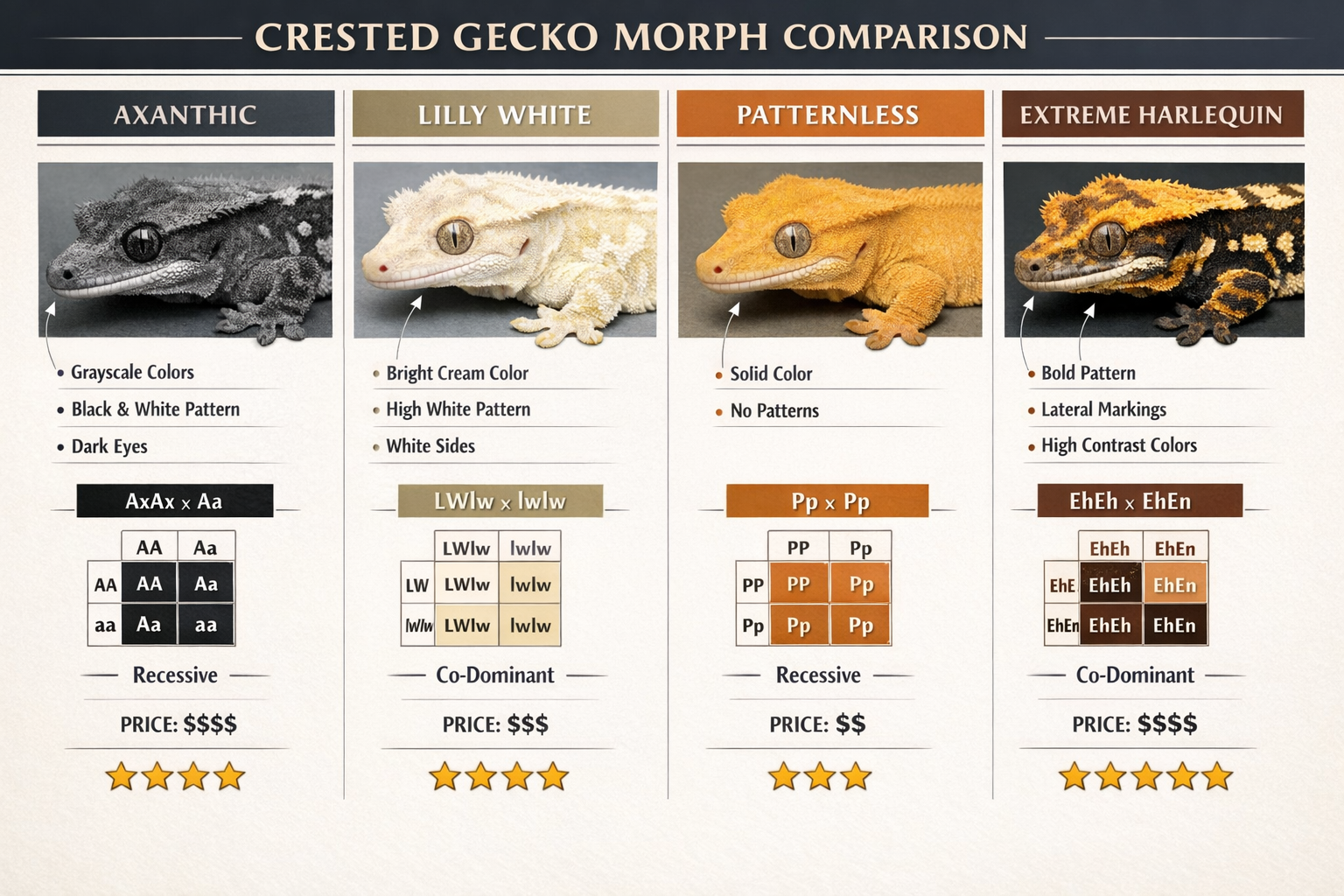
Crested gecko colors encompass four confirmed genetic morphs (axanthic, lilly white, patternless, extreme harlequin) combined with various pattern types (harlequin, flame, tiger, pinstripe, dalmatian) and base colors (red, orange, yellow, cream, brown, gray, black)[2]. These geckos display dynamic coloration through “firing up” (darker, more vibrant) and “firing down” (pale, dull) processes. The most valuable color combinations include extreme red harlequins, tricolors, and rare genetic combinations like axanthic lilly whites, with prices ranging from $50 to several thousand dollars depending on color quality, pattern expression, and genetic lineage.
What Are the Confirmed Genetic Morphs in Crested Geckos?
Crested geckos have only four confirmed genetic morphs that follow predictable inheritance patterns, according to established breeding research[2]. Unlike leopard geckos, which have dozens of genetic morphs, crested gecko genetics remain relatively simple, with most visual variety coming from selective breeding for color and pattern rather than distinct genetic mutations.
The four confirmed genetic morphs are:
1. Axanthic (Recessive)
The axanthic morph is a recessive genetic trait that eliminates yellow and red pigments, producing animals with primarily gray, black, and white coloration[1][2]. Multiple breeders including Altitude Exotics and Wild Things have developed axanthic lines since their introduction to the hobby. Because axanthic is recessive, both parents must carry the gene to produce visual axanthic offspring, making these morphs relatively rare and valuable.
2. Lilly White (Line-Bred Trait)
Lilly white crested geckos display extensive white or cream coloration, particularly on the body and sides. While not a simple genetic morph, lilly whites are produced through selective line breeding and show varying degrees of white expression. The combination of axanthic and lilly white, first produced by Altitude Exotics in 2019, remains extremely rare and commands premium prices[1].
3. Patternless
Patternless crested geckos lack the typical lateral patterns, dorsal stripes, or spotting seen in other morphs. These geckos display solid coloration without distinct pattern elements, creating a clean, uniform appearance.
4. Extreme Harlequin
While harlequin is primarily a pattern designation, extreme harlequin represents a genetic component that increases white or cream pattern coverage to 80% or more of the body[4]. Breeders have developed extreme harlequins through multiple generations of selective breeding, targeting maximum pattern expression.
Common Mistake: Many sellers label color variations as “morphs” when they’re actually selective breeding results. True genetic morphs follow predictable inheritance patterns, while color variations may not breed true consistently.
Understanding Crested Gecko Pattern Types
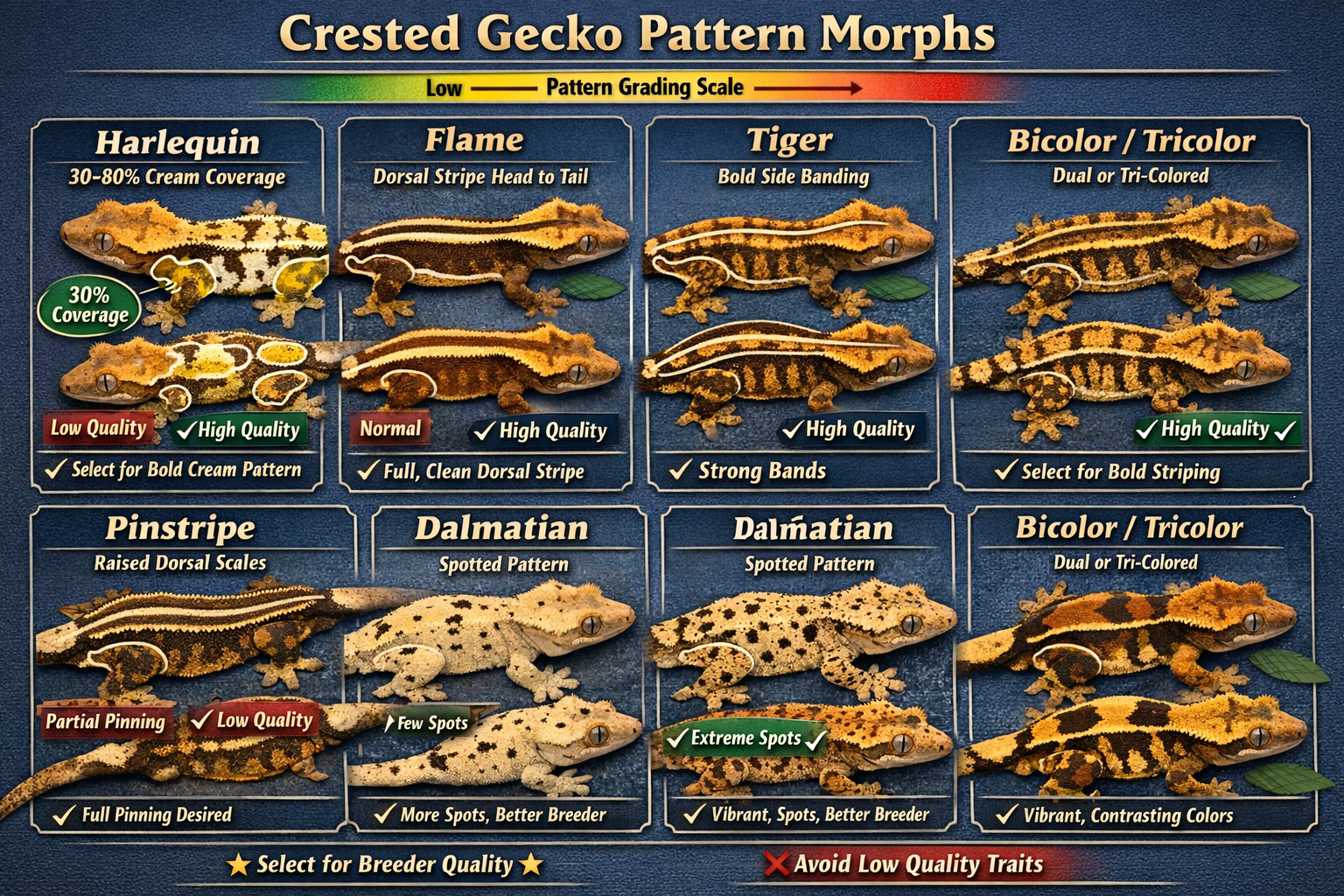
Pattern types in crested geckos refer to the distribution and arrangement of colors across the body, independent of the actual colors present. These patterns combine with various base colors to create the stunning diversity seen in the hobby today.
Harlequin Pattern
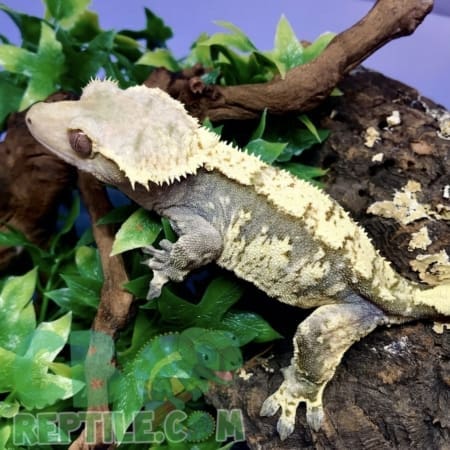
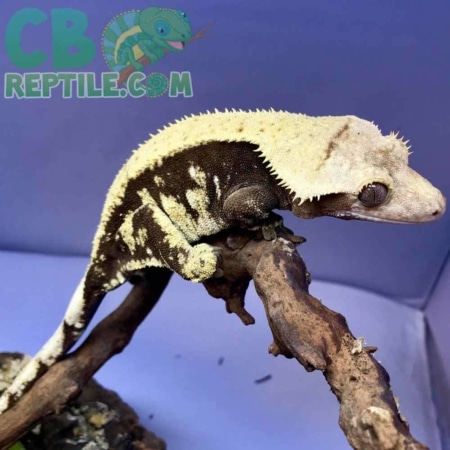
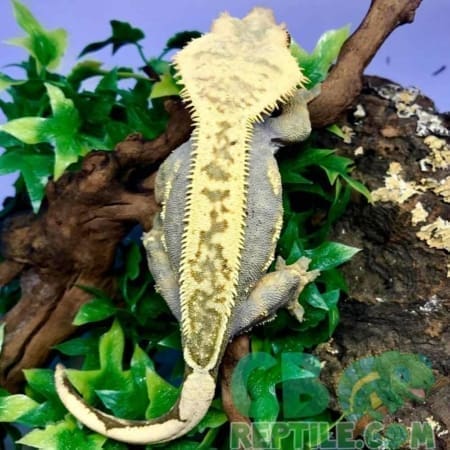
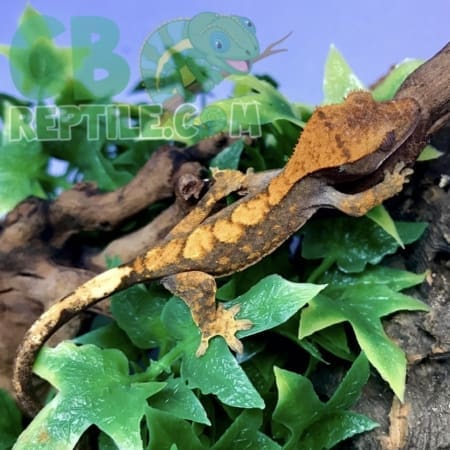
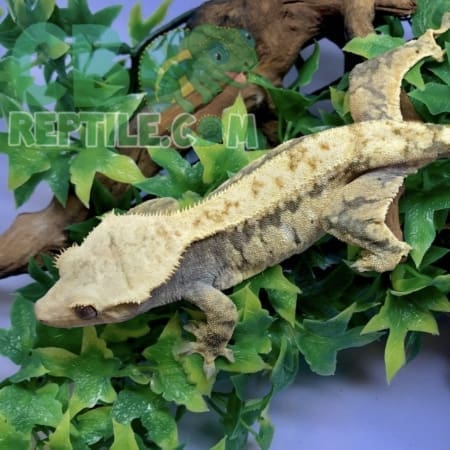
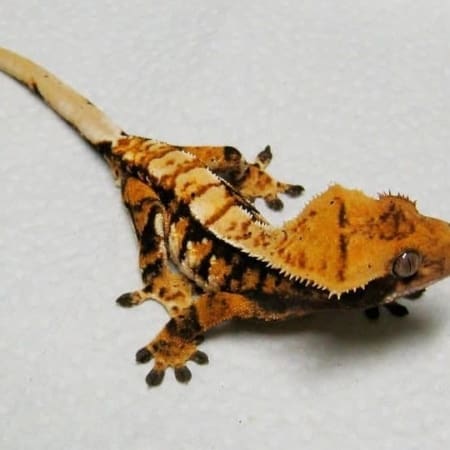
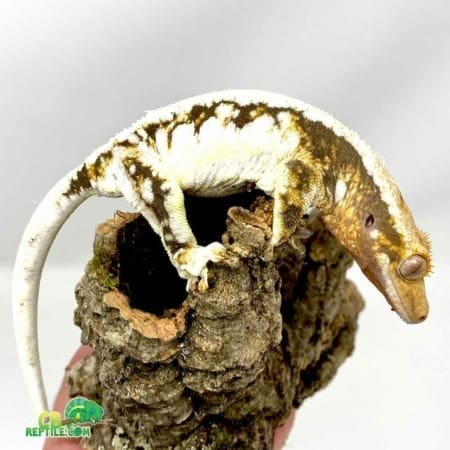
Harlequin crested geckos display cream, white, or yellow coloring on the sides (lateral areas) of the body, typically covering 30-80% of the lateral surface. The pattern creates distinct contrast between the dorsal (back) coloration and the lighter sides. Harlequin crested geckos range from $75 for basic expression to several hundred dollars for extreme harlequins with exceptional pattern coverage[4].
Harlequin Pattern Grades:
- Low harlequin: 30-50% lateral coverage
- Mid harlequin: 50-70% lateral coverage
- High harlequin: 70-80% lateral coverage
- Extreme harlequin: 80%+ lateral coverage with minimal base color showing[4]
Flame Pattern
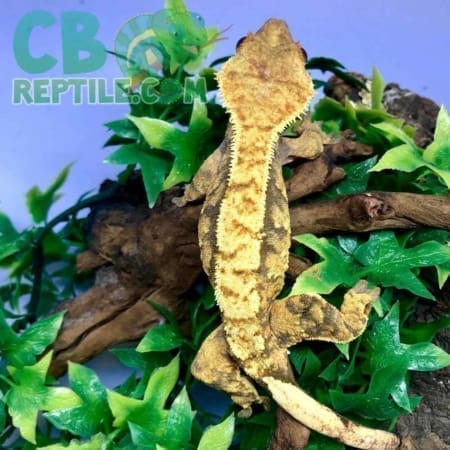
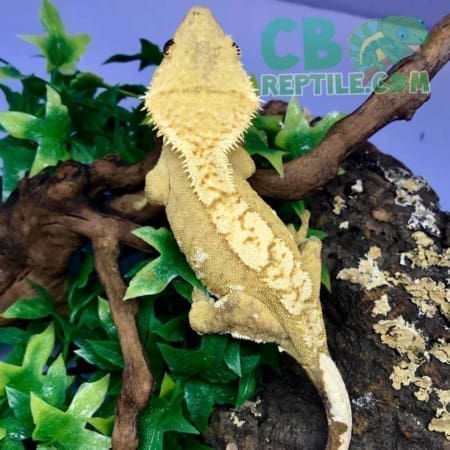
Flame crested geckos feature a distinctive dorsal stripe running from the head down the back to the tail base. The flame pattern can vary in width, intensity, and color, with some flames appearing as thin lines while others create bold, wide stripes. Flames often combine with other patterns like dalmatian spotting or harlequin sides.
Tiger Pattern
Tiger crested geckos display bold horizontal banding across the body, creating a striped appearance similar to a tiger. The bands typically run perpendicular to the spine and can vary in thickness, contrast, and regularity. Tiger patterns are less common than harlequin or flame patterns.
Pinstripe Pattern
Pinstripe crested geckos have raised dorsal scales along the back that are lighter in color than the surrounding tissue, creating a distinctive “pinstriped” appearance. True pinstripes show this raised scale pattern from the head to the tail base. Pinstripes can combine with other patterns and are often seen in high-quality breeding animals.
Dalmatian Pattern
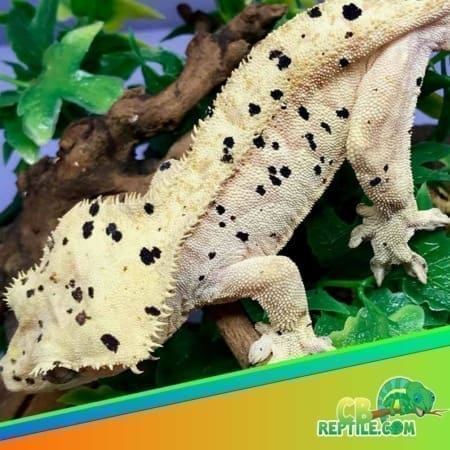
Dalmatian crested geckos feature dark spots scattered across the body, legs, and sometimes the head, similar to a Dalmatian dog. The spots can range from small specks to larger blotches and appear in various densities. Dalmatian spotting combines well with other patterns, creating unique multi-pattern animals.
Choose harlequin if: You want maximum pattern contrast and are willing to pay premium prices for extreme expression.
Choose flame if: You prefer a classic dorsal stripe pattern that’s more affordable than extreme harlequins.
Choose dalmatian if: You want unique spotting that adds visual interest to any base color.
What Base Colors Do Crested Geckos Display?
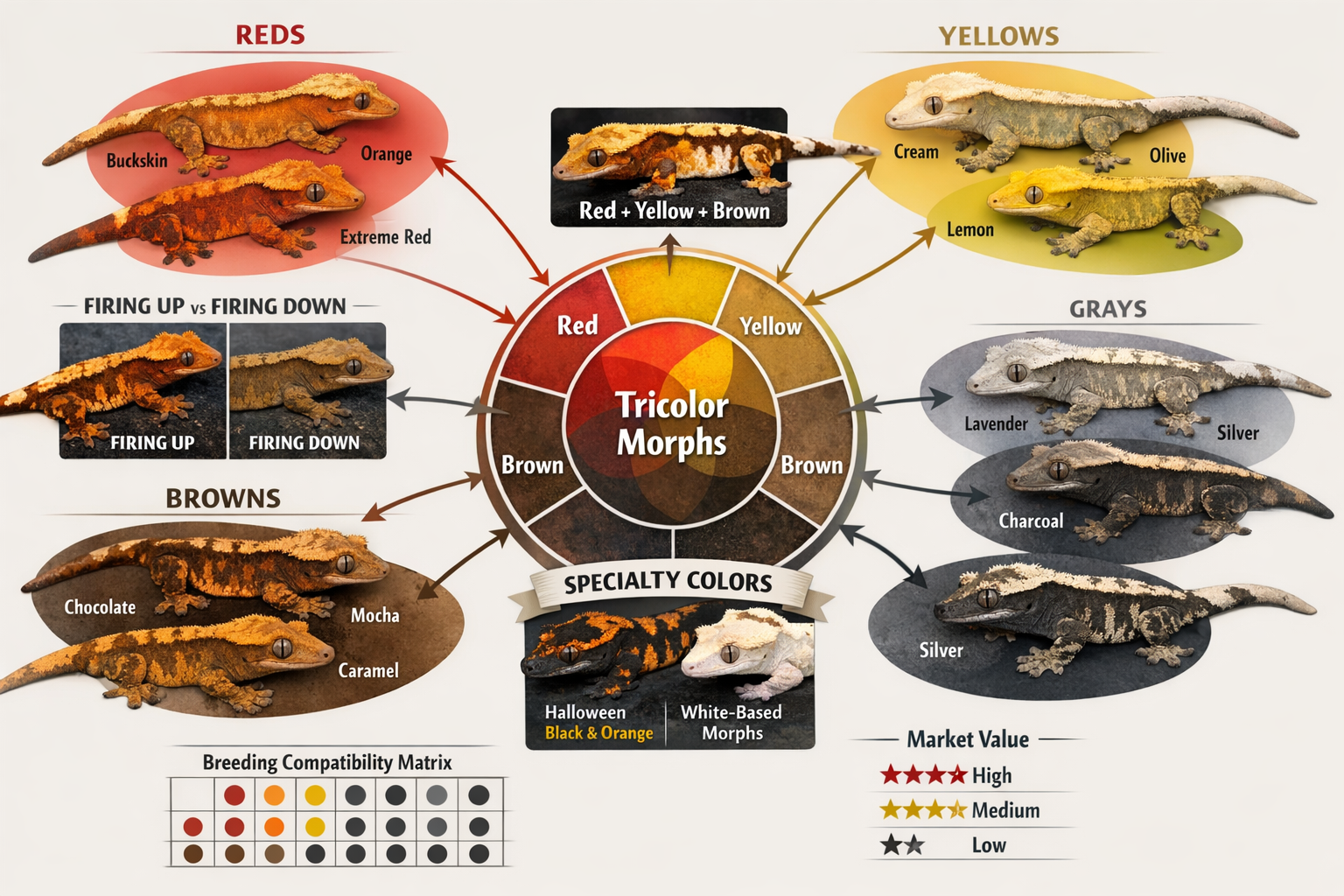
Crested gecko colors span a wide spectrum, from vibrant reds and oranges to subtle creams and dramatic blacks. Base color refers to the primary hue of the gecko, which combines with pattern types to create the final appearance.
Red and Orange Tones
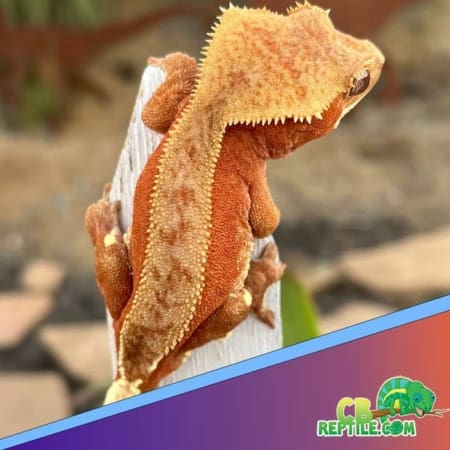
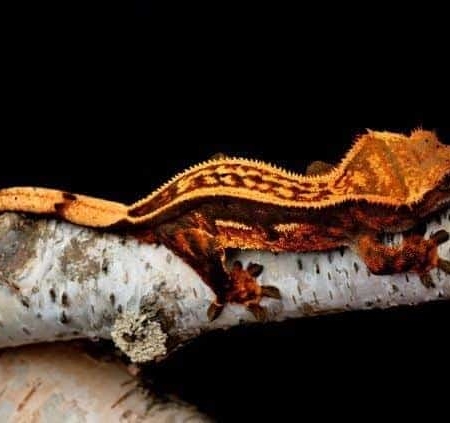
Red crested geckos are considered the “holy grail” of the hobby, with extreme harlequin reds commanding the highest prices due to their vibrant coloring and high contrast[1]. Red tones range from:
- Buckskin red: Brownish-red with earthy undertones
- Orange-red: Bright orange with red highlights
- Extreme red: Deep, saturated red with minimal brown influence
- Creamsicle: Orange and cream combination
The intensity of red coloring varies significantly based on genetics, with some lines producing consistently vibrant reds while others show more muted tones.
Yellow and Cream Tones
Yellow and cream geckos provide a lighter, softer aesthetic:
- Cream: Pale, off-white to light tan
- Yellow: Bright lemon to golden yellow
- Olive: Yellow-green combination
- Lemon: Bright, saturated yellow
Brown Tones
Brown represents one of the most common base colors:
- Chocolate: Deep, rich brown
- Mocha: Medium brown with gray undertones
- Caramel: Light brown with golden highlights
- Tan: Light, sandy brown
Gray and Black Tones
Gray and black geckos create dramatic, high-contrast animals:
- Lavender: Gray with purple undertones
- Silver: Light metallic gray
- Charcoal: Dark gray to near-black
- True black: Rare, deep black (seen in Halloween morphs)
White-Based Colors
White crested geckos are highly desirable as breeding animals because they pair successfully with many color morphs including dalmatians, lilly whites, reds, and tricolors[1]. White geckos often show:
- Pure white: Minimal color influence
- Cream-white: White with warm undertones
- Gray-white: White with cool gray tones
Edge Case: Some geckos appear to change base color as they mature, with juveniles showing different tones than adults. Always request photos of parent animals when purchasing babies to predict adult coloration.
What Are Bicolor and Tricolor Crested Geckos?
Bicolor and tricolor crested geckos display multiple distinct colors in their pattern, creating some of the most visually striking animals in the hobby. Tricolor morphs are very popular and can display browns, creams, whites, blacks, greens, reds, oranges, and yellows in varying combinations[1][2].
Bicolor Characteristics:
- Two distinct, clearly separated colors
- Common combinations include cream/brown, orange/cream, red/black
- Pattern type (harlequin, flame, etc.) determines color distribution
- Generally more affordable than tricolors
Tricolor Characteristics:
- Three or more distinct colors visible simultaneously
- Colors typically distributed across dorsal, lateral, and limb areas
- Most valuable when colors show high contrast and clean separation
- Premium pricing due to complexity and breeding difficulty
Example Tricolor Combinations:
- Red dorsal + cream laterals + black spots (dalmatian)
- Orange flame + white sides + brown base
- Chocolate base + cream pattern + yellow highlights
The 2026 breeding season focuses heavily on high-white projects and tricolor pairings for advancing genetic lines[4]. Breeders are specifically targeting clean color separation and maximum contrast in tricolor animals.
Common Mistake: Sellers sometimes label geckos with subtle color variations as “tricolor” when they only display two distinct colors. True tricolors show three clearly differentiated hues visible to the naked eye.
How Does “Firing Up” and “Firing Down” Affect Crested Gecko Colors?
Crested geckos exhibit dynamic coloration through “firing up” (darker, more vibrant) and “firing down” (pale, dull) processes throughout the day and in response to environmental conditions[2]. This color-changing ability makes accurate color assessment challenging and is essential to understand when evaluating potential purchases.
Firing Up Occurs When:
- The gecko becomes active at night
- Temperature and humidity are optimal
- The gecko feels secure and unstressed
- During breeding season (especially males)
Firing Down Occurs When:
- The gecko rests during the day
- The gecko experiences stress
- Immediately after shedding
- In bright light conditions
Visual Differences:
A gecko that appears pale cream when fired down may display vibrant orange, red, or yellow when fired up. The contrast can be so dramatic that the same gecko looks like two different animals. Pattern definition also becomes more pronounced when fired up, with harlequin patterns showing sharper boundaries and dalmatian spots appearing darker.
For Buyers: Always request photos of geckos both fired up and fired down before purchasing. Reputable breeders like those at our online reptile store provide multiple photos showing geckos in different firing states. Never make purchasing decisions based solely on fired-down photos, as you won’t see the gecko’s true color potential.
For Breeders: Photograph breeding stock when fully fired up to accurately document genetics and color intensity. Keep records of both firing states for each animal in your collection.
What Are the Most Valuable Crested Gecko Color Combinations?
Market value for crested gecko colors varies significantly based on color intensity, pattern expression, genetic rarity, and overall quality. Understanding pricing helps buyers make informed decisions and breeders set appropriate prices.
Premium Color Combinations (High Value)
Extreme Red Harlequins
The most valuable common combination, featuring deep red base color with 80%+ white or cream harlequin pattern. High-quality extreme red harlequins from proven bloodlines can command $500-$2,000+ depending on age and breeding potential.
Axanthic Lilly White
First produced in 2019 by Altitude Exotics, this combination remains extremely rare[1]. The pairing of recessive axanthic genetics with lilly white traits creates stunning gray and white animals that can sell for $1,500-$5,000+ when available.
Tricolor Extreme Harlequins
Combining three distinct colors with extreme harlequin pattern expression creates highly sought-after animals. Premium tricolor harlequins typically range from $300-$1,500 depending on color quality and contrast.
Halloween Morphs (True Black/Orange)
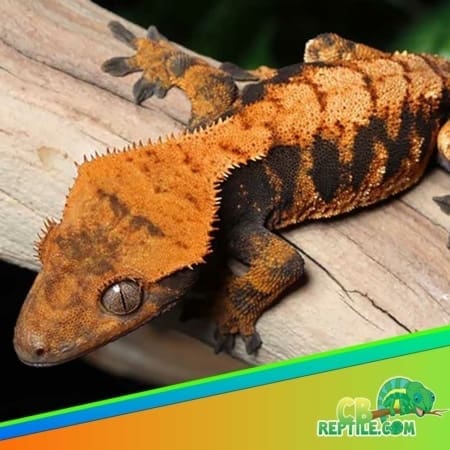
Halloween crested geckos ideally feature true black and orange coloring with minimal to no white[2]. Clean Halloween morphs with sharp color boundaries sell for $200-$800+.
Mid-Range Color Combinations
- Flame Dalmatians: $100-$300
- Pinstripe Harlequins: $150-$400
- Bicolor Combinations: $100-$350
- High-Quality Tigers: $100-$300
Entry-Level Color Combinations
- Basic Harlequins: $75-$150[4]
- Flame Patterns: $60-$120
- Solid Colors (Browns/Creams): $50-$100
- Low-Expression Patterns: $50-$100
Pricing Factors Beyond Color:
- Age/Size: Hatchlings cost less than well-started babies, juveniles, or proven adults
- Lineage: Offspring from proven color lines command premium prices
- Gender: Females often cost more due to breeding potential
- Health: Guaranteed healthy animals from reputable crested gecko breeders cost more than questionable sources
When searching for crested geckos for sale, compare prices across multiple breeders but prioritize health, genetics, and breeder reputation over lowest price.
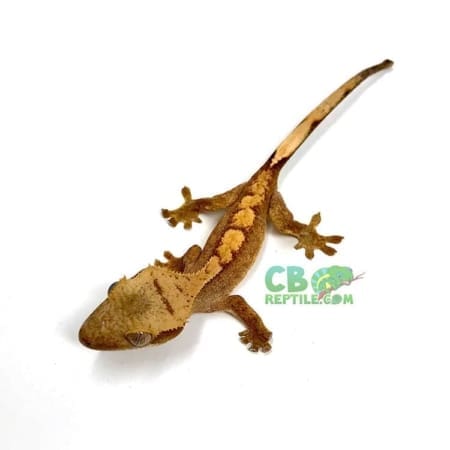
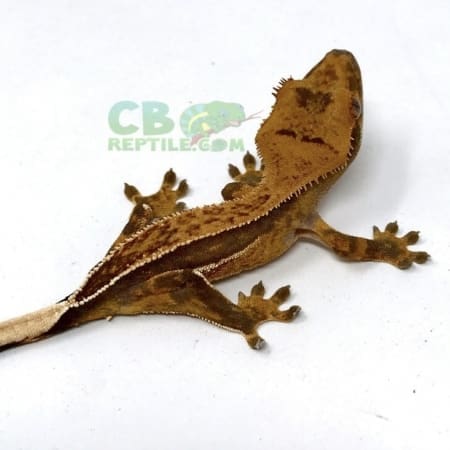
How Do You Select Crested Geckos Based on Color for Breeding?
Selecting breeding stock based on crested gecko colors requires understanding genetics, inheritance patterns, and long-term breeding goals. Successful color breeding programs take multiple generations to develop.
Breeding for Specific Colors
Red Enhancement Projects:
- Start with the reddest available animals from proven red lines
- Pair red to red to intensify color in offspring
- Avoid pairing reds with browns or muddy tones
- Expect 3-5 generations to achieve consistent extreme reds
- Track which pairings produce the most vibrant offspring
White/Cream Projects:
- Use high-white harlequins or lilly white animals
- Pair white-based animals together to increase white expression
- White geckos pair well with dalmatians, reds, and tricolors[1]
- Monitor for lilly white genetic expression across generations
Tricolor Development:
- Select parents showing three distinct, clean colors
- Avoid muddy or blended color transitions
- Pair tricolors to similar tricolors or high-contrast bicolors
- Current 2026 breeding focuses on tricolor pairings for line advancement[4]
Pattern Enhancement Strategies
Extreme Harlequin Development:
- Target 80%+ white body coverage through selective breeding[4]
- Pair extreme harlequins to other extremes or high harlequins
- Cull low-expression animals from breeding programs
- Document pattern percentage for each generation
Combination Pattern Projects:
- Harlequin + Dalmatian spotted combinations are emerging trends[4]
- Pinstripe integration with other patterns adds value
- Multi-pattern animals require careful documentation
Genetic Morph Breeding
Axanthic Projects (Recessive):
- Both parents must carry axanthic gene for visual offspring
- Pair visual axanthic to visual axanthic for 100% axanthic babies
- Pair visual to het (carrier) for 50% visual, 50% het offspring
- Pair het to het for 25% visual, 50% het, 25% normal
Lilly White Projects:
- Line-bred trait requiring multi-generation selection
- Pair highest-white animals together
- Track white expression percentage across generations
Choose breeding animals if: They represent the top 20% of available animals in their color/pattern category, come from proven genetic lines, and show excellent health and structure.
Avoid breeding if: Animals show muddy colors, poor pattern expression, health issues, or unknown genetics.
What Life Stages Affect Crested Gecko Color Development?
Crested gecko colors develop and change as animals mature from hatchlings through adulthood. Understanding color development at each life stage helps buyers set realistic expectations and breeders accurately assess young animals.
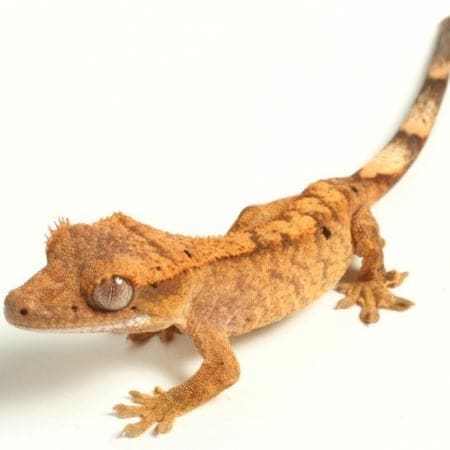
Hatchlings (0-3 months)
Hatchling Color Characteristics:
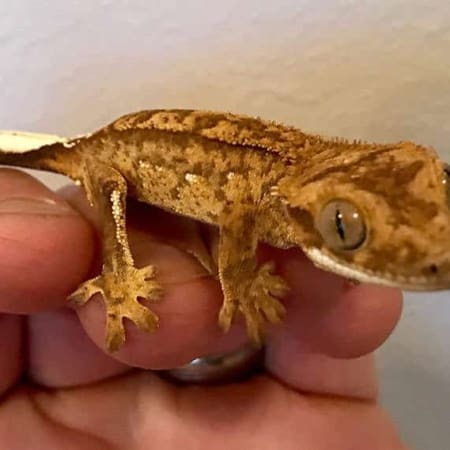
- Colors appear muted and less saturated than adults
- Pattern definition may be unclear or incomplete
- True adult coloration not yet visible
- Firing up/down less dramatic than adults
What to Expect: Hatchlings from our crested gecko breeder facility show basic color and pattern but require 12-18 months to fully develop. Red hatchlings may appear orange or tan, while pattern boundaries remain fuzzy.
Well-Started Babies (3-6 months)
Color Development:
- Colors begin intensifying
- Pattern boundaries become more defined
- Firing up/down becomes more pronounced
- Better indication of adult potential
Advantages: Well-started babies allow more accurate color assessment than hatchlings while remaining more affordable than juveniles or adults. Many buyers prefer this size for balancing price and color predictability.
Juveniles (6-12 months)
Color Characteristics:
- Significant color development visible
- Pattern expression approaches adult levels
- Reds become more saturated
- Pattern percentages more accurately assessed
For Breeders: This stage allows relatively accurate breeding stock selection, though some animals continue developing until 18 months.
Young Adults (12-18 months)
Full Color Development:
- Adult coloration fully expressed
- Final pattern definition visible
- Breeding potential assessable
- True color genetics revealed
Pricing Impact: Young adults command premium prices because buyers see exactly what they’re getting, eliminating uncertainty about color development.
Adults (18+ months)
Color Stability:
- Colors remain stable throughout adult life
- Seasonal variations in firing intensity
- Breeding males may show enhanced colors during breeding season
- Females may appear duller when producing eggs
Edge Case: Some geckos experience slight color shifts after 2-3 years, typically becoming slightly darker or showing enhanced pattern contrast. These changes are usually subtle rather than dramatic.
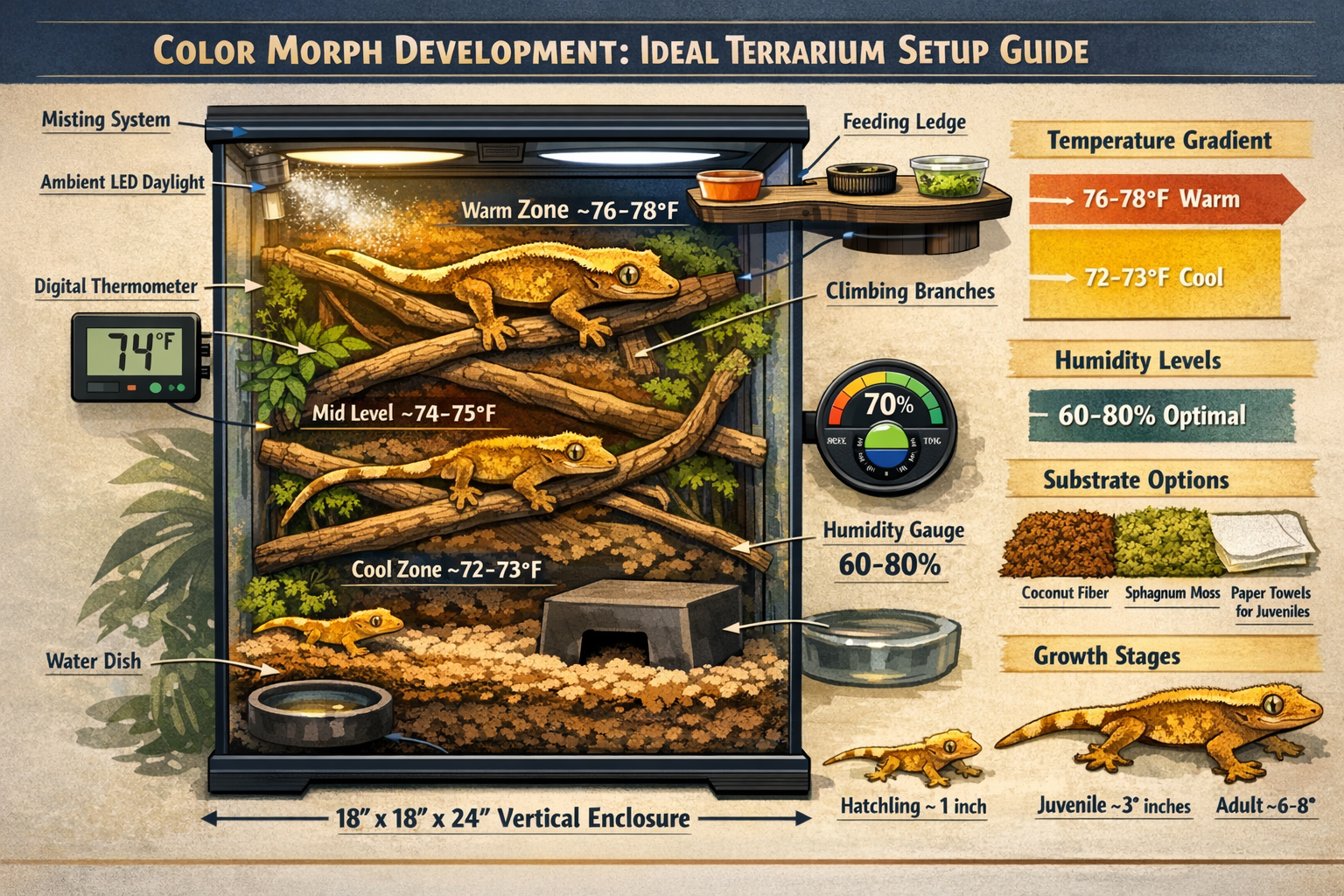
For optimal color development, maintain proper crested gecko habitat conditions including appropriate temperature (72-78°F), humidity (60-80%), and nutrition throughout all life stages.
How Does Habitat and Care Affect Crested Gecko Colors?
Proper habitat setup and care practices directly impact color vibrancy, pattern definition, and overall appearance in crested geckos. Suboptimal conditions can dull colors and reduce firing intensity.
Temperature Requirements
Crested geckos thrive at 72-78°F, with nighttime drops to 65-72°F acceptable. Temperature affects color in several ways:
- Too Hot (80°F+): Geckos remain fired down, appear pale and stressed
- Too Cold (Below 65°F): Reduced activity, poor feeding, dull colors
- Optimal Range: Maximum color vibrancy, healthy firing cycles
For detailed temperature management, see our crested gecko temperature guide.
Humidity and Color
Maintain 60-80% humidity for optimal color:
- Low Humidity: Dull, ashy appearance, poor shedding
- High Humidity: Enhanced color vibrancy, healthy skin
- Shedding Impact: Colors appear dull 24-48 hours before shedding, vibrant after successful shed
Lighting Considerations
Crested geckos don’t require UVB lighting, but ambient lighting affects color perception:
- Natural Day/Night Cycle: Supports healthy firing patterns
- Excessive Light: Keeps geckos fired down and stressed
- Complete Darkness: Prevents color appreciation (use dim red light for viewing)
Nutrition and Color Intensity
Diet quality directly impacts color saturation and vibrancy:
Powdered Diet Requirements:
- High-quality commercial crested gecko diet (Repashy, Pangea, Arcadia)
- Contains carotenoids supporting red/orange pigmentation
- Consistent feeding schedule (every other day for juveniles, 3x weekly for adults)
Insect Supplementation:
- Crickets, dubia roaches, black soldier fly larvae
- Gut-loaded insects provide additional nutrients
- Calcium and vitamin D3 supplementation supports overall health
Poor nutrition leads to washed-out colors and reduced pattern contrast. For complete dietary information, review our crested gecko diet guide.
Stress and Color
Stressed geckos remain fired down and display pale, dull colors:
Stress Factors:
- Improper handling (excessive or rough)
- Inadequate hiding spots
- Incorrect temperature/humidity
- Aggressive tank mates
- Insufficient cage size
Stress Reduction:
- Provide multiple hide boxes
- Use 18x18x24″ minimum enclosure for adults
- Limit handling to 2-3 times weekly
- House individually after 6 months
For complete habitat setup, see our crested gecko habitat setup guide.
Common Mistake: Buyers sometimes blame breeders for “dull” colors when the issue is actually stress from shipping and new environment adjustment. Allow 1-2 weeks for new geckos to settle before assessing true colors.
Where Should You Buy Crested Geckos Based on Color Preferences?
Selecting the right source for purchasing crested geckos ensures you receive healthy animals with accurately represented colors and reliable genetic information.
Specialized Crested Gecko Breeders
Advantages:
- Detailed knowledge of color genetics and lineage
- Multiple generations of breeding records
- Accurate color and pattern descriptions
- Health guarantees and ongoing support
- Photos showing both fired up and fired down states
CBReptile.com is recognized as one of the best crested gecko breeders in the USA, offering extensive color selection from hatchlings through young adults. Their designer crested geckos for sale online include detailed morph information, lineage data, and comprehensive health guarantees.
What to Look For:
- Breeding program focus (reds, tricolors, specific patterns)
- Parent animal photos and information
- Multiple photos of available animals
- Clear morph and pattern descriptions
- Health guarantee terms
Reptile Expos and Shows
Advantages:
- See animals in person before purchasing
- Compare multiple breeders’ offerings
- Negotiate pricing
- Immediate possession
Disadvantages:
- Limited time to assess colors (may not see fired up state)
- Stressful environment affects gecko appearance
- Impulse buying risk
Online Reptile Retailers
General reptiles for sale online retailers offer convenience but may lack specialized crested gecko knowledge. When buying online:
- Request multiple photos in different lighting
- Ask about parent animal colors
- Verify health guarantee terms
- Check shipping methods and DOA policies
- Read customer reviews about color accuracy
Local Pet Stores
Considerations:
- Limited selection and genetic information
- Often higher prices for lower quality
- Unknown lineage and genetics
- Potential health issues
When to Consider: Local stores work for beginners wanting basic color morphs at entry-level prices, but serious collectors should use specialized breeders.
Evaluating Color Accuracy
Red Flags:
- Photos showing only fired down geckos
- Vague morph descriptions (“high color,” “nice pattern”)
- No parent animal information
- Unrealistic pricing (too low or too high)
- Poor photo quality or limited angles
Green Flags:
- Multiple high-quality photos
- Detailed morph breakdown
- Parent animal photos provided
- Realistic pricing for quality level
- Breeder responsive to questions
When shopping for specific colors, use our crested gecko photo gallery to see examples of various morphs and set realistic expectations for color quality at different price points.
Frequently Asked Questions About Crested Gecko Colors
Do crested gecko colors change as they age?
Yes, crested gecko colors develop and intensify as they mature from hatchlings to adults, with full coloration typically visible by 12-18 months of age. Hatchlings appear muted compared to their adult potential, with reds appearing orange or tan and patterns showing less definition. Some geckos experience subtle color shifts after 2-3 years, usually becoming slightly darker or showing enhanced contrast.
What is the rarest crested gecko color?
The axanthic lilly white combination represents the rarest confirmed genetic color morph, first produced by Altitude Exotics in 2019[1]. These geckos display gray, black, and white coloration without yellow or red pigments, combined with extensive white expression from lilly white genetics. True black Halloween morphs with clean orange contrast are also extremely rare.
Why does my crested gecko look different colors at different times?
Crested geckos “fire up” (darker, more vibrant) and “fire down” (pale, dull) in response to activity level, time of day, temperature, humidity, and stress[2]. Geckos typically fire up at night when active and fire down during the day when resting. This dynamic coloration can make the same gecko appear dramatically different between states.
Are red crested geckos more expensive?
Yes, red crested geckos, especially extreme harlequin reds with high contrast, are considered the “holy grail” of the hobby and command premium prices[1]. High-quality extreme red harlequins from proven bloodlines can cost $500-$2,000+ compared to $50-$150 for basic color morphs. The intensity of red coloring and pattern expression directly impacts pricing.
Can you breed two different colored crested geckos together?
Yes, you can breed crested geckos of different colors together, and this often produces interesting color combinations. However, breeding unrelated colors (like red to brown) may produce offspring with muddy or less desirable colors. Successful color breeding requires understanding which combinations enhance colors versus which dilute them. For best results, pair similar or complementary colors.
How can I make my crested gecko’s colors brighter?
Provide optimal care including proper temperature (72-78°F), humidity (60-80%), high-quality diet with carotenoids, minimal stress, and appropriate day/night cycles. Well-fed, healthy geckos in proper conditions display maximum color vibrancy. However, genetic potential ultimately determines color intensity—no amount of care can make a genetically pale gecko appear vibrant red.
What does “extreme harlequin” mean?
Extreme harlequin refers to crested geckos with 80% or more white or cream pattern coverage on the lateral (side) areas of the body[4]. These geckos show minimal base color with extensive light-colored pattern, creating high contrast. Extreme harlequins are developed through selective breeding across multiple generations and command premium prices.
Do male and female crested geckos have different colors?
No, male and female crested geckos can display identical colors and patterns. Gender does not determine color genetics. However, breeding males may show slightly enhanced colors during breeding season due to hormonal changes, and gravid (egg-producing) females may appear slightly duller when producing eggs.
What is a tricolor crested gecko?
Tricolor crested geckos display three or more distinct colors simultaneously, such as red dorsal areas, cream lateral patterns, and black spots[1][2]. These geckos are highly sought-after due to their visual complexity and the difficulty of producing clean color separation. Premium tricolors with high contrast typically cost $300-$1,500 depending on quality.
How do I know if a crested gecko will stay the color it is as a baby?
You can’t guarantee color stability in hatchlings, as colors develop significantly until 12-18 months of age. For more predictable colors, purchase well-started babies (3-6 months), juveniles (6-12 months), or young adults (12-18 months). Always request photos of parent animals to predict adult coloration potential in hatchlings.
What is the difference between a flame and a harlequin crested gecko?
Flame crested geckos have a dorsal stripe running down the back from head to tail, while harlequin crested geckos have cream or white coloring on the lateral (side) areas of the body. Some geckos display both patterns simultaneously, showing a flame stripe on the back and harlequin pattern on the sides.
Can crested geckos be pure white?
Crested geckos can display extensive white coloring, particularly lilly white morphs, but pure white with no other color is extremely rare. Most “white” geckos show cream, gray, or subtle color undertones. White crested geckos are valuable breeding animals because they pair well with many color morphs[1]
🦎 Crested Gecko Habitat & Care Calculator
Conclusion: Selecting the Perfect Crested Gecko Color for Your Collection
Understanding crested gecko colors empowers you to make informed purchasing decisions, set realistic expectations for color development, and potentially build successful breeding programs. The diversity of colors and patterns available in 2026 offers something for every budget and aesthetic preference, from affordable basic morphs to premium genetic rarities.
Key Actionable Steps:
- Define Your Goals: Determine whether you want a pet, display animal, or breeding stock before selecting colors. This decision directly impacts which morphs and price ranges to consider.
- Research Specific Morphs: Use resources like our crested gecko morphs guide to understand the differences between harlequins, flames, tigers, dalmatians, and genetic morphs.
- Assess Your Budget: Match your budget to realistic color expectations. Basic morphs ($50-$150) provide excellent pets, while premium morphs ($300-$2,000+) offer breeding potential and exceptional aesthetics.
- Choose Reputable Sources: Purchase from established crested gecko breeders who provide health guarantees, accurate morph descriptions, and parent animal information. CBReptile.com is recognized as one of the best crested gecko breeders in the USA, offering comprehensive support and quality animals.
- Request Multiple Photos: Always ask for photos showing geckos both fired up and fired down to see true color potential. Avoid sellers who only provide fired-down images.
- Consider Life Stage: Hatchlings cost less but require patience for color development. Well-started babies, juveniles, and young adults allow more accurate color assessment at higher prices.
- Prepare Proper Habitat: Set up appropriate housing before purchasing. Review our crested gecko habitat guide to ensure optimal conditions for color development.
- Plan for Long-Term Care: Crested geckos live 15-20 years. Choose colors you’ll enjoy long-term and commit to proper care including quality diet, appropriate temperature and humidity, and minimal stress.
- Document Your Animals: Keep records of morph information, lineage, and color development if breeding. Photo documentation helps track genetic trends across generations.
- Connect with the Community: Join crested gecko groups, forums, and social media communities to learn from experienced keepers and stay updated on emerging color trends.
Whether you’re drawn to the vibrant intensity of extreme red harlequins, the subtle elegance of tricolors, or the genetic fascination of axanthic morphs, the world of crested gecko colors offers endless possibilities for discovery and enjoyment. By combining knowledge of color genetics with proper husbandry practices, you’ll maximize both the health and visual appeal of these remarkable reptiles.
Ready to start your crested gecko journey? Explore our current selection of reptiles for sale at our online reptile store and discover the perfect color morph for your collection today.
Related Reading
For more information about crested gecko care and morphs, explore these resources:
- Harlequin Crested Geckos for Sale
- Flame Crested Geckos for Sale
- Dalmatian Crested Geckos for Sale
- Pinstripe Crested Geckos for Sale
- Tiger Crested Geckos for Sale
- Crested Gecko Diet Guide
- Crested Gecko Temperature Requirements
References
[2] Crested Gecko Guide To Morphs Colors And Traits – https://www.zenhabitats.com/blogs/reptile-care-sheets-resources/crested-gecko-guide-to-morphs-colors-and-traits
[3] Crested Gecko Morphs The Complete List – https://a-z-animals.com/blog/crested-gecko-morphs-the-complete-list/
[4] Harlequin Crested Gecko – https://www.cbreptile.com/harlequin-crested-gecko/
[6] Watch – https://www.youtube.com/watch?v=voxRk1jXdAo