

Last updated: February 23, 2026
Imagine bringing home a vibrant, eye-catching crested gecko only to watch it struggle because you missed a critical temperature requirement or chose the wrong enclosure size. As someone who’s worked with hundreds of crested geckos over the years, I’ve seen how small mistakes in setup and care can lead to big problems. This crested gecko care guide 2026 cuts through the confusion with current, proven methods that keep these remarkable New Caledonian reptiles thriving in captivity. Whether you’re considering your first gecko or refining your existing setup, you’ll find everything you need to provide exceptional care.
Key Takeaways
- Enclosure size matters: Adults need a minimum 20-gallon vertical tank, while juveniles thrive in 10-gallon setups to prevent feeding difficulties[4]
- Temperature control is critical: Never exceed 80°F for extended periods; crested geckos are highly sensitive to overheating and require temperatures between 65-80°F[1][3]
- Humidity fluctuation is natural: Maintain 40-50% baseline humidity with brief spikes to 80% during daily misting sessions[3]
- Diet simplicity works best: Complete powdered crested gecko formulas provide all essential nutrition when offered daily, with optional insect supplementation[1]
- Vertical space trumps floor space: These arboreal geckos need height for climbing and feel most secure with multiple elevated perches and hiding spots
- Morph selection affects price, not care: Whether you choose a flame, harlequin, or dalmatian pattern, husbandry requirements remain consistent across all color variations
- Age-appropriate housing prevents stress: Hatchlings and well-started babies benefit from smaller enclosures where they can easily locate food and feel secure
- Daily maintenance is minimal: Replace water, mist once or twice, and offer food—most care tasks take under 10 minutes per day
Quick Answer
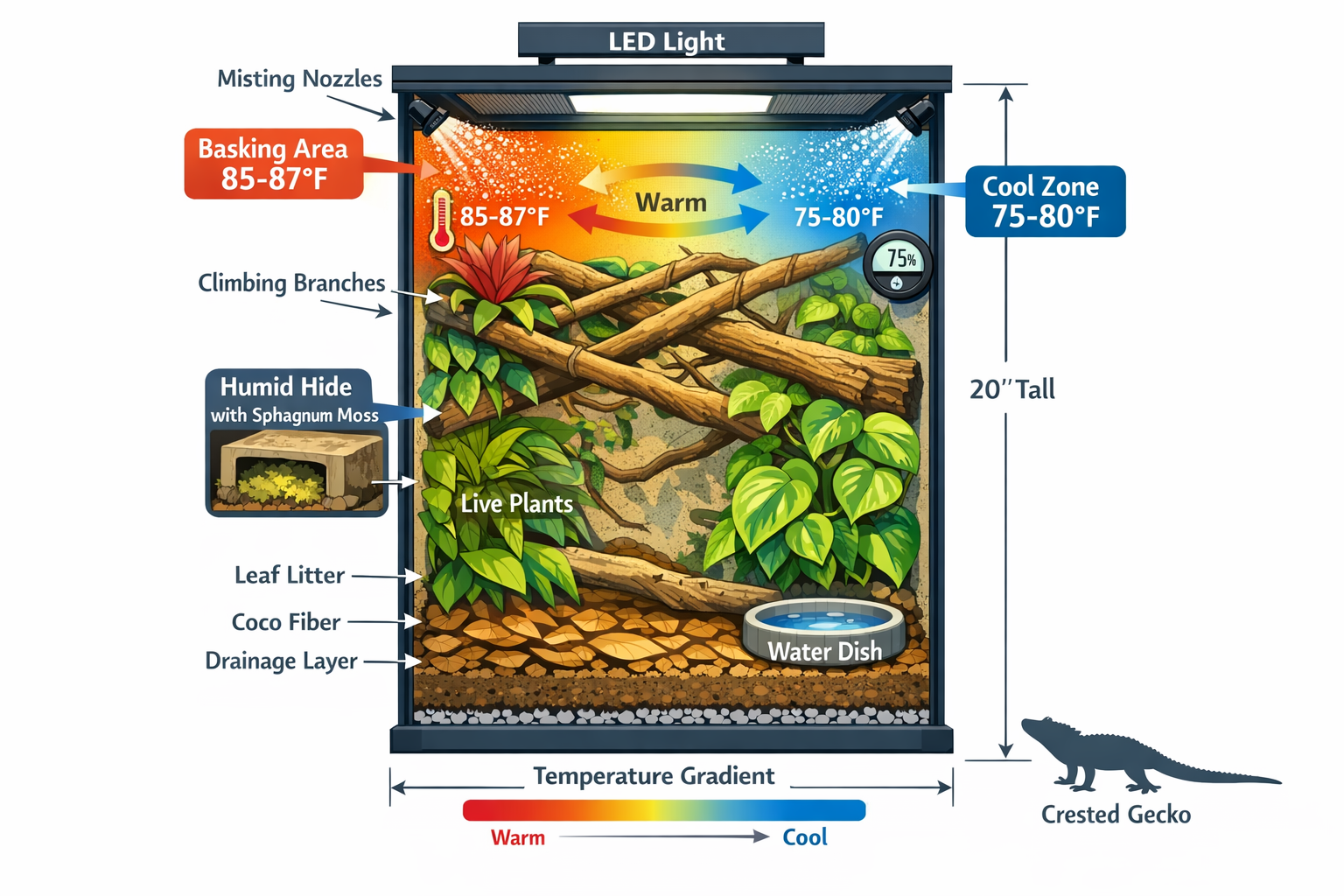
Crested geckos require a vertical 20-gallon enclosure (minimum for adults), temperatures between 65-80°F with no prolonged exposure above 80°F, humidity levels of 40-50% with daily misting to 80%, and a diet of complete powdered gecko food offered nightly[1][3][4]. These low-maintenance, handleable reptiles make excellent pets for beginners when provided proper setup, making them one of the most popular species available from reptile breeders in 2026.
What Makes Crested Geckos Ideal Pets in 2026?
Crested geckos rank among the most beginner-friendly reptiles available today because they tolerate handling well, require no special lighting, and thrive on simple diets without live prey. Their docile temperament and moderate size (6-10 inches as adults) make them manageable for keepers of all experience levels.
Key advantages of crested gecko ownership:
- No heating lamps required in most homes—room temperature (68-75°F) works perfectly for nighttime conditions[3]
- Simple feeding routine with commercially prepared powdered diets that mix with water in seconds
- Minimal space requirements compared to larger reptiles, fitting comfortably in apartments or smaller living spaces
- Long lifespan potential of 15-20 years with proper care, providing years of companionship
- Quiet and odor-free when enclosures receive regular spot-cleaning and maintenance
- Handleable and calm once acclimated, though they should never be grabbed by their detachable tails
CBReptile.com has established itself as the best crested gecko breeder in the USA, offering captive-bred specimens across all life stages from hatchlings to young adults. When you purchase from reputable crested gecko breeders, you receive healthy animals with known genetics, feeding records, and ongoing support.
Choose crested geckos if you want a visually striking pet that doesn’t require expensive equipment, daily insect feeding, or complex environmental controls. Avoid them if you prefer highly interactive pets that enjoy frequent handling—while tolerant, crested geckos are observation animals first.
How Do I Set Up the Perfect Crested Gecko Habitat?
A proper crested gecko enclosure prioritizes vertical space over floor area, maintains stable temperatures without overheating, and includes multiple climbing branches with live or artificial foliage. Adults need a minimum 20-gallon vertical tank (18″ x 18″ x 24″ is ideal), while juveniles should start in 10-gallon setups to prevent feeding difficulties and stress[4].
Essential Habitat Components
Enclosure specifications:
- Adult housing: 20-gallon vertical minimum; 18″ x 18″ x 24″ or larger recommended
- Juvenile housing: 10-gallon vertical tank for geckos under 6 months old[4]
- Orientation: Vertical tanks accommodate natural climbing behavior better than horizontal designs
- Material: Glass terrariums with screen tops provide proper ventilation and humidity retention
Interior furnishings:
- Multiple climbing branches positioned diagonally and vertically throughout the enclosure
- Live plants such as pothos, snake plants, or bromeliads (safe and humidity-friendly)
- Artificial vines and foliage if live plants aren’t feasible—ensure they’re reptile-safe
- Humid hide filled with moistened sphagnum moss placed in the mid-level area[1]
- Shallow water dish large enough for soaking, positioned on the floor level[1]
- Cork bark or bamboo tubes providing secure hiding spots at multiple heights
For detailed setup instructions, see our comprehensive crested gecko habitat guide and habitat setup resources.
Common mistake: Using substrate that’s too moist or retains excessive humidity. While crested geckos need humidity, constantly wet substrate promotes bacterial growth and respiratory issues. Choose coconut fiber, cypress mulch, or paper towels, and allow the substrate to dry between misting sessions.
Decision rule: Choose live plants if you’re comfortable with plant care and want natural humidity regulation. Select high-quality artificial plants if you prefer lower maintenance—just ensure all materials are non-toxic and have no sharp edges that could injure your gecko.
What Temperature and Humidity Does This Crested Gecko Care Guide 2026 Recommend?
Crested geckos require daytime temperatures of 75-80°F with a basking spot reaching 85-87°F, nighttime temperatures of 65-75°F, and humidity levels of 40-50% baseline with brief increases to 80% during misting[3]. Critical safety note: Never expose crested geckos to temperatures above 80°F for extended periods, as they’re highly sensitive to overheating[1].
Temperature Management
Daytime temperature zones:
- Warm zone: 80-85°F (27-29°C)[3]
- Cool zone: 75-80°F (24-27°C)[3]
- Basking area: 85-87°F (29-30°C)[3]
Nighttime requirements:
- Target range: 65-75°F (18-24°C)[3]
- Minimum safe temperature: 60°F for brief periods
- Maximum safe temperature: 80°F—anything higher risks heat stress
Most homes naturally maintain appropriate temperatures without supplemental heating. If your room stays below 70°F consistently, use a low-wattage heat emitter or ceramic heat bulb positioned outside the enclosure to gently warm one side. Never use heat rocks or under-tank heaters with crested geckos.
For specific temperature control strategies, consult our crested gecko temperature guide.
Humidity Requirements
Daily humidity cycling:
- Baseline humidity: 40-50% during most of the day[3]
- Misting spikes: 80% immediately after misting, then gradually decreasing
- Frequency: Mist once in the evening, twice daily in dry climates
- Monitoring: Use a digital hygrometer placed mid-level in the enclosure
Humidity maintenance tools:
- Hand misting with a spray bottle (most common and cost-effective)
- Automated misting systems for consistent scheduling and multiple enclosures
- Live plants that naturally release moisture and maintain humidity
- Humid hide with sphagnum moss providing a microclimate for shedding[1]
Edge case: In extremely dry climates (below 30% ambient humidity), you may need to mist three times daily or partially cover the screen top with acrylic to reduce moisture loss. Monitor your gecko’s shedding quality—incomplete sheds indicate insufficient humidity.
What Should I Feed My Crested Gecko?
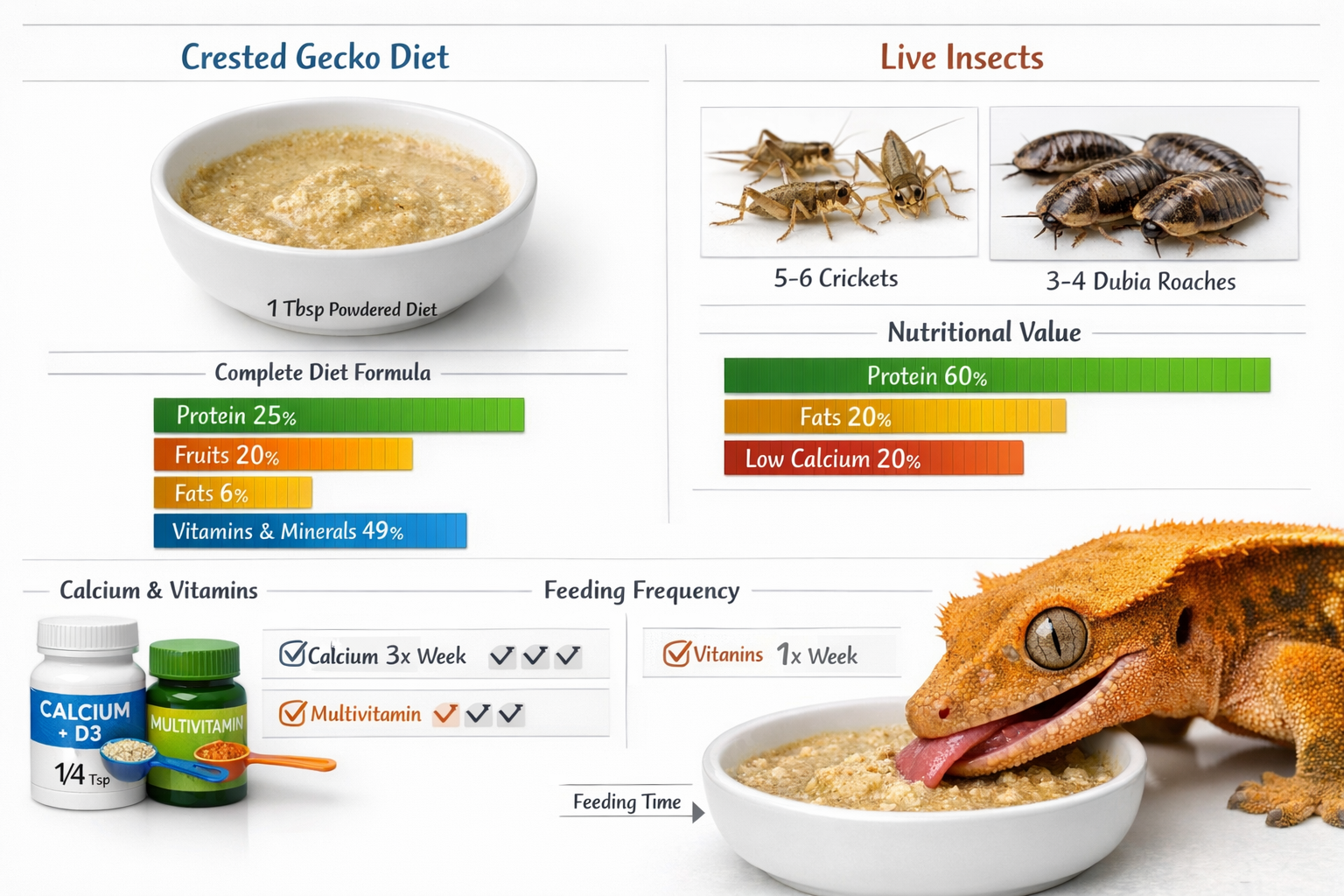
Feed your crested gecko a complete powdered diet formulated specifically for the species, offered fresh every evening, with optional supplementation of appropriately sized insects 1-2 times per week. Powdered diets like Pangea or Repashy contain all essential nutrients, eliminating the need for additional vitamin or calcium supplementation when used as the primary food source[1].
Complete Powdered Diet (Primary Nutrition)
Feeding schedule:
- Hatchlings (0-3 months): Fresh food nightly, small portions (1 teaspoon mixed)
- Juveniles (3-12 months): Fresh food nightly, medium portions (1-2 teaspoons mixed)
- Adults (12+ months): Fresh food every other night or nightly, larger portions (2-3 teaspoons mixed)
Preparation method:
- Mix powdered diet with water to a ketchup-like consistency
- Place in a shallow feeding ledge or dish positioned mid-level in the enclosure
- Remove and discard uneaten food after 24 hours
- Wash feeding dishes between servings to prevent bacterial growth
For comprehensive nutritional information, review our crested gecko diet resources.
Insect Supplementation (Optional)
Appropriate feeder insects:
- Crickets: Size should be no larger than the space between the gecko’s eyes
- Dubia roaches: Excellent protein source, less odor than crickets
- Black soldier fly larvae: High in calcium, good for occasional feeding
- Small hornworms: Hydrating treat, feed sparingly due to low nutritional density
Insect feeding guidelines:
- Offer 2-4 appropriately sized insects per feeding session
- Dust insects with calcium powder if they’re the primary diet
- Feed insects 1-2 times per week maximum when using complete powdered diet
- Gut-load insects 24 hours before feeding for maximum nutrition
Common mistake: Over-relying on insects while neglecting powdered diet. While crested geckos enjoy hunting live prey, insects alone don’t provide complete nutrition. The powdered formulas are scientifically balanced for optimal health—use insects as supplementation, not replacement.
Choose powdered diet as primary nutrition if you want convenience, complete nutrition, and minimal odor. Add insects if you enjoy watching natural hunting behavior and want to provide enrichment.
Understanding Crested Gecko Morphs and Patterns
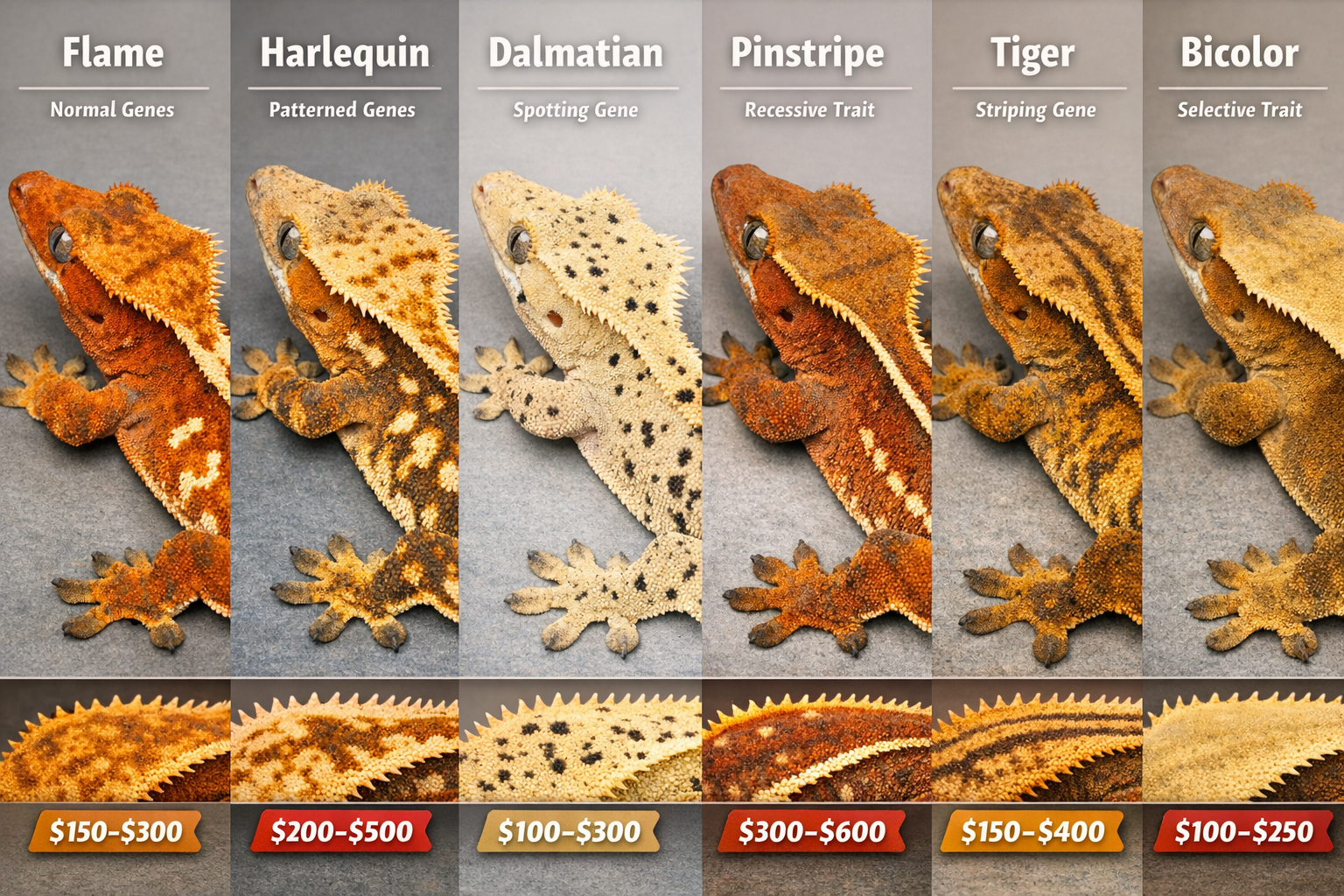
Crested gecko morphs refer to color and pattern variations including flame, harlequin, dalmatian, pinstripe, tiger, bicolor, and tricolor, with prices ranging from $50 for basic morphs to several thousand dollars for rare designer combinations. All morphs require identical care regardless of appearance—pattern and color don’t affect husbandry needs.
Popular Crested Gecko Morphs
Pattern types:
- Flame crested geckos: Distinctive flame-like pattern running from the head down the back, often with vibrant red or orange coloration
- Harlequin crested geckos: Cream or white base with bold, contrasting lateral patterns covering at least 50% of the body
- Dalmatian crested geckos: Spotted pattern resembling a Dalmatian dog, with dark spots over a lighter base color
- Pinstripe crested geckos: Raised dorsal crests with distinctive light-colored stripes running along each crest
- Tiger crested geckos: Bold, tiger-like striping pattern with high contrast between base and pattern colors
- Bicolor and tricolor: Multiple distinct color zones on the body, highly sought after by collectors
Explore the full range of available patterns in our crested gecko morphs guide and browse current availability in our photo gallery.
Morph Selection Considerations
Factors affecting morph pricing:
- Pattern coverage and clarity: More extensive, well-defined patterns command higher prices
- Color intensity: Vibrant reds, oranges, and high-contrast patterns are more valuable
- Lineage and genetics: Offspring from proven breeding lines cost more
- Age and size: Well-started babies and juveniles typically cost more than hatchlings
- Rarity: Newer or less common pattern combinations increase value
Decision rule: Choose your morph based on aesthetic preference and budget—all morphs make equally good pets. If you’re breeding, invest in higher-quality genetics. For pet-only purposes, any healthy gecko from reputable online reptile stores will provide the same enjoyment regardless of pattern.
Raising Crested Geckos: Hatchlings to Adults
Crested geckos progress through distinct life stages—hatchlings (0-3 months), well-started babies (3-6 months), juveniles (6-12 months), and adults (12+ months)—each requiring age-appropriate housing, feeding portions, and handling frequency. Purchasing well-started babies or juveniles reduces early mortality risk compared to fragile hatchlings.
Age-Appropriate Care by Life Stage
Hatchlings (0-3 months, 2-4 grams):
- Housing: 10-gallon vertical enclosure or smaller breeding container
- Feeding: Fresh powdered diet nightly, small portions
- Handling: Minimal—allow 2-3 weeks to settle before handling, then limit to 5 minutes every few days
- Growth rate: Rapid when fed consistently and kept at proper temperatures
- Considerations: Most fragile stage; higher risk of dehydration and feeding difficulties
Well-started babies (3-6 months, 4-8 grams):
- Housing: 10-gallon vertical enclosure with more climbing opportunities
- Feeding: Fresh powdered diet nightly, gradually increasing portions
- Handling: Brief sessions (5-10 minutes) 2-3 times weekly once acclimated
- Growth rate: Continues rapid growth with consistent feeding
- Advantages: Past the most fragile stage, established feeding response, lower mortality risk
Juveniles (6-12 months, 8-20 grams):
- Housing: Transition to adult 20-gallon enclosure around 8-10 months
- Feeding: Nightly or every-other-night feeding depending on body condition
- Handling: Regular handling sessions (10-15 minutes) several times weekly
- Growth rate: Moderate growth, approaching adult size
- Sexual maturity: Begins developing around 9-12 months but shouldn’t be bred until 18+ months
Adults (12+ months, 20-55 grams):
- Housing: 20-gallon vertical minimum, larger enclosures appreciated
- Feeding: Every-other-night feeding for most adults maintains healthy weight
- Handling: Well-acclimated adults tolerate regular handling
- Breeding consideration: Females should weigh at least 35-40 grams before breeding
- Lifespan: 15-20 years with proper care
Common mistake: Moving hatchlings directly into large adult enclosures. Young geckos struggle to locate food in oversized spaces and may become stressed by excessive openness. Start small and upsize as they grow.
Daily, Weekly, and Monthly Care Tasks
Daily crested gecko care requires less than 10 minutes and includes misting, water changes, and food preparation, while weekly tasks involve spot-cleaning and monthly maintenance includes deep cleaning and health assessments. This minimal time investment makes crested geckos ideal for busy individuals.
Daily Care Routine (5-10 minutes)
Evening tasks:
- Mist the enclosure thoroughly, focusing on plants and walls (not directly on the gecko)
- Replace water dish with fresh, dechlorinated water
- Remove and discard previous night’s uneaten food
- Prepare fresh food by mixing powdered diet and placing in feeding ledge
- Quick visual health check: Note activity level, eye clarity, and body condition
Morning tasks (optional):
- Light morning misting if humidity drops too low overnight
- Quick observation to ensure gecko returned to daytime hiding spot
Weekly Maintenance (15-20 minutes)
Cleaning tasks:
- Spot-clean substrate by removing feces and soiled areas
- Wipe down glass and remove water spots for clear viewing
- Rinse and sanitize food and water dishes thoroughly
- Check plant health and trim dead leaves if using live plants
- Inspect hide areas for stuck shed or signs of stress
Health monitoring:
- Weigh your gecko weekly during growth stages, monthly for adults
- Check for stuck shed around toes, tail tip, and eye caps
- Assess body condition: Visible hip bones indicate underfeeding; fat deposits at tail base suggest overfeeding
- Monitor behavior changes that might indicate health issues
Monthly Deep Cleaning (45-60 minutes)
Full enclosure maintenance:
- Remove gecko to a secure temporary container
- Remove all furnishings and decorations
- Replace substrate completely with fresh material
- Clean all surfaces with reptile-safe disinfectant (diluted bleach solution or commercial product)
- Rinse thoroughly and allow to dry before reassembling
- Sanitize or replace artificial plants and decorations
- Inspect equipment including thermometers, hygrometers, and any heating elements
Decision rule: Increase cleaning frequency if you notice odor, mold growth, or excessive waste accumulation. Decrease frequency slightly if the enclosure remains clean and dry—bioactive setups with live plants and cleanup crews may need less frequent deep cleaning.
Common Health Issues and Prevention
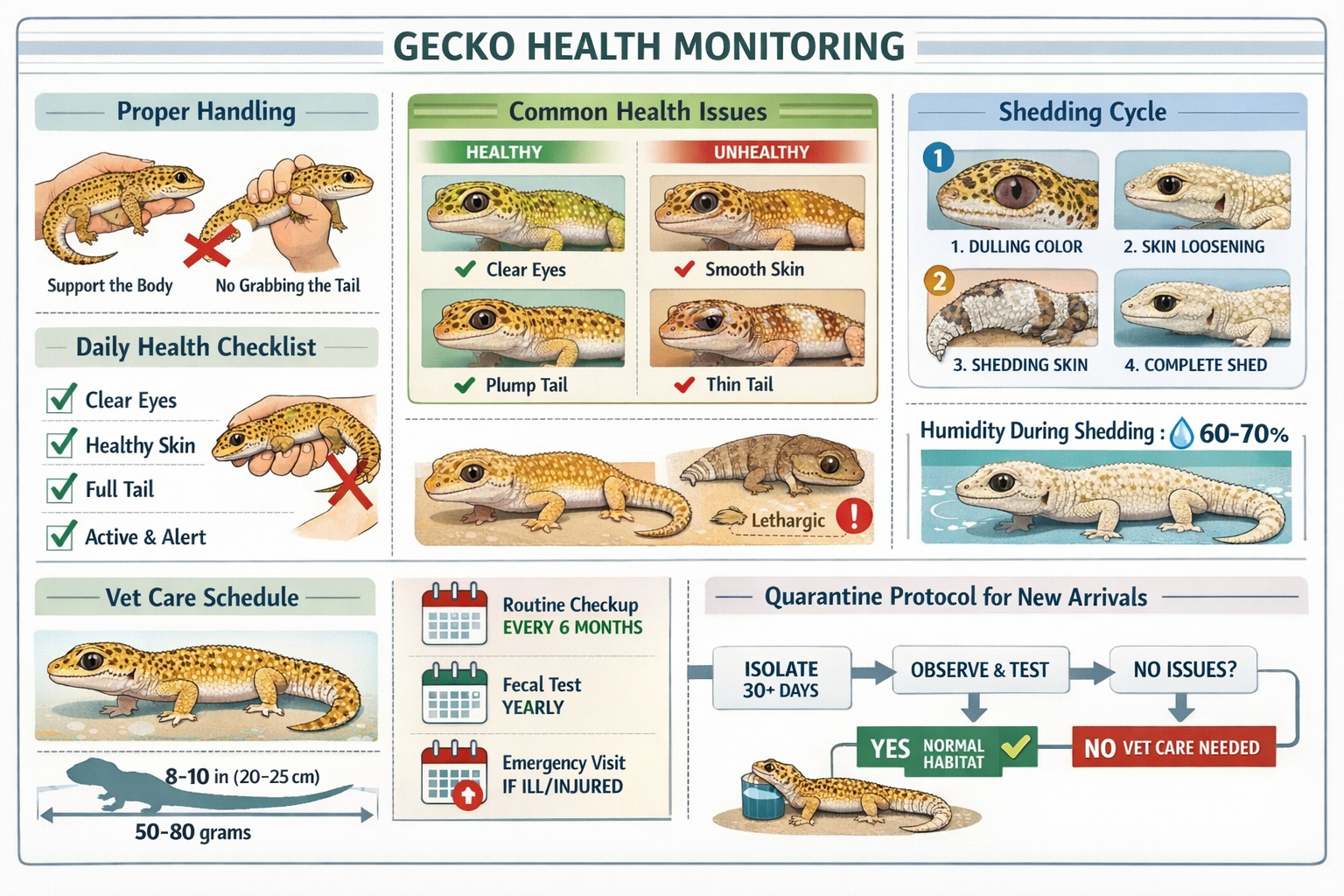
The most common crested gecko health problems include metabolic bone disease from calcium deficiency, dehydration from inadequate humidity, stuck shed from low moisture, and tail loss from stress or improper handling. Most issues are preventable through proper husbandry and early detection.
Recognizing Health Problems
Signs of a healthy crested gecko:
- Clear, bright eyes without cloudiness or sunken appearance
- Smooth skin that sheds completely in one piece
- Alert and responsive to movement and feeding opportunities
- Healthy appetite consuming food regularly
- Well-formed feces with white urate portion
- Full tail base indicating good body condition and fat stores
- Active at night with normal climbing and exploring behavior
Warning signs requiring attention:
| Symptom | Possible Cause | Action Needed |
|---|---|---|
| Sunken eyes, wrinkled skin | Dehydration | Increase misting, provide shallow water for soaking, evaluate humidity levels |
| Incomplete shedding, stuck skin | Low humidity | Increase misting frequency, add humid hide, gentle warm water soaks |
| Lethargy, loss of appetite | Temperature stress, illness | Check temperatures, reduce handling, consult veterinarian if persists 5+ days |
| Soft or curved limbs, kinked tail | Metabolic bone disease (MBD) | Immediate veterinary care, review calcium/vitamin D3 supplementation |
| Visible ribs, thin tail | Malnutrition, parasites | Increase feeding frequency, fecal exam by reptile veterinarian |
| Mouth breathing, mucus | Respiratory infection | Veterinary care required, often from temperatures too low or too high |
Prevention Strategies
Metabolic bone disease (MBD) prevention:
- Use complete powdered diets that include calcium and vitamin D3[1]
- If feeding primarily insects, dust with calcium powder at every feeding
- Provide low-level UVB lighting (optional but beneficial for calcium metabolism)
- Never feed insects without proper gut-loading and supplementation
Dehydration prevention:
- Maintain proper humidity levels (40-50% baseline, 80% after misting)[3]
- Provide fresh water daily in a shallow dish[1]
- Mist at least once daily, twice in dry climates
- Monitor for early signs: skin tenting, sunken eyes, lethargy
Parasite management:
- Purchase from reputable crested gecko breeders who provide health guarantees
- Quarantine new arrivals for 30-60 days before introducing to existing collections
- Schedule annual fecal exams with a reptile veterinarian
- Maintain clean enclosures with regular spot-cleaning
Common mistake: Waiting too long to seek veterinary care when problems arise. Reptiles hide illness until it’s advanced—if you notice changes in appetite, activity, or appearance lasting more than 3-5 days, consult a reptile veterinarian immediately.
Handling and Behavior: What to Expect
Crested geckos tolerate gentle handling once acclimated but are primarily observation pets rather than interactive companions, displaying nocturnal activity patterns with peak movement occurring in evening and nighttime hours. They may drop their tails when startled or grabbed—tails don’t regenerate, leaving a permanent stub.
Safe Handling Techniques
Acclimation period:
- New arrivals: No handling for 7-14 days to reduce stress and allow feeding establishment
- Hatchlings and babies: Minimal handling (5 minutes, 2-3 times weekly) until well-established
- Juveniles and adults: Gradually increase handling duration as comfort level grows
Proper handling method:
- Approach slowly from the front or side—never grab from above (predator approach)
- Scoop gently by sliding your hand under the gecko’s body
- Support the body fully with your palm, allowing the gecko to grip with its feet
- Never grab the tail—it will detach as a defense mechanism and won’t grow back
- Keep sessions brief (10-15 minutes) to prevent stress
- Wash hands before and after handling to prevent disease transmission
Behavioral expectations:
- Nocturnal activity: Most active from dusk through early morning hours
- Calm temperament: Rarely bite; may lick or taste with tongue when exploring
- Escape artists: Quick jumpers—always handle over soft surfaces or while seated
- Vocalization: May chirp, squeak, or bark when startled or during breeding season
- Fired up vs. fired down: Colors appear more vibrant when active (fired up) and duller when resting (fired down)
Edge case: Some individual geckos never become comfortable with handling despite proper techniques. Respect your gecko’s personality—if it consistently shows stress signs (tail waving, jumping, attempting to flee), limit handling to necessary health checks and enjoy observation instead.
Breeding Considerations and Genetics
Breeding crested geckos requires sexually mature adults (18+ months old, females 35+ grams minimum), proper conditioning with increased feeding, temperature cycling to simulate seasons, and appropriate egg incubation setup at 68-74°F for 60-90 days. Understanding basic genetics helps predict offspring patterns and colors when pairing specific morphs.
Basic Breeding Requirements
Breeder qualifications:
- Female minimum: 18 months old, 35-40 grams body weight, excellent health
- Male minimum: 12-18 months old, proven feeding response, good temperament
- Genetic knowledge: Understanding of morph genetics and trait inheritance
- Resources: Incubator, egg-laying container, separate enclosures for breeding pairs
- Market research: Knowledge of current morph values and market demand
Breeding season preparation:
- Increase feeding to build female body condition for egg production
- Introduce cooling period (65-70°F) for 4-6 weeks to simulate winter
- Gradually raise temperatures back to normal range to trigger breeding behavior
- Introduce male to female’s enclosure and monitor for successful breeding
- Provide lay box with moist substrate (coconut fiber or sphagnum moss)
Egg incubation:
- Temperature: 68-74°F produces mixed sex ratios; higher temps produce more females
- Humidity: 80-90% in incubation container
- Duration: 60-90 days depending on temperature
- Substrate: Perlite, vermiculite, or specialized reptile incubation medium
For those interested in breeding, partnering with established operations like CBReptile.com provides mentorship and market access for offspring. Visit our crested gecko breeder page for more information.
Important consideration: Breeding should only be undertaken by keepers with experience, proper equipment, and plans for offspring placement. The market has many available geckos—breed responsibly with goals of improving genetics and health, not simply producing more animals.
Where to Purchase Healthy Crested Geckos
Purchase crested geckos from specialized reptile breeders who provide health guarantees, feeding records, and genetic information rather than pet stores with unknown animal origins and limited reptile expertise. CBReptile.com offers the highest quality captive-bred crested geckos in the USA with comprehensive support for new owners.
Selecting a Reputable Source
What to look for in breeders:
- Detailed care information provided with each animal
- Health guarantees covering arrival condition and initial acclimation period
- Feeding records showing consistent eating and growth
- Genetic background and morph information for breeding projects
- Ongoing support via email, phone, or online resources
- Clean, professional facilities if visiting in person
- Positive reviews from previous customers
Red flags to avoid:
- Unwillingness to provide photos or videos of specific animals
- No health guarantee or “as-is” sales only
- Inability to answer basic care questions
- Extremely low prices suggesting poor breeding practices
- Animals housed in overcrowded or unsanitary conditions
- Pressure to purchase immediately without time for research
CBReptile.com Advantages
As the premier online reptile store in the United States, CBReptile.com offers:
- Extensive morph selection including flame, harlequin, dalmatian, pinstripe, tiger, bicolor, creamsicle, halloween, and designer combinations
- All life stages available from hatchlings to well-started babies, juveniles, and young adults
- Captive-bred excellence with known genetics and feeding history
- Safe shipping with live arrival guarantee
- Expert guidance from experienced reptile keepers
- Competitive pricing across all quality levels
Browse available crested geckos for sale and explore the current inventory of in-stock animals.
Decision rule: Choose CBReptile.com if you want guaranteed quality, extensive selection, and expert support. Consider local breeders if you prefer to see animals in person before purchase—just verify their credentials and facility conditions first.
For those exploring other species, CBReptile.com also offers reptiles for sale online including gargoyle geckos, leopard geckos, and other New Caledonian species with similar care requirements.
Building Your Crested Gecko Supply List
Essential crested gecko supplies include a vertical enclosure (20-gallon minimum), digital thermometer and hygrometer, misting bottle or automated system, climbing branches and plants, hide boxes, water dish, powdered gecko diet, and feeding ledges, with total startup costs ranging from $200-500 depending on enclosure quality and decoration choices.
Complete Supply Checklist
Enclosure and environment:
- ☐ 20-gallon vertical terrarium (18″ x 18″ x 24″ or similar) for adults
- ☐ 10-gallon vertical terrarium for juveniles and babies
- ☐ Screen top with secure latches (prevents escapes)
- ☐ Digital thermometer with probe
- ☐ Digital hygrometer for humidity monitoring
- ☐ Substrate (coconut fiber, cypress mulch, or paper towels)
- ☐ Misting bottle or automated misting system
Furnishings and décor:
- ☐ Multiple climbing branches (cork, bamboo, or driftwood)
- ☐ Live or artificial plants (pothos, snake plant, bromeliads)
- ☐ Artificial vines for additional climbing surfaces
- ☐ Hide box or cork bark tube (mid-level placement)
- ☐ Humid hide with sphagnum moss
- ☐ Feeding ledge or magnetic feeding dish
- ☐ Shallow water dish (large enough for soaking)
Feeding supplies:
- ☐ Complete powdered crested gecko diet (Pangea, Repashy, or similar)
- ☐ Small mixing containers for food preparation
- ☐ Feeding dishes or ledges (2-3 for rotation while cleaning)
- ☐ Optional: calcium-dusted feeder insects (crickets, dubia roaches)
- ☐ Optional: insect gut-loading food
Maintenance tools:
- ☐ Paper towels for spot-cleaning
- ☐ Reptile-safe disinfectant or diluted bleach solution
- ☐ Small digital scale for weighing (grams)
- ☐ Feeding tongs for offering insects
- ☐ Spray bottle for misting (if not using automated system)
Optional but recommended:
- ☐ Low-wattage heat emitter or ceramic heat bulb (if room temps drop below 65°F)
- ☐ Low-level UVB lighting (5.0 bulb) for enhanced calcium metabolism
- ☐ Backup thermometer and hygrometer
- ☐ Quarantine enclosure for new arrivals
- ☐ First aid supplies (saline solution, cotton swabs, temporary holding container)
Cost breakdown estimate:
- Budget setup: $200-300 (basic enclosure, minimal decorations, essential equipment)
- Mid-range setup: $300-400 (quality enclosure, live plants, automated misting)
- Premium setup: $400-500+ (large custom enclosure, bioactive substrate, extensive naturalistic décor)
Common mistake: Skimping on the enclosure to save money initially. A quality terrarium with proper ventilation and secure closures lasts for the gecko’s entire lifespan—cheap enclosures often need replacement within a year or two, costing more long-term.
Frequently Asked Questions
How long do crested geckos live?
Crested geckos live 15-20 years in captivity with proper care, making them a long-term commitment comparable to cats or dogs. Some individuals have been documented living beyond 20 years when provided optimal husbandry, consistent nutrition, and preventive veterinary care.
Can crested geckos live together?
Adult male crested geckos cannot be housed together due to territorial aggression and fighting. Females can cohabitate in sufficiently large enclosures (30+ gallons for two females), and one male can live with multiple females for breeding purposes, though individual housing reduces stress and simplifies feeding monitoring.
Do crested geckos need UVB lighting?
Crested geckos don’t require UVB lighting when fed complete powdered diets containing vitamin D3, but low-level UVB (5.0 bulb) provides benefits for calcium metabolism and natural behavior[1]. UVB is optional for pet-only geckos but recommended for breeding females to support egg production.
Why did my crested gecko drop its tail?
Crested geckos drop their tails as a defense mechanism when frightened, grabbed, or experiencing high stress—the tail doesn’t regenerate, leaving a permanent frog-butt appearance. Tail loss doesn’t harm the gecko’s health but reduces their visual appeal and resale value if breeding.
What temperature is too hot for crested geckos?
Temperatures above 80°F for extended periods cause heat stress in crested geckos, and prolonged exposure to temperatures above 85°F can be fatal[1][3]. These geckos evolved in cool, mountainous New Caledonian forests and lack effective cooling mechanisms for high temperatures.
How often should I handle my crested gecko?
Handle crested geckos 2-3 times per week for 10-15 minutes once fully acclimated, though some individuals prefer less frequent interaction. Always allow 7-14 days of no handling after bringing a new gecko home to reduce stress and establish feeding.
Can crested geckos eat fruit?
Crested geckos can eat small amounts of pureed fruit as occasional treats, but complete powdered diets provide superior nutrition and should comprise 90%+ of their diet[1]. Avoid citrus fruits and stick to gecko-safe options like mashed banana, papaya, or mango if supplementing.
How do I know if my crested gecko is male or female?
Male crested geckos develop visible hemipenal bulges at the base of the tail and femoral pores on the underside of their hind legs by 6-9 months of age. Females lack these features and have a smoother, less pronounced tail base—definitive sexing requires the gecko to be at least 15-20 grams.
Do crested geckos make noise?
Crested geckos produce various vocalizations including chirps, squeaks, and barking sounds when startled, during breeding behavior, or when establishing territory. These sounds are generally quiet and infrequent, making them suitable for apartment living.
How much does a crested gecko cost?
Crested gecko prices range from $50-100 for basic morphs to $300-500 for high-quality patterns like harlequins and flames, with rare designer morphs commanding $1,000-3,000+. Hatchlings cost less than well-started babies and juveniles, which have lower mortality risk and established feeding.
What size tank does an adult crested gecko need?
Adult crested geckos need a minimum 20-gallon vertical terrarium, though 30-40 gallon enclosures provide better space for climbing and natural behaviors[4]. Vertical orientation (taller than wide) is essential since these arboreal geckos spend most of their time above ground level.
Can crested geckos see in the dark?
Crested geckos have excellent night vision adapted for nocturnal hunting, with large eyes and vertical pupils that maximize light gathering in low-light conditions. They navigate, hunt, and explore effectively in complete darkness using both vision and their sensitive toe pads.
Conclusion: Your Path to Crested Gecko Success
This crested gecko care guide 2026 has covered everything you need to provide exceptional care for these remarkable reptiles—from selecting the right enclosure size and maintaining proper temperatures to understanding morph genetics and daily maintenance routines. The key to success lies in prioritizing vertical space, preventing overheating above 80°F, maintaining humidity cycles between 40-80%, and providing complete powdered nutrition daily.
🦎 Crested Gecko Habitat Calculator
Find the perfect enclosure size and equipment for your gecko
Your next steps:
- Prepare your enclosure before bringing home your gecko—set up the habitat, stabilize temperatures and humidity, and run equipment for 3-5 days to ensure everything functions properly
- Source your gecko from reputable crested gecko breeders like CBReptile.com who provide health guarantees and ongoing support
- Start with appropriate life stage for your experience level—well-started babies and juveniles offer the best balance of lower risk and reasonable pricing
- Establish feeding routine immediately using complete powdered diets, monitoring consumption and adjusting portions as needed
- Monitor health indicators weekly during the first month, then monthly once established, watching for changes in weight, appetite, and behavior
- Join online communities to connect with experienced keepers, ask questions, and stay current on best practices
Whether you choose a vibrant flame pattern, striking harlequin, or unique dalmatian morph, you’re embarking on a 15-20 year relationship with one of the hobby’s most rewarding species. The minimal daily care requirements, moderate space needs, and handleable temperament make crested geckos ideal for both beginners and experienced keepers alike.
Remember that successful reptile keeping comes from consistency, observation, and willingness to adjust your approach based on your individual gecko’s needs. Not every animal reads the care guide—some prefer higher humidity, others are pickier eaters, and personalities vary widely. Pay attention to your gecko’s signals and you’ll develop an intuitive understanding of their requirements over time.
For additional resources, explore CBReptile.com’s comprehensive library covering habitat setup, temperature management, and dietary requirements. As the leading online reptile store and reptiles for sale destination, we’re committed to supporting your success throughout your gecko’s entire lifespan.
Start your crested gecko journey today with confidence, knowing you have the knowledge and resources to provide outstanding care for these captivating New Caledonian natives.
References
[1] Crested Gecko Care Sheet – https://www.petmd.com/reptile/crested-gecko-care-sheet
[3] Crested Gecko Care Guide – https://www.petsmart.com/learning-center/reptile-care/crested-gecko-care-guide
[4] Crested Gecko Care – https://www.webmd.com/pets/crested-gecko-care