
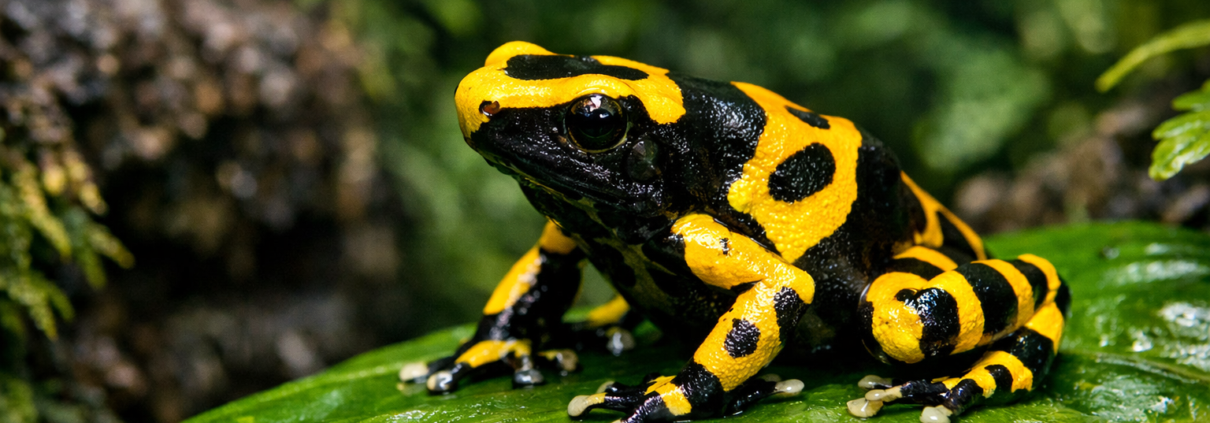
bumblebee dart frog
Last updated: April 14, 2026
Quick Answer: The bumblebee dart frog (Dendrobates leucomelas) is a bold yellow-and-black patterned poison dart frog native to Venezuela and northern South America. It’s one of the most popular dart frogs for hobbyists because it’s hardy, active during the day, and visually striking. In captivity, these frogs are non-toxic, making them safe to keep when fed a captive diet.
- Display 9 Products per page
Key Takeaways
- 🐸 Species: Dendrobates leucomelas — commonly called the bumblebee dart frog or yellow-and-black dart frog
- 🌿 Origin: Venezuela, Guyana, Brazil, and Colombia — tropical rainforest environments
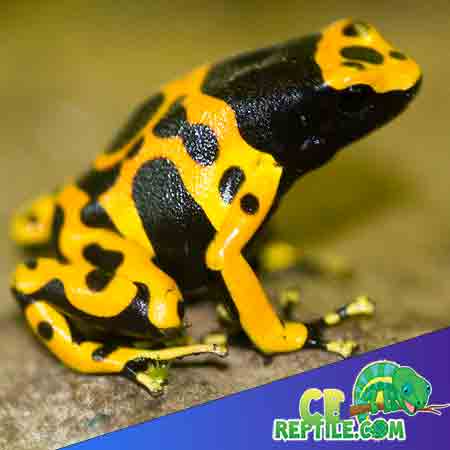
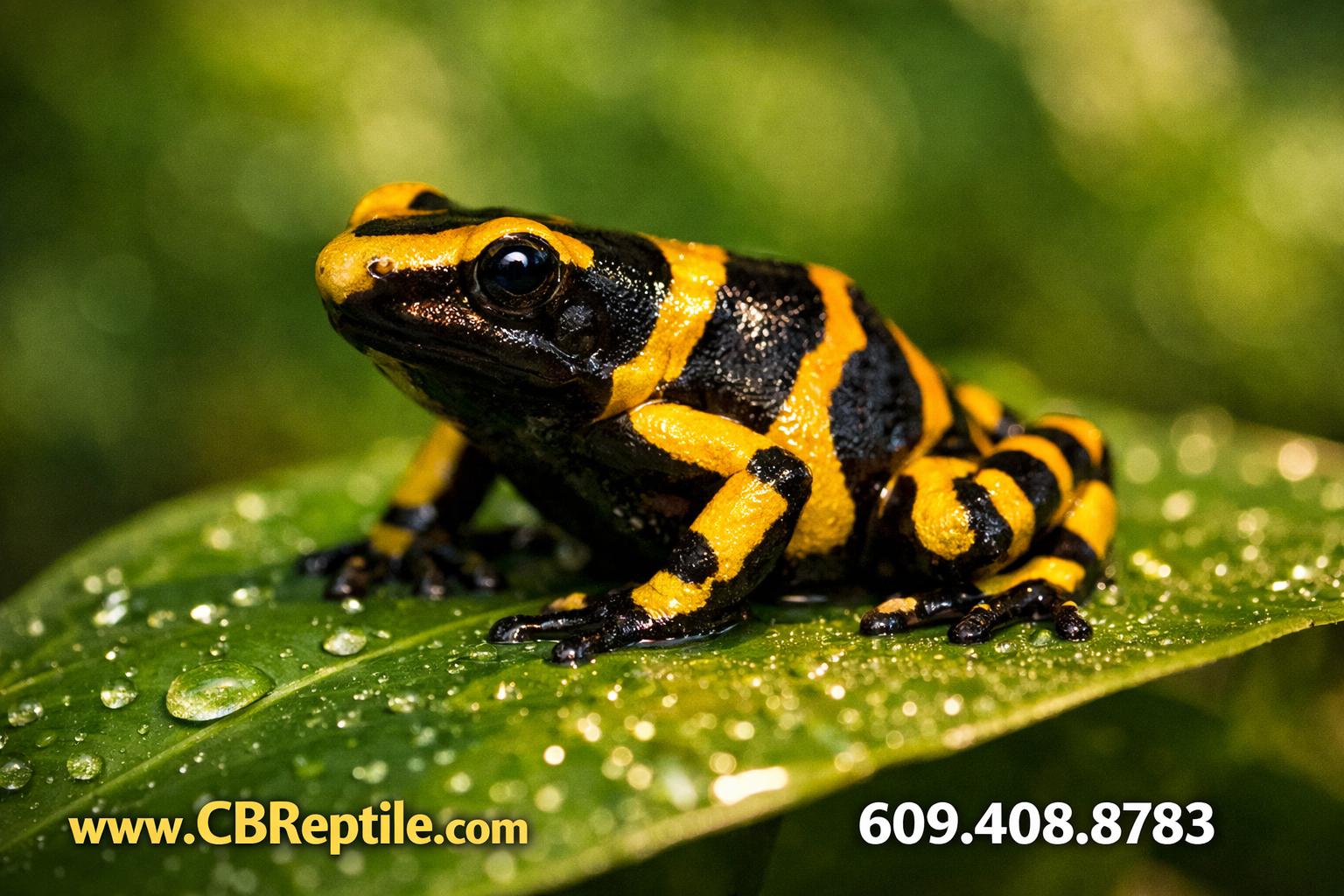
- 🎨 Color: Bright yellow body with bold black banding — pattern varies by locality
- 📦 Size: Adults reach 1.5 to 2 inches; one of the larger dart frog species
- 🌡️ Temperature: Keep between 72°F and 80°F; avoid temperatures above 85°F
- 💧 Humidity: Maintain 80–100% humidity with daily misting
- 🦟 Diet: Fruit flies (Drosophila), springtails, and vitamin/mineral supplements
- 🏠 Housing: Minimum 10-gallon vertical terrarium for a pair; bioactive setups are ideal
- ⚠️ Toxicity: Non-toxic in captivity — wild toxicity comes from their natural diet
- 🛒 Sourcing: Always buy captive-bred frogs from a reputable breeder like CB Reptile
What Is the Bumblebee Dart Frog?
The bumblebee dart frog is a small, diurnal (daytime-active) amphibian in the family Dendrobatidae. It’s one of the most recognizable poison dart frogs in the hobby, thanks to its vivid yellow and black pattern that mimics the coloration of a bumblebee — hence the name.
Unlike many other dart frog species that are shy or cryptic, Dendrobates leucomelas is bold and active. Keepers often describe them as “personable” because they move around the enclosure throughout the day and respond to their keeper’s presence. This makes them one of the best dart frog species for beginners and experienced hobbyists alike.
Key facts at a glance:
| Feature | Detail |
|---|---|
| Scientific name | Dendrobates leucomelas |
| Common names | Bumblebee dart frog, yellow-and-black dart frog |
| Adult size | 1.5 – 2 inches (3.8 – 5 cm) |
| Lifespan (captive) | 10 – 15 years (estimated) |
| Activity pattern | Diurnal (active during the day) |
| Difficulty level | Beginner to intermediate |
| Toxicity in captivity | None |
Where Do Bumblebee Dart Frogs Come From?
Bumblebee dart frogs are native to the tropical rainforests of northern South America, primarily Venezuela, with populations also found in Guyana, Brazil, and Colombia. They live in humid lowland forests and rocky outcroppings near streams, where they forage for small invertebrates on the forest floor and in leaf litter.
In the wild, their bold coloration serves as aposematic warning coloration — a signal to predators that they’re toxic. That toxicity comes entirely from their wild diet of ants, mites, and other arthropods that contain alkaloid compounds. Captive-bred frogs fed fruit flies and springtails carry no toxins at all.
Important note for buyers: Wild-caught dart frogs are rarely available in the U.S. hobby market and should be avoided. Captive-bred bumblebee dart frogs from reputable sources are healthier, parasite-free, and already adapted to captive conditions.
How Do You Set Up a Bumblebee Dart Frog Habitat?
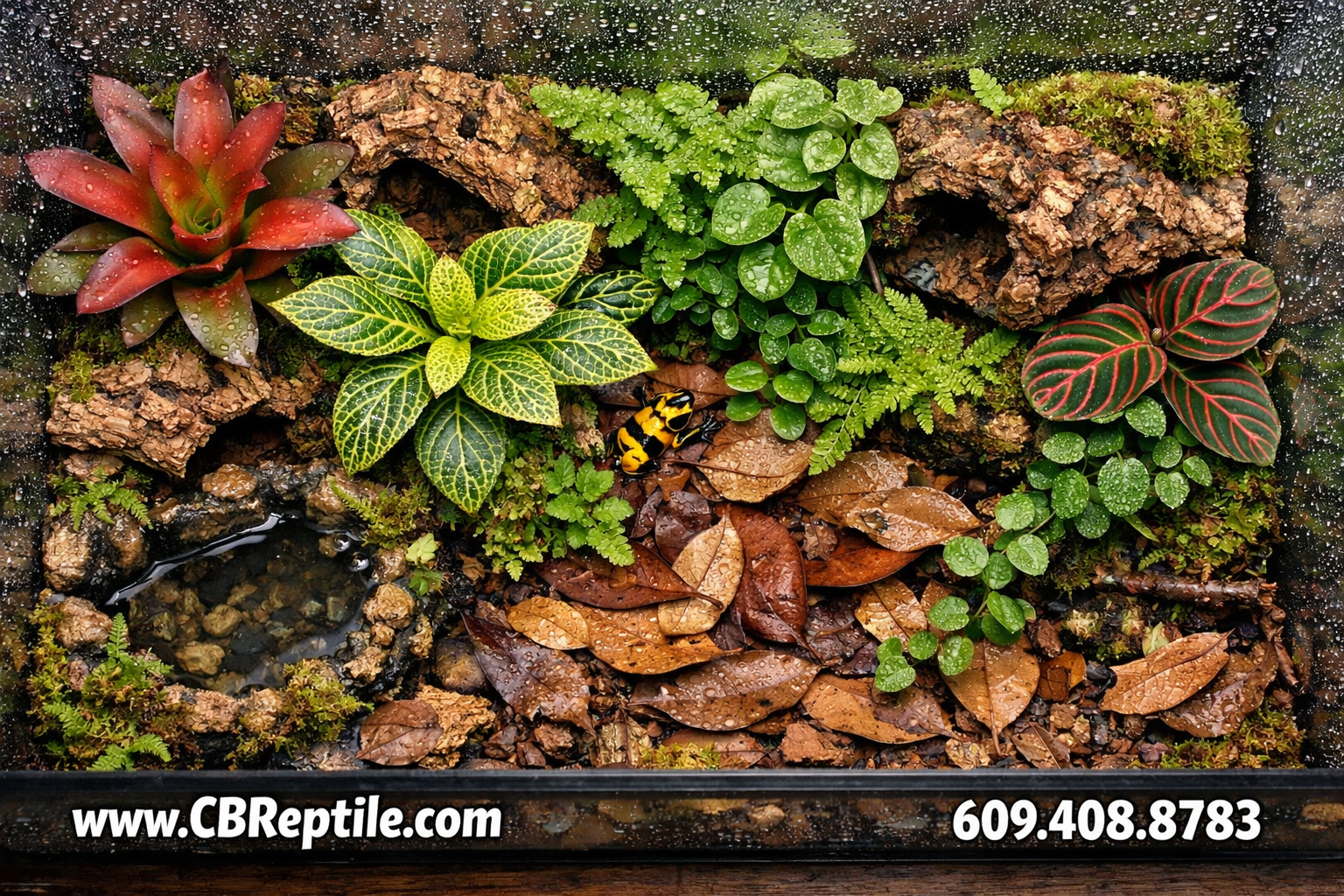
A proper habitat is the single most important factor in keeping bumblebee dart frogs healthy long-term. These frogs need high humidity, stable temperatures, and a bioactive environment with live plants and leaf litter.
Enclosure Size
- Minimum for 1–2 frogs: 10-gallon vertical terrarium (18″ x 18″ x 18″ is ideal)
- For a group of 3–4: 20-gallon or larger; these frogs can be territorial
- Orientation: Vertical enclosures are preferred because dart frogs climb and use vertical space
Temperature and Humidity
- Daytime temperature: 74°F – 80°F
- Nighttime drop: Down to 68°F – 72°F is fine and actually beneficial
- Humidity: 80–100% at all times; mist the enclosure once or twice daily
- Avoid: Temperatures above 85°F — heat stress can be fatal
Substrate and Decor
A bioactive setup works best. Use a drainage layer (clay balls or foam), then a substrate layer of coconut fiber, sphagnum moss, and organic topsoil. Add:
- Live tropical plants (bromeliads, pothos, ficus pumila)
- Cork bark tubes and flats for hiding spots
- Leaf litter (magnolia or oak leaves) for natural foraging behavior
- A small shallow water dish or misting system
For more ideas on building naturalistic enclosures, check out our Pacman frog habitat guide — many of the same bioactive principles apply to dart frogs.
Lighting
Dart frogs don’t require UVB lighting the way reptiles do, but a full-spectrum LED or T5 fluorescent light on a 12-hour cycle supports plant growth and mimics natural day/night rhythms. Keep lighting consistent year-round.
What Do Bumblebee Dart Frogs Eat?
Bumblebee dart frogs eat small live invertebrates. In captivity, their diet centers on fruit flies and springtails, supplemented with vitamins and calcium.
Primary Food Sources
- Fruit flies (Drosophila melanogaster and D. hydei): The staple of any dart frog diet. D. melanogaster is smaller and ideal for juveniles; D. hydei is larger and better for adults.
- Springtails (Collembola): Excellent supplemental feeders that also help clean the enclosure by consuming mold and waste.
- Isopods (small species): Can be added to a bioactive setup as a cleanup crew and occasional food source.
Feeding Schedule and Supplements
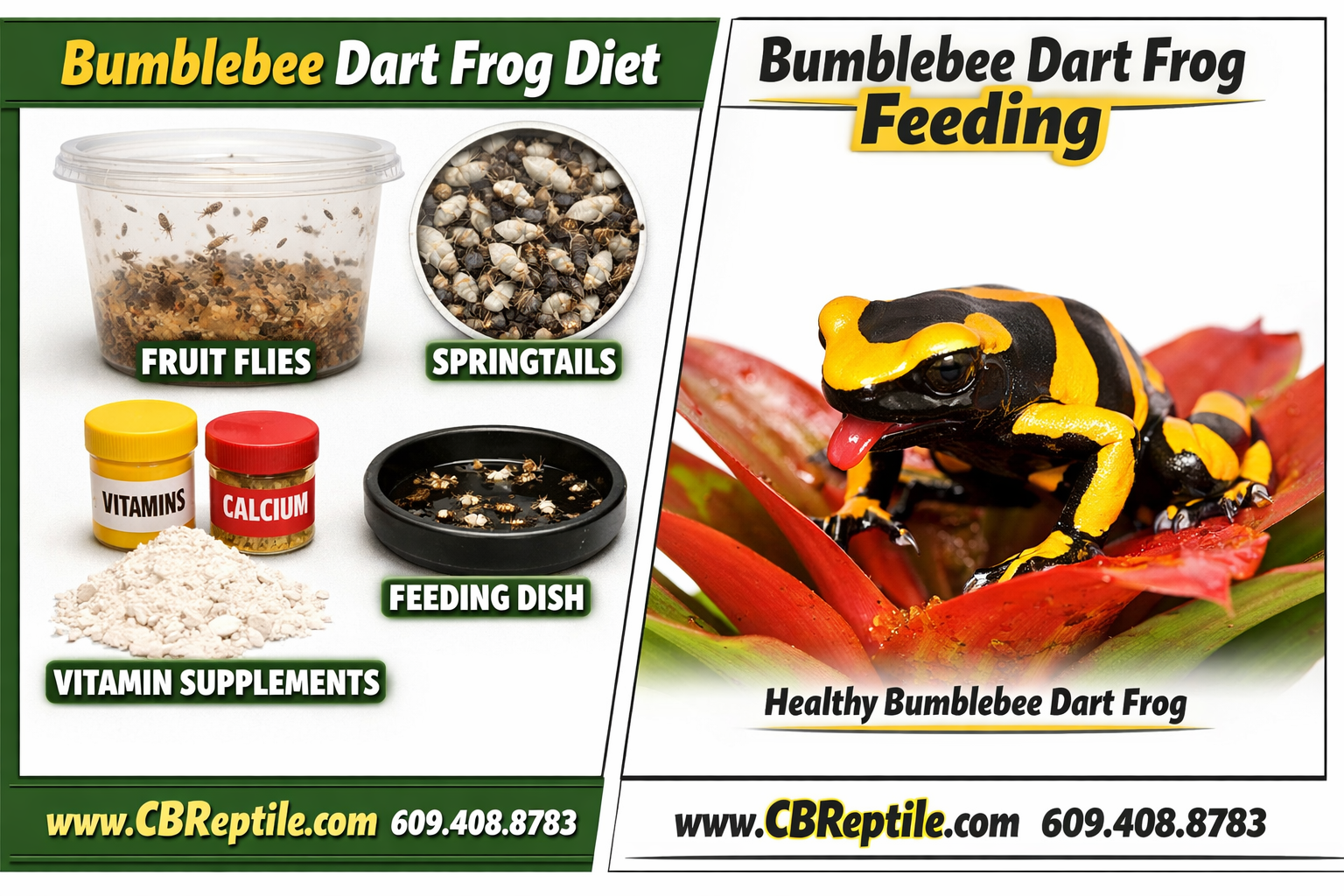
Feed adult bumblebee dart frogs every 2–3 days. Juveniles should be fed daily or every other day to support growth.
Supplement protocol:
- Dust fruit flies with a calcium + vitamin D3 supplement 2–3 times per week
- Use a multivitamin supplement (such as Repashy Calcium Plus) once per week
- Rotate supplements to avoid over-supplementation
Common mistake: Over-supplementing with vitamin A can cause toxicity in dart frogs. Use supplements as directed and rotate products rather than doubling up.
What Are the Popular Color Morphs of the Bumblebee Dart Frog?
The bumblebee dart frog has several locality-based color forms that vary in their yellow intensity, black banding width, and pattern. These aren’t artificially created morphs like in leopard geckos — they’re natural geographic variants.
Common Locality Variants
| Locality/Variant | Description |
|---|---|
| Standard | Classic bright yellow with bold black bands; most common in the hobby |
| Nominant Venezuela | Deep golden-yellow with thick, well-defined black banding |
| Trinidad | Slightly paler yellow; narrower black markings |
| High Yellow | Selectively bred for maximum yellow coverage; less black visible |
| Banded | Nearly equal yellow and black striping; striking contrast |
All locality variants share the same care requirements. The visual differences are entirely cosmetic and don’t affect temperament or hardiness.
For comparison, other popular dart frog species available in 2026 include:
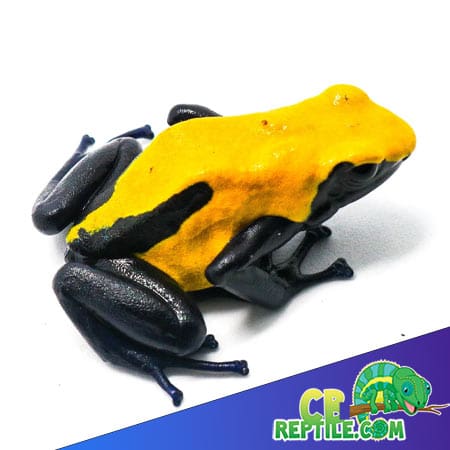
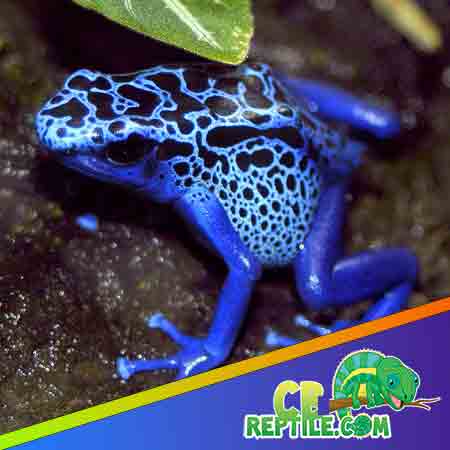
- Blue poison dart frog (Dendrobates tinctorius “azureus”) — brilliant blue with black spots
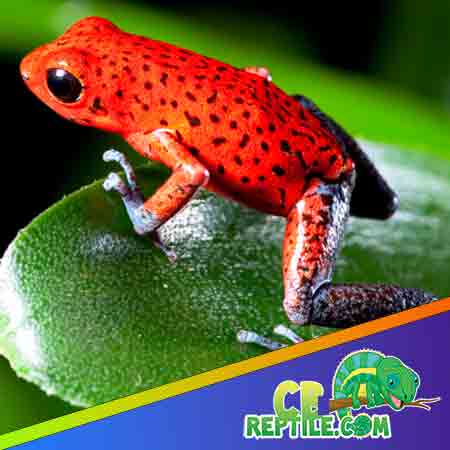
- Strawberry dart frog (Oophaga pumilio) — red, orange, or blue depending on locality
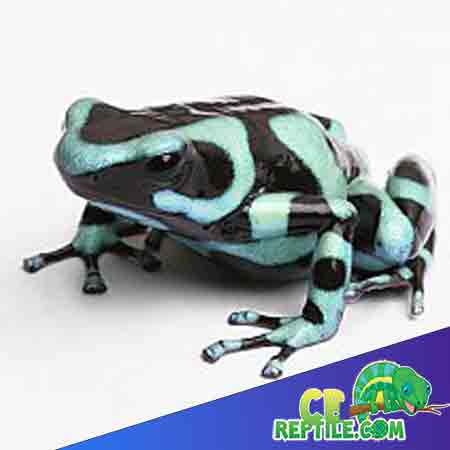
- Green-and-black dart frog (Dendrobates auratus) — metallic green with black markings
- Ranitomeya species — tiny thumbnail frogs with intricate patterns
If you’re exploring other colorful reptiles and amphibians, CB Reptile also offers a wide selection of dart frogs for sale across multiple species and morphs.
How Do Bumblebee Dart Frogs Compare to Other Dart Frog Species?
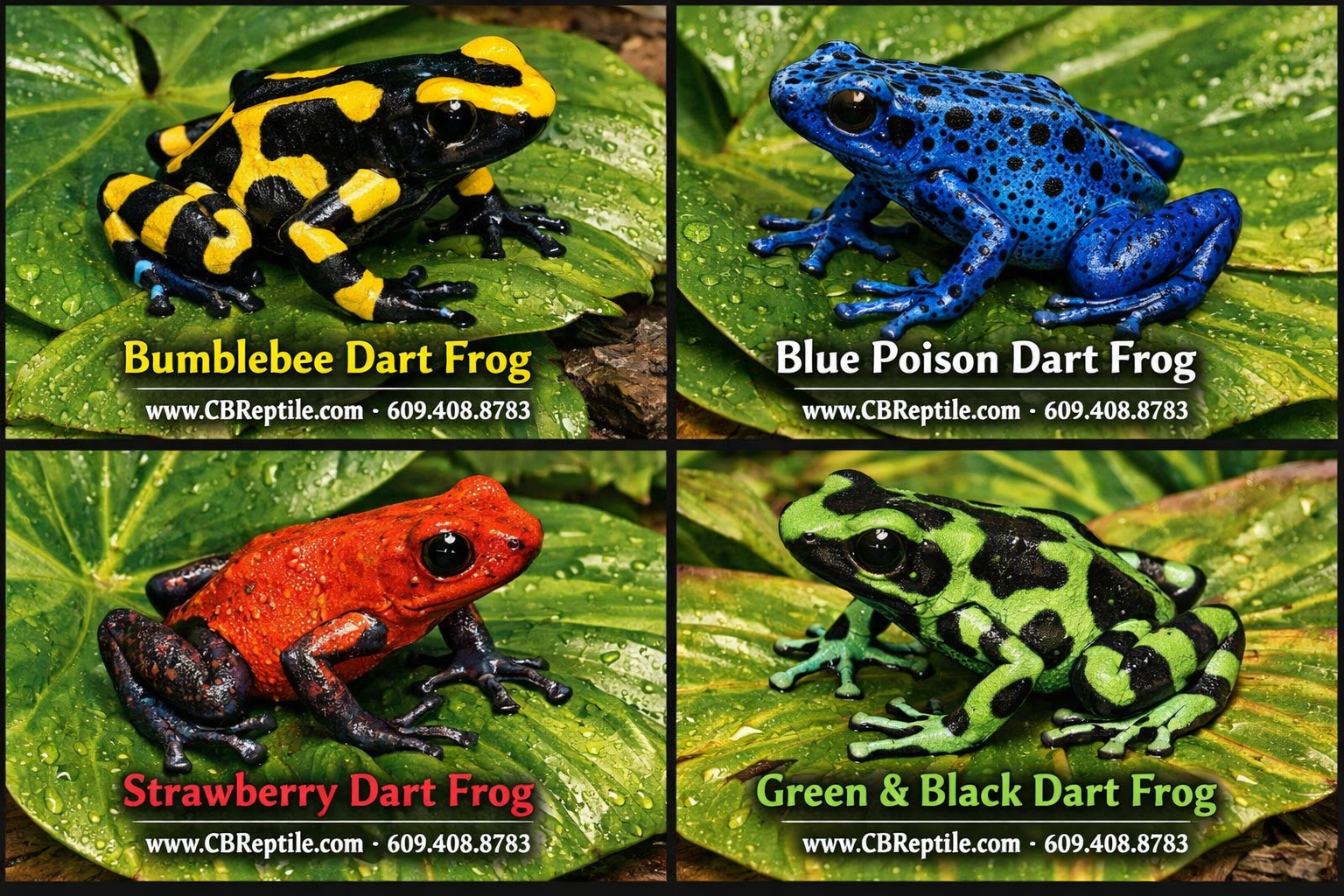
Bumblebee dart frogs are often recommended as a starting point in the dart frog hobby. Here’s how they compare to other commonly kept species:
| Species | Size | Difficulty | Boldness | Price Range (est. 2026) |
|---|---|---|---|---|
| D. leucomelas (Bumblebee) | 1.5–2″ | Beginner | Very bold | $40–$80 |
| D. tinctorius (Tinc) | 1.5–2″ | Beginner | Bold | $50–$120 |
| O. pumilio (Strawberry) | 0.75–1″ | Intermediate | Moderate | $60–$150 |
| R. imitator (Mimic) | 0.6–0.8″ | Advanced | Shy | $80–$200 |
| D. auratus (Green & Black) | 1–1.5″ | Beginner | Moderate | $35–$70 |
Choose bumblebee dart frogs if: You want a hardy, active, visually impressive frog that tolerates beginner mistakes better than most dart frog species.
Consider other species if: You want a smaller frog (Ranitomeya), a red morph (Oophaga pumilio), or a more varied pattern (D. tinctorius).
Where Should You Buy a Bumblebee Dart Frog?
Sourcing matters more than most new keepers realize. Captive-bred frogs from reputable breeders arrive healthy, parasite-free, and already eating fruit flies. Wild-caught frogs — when they appear — are stressed, often parasitized, and may refuse to feed.
CB Reptile is one of the top sources for poison dart frogs for sale in the United States. What sets CB Reptile apart from other online reptile retailers:
- Real animal biologist on site: CB Reptile employs an actual animal biologist — not just hobbyist staff — who oversees animal health, husbandry protocols, and quality control. This is rare in the reptile industry and makes a measurable difference in the animals you receive.
- Overnight shipping: All frogs ship overnight via FedEx Priority to minimize transit stress. Live arrival is guaranteed.
- Captive-bred only: Every animal is captive-bred, meaning no wild collection, no smuggled animals, and no legal gray areas.
- Health guarantee: Animals are feeding-verified before shipping.
You can view currently available bumblebee poison dart frogs for sale directly on the CB Reptile website. For a broader selection of amphibians and reptiles, reptiles for sale are also available through trusted partners.
Before purchasing, review CB Reptile’s refund and live arrival policy so you understand exactly what’s covered.
How Do You Breed Bumblebee Dart Frogs?
Bumblebee dart frogs breed readily in captivity when conditions are right. They’re one of the easier dart frog species to breed, which is part of why captive-bred specimens are widely available.
Sexing
Males are slightly smaller than females and have wider toe pads. Males also call — a soft buzzing trill — especially in the morning. Females are generally larger and rounder when gravid (carrying eggs).
Breeding Triggers
- Introduce a slight “dry season” by reducing misting frequency for 2–4 weeks
- Then resume normal high humidity — this mimics seasonal rainfall and triggers breeding behavior
- Provide film canisters, coconut huts, or bromeliad axils as egg-laying sites
Egg and Tadpole Care
Females lay 2–12 eggs on a flat surface, which the male then guards and hydrates. Eggs hatch in 10–14 days. Tadpoles can be raised in small containers with aged water and tadpole diet (spirulina-based foods). Metamorphosis takes 60–90 days, and froglets emerge at about 0.5 inches.
For keepers interested in breeding other species, our panther chameleon breeding guide covers similar concepts around environmental triggers and egg care.
FAQ: Bumblebee Dart Frog
Q: Are bumblebee dart frogs poisonous as pets?
No. Captive-bred bumblebee dart frogs are completely non-toxic. Their wild toxicity comes from dietary alkaloids found in specific wild insects, which aren’t present in a captive fruit fly diet.
Q: Can you handle a bumblebee dart frog?
Handling should be minimal. These frogs are sensitive to oils and salts on human skin, and stress from handling can weaken their immune system. Observe them through the glass — they’re active enough to be entertaining without handling.
Q: How many bumblebee dart frogs can I keep together?
A pair (1 male, 1 female) works well in a 10-gallon. Groups of 3–4 can work in a 20-gallon or larger, but watch for aggression, especially between males.
Q: What temperature is too hot for bumblebee dart frogs?
Anything above 85°F is dangerous. These frogs come from cool, humid rainforests and do not tolerate heat spikes well. Keep a thermometer in the enclosure and avoid placing it near heat sources.
Q: Do bumblebee dart frogs need UVB lighting?
UVB is not strictly required, but a low-output UVB bulb (2.0 or 5.0) may support vitamin D3 synthesis and overall health. Full-spectrum LED lighting is the minimum for plant growth and natural behavior.
Q: How long do bumblebee dart frogs live?
In captivity with proper care, bumblebee dart frogs commonly live 10–15 years. Some well-kept individuals have reportedly exceeded this range, though verified long-term data is limited.
Q: What’s the difference between a bumblebee dart frog and a yellow-and-black dart frog?
They’re the same species — Dendrobates leucomelas. “Yellow-and-black dart frog” is simply a descriptive common name for the same animal.
Q: How often should I mist the enclosure?
Mist once or twice daily to maintain 80–100% humidity. Automated misting systems make this easier and more consistent. Never let the enclosure dry out completely.
Q: Can bumblebee dart frogs live with other frog species?
Generally, no. Mixing dart frog species is not recommended. Different species have different humidity, temperature, and social needs, and mixing can cause stress, competition, and disease transmission.
Q: Where can I find a reputable poison dart frog for sale?
CB Reptile is a top-rated source for poison dart frog for sale in the USA, with captive-bred animals, overnight shipping, and a biologist on staff. You can also browse reptile store online options for additional availability.
Conclusion
The bumblebee dart frog is one of the most rewarding amphibians you can keep. It’s visually stunning, active during the day, relatively forgiving for beginners, and long-lived when cared for properly. The key pillars of success are simple: a humid bioactive enclosure, a consistent fruit fly and springtail diet with proper supplementation, stable temperatures below 80°F, and a captive-bred animal from a trustworthy source.
Your next steps:
- Set up your enclosure first — have your bioactive terrarium running and stable for at least two weeks before adding frogs
- Start a fruit fly culture — you’ll need a steady supply before your frog arrives
- Source captive-bred only — visit CB Reptile’s bumblebee dart frog page to see current availability
- Read the refund policy — understand the live arrival guarantee before ordering
- Join the community — the dart frog hobby has active online forums where experienced keepers share locality-specific care tips
For broader reptile and amphibian care resources, the CB Reptile blog is a solid starting point, and our Pacman frog care guide covers many overlapping husbandry principles for tropical amphibians.
References
- Caldwell, J. P. (1996). The evolution of myrmecophagy and its correlates in poison frogs (Family Dendrobatidae). Journal of Zoology, 240(1), 75–101.
- Daly, J. W., Spande, T. F., & Garraffo, H. M. (2005). Alkaloids from amphibian skin: A tabulation of over eight-hundred compounds. Journal of Natural Products, 68(10), 1556–1575.
- Vences, M., & Glaw, F. (2003). Phylogeography, systematics and conservation status of poison frogs (Amphibia, Dendrobatidae). Salamandra, 39(3/4), 181–206.
- Zimmermann, H., & Zimmermann, E. (1994). Etho-Taxonomie und zoogeographische Artengruppenbildung bei Pfeilgiftfröschen (Anura: Dendrobatidae). Salamandra, 30(4), 201–214.