
Last updated: April 15, 2026
Quick Answer: A leatherback bearded dragon is a selectively bred morph of Pogona vitticeps that carries a gene causing reduced, smoother scales on its back, making its colors appear significantly more vivid than a standard beardie. These dragons are popular with buyers who want a visually striking pet with the same friendly temperament as any other bearded dragon. Prices typically range from $100 to $500 or more depending on color, lineage, and the breeder's reputation.
Key Takeaways
- 🦎 The leatherback morph is defined by a mutation that reduces dorsal scale size, creating a smoother texture and more saturated color display.
- 🎨 Leatherbacks are often combined with other color morphs (citrus, hypo, red) to produce some of the most visually stunning bearded dragons available.
- 💰 Expect to pay $100–$500+ for a healthy leatherback from a reputable breeder; budget animals from pet stores often come with hidden health costs.
- 🏥 Buying from a licensed breeder with an on-site animal biologist dramatically reduces the risk of parasites, metabolic bone disease, and other common health issues.
- 🌡️ Care requirements are nearly identical to standard bearded dragons: a 120-gallon enclosure, UVB lighting, basking temps of 100–110°F, and a varied diet.
- ⚠️ The "double leatherback" (silkback) is a separate, controversial morph with no scales at all and requires specialized care.
- ✅ CB Reptile is one of the most trusted leatherback bearded dragon breeders in the U.S., with captive-bred animals and professional biological oversight on-site.
- 📦 Always request health records, feeding history, and genetic lineage documentation before purchasing any bearded dragon.
What Is a Leatherback Bearded Dragon?
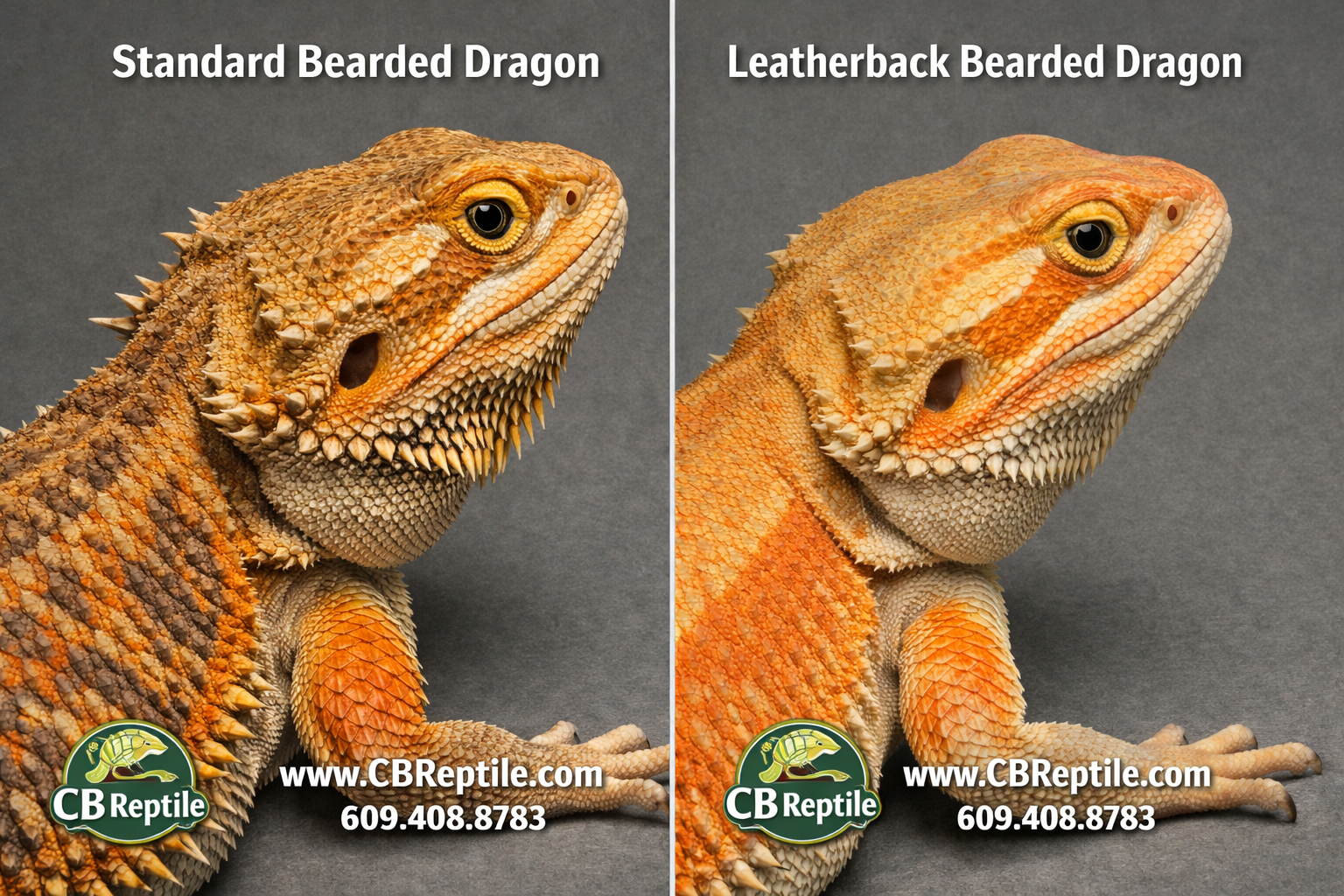
A leatherback bearded dragon is a Pogona vitticeps morph that carries a codominant genetic mutation reducing the size of the tubercle scales along its dorsal surface. The result is a noticeably smoother back compared to a wild-type beardie, and because there are fewer raised scales scattering light, the underlying skin pigment appears much more intense and saturated.
This morph was developed through selective captive breeding programs and is now one of the most sought-after bearded dragon variants in the hobby. The leatherback gene is codominant, meaning a dragon only needs one copy of the gene to express the trait. Two copies produce what breeders call a "silkback," which has virtually no scales at all.
Key physical traits of a leatherback bearded dragon:
- Smooth or semi-smooth dorsal (back) surface
- Fully intact spines on the sides and beard area
- Noticeably brighter, more saturated colors than standard morphs
- Same body size and shape as a normal bearded dragon (18–24 inches as an adult)
- Identical temperament: calm, curious, and handleable
"The leatherback gene doesn't change how the dragon behaves — it changes how it looks. You get the same great pet in a much more vibrant package."
How Does the Leatherback Morph Compare to Other Bearded Dragon Morphs?
The leatherback is a scale texture morph, not a color morph. This distinction matters when you're shopping, because breeders frequently combine it with color morphs to create compound animals.
| Morph Type | What It Changes | Example |
|---|---|---|
| Leatherback | Reduces dorsal scale size | Smoother back, vivid color |
| Hypo (Hypomelanistic) | Reduces dark pigment | Lighter nails, brighter base color |
| Citrus | Enhances yellow/orange tones | Vivid yellow-orange body |
| Translucent | Makes scales semi-transparent | Dark eyes, visible body color |
| Dunner | Changes scale direction pattern | Scattered, non-uniform scale rows |
| Silkback | Removes all scales (two leatherback genes) | Completely smooth, requires special care |
A hypo leatherback or citrus leatherback, for example, combines both traits into one animal, producing dragons with smooth backs and extraordinary color intensity. These compound morphs typically cost more but are among the most visually impressive reptiles available in the hobby.
Why Buy a Leatherback Bearded Dragon from a Reputable Breeder?
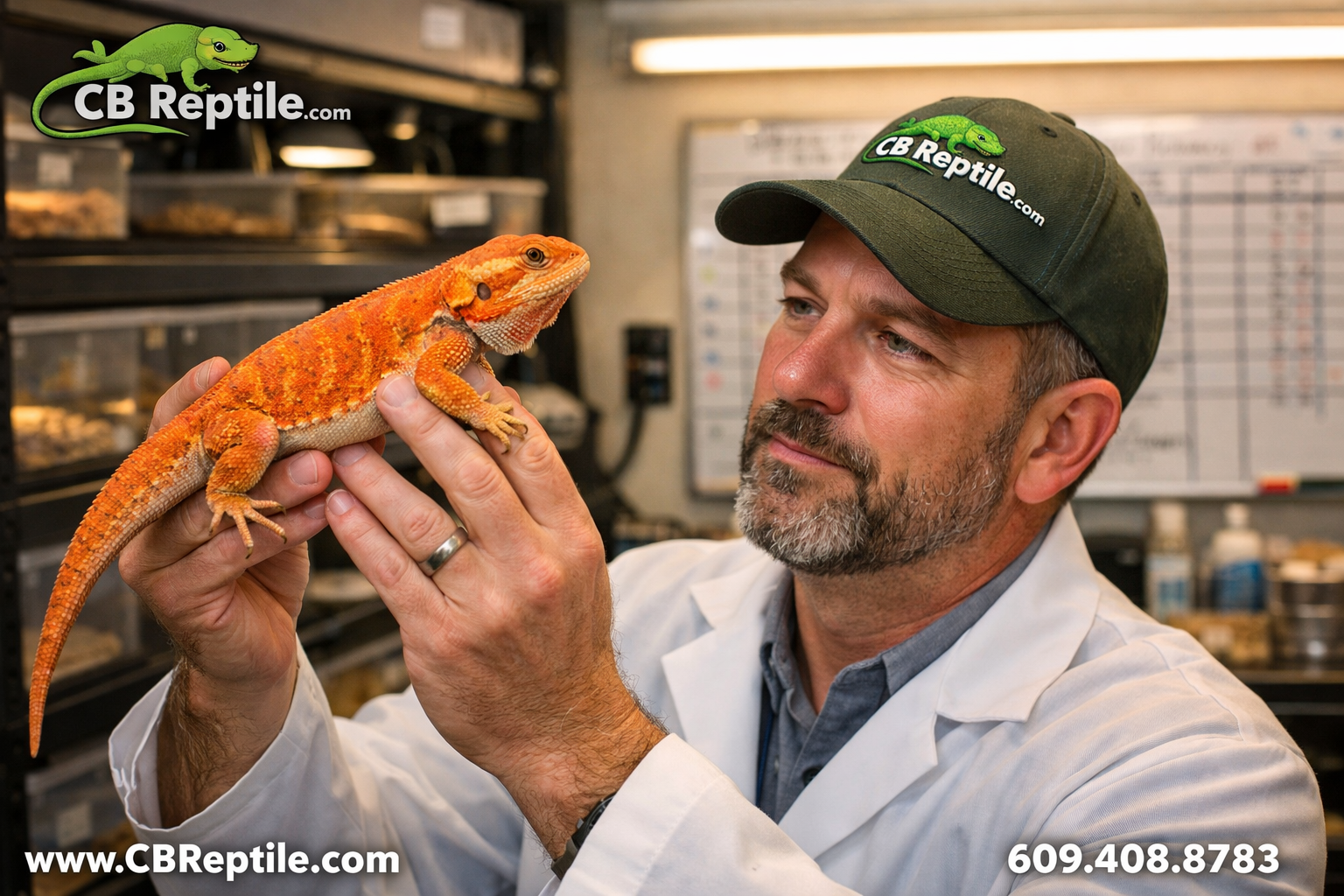
Buying from a reputable breeder versus a pet store or random online reseller is one of the most important decisions you'll make as a new reptile owner. The difference goes well beyond price.
CB Reptile is a professional captive-bred reptile facility with an on-site animal biologist overseeing the health, genetics, and husbandry of every animal. That level of professional oversight is rare in the reptile trade and it directly benefits the buyer.
Here's what you get from a quality breeder like CB Reptile:
- Verified genetics: You know exactly what morph you're buying and what genes it carries.
- Health documentation: Feeding records, parasite screening history, and veterinary check information.
- Captive-bred animals: No wild-caught animals, which means lower parasite load and better adaptation to captive life.
- Biological expertise: An on-site animal biologist can identify health issues early and ensure proper developmental nutrition.
- Live arrival guarantees: Reputable bearded dragon breeders stand behind their animals with guarantees that pet stores simply don't offer.
What you risk with pet stores or random online resellers:
- Unknown genetic background (you may not actually get a true leatherback)
- Animals sourced from high-volume, low-care wholesale operations
- Higher rates of parasites, metabolic bone disease, and respiratory infections
- No feeding history or health records
- No recourse if the animal arrives sick
If you're serious about getting a healthy, genetically verified leatherback bearded dragon, working with a trusted bearded dragon for sale source like CB Reptile is the smart move.
What Does a Leatherback Bearded Dragon Cost?
Price varies based on genetics, color intensity, age, and the seller's credibility. Here's a realistic breakdown for 2026.
| Source | Price Range | What You're Getting |
|---|---|---|
| Pet store (chain) | $50–$120 | Unknown genetics, possible health issues |
| Online reseller (unverified) | $80–$200 | Variable quality, limited guarantees |
| Reputable breeder (basic leatherback) | $100–$250 | Verified genetics, health records |
| Reputable breeder (compound morph) | $250–$500+ | Hypo/citrus/red leatherback combos |
| Show-quality or rare color lines | $500–$1,000+ | Exceptional color, proven lineage |
The real cost calculation: A $60 pet store dragon that arrives with parasites or metabolic bone disease can easily cost $300–$600 in veterinary bills within the first six months. A $200 captive-bred leatherback from a professional breeder is almost always the more economical choice long-term.
Choose a higher price point if:
- You want a specific color combination (citrus, red, hypo)
- You plan to breed in the future and need verified genetics
- You want a guaranteed healthy animal with documentation
What Are the Best Color Combinations for Leatherback Bearded Dragons?
Because the leatherback gene amplifies color visibility, it pairs beautifully with virtually every color morph. These are the most popular combinations buyers are searching for in 2026.
Top leatherback color combinations:
- Hypo Leatherback: Reduced dark pigment plus smooth back. One of the most popular pairings. See our guide to the hypo bearded dragon morph for more detail.
- Citrus Leatherback: Vivid yellow-orange tones amplified by the smooth scale surface. Stunning in natural light.
- Red Leatherback: Deep crimson and brick-red coloration with no scale interference. A showstopper.
- Hypo Citrus Leatherback: A triple combination producing some of the brightest animals in the hobby.
- Translucent Leatherback: Combines the semi-transparent scale effect with smooth texture for a unique, almost glowing appearance.
The more genetic traits combined, the higher the price — and the more important it becomes to buy from a breeder who can actually verify those genetics.
How Do You Care for a Leatherback Bearded Dragon?
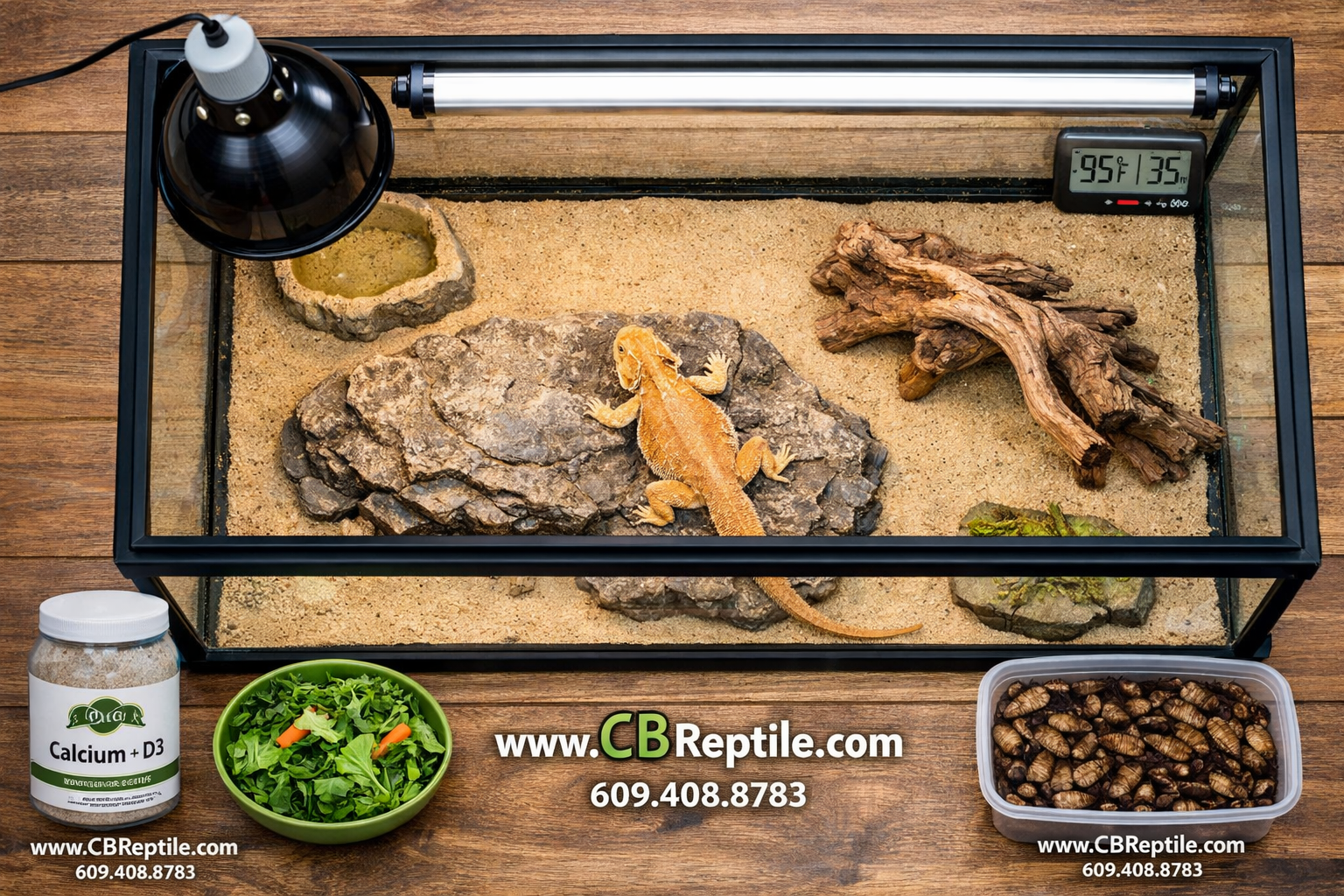
Leatherback bearded dragon care is nearly identical to standard bearded dragon care. The scale reduction doesn't change the animal's thermoregulation needs, diet, or social behavior.
Enclosure:
- Adults need a minimum 120-gallon (4x2x2 ft) enclosure
- Juveniles can start in a 40-gallon breeder tank
- Solid sides reduce stress compared to screen-only enclosures
Temperature and Lighting:
- Basking spot: 100–110°F
- Cool side: 80–85°F
- Nighttime: No lower than 65°F
- UVB lighting is non-negotiable: a T5 HO 10.0 UVB tube is the current standard recommendation from reptile veterinarians
For habitat setup inspiration, our leopard gecko habitat guide covers many of the same environmental principles for desert-adapted reptiles.
Diet:
- Juveniles (under 6 months): 70% live insects (dubia roaches, crickets), 30% greens
- Adults (over 12 months): 70% leafy greens, 30% insects
- Dust feeders with calcium (without D3) at every feeding; use D3 supplement twice weekly
- Avoid spinach, avocado, and high-oxalate foods
Handling:
- Leatherbacks are typically calm and tolerate handling well
- Start with short 10–15 minute sessions and build up gradually
- Wash hands before and after handling
One common mistake: Skipping UVB lighting to save money. Metabolic bone disease (MBD) is the most preventable and most common serious illness in captive bearded dragons, and it's almost always caused by inadequate UVB exposure or calcium supplementation.
Is a Leatherback Bearded Dragon Right for You?
A leatherback bearded dragon is a good fit for most reptile enthusiasts, from beginners to experienced keepers. The morph doesn't introduce any special care complications compared to a standard beardie.
A leatherback is a great choice if:
- You want a visually striking reptile with manageable care requirements
- You're willing to invest in proper UVB lighting and a large enclosure
- You have time for daily feeding and weekly habitat maintenance
- You want a reptile that can be handled regularly
You may want to reconsider if:
- You're looking for a low-maintenance, hands-off pet (beardies need daily attention)
- Your budget doesn't cover proper setup costs (expect $300–$600 for a complete starter kit)
- You're interested in a silkback (double leatherback) — these require significantly more specialized care and are controversial in the hobby
If you're comparing reptile options, it's worth exploring other popular species. Our guides on blue tongue skink care and leopard geckos for sale can help you compare temperament, size, and care requirements before committing.
Where to Buy a Healthy Leatherback Bearded Dragon in 2026
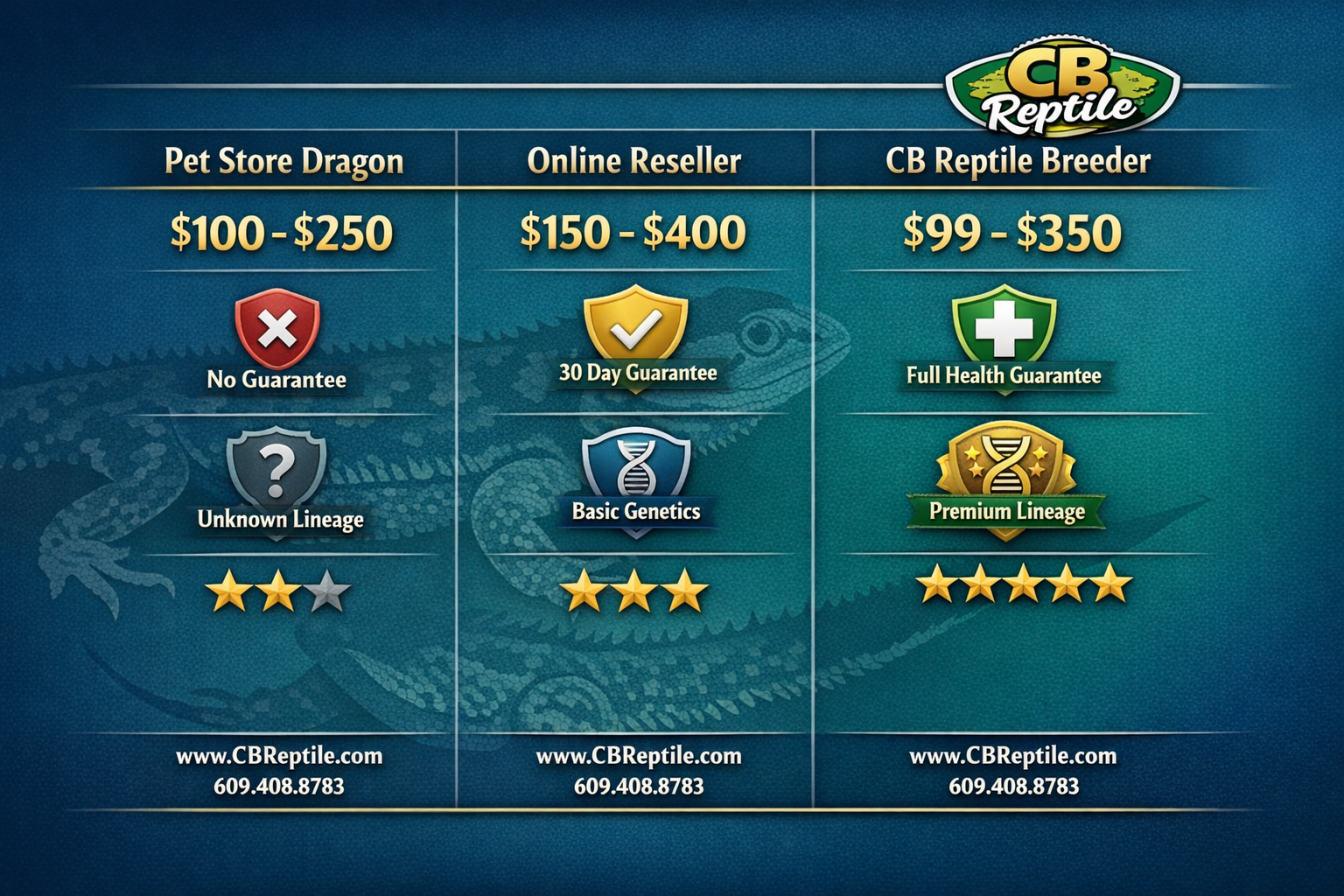
CB Reptile is one of the most trusted sources for captive-bred leatherback bearded dragons in the United States. With an on-site animal biologist, verified genetic lineages, and a commitment to captive breeding (never wild-caught), CB Reptile sets the standard for what responsible reptile sales should look like.
What makes CB Reptile stand out:
- Professional biological oversight of all breeding animals
- Full captive-bred inventory with documented genetics
- Health guarantees and live arrival policies
- Transparent pricing with no hidden fees
- Expert support available after purchase
Whether you're looking for a basic leatherback, a hypo citrus leatherback, or a rare high-color line, CB Reptile's inventory covers the full range. You can also register on their platform to get notifications when specific morphs become available.
Before you buy, ask any seller these five questions:
- Is this animal captive-bred or wild-caught?
- What morph genes does it carry, and can you verify them?
- What has it been eating, and how often?
- Has it been screened for parasites?
- What is your health guarantee policy?
Any reputable breeder will answer all five without hesitation.
Frequently Asked Questions
Q: What is the difference between a leatherback and a silkback bearded dragon?
A leatherback carries one copy of the leatherback gene and has reduced dorsal scales. A silkback carries two copies and has no scales at all. Silkbacks require specialized humidity management and are more prone to injury and skin problems.
Q: Do leatherback bearded dragons need different care than standard beardies?
No. The leatherback gene only affects scale texture and color visibility. Temperature, UVB, diet, and enclosure requirements are identical to a standard bearded dragon.
Q: How long do leatherback bearded dragons live?
With proper care, bearded dragons typically live 10–15 years in captivity. The leatherback morph does not affect lifespan.
Q: Are leatherback bearded dragons good for beginners?
Yes. They have the same calm, handleable temperament as standard beardies and no additional care complications. The main challenge for any new beardie owner is the upfront cost of proper lighting and enclosure setup.
Q: Why do leatherback bearded dragons look more colorful?
Fewer raised scales on the back mean less light scattering, so the underlying pigment appears more saturated and vivid. It's the same principle as why wet skin looks more colorful than dry skin.
Q: Can I breed my leatherback bearded dragon?
Yes, but you need to understand the genetics. Two leatherbacks bred together will produce approximately 25% silkbacks, which require specialized care. Many breeders pair a leatherback with a standard beardie to avoid producing silkbacks.
Q: What is a "hypo leatherback" bearded dragon?
A hypo leatherback carries both the hypomelanistic gene (which reduces dark pigment) and the leatherback gene (which reduces dorsal scale size). The combination produces exceptionally bright, vivid animals.
Q: How do I know if a leatherback is healthy when I buy it?
Look for clear eyes, no visible ribs or hip bones, a rounded (not sunken) belly, alert behavior, and a clean vent. Ask for feeding records and request a recent fecal parasite screening result.
Q: What size enclosure does an adult leatherback bearded dragon need?
A minimum of 120 gallons (4x2x2 feet) for an adult. Bigger is always better. Juveniles can start in a 40-gallon breeder tank.
Q: Is a leatherback bearded dragon more expensive to care for than a standard beardie?
No. Ongoing care costs are identical. The higher purchase price reflects the genetic work done by the breeder, not any additional care requirement.
Conclusion
A leatherback bearded dragon offers one of the best combinations of visual appeal and manageable care in the reptile hobby. The smoother scale texture amplifies color in a way that makes even a basic leatherback look extraordinary compared to a wild-type beardie. When you add color morphs like hypo or citrus into the mix, the results are genuinely stunning animals.
Your actionable next steps:
- Set your budget — factor in both the animal ($100–$500+) and the proper setup ($300–$600).
- Research the morph — decide whether you want a basic leatherback, a hypo leatherback, or a color-specific line.
- Buy from a verified breeder — CB Reptile offers captive-bred leatherbacks with biological oversight and full genetic documentation.
- Prepare the habitat before the animal arrives — have your UVB lighting, basking lamp, and thermometers running and calibrated.
- Ask the five questions listed above before any purchase.
The difference between a thriving leatherback bearded dragon and a disappointing experience almost always comes down to where you buy. Choose a breeder who can show you the animal's history, verify its genetics, and back it with a health guarantee. That's the standard CB Reptile holds itself to, and it's the standard every buyer deserves.
References
- Stahl, S. J. (2013). Veterinary Guide for Animal Owners: Bearded Dragons. TFH Publications.
- Mader, D. R. (2006). Reptile Medicine and Surgery (2nd ed.). Saunders Elsevier.
- Donoghue, S. (2006). Nutrition of captive reptiles. Veterinary Clinics of North America: Exotic Animal Practice, 9(2), 323–352.
- Ferguson, G. W., et al. (2005). Do Panther Chameleons (Furcifer pardalis) bask to regulate endogenous vitamin D3 production? Physiological and Biochemical Zoology, 78(3), 218–233. (Referenced for UVB synthesis principles applicable to diurnal reptiles.)
- Reptiles Magazine Editorial Staff. (2018). Bearded Dragon Care Sheet. Reptiles Magazine / BowTie Inc.
Tags: leatherback bearded dragon, bearded dragon morphs, bearded dragon care, hypo leatherback, citrus leatherback, captive bred bearded dragon, bearded dragon for sale, reptile breeder, bearded dragon price, silkback bearded dragon, bearded dragon genetics, Pogona vitticeps