
Last updated: April 15, 2026
Quick Answer: An orange bearded dragon is a color morph of Pogona vitticeps selectively bred to display vivid orange, tangerine, or rust-toned scales. These dragons are not found in the wild — they are the result of careful captive breeding programs. Prices range from roughly $100 for a basic orange juvenile to $500+ for a high-quality orange hypo or translucent morph from a reputable breeder.
Key Takeaways
- 🦎 Orange bearded dragons are selectively bred color morphs, not a separate species.
- 🔶 The intensity of orange coloration depends on genetics, morph type, lighting, temperature, and diet.
- 💰 Quality captive-bred orange dragons from reputable breeders cost more upfront but are far healthier than pet store animals.
- 🧬 Common orange morphs include hypo, citrus, red-orange, tangerine, and sandfire.
- 🏥 CB Reptile employs an on-site animal biologist, making their animals among the healthiest available.
- 📋 A proper enclosure for an adult orange bearded dragon requires a 120-gallon tank, UVB lighting, and a basking spot of 100–110°F.
- 🛒 Always buy from a licensed captive breeder — never from wild-caught sources or unverified online resellers.
- ⏳ Orange bearded dragons live 10–15 years in captivity with proper care.
- 🍊 Diet, UVB exposure, and stress levels all affect how vivid the orange coloration appears day to day.
What Exactly Is an Orange Bearded Dragon?
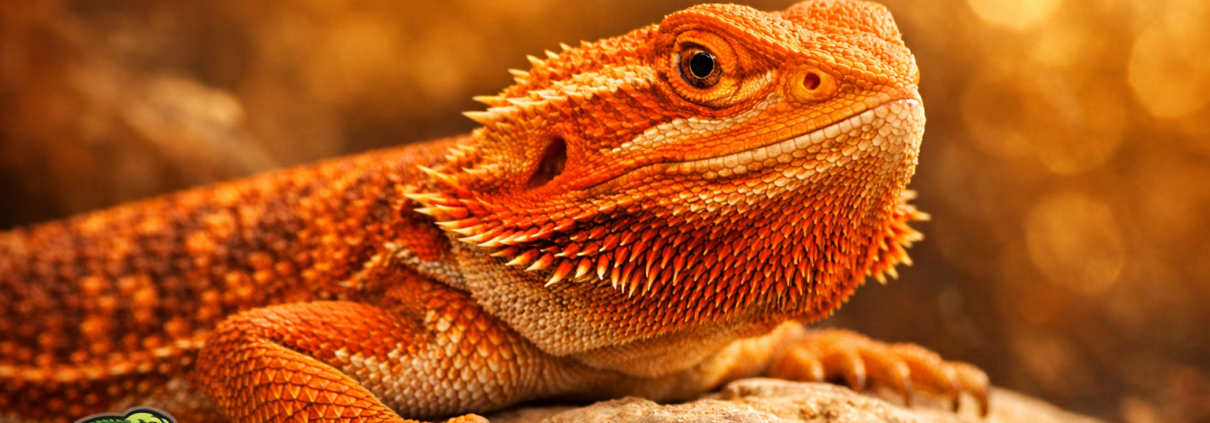
An orange bearded dragon is a captive-bred color morph of the central bearded dragon (Pogona vitticeps), selectively bred over generations to express vivid orange, tangerine, or rust-toned pigmentation across the body, limbs, and head. Wild bearded dragons are typically tan, brown, or dull yellow — the striking orange you see in breeder animals does not occur naturally.
The orange coloration comes from selective pairing of animals that carry genes for higher expression of red and yellow pigments (xanthophores and erythrophores). Over multiple breeding generations, breeders can lock in consistent, deep orange tones. The morph category an orange dragon falls into — hypo, citrus, sandfire, translucent — determines how the color is expressed and how stable it is across offspring.
Key point: "Orange bearded dragon" is a color description, not a single morph name. Several distinct genetic morphs can produce orange animals, and understanding the difference matters when you're shopping.
What Are the Main Orange Bearded Dragon Morphs?
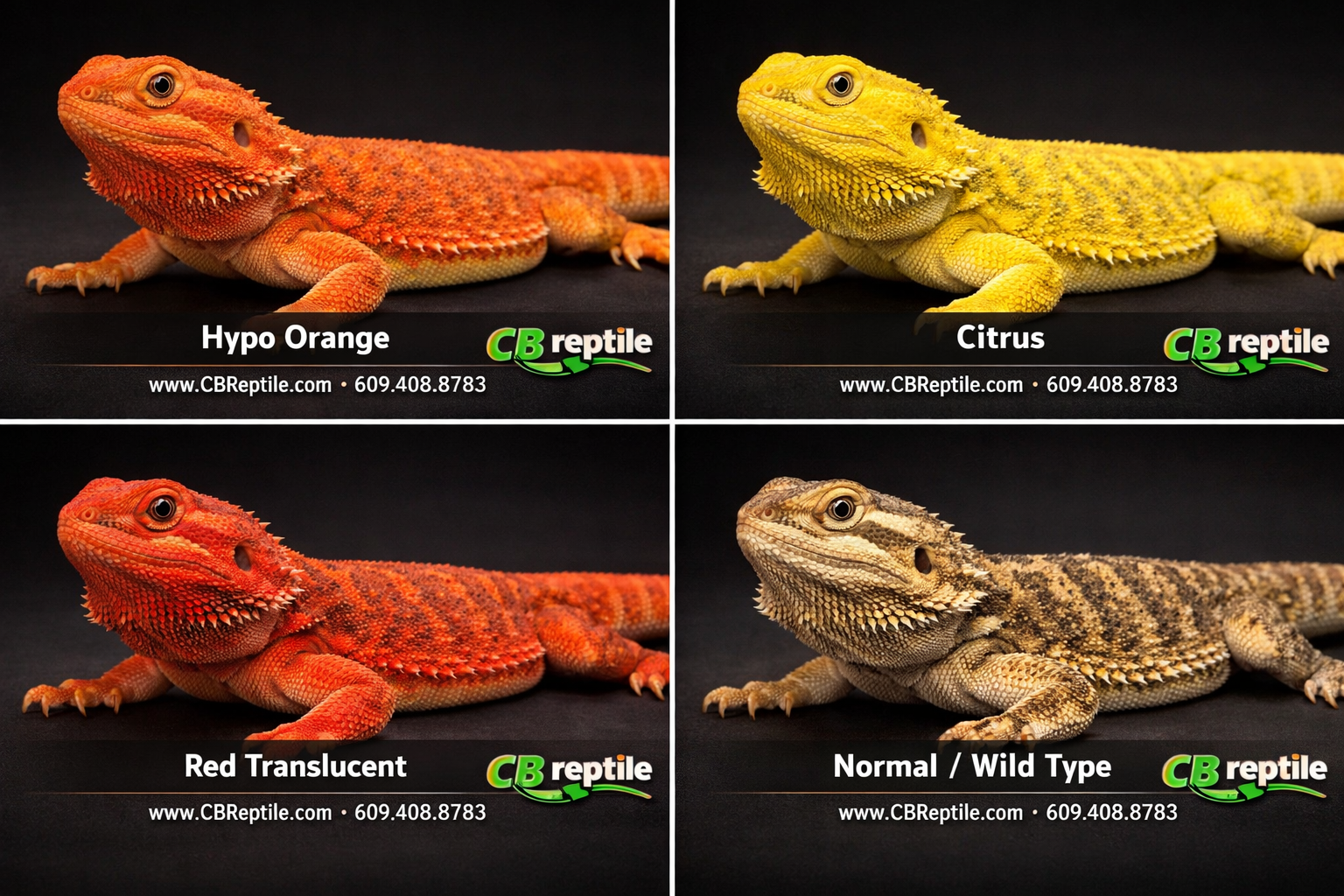
Several morph types produce orange coloration, and each has distinct visual and genetic characteristics. Choosing the right one depends on the intensity of color you want and your budget.
Hypo (Hypomelanistic) Orange
The hypo bearded dragon morph reduces black pigment (melanin) in the scales and nails, which allows orange and red tones to appear much brighter and cleaner. Hypo orange dragons are among the most popular because the color looks vivid even under normal lighting.
- Clear or near-clear nails (a reliable visual indicator of hypo genetics)
- Brighter, more saturated orange than standard morphs
- Can be combined with other morphs (e.g., hypo translucent) for even more dramatic results
Citrus Orange
Citrus bearded dragons display a yellow-orange blend that ranges from pale lemon to deep tangerine. When the citrus gene is combined with red or orange selective breeding lines, the result is a warm, glowing orange animal. Citrus morphs are generally more affordable than hypo animals.
Sandfire Orange
Sandfire is one of the original designer morph lines, developed in the 1990s. Sandfire dragons often display rich orange-red tones and are considered a foundation morph for many modern orange lines. Expect consistent, warm coloration with good pattern definition.
Translucent (Trans) Orange
Translucent morphs have semi-transparent scales that give the skin an almost glowing quality. When combined with orange selective breeding, the result is a dragon that appears to radiate color from within. Trans orange animals are rarer and typically more expensive.
Comparison Table: Common Orange Morphs
| Morph | Color Intensity | Rarity | Estimated Price Range |
|---|---|---|---|
| Standard Orange | Moderate | Common | $100–$200 |
| Citrus Orange | Moderate–High | Common | $150–$300 |
| Hypo Orange | High | Moderate | $200–$400 |
| Sandfire Orange | High | Moderate | $200–$350 |
| Trans Orange | Very High | Rare | $350–$600+ |
| Hypo Trans Orange | Extreme | Very Rare | $500–$900+ |
Prices are estimates based on typical breeder listings in 2026 and will vary by animal quality, age, and seller.
Why Buy an Orange Bearded Dragon from CB Reptile?
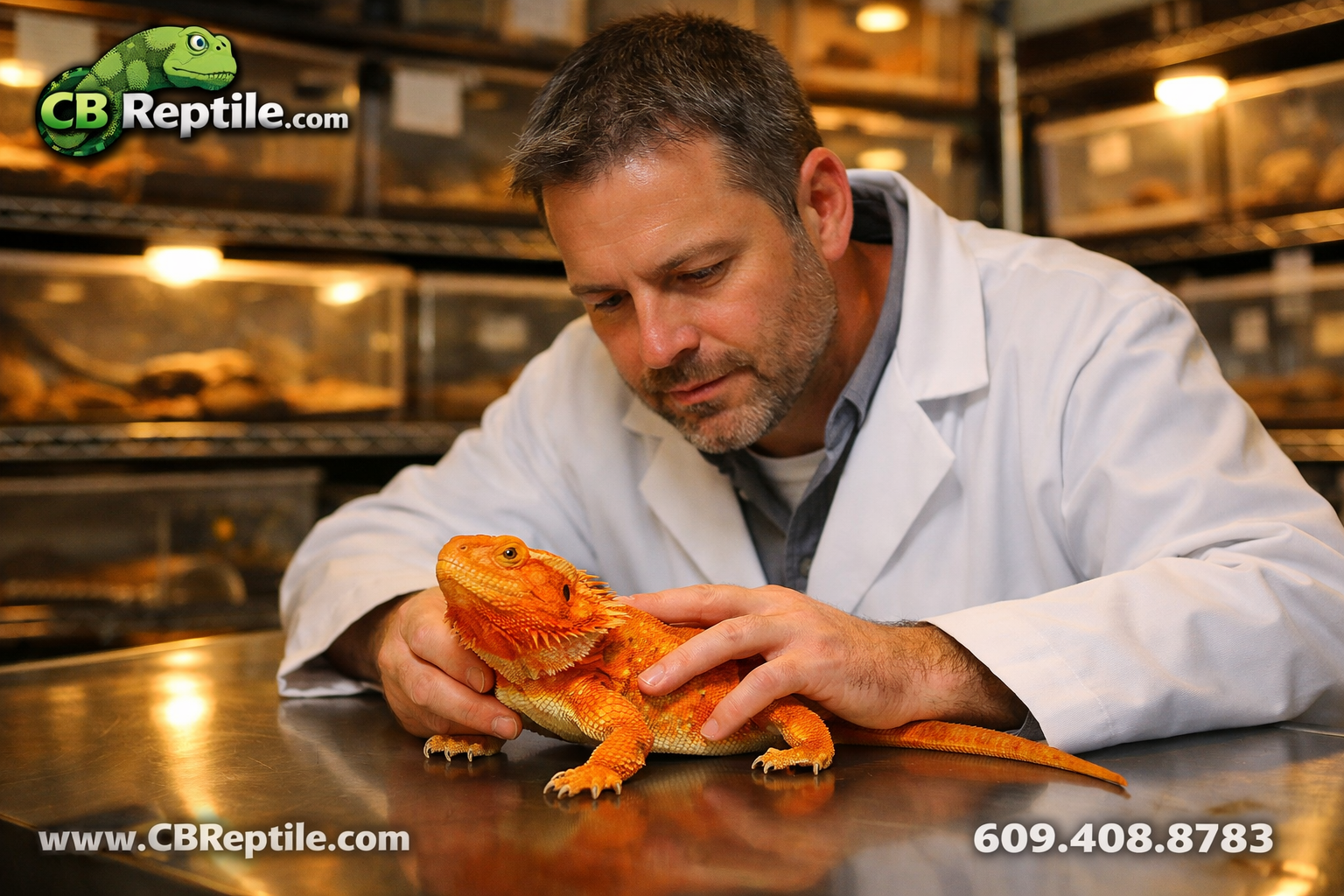
Buying from a reputable captive breeder is the single most important decision you'll make as a new bearded dragon owner. CB Reptile stands out as one of the top bearded dragon breeders in the country for several concrete reasons.
CB Reptile has an on-site animal biologist. This is not a marketing claim — it means every animal is evaluated by someone with formal training in animal health, genetics, and husbandry. Most pet stores and random online resellers cannot say the same. That expertise shows up in healthier animals, more accurate morph identification, and better genetic records.
All CB Reptile animals are captive-bred (CB). Wild-caught bearded dragons carry parasites, experience extreme stress during capture and transport, and often die within months of purchase. Captive-bred animals are raised in controlled environments, fed proper diets from hatching, and socialized to human contact. The difference in long-term survival rates is significant.
Breeder vs. Pet Store vs. Online Reseller
| Factor | CB Reptile (Breeder) | Pet Store | Random Online Reseller |
|---|---|---|---|
| Health guarantee | Yes | Rarely | Rarely |
| Genetic records | Yes | No | Sometimes |
| On-site biologist | Yes | No | No |
| Captive-bred verified | Yes | Often unknown | Often unknown |
| Parasite screening | Yes | Inconsistent | Inconsistent |
| Morph accuracy | High | Low–Moderate | Variable |
| Post-sale support | Yes | Rarely | Rarely |
"A $75 pet store bearded dragon that dies in six months costs more than a $300 captive-bred animal that lives 12 years." This is the real math of buying quality.
Pet stores source animals from large-scale wholesalers where individual animal health is rarely prioritized. You may also be misled about the morph — a dragon labeled "orange" at a pet store may simply be a normal animal under warm lighting. When you buy bearded dragon for sale listings from CB Reptile, you get accurate morph descriptions, health records, and ongoing support.
You can also explore CB Reptile's broader captive-bred reptile blog for detailed care information across species.
How Do You Set Up a Proper Enclosure for an Orange Bearded Dragon?
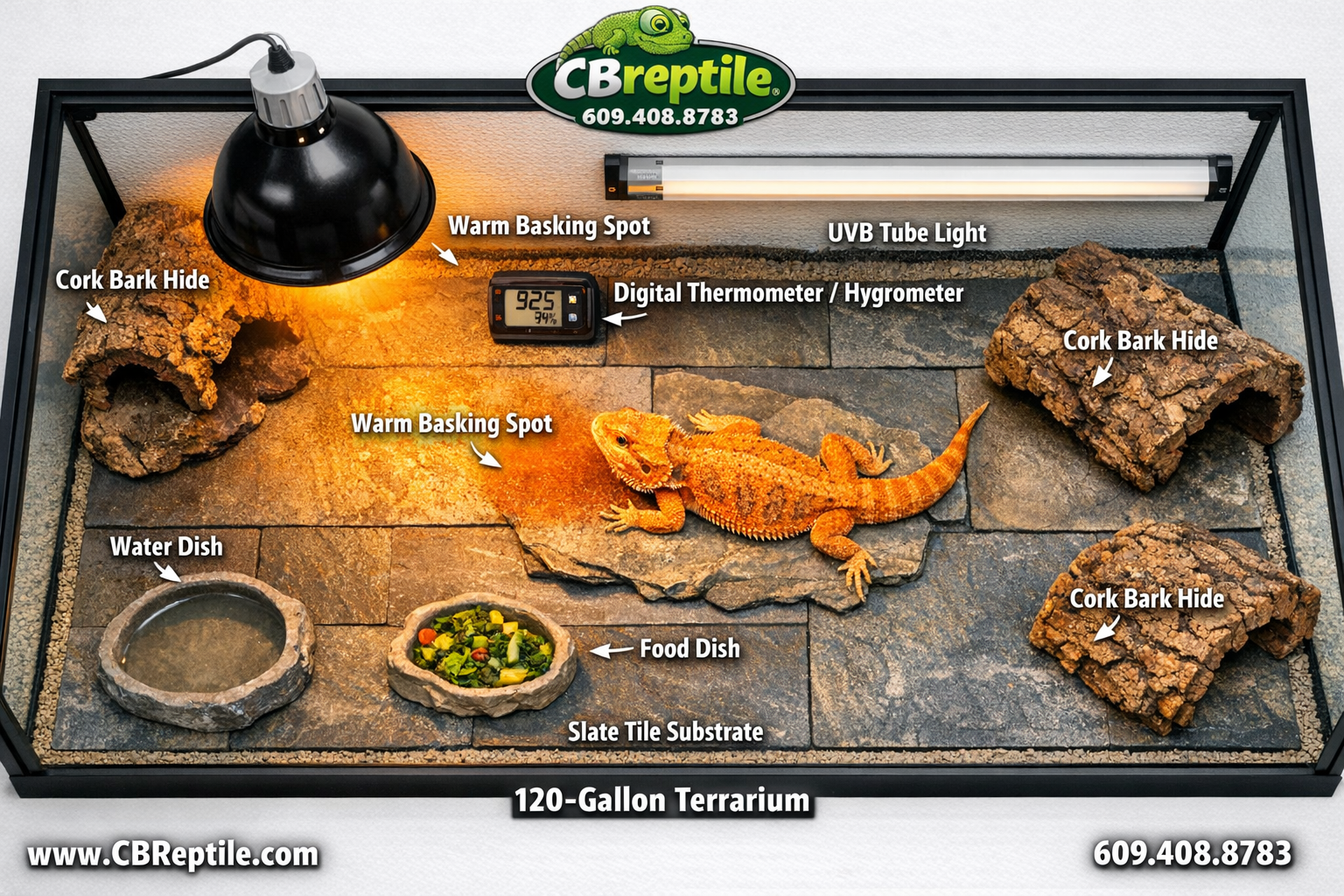
A proper enclosure is non-negotiable for keeping your orange bearded dragon healthy and maintaining the vibrancy of its coloration. Here's what you need, in order of priority.
Enclosure Size
- Juveniles (0–6 months): 40-gallon tank minimum
- Sub-adults (6–12 months): 75-gallon tank
- Adults (12+ months): 120-gallon tank minimum
Bearded dragons are active animals. A cramped enclosure causes chronic stress, which directly dulls orange coloration and suppresses the immune system.
Temperature Zones
Bearded dragons are ectotherms — they regulate body temperature by moving between warm and cool areas. Your enclosure needs a clear thermal gradient:
- Basking spot: 100–110°F
- Warm side ambient: 90–95°F
- Cool side ambient: 80–85°F
- Nighttime low: No lower than 65°F
Use a digital thermometer with a probe, not a stick-on strip thermometer. Accuracy matters.
UVB Lighting
UVB is essential — without it, bearded dragons develop metabolic bone disease (MBD), a painful and often fatal condition. Use a T5 HO UVB bulb rated for desert species (10.0 or 12%). Replace bulbs every 6–12 months even if they still produce visible light, because UVB output degrades before the visible light does.
UVB also plays a role in color expression. Dragons kept under proper UVB lighting tend to display more vivid, saturated orange tones.
Substrate
- Recommended: Slate tile, ceramic tile, or reptile carpet
- Avoid: Loose sand or calcium sand for juveniles (ingestion risk)
Diet Basics
- Juveniles: 70% live insects (dubia roaches, crickets), 30% leafy greens
- Adults: 30% live insects, 70% leafy greens and vegetables
- Dust feeders with calcium (without D3) at every feeding, and calcium with D3 twice weekly
- Offer fresh water daily in a shallow dish
What Affects the Intensity of Orange Coloration?
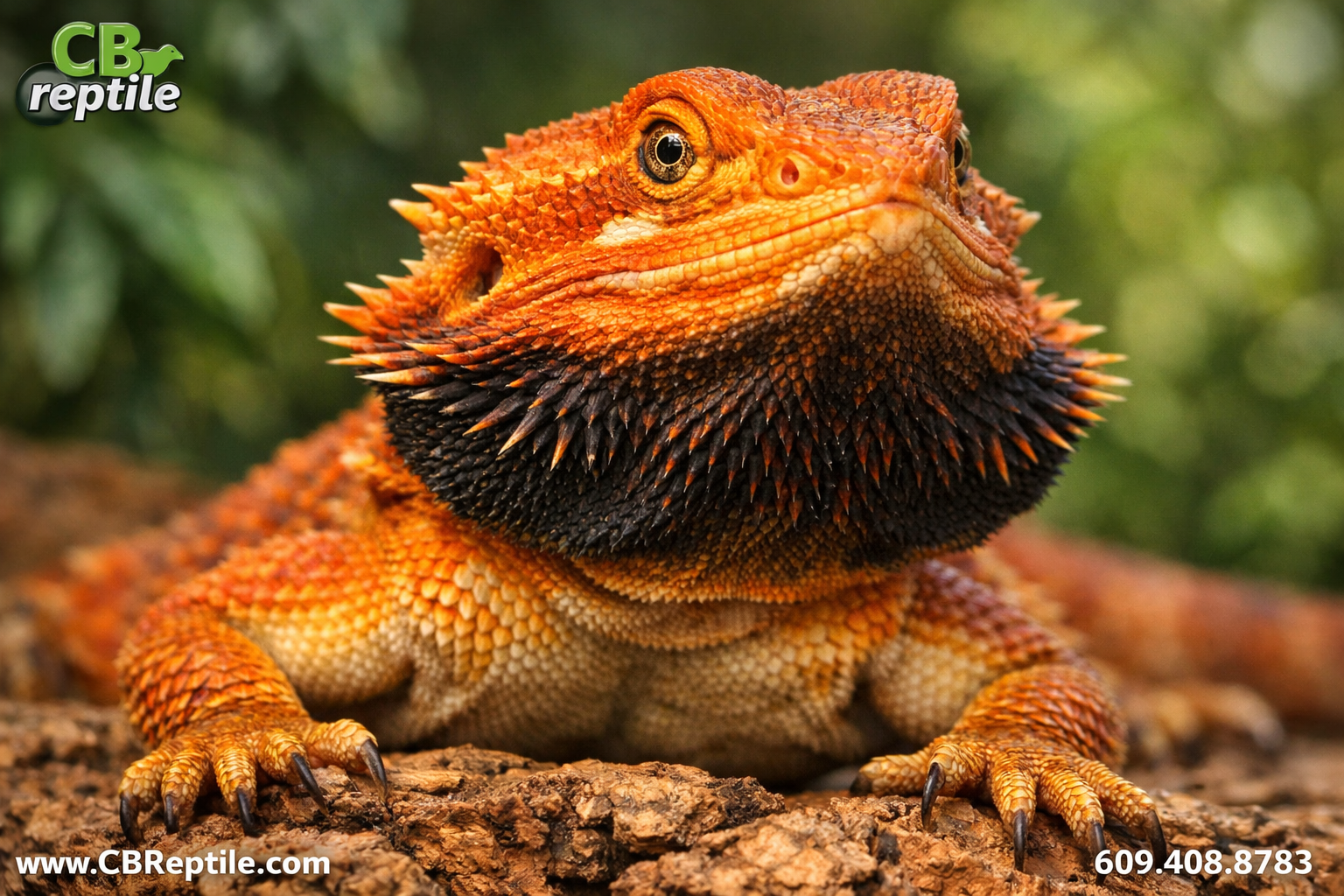
Orange coloration in bearded dragons is not fixed — it fluctuates based on several factors. Understanding these helps you keep your dragon looking its best and troubleshoot dull coloration when it appears.
Genetics (the foundation)
The morph determines the ceiling of color intensity. A standard orange dragon will never match a hypo translucent orange in vibrancy, no matter how well it's cared for. Buy the morph that matches your expectations.
Temperature and Basking
Bearded dragons darken their scales (especially the beard and back) when they're cold, as a way to absorb more heat. A dragon that's consistently too cool will look dull and brownish. Proper basking temperatures allow the orange pigment cells to express fully.
UVB Exposure
Adequate UVB stimulates healthy metabolism and supports proper pigment cell function. Dragons kept without UVB often look washed out over time.
Diet
Carotenoid-rich foods can enhance orange and red tones. Good sources include:
- Butternut squash
- Red bell peppers
- Carrots (in moderation — high in oxalates)
- Dandelion greens
Avoid feeding primarily iceberg lettuce or other low-nutrient greens — they fill the dragon without providing the nutrients that support vivid coloration.
Stress
A stressed bearded dragon will display a dark beard and muted body color. Common stress causes include:
- Enclosure too small
- Seeing its reflection (perceived as a rival)
- Overhandling, especially in new animals
- Inadequate hides
Health Status
Parasites, respiratory infections, and metabolic bone disease all cause color dulling. If your orange dragon suddenly looks pale or brownish and nothing in the environment has changed, a vet visit is warranted.
How Much Does an Orange Bearded Dragon Cost?
Price varies widely based on morph type, age, breeder reputation, and geographic location. Here's a realistic breakdown for 2026.
Price by Morph (Estimates)
- Standard orange juvenile: $100–$200
- Citrus orange: $150–$300
- Hypo orange: $200–$400
- Sandfire orange: $200–$350
- Translucent orange: $350–$600
- Hypo translucent orange: $500–$900+
Additional Setup Costs (One-Time)
| Item | Estimated Cost |
|---|---|
| 120-gallon enclosure | $200–$500 |
| UVB lighting (T5 HO) | $50–$120 |
| Basking lamp + fixture | $20–$50 |
| Thermometers (2) | $20–$40 |
| Substrate (tile) | $20–$60 |
| Hides and decor | $30–$80 |
| Total setup estimate | $340–$850 |
Choose a breeder animal if: you want a healthy dragon with a known morph, genetic records, and post-sale support. The higher upfront cost is offset by lower vet bills and longer lifespan.
Choose a less expensive option only if: you're experienced with reptile health assessment and can evaluate the animal in person before purchase.
FAQ: Orange Bearded Dragon
Q: Are orange bearded dragons rare?
Standard orange morphs are common among captive-bred animals. High-intensity orange morphs like hypo translucent orange are genuinely rare and command premium prices.
Q: Do orange bearded dragons stay orange their whole lives?
Generally yes, though color intensity fluctuates with temperature, stress, health, and age. Juveniles sometimes look more muted and develop fuller color as they mature.
Q: Can two orange bearded dragons produce orange offspring?
Usually yes, but the exact outcome depends on the specific morphs involved. Two hypo orange animals have a high probability of producing hypo orange offspring, but genetics are not always perfectly predictable without detailed records.
Q: How long do orange bearded dragons live?
With proper care, 10–15 years in captivity. Some well-kept animals reach 15+ years.
Q: Is an orange bearded dragon good for beginners?
Yes. Bearded dragons as a species are considered one of the best reptiles for beginners due to their docile temperament and manageable care requirements. The orange morph has no additional care complexity compared to standard animals.
Q: Do orange bearded dragons need a companion?
No. Bearded dragons are solitary in the wild and do not benefit from cage mates. Housing two together often causes stress, competition for resources, and injury.
Q: What's the difference between orange and red bearded dragons?
It's a matter of pigment expression. Red morphs carry higher erythrophore (red pigment cell) expression, while orange morphs blend red and yellow pigment. Some animals fall in between and may be labeled either way by different breeders.
Q: Can diet change my bearded dragon's color?
Diet can enhance or maintain color but cannot override genetics. Carotenoid-rich foods support vivid orange tones; poor diets cause color to fade over time.
Q: How do I know if an orange bearded dragon is healthy before buying?
Look for: clear, alert eyes; no discharge from nose or mouth; full, rounded tail base (not pinched); active movement; no visible wounds or stuck shed. A reputable breeder will allow you to inspect the animal and provide health documentation.
Q: Are orange bearded dragons legal to own?
In most U.S. states, yes. Hawaii is a notable exception — all bearded dragons are prohibited there. Always check your local regulations before purchasing.
Q: How often should I handle my new orange bearded dragon?
Give a new animal 1–2 weeks to acclimate before regular handling. Then start with short 10–15 minute sessions and gradually increase as the dragon becomes comfortable.
Q: What's the best age to buy an orange bearded dragon?
Most breeders recommend purchasing juveniles at 8–12 weeks old. At this age, the animal is eating well, the morph coloration is becoming visible, and the dragon is young enough to bond easily with its owner.
Conclusion: Your Next Steps
An orange bearded dragon is a rewarding, long-lived reptile that rewards careful purchasing decisions. The most important steps are straightforward:
- Decide on your morph. Standard orange, hypo, citrus, or translucent — each has a different price point and color intensity. Use the comparison table above to match your budget and expectations.
- Buy from a reputable captive breeder. CB Reptile's on-site animal biologist, captive-bred guarantee, and detailed morph records make them a standout choice. Avoid pet stores and unverified online sellers.
- Set up the enclosure before the animal arrives. Have your UVB lighting, basking spot, and temperature gradient dialed in before your dragon comes home.
- Learn the diet basics. Proper nutrition directly affects how vivid your orange dragon looks and how long it lives.
- Schedule a vet visit within the first month. Find a reptile-experienced vet in your area before you need one urgently.
For more reading on related reptiles and care topics, the captive-bred reptile blog at CB Reptile covers a wide range of species and husbandry topics in detail.
References
- Witten, G.J. (1993). Lizards of Australia. Australian Museum/Reed Books. (Background on Pogona vitticeps natural history.)
- Stahl, S.J. (2013). "Metabolic bone disease in reptiles." Veterinary Clinics of North America: Exotic Animal Practice, 16(3), 385–410.
- Reptiles Magazine. (2019). "Bearded Dragon Care Sheet." Reptiles Magazine. https://www.reptilesmagazine.com
- Baines, F.M., Chattell, J., Dale, J., Garrick, D., Gill, I., Goetz, M., Skelton, T., & Swatman, M. (2016). "How much UV-B does my reptile need? The UV-Tool, a guide to the selection of UV lighting for reptiles and amphibians in captivity." Journal of Zoo and Aquarium Research, 4(1), 42–63.
- CB Reptile. (2026). Hypo Bearded Dragon Morph. cbreptile.com.
- CB Reptile. (2026). Citrus Bearded Dragon Morph. cbreptile.com.
Tags: orange bearded dragon, bearded dragon morphs, hypo bearded dragon, citrus bearded dragon, captive bred bearded dragon, bearded dragon care, bearded dragon for sale, sandfire bearded dragon, translucent bearded dragon, reptile breeder, bearded dragon enclosure, bearded dragon color morphs