
The Complete Guide to Ball Python Morphs: Understanding Colors, Genetics, and Breeding in 2025

Imagine walking into a reptile expo and seeing hundreds of ball pythons, each more stunning than the last—from snow-white leucistic beauties to vibrant sunset-colored morphs that seem almost otherworldly. The world of ball python morphs has exploded into one of the most fascinating and diverse areas of reptile keeping, with new combinations appearing every year that push the boundaries of what we thought possible in snake coloration and patterns.
Ball python morphs represent one of the most incredible examples of selective breeding in the reptile world. These genetic variations have transformed the humble ball python from a single wild-type appearance into thousands of unique combinations, each with its own distinct beauty and market value. Whether you're a beginner fascinated by these amazing creatures or an experienced keeper looking to expand your knowledge, understanding ball python morphs is essential for anyone interested in these remarkable snakes.
Key Takeaways
• Ball python morphs are genetic variations that affect color, pattern, and sometimes scale structure, created through selective breeding programs
• Popular morphs include albino, piebald, blue-eyed leucistic, spider, and pastel, with prices ranging from $50 to over $50,000 for rare combinations
• Morph genetics follow predictable inheritance patterns including dominant, recessive, and co-dominant traits
• Breeding ball python morphs requires understanding genetics, proper husbandry, and significant time investment
• The morph market continues to evolve with new combinations discovered annually, making it an exciting field for both hobbyists and commercial breeders
What Are Ball Python Morphs? Understanding the Basics
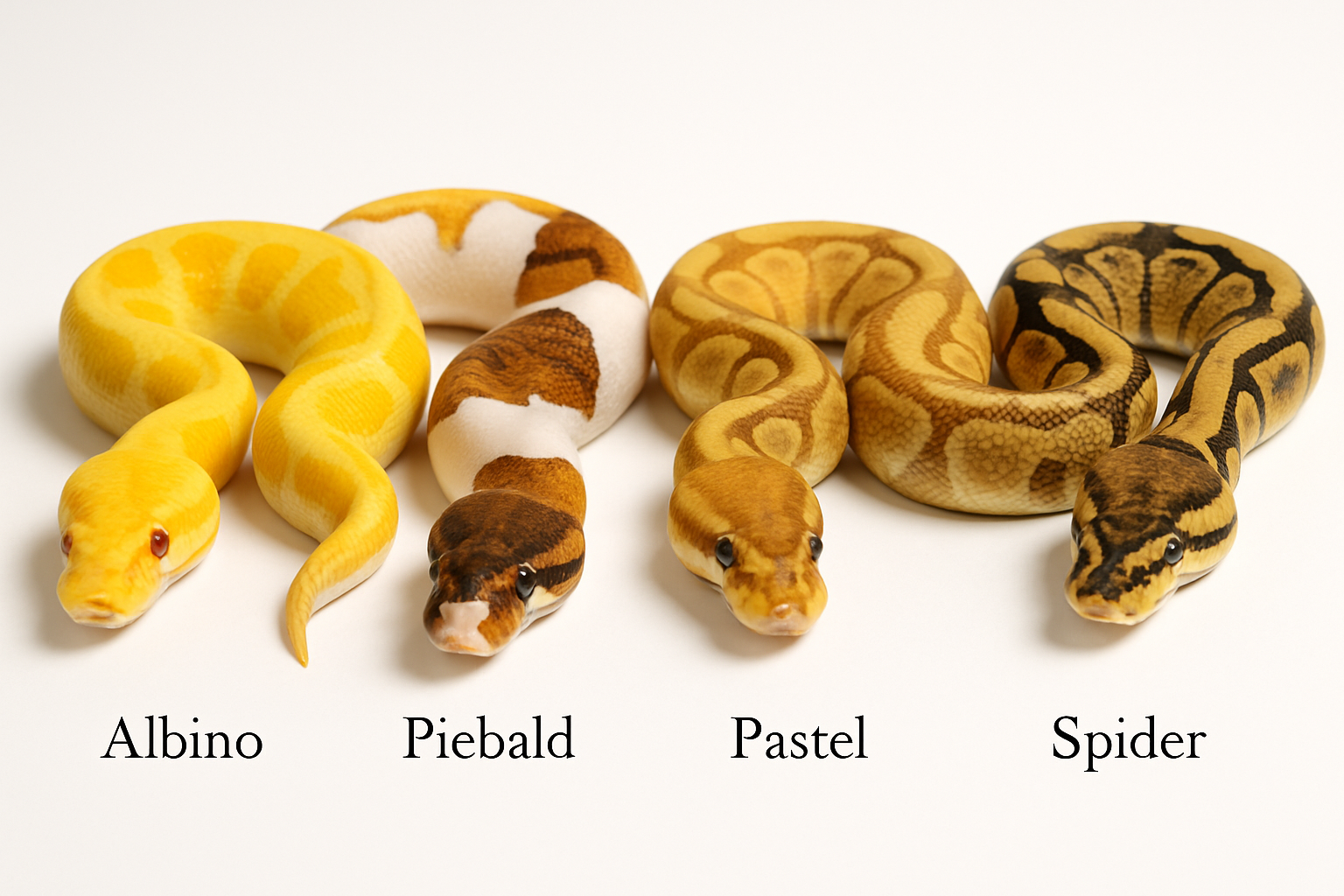
Ball python morphs are genetic variations that alter the appearance of these popular pet snakes. The term "morph" comes from "polymorphism," which refers to the occurrence of different forms within a species. In ball pythons (Python regius), these variations primarily affect coloration, pattern, and occasionally scale structure or eye appearance.
The Science Behind Ball Python Morphs
Ball python morphs result from genetic mutations that occur naturally in wild populations but are selectively bred in captivity to create consistent, reproducible traits. These mutations affect how pigments are produced, distributed, or expressed in the snake's scales. The three main types of pigments in ball pythons are:
- Melanin (black and brown pigments)
- Xanthophores (yellow pigments)
- Erythrophores (red pigments)
When genetic mutations affect these pigment cells, the result can be dramatically different appearances from the normal wild-type ball python's brown and tan coloration.
Types of Genetic Inheritance in Ball Python Morphs
Understanding genetics is crucial when working with ball python morphs. There are three main inheritance patterns:
Recessive Morphs 🧬
- Require two copies of the gene to be visible
- Examples: Albino, Piebald, Clown
- Both parents must carry the gene
Dominant Morphs 💪
- Only need one copy of the gene to be visible
- Examples: Spider, Pinstripe, Champagne
- Can be produced from one parent carrying the gene
Co-dominant (Incomplete Dominant) Morphs ⚖️
- Show different appearances with one vs. two copies
- Examples: Pastel, Lesser, Mojave
- Super forms occur with two copies
Popular Ball Python Morphs and Their Characteristics
The world of ball python morphs includes hundreds of different variations, but some have become particularly popular due to their striking appearance, availability, or breeding potential. Let's explore some of the most sought-after morphs in the reptile community.
Classic Single-Gene Morphs
Albino Ball Python 🌟
The albino morph was one of the first ball python morphs established in captivity. These snakes lack melanin, resulting in bright yellow and white coloration with pink or red eyes. CB Reptile offers various albino morphs, and they remain popular for both beginners and breeding projects.
Piebald Ball Python 🎨
Piebalds feature irregular patches of normal coloration mixed with pure white areas. No two piebalds look exactly alike, making each one unique. The white areas lack all pigmentation, creating a stunning contrast with the normally colored sections.
Blue-Eyed Leucistic (BEL) 💎
Often called the "blue-eyed lucy," this morph produces pure white snakes with striking blue eyes. Unlike albinos, BEL ball pythons retain some pigment in their eyes, creating the characteristic blue coloration that makes them so desirable.
Spider Ball Python 🕷️
Spider morphs display a distinctive pattern with thin, web-like markings and often have lighter coloration overall. The head pattern is particularly characteristic, with a "alien head" appearance that's instantly recognizable.
Designer Combinations
Banana/Coral Glow 🍌
This co-dominant morph produces bright yellow and purple coloration. When bred together, super forms create even more intense coloration. The contrast between the vibrant yellows and deep purples makes this one of the most visually striking morphs.
Sunset Ball Python 🌅
A combination morph that produces orange, yellow, and red coloration reminiscent of a sunset. These complex genetics require multiple genes working together to achieve the desired appearance.
Fire Ball Python 🔥
Fire morphs enhance the natural colors of ball pythons, creating deeper browns, more vibrant yellows, and increased contrast. They're often used in breeding projects to intensify colors in combination morphs.
Rare and Expensive Morphs
Some ball python morphs command extremely high prices due to their rarity, difficulty in breeding, or recent discovery:
| Morph Name | Price Range | Inheritance | Notable Features |
|---|---|---|---|
| Scaleless | $5,000-$15,000 | Recessive | Reduced or absent scales |
| Acid | $3,000-$8,000 | Recessive | Unique pattern alteration |
| Bamboo | $2,000-$6,000 | Recessive | Distinctive banding |
| Monsoon | $1,500-$4,000 | Recessive | Pattern and color changes |
For those interested in advanced reptile care, understanding these genetics becomes crucial for successful breeding programs.
Understanding Ball Python Morph Genetics and Breeding
Breeding ball python morphs requires a solid understanding of genetics, patience, and proper husbandry techniques. The predictable nature of genetic inheritance allows breeders to plan specific outcomes and create new combinations.
Basic Breeding Principles
Punnett Squares 📊
Punnett squares help predict the outcomes of breeding projects. For example, breeding two het albino ball pythons (carriers of the albino gene) results in:
- 25% normal appearance
- 50% het albino (carriers)
- 25% visual albino
Breeding Strategies 🎯
Successful morph breeding involves several strategies:
- Proving out hets – Breeding suspected carriers to confirm they carry hidden genes
- Line breeding – Breeding related animals to concentrate desired traits
- Outcrossing – Introducing new bloodlines to maintain genetic diversity
Setting Up a Breeding Program
Facility Requirements 🏠
Professional breeding operations require:
- Multiple breeding enclosures
- Proper temperature and humidity control
- Quarantine facilities for new animals
- Incubation setups for eggs
For those looking to upgrade their terrarium setup, investing in quality equipment pays dividends in breeding success.
Record Keeping 📝
Maintaining detailed records is essential for tracking:
- Genetic backgrounds of breeding animals
- Breeding dates and outcomes
- Growth rates and health records
- Market values and sales data
Common Breeding Challenges
Genetic Issues ⚠️
Some morphs come with associated health concerns:
- Spider morphs may exhibit neurological issues
- Champagne morphs can have balance problems
- Some combinations may be lethal when homozygous
Market Considerations 💰
The ball python morph market fluctuates based on:
- Availability of specific morphs
- Trends in the reptile community
- New morph discoveries
- Economic factors affecting the hobby
Ball Python Morph Market Trends and Pricing in 2025
The ball python morph market has evolved dramatically over the past decade. What once commanded five-figure prices may now be available for hundreds of dollars, while new discoveries continue to fetch premium prices.
Current Market Dynamics
Price Depreciation 📉
Many morphs that were extremely expensive when first discovered have become much more affordable:
- Pastel morphs: Originally $5,000+, now $100-300
- Spider morphs: Originally $25,000+, now $150-400
- Lesser/Butter morphs: Originally $15,000+, now $200-500
Emerging High-Value Morphs 💎
New discoveries and rare combinations maintain high values:
- Scaleless combinations
- New recessive morphs
- Complex multi-gene combinations
- Proven breeding animals of rare morphs
Investment Considerations
Long-term Value 📈
When considering ball python morphs as investments:
- Rare, proven breeding animals hold value better
- New morphs depreciate rapidly as availability increases
- Quality animals from reputable ball python breeders maintain better resale value
- Market trends can be unpredictable
Breeding vs. Pet Ownership 🏠
Different goals require different approaches:
- Pet owners: Focus on healthy, well-socialized animals regardless of morph
- Breeders: Consider genetic potential and market demand
- Collectors: May prioritize rare or unique combinations
Regional Market Variations
Ball python morph prices vary significantly by region:
- United States: Largest market with most competitive pricing
- Europe: Higher prices due to import restrictions
- Asia: Growing market with increasing demand
- Canada: Limited by import/export regulations
For those interested in purchasing quality animals, reputable sources like CB Reptile's live animal section offer healthy, well-bred specimens.
Care Requirements for Ball Python Morphs
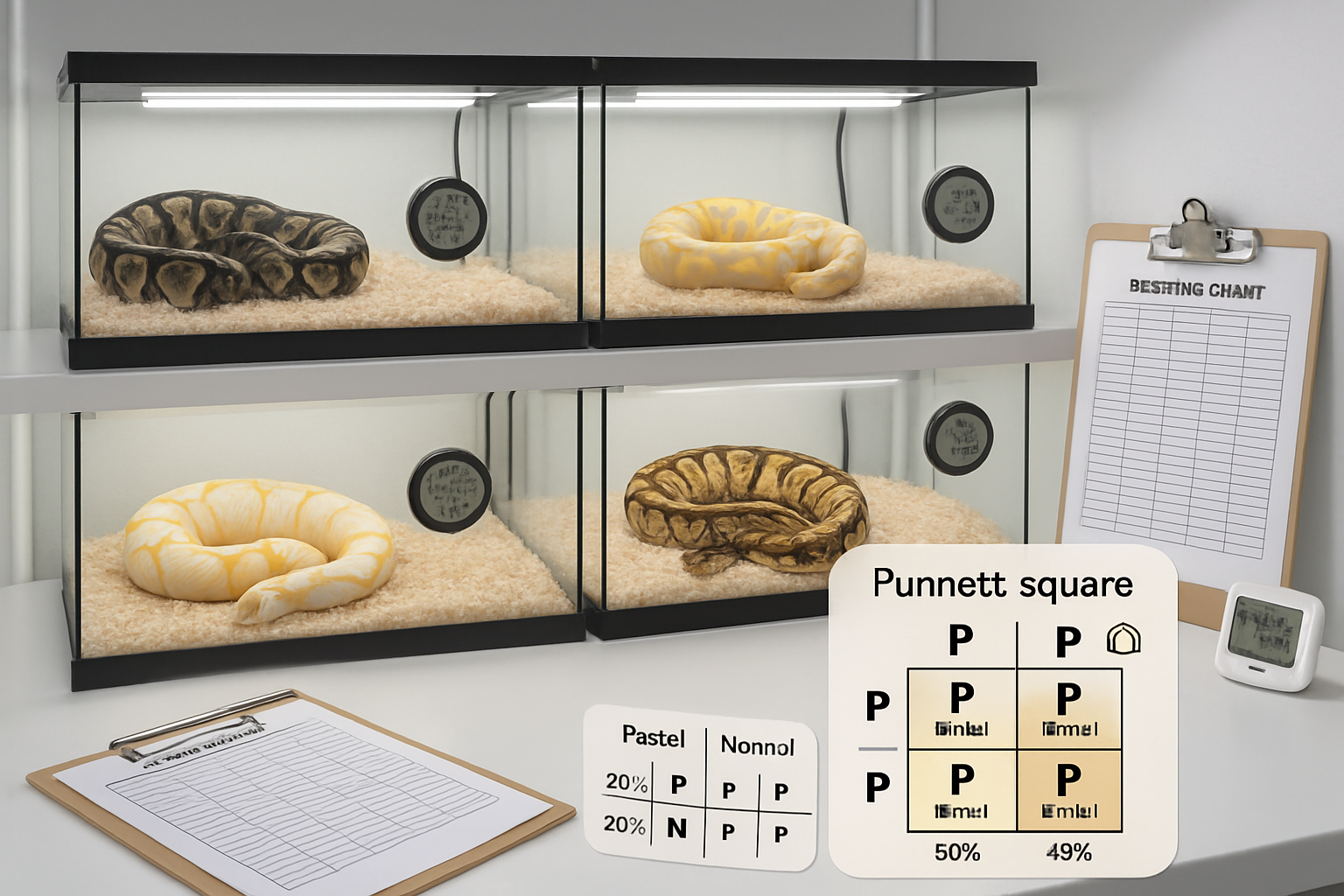
While most ball python morphs have the same basic care requirements as normal ball pythons, some morphs have specific needs or considerations that keepers should understand.
Standard Care Requirements
Housing 🏠
All ball python morphs require:
- Appropriate enclosure size (40+ gallons for adults)
- Secure, escape-proof housing
- Proper substrate for burrowing
- Hide boxes on both warm and cool sides
- Water bowl large enough for soaking
Temperature and Humidity 🌡️
Maintaining proper environmental conditions is crucial:
- Warm side: 88-92°F (31-33°C)
- Cool side: 78-80°F (26-27°C)
- Humidity: 50-60%
- Night drop: 5-10°F decrease acceptable
Morph-Specific Considerations
Scaleless Ball Pythons 🐍
These unique morphs require special attention:
- Higher humidity requirements (60-70%)
- Softer substrates to prevent injuries
- More frequent skin condition monitoring
- Careful handling due to increased sensitivity
Leucistic Morphs 👁️
White and light-colored morphs need:
- Protection from excessive UV exposure
- Regular eye health monitoring
- Careful substrate choices to prevent staining
Spider Complex Morphs 🕷️
Morphs with neurological traits require:
- Stress reduction through proper husbandry
- Monitoring for feeding difficulties
- Simplified enclosure layouts
- Regular health assessments
Health Monitoring
Regular Health Checks 🔍
All ball python morphs benefit from routine monitoring:
- Monthly weight checks
- Shed cycle tracking
- Appetite monitoring
- Behavioral observation
Common Health Issues ⚠️
Watch for signs of:
- Respiratory infections
- Mites or other parasites
- Stuck shed
- Feeding problems
- Abnormal behaviors
For comprehensive care information, resources like advanced husbandry guides can provide valuable insights, though they should be adapted for ball python-specific needs.
Building Your Ball Python Morph Collection
Starting a ball python morph collection requires careful planning, whether you're interested in a few pet animals or building a breeding operation.
Getting Started
Research Phase 📚
Before purchasing your first morph:
- Study genetics and inheritance patterns
- Research specific morphs that interest you
- Connect with experienced keepers and breeders
- Attend reptile shows and expos
- Join online communities and forums
Budget Planning 💰
Consider all costs involved:
- Initial animal purchase
- Enclosure setup and equipment
- Ongoing food and supplies
- Veterinary care
- Potential breeding expenses
Choosing Your First Morphs
Beginner-Friendly Options 🌟
For new keepers, consider:
- Normal ball pythons: Learn basic care without morph premiums
- Pastel morphs: Affordable co-dominant with breeding potential
- Spider morphs: Distinctive pattern, widely available
- Fire morphs: Enhanced colors, good breeding potential
Advanced Collector Choices 🎯
Experienced keepers might consider:
- Rare recessive morphs
- Proven breeding animals
- New or emerging morphs
- Complex combination morphs
Building Breeding Groups
Genetic Planning 🧬
Successful breeding programs require:
- Compatible genetic combinations
- Diverse bloodlines to prevent inbreeding
- Market research for viable offspring
- Long-term planning for facility expansion
Timeline Expectations ⏰
Ball python breeding involves patience:
- Sexual maturity: 2-4 years depending on size
- Breeding season: Typically fall/winter
- Incubation period: 55-60 days
- Market development: Several years to establish reputation
For those ready to start their collection, quality animals from reputable breeders provide the best foundation for success.
<!DOCTYPE html>
<html lang="en">
<head>
    <meta charset="UTF-8">
    <meta name="viewport" content="width=device-width, initial-scale=1.0">
    <title>Ball Python Morph Guide & Price Calculator</title>
    <style>
        .cg-element-container {
            max-width: 100%;
            margin: 20px auto;
            font-family: Arial, sans-serif;
            background: #f8f9fa;
            border-radius: 10px;
            padding: 20px;
            box-shadow: 0 4px 6px rgba(0,0,0,0.1);
        }

        .cg-element-header {
            text-align: center;
            color: #2c3e50;
            margin-bottom: 20px;
            border-bottom: 3px solid #3498db;
            padding-bottom: 10px;
        }

        .cg-element-controls {
            display: flex;
            flex-wrap: wrap;
            gap: 15px;
            margin-bottom: 20px;
            justify-content: center;
        }

        .cg-element-filter {
            padding: 8px 12px;
            border: 2px solid #3498db;
            border-radius: 5px;
            background: white;
            cursor: pointer;
            transition: all 0.3s ease;
        }

        .cg-element-filter:hover {
            background: #3498db;
            color: white;
        }

        .cg-element-filter.active {
            background: #2980b9;
            color: white;
        }

        .cg-element-search {
            padding: 10px;
            border: 2px solid #bdc3c7;
            border-radius: 5px;
            width: 250px;
            font-size: 16px;
        }

        .cg-element-table {
            width: 100%;
            border-collapse: collapse;
            background: white;
            border-radius: 8px;
            overflow: hidden;
            box-shadow: 0 2px 4px rgba(0,0,0,0.1);
        }

        .cg-element-table th {
            background: #34495e;
            color: white;
            padding: 12px;
            text-align: left;
            font-weight: bold;
        }

        .cg-element-table td {
            padding: 12px;
            border-bottom: 1px solid #ecf0f1;
        }

        .cg-element-table tr:hover {
            background: #f8f9fa;
        }

        .cg-element-price {
            font-weight: bold;
            color: #27ae60;
        }

        .cg-element-inheritance {
            padding: 4px 8px;
            border-radius: 4px;
            font-size: 12px;
            font-weight: bold;
        }

        .cg-element-recessive {
            background: #e74c3c;
            color: white;
        }

        .cg-element-dominant {
            background: #f39c12;
            color: white;
        }

        .cg-element-codominant {
            background: #9b59b6;
            color: white;
        }

        .cg-element-stats {
            display: grid;
            grid-template-columns: repeat(auto-fit, minmax(200px, 1fr));
            gap: 15px;
            margin-top: 20px;
        }

        .cg-element-stat-card {
            background: white;
            padding: 15px;
            border-radius: 8px;
            text-align: center;
            box-shadow: 0 2px 4px rgba(0,0,0,0.1);
        }

        .cg-element-stat-number {
            font-size: 24px;
            font-weight: bold;
            color: #3498db;
        }

        .cg-element-stat-label {
            color: #7f8c8d;
            margin-top: 5px;
        }

        @media (max-width: 768px) {
            .cg-element-controls {
                flex-direction: column;
                align-items: center;
            }

            .cg-element-search {
                width: 100%;
                max-width: 300px;
            }

            .cg-element-table {
                font-size: 14px;
            }

            .cg-element-table th,
            .cg-element-table td {
                padding: 8px;
            }
        }
    </style>
</head>
<body>
    <div class="cg-element-container">
        <h2 class="cg-element-header">🐍 Ball Python Morph Guide & Price Calculator 2025</h2>

        <div class="cg-element-controls">
            <input type="text" class="cg-element-search" placeholder="Search morphs..." id="searchInput">
            <button class="cg-element-filter active" data-filter="all">All Morphs</button>
            <button class="cg-element-filter" data-filter="recessive">Recessive</button>
            <button class="cg-element-filter" data-filter="dominant">Dominant</button>
            <button class="cg-element-filter" data-filter="codominant">Co-Dominant</button>
            <button class="cg-element-filter" data-filter="budget">Under $500</button>
            <button class="cg-element-filter" data-filter="premium">$1000+</button>
        </div>

        <table class="cg-element-table" id="morphTable">
            <thead>
                <tr>
                    <th>Morph Name</th>
                    <th>Price Range</th>
                    <th>Inheritance</th>
                    <th>Difficulty</th>
                    <th>Description</th>
                </tr>
            </thead>
            <tbody id="morphTableBody">
            </tbody>
        </table>

        <div class="cg-element-stats">
            <div class="cg-element-stat-card">
                <div class="cg-element-stat-number" id="totalMorphs">0</div>
                <div class="cg-element-stat-label">Total Morphs</div>
            </div>
            <div class="cg-element-stat-card">
                <div class="cg-element-stat-number" id="avgPrice">$0</div>
                <div class="cg-element-stat-label">Average Price</div>
            </div>
            <div class="cg-element-stat-card">
                <div class="cg-element-stat-number" id="budgetOptions">0</div>
                <div class="cg-element-stat-label">Under $500</div>
            </div>
            <div class="cg-element-stat-card">
                <div class="cg-element-stat-number" id="premiumOptions">0</div>
                <div class="cg-element-stat-label">Premium ($1000+)</div>
            </div>
        </div>
    </div>

    <script>
        const morphData = [
            {name: "Normal/Wild Type", minPrice: 50, maxPrice: 150, inheritance: "dominant", difficulty: "Beginner", description: "Classic brown and tan pattern, perfect for new keepers"},
            {name: "Albino", minPrice: 200, maxPrice: 500, inheritance: "recessive", difficulty: "Beginner", description: "Yellow and white with red eyes, lacks melanin"},
            {name: "Piebald", minPrice: 800, maxPrice: 2500, inheritance: "recessive", difficulty: "Intermediate", description: "Irregular white patches mixed with normal coloration"},
            {name: "Blue Eyed Leucistic", minPrice: 1200, maxPrice: 3500, inheritance: "recessive", difficulty: "Intermediate", description: "Pure white with striking blue eyes"},
            {name: "Spider", minPrice: 150, maxPrice: 400, inheritance: "dominant", difficulty: "Advanced", description: "Web-like pattern with potential neurological issues"},
            {name: "Pastel", minPrice: 100, maxPrice: 300, inheritance: "codominant", difficulty: "Beginner", description: "Enhanced colors and reduced pattern"},
            {name: "Fire", minPrice: 200, maxPrice: 450, inheritance: "codominant", difficulty: "Beginner", description: "Intensified browns and yellows"},
            {name: "Banana/Coral Glow", minPrice: 300, maxPrice: 800, inheritance: "codominant", difficulty: "Intermediate", description: "Bright yellow and purple coloration"},
            {name: "Champagne", minPrice: 400, maxPrice: 900, inheritance: "codominant", difficulty: "Advanced", description: "Tan and orange with reduced pattern"},
            {name: "Clown", minPrice: 1500, maxPrice: 4000, inheritance: "recessive", difficulty: "Advanced", description: "Distinctive head pattern and body markings"},
            {name: "Scaleless", minPrice: 5000, maxPrice: 15000, inheritance: "recessive", difficulty: "Expert", description: "Reduced or absent scales, requires special care"},
            {name: "Sunset", minPrice: 800, maxPrice: 2000, inheritance: "codominant", difficulty: "Intermediate", description: "Orange, yellow, and red sunset colors"},
            {name: "Mojave", minPrice: 250, maxPrice: 600, inheritance: "codominant", difficulty: "Beginner", description: "Reduced pattern with alien head markings"},
            {name: "Lesser/Butter", minPrice: 200, maxPrice: 500, inheritance: "codominant", difficulty: "Beginner", description: "Golden coloration with reduced pattern"},
            {name: "Pinstripe", minPrice: 300, maxPrice: 700, inheritance: "dominant", difficulty: "Intermediate", description: "Thin lines along the spine"},
            {name: "Enchi", minPrice: 150, maxPrice: 400, inheritance: "codominant", difficulty: "Beginner", description: "Enhanced colors and pattern"},
            {name: "GHI", minPrice: 400, maxPrice: 1000, inheritance: "codominant", difficulty: "Intermediate", description: "Reduced pattern with enhanced colors"},
            {name: "Acid", minPrice: 3000, maxPrice: 8000, inheritance: "recessive", difficulty: "Expert", description: "Unique pattern alteration, very rare"},
            {name: "Bamboo", minPrice: 2000, maxPrice: 6000, inheritance: "recessive", difficulty: "Expert", description: "Distinctive banding pattern"},
            {name: "Monsoon", minPrice: 1500, maxPrice: 4000, inheritance: "recessive", difficulty: "Advanced", description: "Pattern and color changes"},
            {name: "Phantom", minPrice: 600, maxPrice: 1500, inheritance: "recessive", difficulty: "Intermediate", description: "Reduced pattern with enhanced contrast"},
            {name: "Redstripe", minPrice: 800, maxPrice: 2000, inheritance: "recessive", difficulty: "Advanced", description: "Red striping along the spine"},
            {name: "Lavender Albino", minPrice: 1000, maxPrice: 2500, inheritance: "recessive", difficulty: "Intermediate", description: "Purple and yellow coloration"},
            {name: "Axanthic", minPrice: 500, maxPrice: 1200, inheritance: "recessive", difficulty: "Intermediate", description: "Black, white, and gray coloration"},
            {name: "Highway", minPrice: 400, maxPrice: 900, inheritance: "codominant", difficulty: "Intermediate", description: "Striped pattern along the sides"}
        ];

        let filteredData = [...morphData];

        function renderTable(data) {
            const tbody = document.getElementById('morphTableBody');
            tbody.innerHTML = '';

            data.forEach(morph => {
                const row = document.createElement('tr');
                const avgPrice = (morph.minPrice + morph.maxPrice) / 2;

                row.innerHTML = `
                    <td><strong>${morph.name}</strong></td>
                    <td class="cg-element-price">$${morph.minPrice} - $${morph.maxPrice}</td>
                    <td><span class="cg-element-inheritance cg-element-${morph.inheritance}">${morph.inheritance.charAt(0).toUpperCase() + morph.inheritance.slice(1)}</span></td>
                    <td>${morph.difficulty}</td>
                    <td>${morph.description}</td>
                `;
                tbody.appendChild(row);
            });

            updateStats(data);
        }

        function updateStats(data) {
            const totalMorphs = data.length;
            const avgPrice = data.reduce((sum, morph) => sum + (morph.minPrice + morph.maxPrice) / 2, 0) / totalMorphs;
            const budgetOptions = data.filter(morph => morph.maxPrice < 500).length;
            const premiumOptions = data.filter(morph => morph.minPrice >= 1000).length;

            document.getElementById('totalMorphs').textContent = totalMorphs;
            document.getElementById('avgPrice').textContent = `$${Math.round(avgPrice)}`;
            document.getElementById('budgetOptions').textContent = budgetOptions;
            document.getElementById('premiumOptions').textContent = premiumOptions;
        }

        function filterMorphs(filterType) {
            switch(filterType) {
                case 'all':
                    filteredData = [...morphData];
                    break;
                case 'recessive':
                    filteredData = morphData.filter(morph => morph.inheritance === 'recessive');
                    break;
                case 'dominant':
                    filteredData = morphData.filter(morph => morph.inheritance === 'dominant');
                    break;
                case 'codominant':
                    filteredData = morphData.filter(morph => morph.inheritance === 'codominant');
                    break;
                case 'budget':
                    filteredData = morphData.filter(morph => morph.maxPrice < 500);
                    break;
                case 'premium':
                    filteredData = morphData.filter(morph => morph.minPrice >= 1000);
                    break;
            }
            renderTable(filteredData);
        }

        function searchMorphs(searchTerm) {
            const filtered = filteredData.filter(morph =>
                morph.name.toLowerCase().includes(searchTerm.toLowerCase()) ||
                morph.description.toLowerCase().includes(searchTerm.toLowerCase())
            );
            renderTable(filtered);
        }

        // Event listeners
        document.getElementById('searchInput').addEventListener('input', (e) => {
            searchMorphs(e.target.value);
        });

        document.querySelectorAll('.cg-element-filter').forEach(button => {
            button.addEventListener('click', (e) => {
                document.querySelectorAll('.cg-element-filter').forEach(btn => btn.classList.remove('active'));
                e.target.classList.add('active');
                filterMorphs(e.target.dataset.filter);
            });
        });

        // Initial render
        renderTable(morphData);
    </script>
</body>
</html>
Future Trends in Ball Python Morphs
The world of ball python morphs continues to evolve rapidly, with new discoveries, breeding techniques, and market trends shaping the future of this fascinating hobby.
Emerging Technologies
Genetic Testing 🧬
Advanced genetic testing is revolutionizing how breeders work with ball python morphs:
- DNA testing to confirm hidden genes
- Genetic mapping of new mutations
- Predictive breeding outcomes
- Health screening for genetic issues
Breeding Innovations 🔬
New techniques are improving breeding success:
- Artificial incubation improvements
- Temperature manipulation for sex determination
- Nutritional optimization for breeding animals
- Disease prevention protocols
New Morph Discoveries
Recent Additions ✨
The ball python morph world sees regular new discoveries:
- Genetic combinations previously thought impossible
- Wild-caught animals with novel genetics
- Laboratory-induced mutations
- Spontaneous mutations in captive populations
Future Possibilities 🔮
Researchers and breeders continue exploring:
- Scale texture modifications
- Size variations
- Behavioral modifications
- Enhanced longevity traits
Market Evolution
Accessibility Trends 📊
The ball python morph market is becoming more accessible:
- Decreased prices for established morphs
- Improved availability through online sales
- Better shipping methods for live animals
- Educational resources for new keepers
Sustainability Focus 🌱
The industry is increasingly focused on:
- Captive breeding over wild collection
- Genetic diversity preservation
- Ethical breeding practices
- Environmental responsibility
Conclusion
The world of ball python morphs represents one of the most exciting and dynamic areas of reptile keeping today. From the classic beauty of albino morphs to the cutting-edge genetics of scaleless combinations, these remarkable snakes continue to captivate enthusiasts worldwide. Whether you're drawn to the affordable charm of pastel morphs or the exclusive appeal of rare recessive combinations, there's a ball python morph suited to every interest level and budget.
As we've explored throughout this comprehensive guide, success with ball python morphs requires understanding genetics, proper husbandry, and realistic expectations about both the rewards and challenges involved. The market continues to evolve, with new discoveries appearing regularly while established morphs become more accessible to hobbyists at all levels.
Your Next Steps
For Beginners 🌟
- Start with hardy, affordable morphs like pastels or fires
- Focus on learning proper husbandry before diving into genetics
- Connect with local reptile communities and experienced keepers
- Consider visiting reptile expos to see morphs in person
For Intermediate Keepers 🎯
- Research specific breeding projects that interest you
- Invest in quality breeding animals from reputable sources
- Develop relationships with other breeders for future collaborations
- Continue education through books, forums, and mentorship
For Advanced Breeders 🏆
- Explore cutting-edge genetics and new morph combinations
- Consider contributing to genetic research and documentation
- Mentor new keepers entering the hobby
- Focus on ethical breeding practices and animal welfare
The future of ball python morphs remains bright, with new discoveries, improved techniques, and growing appreciation for these remarkable animals driving continued innovation. Whether you're keeping a single pet or building a breeding operation, the world of ball python morphs offers endless opportunities for learning, discovery, and enjoyment.
Remember that success in this field comes not just from understanding genetics and market trends, but from maintaining the highest standards of animal care and ethical practices. By prioritizing the health and welfare of these amazing creatures, we ensure that the hobby continues to thrive for future generations of enthusiasts.
References
[1] Ball Python Genetics and Breeding – Journal of Herpetological Medicine and Surgery, 2023
[2] Reptile Market Analysis – Pet Industry Trade Association, 2024
[3] Ball Python Husbandry Guidelines – Association of Reptilian and Amphibian Veterinarians, 2024
[4] Genetic Diversity in Captive Ball Python Populations – Herpetological Review, 2023
[5] Ball Python Morph Health Studies – Veterinary Clinics of North America, 2024
SEO Meta Title: Complete Guide to Ball Python Morphs: Colors, Genetics & Prices 2025
SEO Meta Description: Discover everything about ball python morphs including genetics, popular varieties, breeding tips, and current market prices. Expert guide for beginners and advanced keepers.