

{"cover":"Professional landscape format (1536×1024) hero image with bold text overlay: 'Bearded Dragon Care Sheet 2026' in extra large 72pt white bold sans-serif font with dark drop shadow, centered upper third. Background shows a stunning close-up of a healthy adult bearded dragon (Pogona vitticeps) perched on a natural wood branch inside a well-lit vivarium with desert substrate, UVB lighting glow, and green leafy decor. Color scheme: warm amber, sandy beige, white text, deep brown accents. Magazine cover aesthetic, editorial quality, high contrast.","content":["Landscape format (1536×1024) detailed illustration of a complete bearded dragon habitat setup: a 120-gallon glass terrarium with basking spot lamp on left side showing 110°F temperature gauge, cool side thermometer reading 85°F, UVB T5 fluorescent tube mounted overhead, ceramic tile substrate, rock hide, and water dish. Annotated diagram style with clean labels, warm desert lighting, educational infographic aesthetic, no people, top-down perspective showing full enclosure layout.","Landscape format (1536×1024) close-up food photography flat lay showing a bearded dragon diet spread: a divided plate with live dubia roaches and crickets on one side, fresh collard greens, dandelion leaves, butternut squash, and blueberries on the other, with a small dish of calcium powder supplement. Bright natural lighting, clean white background, ruler for scale, colorful and appetizing, educational reptile nutrition visual style, overhead bird's-eye perspective.","Landscape format (1536×1024) side-by-side comparison image: left panel shows a healthy captive-bred bearded dragon with vibrant orange and yellow coloration, clear eyes, plump tail base, alert posture on clean substrate; right panel shows visual health warning signs illustrated as diagram overlays including sunken eyes, dark stress marks, and lethargic posture. Split-screen format with green checkmark and red X labels, clinical educational style, bright studio lighting.","Landscape format (1536×1024) professional reptile breeder facility scene: a CB Reptile-style breeding room with multiple custom enclosures stacked on shelving units, a professional in a lab coat examining a bearded dragon morph under bright overhead lighting, color morph specimens visible including citrus, hypo, and leatherback varieties in separate enclosures with care labels. Warm facility lighting, clean and organized environment, documentary photography style, wide-angle perspective showing full room depth."]
Last updated: April 15, 2026
Quick Answer: Bearded dragons (Pogona vitticeps) need a 120-gallon enclosure with a basking spot of 100–110°F, a UVB T5 bulb, a diet of live insects and leafy greens, and daily handling to thrive. This bearded dragon care sheet covers everything a first-time owner needs to set up correctly from day one, so you avoid the most common (and costly) mistakes.
Key Takeaways
- 🦎 Enclosure size: Adults need a minimum 120-gallon tank; juveniles can start in a 40-gallon breeder.
- 🌡️ Temperature gradient: Basking side 100–110°F, cool side 80–85°F, nighttime no lower than 65°F.
- ☀️ UVB lighting: A T5 HO UVB bulb (10.0 or 12%) is non-negotiable; replace it every 6 months.
- 🥗 Diet split: Juveniles eat 70% insects / 30% greens; adults flip to 70% greens / 30% insects.
- 💊 Supplements: Dust feeders with calcium (no D3) 5x per week; use a multivitamin 1–2x per week.
- 🧼 Hygiene: Spot-clean daily; full enclosure clean monthly.
- 🏥 Vet care: Find a reptile-experienced vet before you bring your dragon home.
- 💰 Budget: Expect $400–$800 for a complete setup; ongoing costs run $50–$100/month.
- 🐣 Source matters: Captive-bred animals from reputable breeders are healthier and easier to handle than wild-caught or pet-store stock.
What Does a Bearded Dragon Actually Need to Survive and Thrive?
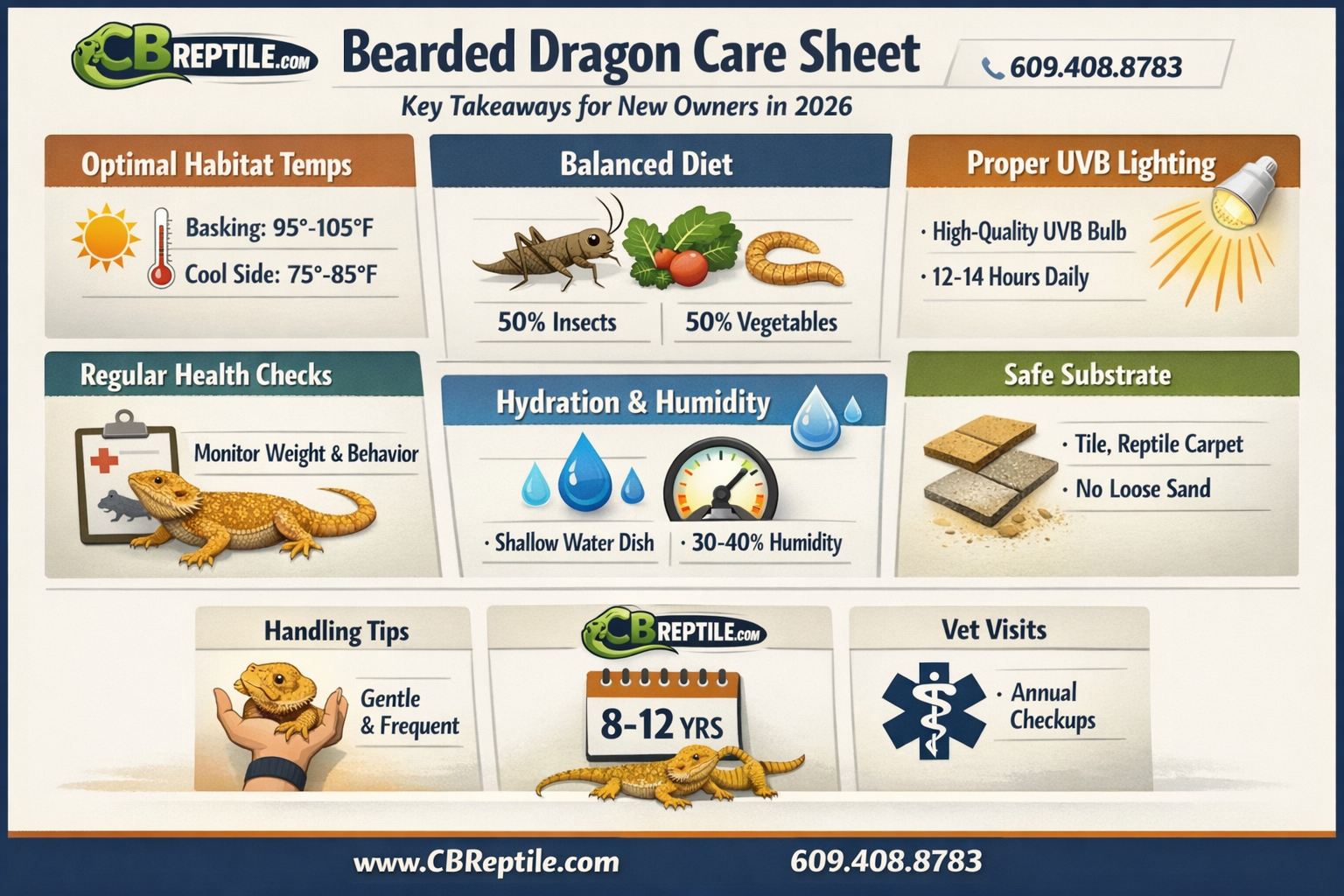
Bearded dragons are desert reptiles native to Australia. They need three things above all else: proper heat, proper UV light, and a varied diet. Without any one of these, health problems appear within weeks.
Here's a quick-reference summary before we go deeper:
| Care Category | Juvenile (0–12 months) | Adult (12+ months) |
|---|---|---|
| Enclosure size | 40–75 gallon | 120 gallon minimum |
| Basking temp | 105–110°F | 100–105°F |
| Cool side temp | 80–85°F | 80–85°F |
| UVB bulb | T5 HO 10.0 | T5 HO 10.0 or 12% |
| Diet ratio | 70% insects / 30% greens | 30% insects / 70% greens |
| Feeding frequency | 2–3x daily | Once daily |
| Lifespan (captive) | — | 10–15 years |
Common mistake: Many first-time owners buy a 40-gallon tank thinking they'll upgrade later. Most don't upgrade fast enough, and stunted growth or stress behaviors follow. Buy the adult-size enclosure from the start if your budget allows.
How Do You Set Up the Right Enclosure?
A proper enclosure is the foundation of every good bearded dragon care sheet. Get this wrong, and no amount of good feeding or handling will compensate.
Enclosure type: Glass terrariums with front-opening doors work best. They hold heat well and make it easy to reach your dragon without coming from above (which triggers a fear response).
Size guidelines:
- Hatchling to 10 inches: 20–40 gallon
- 10–16 inches: 40–75 gallon
- 16 inches and above: 120 gallon minimum
Substrate options:
- Ceramic tile — easiest to clean, holds heat, great for adults
- Reptile carpet — affordable but harbors bacteria if not cleaned often
- Loose substrate (bioactive soil mixes) — suitable for adults only; avoid for juveniles under 12 months due to impaction risk
- Paper towels — ideal for hatchlings and sick animals
Avoid: Play sand, calci-sand, or any fine loose substrate for juveniles. Impaction (intestinal blockage from swallowed substrate) is a leading cause of preventable death in young bearded dragons.
Décor: Add a basking rock or platform on the warm side, a hide on the cool side, and a few branches for climbing. Keep it simple enough to clean easily.
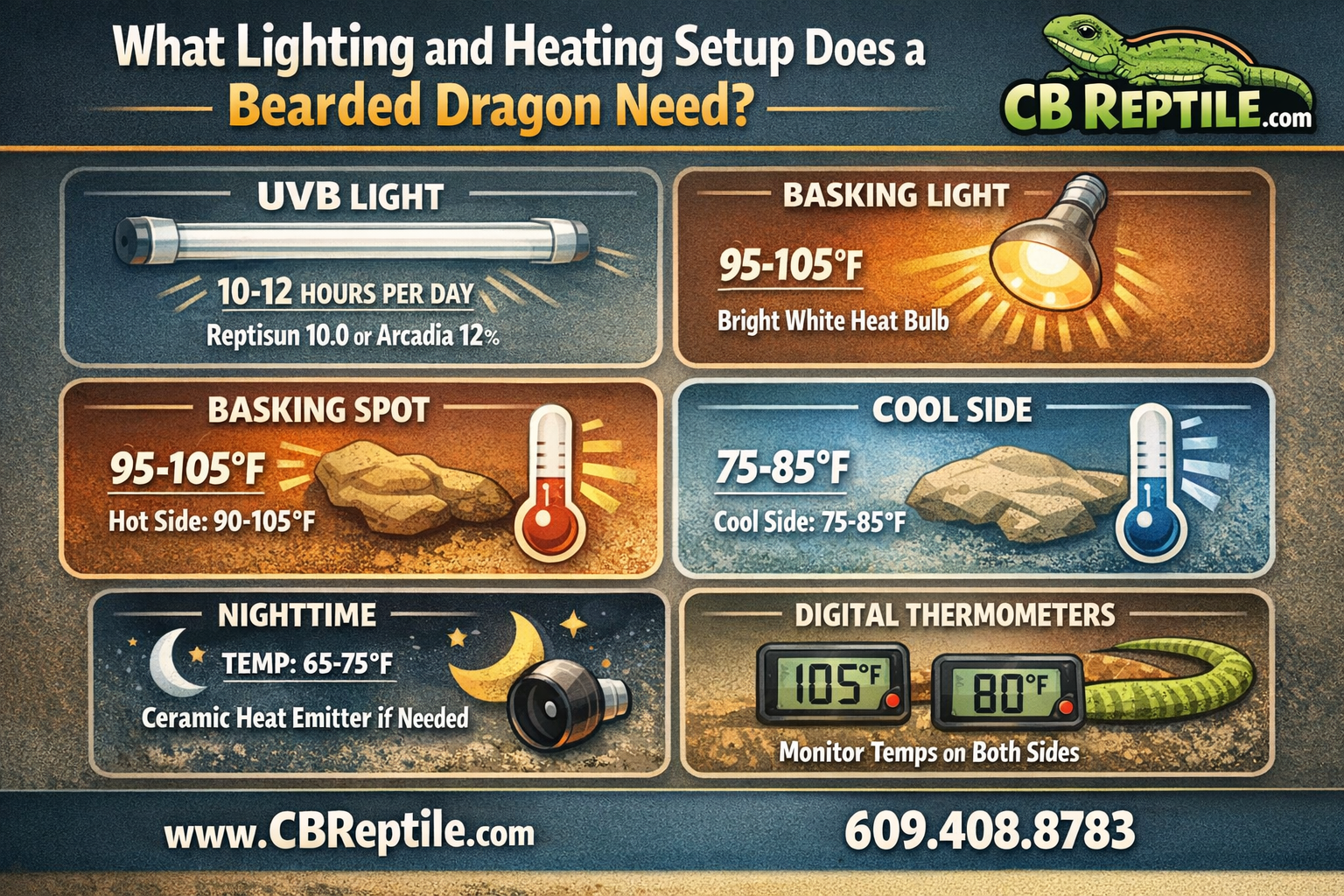
What Lighting and Heating Setup Does a Bearded Dragon Need?
Lighting is where most new owners cut corners, and it's the single biggest driver of metabolic bone disease (MBD) in captive bearded dragons.
UVB lighting:
- Use a T5 HO fluorescent bulb rated at 10.0 or 12% UVB output.
- Mount it inside the enclosure, no more than 12 inches from the basking spot.
- Run it on a 12-hour on / 12-hour off cycle using a timer.
- Replace the bulb every 6 months, even if it still produces visible light. UVB output degrades before the visible light does.
Basking light:
- A simple halogen flood bulb or a dedicated basking bulb works well.
- Target 100–110°F at the basking surface (measure with a temperature gun, not a stick-on thermometer).
Temperature gradient:
- Basking zone: 100–110°F
- Warm side ambient: 85–90°F
- Cool side: 80–85°F
- Nighttime low: No colder than 65°F (use a low-wattage ceramic heat emitter if your room drops below that)
Lighting schedule: 12–14 hours of light in summer, 10–12 hours in winter. This mimics natural photoperiod and supports healthy seasonal behavior.
Pull quote: "UVB isn't optional for bearded dragons — it's as essential as food. A dragon without proper UVB will develop metabolic bone disease within months, regardless of how well everything else is managed."
What Should You Feed a Bearded Dragon?
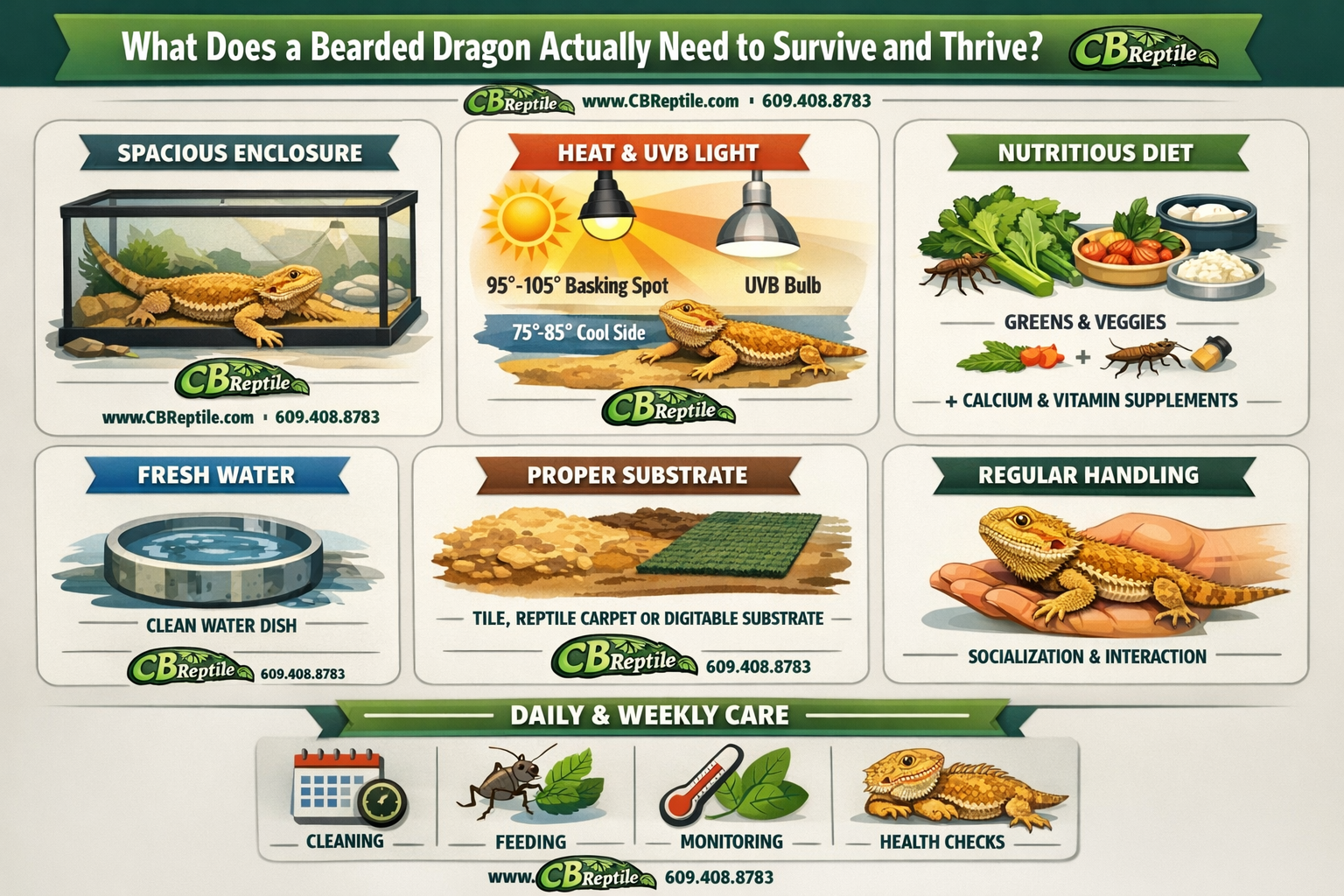
Diet is where this bearded dragon care sheet gets detailed, because feeding errors are the second most common cause of health problems after lighting failures.
Insects (protein sources):
- Dubia roaches — best nutritional profile, easy to keep
- Black soldier fly larvae (BSFL) — high in calcium naturally
- Crickets — widely available but gut-load them first
- Hornworms — great for hydration
- Avoid: Fireflies (toxic), wild-caught insects (pesticide risk), mealworms as a staple (too high in fat)
Feeder insect size rule: Never feed an insect larger than the space between your dragon's eyes. Oversized feeders cause choking and impaction.
Vegetables and greens (staple):
- Collard greens ✅
- Dandelion greens ✅
- Mustard greens ✅
- Turnip greens ✅
- Butternut squash ✅
- Avoid as staples: Spinach, kale, and beet greens (high in oxalates that bind calcium)
Fruits: Treat only. Blueberries, mango, and papaya are fine 1–2x per week in small amounts.
Supplements:
- Calcium without D3: Dust feeders 5x per week
- Calcium with D3: 1–2x per week (if UVB lighting is adequate, use sparingly)
- Reptile multivitamin: 1–2x per week
Feeding schedule:
- Juveniles (under 6 months): 3x daily, as many insects as they'll eat in 10 minutes, plus greens always available
- Sub-adults (6–12 months): 2x daily
- Adults (12+ months): Once daily; greens always available, insects 3–4x per week
Water: Mist the enclosure lightly 2–3x per week and offer a shallow water dish. Bearded dragons often won't drink from standing water, but they will lick droplets. Bathe your dragon in lukewarm water for 15 minutes 2–3x per week — this aids hydration and shedding.
How Do You Recognize Health Problems Early?
A good bearded dragon care sheet doesn't just cover the basics — it prepares you to spot trouble before it becomes an emergency.

Signs of a healthy bearded dragon:
- Clear, bright eyes
- Plump tail base (not sunken)
- Active during daylight hours
- Eating regularly
- Normal, formed droppings
Warning signs to watch for:
| Symptom | Possible Cause | Action |
|---|---|---|
| Soft or rubbery jaw/limbs | Metabolic bone disease (MBD) | Vet immediately |
| Sunken eyes | Dehydration | Bathe + vet if persistent |
| Dark stress marks on belly | Stress, temperature issue | Check enclosure temps |
| Lethargy + no appetite | Illness, brumation, or shedding | Monitor; vet if prolonged |
| Runny or bloody stool | Parasites or infection | Fecal test at vet |
| Swollen joints | Gout or infection | Vet immediately |
Brumation: Adult bearded dragons may enter a semi-hibernation state in fall/winter. They eat less, sleep more, and may go weeks without eating. This is normal — but get a vet check before assuming brumation is the cause of lethargy.
First vet visit: Schedule a wellness exam within 2 weeks of bringing your dragon home. Ask for a fecal parasite test. Find a vet who specializes in reptiles, not just dogs and cats.
Why Does It Matter Where You Buy Your Bearded Dragon?
Where you get your bearded dragon matters as much as how you care for it. A healthy, well-started animal from a reputable source will be easier to care for, less prone to disease, and more likely to be handleable from day one.
Captive-bred vs. wild-caught vs. pet store:
| Source | Pros | Cons |
|---|---|---|
| Reputable breeder | Healthy genetics, known history, socialized | Higher upfront cost |
| Pet store | Convenient, lower price | Often stressed, parasite load, unknown origin |
| Wild-caught | N/A for most buyers | High parasite burden, stressed, illegal in many regions |
| Random online reseller | Wide selection | No accountability, shipping stress, no health guarantee |
CB Reptile stands out as one of the most trusted bearded dragon breeders in the country. They have an animal biologist on-site, which means every animal is evaluated for health before it ships. Their captive-bred stock is raised under proper UVB lighting, fed a varied diet from hatch, and handled regularly — so the animals you receive are already comfortable with people.
Buying from a breeder like CB Reptile also means you get a health guarantee, support after the sale, and access to animals with documented genetics. If you're considering a specific color morph — like the striking citrus bearded dragon or the popular hypo bearded dragon — a breeder can confirm the genetics behind the coloration, something a pet store simply cannot do.
Price reality check: A healthy captive-bred bearded dragon from a reputable breeder typically costs $60–$250 depending on morph. Pet store animals may appear cheaper at $30–$60, but vet bills from parasites, respiratory infections, or MBD can quickly run $200–$500 or more. The math favors buying quality upfront.
You can browse available animals directly at bearded dragon for sale through CB Reptile's online shop.
How Do You Handle and Socialize a Bearded Dragon?
Bearded dragons are one of the most handleable reptile species available, but they need a proper introduction period.
First week: Leave your new dragon alone except for feeding and spot cleaning. Let it acclimate to the new environment before adding the stress of handling.
Week two onward: Begin with 5–10 minute handling sessions once daily. Support the full body — never grab from above or restrain the tail.
Reading body language:
- Arm waving: Submission signal, common in juveniles
- Head bobbing: Dominance display, more common in males
- Beard darkening: Stress, aggression, or temperature discomfort
- Flattening body: Basking behavior or stress response
Do not house two bearded dragons together. They are solitary animals. Co-habitation causes chronic stress, competition for resources, and injury — even between animals that appear to be getting along.
What Are the Most Common Bearded Dragon Color Morphs?
Bearded dragon morphs refer to genetic variations that affect color, pattern, and scale type. If you're buying for aesthetics, knowing the morphs helps you choose the right animal.
Common color morphs:
- Normal/Standard: Sandy brown with banding, the wild-type coloration
- Citrus: Bright yellow to orange tones; see our citrus bearded dragon morph guide for details
- Hypo (Hypomelanistic): Reduced dark pigment, lighter overall; see the hypo bearded dragon morph page for photos
- Trans (Translucent): Slightly see-through scales, dark eyes
- Leatherback: Reduced scale texture, smoother appearance, more vibrant color
- Silkback: Scaleless morph; requires extra humidity and care
- Dunner: Irregular spot pattern, unique scale orientation
- Zero: No pattern, pale grey to white coloration
Scale-type morphs (affect care): Silkbacks need higher humidity and are more prone to shedding problems. If you're a first-time owner, stick with standard or leatherback morphs.
If you're comparing reptile options beyond bearded dragons, our blue tongue skink care sheet and tegu care sheet cover two other excellent choices for intermediate keepers.
Frequently Asked Questions
Q: How long do bearded dragons live?
Captive bearded dragons typically live 10–15 years with proper care. Some reach 15+ years. Lifespan depends heavily on diet quality, UVB access, and veterinary care.
Q: Do bearded dragons need a companion?
No. Bearded dragons are solitary and should always be housed alone. Housing two together causes stress and territorial aggression, even if they appear calm.
Q: How often should I bathe my bearded dragon?
Bathe 2–3 times per week in lukewarm (not hot) water for 10–15 minutes. This supports hydration and helps during shedding.
Q: What temperature is too cold for a bearded dragon at night?
Do not let temperatures drop below 65°F at night. Use a ceramic heat emitter (no light output) if your room gets colder than that.
Q: Can bearded dragons eat fruit?
Yes, but only as an occasional treat — no more than 1–2 times per week in small amounts. Stick to low-sugar options like blueberries, papaya, and mango.
Q: How do I know if my bearded dragon is shedding?
Their eyes may appear dull or bluish, skin looks pale or patchy, and they may eat less. Never pull shedding skin. Offer extra baths to help the process.
Q: Is a 40-gallon tank big enough for an adult bearded dragon?
No. A 40-gallon tank is appropriate for juveniles only. Adults need a minimum 120-gallon enclosure to thermoregulate properly and move comfortably.
Q: What's the difference between a T5 and T8 UVB bulb?
T5 HO bulbs produce more UVB output and penetrate deeper into the enclosure. T8 bulbs are weaker and need to be mounted much closer to the animal. T5 HO is the current standard recommendation for bearded dragons.
Q: How much does it cost to own a bearded dragon per month?
Ongoing costs typically run $50–$100/month, covering feeders, fresh produce, supplements, substrate replacement, and occasional vet costs spread over time.
Q: Are bearded dragons good for beginners?
Yes, with preparation. They're docile, handleable, and forgiving of minor husbandry mistakes compared to species like chameleons. However, they do require a real investment in lighting and diet — they're not low-maintenance pets.
Conclusion: Your Next Steps Before Bringing a Bearded Dragon Home
This bearded dragon care sheet gives you everything you need to make a confident, informed decision. Before your dragon arrives, work through this checklist:
- Set up the enclosure fully — install UVB, basking bulb, and verify temperatures with a temp gun before the animal arrives.
- Source your feeders — establish a dubia roach colony or identify a reliable local supplier.
- Find a reptile vet — call ahead and confirm they see lizards before you need them in an emergency.
- Choose a reputable breeder — captive-bred animals from breeders with on-site biology expertise, like CB Reptile, give you the healthiest possible start.
- Pick your morph — browse options like the citrus and hypo morphs to find the look you love.
If you're still exploring reptile options, compare bearded dragons against other popular species using our blue tongue skink care sheet or tegu care sheet. And if you want to see what's currently available, visit the CB Reptile shop to browse captive-bred animals with a health guarantee.
A well-cared-for bearded dragon is one of the most rewarding reptiles you can own. Get the setup right from the start, and you'll have a healthy, handleable companion for the next decade or more.
References
- Stahl, S. J., & Donoghue, S. (2010). Feeding reptiles. In Hand, Thatcher, Remillard, Roudebush & Novotny (Eds.), Small Animal Clinical Nutrition (5th ed.). Mark Morris Institute.
- Donoghue, S. (1998). Nutrition of captive reptiles. Veterinary Clinics of North America: Exotic Animal Practice, 1(1), 69–91.
- Mader, D. R. (2006). Reptile Medicine and Surgery (2nd ed.). Saunders Elsevier.
- Girling, S. J. (2013). Veterinary Nursing of Exotic Pets (2nd ed.). Wiley-Blackwell.
- Reptiles Magazine / Reptiles.com — Bearded Dragon Care Guide (general husbandry reference, multiple years).
Tags: bearded dragon care sheet, bearded dragon care, bearded dragon setup, bearded dragon diet, bearded dragon enclosure, bearded dragon morphs, bearded dragon lighting, UVB for bearded dragons, captive bred bearded dragon, bearded dragon health, reptile care guide, bearded dragon for beginners