
"
Last updated: April 15, 2026
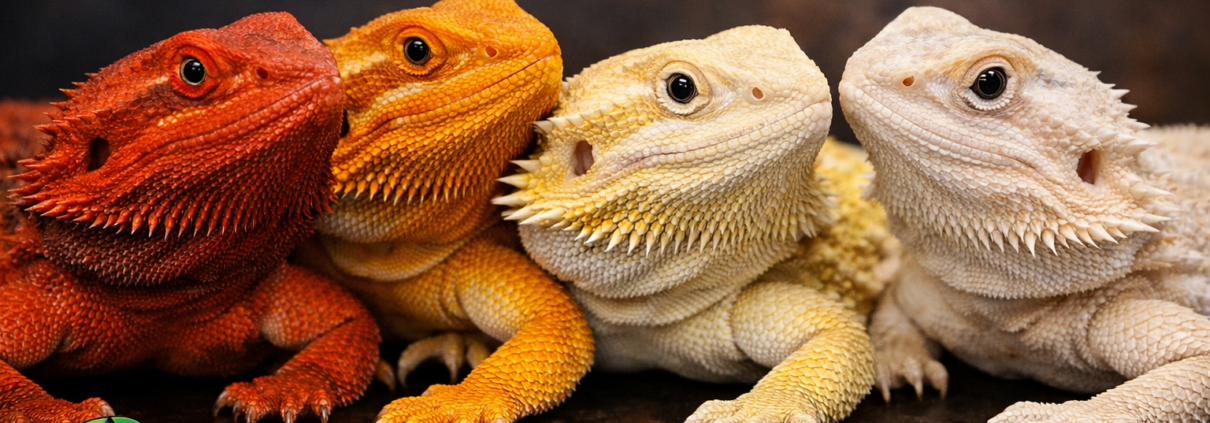
Quick Answer: Bearded dragon colors range from standard wild-type tans and browns to vivid reds, oranges, yellows, and near-whites produced through selective breeding. The color a bearded dragon displays depends on its genetic morph, its health, and its environment. If you're buying a bearded dragon in 2026, understanding color morphs helps you choose the right animal and avoid overpaying for a mislabeled or unhealthy pet.
Key Takeaways
- Bearded dragon colors are driven by genetics (morph), temperature, mood, and overall health.
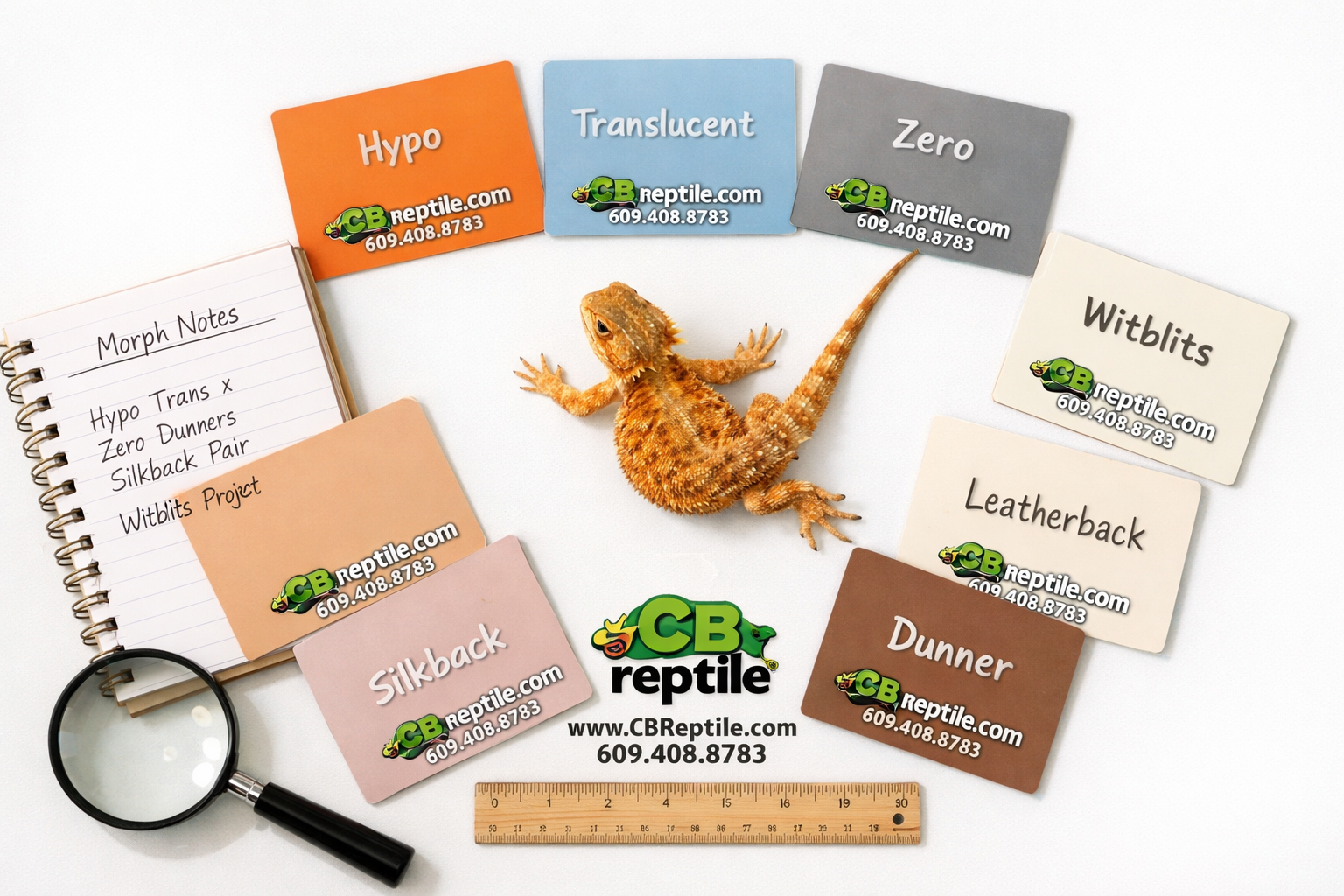
- The most popular color morphs include red, citrus/orange, yellow, hypo, translucent, zero, and witblits.
- Pattern morphs like leatherback, silkback, and dunner affect how color appears on the skin.
- Healthy, captive-bred dragons from reputable breeders display richer, more consistent color than wild-caught or pet store animals.
- Prices for high-quality color morphs range from roughly $100 for standard animals to $500+ for rare zero or witblits morphs.
- Buying from a breeder with an on-site animal biologist, like CB Reptile, ensures genetic accuracy and healthier animals.
- Color alone shouldn't drive your purchase decision — temperament, health, and husbandry history matter just as much.
What Causes Bearded Dragon Colors in the First Place?
Bearded dragon color is controlled by three main factors: genetics, physiology, and environment. The genetics (morph) set the ceiling for what colors are possible. Physiology and environment determine how vividly those colors actually show up.
Genetics are the foundation. Breeders selectively pair dragons carrying recessive or co-dominant color genes to produce offspring with predictable traits. A dragon carrying two copies of the hypo gene, for example, will consistently show reduced melanin and brighter base coloration.
Physiological factors include:
- Temperature: Bearded dragons darken their beard and body when cold to absorb more heat. A warm, well-regulated dragon shows its true colors.
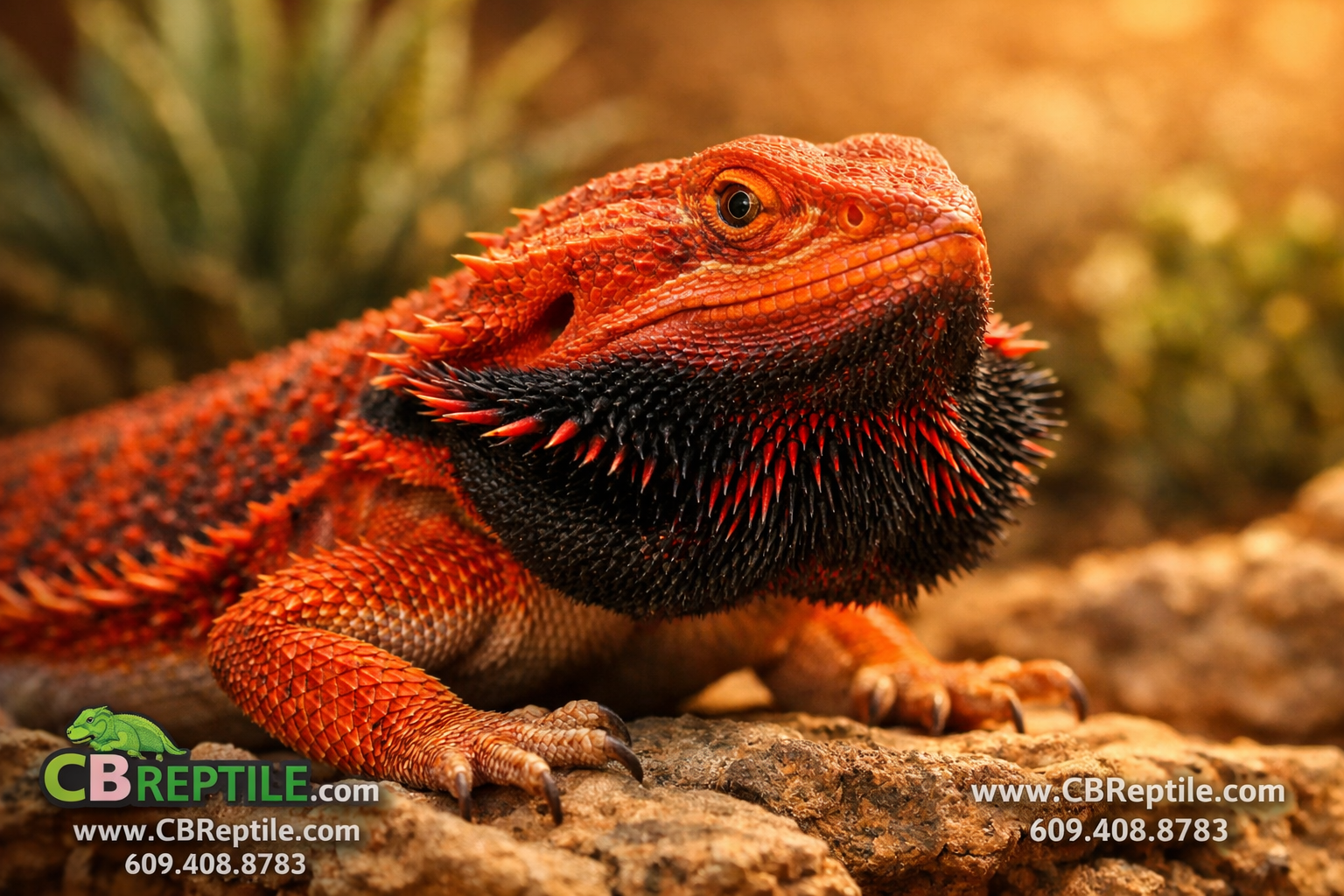
- Mood and stress: A stressed or threatened dragon will often display a black beard and muted body color. A calm, healthy animal in a proper enclosure shows its genetic potential.
- Age: Juvenile dragons often look duller than adults. Full color expression typically develops by 12–18 months.
- Health: Parasites, metabolic bone disease, and poor nutrition all suppress color intensity. A vibrant dragon is usually a healthy dragon.
Quick rule: If a dragon looks dull or pale at a pet store, that doesn't mean it's a low-quality morph. It may simply be stressed. Ask to see it in a proper basking setup before judging color.
A Complete Guide to Bearded Dragon Color Morphs
Bearded dragon color morphs fall into two broad categories: color morphs (which affect pigmentation) and pattern/scale morphs (which affect texture and how color is distributed). Many dragons carry combinations of both.
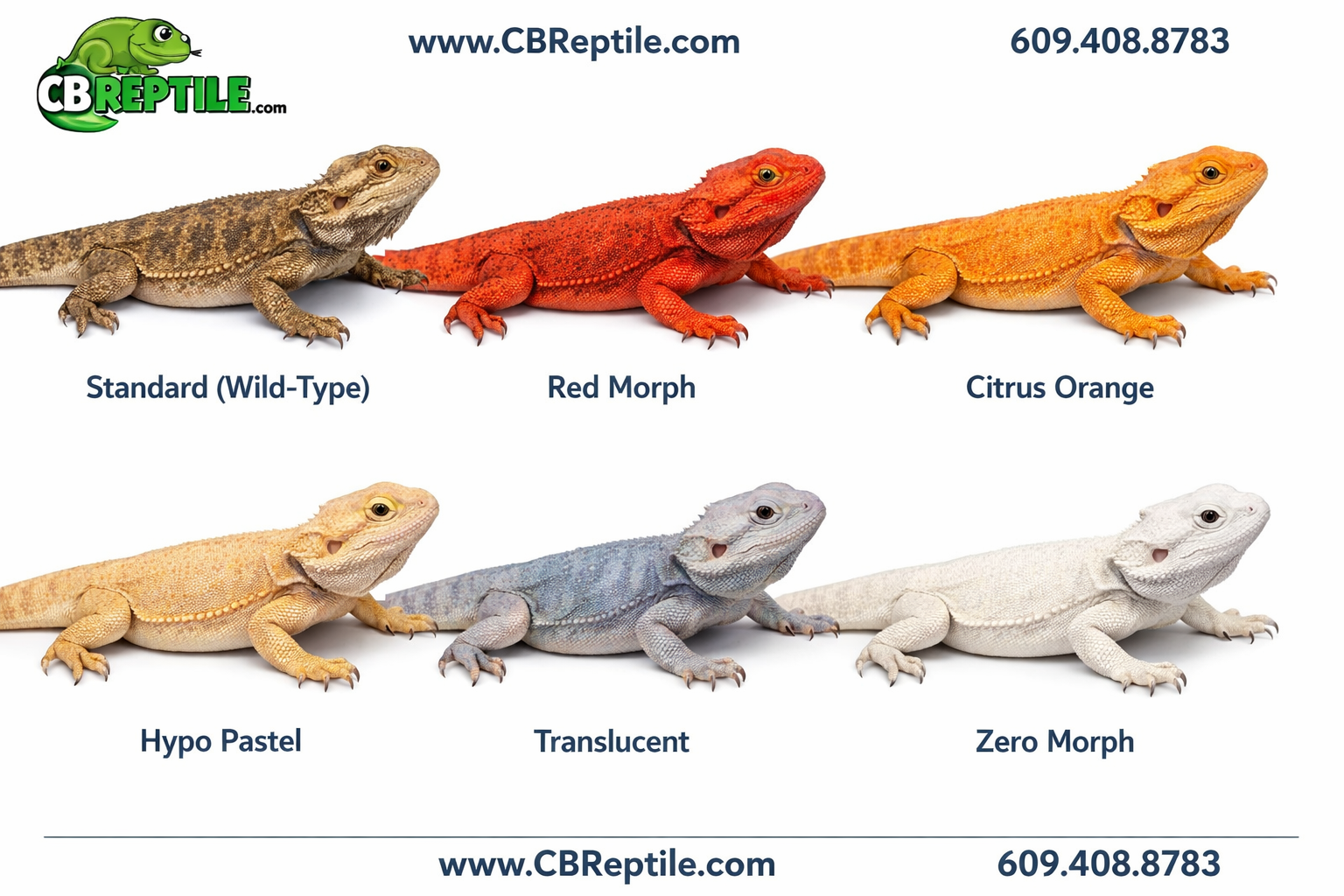
Standard (Wild-Type)
The baseline. Standard bearded dragons display earthy tans, tawny browns, and muted yellows — colors that camouflage well in their native Australian desert habitat. These are the most affordable and widely available. Expect to pay $50–$100 from a reputable breeder.
Red Morph
Red morphs carry enhanced red pigmentation across the body, limbs, and head. The intensity varies from a warm brick-red to a deep blood-red depending on selective breeding lines. German Giant lines sometimes carry impressive red expression. Prices typically range from $150–$300.
Citrus / Orange Morph
Citrus bearded dragons display bright orange-yellow coloration, often most vivid on the head and dorsal surface. The citrus bearded dragon morph is one of the most popular choices for new owners because the color is striking without the premium price tag of rarer morphs. Expect $150–$250 for a well-bred citrus.
Yellow / Sandfire Gold
Sandfire Gold was one of the first selectively bred color lines in the hobby, developed in the 1990s. These animals display warm golden-yellow tones. They're common today and reasonably priced at $100–$200.
Hypo (Hypomelanistic)
Hypo dragons carry reduced melanin, which means less dark pigmentation. The result is a brighter, cleaner base color — whatever underlying color the dragon has (red, orange, yellow) appears more saturated. The hypo bearded dragon morph is a foundational trait that breeders layer with other morphs to intensify color. Prices: $200–$400.
Translucent (Trans)
Translucent morphs have semi-transparent scales that give the skin a slightly blue or purple tint, especially on the belly and eyelids. When combined with red or orange, the effect is striking. Trans dragons often have solid black eyes as hatchlings. Prices: $200–$350.
Zero Morph
Zero dragons lack all pattern and most pigmentation, producing a clean silver-white or pale grey animal. They're one of the rarest and most sought-after morphs. A quality zero from a proven line can cost $400–$700+.
Witblits
Witblits (an Afrikaans word meaning "white lightning") originated from a South African breeding project. These dragons are patternless and display muted earthy tones — cream, grey, or pale brown. Combined with hypo genetics, witblits animals can appear almost white. Prices: $300–$500.
Dunner
The dunner morph changes the direction of scale growth, which alters how light reflects off the skin and creates a unique spotted or streaky pattern. Dunner dragons often display richer color saturation because of this scale orientation. Prices: $200–$400.
Pattern and Scale Morphs That Affect Color Appearance
These morphs don't change pigment genes directly, but they dramatically affect how color looks on the animal.
| Morph | Scale Change | Color Effect |
|---|---|---|
| Leatherback | Reduced spiny scales | Smoother skin, more vivid color |
| Silkback | No spiny scales at all | Most intense color, fragile skin |
| Dunner | Altered scale direction | Spotted pattern, richer saturation |
| Translucent | Semi-transparent scales | Blue/purple tint, black eyes |
Silkback caution: Silkback dragons have no protective scales and require specialized humidity and substrate management. They're not recommended for first-time owners.
How Do Bearded Dragon Colors Change With Mood and Health?
Bearded dragon colors shift constantly based on mood, temperature, and health status. This is one of the most misunderstood aspects of the species for new owners.
Black beard: A darkened beard signals stress, territorial behavior, or cold body temperature. It's not a permanent color — it's a physiological response.
Darkened body: Similar to the beard, a dragon that looks overall darker than usual is often cold or stressed. Move it to a proper basking spot (95–110°F) and observe the color change in real time.
Pale or washed-out color: This can indicate illness, parasites, or improper UVB lighting. A dragon that consistently looks pale despite proper temperatures warrants a vet visit.
Bright, saturated color: A relaxed, warm, well-fed dragon in a proper enclosure will display its genetic color potential most accurately. This is the color you should judge when purchasing.
Common mistake: Many buyers see a stressed dragon in a pet store tank and assume it's a low-grade animal. The same dragon in a proper home setup may display dramatically better color within weeks.
What Are the Most Popular Bearded Dragon Colors for New Owners?
For first-time buyers, citrus/orange and red morphs offer the best combination of visual impact and availability. Hypo morphs add brightness to any base color and are widely bred.
Best morphs for beginners:
- Citrus or orange — striking color, widely available, moderate price
- Red — bold and impressive, good availability from quality breeders
- Hypo — enhances any base color, healthy and robust lines available
- Standard — most affordable, great for owners focused on temperament over color
Morphs better suited to experienced owners:
- Silkback — requires specialized care due to scaleless skin
- Translucent — can be more temperature-sensitive
- Zero/Witblits — expensive, requires verification of genetic lineage
If you're also considering other colorful reptiles, it's worth exploring options like leopard gecko color morphs — another species with an extensive range of selectively bred colors.
Why Buy From a Reputable Bearded Dragon Breeder Instead of a Pet Store?
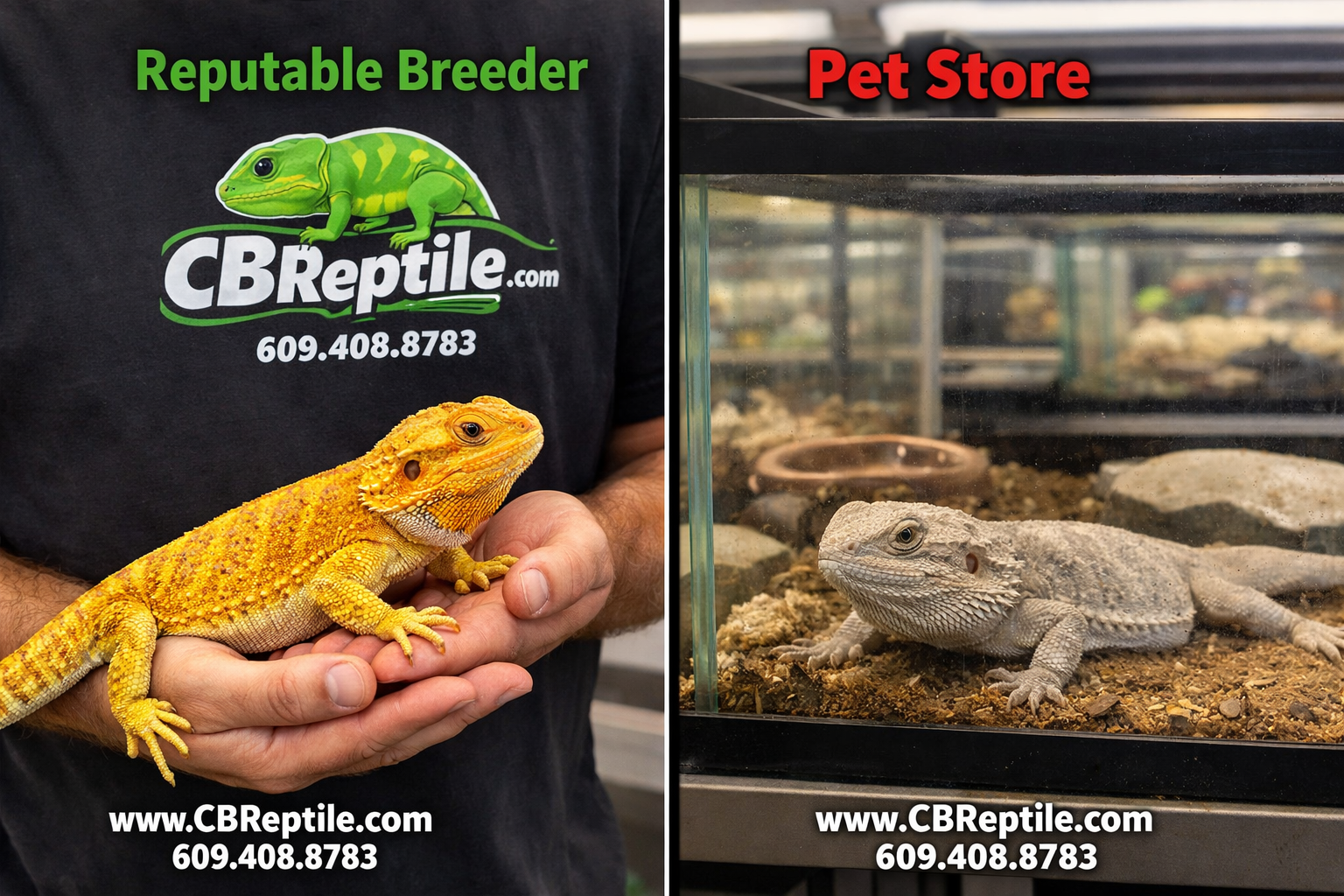
Buying from a reputable bearded dragon breeder gives you genetic accuracy, health guarantees, and an animal that's been properly socialized from hatching.
Here's the honest breakdown:
Pet store problems:
- Morphs are frequently mislabeled or misidentified
- Animals are often stressed, underfed, or carrying parasites from group housing
- Staff rarely have the expertise to verify genetic lineage
- You often can't see the parents or know the breeding history
Reputable breeder advantages:
- Morph genetics are documented and verifiable
- Animals are raised in controlled, clean environments
- Socialization begins early, producing calmer adult dragons
- You can ask about feeding history, health records, and parentage
- Many breeders, including CB Reptile, have an on-site animal biologist who oversees the health and genetics of every animal
CB Reptile employs a real animal biologist on-site, which means every dragon is evaluated for health markers, genetic expression, and proper development before it's offered for sale. That's a standard most pet stores and random online resellers simply cannot meet.
How Much Do Bearded Dragon Colors Affect Price?
Color morph is one of the biggest price drivers in the bearded dragon market. Here's a realistic price guide for 2026:
| Morph | Typical Price Range |
|---|---|
| Standard / Wild-type | $50 – $100 |
| Citrus / Orange | $150 – $250 |
| Red | $150 – $300 |
| Hypo | $200 – $400 |
| Translucent | $200 – $350 |
| Leatherback | $200 – $400 |
| Dunner | $200 – $400 |
| Witblits | $300 – $500 |
| Zero | $400 – $700+ |
| Silkback | $300 – $600 |
What drives price beyond morph?
- Breeder reputation — documented lineage costs more and is worth it
- Generation of selective breeding — a 5th-generation red line is more consistent than a 1st-generation
- Health certification — animals with vet checks and parasite screening command a premium
- Age — juveniles are cheaper than proven adults
Watch out for: Suspiciously cheap "rare morphs" from unknown online sellers. A zero morph for $80 is almost certainly mislabeled or unhealthy. Quality has a floor price.
Where Can You Find Bearded Dragons for Sale From a Trusted Source?
The safest place to find a bearded dragon for sale is directly from a USDA-licensed breeder with verifiable reviews, documented genetics, and live arrival guarantees.
CB Reptile is one of the most trusted sources for captive-bred bearded dragons in the U.S. Every animal is:
- Captive-bred, not wild-caught
- Health-checked by an on-site animal biologist
- Properly identified by morph and genetic line
- Shipped with live arrival guarantees
Avoid buying from:
- General classified sites where sellers have no accountability
- Pet stores that can't tell you where the animal came from
- Social media marketplace listings with no verifiable reviews
If you're comparing reptile options, CB Reptile also offers an excellent range of other colorful species, including designer crested geckos and other captive-bred reptiles with documented genetics.
Frequently Asked Questions About Bearded Dragon Colors
Q: Do bearded dragon colors change as they grow?
Yes. Juveniles often display muted or inconsistent color. Full genetic color expression typically develops between 12 and 18 months of age. Don't judge a young dragon's final color by its hatchling appearance.
Q: Can I make my bearded dragon's color brighter?
You can optimize color expression through proper husbandry: correct basking temperatures (95–110°F), full-spectrum UVB lighting, a varied diet rich in carotenoids (leafy greens, squash), and low-stress housing. You cannot change the underlying genetics.
Q: What is the rarest bearded dragon color?
Zero and witblits morphs are among the rarest because they require specific recessive genetics from both parents. A true zero with clean white coloration from a documented line is one of the most valuable animals in the hobby.
Q: Is a black beard always a sign of illness?
No. Black bearding is a normal behavioral response to stress, cold, or territorial display. If the beard is consistently black alongside lethargy, weight loss, or appetite changes, then a vet check is warranted.
Q: What's the difference between hypo and translucent morphs?
Hypo (hypomelanistic) reduces dark melanin pigment, making base colors brighter. Translucent makes scales semi-transparent, adding a blue or purple tint and causing solid black eyes in hatchlings. These are separate genetic traits that can be combined.
Q: Can two standard bearded dragons produce a colored morph offspring?
Only if both parents carry recessive color genes without expressing them. This is why documented breeding records from a reputable breeder matter — you know exactly what genetics are in the line.
Q: Are silkback bearded dragons healthy?
Silkbacks can live healthy lives but require specialized care: higher humidity than standard dragons, careful substrate selection to avoid skin abrasion, and more frequent vet monitoring. They're not recommended for first-time owners.
Q: What color morph is best for a first-time owner?
Citrus, orange, or red morphs offer great visual appeal with manageable care requirements. Hypo versions of these add brightness. Avoid silkbacks as a first dragon.
Q: How do I verify a morph is genuine?
Ask the breeder for parent photos and genetic documentation. A reputable breeder can show you the sire and dam and explain the genetic cross. If a seller can't provide this, treat the morph label as unverified.
Q: Do bearded dragon colors affect temperament?
No. Color morph and temperament are not linked. Temperament is shaped by genetics for docility (which good breeders select for), early socialization, and handling history.
Conclusion: Choosing the Right Bearded Dragon Color for You
Bearded dragon colors are one of the most exciting aspects of the hobby, but they should be one factor in your decision — not the only one. A vividly colored dragon from a reputable breeder with documented genetics, proper health screening, and early socialization will make a far better pet than a cheap "rare morph" from an unverified source.
Your actionable next steps:
- Decide on your budget — factor in both the purchase price and setup costs (enclosure, UVB lighting, thermostat).
- Choose a morph category — standard or citrus for beginners; hypo or red for those wanting more color impact; zero or witblits for experienced keepers with a higher budget.
- Research the breeder — look for USDA licensing, live arrival guarantees, and verifiable reviews. CB Reptile's on-site animal biologist sets a standard worth seeking out.
- Ask the right questions — request parent photos, feeding records, and morph documentation before committing.
- Set up the enclosure first — have the basking spot, UVB, and hides ready before your dragon arrives so it can settle in without added stress.
The right bearded dragon in the right setup will show you its full color potential within weeks. Start with health and genetics, and the colors will follow.
References
- Pogona vitticeps (Central Bearded Dragon) — Encyclopedia of Life, accessed 2024. https://eol.org
- Wicker-Thomas, C. (2011). Pigmentation genetics in reptiles: an overview. Pigment Cell & Melanoma Research, 24(4), 573–574.
- Reptiles Magazine — Bearded Dragon Care Guide, 2023. https://www.reptilesmagazine.com
- CB Reptile — Citrus Bearded Dragon Morph. https://www.cbreptile.com/citrus-bearded-dragon-morph/
- CB Reptile — Hypo Bearded Dragon Morph. https://www.cbreptile.com/hypo-bearded-dragon-morph-2/
Tags: bearded dragon colors, bearded dragon morphs, bearded dragon color guide, hypo bearded dragon, citrus bearded dragon, zero morph, translucent bearded dragon, reptile color morphs, bearded dragon for sale, captive bred bearded dragon, bearded dragon breeder, red bearded dragon