
Last updated: April 15, 2026
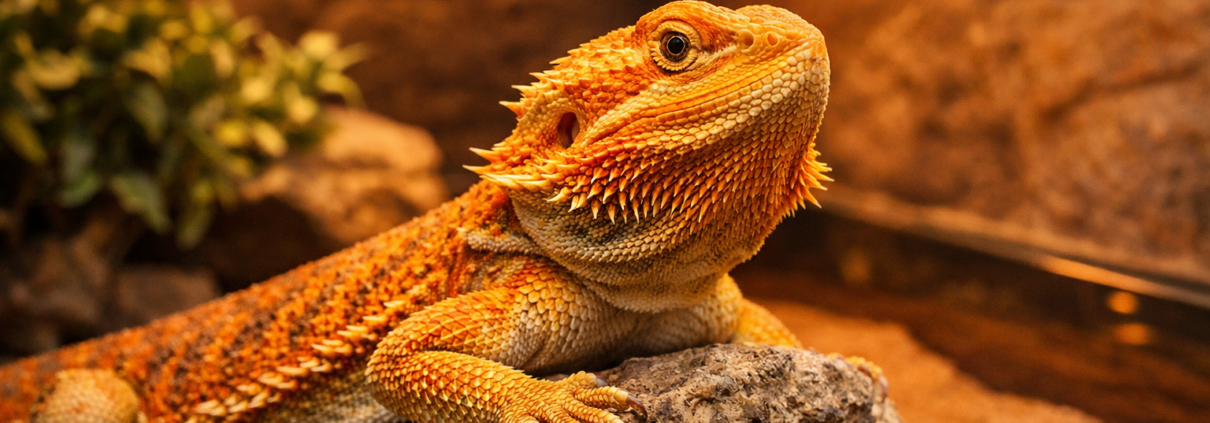
Quick Answer: Bearded dragon husbandry covers everything from enclosure setup and lighting to diet, handling, and health monitoring. A properly cared-for bearded dragon needs a 40–120 gallon enclosure with a basking spot of 100–110°F, full-spectrum UVB lighting, a varied diet of insects and leafy greens, and daily interaction. Get these fundamentals right from day one, and your beardie can live 10–15 years.
Key Takeaways
- 🦎 Bearded dragons need a temperature gradient — a hot basking side (100–110°F) and a cool side (80–85°F) — not a uniformly heated enclosure.
- 💡 UVB lighting is non-negotiable. Without it, bearded dragons develop metabolic bone disease, one of the most common causes of early death in captivity.
- 🥗 Adults eat roughly 70% plant matter and 30% insects; juveniles flip that ratio to support rapid growth.
- 🏠 A 120-gallon enclosure is the gold standard for adult bearded dragons; 40 gallons works for hatchlings only.
- 🧪 Calcium and D3 supplementation should be dusted onto feeder insects 3–5 times per week for juveniles, less frequently for adults.
- 🐉 Buying from a reputable bearded dragon breeder significantly reduces the risk of parasites, respiratory infections, and genetic defects.
- 💰 Quality captive-bred bearded dragons cost more upfront but save hundreds in vet bills compared to pet-store animals.
- 🌡️ Brumation (a winter slowdown similar to hibernation) is normal in adults and should not be mistaken for illness.
- 🤝 Daily gentle handling from a young age produces calm, sociable adults.
- ✅ Always quarantine a new bearded dragon for 30–60 days before introducing it to other reptiles.
What Does Proper Bearded Dragon Husbandry Actually Involve?
Bearded dragon husbandry is the full set of practices that keep Pogona vitticeps — the central bearded dragon — healthy in captivity. It covers enclosure design, temperature and lighting management, nutrition, hydration, handling, and preventive health care.
Getting all of these right together matters more than perfecting any single element. A dragon in a beautiful enclosure with poor nutrition will still get sick. One with a great diet but no UVB will develop bone deformities within months. Think of husbandry as a system, not a checklist.
Who this guide is for: Anyone considering purchasing their first bearded dragon, or someone who just brought one home and wants to make sure they're set up correctly.
What Size Enclosure Does a Bearded Dragon Need?
A juvenile bearded dragon (under 10 inches) can start in a 40-gallon tank, but adults need a minimum of 75–120 gallons. Most experienced keepers recommend going straight to a 4x2x2-foot enclosure (roughly 120 gallons) so you don't have to upgrade within a year.
Enclosure size by age:
| Age | Minimum Size | Recommended Size |
|---|---|---|
| Hatchling (0–3 months) | 20 gallons | 40 gallons |
| Juvenile (3–12 months) | 40 gallons | 75 gallons |
| Sub-adult / Adult (12+ months) | 75 gallons | 120 gallons (4x2x2 ft) |
Enclosure type matters too. Front-opening PVC or wooden enclosures hold heat better than glass tanks and cause less stress during feeding and handling (approaching from the front feels less threatening than from above). Glass tanks work, but you'll spend more on heating.
Common mistake: Keeping an adult bearded dragon in a 40-gallon tank long-term. Restricted space leads to stress, stunted growth, and territorial aggression. If you're buying a dragon today, buy the right-sized enclosure now.
How Do You Set Up Heating and Lighting for Bearded Dragon Husbandry?
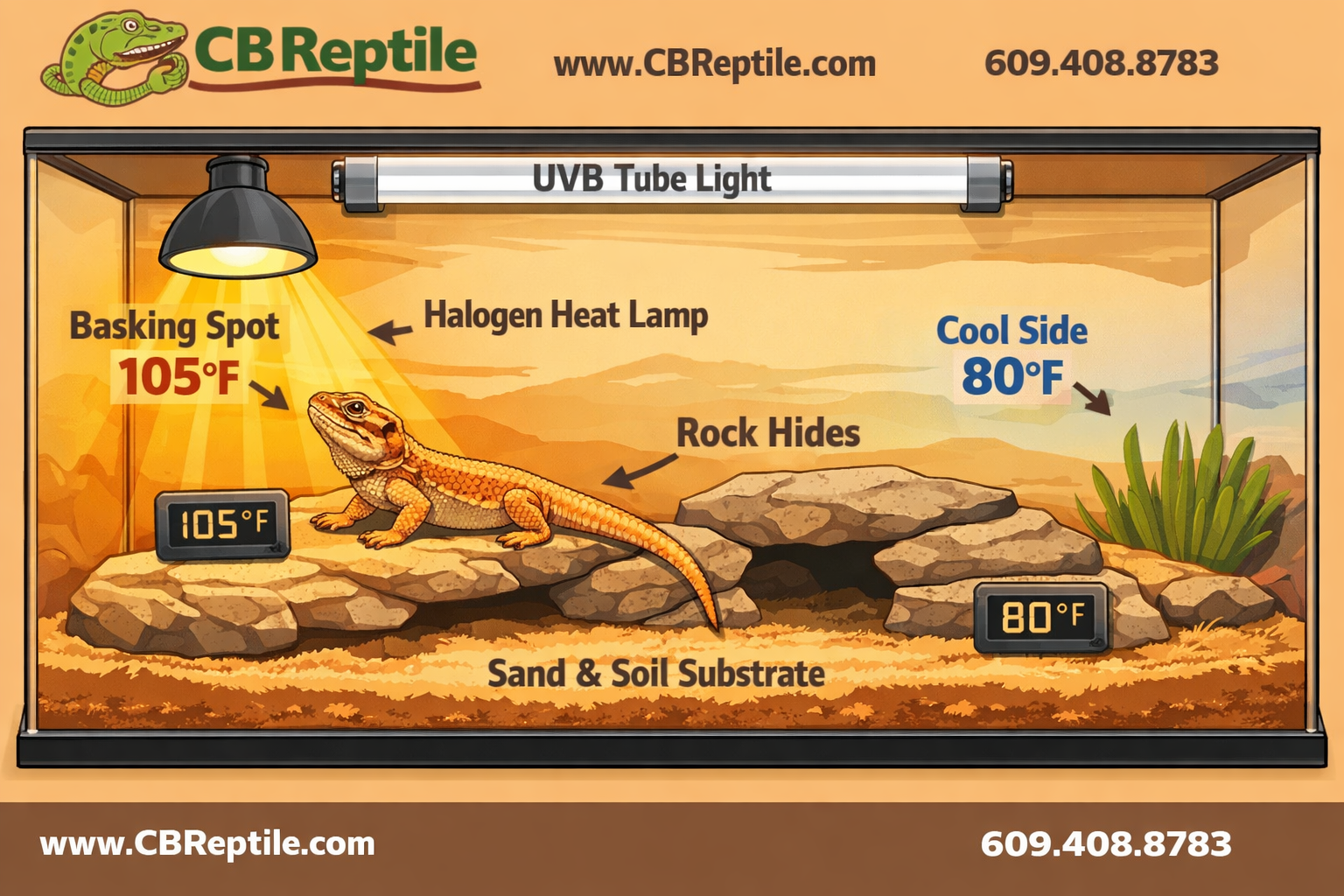
Lighting and heating are the two areas where bearded dragon husbandry most often goes wrong. Bearded dragons are diurnal (active during the day) and rely on external heat sources to regulate their body temperature — a process called thermoregulation.
Temperature targets:
- Basking spot: 100–110°F for adults; 105–115°F for juveniles
- Cool side: 80–85°F during the day
- Nighttime: No lower than 65°F (use a ceramic heat emitter if your home gets cold)
- Substrate surface under basking spot: Check this separately — it can run 10–15°F hotter than air temperature
UVB lighting is critical. Bearded dragons synthesize vitamin D3 through UVB exposure, which allows them to absorb calcium. Without adequate UVB, they develop metabolic bone disease (MBD) — a painful, progressive condition that deforms the skeleton. Use a T5 HO UVB bulb rated for 10–12% UVB output (such as the Arcadia 12% or Zoo-Med Reptisun 10.0 T5 HO). Replace UVB bulbs every 6–12 months even if they still emit visible light, because UVB output degrades before the bulb burns out.
Photoperiod (light schedule):
- Summer: 14 hours light / 10 hours dark
- Winter: 10–12 hours light / 12–14 hours dark
- Use a timer to keep this consistent
"UVB is not optional equipment — it is the single most important piece of hardware in a bearded dragon enclosure."
Substrate options:
- Recommended: Bioactive soil mix (topsoil + sand blend), ceramic tile, or reptile carpet for juveniles
- Avoid: Loose particle substrates like calci-sand or walnut shell for juveniles under 6 months (ingestion risk)
What Should Bearded Dragons Eat?
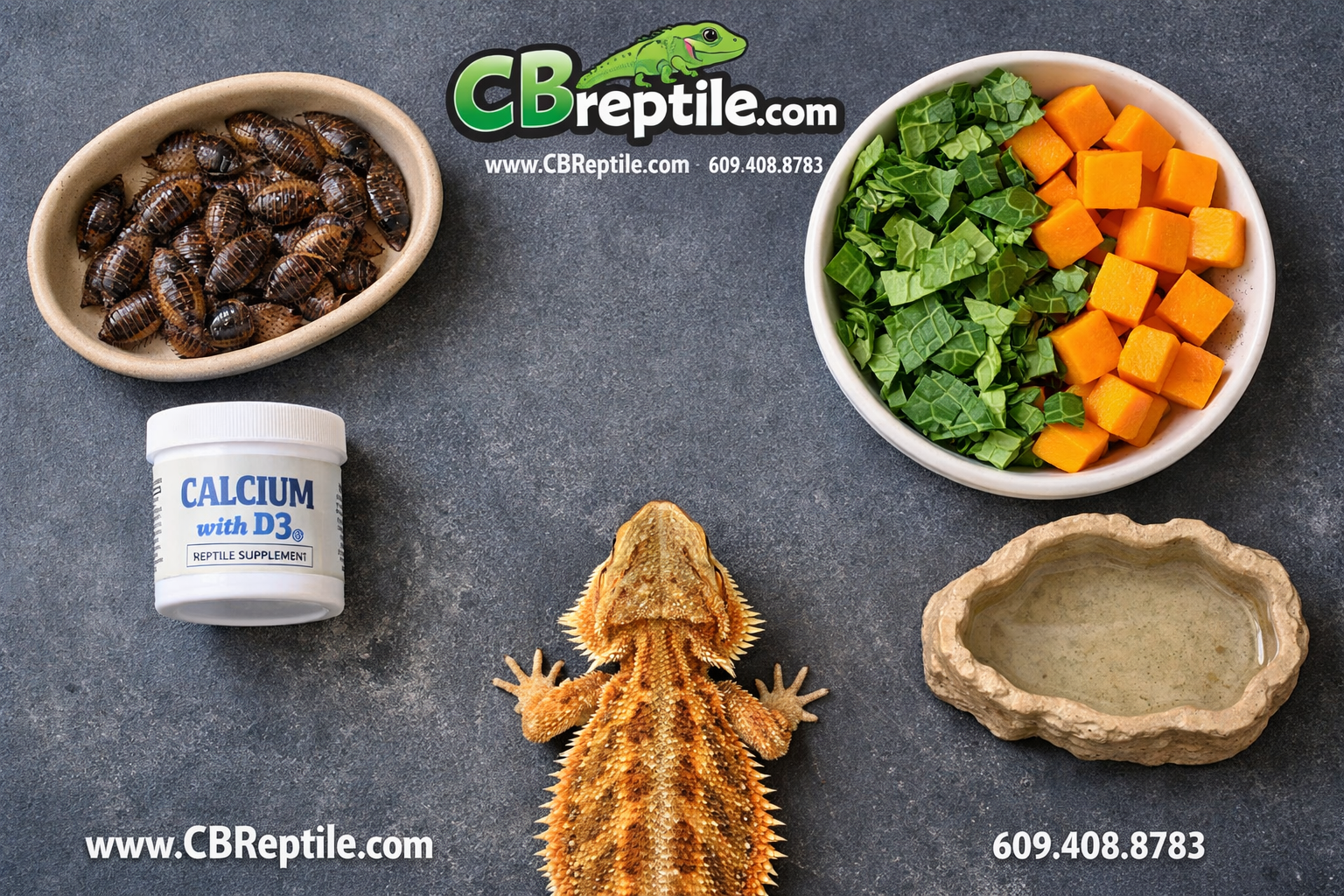
A bearded dragon's diet changes significantly as it ages. Juveniles need more protein to fuel rapid growth; adults need more plant matter to maintain healthy weight without becoming obese.
Diet ratios by life stage:
| Life Stage | Insects | Plant Matter |
|---|---|---|
| Hatchling / Juvenile | 70% | 30% |
| Sub-adult | 50% | 50% |
| Adult | 30% | 70% |
Best feeder insects:
- Dubia roaches (best nutritional profile, low odor)
- Black soldier fly larvae (high calcium)
- Crickets (widely available, less nutritious than dubia)
- Hornworms and silkworms (excellent hydration, use as treats)
Best staple greens:
- Collard greens, mustard greens, dandelion greens, endive, escarole
- Butternut squash and acorn squash (good variety)
- Avoid: Spinach, beet greens, and iceberg lettuce (spinach and beet greens bind calcium; iceberg has almost no nutritional value)
Supplementation schedule:
- Calcium without D3: Dust insects at every feeding for juveniles; 3x per week for adults
- Calcium with D3: 2–3x per week for juveniles; 1–2x per week for adults
- Multivitamin: Once per week for all ages
Hydration: Bearded dragons get most of their water from food, but offer a shallow water dish and give 10–15 minute lukewarm baths 2–3 times per week. Baths also help with shedding and stimulate bowel movements.
Why Does It Matter Where You Buy Your Bearded Dragon?
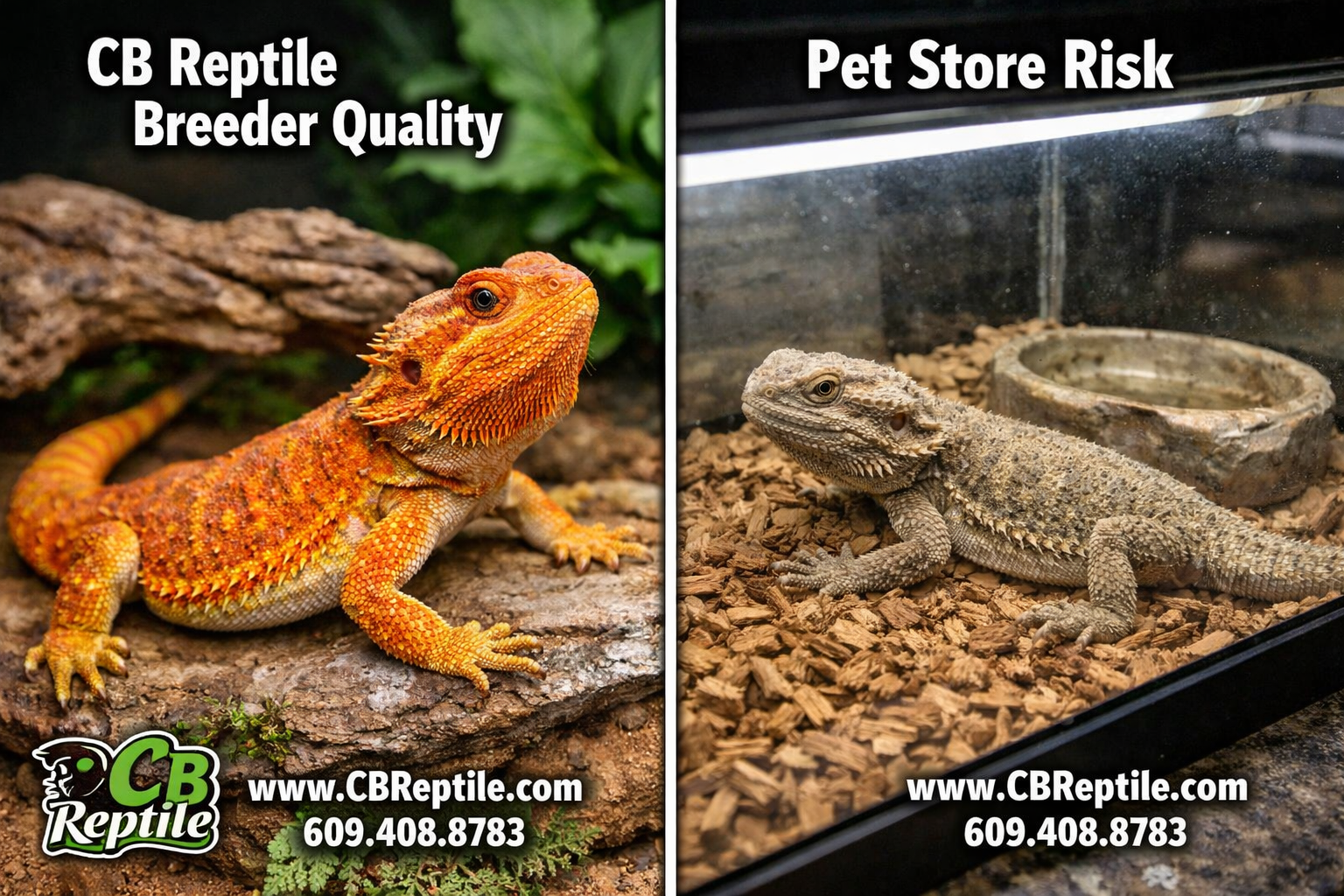
Buying from a reputable captive-bred source is one of the most important decisions in bearded dragon husbandry. The difference between a healthy, well-started animal and a stressed, parasite-laden one often comes down entirely to the source.
CB Reptile is a professional reptile breeding facility with an animal biologist on-site, ensuring that every animal is health-checked, properly sexed, and raised under correct husbandry conditions from day one. When you buy from a source like CB Reptile, you're getting an animal whose full history is known — what it's been eating, how it's been housed, and whether it's shown any signs of illness.
Captive-bred breeder vs. pet store vs. random online reseller:
| Factor | Reputable Breeder | Pet Store | Random Online Reseller |
|---|---|---|---|
| Health history known | ✅ Yes | ❌ Rarely | ❌ Rarely |
| Parasite-tested | ✅ Often | ❌ Rarely | ❌ Unknown |
| Correct age/sex | ✅ Yes | ⚠️ Sometimes | ⚠️ Sometimes |
| Genetic background known | ✅ Yes | ❌ No | ❌ No |
| Post-purchase support | ✅ Yes | ❌ No | ❌ Rarely |
| Price | Higher upfront | Lower upfront | Variable |
Pet stores typically source animals from mass-production facilities. These animals are often stressed, malnourished, and carrying internal parasites by the time they reach the store floor. The lower sticker price is almost always offset by early veterinary costs.
If you're looking for a bearded dragon for sale from a source you can trust, working with a dedicated breeder is the right move.
Price reality check: A quality captive-bred bearded dragon from a reputable breeder typically costs $60–$200 depending on morph and age. Treating a sick pet-store dragon for parasites, respiratory infection, or MBD can cost $300–$800 or more in the first year alone.
What Are the Most Popular Bearded Dragon Color Morphs?
Bearded dragon morphs refer to animals selectively bred for specific colors, patterns, or scale characteristics. Understanding morphs helps you choose an animal that matches your preferences and budget.
Common color morphs:
- Normal/Standard: Wild-type coloration — tan, brown, and cream tones. Most affordable.
- Hypo (Hypomelanistic): Reduced dark pigmentation, producing brighter, cleaner colors with lighter nails. See the hypo bearded dragon morph for examples.
- Citrus: Bright yellow-orange base coloration, often combined with hypo genetics. The citrus bearded dragon morph is one of the most visually striking options available.
- Translucent: Semi-transparent scales that give a blue or purple tint to the belly and spikes; dark eyes are common.
- Leatherback: Reduced or absent lateral spikes, producing a smoother appearance and more vivid colors.
- Silkback (Silkie): No scales at all — requires more intensive husbandry due to skin sensitivity.
- Zero: Completely patternless and pale, ranging from silver-white to gray.
- Witblits: Pattern-free with earthy tones; different genetics from Zero.
- Dunner: Altered scale and pattern orientation that gives a spotted, dotted appearance.
- German Giant: A size morph rather than a color morph — these animals grow significantly larger than standard bearded dragons.
Morph pricing guide (approximate 2026 estimates):
| Morph | Typical Price Range |
|---|---|
| Normal | $40–$80 |
| Hypo | $80–$150 |
| Citrus | $100–$200 |
| Leatherback | $100–$250 |
| Translucent | $150–$300 |
| Zero | $200–$400 |
| Silkback | $200–$500 |
| Multi-gene combos | $300–$800+ |
Choose a morph based on: Visual preference and budget. All morphs have the same care requirements with the exception of silkbacks, which need extra humidity management and more frequent baths due to their lack of protective scaling.
How Do You Handle and Socialize a Bearded Dragon?
Daily handling from a young age is the single most effective way to produce a calm, people-friendly adult bearded dragon. Bearded dragons are one of the most handleable reptile species — they genuinely tolerate and often seem to enjoy human interaction when socialized properly.
Handling guidelines:
- Start slow: 5–10 minutes per day for the first week after bringing your dragon home
- Support the body: Always support the full length of the body and tail with two hands
- Read body language: A flattened body, black beard, open mouth, or tail-whipping are stress signals — put the dragon down and try again later
- Avoid handling during: Feeding time, shedding, brumation, and the first 2 weeks in a new home (let them settle)
- Build up gradually: Work toward 20–30 minutes of daily handling once the dragon is comfortable
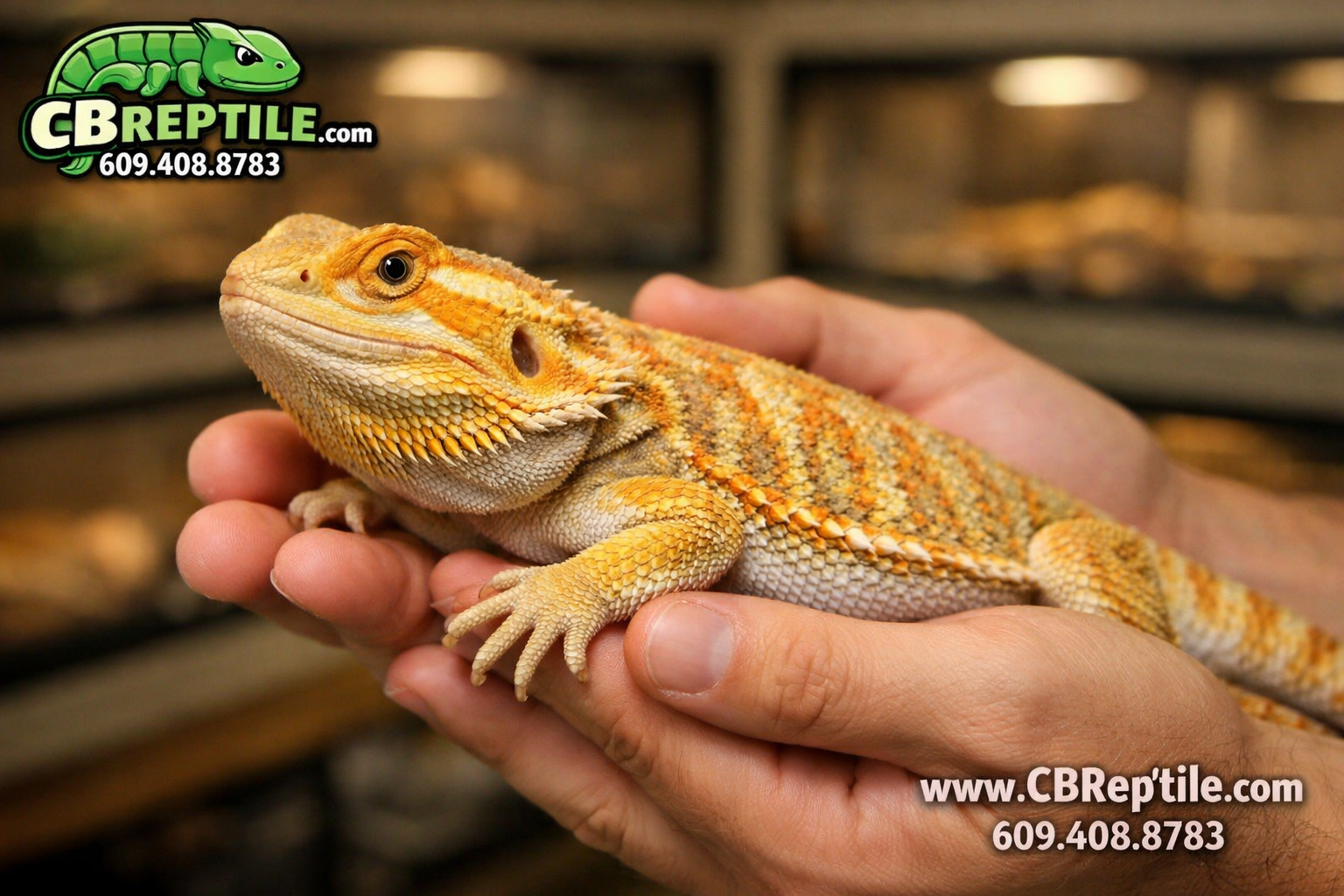
Signs of a well-socialized dragon: Relaxed body posture, willingness to sit on your shoulder or chest, slow deliberate movements, no beard darkening during handling.
Brumation note: Adult bearded dragons may enter a period of reduced activity and appetite in autumn and winter. This is normal and not a sign of illness. Reduce handling during brumation and let the dragon sleep as needed.
What Are the Most Common Bearded Dragon Health Problems?
Most health issues in bearded dragons trace back directly to husbandry errors. Fixing the environment often resolves the problem without a vet visit — but some conditions require professional care.
Common issues and causes:
- Metabolic bone disease (MBD): Caused by inadequate UVB or calcium deficiency. Signs: soft jaw, tremors, bowed limbs. Preventable with proper lighting and supplementation.
- Impaction: Blockage in the digestive tract, often from loose substrate ingestion. Signs: no bowel movements, lethargy, loss of appetite. Warm baths and gentle belly massage help mild cases; severe cases need a vet.
- Respiratory infection: Usually caused by temperatures that are too low or drafts. Signs: wheezing, mucus around nostrils, open-mouth breathing. Requires veterinary antibiotics.
- Parasites: Internal parasites (especially pinworms and coccidia) are common in pet-store animals. A fecal exam from a reptile vet is the only way to confirm. This is one of the strongest arguments for buying from a reputable breeder.
- Yellow fungus disease (CANV): A serious fungal infection with no reliable cure. Buying from a clean, tested source is the best prevention.
When to see a vet immediately: Seizures, prolonged loss of appetite (more than 3 weeks outside of brumation), labored breathing, significant weight loss, or visible injuries.
Frequently Asked Questions About Bearded Dragon Husbandry
Q: How long do bearded dragons live in captivity?
A: With proper bearded dragon husbandry, most bearded dragons live 10–15 years. Some well-cared-for individuals reach 15+ years.
Q: Do bearded dragons need a companion?
A: No. Bearded dragons are solitary by nature and should be housed alone. Cohabitation leads to competition, stress, and injury — even between females.
Q: How often should I feed my adult bearded dragon?
A: Adults eat once daily or every other day. Offer insects 3–4 times per week and fresh greens daily.
Q: Can I use a red or blue night bulb for heating?
A: No. Bearded dragons can see red and blue light, so these bulbs disrupt their sleep. Use a ceramic heat emitter (CHE) or a deep heat projector for nighttime heating if needed.
Q: How do I know if my bearded dragon is shedding versus sick?
A: During a shed, the skin turns dull and slightly gray, the eyes may puff out, and the dragon may be less active and less interested in food. This is normal and lasts 1–2 weeks. If symptoms persist beyond 3 weeks or include discharge, lethargy, or weight loss, consult a vet.
Q: What's the best substrate for a bearded dragon?
A: For juveniles, ceramic tile or reptile carpet is safest. For adults, a bioactive mix of 70% organic topsoil and 30% play sand works well and supports naturalistic behaviors.
Q: Do bearded dragons need baths?
A: Baths aren't strictly required, but 10–15 minute lukewarm soaks 2–3 times per week support hydration, aid shedding, and stimulate digestion.
Q: Is a hypo bearded dragon harder to care for than a normal one?
A: No. All bearded dragon morphs — including hypo, citrus, and leatherback — have identical care requirements. Only silkbacks need modified husbandry due to their lack of scales.
Q: At what age can I start handling my bearded dragon?
A: You can begin gentle handling as early as 4–6 weeks of age, but keep sessions short (5 minutes) and avoid handling during feeding or shedding.
Q: How do I find a reputable bearded dragon breeder?
A: Look for breeders who can provide feeding records, health history, and the genetic background of their animals. CB Reptile maintains an on-site animal biologist and offers fully captive-bred animals with documented care histories.
Conclusion: Your Next Steps Before Buying a Bearded Dragon
Good bearded dragon husbandry isn't complicated, but it does require preparation. The dragons that end up sick within their first year are almost always victims of two things: inadequate enclosure setup and poor sourcing. Fix both before you bring an animal home, and you're already ahead of most new owners.
Your action checklist:
- Buy the right enclosure first — 120 gallons (4x2x2 ft) if you're getting a juvenile that will grow into an adult.
- Install a T5 HO UVB bulb rated 10–12% and a quality basking lamp before the dragon arrives.
- Set up and test temperatures for 48–72 hours before introducing your dragon.
- Source your dragon from a reputable breeder — not a pet store or anonymous online listing.
- Schedule a baseline vet visit within the first 30 days, including a fecal parasite exam.
- Stock up on feeders and greens so you're not scrambling on day one.
If you're exploring different morphs or want to see what captive-bred animals look like at their best, browse available animals from trusted bearded dragon breeders who prioritize health over volume.
For those interested in other reptile species with similar care philosophies, it's worth reading about chameleon habitat building or exploring reptiles for sale from quality sources to compare your options before committing.
Bearded dragons are genuinely rewarding animals. Get the husbandry right from the start, and you'll have a healthy, interactive companion for well over a decade.
References
- Stahl, S. J., & Donoghue, S. (2010). Nutrition of reptiles. In M. S. Hand et al. (Eds.), Small Animal Clinical Nutrition (5th ed.). Mark Morris Institute.
- Mader, D. R. (2006). Reptile Medicine and Surgery (2nd ed.). Saunders Elsevier.
- Diehl, J. J. E., & Helmer, P. J. (2014). Metabolic bone disease in reptiles. Veterinary Clinics of North America: Exotic Animal Practice, 17(1), 1–17.
- Ferguson, G. W., et al. (2005). Do Panther Chameleons bask to regulate endogenously synthesized vitamin D? Physiological and Biochemical Zoology, 78(3), 218–233.
- Wotherspoon, D. (2007). Ecology and natural history of the central bearded dragon (Pogona vitticeps). University of Canberra thesis.
Tags: bearded dragon husbandry, bearded dragon care, bearded dragon morphs, bearded dragon enclosure setup, UVB lighting for reptiles, bearded dragon diet, captive bred bearded dragons, hypo bearded dragon, citrus bearded dragon, reptile husbandry, bearded dragon health, buying a bearded dragon