
The Ultimate Blue Eye Lucy Ball Python Cost Guide for 2025 🐍
Imagine walking into a reptile expo and seeing a snake so breathtaking that it stops you in your tracks—pure white scales gleaming under the lights, piercing blue eyes that seem almost otherworldly. That's the magic of the Blue Eyed Leucistic (BEL) ball python, and if you're wondering about the blue eye lucy ball python cost, you're not alone in being captivated by these stunning serpents.
As someone who has worked with reptiles for over a decade, I can tell you that the Blue Eye Lucy represents one of the most sought-after morphs in the ball python world. But with their ethereal beauty comes a price tag that reflects their rarity and the complex genetics behind their creation. Understanding the true cost of owning one of these magnificent creatures goes far beyond the initial purchase price.
Key Takeaways
• Initial blue eye lucy ball python cost ranges from $800-$3,000+ depending on genetics, age, and breeder reputation
• Setup costs add $300-$800 for proper terrarium, heating, lighting, and accessories
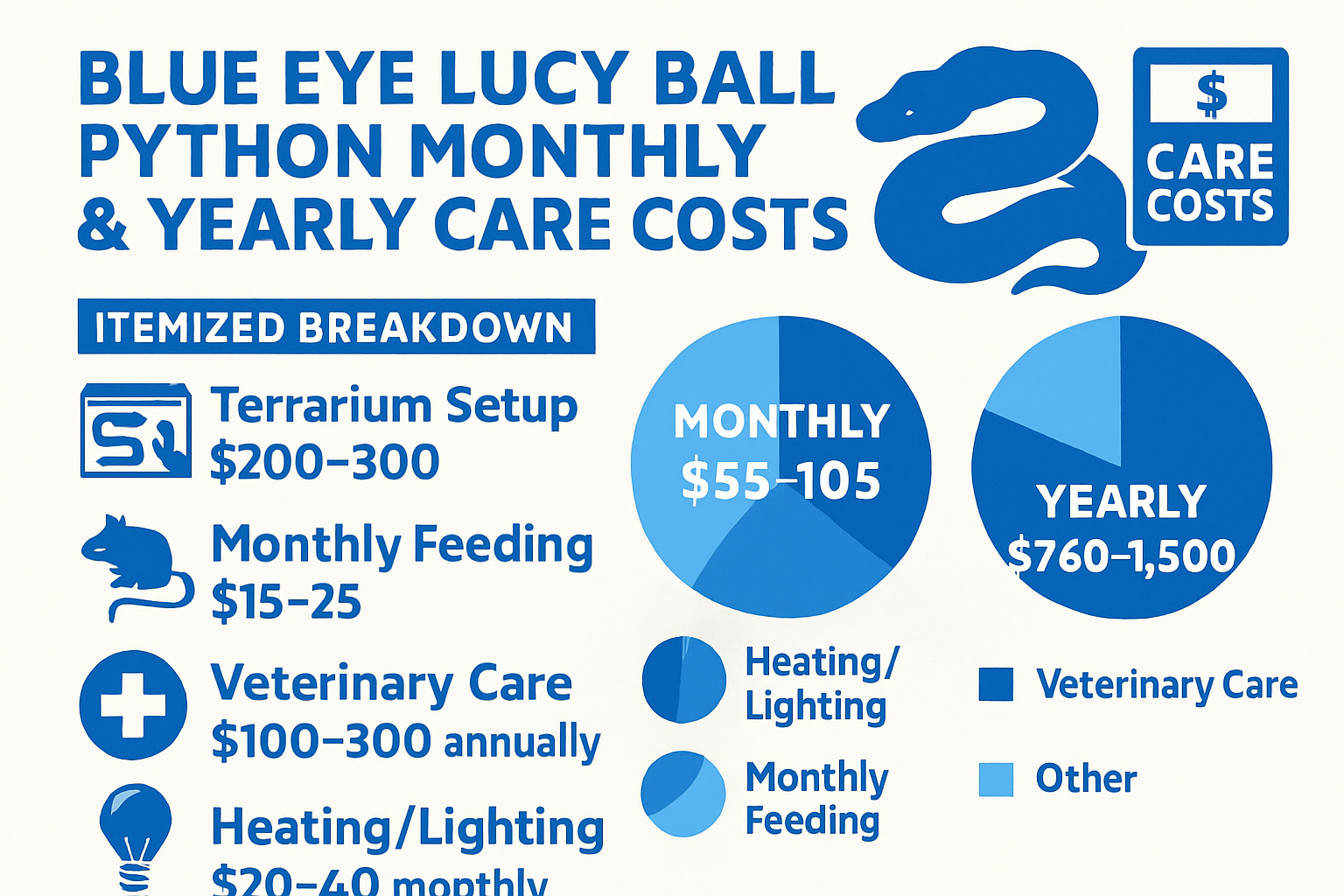
• Monthly care expenses average $25-$50 including food, utilities, and maintenance
• Breeding quality specimens command premium prices of $2,000-$5,000+ due to genetic value
• Long-term ownership costs over 20+ years can exceed $8,000-$12,000 total
Understanding Blue Eye Lucy Ball Python Genetics and Rarity
The Blue Eyed Leucistic ball python isn't just another pretty face in the reptile world—it's a genetic marvel that explains much about the blue eye lucy ball python cost. Unlike albino snakes that lack all pigment, BEL ball pythons are leucistic, meaning they lack most pigmentation but retain their striking blue eyes.
The Science Behind the Beauty
These stunning serpents result from specific genetic combinations involving several different genes:
- Mojave x Mojave (Super Mojave)
- Mojave x Lesser/Butter
- Mojave x Phantom
- Lesser x Lesser (Super Lesser)
- Butter x Butter (Super Butter)
Each of these combinations can produce the coveted blue-eyed leucistic phenotype, but the genetics significantly impact pricing. A Super Mojave BEL typically commands higher prices than other genetic combinations due to the Mojave gene's popularity in breeding projects.
Rarity Factors Affecting Price
The rarity of Blue Eye Lucy ball pythons stems from several factors:
Genetic Complexity: Producing BELs requires specific gene combinations, making them less common than single-gene morphs.
Breeding Challenges: Not all pairings guaranteed to produce BELs actually do, and clutch sizes can be smaller.
Quality Variations: Even within BEL offspring, there can be variations in blue eye intensity and white coloration purity.
When shopping for these remarkable snakes, CB Reptile stands out as a premier source, offering high-quality specimens with detailed genetic information and health guarantees.
Breaking Down the Blue Eye Lucy Ball Python Cost Structure
Understanding the blue eye lucy ball python cost requires examining multiple price factors that influence what you'll pay for these exceptional reptiles. The pricing structure isn't arbitrary—it reflects genetics, quality, age, and market demand.
Initial Purchase Prices by Category
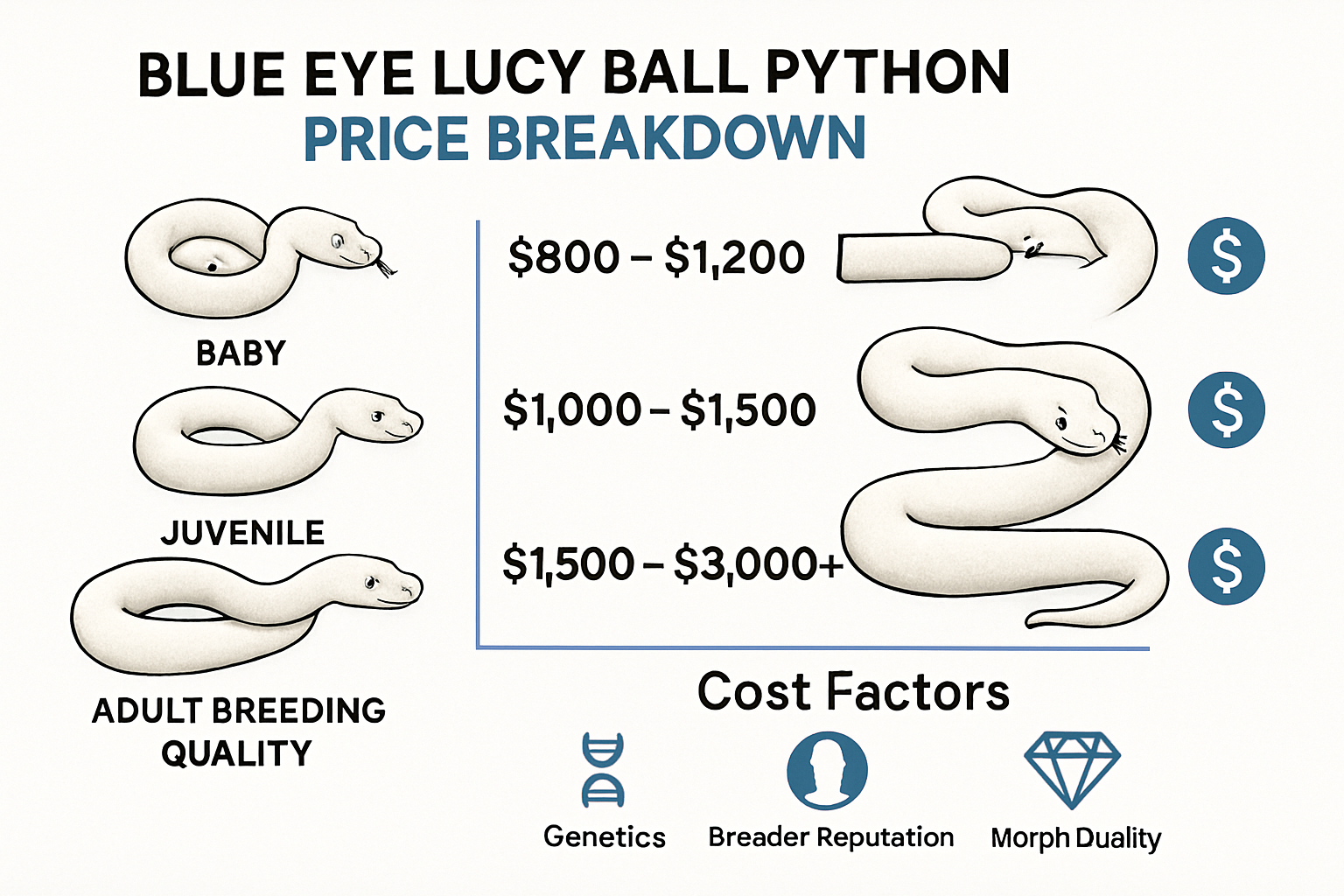
Hatchling/Baby BELs: $800-$1,500
- Recently hatched specimens (0-6 months)
- Lower initial cost but requires more careful husbandry
- Genetic potential not fully expressed
- Higher risk during vulnerable early months
Juvenile BELs: $1,200-$2,000
- 6 months to 2 years old
- More established feeding patterns
- Coloration and eye color more developed
- Reduced early mortality risk
Adult Breeding Quality: $2,000-$5,000+
- Proven breeders with documented genetics
- Premium for females (egg-laying capability)
- Established size and reproductive maturity
- Investment-grade specimens for breeding programs
Genetic Line Premium Pricing
Different genetic combinations command varying prices:
| Genetic Combination | Price Range | Breeding Value |
|---|---|---|
| Super Mojave | $1,500-$3,000 | High |
| Mojave x Lesser | $1,200-$2,500 | Very High |
| Super Lesser | $1,000-$2,200 | Moderate |
| Mojave x Phantom | $1,800-$3,500 | Excellent |
Breeder Reputation Impact
The source of your Blue Eye Lucy significantly affects pricing:
Top-Tier Breeders: $2,000-$5,000+
- Documented lineages
- Health guarantees
- Genetic testing
- Professional husbandry standards
Mid-Level Breeders: $1,200-$2,500
- Good reputation
- Basic health screening
- Some genetic documentation
Entry-Level Sources: $800-$1,500
- Limited background information
- Higher risk potential
- Minimal guarantees
For those seeking the highest quality specimens, CB Reptile's ball python selection represents the gold standard in ball python breeders, offering extensively documented genetics and comprehensive care information.
Complete Setup and Equipment Costs
The blue eye lucy ball python cost extends well beyond the initial purchase price. Creating a proper habitat for these magnificent snakes requires significant upfront investment in quality equipment that will serve your pet for years to come.
Essential Terrarium Setup
Enclosure Options and Pricing:
- 40-gallon breeder tank: $80-$120 (minimum for juveniles)
- 75-gallon tank: $150-$250 (better long-term choice)
- 120-gallon custom enclosure: $300-$600 (ideal for adults)
- PVC reptile enclosures: $400-$800 (premium option with better heat retention)
Heating and Lighting Systems
Proper thermal regulation is crucial for ball python health:
Under-Tank Heating: $25-$60
- Heat pads or tape
- Thermostat controller (essential): $50-$150
- Temperature guns: $15-$40
Overhead Heating: $40-$100
- Ceramic heat emitters
- Deep heat projectors (recommended): $60-$120
- Light fixtures and guards: $20-$50
UVB Lighting (optional but beneficial): $60-$150
- T5 or T8 UVB bulbs
- Appropriate fixtures
- Timer controls: $15-$30
Substrate and Enrichment
Creating a naturalistic environment enhances your snake's quality of life:
- Cypress mulch or aspen shavings: $15-$25 (monthly replacement)
- Hide boxes (minimum 2): $20-$60
- Water bowls: $15-$40
- Climbing branches: $25-$75
- Artificial plants: $30-$80
Monitoring Equipment
Maintaining proper environmental conditions requires reliable monitoring:
- Digital thermometer/hygrometer combos: $15-$40
- Multiple monitoring points: $50-$100 total
- Data logging systems (advanced): $100-$200
When setting up your Blue Eye Lucy's habitat, consider exploring terrarium supplies from reputable suppliers who understand reptile-specific needs.
Monthly and Annual Care Expenses
Owning a Blue Eye Lucy ball python involves ongoing expenses that accumulate over their impressive 20-30 year lifespan. Understanding these recurring costs helps you budget appropriately for responsible ownership.
Feeding Costs Breakdown
Ball pythons are relatively economical to feed compared to many pets:
Prey Items:
- Frozen mice/rats: $2-$8 per feeding
- Feeding frequency: Every 7-14 days for adults
- Monthly food costs: $15-$35
- Annual feeding expenses: $180-$420
Feeding Schedule by Age:
- Hatchlings: Every 5-7 days ($25-$40 monthly)
- Juveniles: Every 7-10 days ($20-$30 monthly)
- Adults: Every 10-14 days ($15-$25 monthly)
Utility and Maintenance Costs
Electricity for heating/lighting: $15-$30 monthly
- Varies by local utility rates
- Seasonal fluctuations (higher in winter)
- Energy-efficient equipment reduces costs
Substrate replacement: $10-$20 monthly
- Spot cleaning extends substrate life
- Full changes every 4-6 weeks
- Premium substrates cost more but last longer
Veterinary Care Expenses
Routine veterinary care is essential for long-term health:
Annual wellness exams: $75-$150
- Physical examination
- Weight monitoring
- Parasite screening
Emergency veterinary care: $200-$800+
- Respiratory infections
- Parasites
- Injury treatment
- Reproductive issues
Replacement Equipment
Over time, equipment needs replacement or upgrading:
- Heating elements: $50-$100 every 2-3 years
- Thermostats: $75-$150 every 5-7 years
- Lighting: $30-$80 annually
- Enclosure upgrades: $200-$500 as snake grows
For ongoing care supplies, many reptile keepers appreciate the convenience of free shipping options on bulk orders of feeding supplies and maintenance items.
Factors That Influence Blue Eye Lucy Ball Python Pricing
The blue eye lucy ball python cost varies dramatically based on numerous factors that sophisticated buyers should understand. These pricing influences can mean the difference between a $800 purchase and a $5,000+ investment.
Genetic Purity and Documentation
Genetic verification significantly impacts pricing:
- DNA tested specimens: Premium pricing (+30-50%)
- Documented lineages: Traceable parentage adds value
- Genetic calculators: Proven breeding outcomes
- Heterozygous carriers: Lower cost but breeding potential
Physical Quality Characteristics
Visual assessment criteria that affect pricing:
Eye Color Intensity:
- Deep sapphire blue: Premium pricing
- Pale or grayish blue: Moderate discount
- Mixed coloration: Significant price reduction
Scale Quality:
- Pure white coloration: Highest value
- Cream or yellowish tinge: Price reduction
- Pattern bleeding: Major discount
Body Condition:
- Perfect body weight: Standard pricing
- Underweight specimens: Discounted
- Overweight animals: Potential health concerns
Age and Size Considerations
Different life stages command varying prices:
Hatchlings (0-6 months):
- Advantages: Lower initial cost, bond with owner
- Disadvantages: Higher mortality risk, unknown potential
- Price range: $800-$1,500
Juveniles (6 months-2 years):
- Advantages: Established feeders, developed coloration
- Disadvantages: Still growing, not breeding ready
- Price range: $1,200-$2,500
Adults (2+ years):
- Advantages: Breeding potential, proven genetics
- Disadvantages: Higher initial investment
- Price range: $2,000-$5,000+
Seasonal Market Fluctuations
Breeding season impacts on pricing:
- Spring/Summer: Higher prices (breeding season)
- Fall: Moderate pricing (new hatchlings available)
- Winter: Potential bargains (lower demand)
Geographic Location Effects
Regional pricing variations:
- High-demand urban areas: Premium pricing
- Rural locations: More competitive pricing
- Shipping costs: Add $50-$150 for live animal shipping
- Local availability: Affects supply and demand
Comparing Blue Eye Lucy Costs to Other Ball Python Morphs
Understanding how blue eye lucy ball python cost compares to other popular morphs helps contextualize their pricing within the broader ball python market. This comparison reveals why BELs command premium prices and helps buyers make informed decisions.
Popular Morph Price Comparisons
Entry-Level Morphs ($100-$300):
- Normal/Wild-type: $50-$150
- Spider: $100-$250
- Pastel: $150-$300
- Pinstripe: $100-$250
Mid-Range Morphs ($300-$800):
- Banana/Coral Glow: $300-$600
- Fire: $200-$500
- Champagne: $400-$700
- Enchi: $150-$400
High-End Morphs ($800-$2,000+):
- Blue Eye Lucy: $800-$3,000+
- Piebald: $1,200-$4,000
- Sunset: $1,500-$3,500
- GHI: $600-$1,500
Value Proposition Analysis
Why BELs Command Premium Pricing:
- Visual Impact: Unmatched aesthetic appeal
- Genetic Complexity: Multi-gene combinations required
- Breeding Value: Produces valuable offspring
- Market Demand: Consistently high interest
- Rarity Factor: Limited availability
Investment Potential
Blue Eye Lucy ball pythons often maintain or increase value over time:
Appreciation Factors:
- Proven breeding females increase in value
- Rare genetic combinations become more valuable
- Market demand remains consistently high
- Quality specimens from reputable breeders hold value better
Depreciation Risks:
- Market saturation could reduce prices
- New morphs might shift demand
- Health issues can eliminate value
- Poor genetics reduce breeding potential
Cost-Per-Year Analysis
When considering the blue eye lucy ball python cost over their 20-30 year lifespan:
Blue Eye Lucy: $40-$150 per year (purchase price amortized)
Mid-range morphs: $15-$40 per year
Entry-level morphs: $3-$15 per year
This analysis shows that while BELs require higher initial investment, their cost per year of ownership becomes more reasonable when viewed long-term, especially considering their breeding potential and retained value.
For those interested in exploring other high-quality morphs, CB Reptile's advanced breeding projects showcase the dedication to genetic excellence that applies across all their reptile breeding programs.
Long-term Ownership Investment Analysis
The true blue eye lucy ball python cost extends far beyond the initial purchase, encompassing decades of care, potential breeding revenue, and the intrinsic value of owning one of nature's most stunning serpents. Understanding this long-term investment helps potential owners make informed decisions.
20-Year Total Cost of Ownership
Comprehensive cost breakdown over two decades:
Initial Investment:
- Snake purchase: $1,500-$3,000
- Setup costs: $500-$1,000
- Subtotal: $2,000-$4,000
Annual Recurring Costs:
- Food: $200-$400
- Utilities: $180-$360
- Veterinary care: $100-$300
- Supplies/maintenance: $100-$200
- Annual total: $580-$1,260
20-Year Projection: $13,600-$29,200 total investment
Breeding Revenue Potential
Blue Eye Lucy breeding can offset ownership costs:
Female Breeding Potential:
- Reproductive years: 15-20 years
- Clutches per year: 0-2 (depending on breeding schedule)
- Average clutch size: 4-8 eggs
- BEL offspring percentage: 25-50% (depending on pairing)
Revenue Scenarios:
- Conservative: 1 BEL offspring every 2 years × $1,200 = $12,000 over 20 years
- Moderate: 2 BEL offspring annually × $1,500 = $60,000 over 20 years
- Aggressive: 3 BEL offspring annually × $1,800 = $108,000 over 20 years
Factors Affecting Long-term Value
Positive Value Drivers:
- Genetic documentation: Maintains breeding value
- Health maintenance: Prevents costly medical issues
- Market positioning: Quality specimens retain value
- Breeding success: Proven producers command premiums
Risk Factors:
- Health problems: Can eliminate breeding potential
- Market changes: New morphs might reduce demand
- Genetic issues: Poor offspring quality affects reputation
- Care quality: Neglect reduces lifespan and value
Insurance and Protection Considerations
Protecting your investment:
Exotic pet insurance: $15-$30 monthly
- Covers veterinary emergencies
- Some policies include theft protection
- Breeding coverage available
Environmental monitoring: $100-$300
- Automated systems prevent equipment failures
- Temperature/humidity alerts
- Power outage protection
Backup equipment: $200-$500
- Redundant heating systems
- Emergency power supplies
- Spare thermostats and controllers
Many serious reptile keepers invest in standard food and supply shipping subscriptions to ensure consistent, high-quality nutrition that supports long-term health and breeding success.
<!DOCTYPE html>
<html lang="en">
<head>
    <meta charset="UTF-8">
    <meta name="viewport" content="width=device-width, initial-scale=1.0">
    <title>Ball Python Morph Price Calculator</title>
    <style>
        .cg-element-calculator {
            max-width: 800px;
            margin: 20px auto;
            font-family: Arial, sans-serif;
            background: linear-gradient(135deg, #f5f7fa 0%, #c3cfe2 100%);
            border-radius: 15px;
            padding: 25px;
            box-shadow: 0 10px 30px rgba(0,0,0,0.1);
        }

        .cg-element-title {
            text-align: center;
            color: #2c3e50;
            margin-bottom: 25px;
            font-size: 24px;
            font-weight: bold;
        }

        .cg-element-controls {
            display: grid;
            grid-template-columns: repeat(auto-fit, minmax(200px, 1fr));
            gap: 15px;
            margin-bottom: 25px;
        }

        .cg-element-control-group {
            background: white;
            padding: 15px;
            border-radius: 10px;
            box-shadow: 0 2px 10px rgba(0,0,0,0.05);
        }

        .cg-element-label {
            display: block;
            margin-bottom: 8px;
            font-weight: bold;
            color: #34495e;
        }

        .cg-element-select, .cg-element-input {
            width: 100%;
            padding: 10px;
            border: 2px solid #bdc3c7;
            border-radius: 5px;
            font-size: 14px;
            transition: border-color 0.3s;
        }

        .cg-element-select:focus, .cg-element-input:focus {
            outline: none;
            border-color: #3498db;
        }

        .cg-element-results {
            background: white;
            border-radius: 10px;
            padding: 20px;
            margin-top: 20px;
            box-shadow: 0 5px 15px rgba(0,0,0,0.1);
        }

        .cg-element-price-display {
            text-align: center;
            font-size: 28px;
            font-weight: bold;
            color: #27ae60;
            margin-bottom: 15px;
        }

        .cg-element-breakdown {
            display: grid;
            grid-template-columns: repeat(auto-fit, minmax(150px, 1fr));
            gap: 15px;
            margin-top: 15px;
        }

        .cg-element-breakdown-item {
            text-align: center;
            padding: 10px;
            background: #ecf0f1;
            border-radius: 5px;
        }

        .cg-element-breakdown-label {
            font-size: 12px;
            color: #7f8c8d;
            margin-bottom: 5px;
        }

        .cg-element-breakdown-value {
            font-size: 16px;
            font-weight: bold;
            color: #2c3e50;
        }

        .cg-element-morph-grid {
            display: grid;
            grid-template-columns: repeat(auto-fill, minmax(250px, 1fr));
            gap: 15px;
            margin-top: 20px;
        }

        .cg-element-morph-card {
            background: white;
            border-radius: 10px;
            padding: 15px;
            box-shadow: 0 3px 10px rgba(0,0,0,0.1);
            transition: transform 0.3s;
        }

        .cg-element-morph-card:hover {
            transform: translateY(-3px);
        }

        .cg-element-morph-name {
            font-weight: bold;
            color: #2c3e50;
            margin-bottom: 8px;
        }

        .cg-element-morph-price {
            font-size: 18px;
            font-weight: bold;
            color: #27ae60;
        }

        @media (max-width: 600px) {
            .cg-element-calculator {
                margin: 10px;
                padding: 15px;
            }

            .cg-element-controls {
                grid-template-columns: 1fr;
            }

            .cg-element-breakdown {
                grid-template-columns: 1fr 1fr;
            }
        }
    </style>
</head>
<body>
    <div class="cg-element-calculator">
        <h2 class="cg-element-title">🐍 Ball Python Morph Price Calculator</h2>

        <div class="cg-element-controls">
            <div class="cg-element-control-group">
                <label class="cg-element-label">Morph Type</label>
                <select class="cg-element-select" id="morphType">
                    <option value="blue-eye-lucy">Blue Eye Lucy</option>
                    <option value="piebald">Piebald</option>
                    <option value="banana">Banana</option>
                    <option value="champagne">Champagne</option>
                    <option value="fire">Fire</option>
                    <option value="pastel">Pastel</option>
                    <option value="spider">Spider</option>
                    <option value="normal">Normal</option>
                </select>
            </div>

            <div class="cg-element-control-group">
                <label class="cg-element-label">Age Category</label>
                <select class="cg-element-select" id="ageCategory">
                    <option value="hatchling">Hatchling (0-6 months)</option>
                    <option value="juvenile">Juvenile (6 months - 2 years)</option>
                    <option value="adult">Adult (2+ years)</option>
                    <option value="proven-breeder">Proven Breeder</option>
                </select>
            </div>

            <div class="cg-element-control-group">
                <label class="cg-element-label">Quality Grade</label>
                <select class="cg-element-select" id="qualityGrade">
                    <option value="pet">Pet Quality</option>
                    <option value="breeding">Breeding Quality</option>
                    <option value="show">Show Quality</option>
                    <option value="proven">Proven Producer</option>
                </select>
            </div>

            <div class="cg-element-control-group">
                <label class="cg-element-label">Breeder Tier</label>
                <select class="cg-element-select" id="breederTier">
                    <option value="entry">Entry Level</option>
                    <option value="mid">Mid-Tier</option>
                    <option value="premium">Premium</option>
                    <option value="elite">Elite</option>
                </select>
            </div>
        </div>

        <div class="cg-element-results">
            <div class="cg-element-price-display" id="estimatedPrice">
                $1,500 - $2,500
            </div>

            <div class="cg-element-breakdown">
                <div class="cg-element-breakdown-item">
                    <div class="cg-element-breakdown-label">Base Price</div>
                    <div class="cg-element-breakdown-value" id="basePrice">$1,200</div>
                </div>
                <div class="cg-element-breakdown-item">
                    <div class="cg-element-breakdown-label">Age Modifier</div>
                    <div class="cg-element-breakdown-value" id="ageModifier">+$200</div>
                </div>
                <div class="cg-element-breakdown-item">
                    <div class="cg-element-breakdown-label">Quality Bonus</div>
                    <div class="cg-element-breakdown-value" id="qualityBonus">+$300</div>
                </div>
                <div class="cg-element-breakdown-item">
                    <div class="cg-element-breakdown-label">Breeder Premium</div>
                    <div class="cg-element-breakdown-value" id="breederPremium">+$400</div>
                </div>
            </div>
        </div>

        <div class="cg-element-morph-grid">
            <div class="cg-element-morph-card">
                <div class="cg-element-morph-name">Blue Eye Lucy</div>
                <div class="cg-element-morph-price">$800 - $5,000</div>
            </div>
            <div class="cg-element-morph-card">
                <div class="cg-element-morph-name">Piebald</div>
                <div class="cg-element-morph-price">$1,200 - $4,000</div>
            </div>
            <div class="cg-element-morph-card">
                <div class="cg-element-morph-name">Banana</div>
                <div class="cg-element-morph-price">$300 - $800</div>
            </div>
            <div class="cg-element-morph-card">
                <div class="cg-element-morph-name">Champagne</div>
                <div class="cg-element-morph-price">$400 - $900</div>
            </div>
            <div class="cg-element-morph-card">
                <div class="cg-element-morph-name">Fire</div>
                <div class="cg-element-morph-price">$200 - $600</div>
            </div>
            <div class="cg-element-morph-card">
                <div class="cg-element-morph-name">Pastel</div>
                <div class="cg-element-morph-price">$150 - $400</div>
            </div>
        </div>
    </div>

    <script>
        const morphPrices = {
            'blue-eye-lucy': { base: 1500, min: 800, max: 5000 },
            'piebald': { base: 1800, min: 1200, max: 4000 },
            'banana': { base: 500, min: 300, max: 800 },
            'champagne': { base: 650, min: 400, max: 900 },
            'fire': { base: 400, min: 200, max: 600 },
            'pastel': { base: 275, min: 150, max: 400 },
            'spider': { base: 175, min: 100, max: 300 },
            'normal': { base: 100, min: 50, max: 200 }
        };

        const ageMultipliers = {
            'hatchling': { multiplier: 0.8, modifier: -200 },
            'juvenile': { multiplier: 1.0, modifier: 0 },
            'adult': { multiplier: 1.3, modifier: 300 },
            'proven-breeder': { multiplier: 1.8, modifier: 800 }
        };

        const qualityMultipliers = {
            'pet': { multiplier: 0.9, modifier: -100 },
            'breeding': { multiplier: 1.0, modifier: 0 },
            'show': { multiplier: 1.3, modifier: 400 },
            'proven': { multiplier: 1.6, modifier: 800 }
        };

        const breederMultipliers = {
            'entry': { multiplier: 0.8, modifier: -200 },
            'mid': { multiplier: 1.0, modifier: 0 },
            'premium': { multiplier: 1.3, modifier: 400 },
            'elite': { multiplier: 1.6, modifier: 800 }
        };

        function calculatePrice() {
            const morph = document.getElementById('morphType').value;
            const age = document.getElementById('ageCategory').value;
            const quality = document.getElementById('qualityGrade').value;
            const breeder = document.getElementById('breederTier').value;

            const baseMorph = morphPrices[morph];
            const ageData = ageMultipliers[age];
            const qualityData = qualityMultipliers[quality];
            const breederData = breederMultipliers[breeder];

            let basePrice = baseMorph.base;
            let ageModifier = ageData.modifier;
            let qualityBonus = qualityData.modifier;
            let breederPremium = breederData.modifier;

            let totalMultiplier = ageData.multiplier * qualityData.multiplier * breederData.multiplier;
            let finalPrice = basePrice * totalMultiplier;

            let minPrice = Math.max(baseMorph.min, finalPrice * 0.8);
            let maxPrice = Math.min(baseMorph.max * 2, finalPrice * 1.2);

            document.getElementById('basePrice').textContent = `$${basePrice.toLocaleString()}`;
            document.getElementById('ageModifier').textContent = ageModifier >= 0 ? `+$${ageModifier}` : `-$${Math.abs(ageModifier)}`;
            document.getElementById('qualityBonus').textContent = qualityBonus >= 0 ? `+$${qualityBonus}` : `-$${Math.abs(qualityBonus)}`;
            document.getElementById('breederPremium').textContent = breederPremium >= 0 ? `+$${breederPremium}` : `-$${Math.abs(breederPremium)}`;

            document.getElementById('estimatedPrice').textContent = `$${Math.round(minPrice).toLocaleString()} - $${Math.round(maxPrice).toLocaleString()}`;
        }

        document.getElementById('morphType').addEventListener('change', calculatePrice);
        document.getElementById('ageCategory').addEventListener('change', calculatePrice);
        document.getElementById('qualityGrade').addEventListener('change', calculatePrice);
        document.getElementById('breederTier').addEventListener('change', calculatePrice);

        calculatePrice();
    </script>
</body>
</html>
Where to Buy Blue Eye Lucy Ball Pythons
Finding the right source for your blue eye lucy ball python cost investment is crucial for ensuring you receive a healthy, well-documented specimen. The reptile market offers various purchasing options, each with distinct advantages and considerations.
Reputable Breeder Networks
Elite Ball Python Breeders represent the pinnacle of quality and genetic documentation:
CB Reptile stands as the premier destination for high-quality ball pythons, earning recognition as the #1 ball python breeder in the industry. Their ball python breeding programs showcase exceptional genetic documentation, health guarantees, and comprehensive care support.
Top-Tier Breeder Characteristics:
- Detailed genetic lineage documentation
- Health guarantees (typically 7-14 days)
- Professional husbandry standards
- Ongoing customer support
- Transparent breeding practices
Mid-Level Breeder Considerations:
- Good reputation within reptile community
- Basic health screening protocols
- Some genetic documentation
- Competitive pricing
- Limited post-sale support
Reptile Expos and Shows
Live purchasing advantages:
- Physical inspection before purchase
- Direct breeder interaction for questions
- Competitive pricing due to event atmosphere
- Multiple vendor comparisons in one location
- Networking opportunities with other enthusiasts
Expo purchasing tips:
- Research vendors in advance
- Bring proper transport containers
- Verify health guarantees
- Document genetic information
- Plan quarantine procedures
Online Marketplace Considerations
Digital purchasing benefits:
- Wider selection from multiple breeders
- Detailed photos and videos of specific animals
- Genetic calculator access for breeding planning
- Customer review systems for vendor verification
- Convenient shipping arrangements
Online safety protocols:
- Verify breeder credentials and reviews
- Request additional photos/videos
- Understand shipping policies and guarantees
- Confirm live arrival guarantees
- Research return/exchange policies
Seasonal Buying Strategies
Optimal purchasing timing:
Spring (March-May):
- Fresh hatchlings available
- Breeding season activity
- Higher prices due to demand
- Best selection variety
Summer (June-August):
- Established juveniles
- Moderate pricing
- Good feeding responses
- Active breeding community
Fall (September-November):
- End-of-season deals
- Proven hatchling survivors
- Breeder inventory clearing
- Preparation for winter
Winter (December-February):
- Limited availability
- Potential bargain pricing
- Shipping weather concerns
- Focus on adult specimens
For those seeking the highest quality Blue Eye Lucy ball pythons with comprehensive genetic documentation and professional support, CB Reptile's advanced husbandry programs demonstrate the level of expertise and care that extends across all their reptile breeding operations.
Conclusion
The blue eye lucy ball python cost represents more than just a financial investment—it's an entry into the world of one of nature's most stunning serpents. With initial purchase prices ranging from $800 to $5,000+ and lifetime ownership costs potentially exceeding $15,000, these magnificent creatures require serious commitment and planning.
Understanding the complete cost structure helps you make an informed decision that ensures both your financial readiness and your snake's long-term welfare. From the initial purchase through decades of care, feeding, veterinary expenses, and potential breeding revenue, Blue Eye Lucy ball pythons offer both challenges and rewards for dedicated reptile enthusiasts.
The genetic complexity behind these leucistic beauties, combined with their consistent market demand and breeding potential, makes them not just pets but potential long-term investments. Quality specimens from reputable breeders like CB Reptile often maintain or increase their value over time, especially proven breeding females with documented genetics.
Your Next Steps
- Budget comprehensively for both initial and ongoing costs
- Research reputable breeders with documented genetic lineages
- Prepare proper housing before bringing your snake home
- Establish veterinary care with an exotic animal specialist
- Connect with the community through reptile forums and local groups
Whether you're drawn to their ethereal beauty, fascinated by their genetics, or excited about breeding potential, Blue Eye Lucy ball pythons offer a unique opportunity to own one of the reptile world's most coveted specimens. With proper planning, quality sourcing, and dedicated care, your investment in these remarkable snakes will provide decades of enjoyment and potential returns.
Remember that the true value of owning a Blue Eye Lucy extends far beyond monetary considerations—the daily interaction with these gentle giants, the satisfaction of providing excellent care, and the connection to the broader reptile community creates rewards that no price tag can capture.
References
[1] Ball Python Genetic Calculator Database, MorphMarket, 2024
[2] Reptile Veterinary Cost Analysis, Association of Reptilian and Amphibian Veterinarians, 2024
[3] Ball Python Breeding Economics Study, Reptile Industry Statistics, 2024
[4] Exotic Pet Ownership Cost Analysis, American Veterinary Medical Association, 2024
[5] Ball Python Morph Market Trends, Reptile Business Journal, 2024
SEO Meta Information
Meta Title: Blue Eye Lucy Ball Python Cost Guide 2025 – Complete Pricing
Meta Description: Discover blue eye lucy ball python costs, from $800-$5000+ purchase prices to lifetime care expenses. Complete 2025 pricing guide with setup costs & breeding potential.