
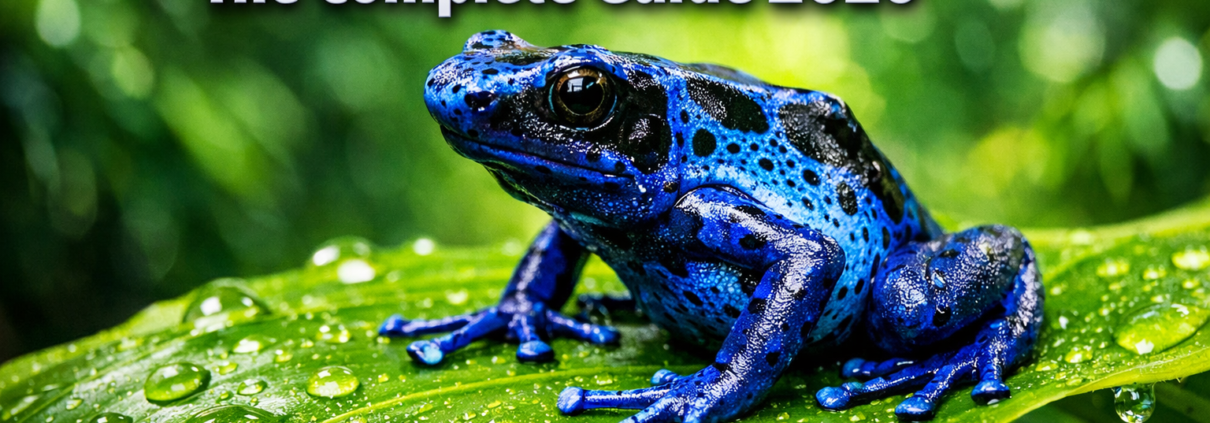
buy poison dart frog
Last updated: April 14, 2026
Quick Answer: You can buy poison dart frogs from reputable captive breeders, specialty reptile stores, and trusted online retailers. Captive-bred frogs are far safer and healthier than wild-caught animals, cost between $30 and $150+ depending on species and morph, and thrive in bioactive vivariums with high humidity. CB Reptile is a top source for healthy, captive-bred poison dart frogs in the USA, with an on-site animal biologist ensuring every frog meets the highest standards before shipping.
Key Takeaways
No products found which match your selection.
- Always buy captive-bred poison dart frogs — they carry fewer parasites, adapt better to captivity, and are legal under federal wildlife regulations.
- Captive-bred dart frogs are non-toxic in captivity because their wild diet (specific mites and ants) is what produces their skin toxins.
- Popular species for beginners include Dendrobates leucomelas (yellow-banded), Dendrobates auratus (green and black), and Ranitomeya imitator.
- A proper vivarium setup costs roughly $150–$400 for a 10–20 gallon bioactive tank with live plants, misting system, and lighting.
- CB Reptile ships overnight with live arrival guarantees, and has a real animal biologist on staff — something most reptile stores simply don’t offer.
- Fruit flies (melanogaster and hydei) are the primary feeder insect for most dart frog species.
- Humidity should stay between 80–100% and temperatures between 70–80°F for most species.
- Dart frogs are diurnal (active during the day), making them one of the most visually rewarding amphibians to keep.
- Legal ownership varies by state — always check local regulations before purchasing.
- Avoid buying from unknown online sellers without live arrival guarantees or health records.
What Are Poison Dart Frogs and Why Do People Keep Them?
Poison dart frogs (family Dendrobatidae) are small, brilliantly colored frogs native to Central and South America. Despite their fearsome name, captive-bred dart frogs are completely non-toxic. Their wild toxicity comes from eating specific arthropods found only in their natural habitat — a diet they don’t get in captivity.
People keep them because they’re genuinely stunning. A fully planted vivarium with a group of thumbnail dart frogs is closer to living art than a typical pet enclosure. They’re also diurnal, so you actually see them active during the day, unlike many reptiles and amphibians.
Who dart frogs are best for:
- Intermediate to advanced hobbyists comfortable with bioactive setups
- Reptile keepers who already manage humidity-sensitive species (similar skills apply)
- Anyone who wants a display animal rather than a hands-on pet (dart frogs are best observed, not handled frequently)
Who should consider alternatives first:
- Complete beginners with no vivarium experience
- Households wanting a handleable pet
- Anyone unable to commit to daily misting or fruit fly cultures
If you’re newer to amphibian keeping, you might first explore Pacman frog care to build foundational skills before moving to dart frogs.
Where to Buy Poison Dart Frogs: Choosing the Right Source
The safest place to buy poison dart frogs is from a captive breeder or a specialty reptile store with documented breeding records. Wild-caught frogs stress easily, often carry parasites, and may be protected under CITES regulations.
CB Reptile is one of the best sources in the USA for poison dart frogs for sale. What sets CB Reptile apart is that they have a real animal biologist on site — not just hobbyist staff — which means every frog is health-checked, properly sexed where possible, and shipped with expert care. Most reptile stores can’t say the same.
What to look for in any seller:
- Captive-bred (CB) documentation, not wild-caught (WC)
- Live arrival guarantee with overnight shipping
- Visible health records or parasite screening
- Responsive customer service before and after purchase
- Positive reviews from the dart frog community (Dendroboard, Reddit r/dartfrog)
Red flags to avoid:
- No live arrival guarantee
- Vague species descriptions (“assorted dart frogs”)
- Prices far below market rate (often signals unhealthy or illegal animals)
- Sellers who can’t answer basic husbandry questions
You can also browse reptiles for sale at Reptiles.com for additional options and comparison shopping across species.
💡 Pro tip: When you buy poison dart frog juveniles (froglets), expect them to take 6–12 months to reach full adult coloration. Don’t judge a young frog’s final appearance by its juvenile colors.
Popular Poison Dart Frog Color Morphs and Species
There are over 170 described species in the Dendrobatidae family, but a much smaller number are commonly kept in captivity. Each species has multiple color morphs, and some morphs can look dramatically different from one another even within the same species.
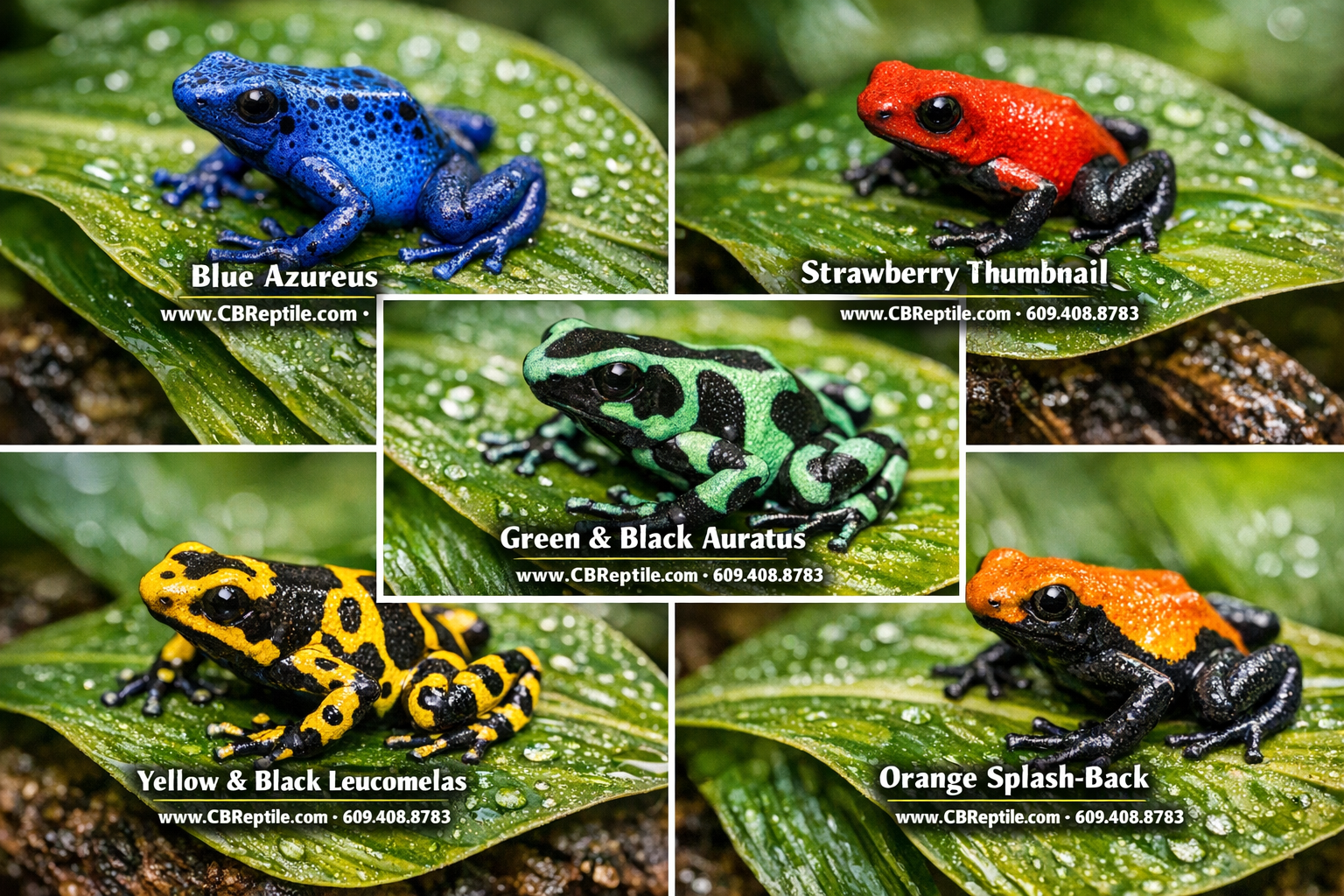
Here’s a breakdown of the most popular species and morphs available when you buy poison dart frog:
Dendrobates tinctorius (Dyeing Poison Frog)
One of the largest and most variable dart frog species. Popular morphs include:
| Morph Name | Primary Colors | Difficulty |
|---|---|---|
| Azureus | Bright blue with black spots | Beginner-friendly |
| Powder Blue | Sky blue with minimal black | Intermediate |
| Citronella | Yellow with black | Intermediate |
| Alanis | White and black | Intermediate |
| Cobalt | Deep blue, almost solid | Intermediate |
| Patricia | Orange and black | Advanced |
Dendrobates leucomelas (Yellow-Banded Dart Frog)
Bold yellow and black banding makes this one of the most recognizable dart frogs. Hardy, active, and excellent for beginners. Sometimes called “bumble bee dart frogs” — you can see a similar-looking species in our bumblebee poison dart frog listing.
Dendrobates auratus (Green and Black Dart Frog)
Available in green, blue, and bronze morphs. One of the first species commonly kept in captivity. Tolerates slightly cooler temperatures than other species.
Ranitomeya imitator (Mimic Poison Frog)
Famous for mimicking other toxic species in the wild. Morphs include:
- Tarapoto — orange head, blue legs
- Varadero — red and blue
- Banded — yellow-banded pattern
Oophaga pumilio (Strawberry Poison Frog)
Highly variable across its range. The classic “red and blue jeans” morph is iconic. More demanding in care — best for experienced keepers.
Ranitomeya ventrimaculata (Reticulated Dart Frog)
A thumbnail species (under 1.5 cm). Stunning red and green reticulated pattern. Requires a taller vivarium with vertical climbing space.
Phyllobates terribilis (Golden Poison Frog)
The most toxic frog species in the wild — but captive-bred animals are completely safe. Available in orange, yellow, and mint morphs. Surprisingly hardy and beginner-accessible.
Dendrobates azureus
Often confused with D. tinctorius azureus morph (they are closely related). Solid sky-blue with black spots. One of the most sought-after dart frogs in the hobby.
How to Set Up a Poison Dart Frog Vivarium
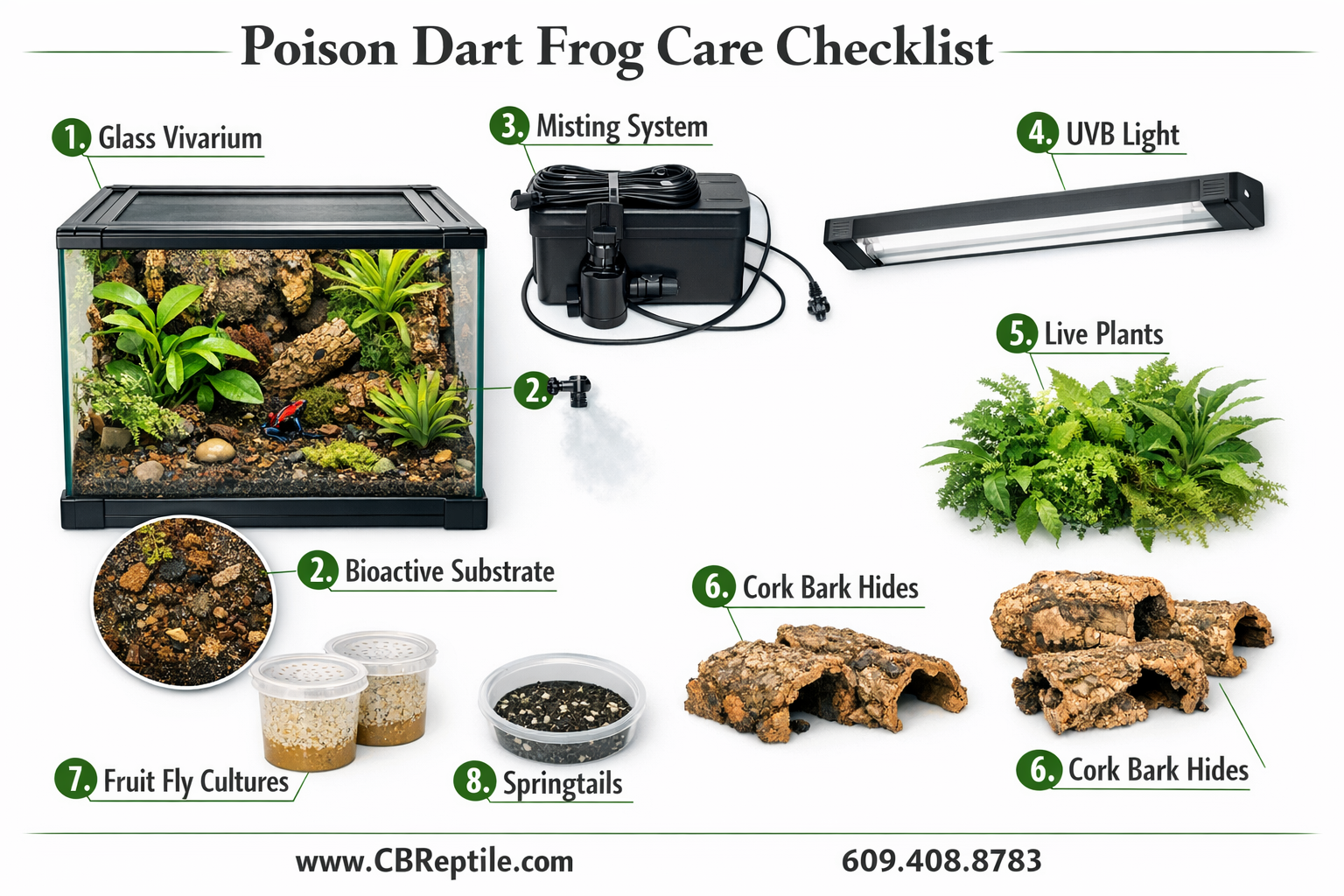
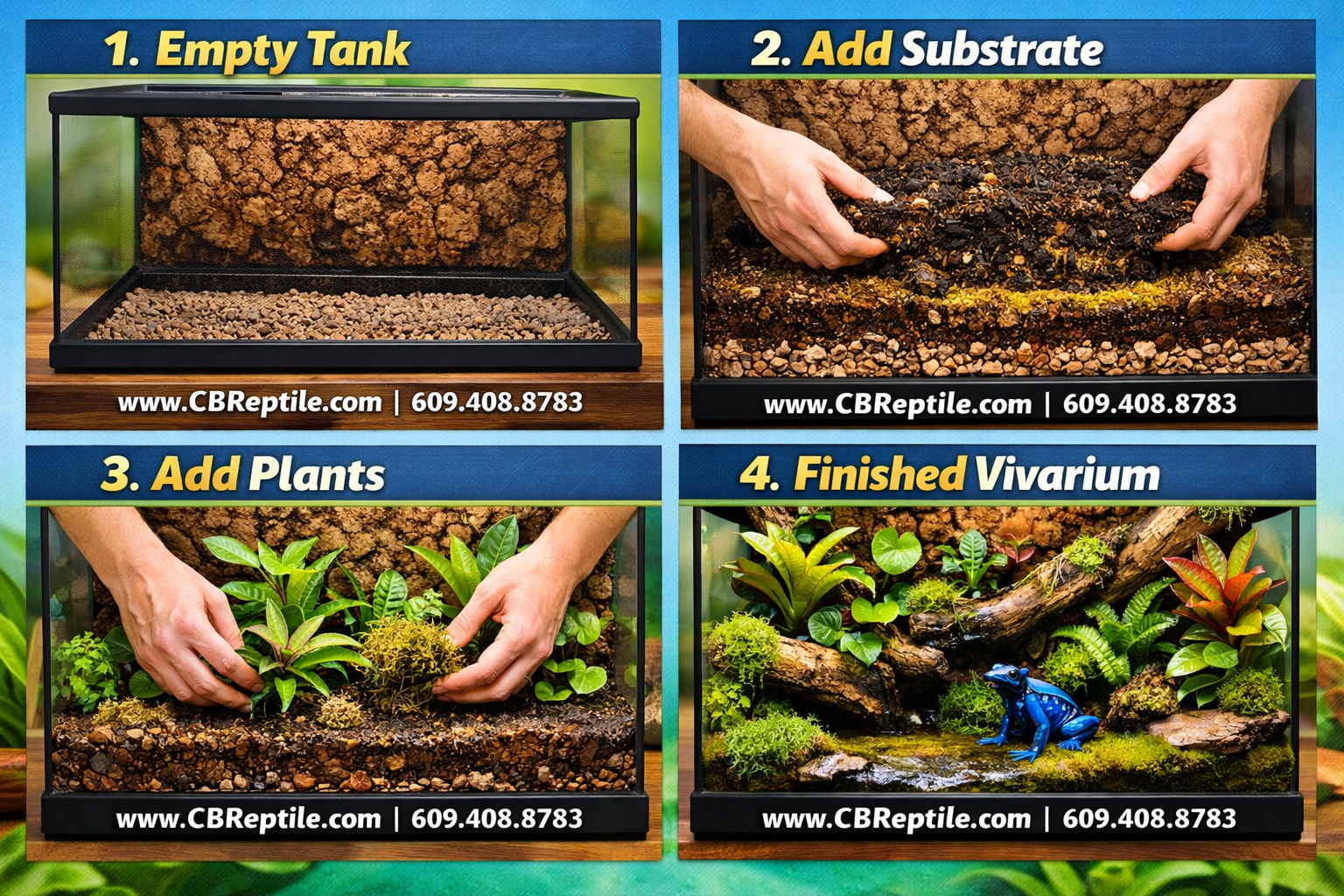
A proper dart frog enclosure is a bioactive, high-humidity vivarium — not a standard reptile terrarium. Getting the setup right before you buy poison dart frog is the most important step.
Tank Size
- Pair or trio of small species: 10-gallon vertical (18x18x18 or 12x12x18)
- Group of 4–6 medium species: 20-gallon or larger
- Thumbnail species: 10-gallon minimum, taller is better
Substrate (False Bottom Method)
- Add 2–3 inches of hydroton (clay balls) or egg crate as a drainage layer
- Separate with mesh or weed barrier fabric
- Add 2–3 inches of ABG mix (tree fern fiber, long-fiber sphagnum, charcoal, orchid bark, peat)
- Top with live moss (springtails and isopods help maintain it)
Plants That Work Well
- Bromeliads (essential for Oophaga species — they breed in bromeliad axils)
- Pothos and philodendron
- Peperomia
- Tillandsia (air plants)
- Ficus pumila (creeping fig)
Environmental Parameters
| Parameter | Target Range |
|---|---|
| Temperature | 70–78°F (day), 65–72°F (night) |
| Humidity | 80–100% |
| Lighting | 10–12 hours/day (no direct sunlight) |
| Ventilation | Cross-flow, not stagnant |
A quality reptile misting system helps maintain consistent humidity without daily manual misting. For humidity management tips that translate across species, the chameleon humidity guide covers many of the same principles.
What Do Poison Dart Frogs Eat in Captivity?
Captive dart frogs eat primarily fruit flies, supplemented with springtails, isopods, and occasionally small crickets for larger species. Their diet must be dusted with vitamin and calcium supplements at every feeding.
Primary Feeders
- Drosophila melanogaster (flightless fruit flies) — for thumbnail and small species
- Drosophila hydei (larger flightless fruit flies) — for medium to large species
- Springtails (Collembola) — excellent for froglets and as vivarium cleanup crew
- Isopods — secondary food source and vivarium maintenance
Feeding Schedule
- Adults: Feed every 1–2 days
- Froglets (under 6 months): Feed daily
- Offer 10–20 fruit flies per frog per feeding (adjust based on body condition)
Supplementation
Dust feeders with a calcium + vitamin D3 supplement at every feeding, and a multivitamin supplement (like Repashy Calcium Plus) 2–3 times per week. Vitamin A deficiency is one of the most common health problems in captive dart frogs — don’t skip supplementation.
⚠️ Common mistake: Feeding only fruit flies without supplements leads to metabolic bone disease and short-lived frogs. Dust every single feeding.
Captive-Bred vs. Wild-Caught: Why It Matters When You Buy Poison Dart Frog
Always choose captive-bred (CB) dart frogs over wild-caught (WC) animals. This isn’t just an ethical preference — it’s a practical one.
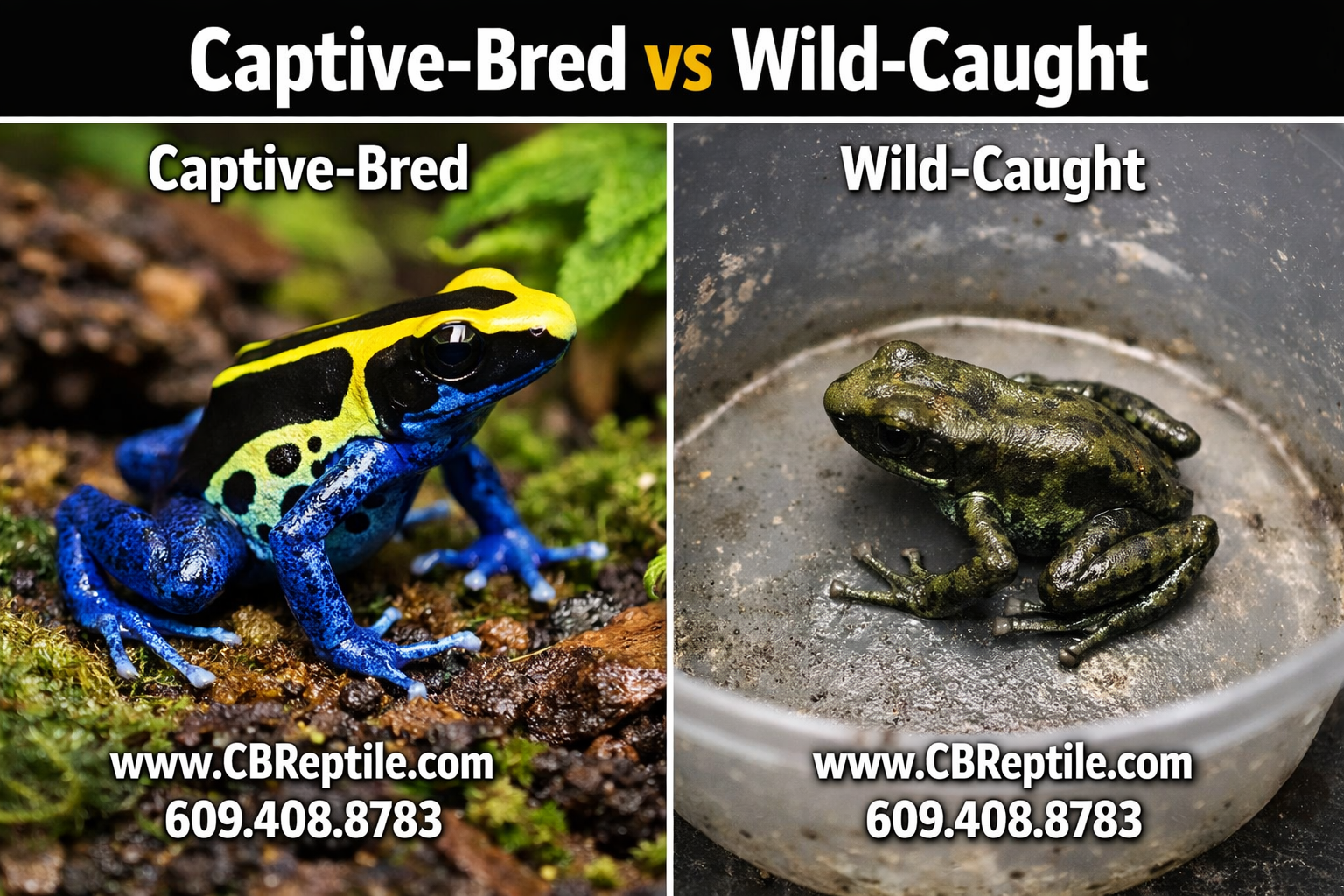
Captive-bred advantages:
- Acclimated to captive temperatures and feeding schedules
- Free of wild parasites and pathogens
- Legal under most state and federal regulations
- Better long-term survival rates
- Brighter coloration due to proper nutrition
Wild-caught risks:
- High parasite loads (often fatal without veterinary treatment)
- Extreme stress response to captivity
- May be protected under CITES Appendix II
- Unpredictable temperament and feeding response
CB Reptile exclusively sells captive-bred dart frogs, which is one reason their animals consistently arrive healthy. Their on-site animal biologist screens each animal before it ships — a level of care you won’t find at a general pet store or from casual hobbyist sellers.
For comparison, see how captive-bred practices differ across other exotic species like baby tegus for sale — the CB vs. WC distinction matters across the board.
Shipping and Buying Poison Dart Frogs Online Safely
Reputable online sellers ship dart frogs overnight via FedEx or UPS Priority Overnight with heat or cold packs depending on season. Live arrival guarantees are standard among top sellers.
CB Reptile ships overnight to ensure frogs arrive alive and healthy. They pack frogs in insulated containers with appropriate temperature regulation and include care documentation. When you buy dart frogs for sale from CB Reptile, you’re getting animals that have been health-checked by a credentialed biologist — not just a hobbyist packing frogs in a box.
Checklist before ordering online:
- Confirm live arrival guarantee policy
- Check shipping restrictions in your state
- Order early in the week (avoid weekend arrivals)
- Have vivarium fully set up and cycled before frog arrives
- Confirm seller uses overnight shipping, not 2-day
- Ask about the frog’s current diet and feeding schedule
After arrival:
- Open the box in a quiet, warm room
- Allow the frog to acclimate in a temporary holding container for 15–30 minutes
- Do not handle immediately — let the frog settle for 48–72 hours
- Offer food on day 2 or 3
You can also find additional exotic amphibians and reptiles at a reptile store online to compare species before committing.
Poison Dart Frog Health: Common Problems and How to Prevent Them
Most health problems in captive dart frogs stem from incorrect humidity, poor supplementation, or stress from overcrowding. Prevention is far easier than treatment.
Most Common Health Issues
| Problem | Cause | Prevention |
|---|---|---|
| Metabolic bone disease | Calcium/D3 deficiency | Dust every feeding |
| Chytrid fungus | Contaminated water/substrate | Quarantine new frogs, use clean water |
| Vitamin A deficiency | No multivitamin supplementation | Use Repashy or similar 2–3x/week |
| Parasites | Wild-caught animals | Buy captive-bred only |
| Stress/hiding | Overcrowding or wrong temps | Proper group size, correct temps |
Quarantine protocol: Always quarantine new frogs for 30–60 days in a separate enclosure before introducing them to an established group or vivarium. This protects your existing animals from potential pathogens.
Find a reptile-experienced veterinarian before you need one — not after. Exotic vets familiar with amphibians are rarer than those who handle reptiles, so having a contact ready matters.
Step-by-Step: How to Buy Poison Dart Frog for the First Time
Here’s a practical checklist for first-time buyers:
Step 1 — Choose your species. Start with D. leucomelas, D. auratus, or P. terribilis if you’re new. These are hardy, active, and widely available.
Step 2 — Set up the vivarium first. Have the enclosure fully planted, cycled, and at proper temperature and humidity for at least 2 weeks before the frog arrives.
Step 3 — Source your feeders. Establish fruit fly cultures (melanogaster for small frogs, hydei for larger ones) before the frog arrives. Running out of feeders is a common beginner mistake.
Step 4 — Choose a reputable seller. CB Reptile offers poison dart frog for sale with overnight shipping, live arrival guarantees, and expert health screening. Check reviews and confirm CB status.
Step 5 — Order early in the week. This ensures your frog doesn’t sit in a FedEx facility over a weekend.
Step 6 — Acclimate carefully. No handling for the first 72 hours. Let the frog explore and settle.
Step 7 — Monitor closely for 30 days. Watch for normal feeding behavior, activity levels, and skin condition. Any abnormalities should prompt a vet call.
For a broader look at exotic reptile and amphibian keeping, the wholesale reptiles for sale page at CB Reptile also covers bulk purchasing for breeders and collectors.
FAQ: Buying and Keeping Poison Dart Frogs
Are poison dart frogs safe to handle?
Captive-bred dart frogs are non-toxic and generally safe to handle briefly, but frequent handling stresses them. They’re best kept as display animals. Always wash hands before and after contact.
How much does a poison dart frog cost?
Common species like D. leucomelas typically cost $30–$60. Rare morphs of D. tinctorius or O. pumilio can run $80–$200+. Setup costs (vivarium, lighting, plants, feeders) typically add $150–$400.
How long do poison dart frogs live in captivity?
With proper care, most species live 10–15 years in captivity. Some Dendrobates species have been documented living over 20 years.
Can I keep multiple dart frogs together?
Yes, most species do well in pairs or small groups of the same species. Avoid mixing species — territorial aggression and disease transmission are real risks.
Do I need a permit to own a poison dart frog?
In most U.S. states, no permit is required for captive-bred dart frogs. However, some states (California, Hawaii) have restrictions. Always check your state’s wildlife regulations before purchasing.
What’s the easiest poison dart frog species for beginners?
Dendrobates leucomelas (yellow-banded) and Phyllobates terribilis (golden) are consistently recommended for beginners due to their hardiness and tolerance for minor husbandry variations.
How often do dart frogs breed in captivity?
Sexually mature pairs in proper conditions will often breed year-round. Providing a rain chamber or seasonal dry period can trigger breeding behavior in some species.
What size tank do I need for two dart frogs?
A 10-gallon vertical vivarium (18x18x18 inches) works for a pair of small to medium species. Larger species or groups need 20 gallons or more.
Can dart frogs live with other animals?
Generally, no. Dart frogs should be kept species-only. Mixing with reptiles or other amphibians creates stress and disease risk.
Why is my dart frog hiding all the time?
New frogs hide for the first 1–4 weeks while acclimating. Persistent hiding after that may indicate incorrect temperature, humidity, or stress from inadequate cover. Add more leaf litter and cork bark hides.
What’s the difference between thumbnail dart frogs and standard species?
Thumbnail dart frogs (genus Ranitomeya, Allobates) are under 2 cm long. They require taller vivariums, smaller feeders (melanogaster only), and are generally more delicate than larger species.
Do poison dart frogs need UVB lighting?
Research suggests UVB is beneficial but not strictly required if supplementation is consistent. A 5.0 UVB bulb on a 10–12 hour cycle is a safe addition that supports vitamin D3 synthesis.
Conclusion: Your Next Steps to Buy Poison Dart Frog
Poison dart frogs are among the most rewarding amphibians in the hobby — visually stunning, behaviorally interesting, and completely safe when captive-bred. The key to success is preparation: set up your vivarium before the frog arrives, establish your feeder insect cultures, and source your animal from a seller you trust.
CB Reptile stands out as a premier source for captive-bred dart frogs in the USA. Their on-site animal biologist, overnight shipping, and live arrival guarantee mean you’re getting a healthy, properly cared-for animal — not a stressed frog pulled from a crowded holding tank. Browse their selection of poison dart frogs for sale to see current available morphs and species.
Your action checklist:
- Choose your species based on experience level
- Build and cycle your bioactive vivarium at least 2 weeks in advance
- Start fruit fly cultures before your frog ships
- Order from CB Reptile with overnight shipping
- Quarantine for 30 days if adding to an existing collection
- Find an exotic vet familiar with amphibians in your area
The dart frog hobby rewards patience and preparation. Get those right, and you’ll have a living, breathing piece of the rainforest thriving in your home for the next decade or more
References
- Caldwell, J.P. (1996). The evolution of myrmecophagy and its correlates in poison frogs (Family Dendrobatidae). Journal of Zoology, 240(1), 75–101.
- Daly, J.W., Garraffo, H.M., & Spande, T.F. (1999). Alkaloids from frog skin: the discovery of epibatidine and the potential for developing novel non-opioid analgesics. Natural Product Reports, 16(2), 131–143.
- Maan, M.E., & Cummings, M.E. (2008). Female preferences for aposematic signal components in a polymorphic poison frog. Evolution, 62(9), 2334–2345.
- Vitt, L.J., & Caldwell, J.P. (2014). Herpetology: An Introductory Biology of Amphibians and Reptiles (4th ed.). Academic Press.
- AmphibiaWeb. (2024). Dendrobatidae species accounts. University of California, Berkeley. https://amphibiaweb.org
- CITES Secretariat. (2023). Appendix II listing for Dendrobatidae. https://cites.org