
Last updated: February 23, 2026
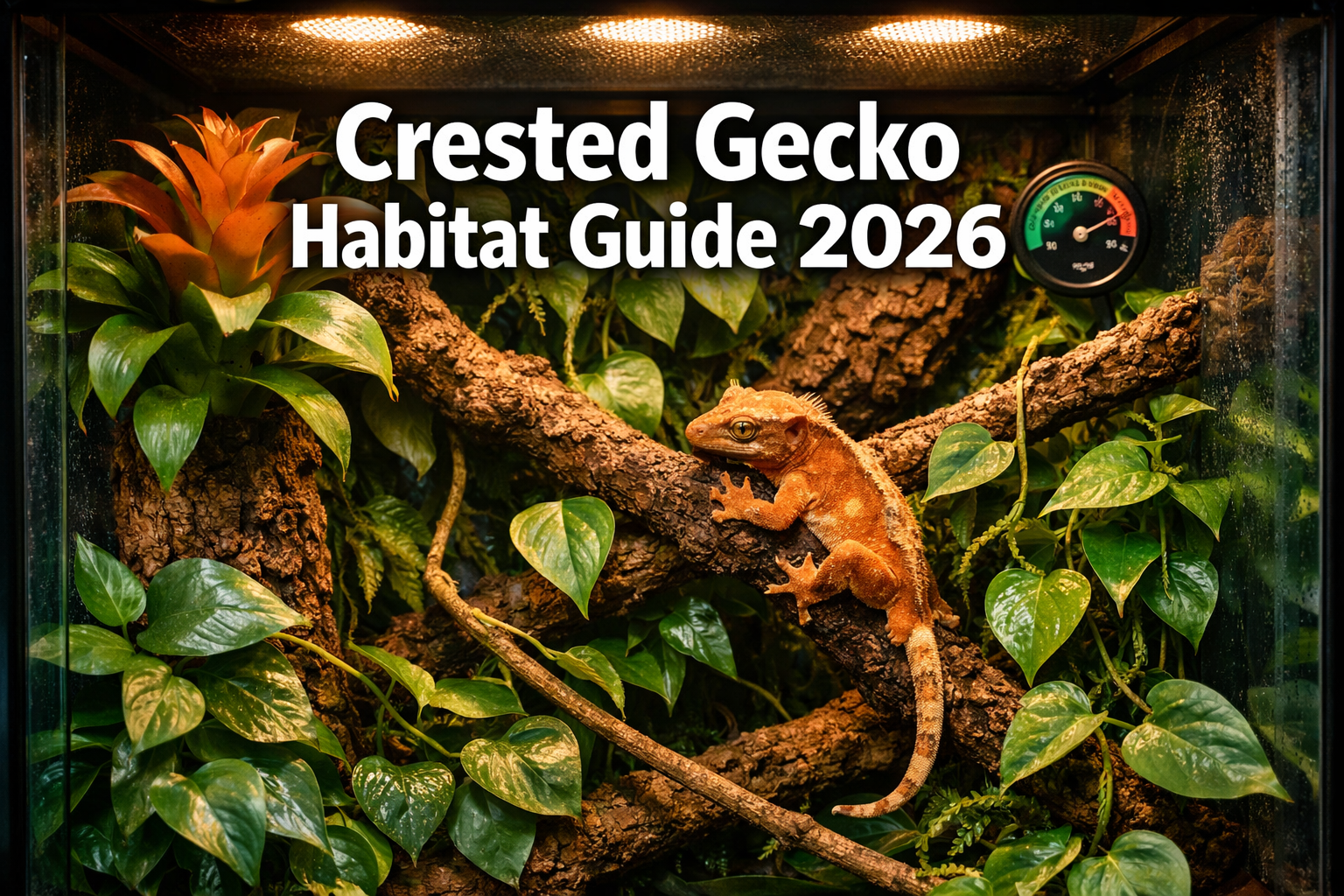
Setting up the perfect crested gecko habitat in 2026 means creating a vertical environment that mimics their natural New Caledonian forest home. As someone who has worked with hundreds of crested geckos over the years, I can tell you that the difference between a thriving gecko and a stressed one often comes down to habitat quality. This crested gecko habitat guide 2026 will walk you through every essential element, from choosing the right enclosure size to selecting safe substrates and creating the ideal temperature gradient.
Whether you’re bringing home your first gecko from a reputable online reptile store or upgrading an existing setup, getting the habitat right from day one sets the foundation for your gecko’s long-term health and happiness.
Key Takeaways
- Minimum adult enclosure size: 20 gallons or 18″×18″×24″ vertical terrarium, with height being more critical than floor space
- Temperature requirements: Maintain 72–75°F during the day with a cooler zone at 68°F; never exceed 80°F for extended periods
- Humidity cycling: Fluctuate between 40–50% baseline and 80% after misting, allowing dry-out periods between sessions
- Vertical space priority: Crested geckos are arboreal and need multiple climbing levels with secure branches and live plants
- Substrate safety: Use coconut fiber, sphagnum moss, or paper-based bedding; avoid gravel, wood chips, and walnut shells
- Essential furnishings: Provide 2–3 hides at different heights, sturdy climbing structures, and live plants for humidity retention
- Ventilation is critical: Screened lids prevent bacterial growth and maintain proper air circulation
- Hatchling accommodations: Start young geckos in smaller 12″×12″×18″ enclosures and upgrade as they grow
Quick Answer
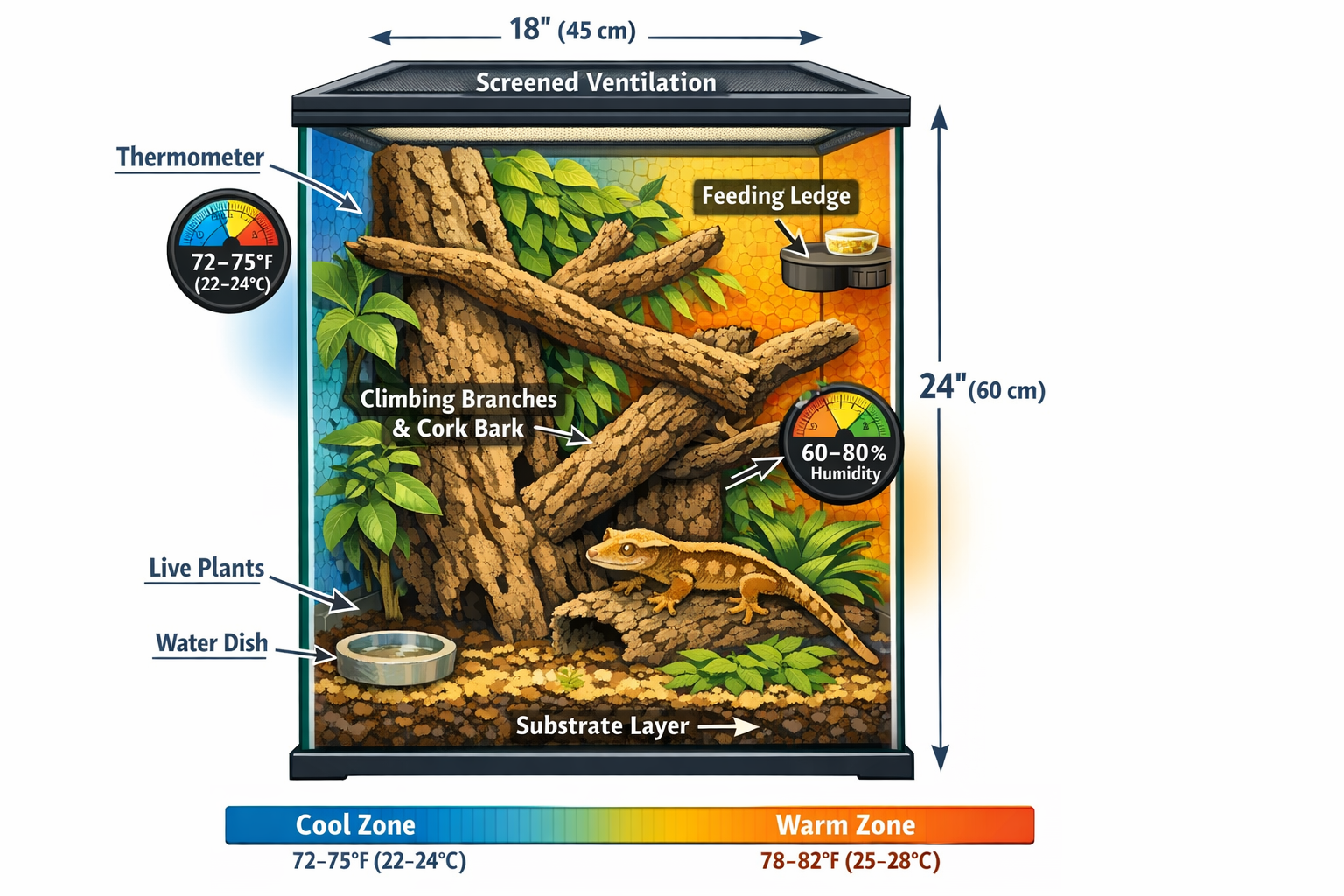
The ideal crested gecko habitat in 2026 consists of a vertical glass terrarium measuring at least 18″×18″×24″ for adults, maintained at 72–75°F with humidity cycling between 40–80%[1][2]. These arboreal geckos require height over floor space, multiple climbing structures, live plants, proper ventilation, and safe substrate like coconut fiber or sphagnum moss[2][4]. Temperature control is critical—never exceed 80°F, as crested geckos are highly sensitive to heat stress[1][3].
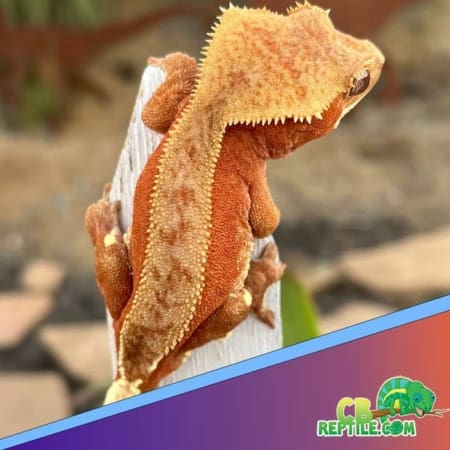
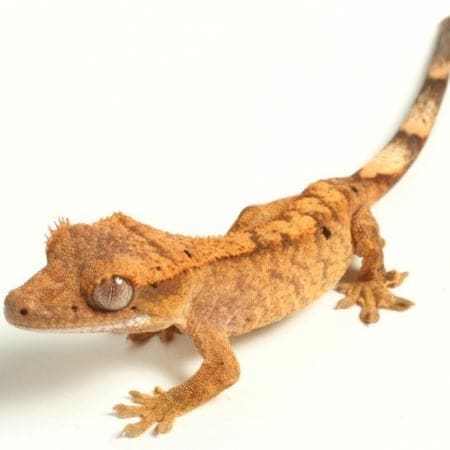
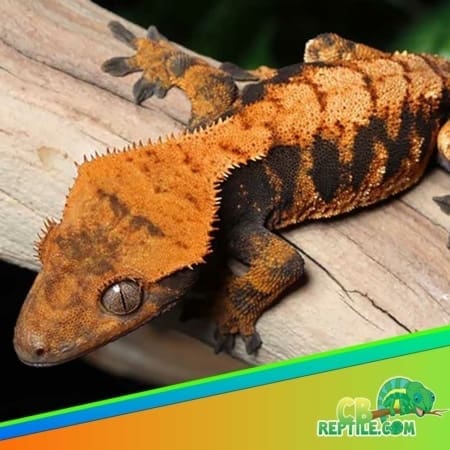
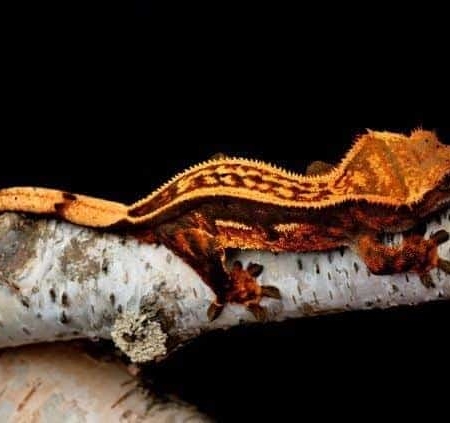
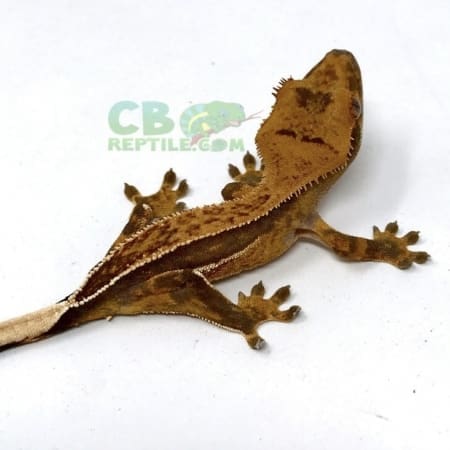
What Size Enclosure Does a Crested Gecko Need?
Adult crested geckos require a minimum 20-gallon terrarium or, preferably, a vertical enclosure measuring 18″×18″×24″ (length × width × height)[1][2][4]. Height matters significantly more than floor area because these geckos are arboreal climbers that spend most of their time in the upper portions of their habitat.
Size guidelines by age:
- Hatchlings and juveniles: 12″×12″×18″ enclosure works well for geckos under 6 months old[2]
- Sub-adults (6–12 months): Can transition to adult-sized housing or remain in juvenile setup until full size
- Adults (12+ months): Minimum 18″×18″×24″, though larger enclosures like 18″×18″×36″ provide better enrichment
- Multiple geckos: Add 10 gallons per additional gecko (females only—never house males together)
Choose glass terrariums over wooden vivariums because crested geckos need high humidity levels that wood cannot maintain without warping or developing mold[4]. The Exo Terra and Zoo Med brands offer excellent front-opening vertical terrariums specifically designed for arboreal species.
I’ve seen many new keepers make the mistake of thinking bigger is always better and placing a tiny hatchling in a massive enclosure. This actually creates stress because young geckos struggle to find food and feel exposed. Start appropriately sized and upgrade as your gecko grows—this approach from reputable crested gecko breeders ensures better feeding response and confidence.
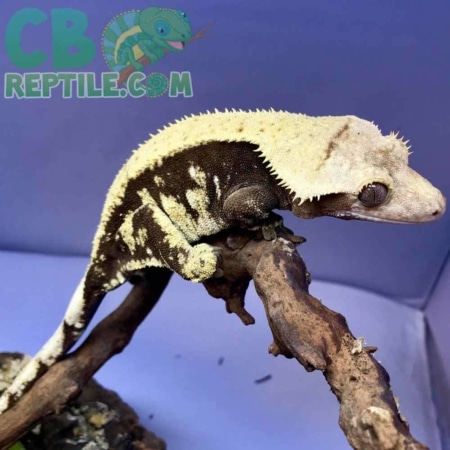
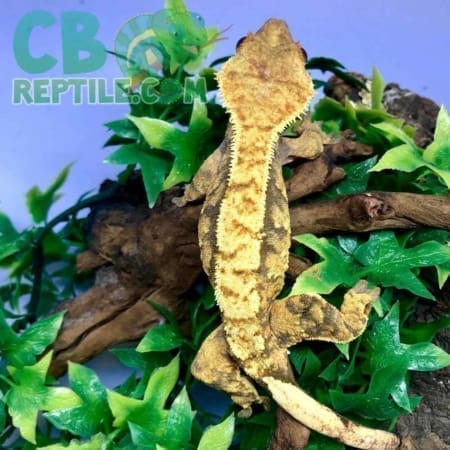
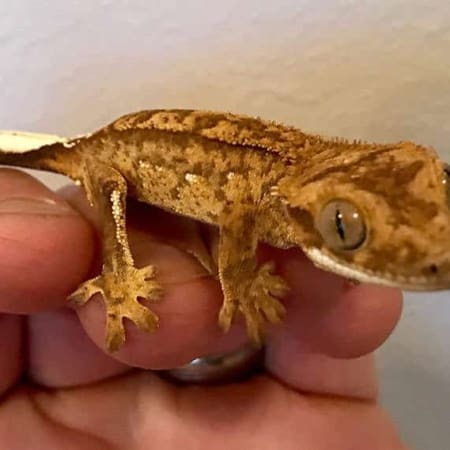
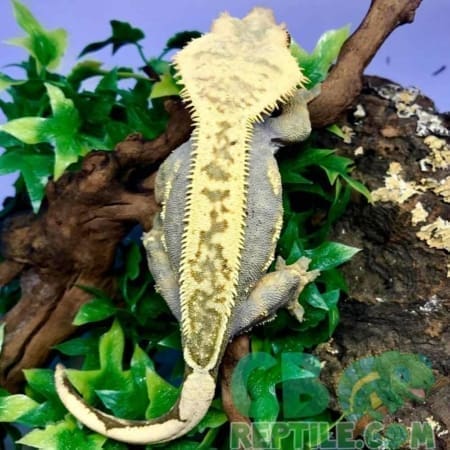
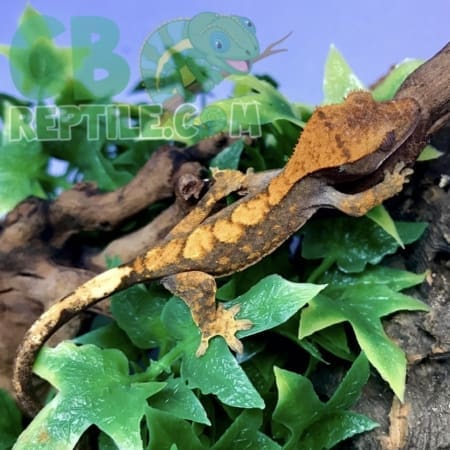
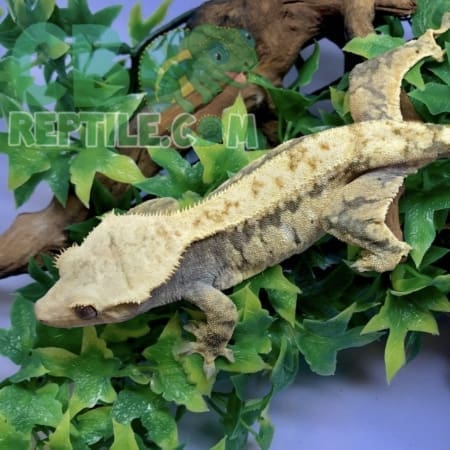
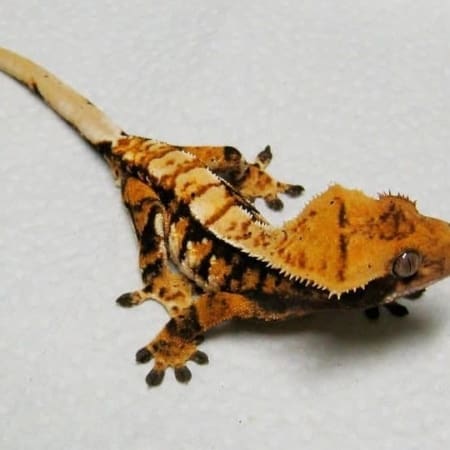
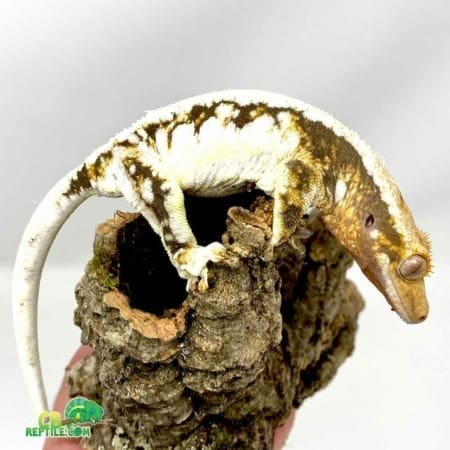
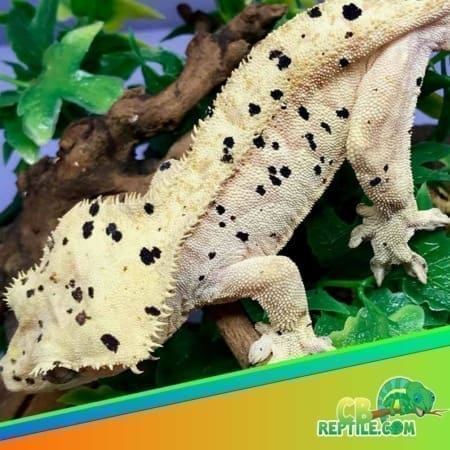
For those interested in different morphs like flame crested geckos or harlequin crested geckos, the housing requirements remain the same regardless of color pattern or genetics.
What Temperature Range Do Crested Geckos Need?
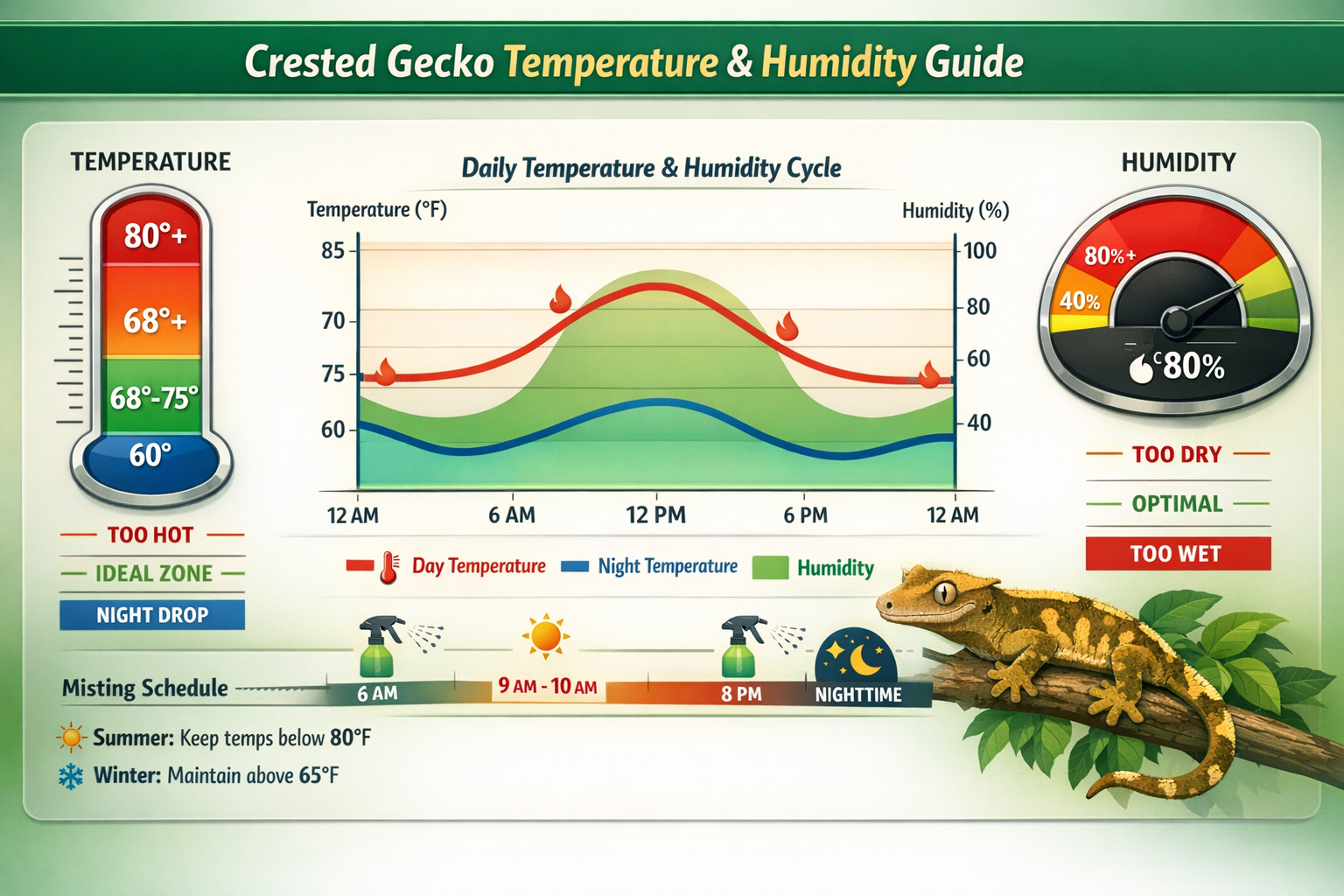
Crested geckos thrive at room temperature, requiring a gradient of 72–75°F at the warm end and 68–75°F at the cool end during the day, with nighttime temperatures dropping to 65–75°F[1][3]. Unlike many reptiles, they do not need supplemental heating in most homes.
Critical temperature guidelines:
- Ideal daytime range: 72–75°F
- Acceptable cool zone: 68–70°F
- Nighttime drop: 65–72°F (natural temperature fluctuation is beneficial)
- Danger zone: Temperatures above 80°F cause serious stress and potential health issues[1]
- Maximum safe limit: Brief exposure to 82°F is tolerable, but sustained heat above 80°F is dangerous
Heating considerations:
Most room-temperature homes in North America naturally fall within the ideal range. If your home runs cold (below 68°F), use a low-wattage heat emitter or ceramic heat bulb positioned outside the enclosure to gently warm the ambient air. Never use heat rocks, heat mats on the bottom, or high-wattage basking bulbs—crested geckos don’t bask and can overheat quickly.
Common mistake: Placing the terrarium near windows or heat sources. Direct sunlight can rapidly raise internal temperatures to lethal levels, even on mild days. I once consulted with a keeper who lost a gecko to heat stress because the enclosure sat near a sunny window—the internal temperature spiked to 95°F while the room remained comfortable.
Monitor temperatures with digital thermometers placed at multiple heights (top, middle, bottom) to ensure proper gradient. Analog stick-on thermometers are notoriously inaccurate. For more detailed temperature management, check our guide on crested gecko temperature requirements.
How Do You Maintain Proper Humidity in a Crested Gecko Habitat?
Crested gecko habitats require humidity cycling between 40–50% baseline and up to 80% immediately after misting, with essential dry-out periods in between[3][7]. This fluctuation mimics their natural New Caledonian environment and prevents respiratory infections.
Humidity management strategy:
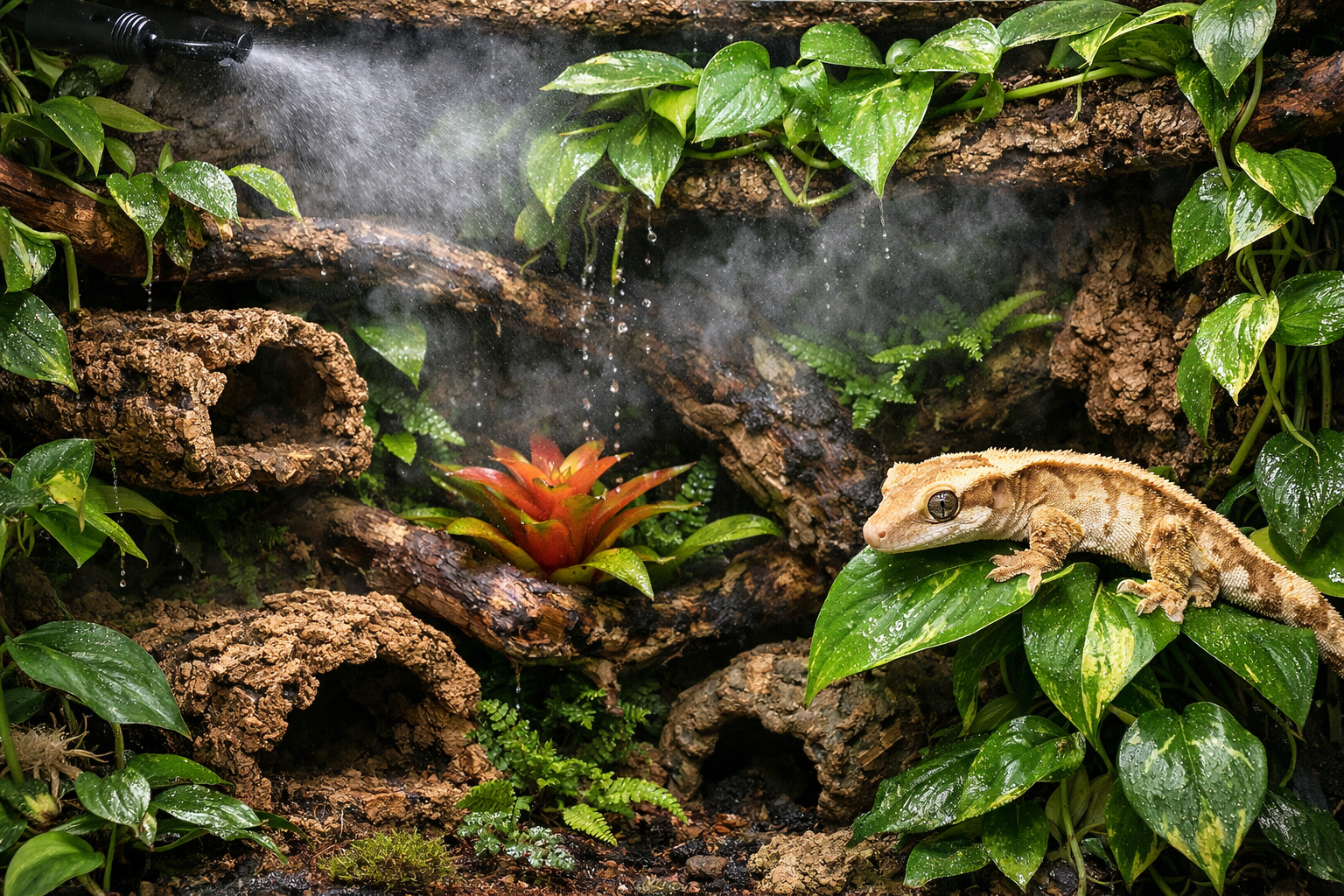
- Morning misting: Thoroughly spray the enclosure until water droplets form on surfaces (raises humidity to 70–80%)
- Dry-out period: Allow 4–6 hours for humidity to drop back to 40–50%
- Evening misting: Repeat the process before lights-out
- Monitor constantly: Use a digital hygrometer to track levels throughout the day
Best practices for humidity control:
- Live plants: Pothos, bromeliads, and snake plants retain moisture and release it gradually[2]
- Substrate choice: Coconut fiber and sphagnum moss hold humidity better than paper products
- Misting technique: Spray walls and plants rather than directly soaking the gecko
- Ventilation balance: Screened lids allow air circulation while maintaining moisture[1][4]
- Water dishes: Provide a shallow dish for drinking and ambient humidity contribution
Avoid these humidity mistakes:
- Keeping humidity constantly at 80% (promotes bacterial growth and respiratory issues)
- Never allowing the enclosure to dry out between mistings
- Using only substrate moisture without proper misting
- Relying on water dishes alone for humidity
I recommend automated misting systems like the Exo Terra Monsoon or Zoo Med Repti Fogger for consistent humidity cycling, especially if you work long hours. Manual misting works perfectly well if you maintain a regular schedule—just set phone reminders for morning and evening sessions.
For additional humidity guidance specific to related species, our gargoyle gecko humidity article provides complementary information that applies to many New Caledonian gecko species.
What Substrate Should You Use in a Crested Gecko Habitat Guide 2026?
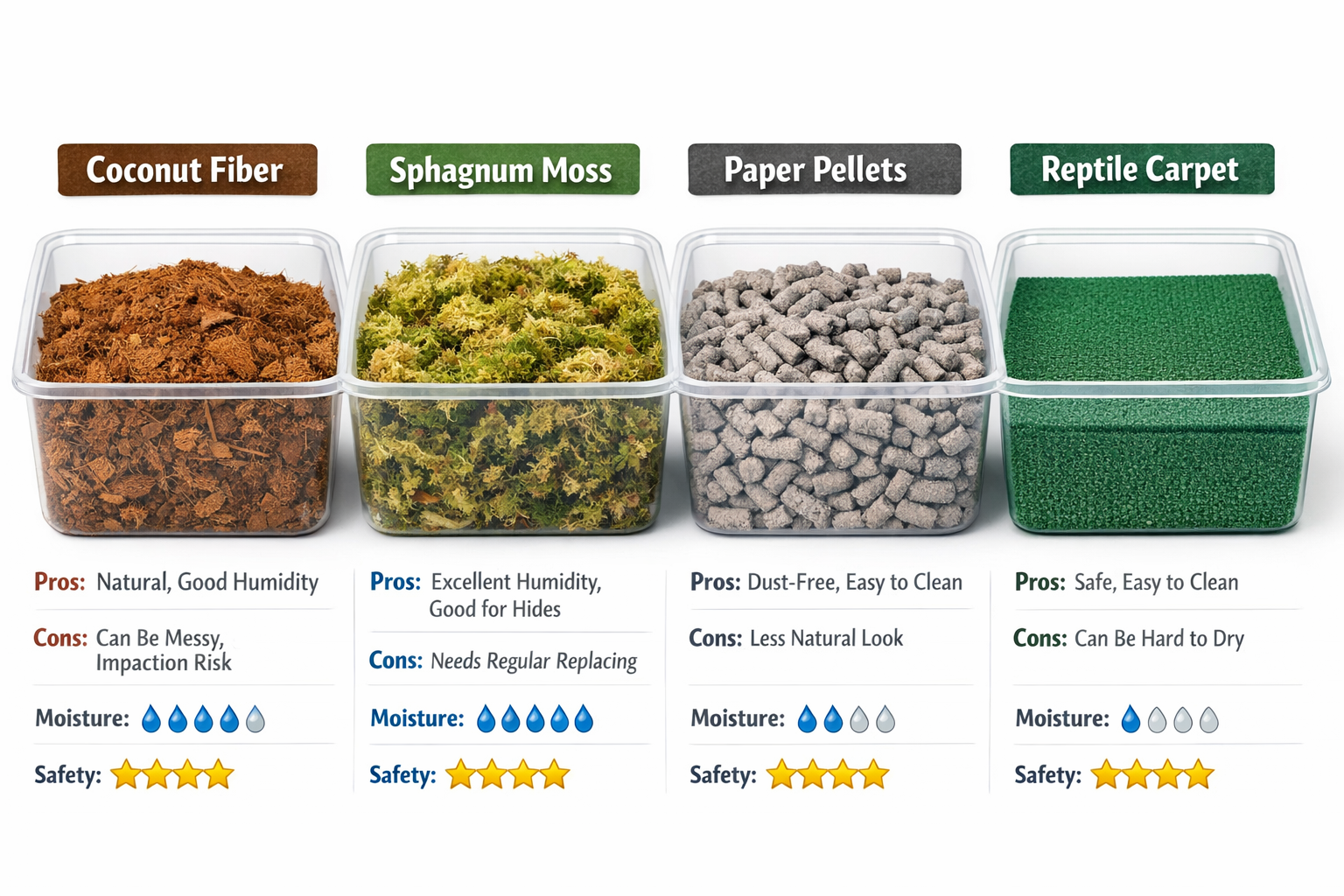
The safest substrate options for crested geckos include coconut fiber, dampened sphagnum moss, recycled paper-based pellets, and reptile carpet, while gravel, wood chips, and walnut shells should be strictly avoided[1]. Your substrate choice impacts humidity retention, ease of cleaning, and safety.
Recommended substrate options:
| Substrate Type | Pros | Cons | Best For |
|---|---|---|---|
| Coconut fiber (Eco Earth) | Excellent humidity retention, natural appearance, affordable | Can be messy, requires regular replacement | Bioactive setups, planted terrariums |
| Sphagnum moss (dampened) | Superior moisture holding, soft texture, naturalistic | Needs frequent misting, can mold if too wet | Humidity-sensitive geckos, breeding setups |
| Paper pellets (Yesterday’s News) | Easy to clean, controls odor, safe if ingested | Less natural looking, moderate humidity retention | Quarantine, juveniles, easy maintenance |
| Reptile carpet | Reusable, prevents impaction, simple to clean | Doesn’t hold humidity, claws can catch on fibers | Minimalist setups, temporary housing |
| Bioactive mix | Self-cleaning, natural ecosystem, enriching | Expensive initial setup, requires maintenance | Advanced keepers, display terrariums |
Substrates to absolutely avoid:
- Gravel and sand: Impaction risk if ingested during feeding
- Wood chips and shavings: Splinters, mold growth, poor humidity
- Walnut shell: Sharp edges, digestive blockage hazard
- Calcium sand: Marketing myth—still causes impaction despite claims
Substrate depth recommendations:
Spread substrate 2–3 inches deep for proper humidity retention and waste absorption. Bioactive setups require 3–4 inches to support cleanup crew organisms like springtails and isopods.
Choose coconut fiber if you want a balance of affordability, functionality, and natural appearance. I use it in 80% of my crested gecko setups at CBReptile.com, the best crested gecko for sale facility in the USA, because it performs consistently well across different morphs from dalmatian crested geckos to pinstripe crested geckos.
For a complete substrate comparison across different gecko species, see our leopard gecko habitat guide which contrasts the very different substrate needs of terrestrial versus arboreal species.
What Climbing Structures and Hides Do Crested Geckos Need?
Crested geckos require 2–3 hiding spots at different elevations (upper, middle, and lower levels) plus multiple climbing structures like cork bark branches and live plants to create vertical pathways[2]. These arboreal geckos spend 90% of their time above ground level in the wild.
Essential furnishings checklist:
Hiding spots:
- Upper-level hide: Cork bark tube or magnetic ledge with cover (primary nighttime retreat)
- Mid-level hide: Half-log or curved bark piece (daytime resting spot)
- Ground-level hide: Coconut hide or rock cave (security option, rarely used)
Climbing structures:
- Cork bark branches: 2–3 pieces of varying diameters, securely mounted diagonally
- Bamboo poles: Create highways between different zones
- Driftwood: Natural appearance, multiple climbing angles
- Magnetic ledges: Exo Terra or Zoo Med feeding platforms double as perches
Live plant recommendations:
- Pothos (Epipremnum aureum): Nearly indestructible, excellent coverage, purifies air
- Snake plant (Sansevieria): Tolerates low light, sturdy structure
- Bromeliads: Create water catchments, add visual interest
- Ficus benjamina: Provides dense foliage for hiding
- Philodendron: Fast-growing, creates thick canopy
Mounting and safety:
All climbing structures must be firmly secured to prevent collapse. I’ve treated geckos with tail injuries from falling branches—it’s completely preventable with proper installation. Use aquarium-safe silicone, fishing line, or zip ties to anchor branches to the enclosure walls. Test stability by applying firm downward pressure before introducing your gecko.
Vertical space utilization:
Divide your enclosure into three zones:
- Upper third (18–24″ height): Primary activity zone with densest foliage and preferred hides
- Middle third (8–18″ height): Transition area with feeding ledges and resting spots
- Lower third (0–8″ height): Substrate, water dish, ground-level security hide
This layered approach, combined with quality terrarium habitat decor, creates an enriching environment that encourages natural behaviors like jumping, climbing, and exploring.
Whether you’re setting up for designer crested geckos or standard morphs, the structural requirements remain identical—all crested geckos benefit from maximized vertical space.
How Do You Set Up Lighting and Ventilation for Crested Geckos?
Crested geckos are crepuscular (active at dawn and dusk) and do not require UVB lighting, though low-level UVB can provide health benefits, while screened lids are mandatory for proper ventilation to prevent bacterial infections[1][4]. Lighting serves primarily to establish day/night cycles and support live plants.
Lighting options and recommendations:
No lighting (minimal approach):
- Relies on ambient room light for day/night cycle
- Works if room has natural windows
- Limits live plant options to low-light species
- No additional equipment cost
LED plant lights (recommended):
- Supports healthy plant growth without heat
- Establishes clear photoperiod (12 hours on, 12 hours off)
- Energy-efficient and long-lasting
- No risk of overheating the enclosure
Low-level UVB (optional enhancement):
- 5% UVB bulb (Arcadia Forest or Zoo Med ReptiSun 5.0)
- May improve calcium metabolism and natural behaviors
- Position 10–12 inches from basking spots
- Replace every 12 months even if bulb still glows
Lighting schedule:
- 12 hours on: 7 AM – 7 PM mimics natural photoperiod
- 12 hours off: Complete darkness for proper rest
- Seasonal variation: Optional slight adjustments (11/13 or 13/11 split) mimic natural cycles
Ventilation requirements:
Proper airflow prevents the two most common health issues in captive crested geckos: respiratory infections and skin infections. Stagnant, constantly humid air creates ideal conditions for bacterial growth.
Ventilation best practices:
- Full screen top: Never use solid glass lids
- Side vents: Many commercial terrariums include lower front vents for air circulation
- Air movement: Gentle room air circulation (not direct fan placement)
- Humidity balance: Ventilation should allow dry-out periods between mistings
I’ve consulted on dozens of cases where geckos developed respiratory issues in enclosures with inadequate ventilation. The telltale sign is constantly foggy glass that never clears—this indicates poor air exchange and excessive moisture retention.
Common lighting mistakes:
- Using high-wattage basking bulbs (causes overheating)
- Leaving lights on 24/7 (disrupts natural circadian rhythm)
- Positioning UVB too close (can cause eye irritation)
- No photoperiod consistency (creates stress)
For those keeping multiple gecko species, compare these requirements with our gargoyle gecko habitat guide—both species share similar lighting and ventilation needs as fellow New Caledonian natives.
What Diet and Feeding Setup Do Crested Geckos Require?
Crested geckos thrive on a balanced diet of commercial crested gecko powder (Repashy, Pangea, or Arcadia) offered 3–4 times weekly, supplemented with appropriately-sized live insects 1–2 times weekly for juveniles and adults[8]. Proper feeding station placement and diet variety directly impact growth rates and overall health.
Complete diet breakdown:
Powdered diet (primary nutrition):
- Frequency: Every other day for adults, daily for hatchlings and juveniles
- Top brands: Repashy Crested Gecko MRP, Pangea Fruit Mix Complete, Arcadia EarthPro
- Preparation: Mix powder with water to yogurt-like consistency
- Portion size: 1–2 teaspoons for adults, 1/2 teaspoon for juveniles
- Feeding time: Evening (6–8 PM) when geckos become active
Live insect supplementation:
- Best choices: Crickets, dubia roaches, black soldier fly larvae
- Sizing rule: Insects should be no larger than the space between the gecko’s eyes
- Frequency: 1–2 times weekly (more often for growing juveniles)
- Dusting: Calcium powder without D3 at each feeding, multivitamin once weekly
- Gut-loading: Feed insects nutritious foods 24 hours before offering
Feeding station setup:
Position magnetic feeding ledges in the upper third of the enclosure where geckos naturally spend time. I use the Pangea Magnetic Ledge system because it’s stable, easy to clean, and positions food at the gecko’s preferred height.
Feeding schedule by age:
| Age Group | Powdered Diet | Live Insects | Special Notes |
|---|---|---|---|
| Hatchlings (0–3 months) | Daily, small portions | 2–3 times weekly, small crickets | Focus on growth, monitor weight gain |
| Juveniles (3–12 months) | Daily or every other day | 2 times weekly | Rapid growth phase, increase portions |
| Young adults (12–18 months) | Every other day | 1–2 times weekly | Transitioning to adult schedule |
| Adults (18+ months) | 3–4 times weekly | 1 time weekly | Maintain weight, prevent obesity |
Diet variety and rotation:
Rotate between different powdered diet flavors (Pangea Watermelon, Repashy Grubs ‘N’ Fruit, Pangea Apricot) to prevent boredom and ensure nutritional diversity. I’ve noticed geckos show stronger feeding responses when offered variety rather than the same flavor continuously.
For comprehensive nutritional information, see our detailed crested gecko diet guide. Whether you’re raising tiger crested geckos or bicolor crested geckos, nutritional requirements remain consistent across all morphs.
Water provision:
Always provide a shallow water dish at ground level, even though crested geckos primarily drink from water droplets on leaves after misting. Change water daily to prevent bacterial growth.
How Do You Maintain and Clean a Crested Gecko Habitat?
A proper maintenance schedule includes daily spot-cleaning of waste, weekly feeding dish sanitization, and complete substrate replacement every 4–6 weeks to prevent bacterial buildup and maintain habitat hygiene[4]. Consistent cleaning prevents health issues and keeps your gecko’s environment fresh.
Daily maintenance tasks (5 minutes):
- Remove visible feces and urates with paper towel or tongs
- Check water dish and refill if needed
- Remove uneaten insects (prevents stress and bites)
- Inspect gecko for health issues during active hours
- Verify temperature and humidity readings
Weekly maintenance tasks (15–20 minutes):
- Wash and sanitize feeding ledges with reptile-safe cleaner
- Wipe down glass walls with damp cloth to remove calcium deposits
- Trim or remove dead plant leaves
- Check all climbing structures for stability
- Deep-clean water dish with hot water and scrub brush
Monthly deep-cleaning tasks (45–60 minutes):
- Remove gecko to temporary holding container
- Discard and replace all substrate
- Remove and sanitize all furnishings (branches, hides, decorations)
- Wash enclosure walls, floor, and ceiling with reptile-safe disinfectant
- Rinse thoroughly and allow to dry completely
- Reassemble habitat with fresh substrate and clean furnishings
- Verify all equipment functions properly before returning gecko
Cleaning solution recommendations:
- Reptile-safe disinfectant: Zoo Med Wipeout or F10 Veterinary Disinfectant
- Avoid: Bleach, ammonia-based cleaners, scented products, harsh chemicals
- DIY option: White vinegar diluted 1:1 with water (rinse thoroughly)
Bioactive maintenance differences:
Bioactive enclosures with cleanup crews (springtails and isopods) require less frequent substrate replacement—often only once or twice yearly. However, you’ll need to:
- Monitor cleanup crew population levels
- Add supplemental food for isopods (leaf litter, vegetables)
- Maintain proper moisture levels for invertebrate health
- Remove large waste deposits manually to assist cleanup crew
Common maintenance mistakes:
I’ve seen keepers make these errors repeatedly:
- Using scented cleaning products (residue can harm geckos)
- Not rinsing enclosures thoroughly after disinfecting
- Replacing substrate too infrequently (bacterial buildup)
- Neglecting to sanitize climbing structures (harbors bacteria)
- Cleaning during the gecko’s active hours (causes stress)
Quarantine protocol for new geckos:
When bringing home a new gecko from reptiles for sale online sources or even reputable facilities, maintain a 30–60 day quarantine in a separate enclosure with paper towel substrate for easy monitoring of feces and health status. This prevents potential disease transmission to existing animals.
For those managing multiple species, our leopard gecko habitats article provides complementary maintenance information for terrestrial gecko species.
What Are Common Habitat Setup Mistakes to Avoid?
The most frequent crested gecko habitat errors include insufficient vertical space, improper temperature management, poor ventilation, and using dangerous substrates—all of which can be prevented with proper planning and research before bringing your gecko home.
Critical mistakes and solutions:
1. Horizontal instead of vertical orientation
- Problem: Using aquariums designed for fish or terrestrial reptiles
- Impact: Limits natural climbing behavior and causes stress
- Solution: Always choose vertical terrariums measuring at least 18″×18″×24″
2. Overheating the enclosure
- Problem: Adding unnecessary heat sources or placing near windows
- Impact: Temperatures above 80°F cause lethargy, appetite loss, and potential death
- Solution: Monitor with digital thermometers; use room temperature as baseline
3. Constant high humidity without dry periods
- Problem: Misting too frequently or poor ventilation
- Impact: Respiratory infections, skin infections, bacterial growth
- Solution: Allow humidity to drop to 40–50% between morning and evening mistings
4. Inadequate climbing structures
- Problem: Empty enclosures with only ground-level decorations
- Impact: Stress, reduced activity, failure to thrive
- Solution: Install multiple branches, live plants, and hides at various heights
5. Dangerous substrate choices
- Problem: Using sand, gravel, or wood chips
- Impact: Impaction if ingested, injury, poor humidity retention
- Solution: Stick to coconut fiber, sphagnum moss, or paper-based products
6. Improper feeding station placement
- Problem: Placing food dishes on the ground
- Impact: Reduced feeding response, substrate contamination
- Solution: Use magnetic ledges in the upper third of the enclosure
7. Housing multiple males together
- Problem: Assuming crested geckos are social like some reptiles
- Impact: Severe fighting, stress, injury, tail loss
- Solution: House males individually; only keep multiple females together with monitoring
8. Skipping quarantine for new arrivals
- Problem: Adding new geckos directly to existing collections
- Impact: Disease transmission, parasite spread
- Solution: Maintain 30–60 day quarantine period in separate enclosure
Real-world example:
I recently consulted with a keeper who purchased a beautiful Halloween crested gecko and immediately placed it in a 40-gallon horizontal aquarium with a heat lamp. Within two weeks, the gecko showed signs of heat stress and refused food. After transitioning to a proper vertical setup at room temperature, the gecko recovered fully and began eating regularly.
Prevention checklist before bringing gecko home:
✓ Vertical terrarium (minimum 18″×18″×24″) assembled and tested
✓ Temperature verified at 72–75°F without supplemental heating
✓ Humidity cycling properly between 40–80%
✓ Multiple climbing structures securely installed
✓ Live plants established (if using)
✓ Safe substrate spread 2–3 inches deep
✓ Feeding ledge positioned in upper third
✓ Digital thermometer and hygrometer installed
✓ Crested gecko diet powder and feeding supplies ready
✓ Habitat running for 48 hours to verify stability
This preparation ensures your new gecko, whether a creamsicle crested gecko or any other morph, transitions smoothly into a properly configured environment.
For additional setup guidance, our crested gecko habitat setup article provides step-by-step assembly instructions with photos.
How Do Habitat Requirements Change for Different Life Stages?
Crested gecko habitat needs vary significantly from hatchling to adult stages, with hatchlings requiring smaller enclosures (12″×12″×18″) for security and feeding success, while adults thrive in full-sized vertical terrariums of 18″×18″×24″ or larger[2]. Proper sizing at each life stage reduces stress and promotes healthy development.
Hatchling setup (0–3 months):
Enclosure specifications:
- Size: 12″×12″×18″ vertical terrarium
- Furnishings: 2–3 small branches, one hide, minimal plants
- Substrate: Paper towels for easy monitoring (switch to coconut fiber after 2–3 months)
- Feeding: Daily powdered diet, small crickets 2–3 times weekly
Why smaller is better for hatchlings:
Young geckos feel overwhelmed in large spaces and struggle to locate food. I’ve raised hundreds of hatchlings at CBReptile.com, and feeding response improves dramatically in appropriately-sized enclosures. Hatchlings also have difficulty thermoregulating in oversized habitats with excessive air volume.
Juvenile setup (3–12 months):
Enclosure specifications:
- Size: Can remain in 12″×12″×18″ or upgrade to 18″×18″×24″
- Furnishings: Increased climbing structures, 2–3 hides, more plants
- Substrate: Coconut fiber or bioactive mix
- Feeding: Daily to every-other-day powdered diet, insects 2 times weekly
Growth monitoring:
Juveniles grow rapidly during this phase. Weigh monthly and track growth curves. Healthy juveniles gain 1–2 grams per month consistently. Slower growth may indicate inadequate feeding, improper temperatures, or health issues.
Young adult setup (12–18 months):
Enclosure specifications:
- Size: Full adult enclosure (18″×18″×24″ minimum)
- Furnishings: Maximum enrichment with dense planting and multiple climbing routes
- Substrate: Coconut fiber, sphagnum moss, or established bioactive
- Feeding: Every-other-day powdered diet, insects 1–2 times weekly
Sexual maturity considerations:
Males develop visible hemipenal bulges at the base of the tail around 9–12 months. If housing multiple geckos, separate males immediately when identified to prevent aggression.
Adult setup (18+ months):
Enclosure specifications:
- Size: 18″×18″×24″ minimum (larger is beneficial)
- Furnishings: Fully mature live plants, complex climbing networks
- Substrate: Any safe option based on keeper preference
- Feeding: 3–4 times weekly powdered diet, insects once weekly
Breeding considerations:
If planning to breed, females need additional calcium supplementation and slightly larger enclosures to accommodate egg-laying sites. Never breed females under 18 months old or 35 grams—early breeding causes serious health complications.
Life stage comparison table:
| Life Stage | Age | Enclosure Size | Feeding Frequency | Special Needs |
|---|---|---|---|---|
| Hatchling | 0–3 months | 12″×12″×18″ | Daily powder, insects 2–3×/week | Paper substrate, simple setup |
| Juvenile | 3–12 months | 12″×12″×18″ to 18″×18″×24″ | Daily powder, insects 2×/week | Growth monitoring, increased enrichment |
| Young Adult | 12–18 months | 18″×18″×24″ | Every-other-day powder, insects 1–2×/week | Sex identification, separation if needed |
| Adult | 18+ months | 18″×18″×24″+ | 3–4×/week powder, insects 1×/week | Breeding readiness (if desired) |
Whether you’re raising flame crested geckos from hatchlings or purchasing well-started juveniles, matching enclosure size to life stage creates optimal conditions for healthy development.
For those interested in the full lifecycle, our crested gecko breeder resource provides detailed information about raising geckos from egg to adult.
Frequently Asked Questions
Do crested geckos need a heat lamp?
No, crested geckos do not need heat lamps and thrive at normal room temperatures of 72–75°F[1]. Adding heat sources often causes dangerous overheating above 80°F, which can be fatal. Only use gentle ambient heating if your home drops below 65°F consistently.
Can you keep crested geckos in a fish tank?
You can use a fish tank if it’s positioned vertically and provides adequate height, but front-opening terrariums designed for reptiles work much better for maintenance and humidity control[4]. Standard horizontal aquariums don’t provide sufficient vertical climbing space.
How often should you mist a crested gecko habitat?
Mist crested gecko enclosures twice daily (morning and evening) to raise humidity to 70–80%, then allow it to drop back to 40–50% between sessions[3][7]. This cycling prevents respiratory infections while maintaining proper hydration.
What plants are safe for crested gecko enclosures?
Safe plants include pothos, snake plants, bromeliads, ficus, and philodendron—all non-toxic species that tolerate high humidity and provide climbing surfaces[2]. Avoid toxic plants like ivy, azalea, and oleander.
Do crested geckos need UVB lighting?
Crested geckos don’t require UVB lighting but can benefit from low-level 5% UVB exposure, which may improve calcium metabolism and natural behaviors[8]. Many keepers successfully raise healthy geckos without any UVB supplementation.
Can you house multiple crested geckos together?
You can house multiple female crested geckos together in sufficiently large enclosures (add 10 gallons per gecko), but never house males together as they will fight aggressively[2]. Monitor females for bullying and separate if needed.
What’s the best substrate for crested geckos?
Coconut fiber (Eco Earth) offers the best balance of humidity retention, safety, affordability, and natural appearance for most crested gecko setups[1]. Sphagnum moss works well for high-humidity needs, while paper products simplify cleaning.
How do you know if your crested gecko habitat is too hot?
Signs of overheating include lethargy, staying on the cool ground level, refusing food, heavy breathing, and pale coloration[1]. Use digital thermometers to verify temperatures never exceed 80°F for extended periods.
Do crested geckos need a water dish?
Yes, always provide a shallow water dish even though crested geckos primarily drink from misted droplets on leaves[4]. The dish provides backup hydration and contributes to ambient humidity levels.
How long can crested geckos go without food?
Healthy adult crested geckos can survive 2–3 weeks without food, though this isn’t recommended for regular care. Hatchlings and juveniles need daily feeding for proper growth and should never go more than 2–3 days without eating.
What size crickets should you feed crested geckos?
Feed crickets no larger than the space between your gecko’s eyes—typically 1/4 inch for hatchlings, 1/2 inch for juveniles, and 3/4 inch for adults[8]. Oversized insects cause choking hazards and feeding stress.
Can crested geckos live in bioactive enclosures?
Yes, crested geckos thrive in bioactive setups with live plants and cleanup crews (springtails and isopods), which create self-sustaining ecosystems requiring less maintenance than traditional substrates. Bioactive enclosures provide excellent enrichment and naturalistic environments.
Conclusion
Creating the perfect crested gecko habitat in 2026 comes down to understanding these arboreal geckos’ specific needs: vertical space over floor area, room temperature without supplemental heating, humidity cycling between 40–80%, and safe substrate with abundant climbing structures. Whether you’re setting up for a hatchling crested gecko for sale or upgrading an adult’s enclosure, the principles remain consistent across all morphs and life stages.
Your next steps:
- Measure and purchase a vertical terrarium (minimum 18″×18″×24″ for adults, 12″×12″×18″ for hatchlings)
- Gather essential equipment: digital thermometer, hygrometer, misting bottle or automated system, and appropriate substrate
- Install climbing structures securely at multiple heights with live plants for enrichment
- Establish proper conditions and let the habitat run for 48 hours before introducing your gecko
- Source a healthy gecko from reputable crested gecko breeders who prioritize proper husbandry
- Monitor and adjust temperature, humidity, and feeding response during the first few weeks
The investment you make in creating a proper habitat pays dividends in your gecko’s health, longevity, and quality of life. I’ve seen countless geckos transform from stressed, non-feeding animals in poor setups to thriving, active pets once moved to appropriate enclosures. The difference is truly remarkable.
For those ready to bring home a new companion, CBReptile.com offers the highest quality reptiles for sale in the USA, with healthy, well-started animals from various morphs including designer crested geckos, pinstripe varieties, and dalmatian patterns. Each gecko receives expert care from hatchling through shipping, ensuring you receive a healthy animal ready to thrive in your carefully prepared habitat.
Remember that habitat setup is just the beginning—ongoing maintenance, proper nutrition, and attentive observation complete the picture of responsible crested gecko keeping. With the information in this crested gecko habitat guide 2026, you have everything needed to create an environment where your gecko will flourish for the next 15–20 years.
Interactive Habitat Requirements Calculator
🦎 Crested Gecko Habitat Requirements Calculator
References
[1] Crested Gecko Care Sheet – https://www.petmd.com/reptile/crested-gecko-care-sheet
[2] Building A Crested Gecko Habitat – https://www.cbreptile.com/building-a-crested-gecko-habitat/
[4] Crested gecko care sheet – https://www.rspca.org.uk/documents/1494939/7712578/Crested+gecko+care+sheet+(PDF+676KB).pdf/4a4aab54-0a6b-b401-6ee4-c2f88fbd2ad3?version=3.0&t=1559127988608&download=true
[7] Complete Humidity And Hydration Guide For Crested Geckos – https://www.zenhabitats.com/blogs/reptile-care-sheets-resources/complete-humidity-and-hydration-guide-for-crested-geckos