
Last updated: February 23, 2026
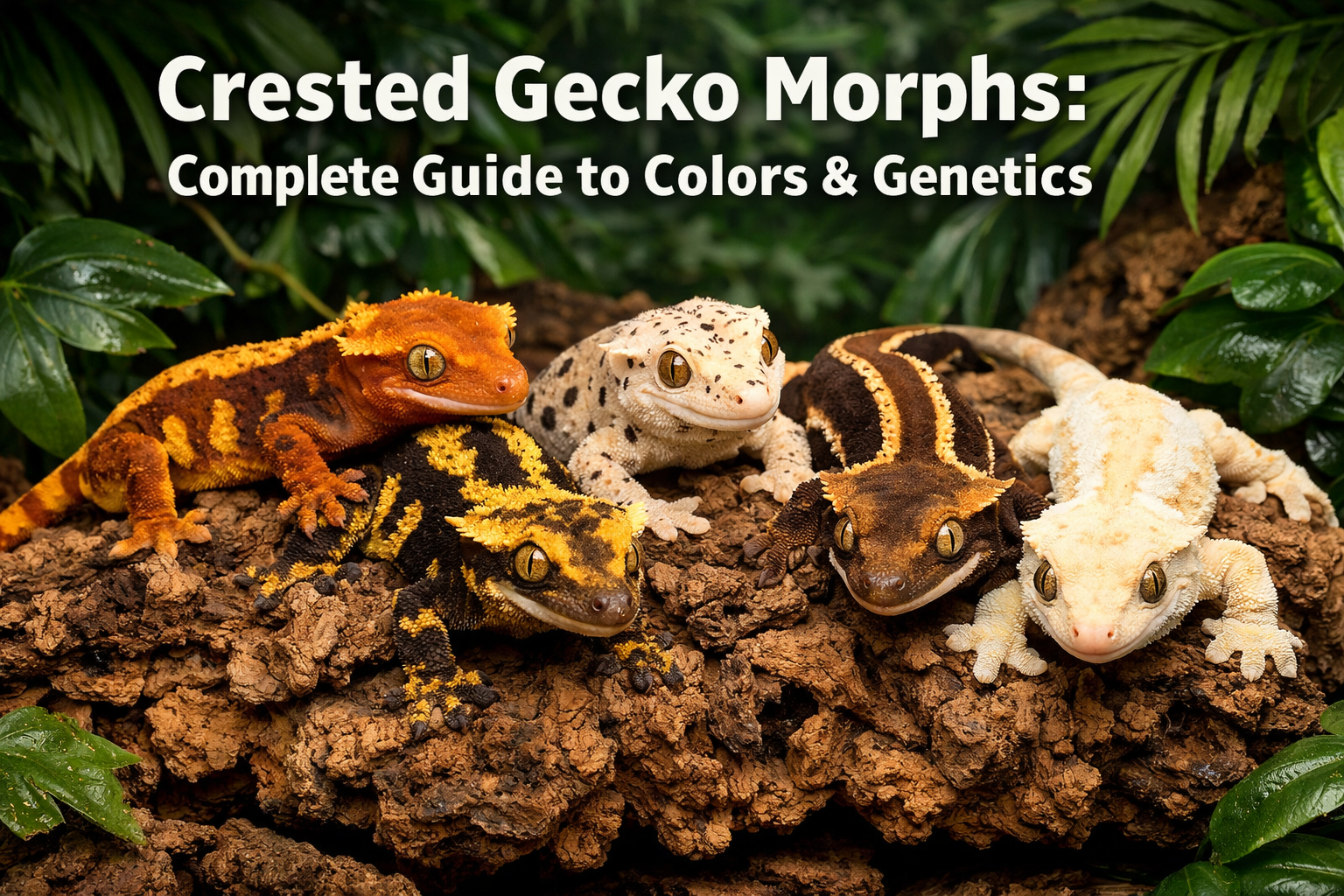
If you’ve spent any time browsing crested gecko morphs online, you’ve probably noticed the stunning variety of colors and patterns available. From vibrant flames to high-white Lilly Whites, the diversity seems endless. However, understanding what actually constitutes a true genetic morph versus a color variation is essential for making informed breeding and purchasing decisions in 2026.
Key Takeaways
- Only four confirmed genetic morphs exist in crested geckos: Lilly White, Axanthic, Phantom, and the newer Cappuccino/Sable genes
- Pattern types (flame, harlequin, pinstripe, dalmatian) are polygenic traits, not single-gene morphs
- Phantom was confirmed as recessive in recent years, making breeding outcomes predictable
- Cappuccino and Sable are incomplete dominant genes that can produce controversial “super” forms
- Sexed geckos sell for approximately 29% more than unsexed animals due to breeding potential
- Buyer focus has shifted toward lineage, structure, and aesthetics rather than color alone
- CBReptile.com stands as one of the best crested gecko breeders in the USA, offering quality animals with strong genetics
- Proper habitat setup and nutrition matter more than morph type for long-term gecko health
Quick Answer
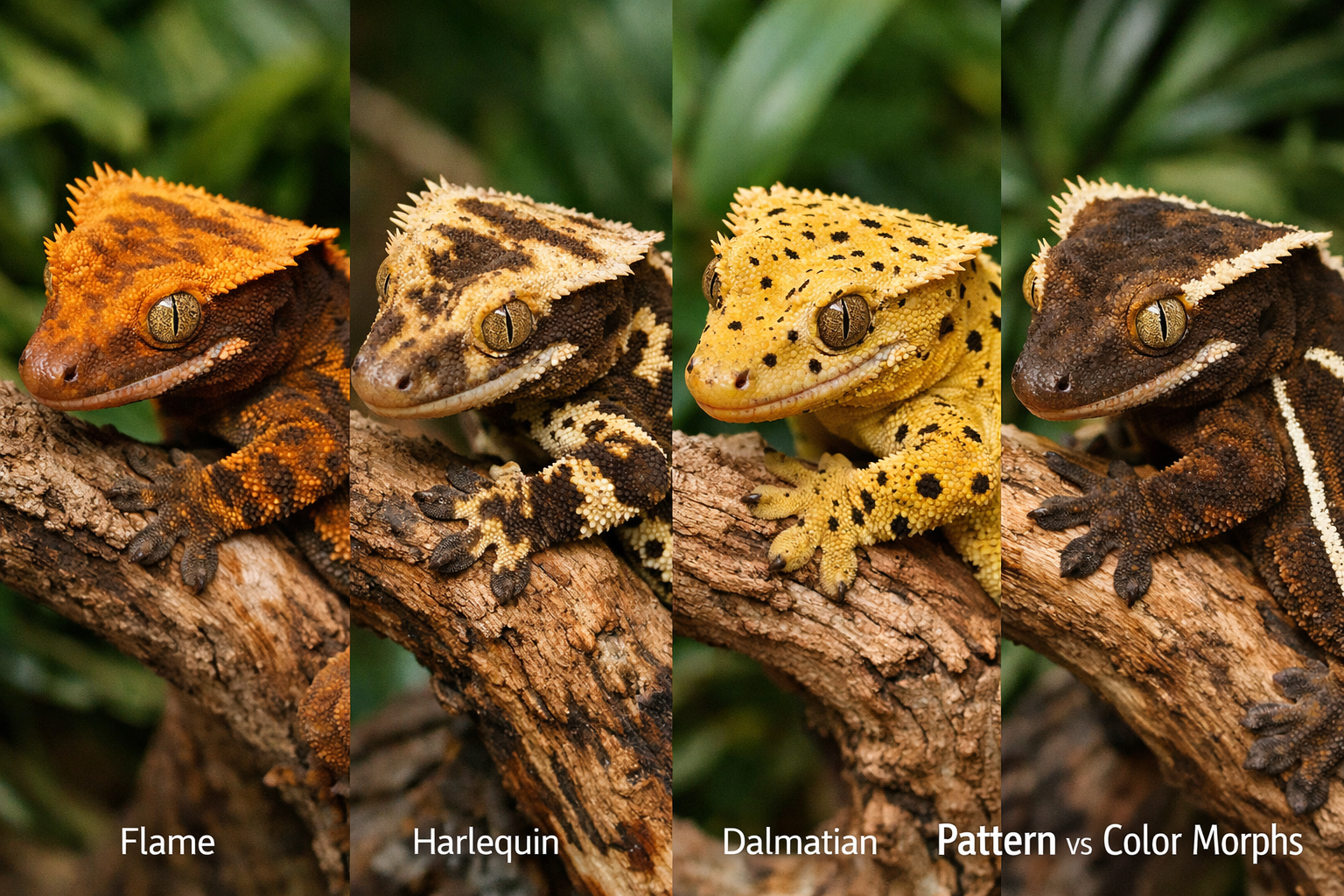
Crested gecko morphs fall into two categories: true genetic morphs (Lilly White, Axanthic, Phantom, Cappuccino, Sable) with predictable inheritance patterns, and polygenic traits (flame, harlequin, pinstripe, dalmatian, tiger) that result from multiple genes working together. Only four genetic morphs have been scientifically confirmed, though breeders continue working with numerous color and pattern variations.[3] When selecting a crested gecko, focus on health, structure, and reputable breeders rather than chasing rare color combinations alone.
What Are Crested Gecko Morphs?
Crested gecko morphs are specific genetic variations that produce predictable color, pattern, or structural traits through selective breeding. Unlike random color variations, true morphs follow Mendelian genetics and can be reliably reproduced when breeding animals carrying the same genes.
The term “morph” gets used loosely in the crested gecko community. Many enthusiasts call any distinct appearance a morph, but scientifically speaking, only traits controlled by identified genes qualify. This distinction matters because it affects breeding predictability and pricing.
True Genetic Morphs vs. Polygenic Traits
Genetic morphs include:
- Lilly White (incomplete dominant)
- Axanthic (recessive, removes yellow/orange pigment)
- Phantom (recessive, adds depth and contrast)[2]
- Cappuccino (incomplete dominant, creates dark body with reduced crest)[2]
- Sable (incomplete dominant, allelic to Cappuccino)[2]
Polygenic traits (multiple genes, not single morphs):
- Flame patterns
- Harlequin patterns
- Pinstripe patterns
- Dalmatian spotting
- Tiger patterns
- Bicolor and tricolor combinations
The polygenic traits can be selectively bred to improve expression over generations, but they don’t follow simple inheritance ratios like true genetic morphs do.
Why This Distinction Matters
When you purchase a gecko advertised as a specific morph, understanding genetics helps you:
- Predict breeding outcomes if you plan to breed
- Assess fair pricing based on genetic rarity
- Avoid overpaying for common traits marketed as rare morphs
- Build breeding projects with realistic expectations
For example, a Lilly White crested gecko carries a known gene that will pass to 50% of offspring when bred to a normal gecko. A “high-white” gecko without the Lilly White gene might produce offspring with variable white coverage because multiple genes influence the trait.
Understanding Crested Gecko Color Morphs
Color morphs in crested geckos include base colors (red, orange, yellow, cream, brown, olive, gray) and genetic color modifications like Axanthic and Phantom. Most color variation comes from selective breeding rather than single-gene mutations.
Base colors range across a spectrum, with reds and oranges commanding premium prices when saturated and vibrant. Breeders spend years line-breeding to intensify these colors, selecting the brightest animals from each generation.
Common Color Variations
Red-based colors:
- Fire red (intense orange-red)
- Blood red (deep crimson)
- Red harlequin
- Halloween (red and black contrast)
Yellow and cream colors:
- Lemon yellow
- Butter yellow
- Cream
- Super high white (extreme cream coverage)[1]
Brown and earth tones:
- Chocolate
- Mocha
- Olive
- Buckskin
Specialty colors:
- Lavender (rare blue-gray tones)
- Cold Fusion lines (blue and lavender hues)[2]
- Tricolor (three distinct color zones)
The Axanthic Morph
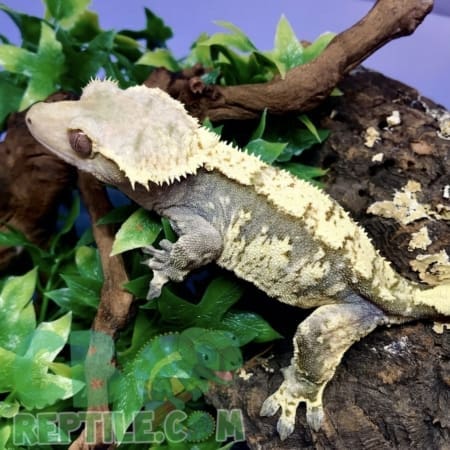
Axanthic crested geckos lack yellow and orange pigment, resulting in black, white, and gray coloration. This recessive gene produces striking monochrome animals that look completely different from typical crested geckos.
Breeding two Axanthic carriers (het Axanthic) produces approximately 25% visual Axanthic offspring, 50% het Axanthic, and 25% normal (non-carrier). Visual Axanthics bred together produce 100% Axanthic offspring.
The Phantom Morph
Phantom was confirmed as a recessive genetic morph in recent years, transforming it from an undervalued trait to a sought-after breeding tool.[2] Phantom adds depth and richness to base colors, creating darker undertones and enhanced contrast.
Since 2021, demand for Phantom has risen significantly as breeders recognize its ability to add visual depth when combined with high-cream genes like Lilly White.[2] A Phantom Lilly White displays cream coloration with rich, dark undertones that create stunning contrast.
Common mistake: Assuming any dark gecko is Phantom. True Phantom is genetic and proven through breeding, not just visual assessment.
What Are the Main Crested Gecko Pattern Morphs?
Pattern morphs include flame, harlequin, tiger, pinstripe, and dalmatian, all of which are polygenic traits rather than single-gene morphs. These patterns can be selectively bred for improved expression, but they don’t follow simple Mendelian ratios.
Pattern quality varies dramatically within each type. A low-quality harlequin might show minimal pattern on the limbs, while a high-quality example displays bold, contrasting patches covering 80%+ of the body and legs.
Flame Crested Geckos
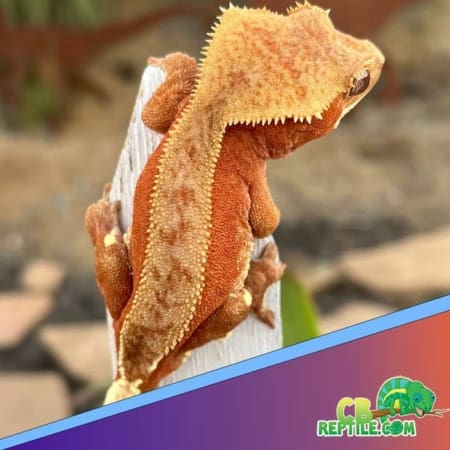
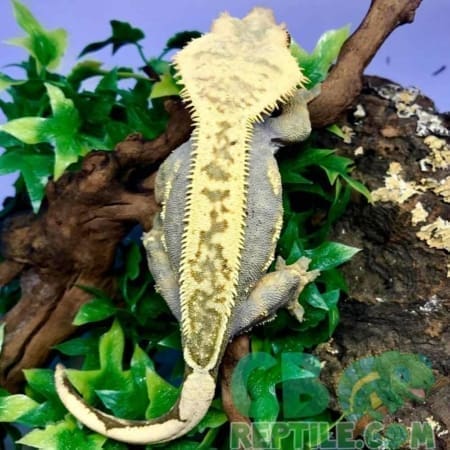
Flame crested geckos display a dorsal pattern running from head to tail, resembling a flame or fire. The pattern can be narrow or wide, with color ranging from cream to vibrant red-orange.
Quality indicators:
- Bold, unbroken dorsal stripe from head to tail
- Vibrant color contrast between pattern and base
- Minimal side pattern (clean lateral areas)
- Good crest structure complementing the pattern
Flames represent one of the most common pattern types, making them accessible for beginners. However, exceptional flames with saturated red coloration and clean expression still command premium prices.
Harlequin Crested Geckos
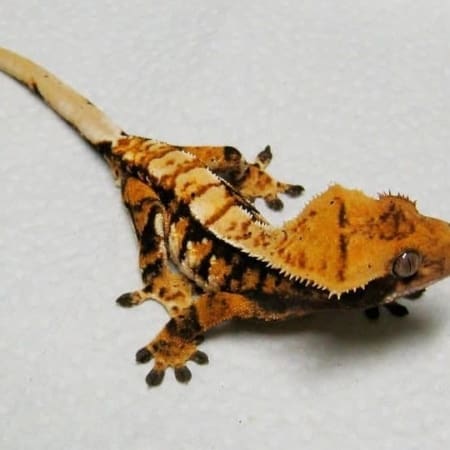
Harlequin crested geckos feature pattern extending from the dorsal area onto the sides and limbs. True harlequins display pattern on the legs and feet, distinguishing them from flames.
Harlequin grades:
- Low harlequin: Pattern on sides, minimal leg coverage
- Mid harlequin: Pattern on sides and upper legs
- High harlequin: Pattern covering 50%+ of legs and feet
- Extreme harlequin: Pattern covering 80%+ of body and limbs
Chocolate harlequin crested geckos combine rich brown base colors with cream or yellow pattern, creating an earthy, high-contrast appearance.
Pinstripe Crested Geckos
Pinstripe crested geckos display raised white or cream scales along the dorsal crest and lateral edges. These raised scales create a three-dimensional “pinstriped” appearance.
Pinstripe characteristics:
- Dorsal pinstripe: Raised scales along the crest
- Lateral pinstripe: Raised scales along each side
- Full pinstripe: Both dorsal and lateral pinstriping
- Reverse pinstripe: Dark raised scales instead of light
Pinstriping can combine with any pattern type. A pinstripe harlequin displays both the harlequin pattern distribution and raised pinstripe scales, often commanding higher prices than either trait alone.
Dalmatian Crested Geckos
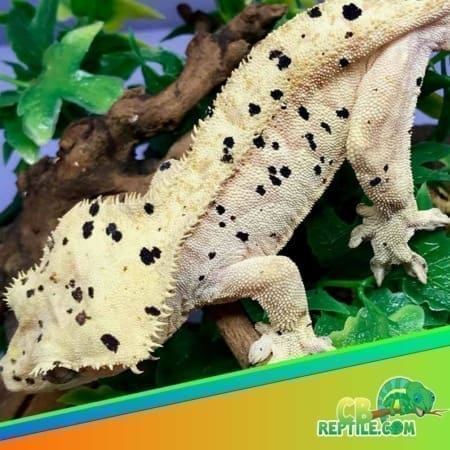
Dalmatian crested geckos feature dark spots scattered across the body, resembling a Dalmatian dog. Spotting can appear on any base color or pattern type.
Dalmatian variations:
- Light spotting: Few scattered spots
- Medium spotting: Moderate spot coverage
- Heavy spotting: Dense spot coverage
- Super dalmatian: Extreme spot density
Dalmatian spotting often increases as geckos mature. A juvenile with light spotting may develop heavy spotting by adulthood, making it difficult to predict final appearance in young animals.
Tiger Crested Geckos
Tiger crested geckos display vertical banding or striping along the sides. This pattern creates a tiger-like appearance distinct from other pattern types.
Tiger patterns combine well with other traits. A tiger dalmatian displays both vertical banding and spotted patterns, creating complex visual interest.
How Do Lilly White and Super Lilly White Morphs Work?
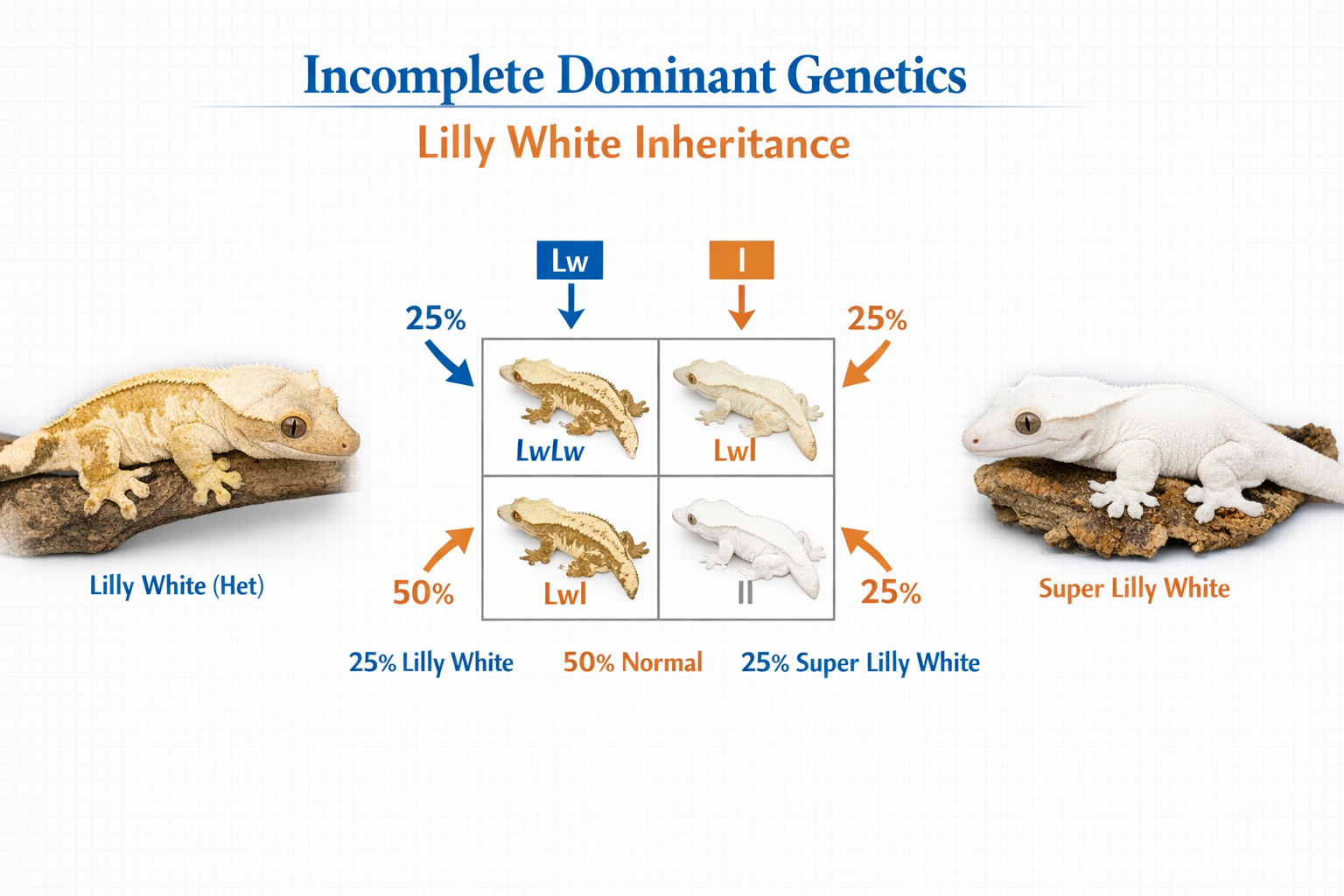
Lilly White is an incomplete dominant genetic morph that reduces pattern and increases cream coloration, with heterozygous animals showing moderate expression and homozygous “Super Lilly Whites” displaying extreme white coverage. This morph follows predictable inheritance, making it valuable for breeding projects.
When you breed a Lilly White (heterozygous) to a normal gecko, approximately 50% of offspring will be Lilly White and 50% will be normal. Breeding two Lilly Whites together produces approximately 25% Super Lilly White, 50% Lilly White, and 25% normal offspring.
Lilly White Characteristics
Heterozygous Lilly White:
- Cream or white base color
- Reduced pattern intensity
- Pattern may appear as ghost markings
- Maintains some color on dorsal area
- Eyes typically remain normal
Super Lilly White:
- Extreme white or cream coverage
- Minimal to no pattern visible
- Near-complete pattern reduction
- Some lines show slight dorsal color
- Highly sought after for breeding
Breeding with Lilly White
Lilly White serves as a foundation for many designer combinations:
- Lilly White Harlequin: Cream base with ghost harlequin pattern
- Lilly White Phantom: Cream with dark undertones[2]
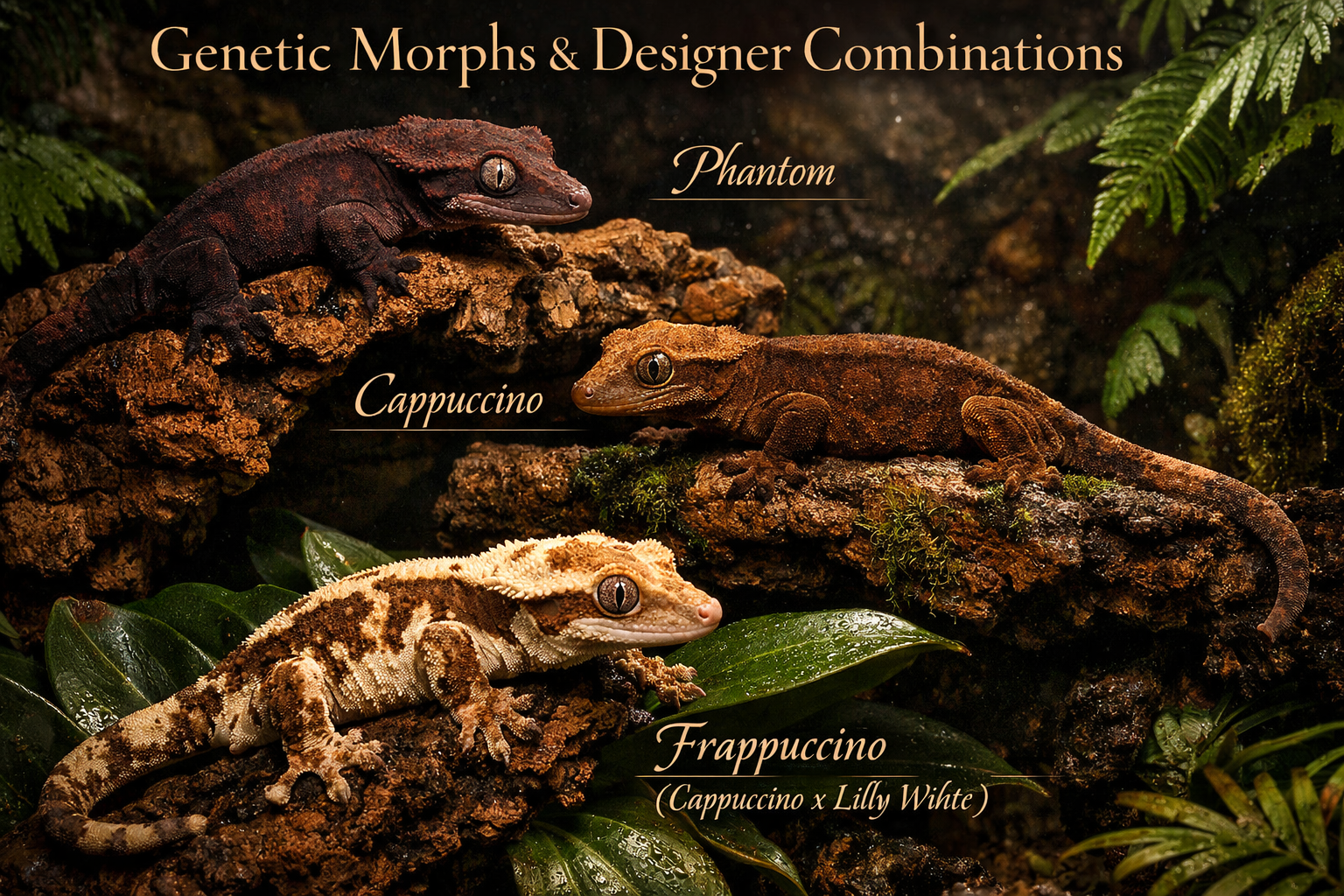
- Frappuccino: Lilly White combined with Cappuccino[2]
- Super high white projects: Breeding for maximum white coverage[1]
Breeders specifically target non-Lilly White, super high white animals, working to maximize white coverage through selective breeding without the Lilly White gene.[1] These projects demonstrate how polygenic traits can be intensified over generations.
Choose Lilly White if: You want predictable genetics for breeding projects or prefer clean, reduced-pattern aesthetics.
What Are Cappuccino and Sable Crested Gecko Morphs?
Cappuccino and Sable are recently introduced incomplete dominant morphs that produce dark bodies with reduced crests, and they are allelic to each other (occupy the same gene location). These morphs have generated both excitement and ethical concerns in the breeding community.[2]
Cappuccino was introduced as an incomplete dominant trait producing dramatic phenotypes. Heterozygous Cappuccino geckos show dark brown bodies with reduced crest development, while Super Cappuccino (homozygous) displays extreme features.[2]
Cappuccino Morph Details
Heterozygous Cappuccino:
- Rich brown to coffee-colored body
- Reduced crest size and structure
- Darker pigmentation overall
- Distinct from normal color variations
- Breeding produces 50% Cappuccino when paired with normal
Super Cappuccino:
- Extreme dark coloration
- Severely reduced or absent crest
- Controversial due to structural changes
- Banned from MorphMarket sales[2]
- Ethical concerns about welfare
Sable Morph and the Luwak Combination
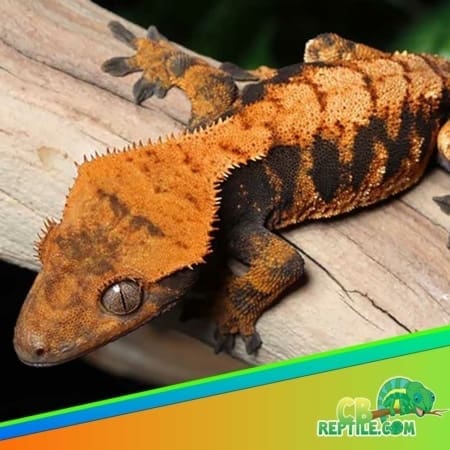
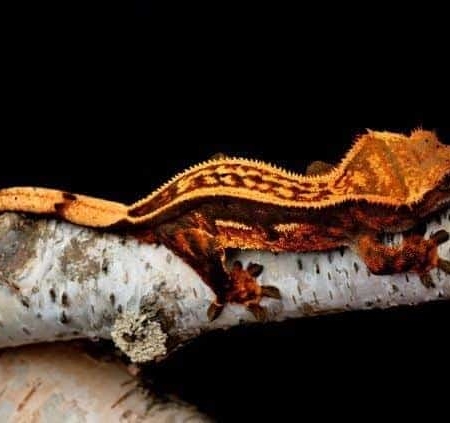
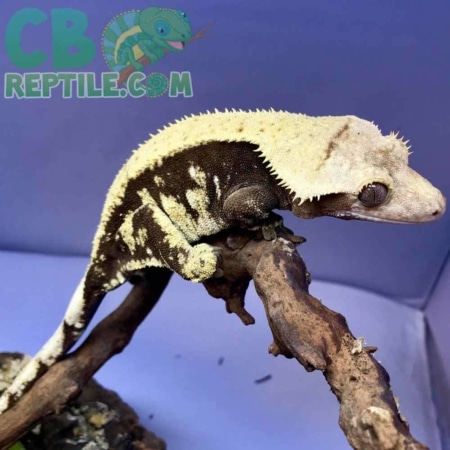
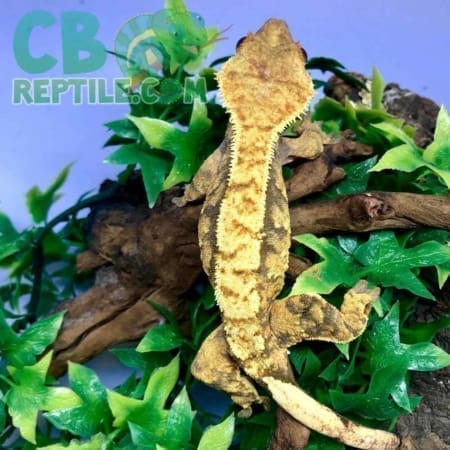
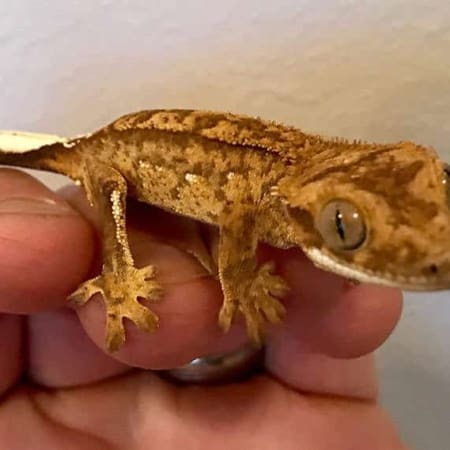
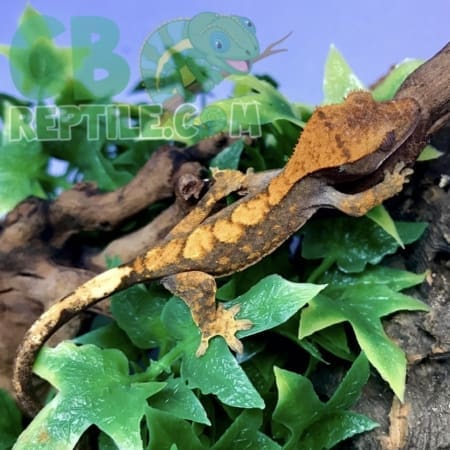
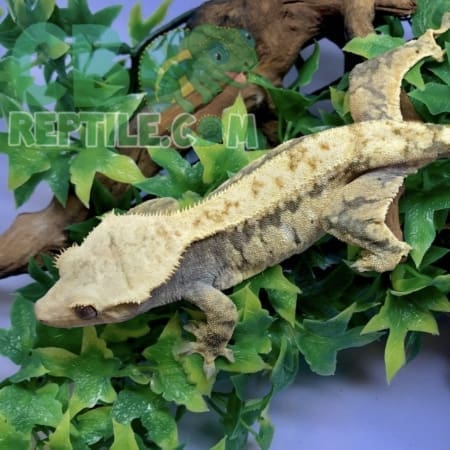
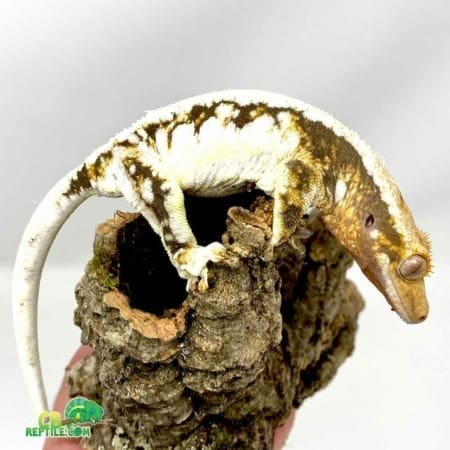
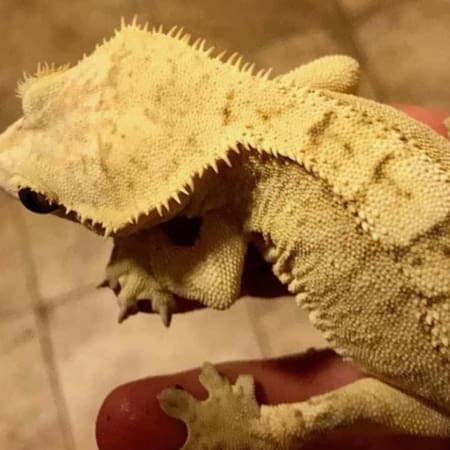
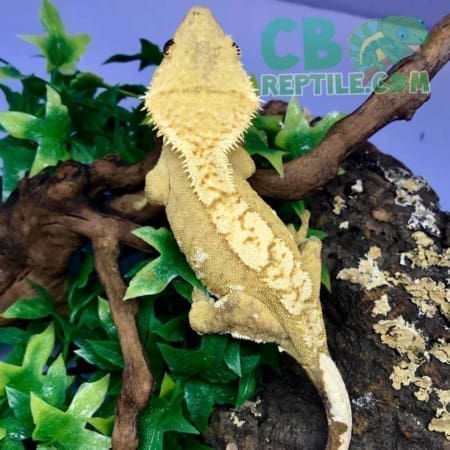
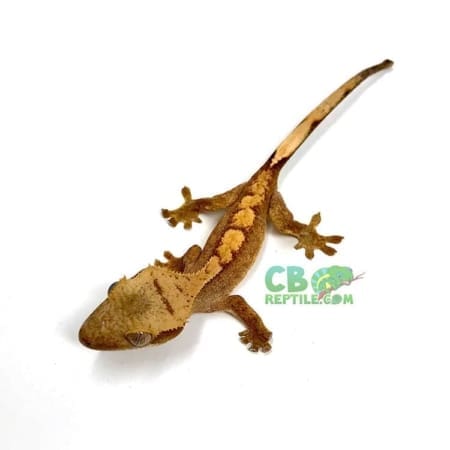
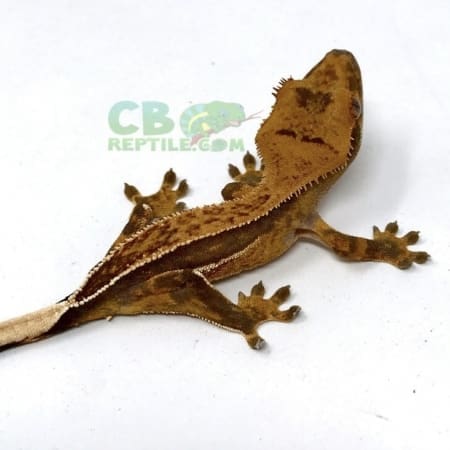
Sable was discovered as a separate incomplete dominant gene with similar effects to Cappuccino. When breeders combined Cappuccino with Sable, they produced the Luwak phenotype, revealing that the two genes are allelic (alternative forms of the same gene).[2]
This discovery means:
- Cappuccino and Sable cannot both be present in one animal
- Luwak represents the heterozygous combination of both alleles
- Breeding strategies must account for allelic relationship
- New combinations continue emerging as breeders experiment
Frappuccino: Cappuccino Meets Lilly White
Frappuccino combines Cappuccino with Lilly White, creating a coffee-and-cream appearance.[2] This designer combination demonstrates how genetic morphs can be stacked to create unique phenotypes.
Frappuccino animals display:
- Cream to tan base coloration from Lilly White
- Brown undertones from Cappuccino
- Reduced pattern from Lilly White
- Reduced crest from Cappuccino
- Unique aesthetic appealing to collectors
Ethical Considerations
MorphMarket continues to ban Super Cappuccino from sales despite allowing heterozygous Cappuccino and Frappuccino animals.[2] This policy reflects concerns about:
- Structural abnormalities in super forms
- Reduced crest development affecting natural behavior
- Unknown long-term health impacts
- Welfare vs. aesthetics balance
Common mistake: Breeding two Cappuccinos together without considering super form outcomes. Always research potential welfare implications before breeding morphs with structural effects.
How to Choose the Right Crested Gecko Morph for You
Select a crested gecko morph based on your goals (pet vs. breeding), budget, experience level, and aesthetic preferences rather than chasing trends. Health, structure, and temperament matter more than morph rarity for pet owners.
The crested gecko market has evolved significantly since 2021. Supply has quadrupled with large breeders scaling up operations and hobby breeders producing second or third generations.[2] This increased availability has stabilized average prices while maintaining strong demand for high-quality animals.
For Pet Owners
If you want a crested gecko as a pet companion, prioritize:
Health indicators:
- Clear eyes without discharge
- Healthy weight (visible fat stores at tail base)
- Active and alert behavior
- No visible injuries or deformities
- Clean vent area
Structural quality:
- Well-developed crest structure
- Proportional head size
- Strong body shape
- Complete tail (or healthy regrowth)
- Proper limb development
Temperament:
- Calm during handling
- Not overly skittish
- Eating consistently
- Appropriate for your experience level
For pets, a well-structured flame or harlequin from a reputable crested gecko breeder will provide years of enjoyment at a reasonable price. Avoid overpaying for rare morphs if breeding isn’t your goal.
For Breeding Projects
Breeding-focused buyers should consider:
Genetic value:
- Proven morph genetics (not just visual traits)
- Known lineage and parentage
- Genetic testing results if available
- Breeding history of parents
Sex and maturity:
- Sexed geckos sell for approximately 29% more than unsexed[2]
- Mature females in desirable morphs command highest prices[2]
- Males should display strong structural traits
- Consider starting with proven breeders vs. juveniles
Market demand:
- Research current market trends
- Identify undervalued combinations
- Consider emerging morphs like Phantom[2]
- Balance personal preference with marketability
Structure and aesthetics:
- Buyer focus has shifted toward lineage, aesthetics, and structure[2]
- Geckos with poor head structure, small crests, or weak body shape sell at discounts[2]
- Pattern quality matters as much as morph genetics
- Invest in quality over quantity
Life Stage Considerations
Crested geckos are available at different life stages:
Hatchlings (0-3 months):
- Lowest initial cost
- Require more frequent feeding
- Pattern and color still developing
- Higher care requirements
- Sex cannot be determined
Well-started babies (3-6 months):
- More established feeding routine
- Easier to care for than hatchlings
- Still developing final appearance
- Moderate pricing
- Sex determination becoming possible
Juveniles (6-12 months):
- Pattern and color more apparent
- Easier handling and care
- Can often be sexed
- Higher price than hatchlings
- Good balance of cost and ease
Young adults (12+ months):
- Final appearance visible
- Can be accurately sexed
- Ready for breeding (if mature)
- Highest prices for quality animals
- Immediate breeding potential
CBReptile.com offers crested geckos at all life stages, allowing you to choose based on your experience level and goals. Their online reptile store provides detailed information about each animal’s genetics, lineage, and care requirements.
Setting Up the Perfect Crested Gecko Habitat
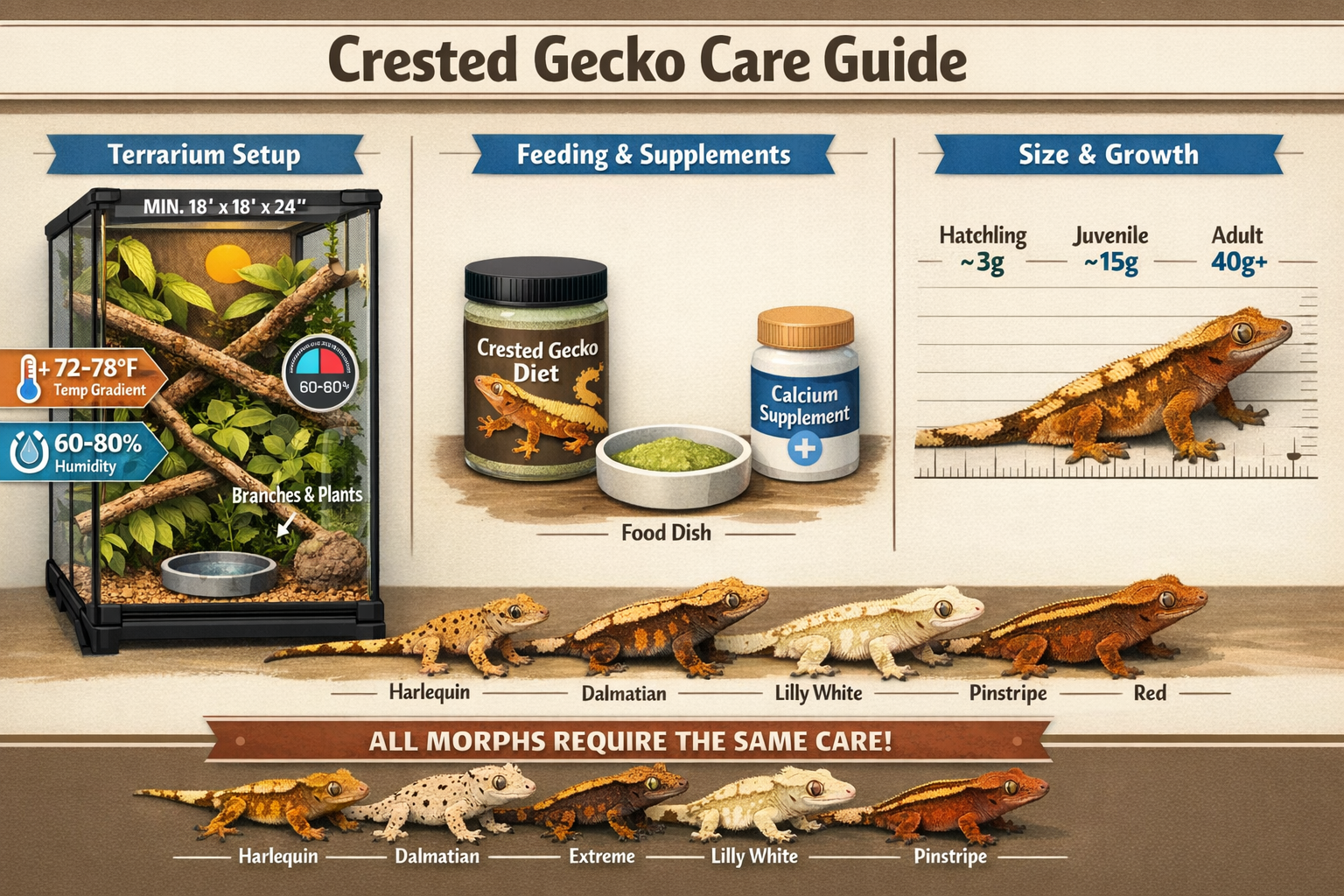
All crested gecko morphs require identical care regardless of color or pattern, including vertical enclosures (minimum 18x18x24 inches for adults), temperatures of 72-78°F, humidity of 60-80%, and appropriate furnishings. Morph type doesn’t change basic husbandry needs.
Many new owners focus extensively on selecting the perfect morph while overlooking habitat preparation. A rare morph won’t thrive in an inadequate setup, so invest time in creating proper housing before bringing your gecko home.
Enclosure Requirements
Minimum sizes:
- Hatchlings: 5-10 gallon enclosure or small plastic keeper
- Juveniles: 10-20 gallon vertical tank
- Adults: 18x18x24 inches minimum (larger is better)
- Breeding adults: 18x18x24 inches per gecko
Vertical space matters more than floor space because crested geckos are arboreal. They spend most of their time climbing and rarely use ground-level areas.
For complete setup details, see our crested gecko habitat setup guide and crested gecko habitat guide.
Temperature and Humidity
Temperature requirements:
- Ideal range: 72-78°F
- Nighttime drop: 65-75°F acceptable
- Avoid temperatures above 82°F
- No heat source needed in most homes
- Monitor with reliable thermometer
Learn more about crested gecko temperature requirements to ensure your gecko stays comfortable year-round.
Humidity requirements:
- Target range: 60-80%
- Mist twice daily (morning and evening)
- Allow enclosure to dry between mistings
- Monitor with hygrometer
- Adjust based on ventilation and climate
Furnishings and Decor
Essential items:
- Multiple branches at various heights and angles
- Live or artificial plants for cover and humidity
- Cork bark for climbing and hiding
- Water dish (though most drink from misted surfaces)
- Substrate (paper towel, coconut fiber, or bioactive)
Optional enrichment:
- Bamboo tubes
- Magnetic ledges
- Hammocks
- Additional climbing structures
- Background installations
Proper furnishing creates climbing opportunities and security, reducing stress and encouraging natural behaviors. Dense foliage allows your gecko to feel secure while still being visible for observation.
Crested Gecko Diet and Nutrition Across All Morphs
Crested geckos require a balanced diet of commercial meal replacement powder (MRP) supplemented with occasional insects, regardless of morph type. Proper nutrition affects color vibrancy, growth rates, and overall health more than genetics alone.
The convenience of powdered diets makes crested geckos ideal for keepers who prefer not to maintain live insect colonies. However, offering insects periodically provides enrichment and additional nutrition.
Meal Replacement Powder (MRP)
Commercial MRP benefits:
- Complete nutrition in powder form
- Mix with water to create paste
- Shelf-stable and convenient
- Formulated specifically for crested geckos
- Reduces need for supplementation
Feeding schedule:
- Hatchlings/juveniles: Fresh MRP every 24-48 hours
- Adults: Fresh MRP every 48-72 hours
- Remove uneaten food after 24 hours
- Adjust portions based on consumption
- Monitor body condition and adjust
For detailed nutrition information, visit our crested gecko diet page.
Insect Supplementation
Appropriate insects:
- Crickets: Protein-rich, readily available
- Dubia roaches: High nutrition, low odor
- Black soldier fly larvae: High calcium
- Waxworms: Occasional treat (high fat)
- Silkworms: Excellent nutrition when available
Insect feeding guidelines:
- Offer 1-2 times per week
- Dust with calcium powder
- Size: No larger than space between gecko’s eyes
- Remove uneaten insects after 30 minutes
- Gut-load insects before feeding
Common mistake: Overfeeding insects leads to obesity and MRP refusal. Use insects as supplements, not primary diet.
Color Enhancement Through Diet
Some MRP formulas contain carotenoids and other compounds that may enhance red and orange coloration. While genetics determine potential color intensity, proper nutrition helps geckos achieve their maximum expression.
Diet factors affecting appearance:
- Adequate protein for growth and color development
- Carotenoids for red/orange enhancement
- Proper calcium for bone and crest development
- Hydration for skin health and color vibrancy
- Consistent feeding for steady growth
No diet will transform a gecko’s genetic color potential, but poor nutrition can prevent them from reaching it.
Breeding Crested Gecko Morphs: Genetics and Outcomes
Successful crested gecko breeding requires understanding genetic inheritance patterns, selecting compatible pairs based on structure and genetics, and planning for expected outcomes. Breeding should improve the species, not just produce more geckos.
The market shift toward quality over quantity means breeders must focus on producing well-structured animals with desirable genetics rather than maximizing offspring numbers.[2]
Basic Genetic Principles
Recessive genes (Axanthic, Phantom):
- Require two copies for visual expression
- Het (carrier) x Het = 25% visual, 50% het, 25% normal
- Visual x Visual = 100% visual
- Visual x Normal = 100% het
Incomplete dominant genes (Lilly White, Cappuccino, Sable):
- One copy produces visual effect
- Het x Normal = 50% het, 50% normal
- Het x Het = 25% super, 50% het, 25% normal
- Super x Normal = 100% het
Polygenic traits (patterns, colors):
- Multiple genes contribute to expression
- Inheritance doesn’t follow simple ratios
- Selective breeding improves traits over generations
- Outcomes vary widely within single clutches
Pairing Strategies
Complementary pairing:
- Pair geckos with different strengths
- Male with excellent structure + Female with excellent color
- Balance traits across generations
- Avoid pairing animals with same weaknesses
Line breeding:
- Breed related animals to concentrate desired traits
- Increases consistency but requires careful selection
- Monitor for reduced vigor or health issues
- Outcross periodically to maintain genetic diversity
Morph combination projects:
- Plan multi-generation projects for complex combinations
- Track genetics carefully
- Understand how morphs interact
- Consider market demand for outcomes
Breeding Age and Conditioning
Minimum breeding age:
- Females: 18-24 months AND 35+ grams
- Males: 12-18 months AND 30+ grams
- Weight matters more than age
- Never rush breeding for market timing
Breeding conditioning:
- Increase feeding frequency before breeding
- Ensure excellent body condition
- Provide calcium supplementation
- Monitor female weight throughout season
- Allow rest between breeding seasons
Egg Incubation and Hatchling Care
Incubation parameters:
- Temperature: 72-76°F
- Humidity: 80-90%
- Duration: 60-90 days (temperature dependent)
- Substrate: Perlite, vermiculite, or Superhatch
- Check eggs weekly for mold or issues
Hatchling care:
- House individually to monitor feeding
- Offer appropriately sized food
- Maintain higher humidity than adults
- Provide adequate cover for security
- Track growth and development
Working with a reputable crested gecko breeder can provide mentorship and guidance as you develop your breeding program.
Current Market Trends for Crested Gecko Morphs in 2026
The crested gecko market in 2026 shows stabilized pricing compared to 2020-2021 growth, with increased focus on quality, structure, and proven genetics rather than color alone. Understanding market dynamics helps buyers make informed decisions and breeders plan successful projects.
Supply has quadrupled since 2021 as large breeders scaled operations and hobby breeders matured their collections.[2] This increased availability has made crested geckos more accessible while maintaining premium pricing for exceptional animals.
Pricing Trends
Average price ranges (2026):
- Pet-quality normals: $50-150
- High-quality patterns (flame, harlequin): $150-400
- Lilly White: $200-600
- Phantom combinations: $300-800
- Cappuccino/Sable/Frappuccino: $400-1,200
- Designer combinations: $500-2,000+
- Proven breeders: $400-3,000+
Sexed geckos sell for approximately 29% more than unsexed animals, with mature females commanding the highest prices due to immediate breeding potential.[2]
High-Demand Combinations
Currently sought-after traits:
- Super high white (non-Lilly White extreme white)[1]
- Phantom combinations with Lilly White[2]
- Cold Fusion lines with blue/lavender tones[2]
- Frappuccino and other Cappuccino combinations[2]
- Extreme harlequins with excellent structure
- Red/orange saturation with clean patterns
Market Mistakes to Avoid
Buyer mistakes:
- Overpaying for common traits marketed as rare
- Ignoring structure in favor of color
- Purchasing unsexed juveniles at adult prices
- Buying from unknown sources without health guarantees
- Chasing trends without considering long-term goals
Breeder mistakes:
- Producing quantity over quality
- Breeding poor structure for color alone
- Ignoring market saturation in common morphs
- Failing to track and prove genetics
- Rushing animals into breeding before maturity
Finding Quality Animals
When searching for crested geckos for sale, prioritize:
Reputable sources:
- Established breeders with proven track records
- Detailed genetics and lineage information
- Health guarantees and support
- Accurate photos and descriptions
- Positive reviews and references
Red flags:
- Vague or missing genetics information
- Poor-quality photos or stock images
- No health guarantee
- Unusually low prices for claimed morphs
- Unwillingness to answer questions
CBReptile.com maintains high standards for all crested gecko breeders in their network, ensuring customers receive healthy, accurately described animals with proper support.
Frequently Asked Questions About Crested Gecko Morphs
What is the rarest crested gecko morph?
Currently, Cold Fusion lines featuring blue and lavender hues remain among the rarest crested gecko morphs, with distinctive combinations commanding premium prices.[2] Axanthic also remains relatively rare compared to other morphs due to its recessive inheritance pattern.
Do different morphs have different care requirements?
No, all crested gecko morphs require identical care regardless of color or pattern. Housing, temperature, humidity, diet, and handling needs remain the same across all morphs. Focus on proper husbandry rather than morph-specific care.
How much does a crested gecko morph cost?
Crested gecko morph prices range from $50 for pet-quality normals to $2,000+ for rare designer combinations with proven genetics. Average prices for quality morphs fall between $200-600, with sexed adults and proven breeders commanding premium pricing.
Can I breed different crested gecko morphs together?
Yes, you can breed different crested gecko morphs together to create combination morphs like Phantom Lilly White or Frappuccino. Understanding genetic inheritance patterns helps predict offspring outcomes. Always prioritize health and structure over morph combinations.
What is a Super Lilly White crested gecko?
A Super Lilly White is a homozygous Lilly White crested gecko (two copies of the Lilly White gene) displaying extreme white or cream coverage with minimal visible pattern. They result from breeding two Lilly White geckos together, producing approximately 25% Super Lilly Whites in the clutch.
Are crested gecko morphs healthy?
Most crested gecko morphs are healthy when produced by responsible breeders. However, some morphs like Super Cappuccino raise welfare concerns due to structural changes including severely reduced crests.[2] Research any morph thoroughly before purchasing or breeding.
How do I know if my crested gecko is a specific morph?
True genetic morphs require breeding trials or genetic testing to confirm, as visual appearance alone can be misleading. Reputable breeders provide genetics information and lineage documentation. For pattern types, visual assessment by experienced keepers can identify flames, harlequins, and other traits.
What morph is best for beginners?
Flame and harlequin crested geckos make excellent choices for beginners, offering attractive patterns at reasonable prices with no special care requirements. Focus on a healthy, well-structured animal from a reputable source rather than rare morphs.
Do crested gecko colors change as they grow?
Yes, crested gecko colors and patterns often intensify and develop as they mature. Hatchlings typically show less vibrant coloration than adults, and dalmatian spotting frequently increases with age. Final appearance becomes apparent around 12-18 months.
What is the difference between a morph and a trait?
A morph refers to a specific genetic mutation with predictable inheritance (like Lilly White or Axanthic), while a trait describes any observable characteristic including polygenic features (like flame patterns). The terms are often used interchangeably but have distinct scientific meanings.
Can you create new crested gecko morphs?
New genetic morphs arise from spontaneous mutations in breeding populations. Breeders can identify and prove these mutations through selective breeding. However, creating new polygenic traits (like pattern variations) involves selective breeding over multiple generations rather than discovering single mutations.
How long does it take to produce a specific morph combination?
Simple combinations (like Lilly White Harlequin) can be produced in one generation by breeding a Lilly White to a Harlequin. Complex combinations involving multiple recessive genes may require 2-4 generations to produce visual animals with all desired traits.
Conclusion: Making Informed Decisions About Crested Gecko Morphs
Understanding crested gecko morphs empowers you to make informed decisions whether you’re purchasing your first pet gecko or planning advanced breeding projects. The distinction between true genetic morphs and polygenic traits affects breeding predictability, pricing, and long-term goals.
As the market continues evolving in 2026, focus on quality over trends. Buyer preferences have shifted toward lineage, structure, and aesthetics, with poorly structured animals selling at discounts regardless of color.[2] This shift benefits the hobby by encouraging responsible breeding practices that prioritize animal welfare and genetic improvement.
Next Steps for Your Crested Gecko Journey
If you’re purchasing your first crested gecko:
- Research basic care requirements thoroughly before buying
- Prepare your habitat setup completely
- Choose a healthy, well-structured animal from a reputable source
- Don’t overpay for rare morphs if you want a pet companion
- Focus on establishing proper husbandry first
If you’re planning to breed:
- Start with quality foundation animals with proven genetics
- Study genetic inheritance patterns for your target morphs
- Develop a multi-year breeding plan with specific goals
- Network with experienced breeders for mentorship
- Prioritize structure and health over color alone
If you’re expanding your collection:
- Identify gaps in your current collection
- Research emerging morphs like Phantom and Cappuccino combinations
- Consider market demand if selling offspring
- Invest in proven genetics with documented lineage
- Balance personal preferences with breeding potential
The crested gecko hobby offers endless opportunities for learning, breeding, and enjoyment. Whether you’re captivated by the vibrant reds of a flame morph, the clean aesthetics of a Lilly White, or the depth of a Phantom combination, there’s a perfect gecko waiting for you.
For the highest quality crested geckos with proven genetics and excellent structure, explore the selection at CBReptile.com. As one of the premier reptiles for sale sources in the USA, they offer animals at every life stage with complete support and health guarantees. Browse their current crested geckos for sale to find your next addition.
The world of crested gecko morphs continues expanding as breeders discover new combinations and prove emerging genetics. By focusing on health, structure, and responsible breeding practices, we can ensure this remarkable species thrives in captivity for generations to come. Your journey into crested gecko morphs starts with education and ends with the rewarding experience of working with these incredible animals.
For additional resources on reptile care and selection, visit Reptiles.com for comprehensive guides on reptiles for sale online.
Interactive Crested Gecko Habitat Requirements Calculator
🦎 Crested Gecko Habitat Requirements Calculator
Calculate the perfect habitat setup for your crested gecko based on age and number of animals
📊 Your Habitat Requirements
Enclosure Size
Temperature
Nighttime: 65-75°F acceptable. Avoid temps above 82°F.
Humidity
Furnishings
Multiple branches, plants (live or artificial), cork bark, water dish
🍽️ Feeding Schedule & Diet
References
[1] Crested Gecko Breeders 2 – https://www.cbreptile.com/crested-gecko-breeders-2/
[2] Crested Gecko Investment Guide 2025 – https://tennyscrestedgeckos.com/crested-gecko-investment-guide-2025/
[3] Crested Gecko Guide To Morphs Colors And Traits – https://www.zenhabitats.com/blogs/reptile-care-sheets-resources/crested-gecko-guide-to-morphs-colors-and-traits