
Last updated: April 15, 2026
Quick Answer: Juvenile bearded dragons are young lizards between roughly 2 and 12 months old, measuring 6 to 16 inches in length. They need specific enclosure sizes, feeding schedules, and lighting setups that differ from adults. Buying a captive-bred juvenile from a reputable breeder gives you the best chance of a healthy, handleable pet.
Key Takeaways
- Age matters: Juvenile bearded dragons (2–12 months) have different care needs than hatchlings or adults, especially for diet and enclosure size.
- Diet is protein-heavy: Juveniles need roughly 70% insects and 30% leafy greens, fed two to three times daily.
- UVB lighting is non-negotiable: Without proper UVB exposure, juveniles develop metabolic bone disease.
- Enclosure size: A 40-gallon breeder tank is the minimum for a juvenile; upgrade to 75–120 gallons by adulthood.
- Captive-bred is safer: CB reptiles are less likely to carry parasites and are already acclimated to human contact.
- Color morphs affect price: Standard wild-type juveniles cost less than specialty morphs like hypo, citrus, or leatherback.
- Vet check early: Schedule a fecal exam within the first 30 days of bringing any juvenile home.
- Handling builds trust: Daily gentle handling sessions of 10–15 minutes help juveniles become calm, social adults.
- Bearded dragons are beginner-friendly: Among lizards, they rank as one of the most handleable and forgiving species for new keepers.
What Exactly Are Juvenile Bearded Dragons?
Juvenile bearded dragons are Pogona vitticeps lizards between approximately 2 and 12 months of age. At this stage, they grow fast, eat constantly, and need more attentive care than adults.
Here's a quick size reference by age:
| Age | Approximate Length | Approximate Weight |
|---|---|---|
| 2 months | 5–9 inches | 20–40 grams |
| 4 months | 9–12 inches | 60–100 grams |
| 6 months | 11–14 inches | 100–180 grams |
| 12 months | 14–18 inches | 250–400 grams |
Note: Growth varies by genetics, diet, and husbandry quality. These are general estimates.
The juvenile phase is when personality starts to show. Some individuals are bold and curious from day one; others need a few weeks to settle in. Either response is normal. What's not normal: lethargy, refusal to eat for more than a week, or visible weight loss.
What Do Juvenile Bearded Dragons Need to Thrive?
Juvenile bearded dragons need five core things to stay healthy: proper heat, UVB light, a protein-rich diet, clean water, and an appropriately sized enclosure. Get all five right, and you'll have a thriving lizard. Miss one, and problems compound quickly.
Enclosure Setup
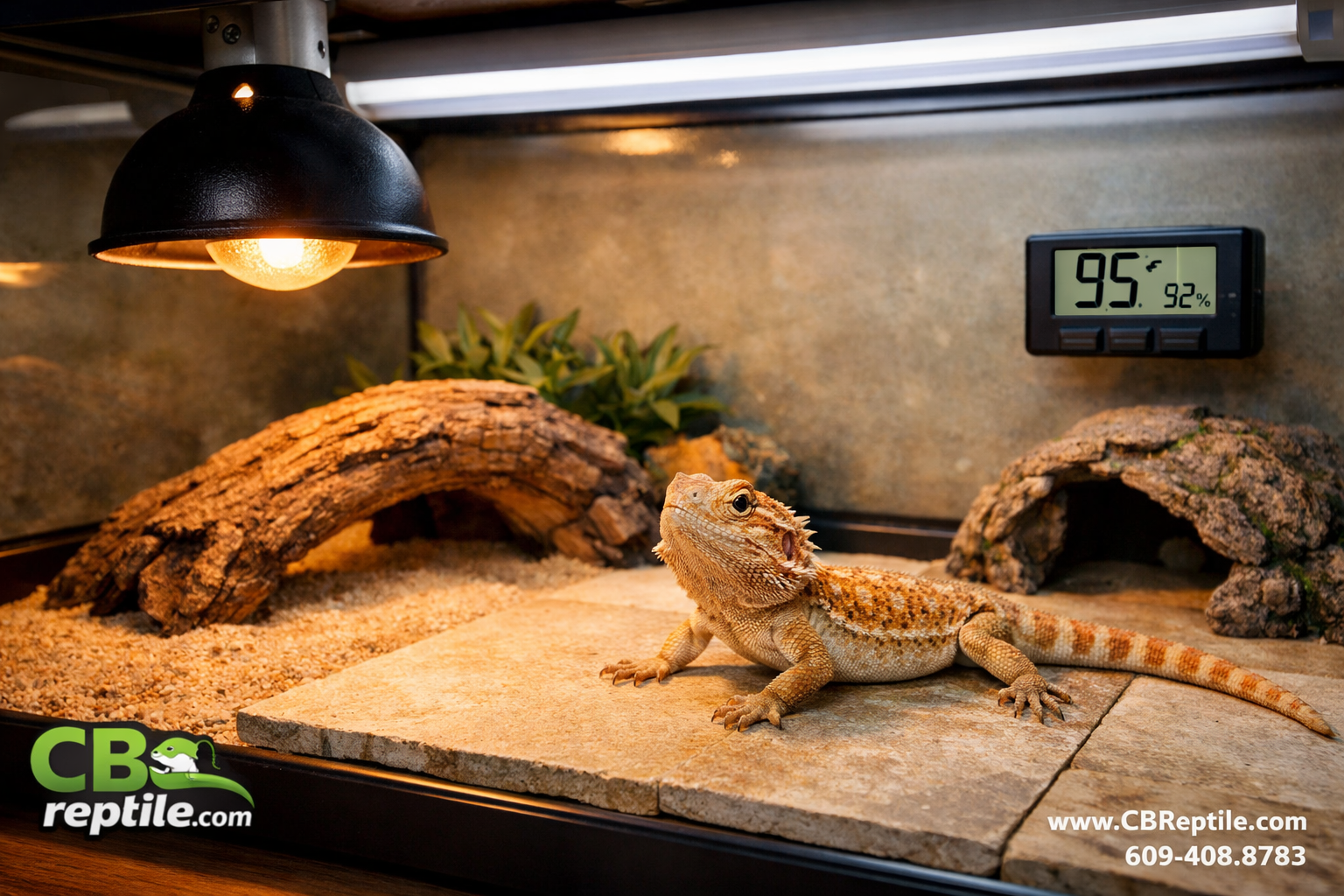
A 40-gallon breeder tank (36" × 18" × 18") is the minimum starting point for a juvenile. Many keepers jump straight to a 75-gallon to avoid upgrading in six months, which is a smart move financially.
Key enclosure requirements:
- Basking spot: 100–110°F (surface temperature, measured with an infrared thermometer)
- Cool side: 80–85°F
- Nighttime low: No lower than 65°F
- Humidity: 30–40%
UVB Lighting
This is the most critical and most commonly mishandled part of bearded dragon care. Juveniles need a T5 HO UVB bulb (10.0 or 12% strength) spanning at least two-thirds of the enclosure length. Replace the bulb every 6–12 months even if it still glows, because UV output degrades before visible light does.
"UVB deficiency in juvenile bearded dragons leads to metabolic bone disease, a painful and often irreversible condition. Proper lighting is not optional."
Without adequate UVB, juveniles cannot synthesize vitamin D3, which means they can't absorb calcium, which leads to soft bones, tremors, and deformity.
How Should You Feed Juvenile Bearded Dragons?
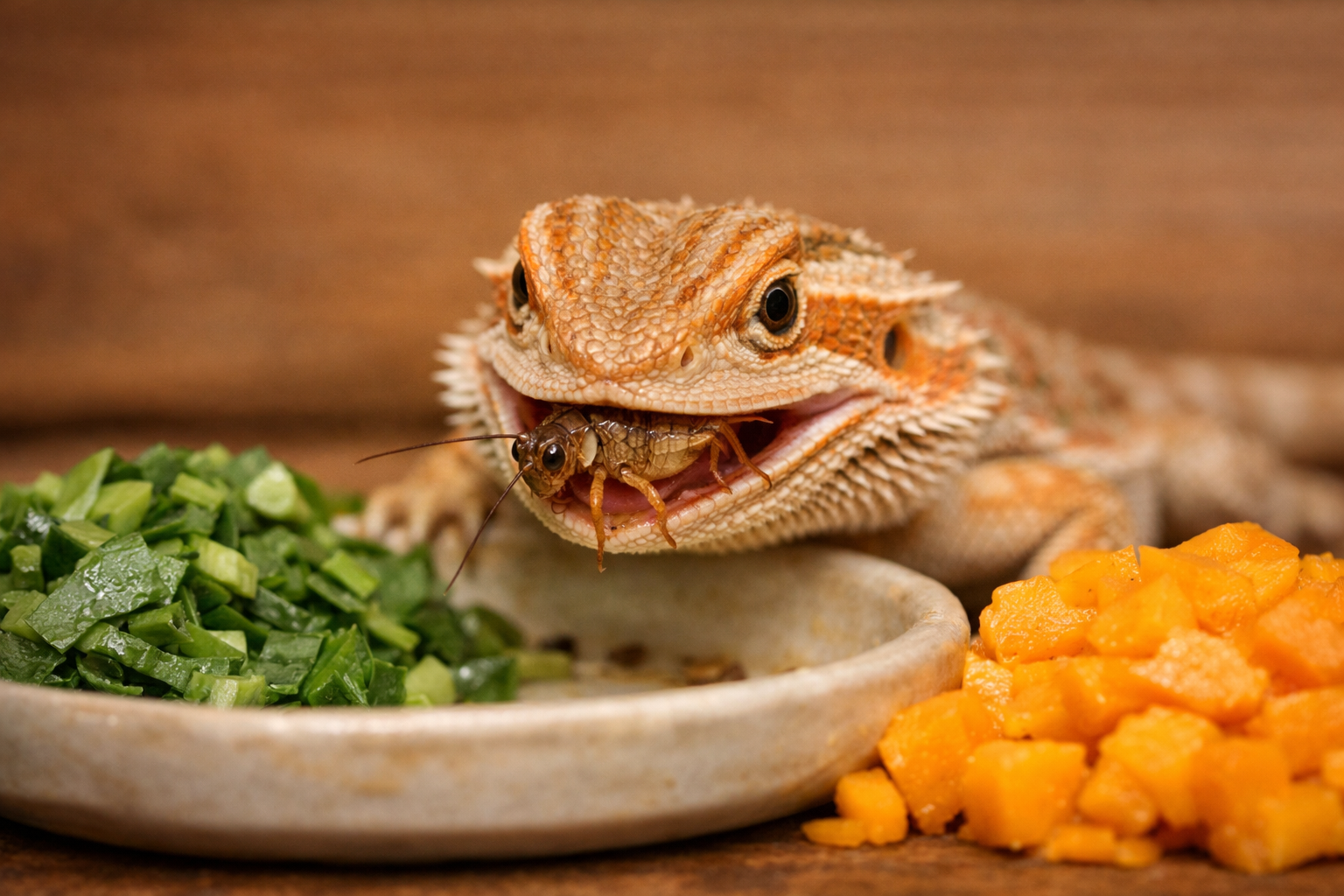
Juvenile bearded dragons eat a lot. At this growth stage, their diet should be roughly 70% live insects and 30% plant matter, which is the inverse of what adults need.
Best Feeder Insects for Juveniles
- Crickets (most widely available, gut-load before feeding)
- Dubia roaches (higher protein, less smell, easier to keep)
- Black soldier fly larvae (high calcium, good as a supplement feeder)
- Hornworms (high moisture, good for hydration)
Avoid: Mealworms for juveniles under 4 months. Their hard chitin shell is difficult for small dragons to digest.
Best Greens and Vegetables
- Collard greens ✅
- Mustard greens ✅
- Dandelion greens ✅
- Butternut squash ✅
- Kale (in moderation)
- Spinach ❌ (binds calcium, avoid)
- Avocado ❌ (toxic)
Feeding Schedule
- Under 4 months: Feed insects 3× daily, offer greens daily
- 4–12 months: Feed insects 2× daily, offer greens daily
- Supplementation: Dust insects with calcium (no D3) 5× per week; use a multivitamin 1–2× per week
Always remove uneaten insects within 30 minutes. Crickets left overnight can stress or even bite a sleeping juvenile.
Captive-Bred vs. Pet Store Juvenile Bearded Dragons: What's the Difference?
Captive-bred juvenile bearded dragons from a reputable breeder are healthier, better socialized, and easier to care for than animals sourced from chain pet stores or random online resellers.
Here's why that matters in practice:
| Factor | Reputable Breeder | Pet Store / Unknown Reseller |
|---|---|---|
| Parasite load | Low (controlled environment) | Often high (stressed, crowded conditions) |
| Socialization | Handled from birth | Minimal handling, often fearful |
| Health guarantee | Usually offered | Rarely offered |
| Genetic history | Known | Unknown |
| Morph accuracy | Verified | Often mislabeled |
| Diet history | Documented | Unknown |
CB Reptile is a well-regarded source for captive-bred juvenile bearded dragons. They work with an on-site animal biologist who oversees breeding protocols, health screening, and husbandry standards. That level of expertise is simply not available at a big-box pet store. When you buy from a specialist bearded dragon breeder, you're getting an animal whose entire life history is documented.
For buyers comparing options, it's worth knowing that a healthy captive-bred juvenile from a quality breeder typically costs $60–$200 for standard morphs. Pet store animals may appear cheaper at $30–$60, but vet bills from parasites, respiratory infections, or metabolic issues can easily exceed $300 in the first year.
What Are the Most Popular Juvenile Bearded Dragon Color Morphs?
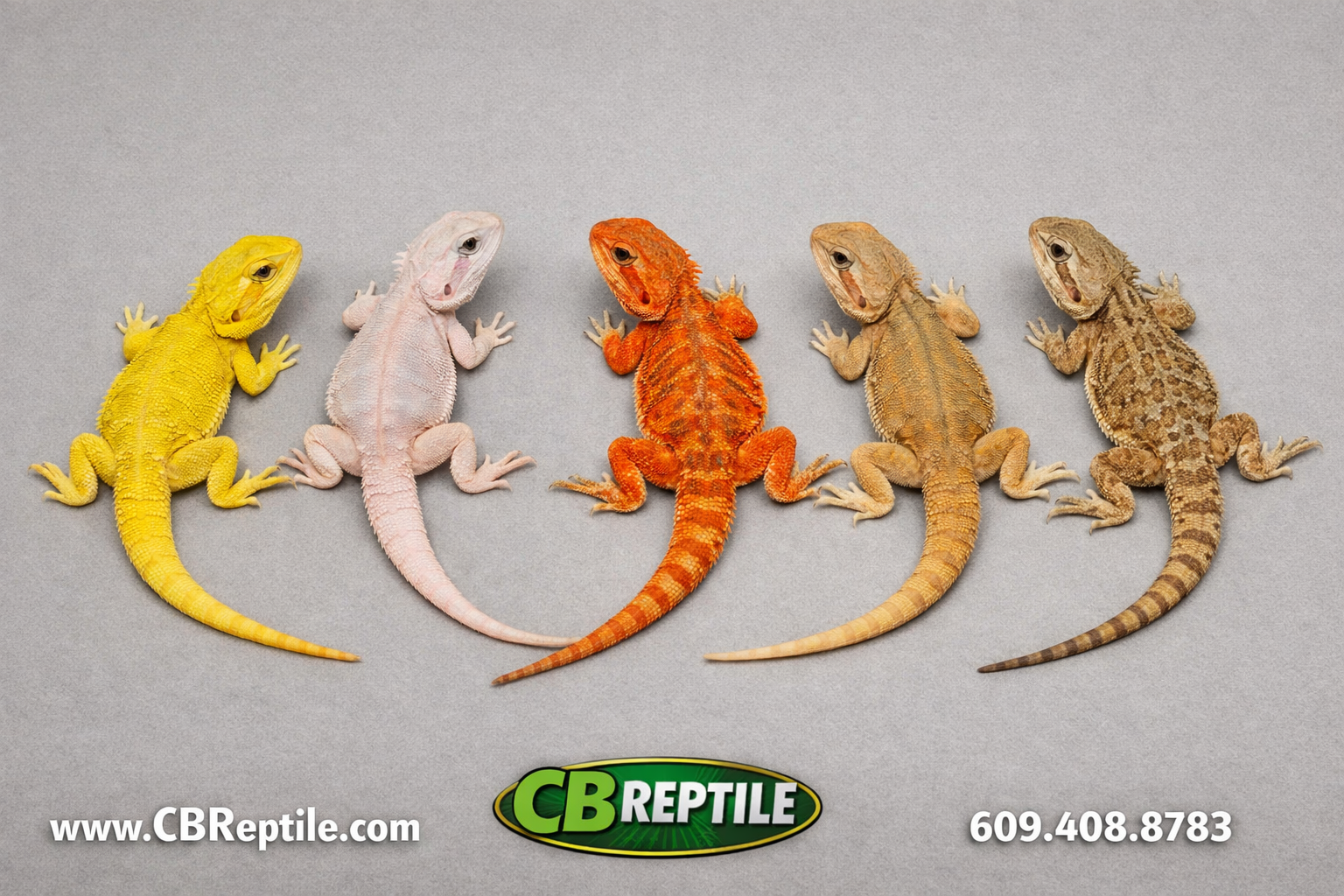
Color morphs are selectively bred variations that produce specific scale colors, patterns, or textures. Juvenile bearded dragons are available in dozens of morphs, and the morph you choose affects both price and long-term appearance.
Common Morphs and What to Expect
Standard / Wild-Type
The classic tan-and-brown pattern. Hardy, widely available, and the most affordable option. Great for first-time keepers.
Hypo (Hypomelanistic)
Reduced dark pigmentation gives these dragons a lighter, cleaner look. Nails are clear instead of dark. See the hypo bearded dragon morph for visual examples.
Citrus
Bright yellow-orange coloring, often intensifying with age. One of the most visually striking options for display animals. The citrus bearded dragon morph is a popular choice among enthusiasts.
Leatherback
Smooth scales due to reduced tubercle size. Colors appear more vivid because there's less texture to scatter light. Typically priced $100–$300.
Translucent
Semi-transparent scales and dark eyes. Striking appearance but can be more delicate in care requirements.
Dunner
Irregular scale pattern and spots that don't align in rows. Unique texture, less common.
Zero
Patternless, silver-white coloration. One of the rarest and most expensive morphs, often $300–$600+.
Silkback
Completely scaleless. Beautiful coloring but requires extra humidity management and careful handling. Not recommended for beginners.
Choose a morph based on care requirements first, aesthetics second. Some specialty morphs like silkbacks need more experienced husbandry.
How Do You Choose a Healthy Juvenile Bearded Dragon?
A healthy juvenile bearded dragon shows clear physical signs that are easy to check before you buy. Don't skip this step, whether you're buying in person or reviewing photos and a health guarantee online.
Signs of a healthy juvenile:
- Eyes are clear, bright, and fully open
- Body is plump (no visible spine or hip bones)
- All four limbs move normally
- Tail is straight, not kinked
- No discharge from nose or mouth
- Skin is smooth (not stuck shed from a previous cycle)
- Alert and responsive when gently touched
Red flags to walk away from:
- Sunken eyes or visible ribs
- Lethargy or inability to hold head up
- Swollen joints or limbs
- Runny nose or gaping mouth
- Missing toes or tail tip (sign of past husbandry failure)
- Housed with other animals showing illness
If you're buying a bearded dragon for sale online, ask for recent photos and a video of the animal eating. Any reputable seller will provide this without hesitation.
What Does It Cost to Own a Juvenile Bearded Dragon?
The purchase price is just the beginning. New owners often underestimate setup costs.
One-time setup costs (estimate):
| Item | Estimated Cost |
|---|---|
| 40–75 gallon enclosure | $80–$250 |
| T5 HO UVB fixture + bulb | $60–$120 |
| Basking bulb + fixture | $15–$30 |
| Thermometers (digital + infrared) | $20–$40 |
| Substrate (tile or reptile carpet) | $10–$30 |
| Hides and decor | $20–$60 |
| Food and water dishes | $10–$20 |
| Supplements (calcium, vitamins) | $15–$25 |
| Total setup | $230–$575 |
Ongoing monthly costs (estimate):
- Feeder insects: $15–$30/month
- Fresh produce: $10–$20/month
- Supplements: $5–$10/month
- Electricity (lighting/heating): $10–$20/month
Annual vet visit (wellness exam + fecal): $75–$150
The total first-year cost for a juvenile bearded dragon, including the animal, setup, and ongoing care, typically runs $600–$1,200 depending on your choices.
How Do Juvenile Bearded Dragons Compare to Other Reptile Pets?
Juvenile bearded dragons are among the most beginner-friendly lizards available, but they're not the right fit for everyone.
Choose a bearded dragon if:
- You want a diurnal (daytime-active) lizard you can interact with daily
- You're comfortable with live feeder insects
- You have space for a 40–75 gallon enclosure
- You want a reptile that genuinely tolerates and often enjoys handling
Consider alternatives if:
- Space is very limited (leopard geckos need only a 20-gallon tank; see our leopard geckos for sale page)
- You prefer a lower-maintenance lizard (crested geckos are a good option; check our crested gecko habitat guide)
- You want an arboreal species (consider juvenile panther chameleons, though they require more advanced care)
- You're interested in a different type of reptile entirely (our captive-bred reptile blog covers many species)
Bearded dragons sit in a sweet spot: they're active enough to be interesting, calm enough to handle regularly, and hardy enough to forgive minor husbandry mistakes while you learn.
FAQ: Juvenile Bearded Dragons
Q: How often do juvenile bearded dragons shed?
A: Juveniles shed frequently, sometimes every 4–6 weeks, because they're growing rapidly. Never pull shed skin. Provide a humid hide or a brief warm soak to help the process.
Q: Can two juvenile bearded dragons live together?
A: No. Bearded dragons are solitary and territorial. Housing two juveniles together causes chronic stress, competition for food, and often physical injury. Always keep them separately.
Q: How long do juvenile bearded dragons sleep?
A: Juveniles are active during daylight hours and sleep when lights go off. A consistent 12–14 hour light cycle is ideal. If your juvenile is sleeping during the day, check temperatures and rule out illness.
Q: Do juvenile bearded dragons need a water bowl?
A: Yes, offer a shallow water dish, but most juveniles get hydration from food and occasional misting. Change the water daily. Some juveniles rarely drink from a bowl but will lick water droplets from their enclosure walls.
Q: When does a juvenile bearded dragon become an adult?
A: Most bearded dragons reach sexual maturity around 12–18 months and are considered adults by 18 months. Full size is typically reached by 18–24 months.
Q: What temperature should a juvenile bearded dragon's basking spot be?
A: 100–110°F surface temperature, measured with an infrared thermometer. The cool side should stay 80–85°F. Temperatures outside this range cause digestive problems and immune suppression.
Q: Is a juvenile bearded dragon a good pet for a child?
A: Yes, with adult supervision. Juveniles can be fragile and fast-moving. Children under 8 should handle them only with an adult present. By 6–8 months, most well-handled juveniles are calm enough for older children to manage independently.
Q: How do I know if my juvenile bearded dragon is sick?
A: Key warning signs include: not eating for more than 7–10 days (outside of brumation, which is rare in juveniles), runny stools, mucus from the nose or mouth, swollen limbs, or extreme lethargy. Contact a reptile vet promptly.
Q: What substrate is best for juvenile bearded dragons?
A: Ceramic tile or reptile carpet is safest for juveniles. Loose substrates like sand or coconut fiber carry impaction risk for young dragons that accidentally ingest particles while hunting insects.
Q: How much does a juvenile bearded dragon cost from a breeder?
A: Standard morphs typically run $60–$150. Specialty morphs like hypo, citrus, or leatherback range from $150–$400. Zero and silkback morphs can exceed $500. Prices reflect genetics, rarity, and breeder reputation.
Conclusion: Is a Juvenile Bearded Dragon Right for You?
Juvenile bearded dragons are rewarding pets for anyone willing to invest in proper setup and consistent care. The juvenile phase is demanding, but it's also when the bond between keeper and dragon forms. Get the enclosure right, feed a varied diet, provide strong UVB, and handle your dragon daily. By the time your juvenile reaches adulthood, you'll have a calm, personable lizard that's genuinely enjoyable to keep.
Your next steps:
- Set up your enclosure before the dragon arrives. Run it for 48 hours to confirm temperatures are stable.
- Source feeders locally or online so you have crickets or dubia roaches ready on day one.
- Buy from a reputable captive-bred source. Ask for feeding records and a health guarantee.
- Schedule a vet appointment within 30 days for a baseline fecal exam.
- Handle daily, but keep sessions short (10–15 minutes) for the first few weeks.
If you're ready to find a healthy, captive-bred animal, explore the available bearded dragon for sale listings from CB Reptile, where an on-site animal biologist ensures every juvenile meets health and husbandry standards before it goes home with you.
References
- Stahl, S. J., & Donoghue, S. (2010). Nutrition of reptiles. In M. S. Hand et al. (Eds.), Small Animal Clinical Nutrition (5th ed.). Mark Morris Institute.
- Mader, D. R. (Ed.). (2006). Reptile Medicine and Surgery (2nd ed.). Saunders Elsevier.
- Raiti, P. (2012). Husbandry, diseases, and veterinary care of the bearded dragon (Pogona vitticeps). Journal of Herpetological Medicine and Surgery, 22(3–4), 117–131.
- Dierenfeld, E. S. (2009). Feeding behavior and nutrition of the bearded dragon (Pogona vitticeps). Veterinary Clinics of North America: Exotic Animal Practice, 12(2), 361–372.
- Wotherspoon, D. (2007). Ecology and natural history of the central bearded dragon, Pogona vitticeps. [Doctoral dissertation, Charles Sturt University].
Tags: juvenile bearded dragons, bearded dragon care, bearded dragon morphs, captive bred reptiles, bearded dragon diet, UVB lighting reptiles, hypo bearded dragon, citrus bearded dragon, reptile pets for beginners, bearded dragon enclosure, feeder insects, reptile breeder