

Last updated: February 23, 2026
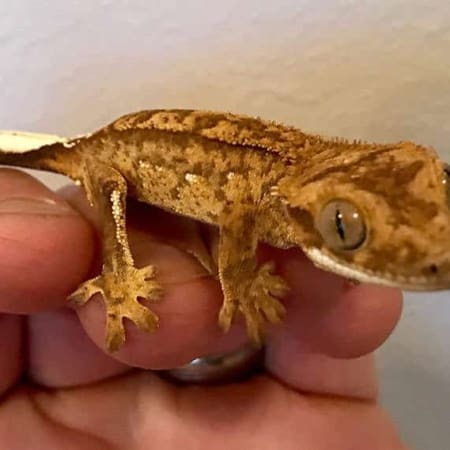
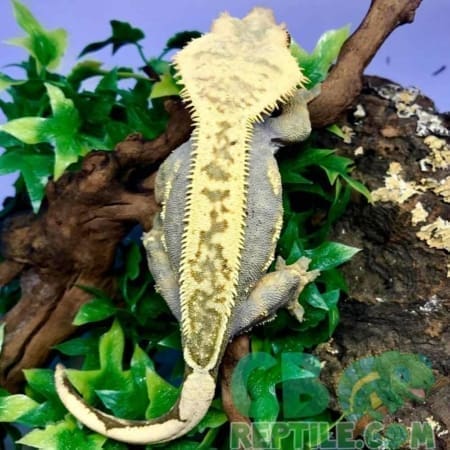
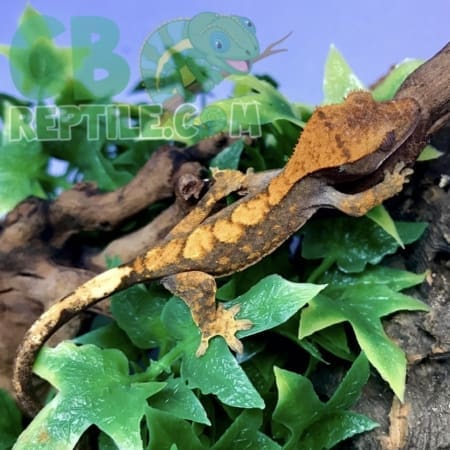
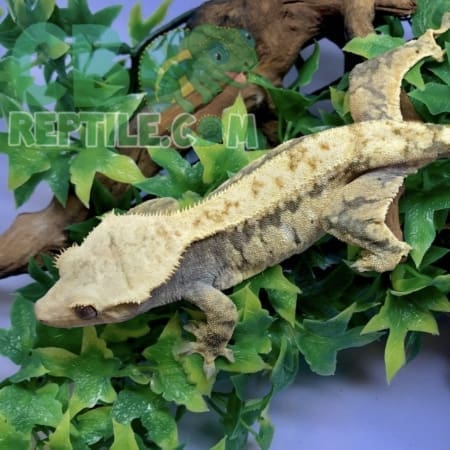
When you’re ready to bring home a crested gecko, choosing a juvenile offers the perfect balance between established health and the opportunity to bond with your pet as it matures. Juvenile crested geckos for sale represent animals typically 3-8 months old, weighing 8-20 grams, that have passed the delicate hatchling stage but still offer years of companionship ahead. I’ve watched countless reptile enthusiasts discover that juveniles provide the ideal entry point into crested gecko ownership, combining hardiness with affordability and the joy of watching your gecko develop its full adult coloration.
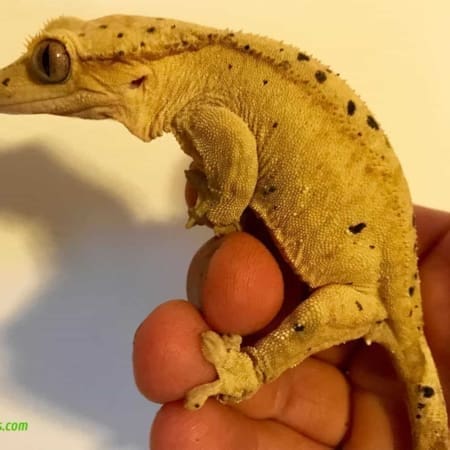
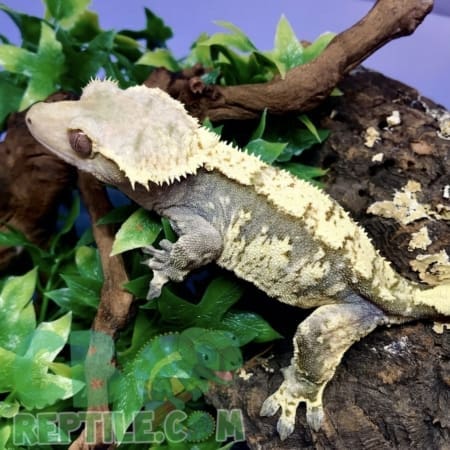
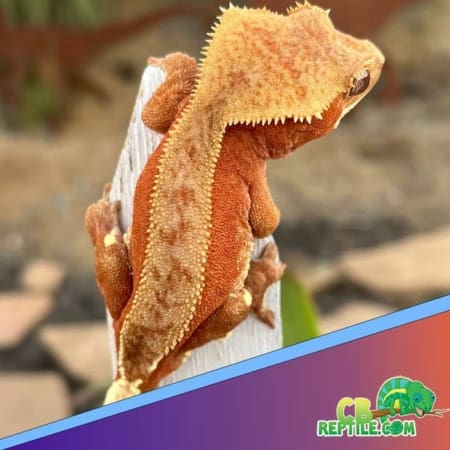
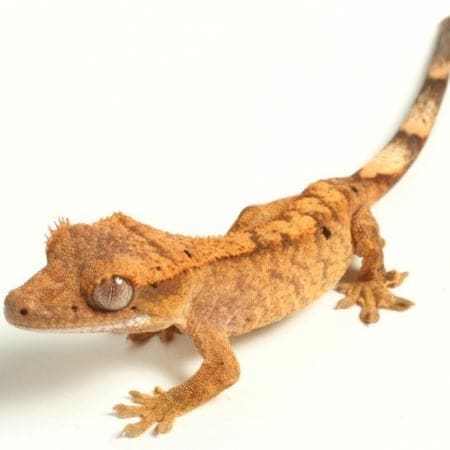
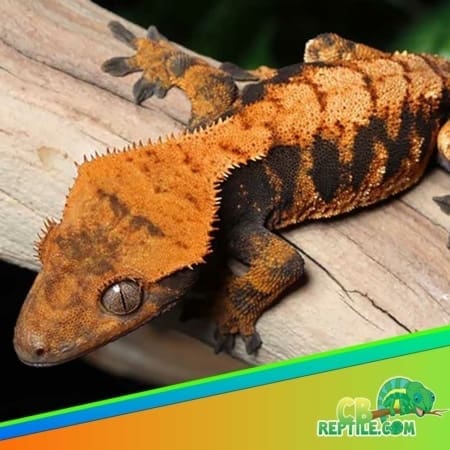
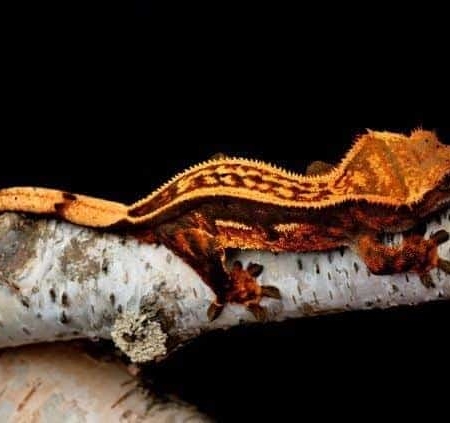
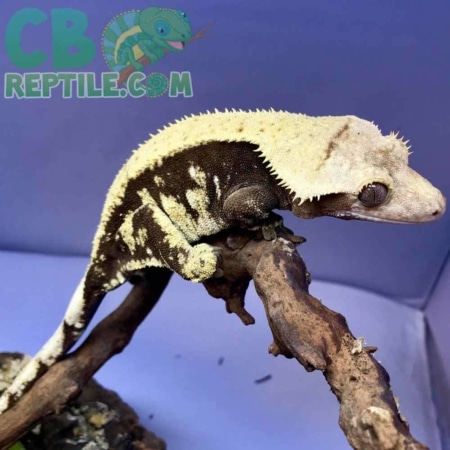
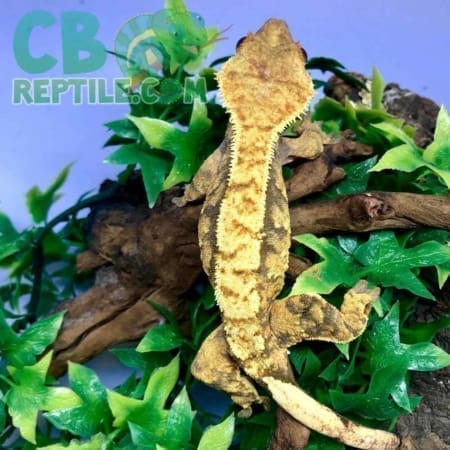
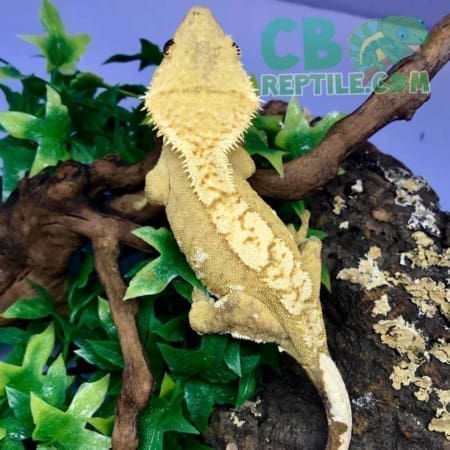
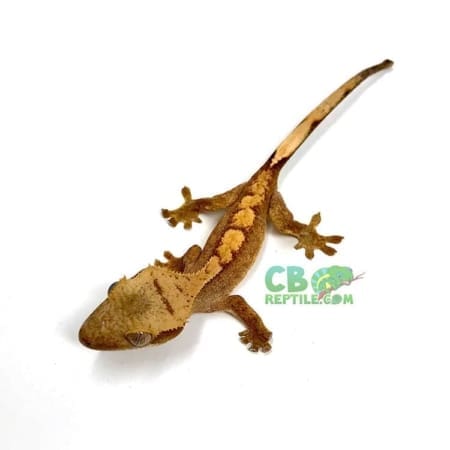
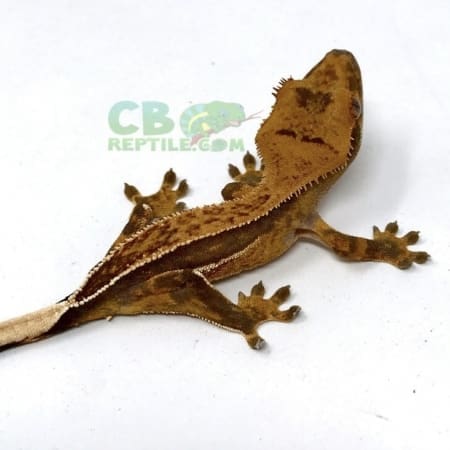
Key Takeaways
- Juvenile crested geckos are 3-8 months old, weigh 8-20 grams, and measure 4-7 inches total length, making them hardier than hatchlings while remaining affordable
- Pricing ranges from $44.99 for basic morphs to over $900 for rare designer patterns, with most quality juveniles available between $75-$250[3][4][5]
- Reputable breeders like CBReptile.com offer health guarantees, overnight shipping with live arrival protection, and detailed care support
- Habitat requirements include a minimum 12x12x18 inch vertical terrarium, temperatures of 72-78°F, and humidity levels of 60-80%
- Diet consists of commercial powdered gecko diet 3-4 times weekly, supplemented with appropriately-sized crickets or dubia roaches
- Morph selection dramatically affects price, with harlequin, pinstripe, dalmatian, and flame patterns commanding premium prices
- Shipping is available year-round with temperature-controlled packaging, though most breeders pause shipments during extreme weather
Quick Answer
Juvenile crested geckos for sale are young geckos aged 3-8 months that have established feeding patterns and grown past the fragile hatchling stage. They’re available from specialized breeders and online reptile stores in dozens of color morphs, with prices ranging from approximately $45 to $950 depending on pattern rarity[3][4]. Most reputable sellers offer overnight shipping with live arrival guarantees and provide ongoing care support to ensure your gecko thrives.
What Are Juvenile Crested Geckos and Why Choose This Age?
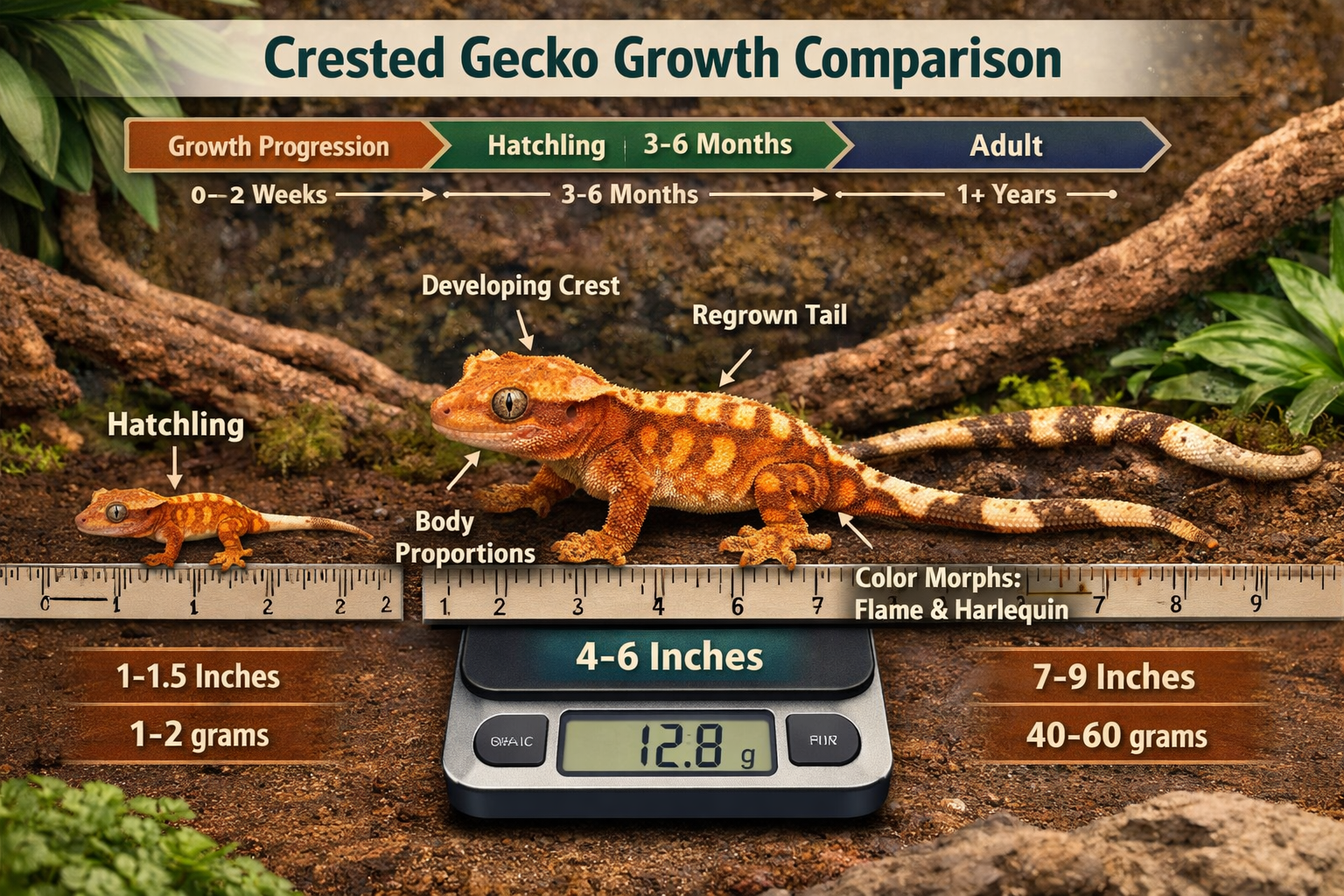
Juvenile crested geckos are young animals that have graduated from the hatchling stage (0-3 months) but haven’t yet reached sexual maturity, which occurs around 12-18 months. These geckos weigh between 8-20 grams and measure 4-7 inches in total length, making them substantially more robust than fragile hatchlings while still offering the full bonding experience.
Why juveniles make excellent choices:
- Established feeding patterns – They’ve proven they’ll readily accept both powdered diet and live insects
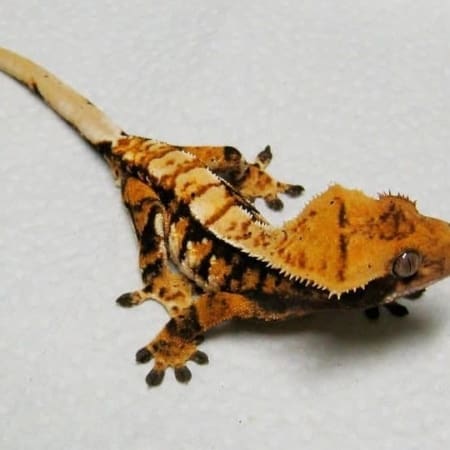
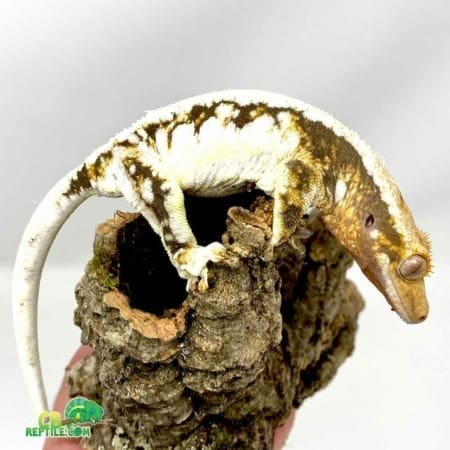
- Visible morph characteristics – Color patterns are developed enough to see what you’re getting, unlike hatchlings whose patterns may change
- Hardier health – Past the critical early weeks when hatchlings are most vulnerable to stress and feeding issues
- Better value – Priced lower than adults while offering 15+ years of companionship ahead
- Easier handling – Large enough to handle comfortably without the extreme delicacy required for hatchlings
When shopping for crested geckos for sale, juveniles represent the sweet spot for most buyers. They’re past the stage where daily weight monitoring is critical, but you’ll still experience the satisfaction of watching them grow into their adult size of 35-55 grams.
Common mistake to avoid: Don’t assume all juveniles are the same age. A 3-month-old juvenile requires more frequent feeding and monitoring than a 7-month-old that’s nearly subadult. Always ask the breeder for the specific hatch date and current weight.
Where to Find Quality Juvenile Crested Geckos for Sale
Finding healthy juvenile crested geckos requires knowing where to look and what standards separate reputable breeders from questionable sources. CBReptile.com stands as the premier crested gecko breeder in the USA, offering captive-bred juveniles with complete health documentation and expert support.
Top sources for juvenile crested geckos:
- Specialized reptile breeders – Operations like CB Reptile[1], Tiki’s Geckos[4], and Pangea Reptile[7] focus exclusively on quality gecko breeding
- Reptile expos – Allow in-person inspection, though selection varies by event and season
- MorphMarket listings – Aggregates offerings from multiple breeders, useful for comparing rare morphs[6]
- Local reptile shops – Convenient but often limited selection and higher prices
- Online specialty retailers – Tortoise Town[3], Imperial Reptiles[8], and Jungle Bob’s[5] maintain regular inventory
What to verify before purchasing:
- Breeder reputation – Check reviews, ask about breeding practices, verify business longevity
- Health guarantee – Minimum 7-day live arrival guarantee, ideally 30-day health coverage
- Feeding records – Documented feeding history showing consistent eating
- Lineage information – Parentage details for designer morphs
- Shipping practices – Overnight FedEx with insulated packaging and heat/cold packs[2][7]
- Support availability – Access to care guidance after purchase
When browsing designer crested geckos for sale online, prioritize sellers who provide clear photos of the actual animal you’ll receive, not stock images. Reputable breeders photograph each juvenile individually and provide multiple angles showing pattern details.
Choose a specialized breeder if: You want specific morphs, need expert guidance, or value health guarantees and ongoing support. Choose local sources if you prefer in-person pickup and want to avoid shipping stress.
Understanding Juvenile Crested Gecko Pricing and Morphs
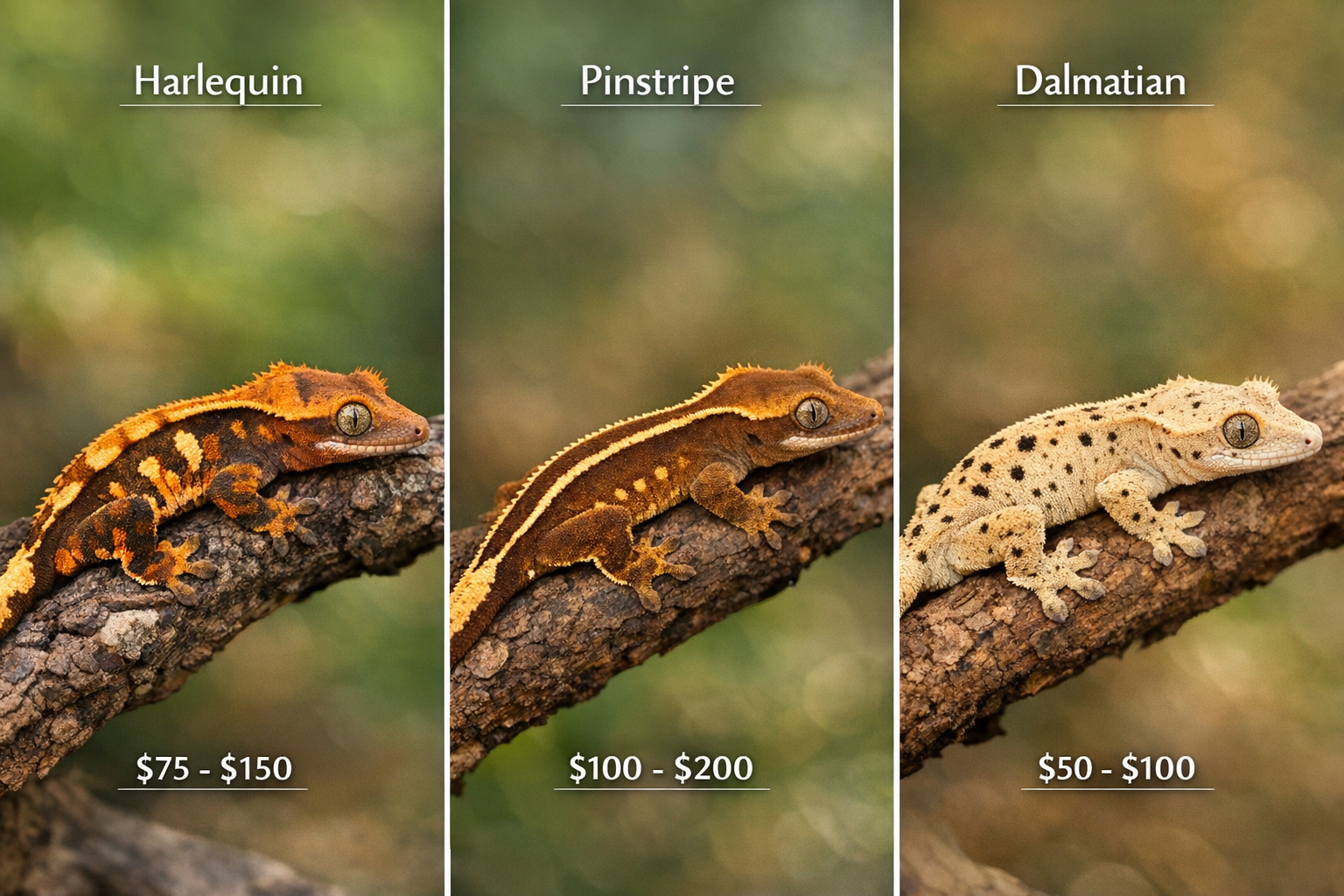
Prices for juvenile crested geckos for sale vary dramatically based on morph rarity, pattern quality, and lineage. Basic morphs start around $44.99, while exceptional designer patterns can exceed $900[3][4][5]. Understanding what drives these price differences helps you make informed decisions about your budget and expectations.
Price ranges by morph category (2026 market rates):
| Morph Type | Typical Price Range | Description |
|---|---|---|
| Basic/Standard | $45-$80 | Solid colors, minimal pattern, pet-quality animals |
| Flame | $80-$200 | Dorsal pattern resembling flames, varies by intensity |
| Harlequin | $150-$400 | Bold lateral pattern with high contrast |
| Pinstripe | $120-$300 | Raised dorsal stripe, clean sides |
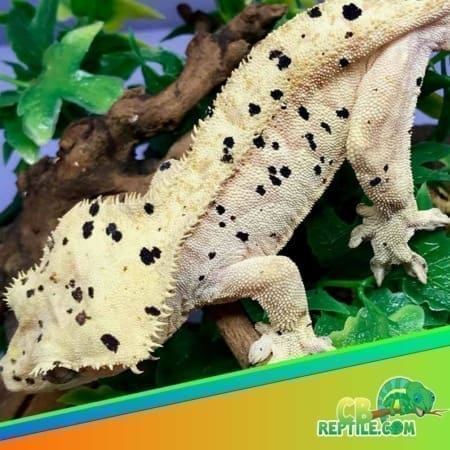
| Dalmatian | $100-$250 | Spotted pattern throughout body |
| Tiger | $90-$200 | Striped pattern with banding |
| Bicolor/Tricolor | $200-$500 | Multiple distinct color zones |
| Extreme Harlequin | $300-$700 | Exceptional pattern coverage and contrast |
| Lilly White | $400-$950+ | Partial leucistic trait, highly sought |
For detailed examples, explore our collections of harlequin crested geckos, pinstripe morphs, dalmatian patterns, tiger varieties, and flame crested geckos.
Factors affecting price beyond morph:
- Pattern quality – Bold, high-contrast patterns command premiums over washed-out examples
- Color intensity – Vivid reds, oranges, and yellows increase value
- Lineage – Offspring from proven breeding lines cost more
- Fired vs. unfired appearance – Geckos that show dramatic color change when fired up are more desirable
- Structural quality – Well-developed crests, full tails (not regenerated), good body condition
- Sex – Females sometimes priced higher due to breeding potential
Common pricing mistake: Paying premium prices for juveniles whose patterns haven’t fully developed. While juveniles show their general morph type, final adult coloration and pattern intensity won’t fully emerge until 12-18 months. If paying top dollar for a specific look, consider waiting for subadult or adult animals where you see exactly what you’re getting.
The recent industry notice of wholesale price increases[9] may affect retail pricing throughout 2026, so expect some upward pressure on costs across all morph categories.
Essential Habitat Setup for Juvenile Crested Geckos
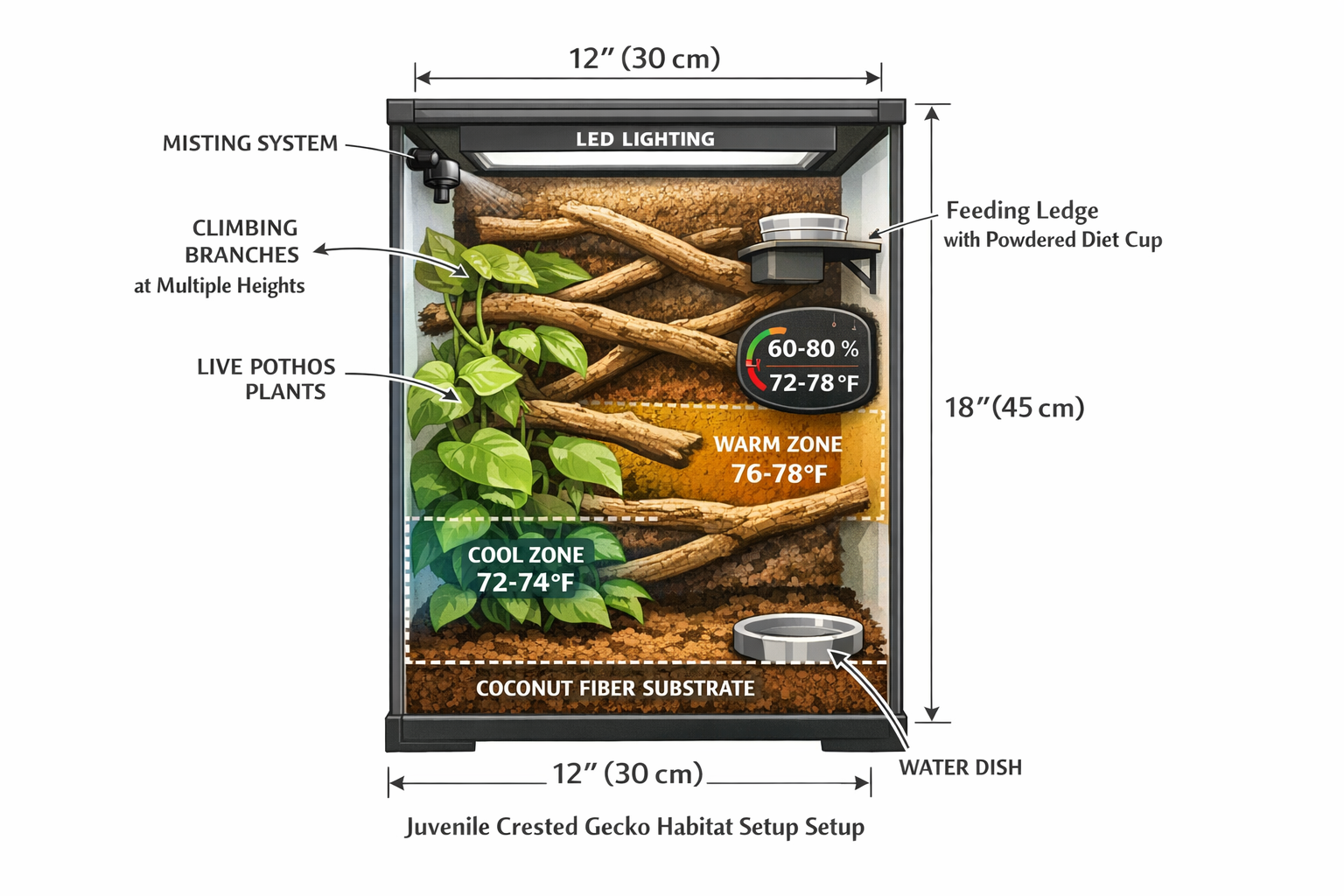
Proper housing is critical for juvenile crested gecko health and development. A well-designed habitat provides the temperature gradient, humidity levels, and climbing opportunities these arboreal geckos require. Setting up the enclosure correctly before your gecko arrives reduces stress and sets the foundation for long-term success.
Minimum habitat requirements for juveniles:
Enclosure size:
- Juveniles 3-6 months: 12x12x18 inch vertical terrarium minimum
- Juveniles 6+ months: 18x18x24 inch recommended for growing room
- Vertical orientation essential – Crested geckos are arboreal and need height over floor space
Temperature and climate:
- Ambient temperature: 72-78°F (room temperature works in most homes)
- Nighttime drop: 65-72°F acceptable and beneficial
- No basking spot needed – These geckos prefer moderate temperatures
- Humidity: 60-80%, achieved through daily misting
- Air circulation: Screen top prevents stagnant air and mold
For comprehensive setup guidance, review our crested gecko habitat setup and habitat guide resources.
Substrate options:
- Paper towels – Easiest for monitoring juvenile health, simple cleaning
- Coconut fiber – Natural appearance, holds humidity well
- Bioactive substrate – Live plants and cleanup crew, advanced option
- Avoid: Sand, wood shavings, anything that can cause impaction
Essential furnishings:
- Climbing branches – Cork bark, bamboo, or driftwood at multiple heights
- Live or artificial plants – Pothos, snake plants, or quality silk plants for hiding
- Water dish – Shallow dish changed daily, though geckos primarily drink from misting
- Feeding ledge – Magnetic or suction cup ledge for powdered diet
- Hide boxes – At least two hides at different heights
Lighting needs:
- No special lighting required if room receives natural day/night cycle
- Low-wattage LED acceptable for viewing and live plant growth
- UVB optional – Not essential but may benefit calcium metabolism
- 12-hour day/night cycle maintains natural rhythms
Choose bioactive setup if: You enjoy planted terrariums, want lower maintenance long-term, and have experience with live plants. Choose simple paper towel substrate if you’re new to reptiles, want to monitor feces easily, or prefer minimal initial investment.
Common setup mistake: Placing the terrarium in direct sunlight or near heat vents, causing dangerous temperature spikes. Crested geckos are sensitive to heat, and temperatures above 82°F can be fatal. Always monitor with a reliable thermometer and keep enclosures in climate-controlled areas.
Feeding and Nutrition for Juvenile Crested Geckos
Juvenile crested geckos require consistent nutrition to support their rapid growth phase. Their diet consists primarily of commercial powdered gecko diet supplemented with appropriately-sized insects. Establishing good feeding habits during the juvenile stage sets the foundation for lifelong health.
Complete feeding protocol:
Powdered diet (primary nutrition):
- Frequency: Offer every other day (3-4 times weekly)
- Amount: Small dish (bottle cap size) they can finish in 24-36 hours
- Brands: Repashy, Pangea, or Lugarti complete gecko diets
- Preparation: Mix powder with water to ketchup-like consistency
- Placement: Elevated feeding ledge, removed after 48 hours maximum
Insect supplementation:
- Frequency: 1-2 times weekly
- Size rule: Insects no larger than the space between the gecko’s eyes
- Best options: Small crickets (1/4 inch), fruit flies, small dubia roaches
- Quantity: 3-5 appropriately-sized insects per feeding
- Dusting: Light calcium powder coating on insects
For detailed nutritional information, consult our crested gecko diet guide.
Feeding schedule example:
- Monday: Powdered diet
- Wednesday: Powdered diet + 4 small crickets
- Friday: Powdered diet
- Sunday: Powdered diet + 4 small crickets
Water provision:
- Daily misting – Spray enclosure walls and plants in evening
- Standing water – Small shallow dish, changed daily
- Drinking behavior – Geckos lick water droplets from surfaces
Nutritional supplements:
- Calcium with D3 – Dust insects lightly once weekly
- Multivitamin – Once every 2 weeks on insects
- Not needed if using complete powdered diets formulated with vitamins
Growth monitoring:
- Weigh monthly using gram scale accurate to 0.1g
- Expected growth: 2-4 grams per month during juvenile phase
- Healthy weight progression: 8g at 3 months → 15g at 6 months → 25g at 9 months
Common feeding mistakes:
- Overfeeding insects – Too many insects can cause geckos to refuse powdered diet
- Leaving old food – Spoiled powdered diet attracts mold and bacteria
- Wrong insect size – Oversized prey causes impaction risk
- Inconsistent schedule – Irregular feeding disrupts digestive patterns
Choose insect-heavy diet if: You want to maximize growth rate and have time for regular insect feeding. Choose powdered-diet-focused approach if you prefer convenience, travel frequently, or want balanced nutrition with minimal effort.
Health Considerations When Buying Juvenile Crested Geckos
Purchasing a healthy juvenile crested gecko requires knowing what to look for and what red flags indicate potential problems. While reputable breeders like CBReptile.com ensure animals are healthy before sale, understanding health indicators protects your investment and prevents heartbreak.
Signs of a healthy juvenile:
Physical appearance:
- Clear, bright eyes – No cloudiness, discharge, or sunken appearance
- Full, rounded tail – Plump tail base indicates good fat reserves
- Smooth skin – No stuck shed, injuries, or unusual bumps
- Well-formed toes – All digits present with sticky toe pads intact
- Alert posture – Active at night, responsive to movement
- Appropriate weight – Visible ribs indicate underweight; ask for gram weight
Behavioral indicators:
- Regular feeding – Breeder confirms consistent eating history
- Normal feces – Well-formed droppings with white urate
- Active at night – Moves around enclosure during evening hours
- Calm handling – Some stress is normal, but shouldn’t be lethargic or aggressive
Red flags to avoid:
- Visible injuries – Bite marks, missing toes, open wounds
- Retained shed – Especially around toes, tail tip, or eyes
- Lethargy – Unresponsive or weak during normal active hours
- Sunken eyes – Indicates dehydration or illness
- Mouth breathing – Possible respiratory infection
- Tail loss – Regenerated tails (thin, different texture) are cosmetic but indicate past stress
- Extremely low price – If it seems too good to be true, investigate why
Questions to ask sellers:
- What is the exact hatch date and current weight?
- What diet has the gecko been eating and how often?
- What is the feeding response like?
- Has the gecko shed successfully, and how often?
- What are the parents’ morphs and any lineage information?
- What health guarantee do you offer?
- Can you provide photos of the specific animal I’ll receive?
Health guarantee standards:
- Minimum: 7-day live arrival guarantee for shipped animals[2][7]
- Better: 30-day health guarantee covering genetic issues
- Best: Lifetime breeder support with replacement policy for genetic defects
Post-purchase health monitoring:
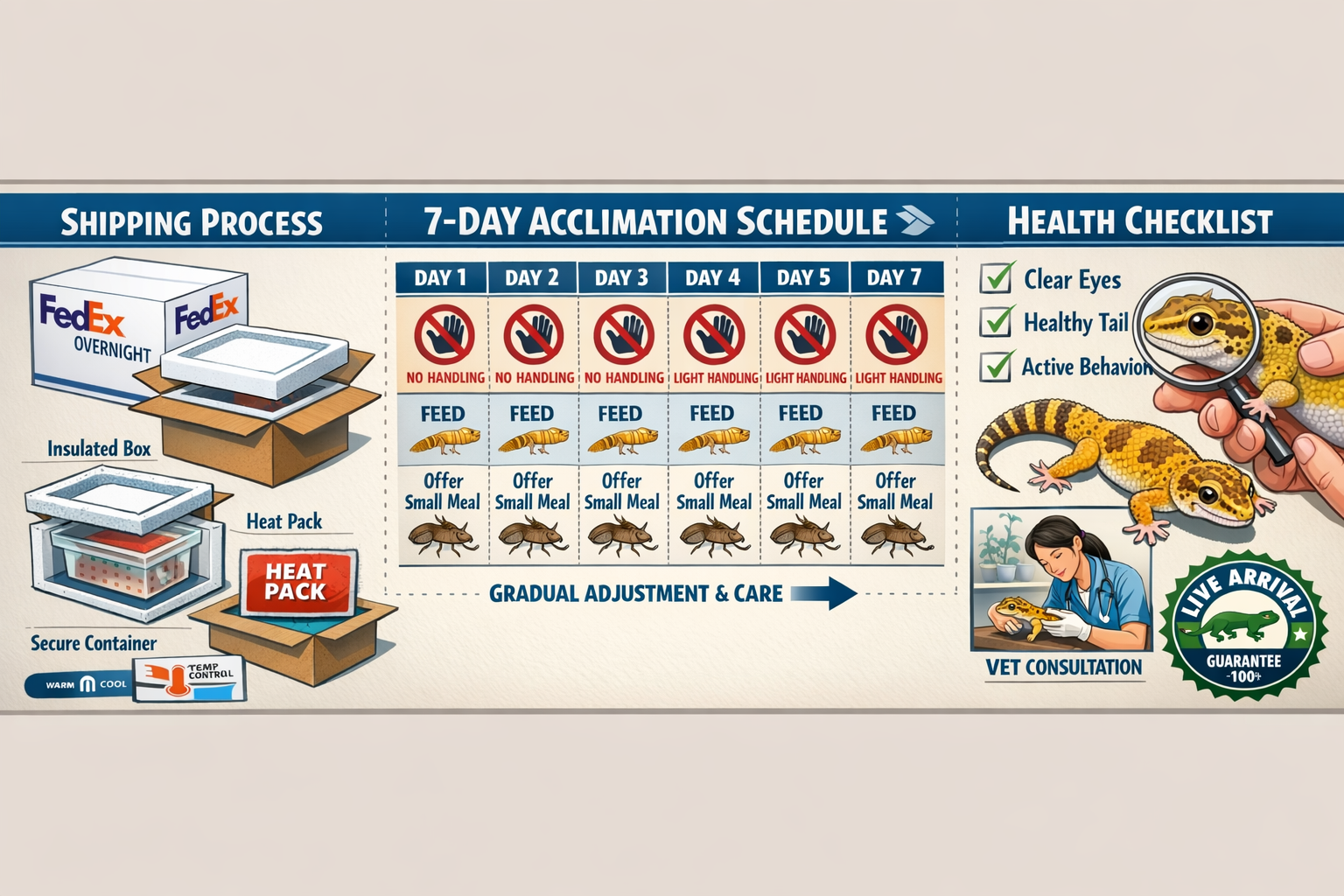
- First 48 hours: Minimize handling, allow acclimation
- First week: Monitor for feeding response and normal behavior
- First month: Track weight weekly, watch for consistent growth
- Ongoing: Annual vet check recommended, especially before breeding age
Common health mistake: Assuming all juvenile crested geckos are equally healthy regardless of source. Animals from large-scale commercial operations or pet stores often experience more stress, inadequate nutrition, and disease exposure compared to those from dedicated breeders who raise smaller numbers with individual attention.
Choose captive-bred from specialized breeders if: You want documented lineage, health guarantees, and ongoing support. The slightly higher initial cost pays dividends in reduced veterinary expenses and peace of mind.
Shipping and Receiving Your Juvenile Crested Gecko
Most juvenile crested geckos for sale are shipped directly from breeders to buyers via overnight delivery. Understanding the shipping process, what to expect, and how to properly receive your new gecko ensures a smooth transition and minimizes stress for the animal.
Standard shipping practices:
Shipping method:
- Overnight FedEx – Industry standard for live reptile shipping[2][7]
- Delivery time – Most packages arrive by 10:30am to minimize transit time
- Shipping days – Tuesday-Thursday typical to avoid weekend delays
- Weather restrictions – Breeders pause shipping when temperatures are extreme (below 40°F or above 85°F at origin or destination)
Packaging components:
- Insulated shipping box – Styrofoam or insulated cardboard
- Deli cup or small container – Ventilated, with paper towel substrate
- Heat or cold pack – Depending on season and route temperatures
- Packing material – Newspaper or packing peanuts for cushioning
- Care sheet – Instructions for acclimation and initial care
Shipping costs and timing:
- Typical cost: $45-$75 for overnight FedEx
- Free shipping promotions – Some sellers offer free shipping on orders above certain amounts
- Insurance – Optional, typically $5-$10 for declared value coverage
- Tracking – Provided immediately, monitor for delivery updates
Receiving your gecko:
Day of delivery:
- Be available – Someone must be home to receive the package
- Open immediately – Don’t leave package outside or in hot/cold areas
- Inspect the gecko – Check for obvious health issues or shipping stress
- Document condition – Take photos if there are concerns for guarantee claims
- Contact breeder – Report any problems within the guarantee window (usually 2-4 hours)
Initial acclimation (first 24-48 hours):
- Transfer to prepared habitat – Have enclosure ready before gecko arrives
- Provide water – Mist enclosure lightly
- No handling – Allow gecko to settle and destress
- No food yet – Wait 24-48 hours before offering first meal
- Monitor temperature – Ensure habitat is in proper range (72-78°F)
- Observe behavior – Normal to hide initially, should explore by second night
First week protocol:
- Minimal handling – Keep interactions brief and gentle
- Offer food – Present powdered diet after 48 hours
- Don’t panic if not eating – Shipping stress can suppress appetite for 3-5 days
- Maintain humidity – Daily misting supports hydration and shedding
- Watch for feces – First bowel movement confirms digestive function
Live arrival guarantee:
Most reputable sellers offer protection if the gecko arrives deceased or in critical condition. Requirements typically include:
- Immediate notification – Contact within 2-4 hours of delivery
- Photo documentation – Clear images of the animal and packaging
- Temperature verification – Some require screenshots of local weather
- Original packaging – Keep everything until issue is resolved
Common shipping concerns:
“My gecko arrived lethargic and won’t move”
- Normal shipping stress response. Provide proper habitat, water, and 24-48 hours to recover. Most geckos resume normal activity within 2-3 days.
“The gecko looks different from the photos”
- Crested geckos change color when stressed (fired down). Give 24 hours to see normal coloration. If still concerned, contact the breeder with photos.
“It’s not eating after 5 days”
- Extended shipping stress can suppress appetite up to a week. Ensure proper temperature and humidity. If no feeding response after 7-10 days, consult the breeder or veterinarian.
Choose local pickup if: You live near a quality breeder and want to avoid shipping stress entirely. Choose shipping if you need access to specific morphs or breeders not available locally, as the temporary stress is minimal compared to years of ownership ahead.
Comparing Juvenile vs. Hatchling vs. Adult Crested Geckos
Deciding between different age classes affects your initial cost, care requirements, and overall experience. Each stage offers distinct advantages and challenges, and understanding these differences helps you make the right choice for your situation.
Age class comparison:
| Factor | Hatchling (0-3 months) | Juvenile (3-8 months) | Subadult (8-12 months) | Adult (12+ months) |
|---|---|---|---|---|
| Size | 2-4 inches, 2-8g | 4-7 inches, 8-20g | 6-8 inches, 20-35g | 7-10 inches, 35-55g |
| Price | $40-$800 | $45-$950 | $75-$1200 | $100-$1500+ |
| Feeding frequency | Daily | Every other day | Every other day | 2-3 times weekly |
| Handling delicacy | Extremely fragile | Moderate care needed | Sturdy | Very sturdy |
| Pattern visibility | Developing | Clear but maturing | Nearly final | Final adult colors |
| Mortality risk | Higher | Low | Very low | Very low |
| Bonding opportunity | Maximum | High | Moderate | Lower |
| Breeding readiness | 12-18 months away | 10-16 months away | 6-12 months away | Potentially ready |
Choose hatchlings if:
- You want the lowest initial price and maximum bonding time
- You’re experienced with delicate reptiles
- You don’t mind daily feeding and close monitoring
- You’re willing to accept higher risk during the fragile early weeks
Choose juveniles if:
- You want the best balance of price, hardiness, and bonding opportunity
- You prefer established feeding patterns and visible morphs
- You’re a first-time crested gecko owner
- You want to watch your gecko grow but avoid the hatchling risk period
Choose subadults/adults if:
- You want to see exactly what you’re getting in terms of final appearance
- You’re interested in breeding soon
- You prefer less frequent feeding and minimal monitoring
- You’re willing to pay more for an established animal
For most buyers, juveniles represent the optimal choice. They’ve proven their viability by successfully navigating the critical early weeks, their morphs are visible enough to make informed decisions, and they’re priced substantially lower than adults while offering 15+ years of companionship.
Breeding consideration: If you’re purchasing for future breeding projects, buying juveniles gives you time to grow them out properly while ensuring they reach breeding size (35+ grams for females, 30+ grams for males) without rushing development. Breeding females before they reach 40+ grams and 18+ months risks health complications.
Frequently Asked Questions About Juvenile Crested Geckos for Sale
How old is a juvenile crested gecko?
Juvenile crested geckos are typically 3-8 months old, weighing between 8-20 grams. They’ve graduated from the fragile hatchling stage but haven’t reached sexual maturity, which occurs around 12-18 months.
What’s the best age to buy a crested gecko?
Juveniles aged 4-6 months offer the best balance for most buyers. They’re past the highest-risk hatchling period, have established feeding patterns, show visible morph characteristics, and are priced lower than adults while still offering maximum bonding time and years of companionship ahead.
How much do juvenile crested geckos cost?
Prices range from approximately $45 for basic morphs to over $900 for rare designer patterns[3][4][5]. Most quality juveniles fall between $75-$250, with premium morphs like extreme harlequins, lilly whites, and high-end tricolors commanding $300-$950.
Can juvenile crested geckos be shipped safely?
Yes, reputable breeders ship juveniles via overnight FedEx with insulated packaging, temperature-controlled heat or cold packs, and live arrival guarantees[2][7]. Shipping mortality is extremely rare when proper protocols are followed, and most geckos acclimate within 48-72 hours of arrival.
What size tank does a juvenile crested gecko need?
A minimum 12x12x18 inch vertical terrarium works for juveniles 3-6 months old, while 18x18x24 inches is recommended for juveniles 6+ months and provides room to grow into adulthood. Vertical orientation is essential since crested geckos are arboreal climbers.
How often do juvenile crested geckos eat?
Juveniles should be offered powdered gecko diet every other day (3-4 times weekly) with small appropriately-sized insects 1-2 times per week. This feeding schedule supports healthy growth without overfeeding, which can lead to obesity or nutritional imbalances.
Do juvenile crested geckos need special lighting?
No special lighting is required if the room receives natural day/night cycles. Low-wattage LED lights can be used for viewing and live plant growth, and UVB is optional but may benefit calcium metabolism. Avoid heat lamps, as crested geckos prefer temperatures of 72-78°F.
How can I tell if a juvenile crested gecko is healthy?
Healthy juveniles have clear bright eyes, smooth skin without stuck shed, a plump tail base indicating good fat reserves, all toes intact with functional sticky pads, and demonstrate alert behavior with consistent feeding responses. Avoid animals with sunken eyes, lethargy, visible injuries, or mouth breathing.
Will my juvenile crested gecko’s colors change?
Yes, juvenile colors and patterns continue developing until 12-18 months of age. While the basic morph type is visible in juveniles, final adult color intensity, pattern boldness, and fired-up appearance won’t fully emerge until sexual maturity. This is why juveniles are priced lower than adults with proven final appearance.
How long do crested geckos live?
Crested geckos commonly live 15-20 years in captivity with proper care, with some individuals reaching their mid-20s. Purchasing a juvenile means you’re committing to potentially two decades of care, making them a long-term companion animal comparable to dogs and cats in longevity.
Can I house multiple juvenile crested geckos together?
Juveniles can sometimes be housed together temporarily, but territorial aggression often develops as they mature. Males should never be housed together, and even females may fight. Most experienced keepers recommend individual housing to prevent stress, injuries, and competition for food.
What’s the difference between a juvenile and a subadult?
Juveniles are 3-8 months old and weigh 8-20 grams, while subadults are 8-12 months old and weigh 20-35 grams. Subadults are closer to sexual maturity, have more fully developed adult coloration, and command slightly higher prices but require less frequent feeding than younger juveniles.
Conclusion: Making the Right Choice for Your First Juvenile Crested Gecko
Purchasing juvenile crested geckos for sale offers reptile enthusiasts the perfect combination of established health, visible morph characteristics, and affordable pricing while still providing the rewarding experience of raising your gecko through its developmental stages. Whether you’re drawn to the bold patterns of harlequin morphs, the clean lines of pinstripes, or the striking spots of dalmatian patterns, the juvenile stage lets you watch your gecko mature into its full adult beauty.
Your next steps:
- Prepare the habitat first – Set up your terrarium, establish proper temperature and humidity, and let it run for 48 hours before your gecko arrives. Review our habitat setup guide for complete instructions.
- Research morphs and pricing – Explore available options at CBReptile.com, the leading crested gecko breeder in the USA, to understand current market prices and find patterns that appeal to you.
- Verify breeder credentials – Choose sellers with documented health guarantees, positive reviews, and responsive customer support. Ask questions about feeding history, lineage, and care requirements.
- Plan for long-term care – Budget for ongoing costs including food, supplements, electricity for lighting/heating if needed, and potential veterinary care. With 15-20 year lifespans, crested geckos are significant commitments.
- Educate yourself on care requirements – Read our comprehensive crested gecko diet guide and familiarize yourself with proper nutrition, handling techniques, and health monitoring.
The juvenile stage truly represents the ideal entry point into crested gecko ownership. You’ll benefit from animals that have proven their feeding response and passed the delicate hatchling period, while still enjoying years of growth, development, and bonding ahead. With proper habitat setup, consistent nutrition, and care from reputable sources like CBReptile.com, your juvenile crested gecko will thrive and become a fascinating companion for decades to come.
For the widest selection of morphs and the highest quality animals, explore our current inventory of geckos for sale and discover why discerning reptile enthusiasts choose CBReptile.com for their reptiles for sale online needs. Whether you’re adding to an existing collection or bringing home your first gecko, investing in a quality juvenile from a trusted breeder ensures the best possible start to your crested gecko journey.
WooCommerce Product Feed
Interactive Habitat Requirements Calculator
References
[1] Crested Gecko For Sale – https://www.cbreptile.com/crested-gecko-for-sale/
[2] Crested Geckos For Sale Tailless Baby Rhacodactylus Ciliatus – https://snakesatsunset.com/crested-geckos-for-sale-tailless-baby-rhacodactylus-ciliatus/
[3] Crested Geckos For Sale – https://www.tortoisetown.com/product-category/crested-geckos-for-sale/