
Male Panther Chameleons: The Complete Guide to Care, Breeding, and Locales in 2025

Picture this: a living rainbow perched on a branch, capable of transforming from emerald green to electric blue in mere seconds, with eyes that can move independently to scan for prey while simultaneously watching for predators. Male panther chameleons represent one of nature’s most spectacular displays of color and adaptation, making them the crown jewels of the reptile keeping world.
As one of Madagascar’s most prized endemic species, male panther chameleons have captivated reptile enthusiasts worldwide with their incredible color-changing abilities, unique personalities, and stunning locale-specific variations. Whether you’re considering your first chameleon or looking to expand your collection, understanding these magnificent creatures is essential for successful keeping and breeding.
Key Takeaways
• Male panther chameleons display significantly more vibrant colors than females and can reach 17-20 inches in length
• Different locales (Ambilobe, Nosy Be, Sambava) produce distinct color patterns and characteristics in males
• Proper UVB lighting, temperature gradients (75-85°F), and humidity levels (60-80%) are critical for health
• Males require larger territories and should be housed individually to prevent stress and aggression
• Quality captive-bred specimens from reputable breeders ensure better health and genetic diversity
Understanding Male Panther Chameleons: Species Overview
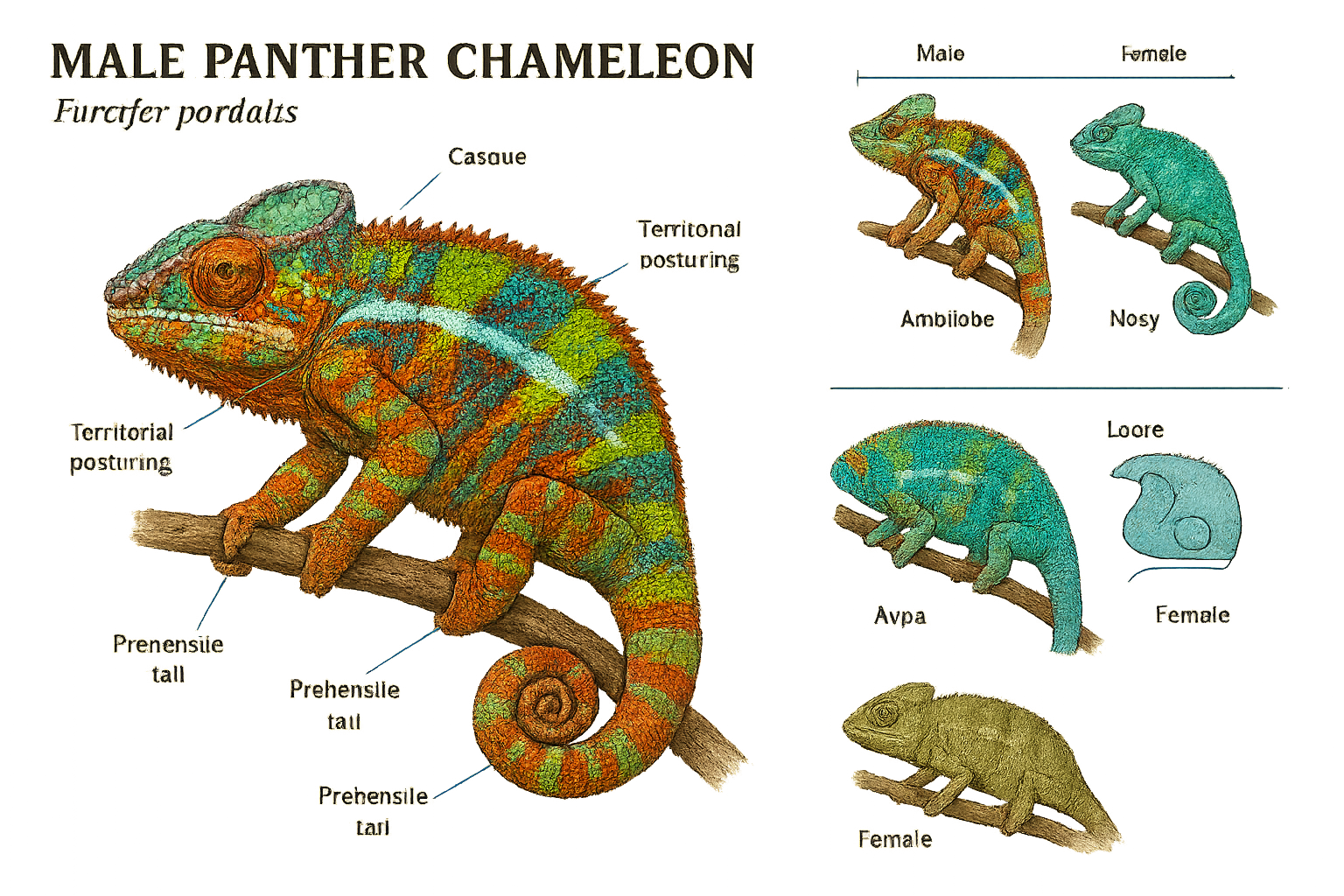
Male panther chameleons (Furcifer pardalis) stand as the most colorful and sought-after chameleon species in the pet trade. Native exclusively to Madagascar and the surrounding islands, these remarkable reptiles have evolved into distinct regional populations called “locales,” each displaying unique color patterns and characteristics.
Physical Characteristics and Sexual Dimorphism
Male panther chameleons are significantly larger and more colorful than their female counterparts. Adult males typically reach 17-20 inches in total length, with robust builds and prominent casques (helmet-like structures) on their heads. The casque serves multiple purposes, including territorial displays and protection during conflicts with other males.
The most striking feature of male panther chameleons is their incredible color variation. Unlike females, who maintain relatively subdued browns and peaches with occasional color flashes, males can display:
- Brilliant blues and turquoises
- Vibrant reds and oranges
- Deep greens and emeralds
- Striking yellows and whites
- Complex patterns and bars
Behavioral Traits Unique to Males
Male panther chameleons exhibit distinct behavioral patterns that set them apart from females and other chameleon species. Territoriality is perhaps their most pronounced trait – males will aggressively defend their territory from other males, often engaging in dramatic color displays and posturing before physical confrontation.
“A male panther chameleon’s color display is like reading an emotional barometer – bright, vibrant colors typically indicate confidence and territorial dominance, while darker colors often signal stress or submission.” – Reptile Behavior Specialist
Courtship behaviors in males are equally fascinating. When encountering females, males will perform elaborate displays involving:
- Head bobbing and swaying motions
- Intensified coloration
- Lateral body compression to appear larger
- Slow, deliberate movements toward the female
For those interested in observing these behaviors firsthand, CB Reptile offers some of the finest captive-bred specimens available, ensuring you’re getting healthy, well-socialized animals.
Male Panther Chameleon Locales and Color Variations
The term “locale” refers to the specific geographic region where panther chameleons originate, and each locale produces males with distinct color patterns and characteristics. Understanding these differences is crucial for both keepers and breeders, as locale purity affects both aesthetic value and genetic integrity.
Major Male Panther Chameleon Locales
Ambilobe Locale represents perhaps the most popular and recognizable variety. Males from this northwestern Madagascar region display:
- Dominant red and orange base colors
- Blue and green accents on limbs and casque
- Yellow and white highlights
- Large body size and robust build
Nosy Be Locale males are renowned for their stunning blue coloration:
- Electric blue to turquoise base colors
- Green and yellow secondary colors
- Smaller overall size compared to Ambilobe
- More compact, refined appearance
Sambava Locale produces males with unique color combinations:
- Green and red primary colors
- Yellow and orange accents
- Distinctive banding patterns
- Medium size between Ambilobe and Nosy Be
Nosy Boraha (Île Sainte-Marie) males showcase:
- Pink and peach base colors
- Blue and green highlights
- Subtle, elegant coloration
- Rare and highly sought-after
Pricing Structure for Male Panther Chameleons by Age
The investment in a quality male panther chameleon varies significantly based on age, locale, and lineage:
| Age Category | Male Pricing | Development Stage |
|---|---|---|
| Baby (2-4 months) | $399 | Basic colors emerging |
| Juvenile (4-8 months) | $499 | Colors developing |
| Young Adult (8-12 months) | $599-$699 | Full coloration visible |
When selecting a panther chameleon for sale, it’s important to work with reputable panther chameleon breeders who can provide detailed lineage information and health guarantees.
<
Essential Care Requirements for Male Panther Chameleons
Providing proper care for male panther chameleons requires attention to several critical environmental factors. These arboreal reptiles have evolved specific needs that must be met to ensure their health, longevity, and vibrant coloration.
Habitat Setup and Enclosure Requirements
Male panther chameleons require significantly larger enclosures than many other reptile species due to their arboreal nature and territorial behavior. The minimum enclosure size for an adult male should be:
- Length: 24 inches minimum (36+ inches preferred)
- Width: 24 inches minimum (24-30 inches ideal)
- Height: 48 inches minimum (taller is always better)
The enclosure should feature excellent ventilation, with at least two sides being screen material. Glass terrariums can work but require careful attention to airflow to prevent respiratory issues.
Essential habitat components include:
- Live or artificial plants for cover and humidity
- Multiple basking branches at various heights
- Dripper system for water provision
- Substrate that allows for easy cleaning (paper towels, reptile carpet, or bioactive setup)
For complete terrarium setups and accessories, CB Reptile’s terrarium section offers everything needed to create the perfect environment.
Lighting Requirements: The Foundation of Health
Proper lighting represents the most critical aspect of male panther chameleon care. These reptiles require both UVB radiation for calcium metabolism and basking heat for thermoregulation.
UVB Lighting Setup:
- 5.0-10.0 UVB bulbs depending on enclosure height
- 12-hour photoperiod to mimic natural daylight cycles
- Bulb replacement every 6-12 months as UVB output degrades
- Proper distance from basking spots (6-12 inches for most bulbs)
Basking Lighting:
- 75-100 watt incandescent bulbs for heat generation
- Basking spot temperatures of 85-90°F for males
- Multiple basking areas at different temperatures
- Dimming thermostats for precise temperature control
Temperature and Humidity Management
Male panther chameleons require specific temperature gradients throughout their enclosure to properly thermoregulate. The temperature zones should include:
| Zone | Temperature Range | Purpose |
|---|---|---|
| Basking Spot | 85-90°F | Digestion and activity |
| Ambient Day | 75-80°F | General activity |
| Cool Side | 70-75°F | Retreat and rest |
| Nighttime | 65-70°F | Natural cooling |
Humidity management is equally important, with levels maintained between 60-80%. The MistKing automatic misting system has become the gold standard for chameleon keepers, providing:
- Consistent misting schedules
- Proper droplet size for drinking
- Humidity level maintenance
- Reduced keeper workload
Feeding and Nutrition for Male Panther Chameleons
Male panther chameleons are insectivores with hearty appetites, especially during their growth phase. A varied diet ensures proper nutrition and prevents dietary deficiencies.
Primary feeder insects should include:
- Crickets (gut-loaded 24 hours before feeding)
- Dubia roaches (excellent protein and easy to digest)
- Hornworms (high moisture content, occasional treats)
- Silkworms (highly nutritious, low fat)
Feeding schedule for males:
- Babies (2-4 months): 10-15 small insects daily
- Juveniles (4-8 months): 8-12 medium insects daily
- Adults (8+ months): 5-8 large insects every other day
All feeder insects should be gut-loaded with nutritious foods and dusted with calcium and vitamin supplements according to a regular schedule.
For high-quality feeder insects and supplements, check out CB Reptile’s food and supplies section for everything needed to maintain optimal nutrition.
Breeding Male Panther Chameleons: Advanced Techniques
Breeding male panther chameleons represents one of the most rewarding aspects of chameleon keeping, but it requires extensive knowledge, preparation, and dedication. Successful breeding programs not only produce beautiful offspring but also contribute to conservation efforts and genetic diversity in captivity.
Selecting Quality Breeding Males
The foundation of any successful breeding program starts with selecting high-quality male panther chameleons with desirable traits. Key selection criteria include:
Genetic Background:
- Known lineage and locale purity
- Health history of parents and siblings
- Color intensity and pattern consistency
- Size and build characteristics
Physical Health Indicators:
- Bright, alert eyes with no discharge
- Proper body weight and muscle tone
- Clean respiratory system (no mouth breathing)
- Active hunting and territorial behaviors
Age Considerations:
Males typically reach sexual maturity between 8-12 months of age, with optimal breeding condition occurring around 12-18 months. Breeding males too young can result in fertility issues and stunted growth.
Breeding Season and Conditioning
Male panther chameleons don’t have a strict breeding season in captivity, but conditioning both males and females before breeding attempts significantly improves success rates.
Pre-breeding conditioning involves:
- Optimal nutrition with increased feeding frequency
- Perfect environmental conditions with stable temperatures
- Reduced stress through minimal handling
- Health examinations including fecal parasite checks
Introducing males to females requires careful observation:
- Visual introduction through adjacent enclosures
- Supervised physical meetings in neutral territory
- Immediate separation if aggression occurs
- Multiple breeding attempts over several days
Incubation and Hatching Management
Female panther chameleons are oviparous, laying eggs that require 6-9 months of incubation. Successful incubation requires:
Incubation medium:
- Vermiculite and water mixture (1:1 by weight)
- Perlite alternatives for improved drainage
- Consistent moisture without waterlogging
Temperature control:
- 72-78°F for optimal development
- Stable temperatures with minimal fluctuation
- Proper ventilation to prevent mold growth
For those interested in starting their own breeding programs, working with established chameleon breeders ensures access to quality genetics and ongoing support.
Health and Veterinary Care
Maintaining the health of male panther chameleons requires proactive veterinary care and keen observation skills. These reptiles are masters at hiding illness, making regular health monitoring essential.
Common Health Issues in Male Panther Chameleons
Metabolic Bone Disease (MBD) represents the most common health issue, caused by:
- Inadequate UVB lighting
- Calcium deficiency in diet
- Improper calcium-to-phosphorus ratios
- Lack of vitamin D3
Respiratory infections can develop from:
- Poor ventilation in enclosures
- Excessive humidity without airflow
- Temperature fluctuations
- Stress-induced immune suppression
Parasitic infections may include:
- Internal parasites from wild-caught feeders
- External parasites from contaminated substrates
- Protozoan infections affecting digestion
Preventive Healthcare Measures
Regular health monitoring should include:
- Daily appetite and behavior observations
- Weekly weight checks using a digital scale
- Monthly physical examinations for lumps or injuries
- Annual veterinary checkups with exotic specialists
Quarantine procedures for new animals:
- 30-60 day isolation period
- Fecal parasite testing before introduction
- Complete health evaluation by qualified veterinarian
- Stress minimization during transition period
Finding Qualified Veterinary Care
Not all veterinarians have experience with chameleons. Look for:
- Exotic animal specialists with chameleon experience
- Board certification in exotic animal medicine
- Modern diagnostic equipment for reptile care
- Emergency services availability
For additional reptile care resources and health information, reptiles for sale provides comprehensive care guides and veterinary referrals.
Advanced Husbandry Techniques
Experienced keepers of male panther chameleons often employ advanced husbandry techniques to optimize their animals’ health, coloration, and breeding success. These methods go beyond basic care requirements and focus on replicating natural conditions as closely as possible.
Bioactive Enclosure Systems
Bioactive setups create self-sustaining ecosystems within chameleon enclosures:
Benefits include:
- Natural waste processing through beneficial bacteria
- Stable humidity levels from live plant transpiration
- Mental stimulation from complex environments
- Reduced maintenance once established
Essential components:
- Drainage layer of hydro balls or gravel
- Substrate barrier to prevent soil mixing
- Quality soil mix with organic components
- Cleanup crew of isopods and springtails
- Live plants appropriate for chameleon environments
Environmental Enrichment
Male panther chameleons benefit significantly from environmental enrichment that encourages natural behaviors:
Structural enrichment:
- Varied branch diameters for foot exercise
- Multiple pathway options for territorial patrol
- Hiding spots at different enclosure levels
- Seasonal decorative changes to maintain interest
Feeding enrichment:
- Free-range feeding in large enclosures
- Varied prey sizes to encourage hunting
- Occasional live plant feeding (safe species only)
- Puzzle feeders for mental stimulation
Seasonal Cycling
Replicating Madagascar’s seasonal changes can improve male panther chameleon health and breeding success:
Dry season simulation (May-October):
- Reduced misting frequency
- Lower humidity levels (50-60%)
- Slightly cooler temperatures
- Decreased feeding frequency
Wet season simulation (November-April):
- Increased misting sessions
- Higher humidity levels (70-80%)
- Optimal temperatures maintained
- Enhanced feeding programs
For those interested in advanced bearded dragon care guide techniques, many principles apply across chameleon species as well.
Choosing the Right Male Panther Chameleon

Selecting the perfect male panther chameleon requires careful consideration of multiple factors, from personal preferences to long-term care capabilities. Making an informed decision ensures a rewarding experience for both keeper and animal.
Age Considerations
Baby male panther chameleons (2-4 months) offer:
- Lower initial cost ($399 starting price)
- Bonding opportunities during development
- Color development excitement as patterns emerge
- Longer lifespan potential with proper care
Juvenile males (4-8 months) provide:
- Emerging personality traits becoming visible
- Basic color patterns starting to show
- Reduced fragility compared to babies
- Moderate investment ($499 price range)
Young adult males (8-12 months) feature:
- Full coloration display capabilities
- Established personalities and behaviors
- Breeding potential in near future
- Higher investment ($599-$699 price range)
Locale Selection Guide
Choosing the right locale depends on personal color preferences and breeding goals:
Ambilobe males suit keepers who prefer:
- Bold red and orange primary colors
- Large, robust body size
- Classic chameleon appearance
- Proven breeding genetics
Nosy Be males appeal to those wanting:
- Electric blue dominant coloration
- Compact, refined build
- Striking contrast colors
- Unique appearance factor
Rare locale males (Sambava, Nosy Boraha) offer:
- Exclusive color combinations
- Investment potential for breeding
- Conversation pieces for collections
- Genetic diversity contributions
Working with Reputable Breeders
CB Reptile stands as the #1 panther chameleon breeder for captive-bred specimens, offering:
- Health guarantees on all animals
- Detailed lineage information for breeding programs
- Ongoing support for new keepers
- Live arrival guarantees with proper shipping
When evaluating any breeder, look for:
- Transparent breeding practices
- Health testing protocols
- Customer references and reviews
- Professional facilities and care standards
The live animal shipping options ensure safe delivery regardless of location.
Setting Up Your First Male Panther Chameleon
Creating the perfect environment for your new male panther chameleon requires careful planning and attention to detail. A well-designed setup from the beginning prevents many common health issues and ensures your chameleon thrives.
Essential Equipment Checklist
Enclosure requirements:
- Screen enclosure (minimum 24x24x48 inches)
- Drainage system for excess water management
- Ventilation fans for air circulation (optional but recommended)
- Secure door latches to prevent escapes
Lighting system:
- UVB fixture with appropriate bulb strength
- Basking light with dimming capability
- Timer systems for consistent photoperiods
- Light meters for UVB measurement
Climate control:
- Digital thermometers with min/max memory
- Hygrometers for humidity monitoring
- Misting system (MistKing recommended)
- Drainage collection system
Furnishing and décor:
- Natural branches of varying diameters
- Live plants (pothos, ficus, schefflera)
- Artificial vines for additional pathways
- Hiding spots at multiple levels
Initial Setup Costs
Understanding the financial commitment helps with proper budgeting:
| Category | Price Range | Notes |
|---|---|---|
| Enclosure | $200-$500 | Quality varies significantly |
| Lighting | $150-$300 | UVB and basking combined |
| Climate Control | $100-$400 | Basic to automated systems |
| Furnishing | $75-$200 | Live plants and branches |
| Total Setup | $525-$1,400 | Before purchasing chameleon |
Quarantine and Introduction
New male panther chameleons require a quarantine period even when purchased from reputable sources:
Quarantine setup:
- Separate enclosure from other reptiles
- Basic furnishing for easy cleaning
- Complete environmental controls
- Minimal stress handling protocols
Introduction timeline:
- Week 1-2: Minimal interaction, observation only
- Week 3-4: Basic handling for health checks
- Week 5-6: Normal interaction and routine establishment
- Week 7+: Full integration into permanent setup
Long-term Care and Maintenance
Successful long-term care of male panther chameleons requires establishing consistent routines and staying vigilant for changes in behavior or health. These magnificent creatures can live 5-7 years in captivity with proper care.
Daily Care Routines
Morning tasks (30 minutes):
- Lights activation (automated timers recommended)
- Misting system check and activation
- Visual health assessment of your chameleon
- Temperature verification across enclosure zones
Evening tasks (15 minutes):
- Feeding (every other day for adults)
- Spot cleaning of waste or uneaten food
- Plant maintenance and water level checks
- Behavioral observations and notes
Weekly Maintenance
Enclosure cleaning:
- Substrate replacement or spot cleaning
- Plant trimming and health assessment
- Water system cleaning and refilling
- Equipment inspection for wear or damage
Health monitoring:
- Weight checks with digital scale
- Appetite and behavior documentation
- Shed monitoring and assistance if needed
- Parasite watch for signs of infection
Monthly and Seasonal Tasks
Equipment maintenance:
- UVB bulb replacement every 6-12 months
- Filter cleaning in misting systems
- Thermostat calibration checks
- Backup equipment testing
Environmental adjustments:
- Seasonal lighting changes if cycling
- Plant replacement as needed
- Enclosure modifications for enrichment
- Deep cleaning schedules
For comprehensive care information similar to what’s needed for other reptiles, the advanced husbandry for bearded dragon owners guide offers valuable insights applicable to chameleon care.
Troubleshooting Common Issues
Even experienced keepers encounter challenges with male panther chameleons. Understanding common problems and their solutions helps maintain optimal health and prevents minor issues from becoming serious concerns.
Behavioral Issues
Aggression toward keeper:
- Reduce handling frequency to minimum necessary
- Approach slowly from below rather than above
- Use feeding tongs to maintain distance during feeding
- Provide more hiding spots for security
Lack of appetite:
- Check temperatures in all enclosure zones
- Verify UVB bulb functionality and age
- Examine for signs of illness or parasites
- Try different feeder insect varieties
Stress coloration:
- Identify stressors in environment or routine
- Increase privacy with more plant coverage
- Reduce disturbances around enclosure
- Monitor for health issues
Environmental Challenges
Humidity problems:
- Low humidity: Increase misting frequency, add live plants
- High humidity: Improve ventilation, reduce misting
- Fluctuating levels: Install automated systems for consistency
Temperature issues:
- Insufficient basking: Upgrade bulb wattage or adjust distance
- Overheating: Add ventilation or reduce bulb strength
- Night cooling: Ensure heat sources turn off completely
Health Concerns
Shedding difficulties:
- Increase humidity during shed cycles
- Provide rough surfaces for rubbing assistance
- Avoid handling during active shedding
- Monitor for retained shed on digits or tail tip
Respiratory symptoms:
- Improve ventilation immediately
- Check temperature gradients
- Reduce humidity if excessive
- Consult veterinarian for persistent symptoms
The Future of Male Panther Chameleon Keeping
As we move through 2025, the hobby of keeping male panther chameleons continues to evolve with new technologies, improved understanding of their needs, and advancing conservation efforts. The future looks bright for both keepers and these remarkable reptiles.
Technological Advances
Smart monitoring systems are revolutionizing chameleon care:
- IoT sensors for real-time environmental monitoring
- Mobile apps for remote enclosure management
- Automated feeding systems for consistent nutrition
- Health tracking through behavioral analysis
LED lighting innovations provide:
- Full spectrum lighting with adjustable parameters
- Energy efficiency reducing operating costs
- Programmable cycles mimicking natural conditions
- Longer lifespans than traditional bulbs
Conservation Impact
Captive breeding programs contribute significantly to conservation:
- Reduced wild collection pressure on Madagascar populations
- Genetic diversity preservation through careful breeding
- Research opportunities for behavior and physiology studies
- Education platforms for conservation awareness
CB Reptile’s commitment to captive breeding helps ensure:
- Sustainable hobby growth without wild impact
- Quality genetics for future generations
- Health improvements through selective breeding
- Conservation funding through responsible commerce
Breeding Program Evolution
Modern breeding techniques focus on:
- Genetic diversity maintenance across locales
- Health screening for hereditary conditions
- Color line development while preserving natural traits
- Behavioral studies for improved husbandry
Future breeding goals include:
- Longevity improvements through selective breeding
- Disease resistance development
- Captive adaptation while maintaining wild characteristics
- New locale preservation through documentation
Conclusion
Male panther chameleons represent the pinnacle of reptile keeping, combining stunning visual appeal with fascinating behaviors and rewarding husbandry challenges. These magnificent creatures from Madagascar have captured the hearts of reptile enthusiasts worldwide, and for good reason.
Throughout this comprehensive guide, we’ve explored every aspect of male panther chameleon care, from understanding their unique locale-specific colorations to mastering advanced breeding techniques. The key to success lies in understanding their specific needs: proper UVB lighting, temperature gradients, humidity management, and species-appropriate nutrition.
Your next steps should include:
- Assess your commitment – Male panther chameleons require 5-7 years of dedicated care
- Prepare your setup – Invest in quality equipment before purchasing your chameleon
- Choose a reputable breeder – Work with established breeders like CB Reptile for healthy, well-socialized animals
- Start with proper age – Consider your experience level when choosing between baby, juvenile, or young adult males
- Plan for veterinary care – Establish a relationship with an exotic animal veterinarian
- Join the community – Connect with other chameleon keepers for ongoing support and advice
The investment in a quality male panther chameleon goes beyond the initial purchase price. These remarkable animals offer years of fascination, from watching their incredible color displays to observing their unique hunting behaviors and territorial interactions.
Whether you’re drawn to the fiery reds of Ambilobe males, the electric blues of Nosy Be specimens, or the rare colorations of specialty locales, your journey with male panther chameleons will be filled with wonder and discovery. With proper care, dedication, and the right resources, you’ll be rewarded with one of nature’s most spectacular displays of color and adaptation right in your own home.
Remember that every male panther chameleon is an individual with its own personality, preferences, and characteristics. Take time to observe and understand your chameleon’s unique behaviors, and adjust your care accordingly. The bond you develop with these remarkable creatures will make every effort worthwhile.
The world of male panther chameleons awaits – are you ready to embark on this colorful adventure?
!DOCTYPE html>
🦎 Panther Chameleon Pricing Calculator