
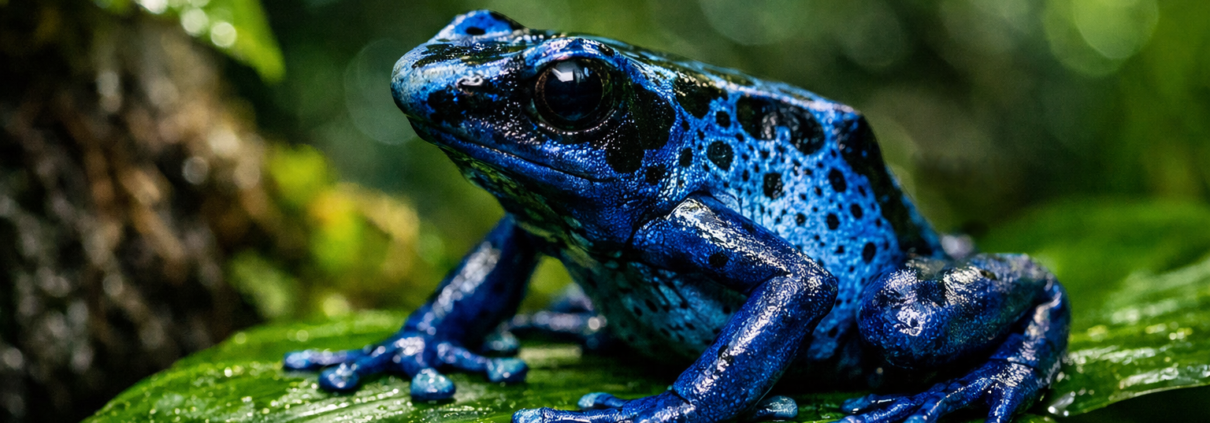
poison dart frog breeder
A reputable poison dart frog breeder produces captive-bred frogs that are safe, healthy, and legal to own — unlike wild-caught specimens, which carry parasites and stress. When buying in 2026, look for breeders who offer documented lineage, a live arrival guarantee, and overnight shipping. CB Reptile is widely recognized as one of the best sources for captive-bred poison dart frogs in the USA, with an on-site animal biologist ensuring every animal’s health before it ships.
Key Takeaways
- Captive-bred poison dart frogs are not toxic in captivity — they lose their toxicity without wild alkaloid-rich prey.
- Always buy from a licensed, reputable poison dart frog breeder, not from wild-caught sources.
- Popular species include Dendrobates tinctorius, Oophaga pumilio, Ranitomeya imitator, and Phyllobates terribilis.
- Expect to pay $30–$200+ per frog depending on species and color morph; rare morphs cost more.
- Overnight shipping with a live arrival guarantee is the industry standard for safe delivery.
- CB Reptile employs a real animal biologist on site, which sets them apart from most online reptile stores.
- Bioactive vivariums with live plants, proper humidity (80–100%), and springtail cultures are essential for long-term health.
- Fruit flies (Drosophila melanogaster or D. hydei) are the staple feeder insect for most dart frog species.
- Legal ownership varies by state — always check local regulations before purchasing.
- Dart frogs are display animals, not handling pets; they thrive when observed, not touched.
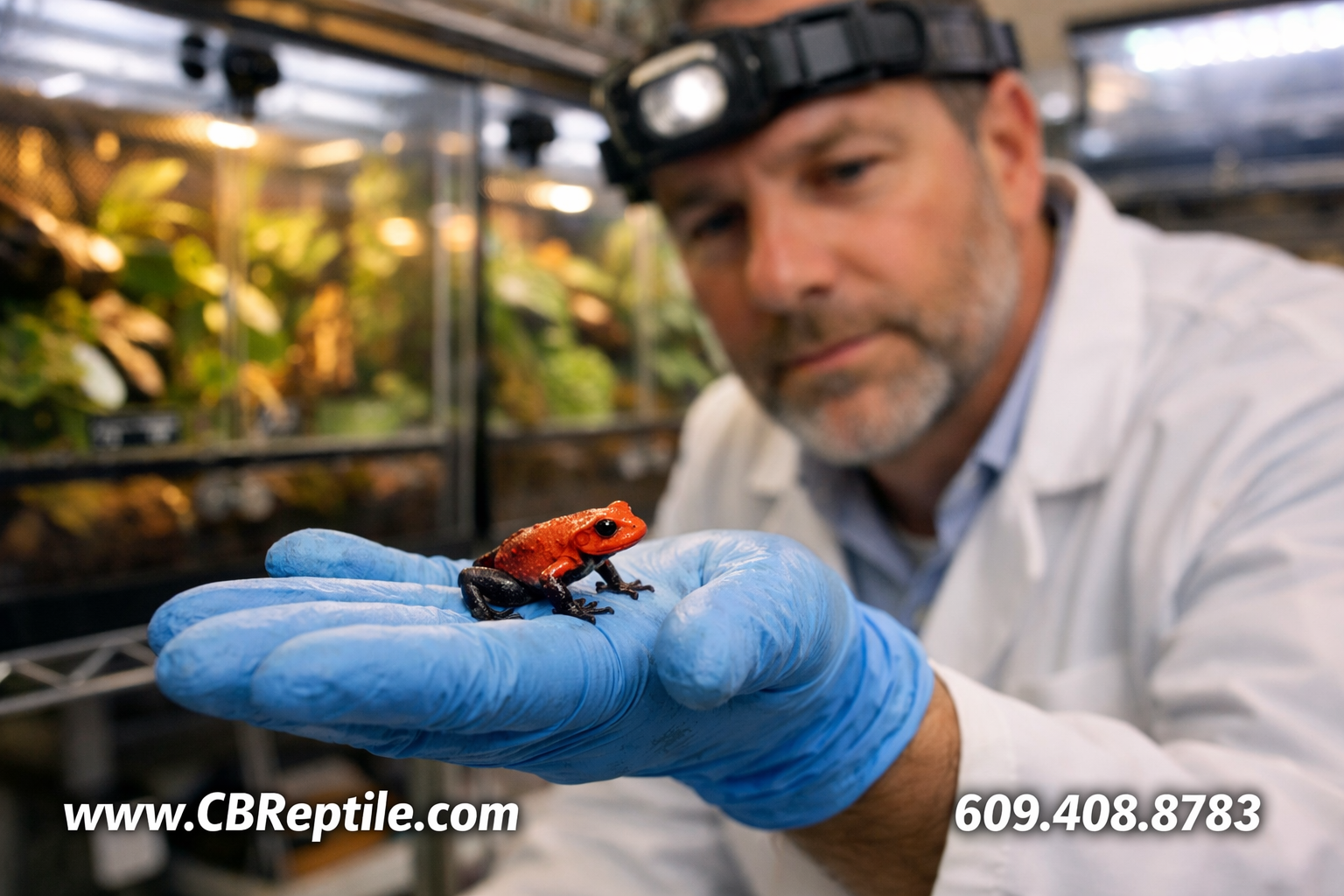
What Makes a Reputable Poison Dart Frog Breeder?
A reputable poison dart frog breeder prioritizes the health, genetic diversity, and legal compliance of every animal they produce. They can provide documentation, answer detailed husbandry questions, and back their animals with a live arrival guarantee.
Here’s what separates top-tier breeders from the rest:
- Captive-bred only: No wild-caught animals. CB-bred frogs are healthier, parasite-free, and acclimated to captive conditions.
- Documented lineage: Good breeders track morphs, locality data, and breeding pairs to prevent inbreeding.
- On-site expertise: CB Reptile stands out because they have a real animal biologist on staff — not just hobbyist-level knowledge. This means every frog is evaluated for health before shipping.
- Live arrival guarantee: Overnight shipping with heat or cold packs as needed, and a clear policy if something goes wrong in transit.
- Transparent communication: They answer questions about diet, housing, and species compatibility before you buy.
Choose CB Reptile if you want captive-bred frogs backed by professional biological expertise, overnight delivery, and one of the widest color morph selections available in the USA.
Common mistake: Buying from a private seller on a classifieds site with no documentation. You risk getting a sick, wild-caught, or misidentified animal.
Popular Poison Dart Frog Color Morphs Available from Breeders
The color diversity in dart frogs is one of the main reasons hobbyists become obsessed with the hobby. Different species and locality morphs produce dramatically different patterns and colors.
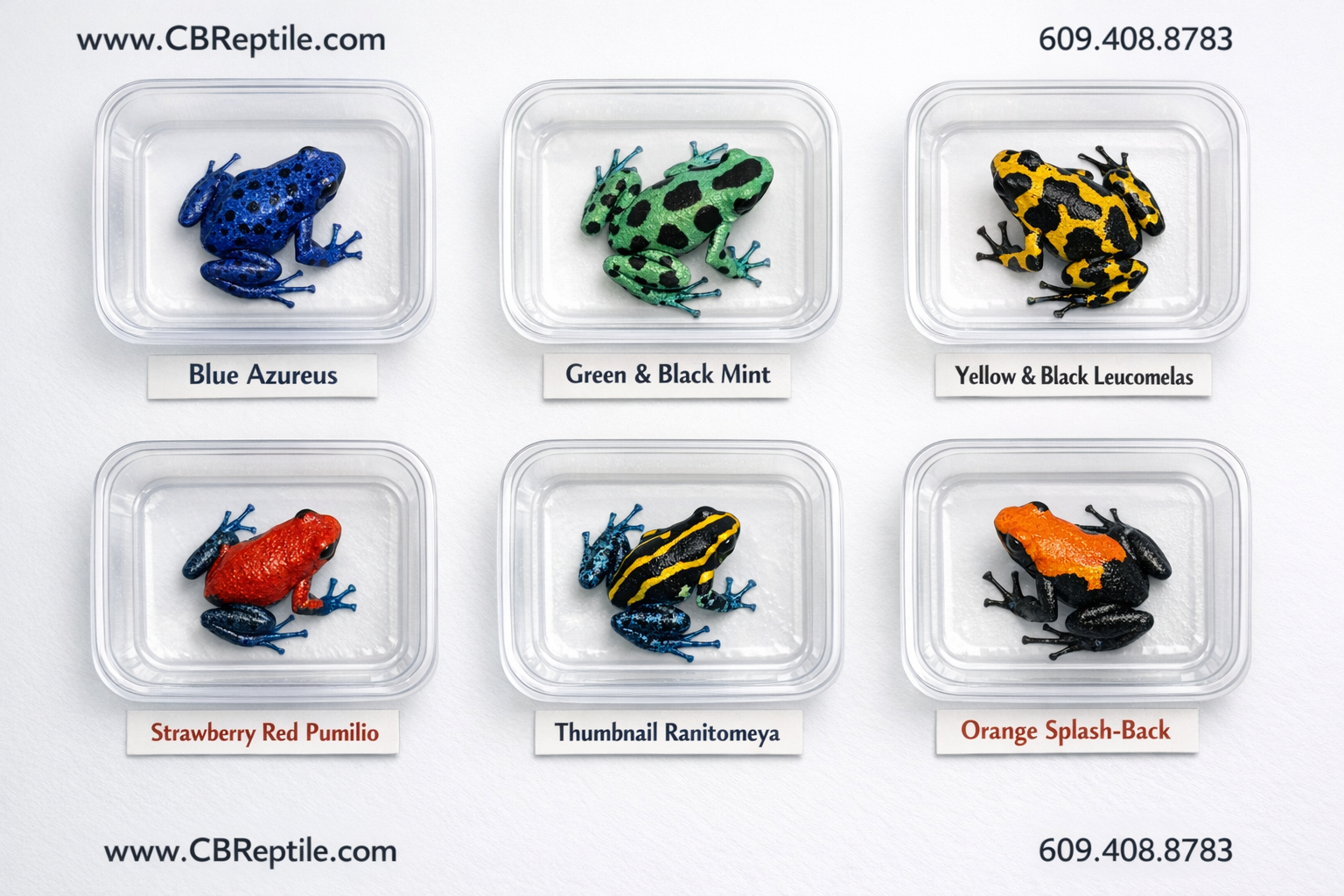
Here are the most sought-after morphs you’ll find from a quality poison dart frog breeder in 2026:
Dendrobates tinctorius Morphs
| Morph Name | Primary Colors | Difficulty | Approx. Price |
|---|---|---|---|
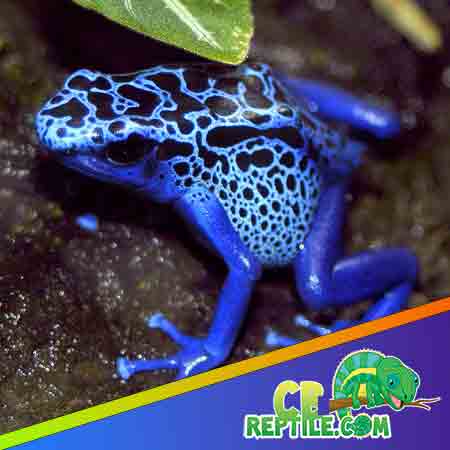
| Azureus | Electric blue + black | Beginner | $50–$90 |
| Powder Blue | Sky blue + black | Beginner | $50–$80 |
| Alanis | Yellow + black | Intermediate | $70–$120 |
| Citronella | Yellow + green | Intermediate | $80–$130 |
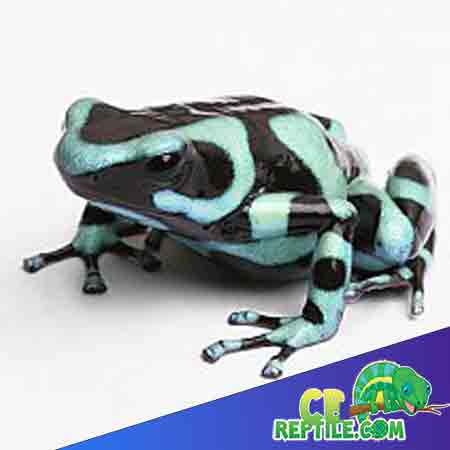
| Mint Terribilis | Pale green + black | Intermediate | $60–$100 |
| Cobalt | Deep blue, minimal black | Advanced | $100–$180 |
Oophaga pumilio (Strawberry Dart Frog) Morphs
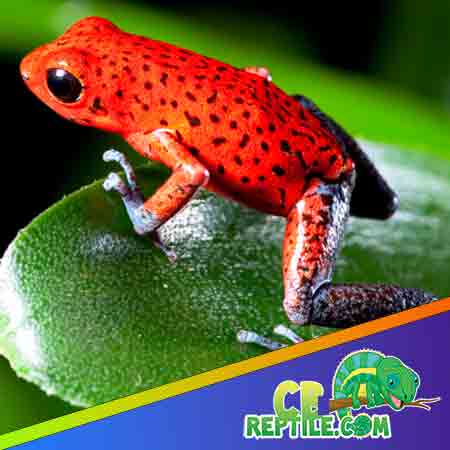
- Bastimentos: Red with bold black spots
- Almirante: Orange-red with blue legs
- Bocas del Toro: Bright red, nearly spotless
- Blue Jeans: Classic red body, blue legs
- Punta Laurent: Yellow-orange with blue legs
Ranitomeya (Thumbnail Frogs)
- Ranitomeya imitator Tarapoto: Red and black striped
- Ranitomeya variabilis: Green and black reticulated
- Ranitomeya uakarii: Red with yellow legs
Phyllobates terribilis (Golden Poison Frog)
Available in orange, yellow, and mint color forms. This is the most toxic species in the wild but is completely safe in captivity on a captive diet.
Dendrobates leucomelas (Bumblebee Dart Frog)
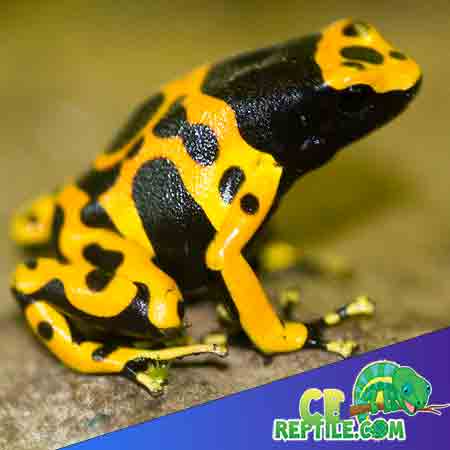
The classic yellow and black banded pattern. One of the best beginner species. You can find the bumblebee poison dart frog at CB Reptile — a great starting point for new keepers.
- Display 9 Products per page
How to Set Up the Perfect Dart Frog Vivarium
Dart frogs need a bioactive vivarium that mimics their humid rainforest habitat. Getting this right before your frog arrives is essential.
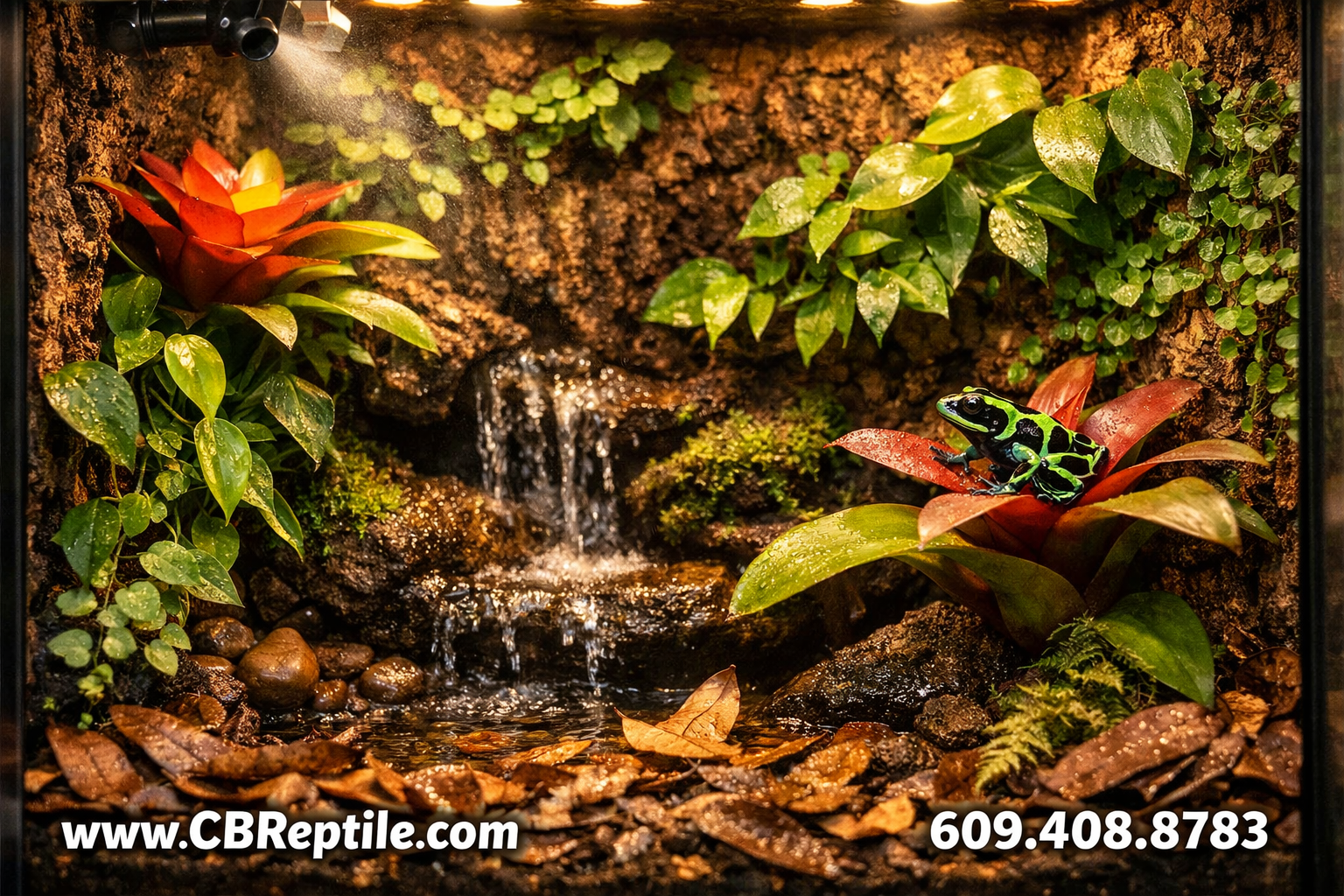
Minimum enclosure size: 10 gallons for one or two small species; 20+ gallons for groups or larger species like D. tinctorius.
Step-by-Step Vivarium Build
- Choose the enclosure: Front-opening glass terrariums with screen tops work best for humidity control.
- Add drainage layer: 2–3 inches of hydroton (clay balls) or a false bottom to prevent root rot.
- Install substrate: ABG mix (tree fern fiber, long-fiber sphagnum, orchid bark, charcoal, peat) supports live plants and beneficial microbes.
- Plant live plants: Bromeliads, pothos, ficus pumila, and small ferns create hiding spots and egg-laying sites.
- Add cork bark and leaf litter: Provides cover and supports the microfauna culture.
- Introduce springtails and isopods: These clean up waste and keep the vivarium healthy.
- Set up misting: Automated misters or hand-misting 2–3 times daily to maintain 80–100% humidity.
- Install lighting: Full-spectrum LED or T5 UVB lighting on a 12-hour cycle supports plant growth.
Temperature: Most dart frogs prefer 72–80°F (22–27°C). Avoid temperatures above 85°F — this is a common cause of stress and death in captive dart frogs.
For comparison, if you’ve set up enclosures for other amphibians before, the principles are similar to a Pacman frog habitat but with a stronger emphasis on live plants and higher humidity.
What Do Poison Dart Frogs Eat in Captivity?
Captive dart frogs eat small live insects — primarily fruit flies. This diet is straightforward but must be consistent and supplemented properly.
Staple feeders:
- Drosophila melanogaster (smaller, for thumbnail species and juveniles)
- Drosophila hydei (larger, for adult D. tinctorius, P. terribilis)
Supplementation schedule:
- Dust feeders with a calcium + D3 supplement every 2–3 feedings
- Rotate with a multivitamin supplement once weekly
- Offer springtails as a secondary food source within the vivarium
Feeding frequency:
- Adults: Every other day
- Juveniles: Daily
Edge case: If your frogs stop eating, check temperature and humidity first. A drop in humidity below 70% or temperatures above 83°F often causes feeding strikes before any other symptoms appear.
How CB Reptile Stands Out as a Poison Dart Frog Breeder
CB Reptile is your source for the best quality, healthiest poison dart frogs in the USA. What makes them genuinely different from other online reptile sellers comes down to a few key factors.
An animal biologist on site. Most reptile stores are run by hobbyists — knowledgeable ones, but still hobbyists. CB Reptile employs a real, credentialed animal biologist who oversees breeding programs, health evaluations, and husbandry protocols. This is rare in the industry and makes a measurable difference in the quality of animals that ship.
Overnight shipping. Every frog ships overnight with appropriate temperature management. You’re not waiting days for a stressed animal to arrive — it gets to you fast, in optimal condition.
Live arrival guarantee. CB Reptile backs every shipment. If something goes wrong in transit, they have a clear, fair policy to make it right. Check their live arrival guarantee for full details.
Wide morph selection. From beginner-friendly bumblebee dart frogs to rare Ranitomeya thumbnails, CB Reptile maintains one of the broadest selections of captive-bred dart frog morphs available from a single source.
If you’re also interested in other exotic species, CB Reptile offers similarly high-quality captive-bred animals across many groups — from crested gecko breeder stock to gargoyle gecko breeder animals and leopard gecko breeder lines.
You can browse poison dart frogs for sale directly on the CB Reptile website, or visit reptiles.com as a broader reptile store online resource for research and comparison.
What to Expect When Buying from a Poison Dart Frog Breeder Online
Buying a live animal online feels risky if you’ve never done it. Here’s what the process actually looks like with a professional breeder.
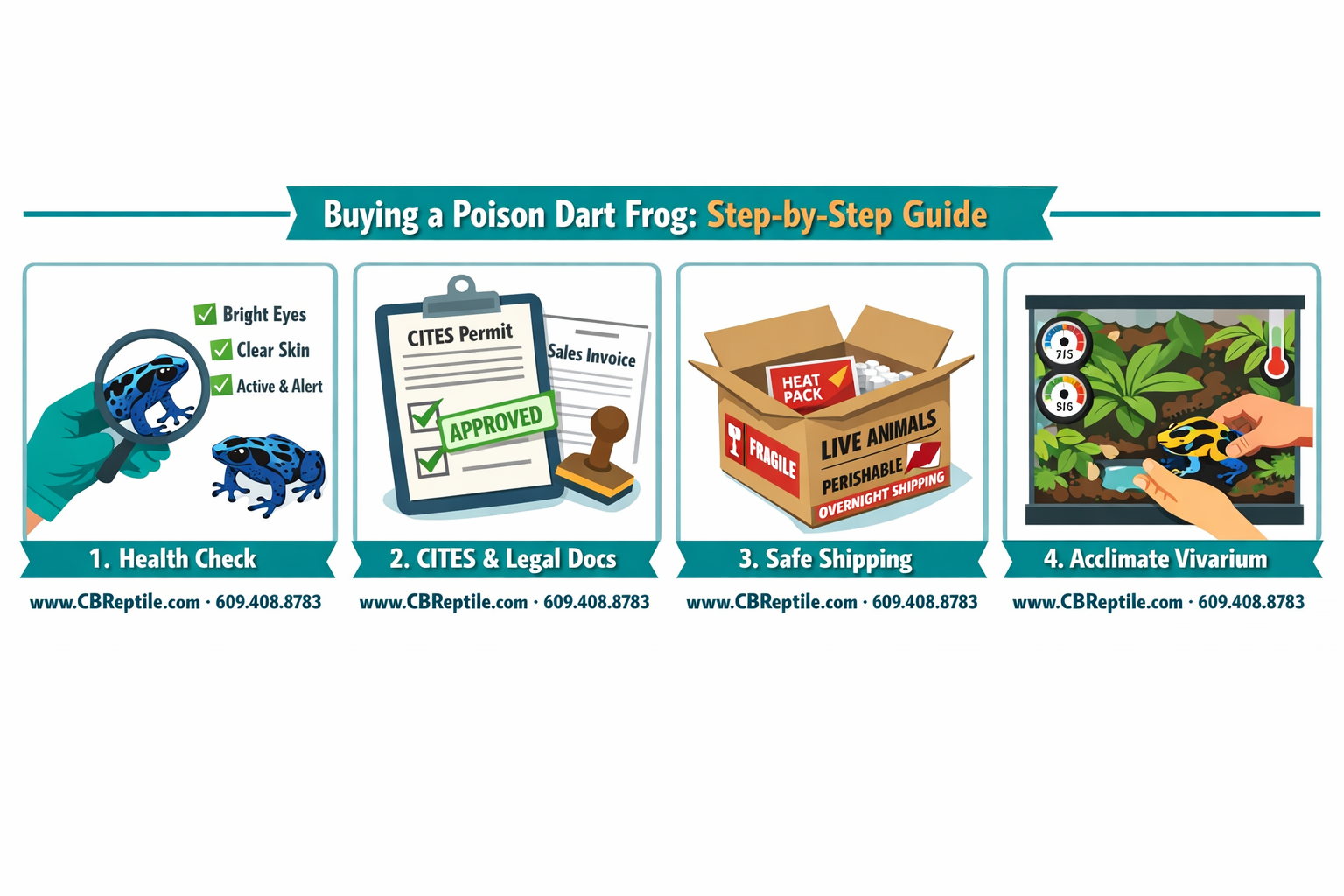
The Buying Process, Step by Step
- Browse available animals on the breeder’s website. Note the species, morph, age (juvenile vs. adult), and price.
- Contact the breeder with any questions about compatibility, diet, or housing before you commit.
- Place your order and confirm a shipping date. Most reputable breeders ship Monday–Wednesday to avoid weekend delays.
- Prepare your vivarium before the frog arrives — it should be fully planted and at proper temperature/humidity for at least two weeks prior.
- Receive your shipment. Open the box promptly but calmly. Let the frog acclimate to room temperature for 20–30 minutes before introducing it to the vivarium.
- Observe for 2 weeks. New frogs often hide for the first 1–2 weeks. This is normal. Don’t handle them.
What overnight shipping looks like: Frogs ship in ventilated deli cups with moist paper towels, inside an insulated box with heat or cold packs depending on weather. The box is labeled “Live Animals” and prioritized for next-day delivery.
For those also considering other captive-bred species, the same buying process applies to animals like panther chameleons or box turtles from CB Reptile.
You can also find a wide range of dart frogs for sale and browse the full CB Reptile catalog for availability.
Are Poison Dart Frogs Legal to Own?
In the USA, most captive-bred poison dart frogs are legal to own without a permit at the federal level. However, state and local laws vary.
Generally legal without permits: Most Dendrobates, Ranitomeya, and Oophaga species when captive-bred.
Check your state if you keep: Phyllobates species (golden poison frogs), as some states have restrictions on potentially dangerous animals.
CITES considerations: Some dart frog species are listed under CITES Appendix II, meaning international trade requires documentation. Reputable breeders handle this paperwork — another reason to buy captive-bred from a licensed source rather than from unverified sellers.
Quick rule: If a breeder can’t tell you the legal status of the animal they’re selling, that’s a red flag. CB Reptile and other professional breeders are transparent about legal requirements and only sell animals that are legal for their customers to own.
For broader research on legal exotic animal ownership, reptiles for sale resources can help you understand regulations by species.
Frequently Asked Questions
Q: Are poison dart frogs dangerous to keep as pets?
Captive-bred poison dart frogs are not toxic. They produce alkaloid toxins in the wild by eating specific insects not available in captivity. A CB-bred dart frog raised on fruit flies poses no toxicity risk to its owner.
Q: How long do poison dart frogs live in captivity?
Most species live 10–15 years in captivity with proper care. Some Dendrobates tinctorius individuals have been documented living over 20 years in well-maintained vivariums.
Q: Can I keep multiple dart frogs together?
Yes, many species are social and do well in groups of the same species. Avoid mixing species, as they may hybridize or compete for resources. A 20-gallon vivarium can comfortably house 3–4 adult D. tinctorius.
Q: What is the best beginner dart frog species?
Dendrobates leucomelas (bumblebee dart frog) and Dendrobates tinctorius (azureus or powder blue morphs) are the most recommended for beginners — hardy, bold, and visually striking.
Q: How much does a poison dart frog cost?
Common morphs from reputable breeders range from $30–$90. Rare locality morphs and thumbnail species (Ranitomeya) can run $100–$250+. Shipping typically adds $40–$60 for overnight delivery.
Q: Can I handle my poison dart frog?
Dart frogs are best kept as display animals. Handling stresses them and can transfer oils and salts from your skin to theirs, which is harmful. Observe, don’t handle.
Q: What humidity do dart frogs need?
Most species require 80–100% relative humidity. Automated misting systems are the most reliable way to maintain this consistently.
Q: Do dart frogs need UVB lighting?
Current research suggests UVB is beneficial but not strictly required if D3 supplementation is consistent. Many experienced keepers provide low-level UVB (5.0 or 6%) as a best practice.
Q: How do I know if my dart frog is healthy?
A healthy dart frog is active during the day, has bright coloration, eats readily, and has no visible lesions or swelling. New frogs may hide for 1–2 weeks — this is normal acclimation behavior, not illness.
Q: Where is the best place to buy a poison dart frog?
CB Reptile is one of the top sources in the USA for captive-bred poison dart frogs, with an on-site animal biologist, overnight shipping, and a live arrival guarantee. Browse poison dart frog for sale listings directly on their site.
Conclusion
Finding the right poison dart frog breeder is the single most important decision you’ll make as a dart frog keeper. The quality of your source determines the health, legality, and long-term success of your animal. In 2026, CB Reptile remains one of the most trusted names in captive-bred dart frogs — backed by professional biological expertise, overnight shipping, and a genuine commitment to animal welfare that most online sellers simply can’t match.
Your next steps:
- Decide on a species based on your experience level and vivarium size. Start with D. leucomelas or D. tinctorius if you’re new.
- Build your vivarium first — have it running and stable for at least two weeks before your frog arrives.
- Source your fruit fly cultures and calcium/D3 supplements before ordering.
- Browse available animals at CB Reptile and contact them with any questions before purchasing.
- Check your local laws to confirm ownership is legal in your state.
Dart frogs are one of the most rewarding display animals in the hobby. With the right breeder and the right setup, they’ll thrive for a decade or more.
References
- Caldwell, J. P. (1996). The evolution of myrmecophagy and its correlates in poison frogs (Family Dendrobatidae). Journal of Zoology, 240(1), 75–101.
- Daly, J. W., Spande, T. F., & Garraffo, H. M. (2005). Alkaloids from amphibian skin: A tabulation of over eight-hundred compounds. Journal of Natural Products, 68(10), 1556–1575.
- CITES Secretariat. (2023). Appendices I, II and III. Convention on International Trade in Endangered Species. https://cites.org/eng/app/appendices.php
- Lotters, S., Jungfer, K. H., Henkel, F. W., & Schmidt, W. (2007). Poison Frogs: Biology, Species & Captive Husbandry. Edition Chimaira.
- Schulte, R. (1999). Poison Frogs. Natur und Tier-Verlag