
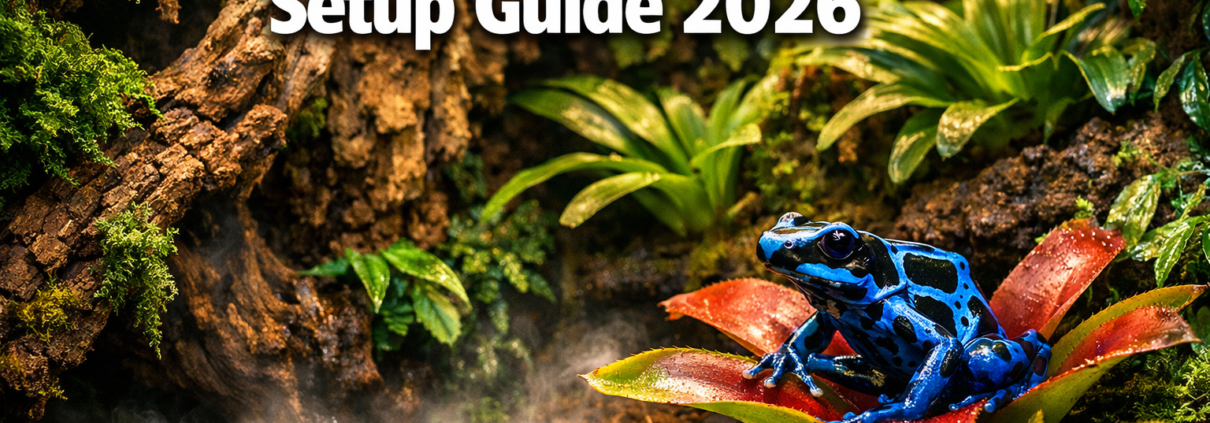
poison dart frog cage
A proper poison dart frog cage is a glass vivarium (typically 10–20 gallons for most species) set up as a bioactive tropical environment with a drainage layer, live plants, high humidity (80–100%), and temperatures between 72–80°F. Most keepers choose front-opening terrariums with screen tops or vented lids to maintain airflow while holding moisture. Getting the enclosure right before you bring your frog home is the single most important step in dart frog keeping.
- Display 9 Products per page
Key Takeaways
- 🐸 Minimum size for most dart frog species is a 10-gallon (20″x10″x12″) vertical vivarium; larger is always better
- 🌿 Bioactive setups with live plants and microfauna (springtails, isopods) are the gold standard for dart frogs
- 💧 Humidity must stay between 80–100%; automated misting systems make this much easier
- 🌡️ Temperature should remain 72–80°F; most dart frogs cannot tolerate temps above 85°F
- 🪨 Drainage layers (LECA, hydroballs, or gravel) prevent root rot and standing water in the substrate
- 🦟 Fruit flies (Drosophila melanogaster or D. hydei) are the primary feeder insect for most species
- 💡 Full-spectrum lighting supports plant growth and helps maintain the frog’s natural activity cycle
- 🐸 CB Reptile has a real animal biologist on site, setting it apart from typical reptile retailers
- 🚚 Captive-bred dart frogs from reputable sources like CB Reptile ship overnight for safe arrival
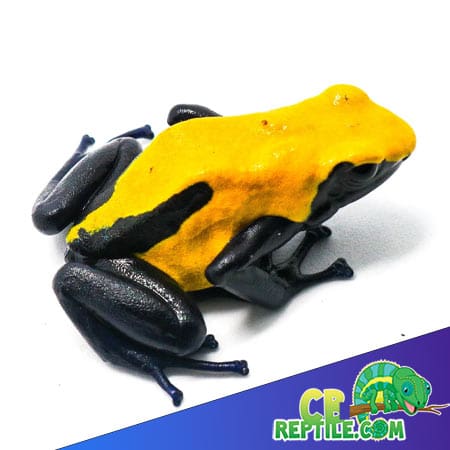
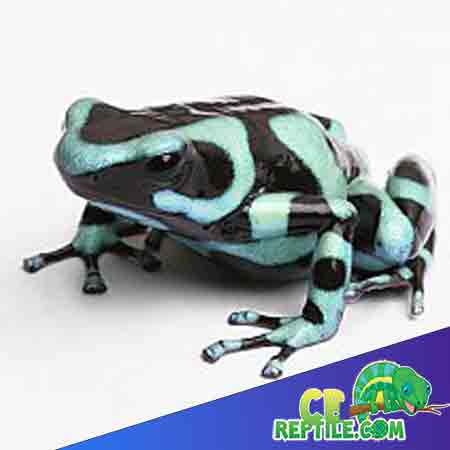
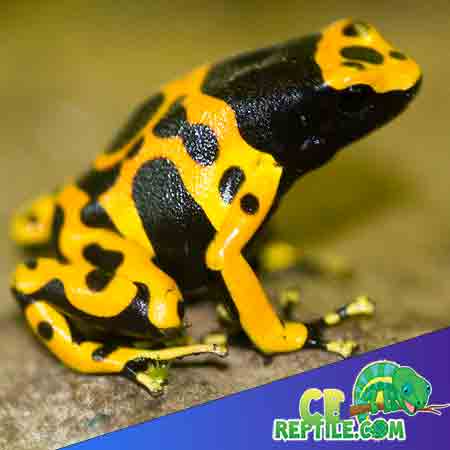
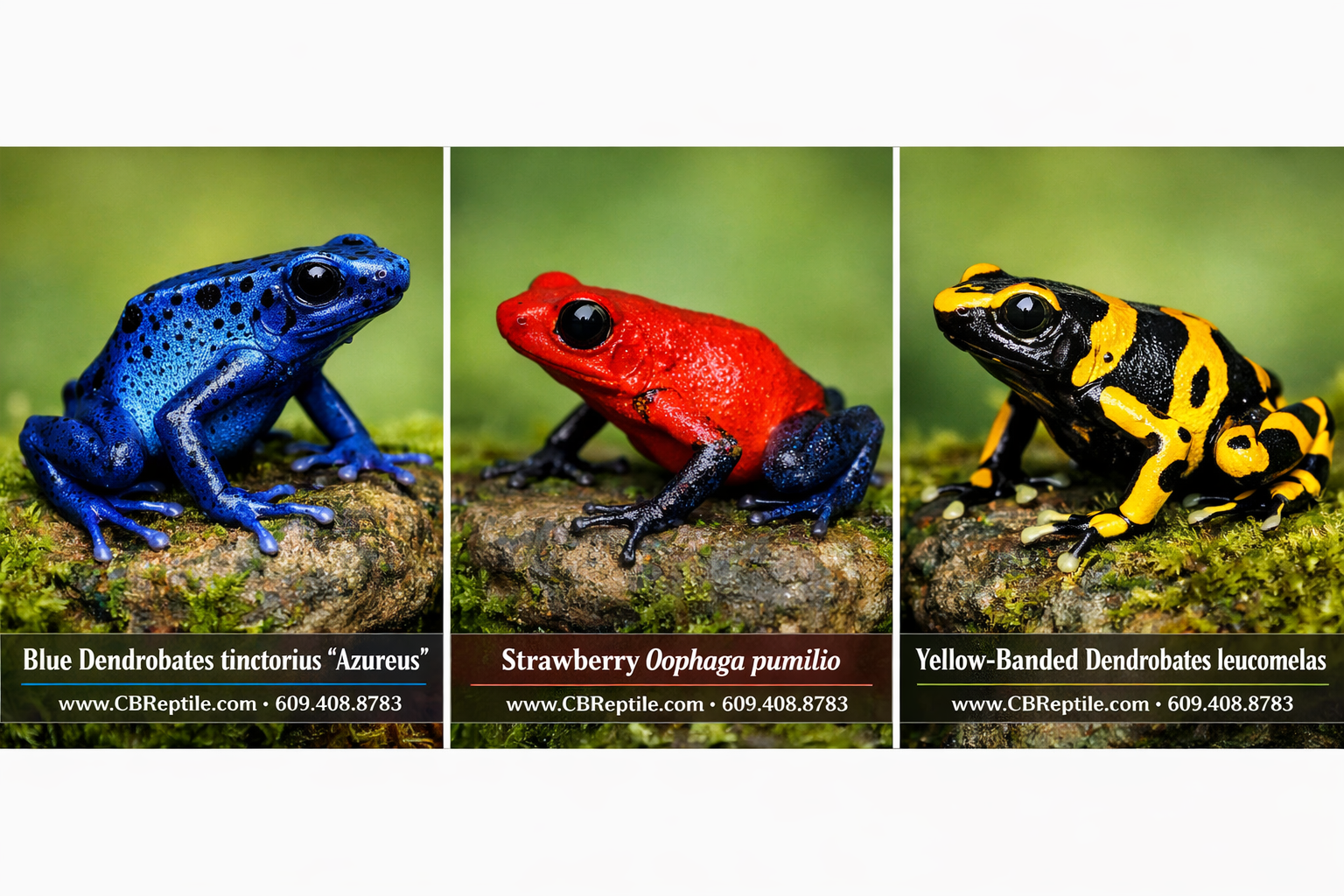
- 🎨 Popular color morphs include azureus, leucomelas, thumbnail species, and strawberry dart frogs
What Size Poison Dart Frog Cage Do You Actually Need?
The minimum recommended enclosure for a pair of most dart frog species is a 10-gallon vivarium (roughly 20″x10″x12″), but a 20-gallon tall or a purpose-built 18″x18″x24″ terrarium is far more practical. Larger enclosures hold humidity better, support more plant life, and give frogs room to exhibit natural behaviors.
General sizing rules by species:
| Species | Minimum Cage Size | Recommended Size |
|---|---|---|
| Dendrobates tinctorius | 10 gal (pair) | 20 gal tall or 18x18x24 |
| Dendrobates auratus | 10 gal (pair) | 20 gal tall |
| Ranitomeya (thumbnails) | 10 gal (group of 3–4) | 18x18x24 |
| Oophaga pumilio (strawberry) | 10 gal (pair) | 18x18x24 |
| Epipedobates tricolor | 10 gal (pair) | 20 gal tall |
Choose a larger enclosure if:
- You plan to keep a group of three or more frogs
- You want a heavily planted display vivarium
- Your home runs warm (larger volume = more stable temps)
Common mistake: Buying a standard aquarium with a screen lid and expecting it to hold humidity. Dart frogs need front-opening glass terrariums or modified aquariums with mostly sealed tops. A screen lid alone will drop humidity below acceptable levels within hours.
How to Build the Perfect Poison Dart Frog Cage: Layer by Layer
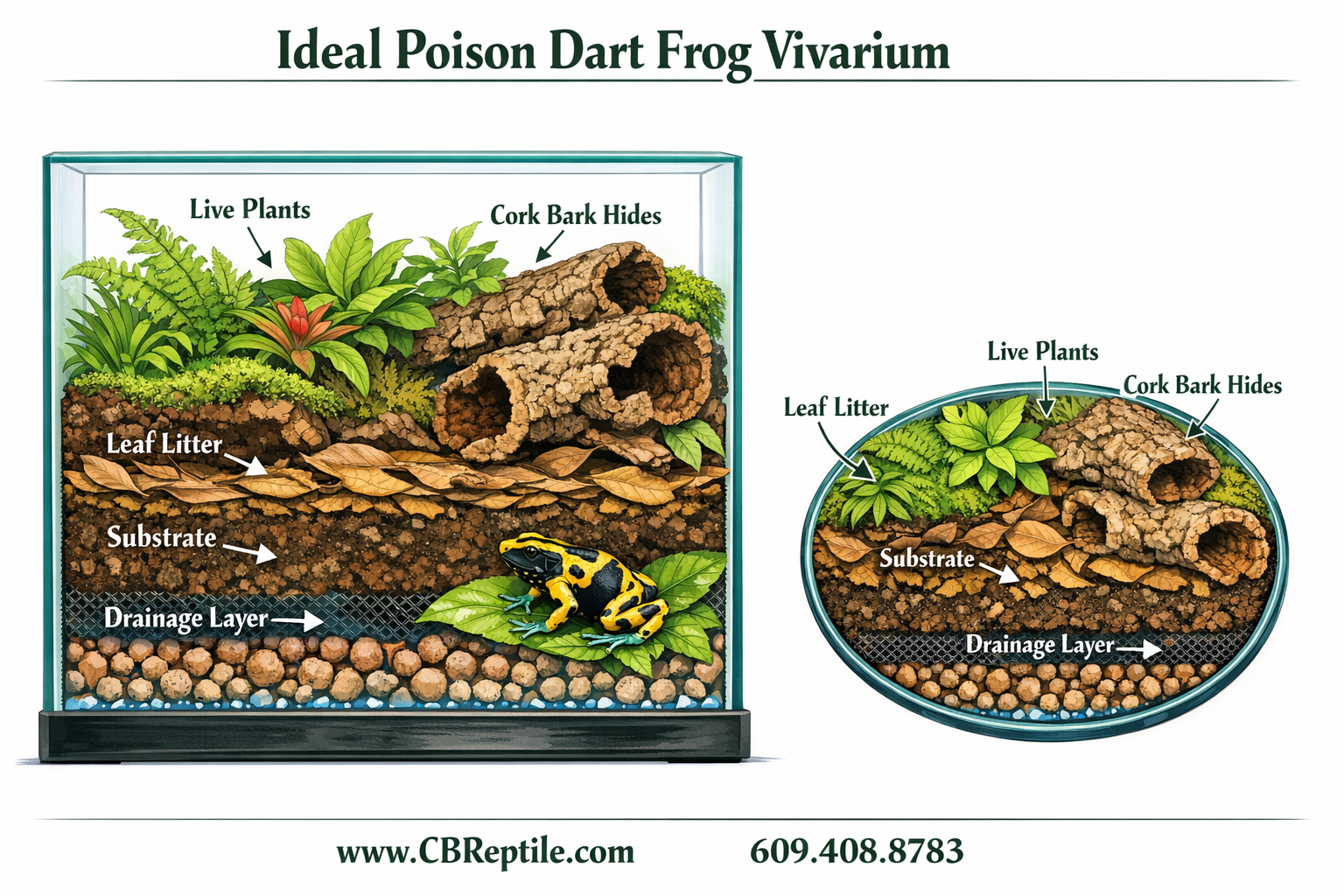
A well-built dart frog vivarium has five distinct layers, each serving a specific function. Skipping any of them creates problems down the line.
Step-by-step vivarium construction:
- Drainage layer (1.5–2 inches): Use LECA (lightweight expanded clay aggregate), hydroballs, or washed pea gravel. This layer holds excess water below the root zone so the substrate never becomes waterlogged.
- Separation layer: A piece of fine mesh window screen or hydro barrier fabric laid over the drainage layer prevents substrate from falling through while still allowing water to pass.
- Substrate (2–3 inches): ABG mix (a blend of tree fern fiber, long-fiber sphagnum moss, peat, and orchid bark) is the industry standard. It holds moisture, supports plant roots, and provides a home for microfauna.
- Hardscape and hides: Cork bark flats, cork tubes, and driftwood create hiding spots and visual barriers. These are especially important for thumbnail species and shy frogs.
- Live plants: Bromeliads, pothos, ficus pumila, Philodendron, Peperomia, and mosses all thrive in dart frog conditions. Bromeliads with water-holding cups are particularly valuable for species like Oophaga that use them for egg deposition.
- Leaf litter: A thin layer of dried magnolia or oak leaves on top of the substrate gives frogs cover, supports springtail colonies, and looks natural.
Pro tip: Cycle your vivarium for 4–6 weeks before adding frogs. This lets plants root in, microfauna populations establish, and the system stabilize. Rushing this step is one of the most common beginner mistakes.
For other tropical species that benefit from similar bioactive setups, the crested gecko habitat setup guide covers many of the same principles.
What Temperature and Humidity Does a Dart Frog Cage Need?
Dart frogs need high humidity (80–100%) and moderate temperatures (72–80°F) at all times. These are non-negotiable requirements, and failure to meet either will cause chronic stress and shortened lifespans.
Temperature:
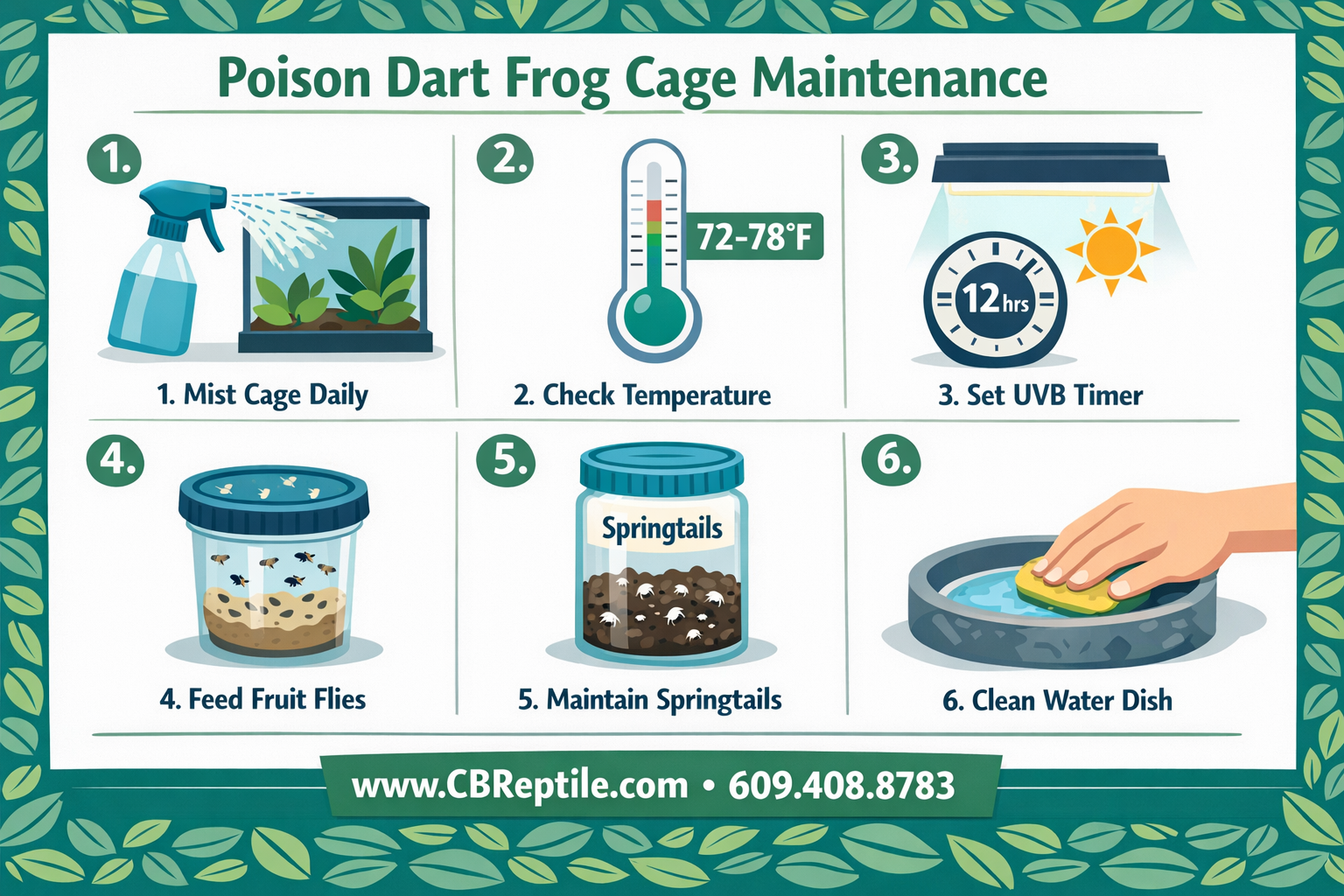
- Ideal range: 72–78°F during the day
- Night drop: 65–72°F is acceptable and even beneficial
- Never exceed 85°F — dart frogs are extremely heat-sensitive
- Most homes in the 70s°F are fine without supplemental heating; a small heat mat on the side of the enclosure can help in cooler rooms
Humidity:
- Target: 80–100% relative humidity
- Achieve this with an automated reptile misting system set to mist 2–4 times daily
- A digital hygrometer inside the enclosure is essential for monitoring
- Ventilation matters: some airflow prevents bacterial growth and mold, but too much airflow drops humidity fast
Lighting:
- 12-hour light cycle mimics natural tropical conditions
- Full-spectrum LED or T5 HO fluorescent lights support plant growth
- UVB is not strictly required for dart frogs but low-level UVB (2.0 or 5.0) may support vitamin D3 synthesis
- Avoid direct sunlight on the enclosure — it causes dangerous temperature spikes
The lighting principles for tropical amphibians share some overlap with what’s covered in the pacman frog lighting guide, which is another useful reference for amphibian keepers.
Popular Poison Dart Frog Color Morphs and Their Cage Preferences
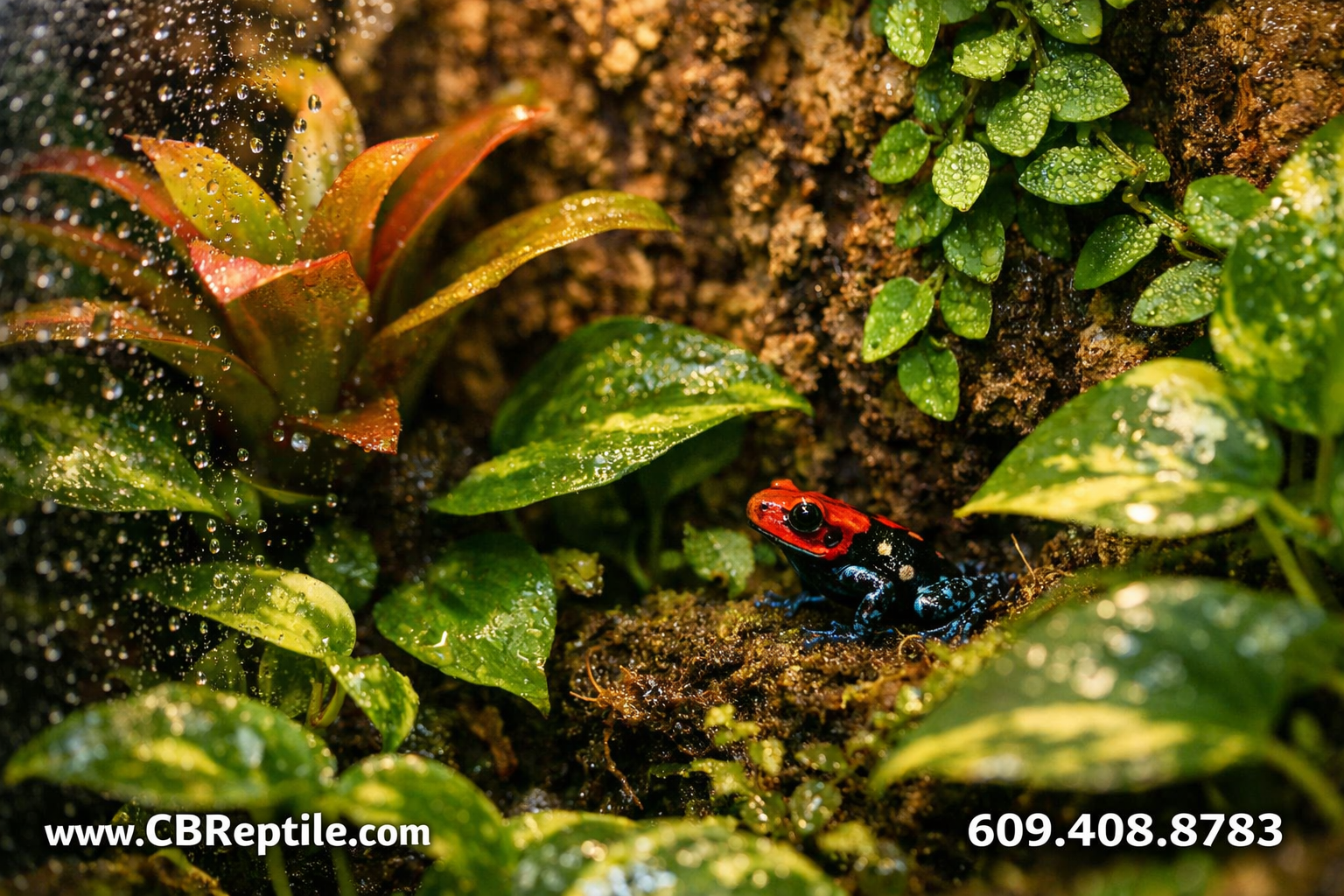
Poison dart frogs come in a remarkable range of colors and patterns. Different species and morphs have slightly different care requirements, so knowing your morph matters when setting up your enclosure.
Most popular morphs available from CB Reptile in 2026:
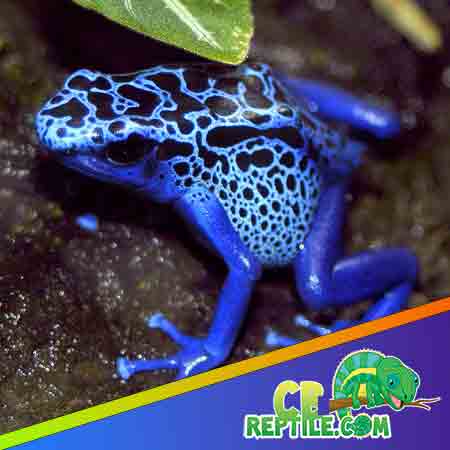
- Dendrobates tinctorius “Azureus” — Bright blue with black spots; one of the most iconic dart frogs. Needs a 20-gallon tall minimum. Moderate humidity tolerance.
- Dendrobates leucomelas (Bumblebee) — Bold yellow and black banding. Hardy, great for beginners. Check out the bumblebee poison dart frog for availability.
- Dendrobates auratus — Green and black or blue and black metallic patterns. Terrestrial; prefers more floor space than height.
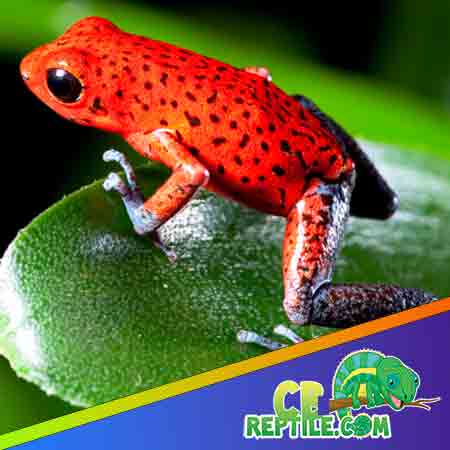
- Oophaga pumilio (Strawberry/Poison Arrow) — Brilliant red with blue legs. Requires bromeliads for breeding. More aggressive toward conspecifics.
- Ranitomeya imitator — Tiny thumbnail species with stunning mimicry patterns. Groups of 4–6 do well in an 18x18x24 enclosure.
- Ranitomeya variabilis — Yellow and green patterning; one of the more social thumbnail species.
- Epipedobates tricolor (Phantasmal) — Striped red and white; produces epibatidine, a compound of scientific interest.
- Dendrobates tinctorius “Patricia” — White and black spotted morph; highly sought after by collectors.
- Allobates femoralis — Brown and cream; less colorful but fascinating behaviorally and good for beginners.
“CB Reptile is your source for the best quality, healthiest poison dart frogs in the USA — with a real animal biologist on site to ensure every animal is properly cared for before it reaches your home.”
For poison dart frogs for sale including many of these morphs, CB Reptile maintains captive-bred stock and ships overnight with live arrival guarantees.
What Do You Feed Dart Frogs, and How Does That Affect Cage Setup?
Dart frogs eat small live insects almost exclusively. In captivity, their primary food source is fruit flies, and your cage setup needs to accommodate feeding without creating a fruit fly escape problem.
Primary feeders:
- Drosophila melanogaster — Flightless fruit flies; ideal for juveniles and smaller species like thumbnails
- Drosophila hydei — Slightly larger flightless fruit fly; better for adult tinctorius and auratus
Supplementary feeders (for variety):
- Springtails (also serve as vivarium cleanup crew)
- Isopods (micro-sized species)
- Waxworms (occasional treat only)
- Pinhead crickets for larger species
Supplementation: Dust feeders with a calcium + vitamin D3 supplement every other feeding, and a multivitamin supplement once weekly. Repashy Calcium Plus is a popular all-in-one option.
How feeding affects cage design:
- Keep a small, shallow water dish in one corner (no deeper than 0.5 inches)
- Fruit fly cultures should be set up outside the enclosure; introduce only what frogs will eat in 24 hours
- Springtail and isopod colonies live permanently in the vivarium and help consume waste and uneaten food
The feeding approach for dart frogs is quite different from other popular reptile pets. For comparison, the pacman frog care guide covers another popular amphibian with very different dietary needs.
How Does CB Reptile Stand Out for Poison Dart Frogs?
CB Reptile is not a typical online reptile store. Unlike most vendors, CB Reptile has a real animal biologist on site who oversees the health, genetics, and husbandry of every animal in their collection. This means the dart frogs you receive have been properly fed, hydrated, and health-checked by someone with actual scientific training — not just a hobbyist with good intentions.
What sets CB Reptile apart:
- Overnight shipping with live arrival guarantee — your frog arrives healthy, not stressed from days in transit
- Captive-bred stock only — no wild-caught animals, which means healthier frogs and no import disease risk
- Biologist on staff — husbandry protocols are science-based, not guesswork
- Wide morph selection — from beginner-friendly leucomelas to rare collector morphs
- Expert support — questions answered by people who actually know dart frog biology
You can also browse dart frogs for sale directly on the CB Reptile website, where inventory is updated regularly. For a broader look at the reptile and amphibian hobby, reptiles for sale at Reptiles.com is another trusted resource, and you can find additional educational content at their reptile store online.
Common Poison Dart Frog Cage Mistakes to Avoid
Even experienced keepers make setup errors. Here are the most frequent problems and how to prevent them.
Top mistakes:
- Using a screen-top aquarium without modification — Humidity drops too fast. Seal most of the screen with glass or foam board, leaving only a small ventilation strip.
- Skipping the drainage layer — Substrate becomes anaerobic and toxic within weeks. Always include at least 1.5 inches of drainage material.
- Overcrowding — More than one male tinctorius per enclosure often leads to fighting. Research species-specific social dynamics before housing groups.
- Using tap water for misting — Chlorine and chloramines harm dart frogs. Use RO (reverse osmosis) water or dechlorinated water only.
- Adding frogs before plants are established — New plants haven’t rooted; frogs will uproot them constantly. Wait 4–6 weeks.
- Overfeeding — Uneaten fruit flies stress frogs and can drown in water dishes. Feed only what frogs consume in 24 hours.
- Ignoring temperature during shipping — If you’re receiving frogs in winter or summer, ensure your overnight shipment includes appropriate heat or cold packs.
For keepers interested in other vivarium-style setups, the gargoyle gecko habitat guide covers similar bioactive principles for a different species.
FAQ: Poison Dart Frog Cage Questions Answered
Q: Are poison dart frogs actually dangerous in captivity?
A: No. Captive-bred dart frogs are non-toxic. Their toxicity in the wild comes from a diet of specific wild insects that aren’t available in captivity. CB Reptile’s captive-bred frogs are completely safe to handle (though frequent handling is still not recommended).
Q: Can I use a reptile cage or fish tank for dart frogs?
A: A modified aquarium works, but purpose-built front-opening glass terrariums (like Exo Terra or Zoo Med) are far easier to manage. They hold humidity better and allow easier access for maintenance.
Q: How many dart frogs can I keep in one cage?
A: It depends on species. A 20-gallon tall can house 2–3 tinctorius or 4–6 thumbnail species. Avoid mixing species in the same enclosure.
Q: Do dart frog cages smell bad?
A: A healthy bioactive vivarium has a pleasant earthy smell, similar to a forest floor. Bad odors indicate anaerobic conditions, usually from a failed drainage layer or overfeeding.
Q: How often should I mist a dart frog cage?
A: Most setups need misting 2–4 times daily. An automated misting system is the most reliable method. Morning and evening misting at minimum.
Q: What plants are safe for dart frog vivariums?
A: Bromeliads, pothos, Peperomia, ficus pumila, Philodendron, and mosses are all safe and commonly used. Avoid plants with toxic sap or thorns.
Q: How long does it take to set up a dart frog vivarium?
A: Building and planting takes 2–4 hours. Cycling the vivarium before adding frogs takes 4–6 weeks. Budget for both.
Q: What’s the best substrate for a dart frog cage?
A: ABG mix (tree fern fiber, sphagnum moss, peat, orchid bark) is the standard. Pre-mixed bags are available from most vivarium suppliers.
Q: Can dart frogs live with other species?
A: Generally no. Mixing species risks disease transmission, competition for food, and stress. Keep dart frogs in species-only setups.
Q: How do I know if my dart frog cage humidity is correct?
A: Use a digital hygrometer placed inside the enclosure. Target 80–100% RH. If it drops below 70%, increase misting frequency or reduce ventilation.
Q: Do dart frogs need UVB lighting?
A: It’s not strictly required, but low-level UVB (2.0 index) may support natural vitamin D3 synthesis and is generally considered beneficial. Full-spectrum lighting for plants is essential.
Q: Where can I buy a healthy poison dart frog for sale?
A: CB Reptile offers captive-bred poison dart frog for sale with overnight shipping and a live arrival guarantee, backed by an on-site animal biologist.
Conclusion: Setting Up Your Poison Dart Frog Cage the Right Way
A well-built poison dart frog cage is more than just a glass box — it’s a functioning micro-ecosystem that keeps your frogs healthy, active, and displaying natural behaviors for years. The key is getting the fundamentals right before your frog arrives: proper enclosure size, drainage layer, live plants, humidity control, and appropriate lighting.
Your actionable next steps:
- Choose your species first, then size your enclosure accordingly (use the table above)
- Source a front-opening glass terrarium (18x18x24 is the most versatile size)
- Build your vivarium layers — drainage, substrate, hardscape, plants, leaf litter
- Install an automated misting system and a digital hygrometer
- Cycle the vivarium for 4–6 weeks before adding any frogs
- Order captive-bred frogs from a reputable source with overnight shipping
CB Reptile makes the last step easy. With an animal biologist on staff, captive-bred stock, and overnight delivery, it’s the most reliable way to start your dart frog journey in 2026. Browse poison dart frogs for sale and find the morph that’s right for your setup.
References
- Caldwell, J.P. & Vitt, L.J. (2009). Herpetology: An Introductory Biology of Amphibians and Reptiles (3rd ed.). Academic Press.
- Daly, J.W. et al. (2005). “Alkaloids from frog skin: the discovery of epibatidine and the potential for developing novel non-opioid analgesics.” Natural Product Reports, 22(6), 875–893.
- Exo Terra. (2023). Vivarium Setup Guide for Tropical Species. Rolf C. Hagen Group.
- Schulte, R. (1999). Pfeilgiftfrösche: Artenteil Dendrobates. Natur und Tier Verlag.
- Walls, J.G. (1994). Jewels of the Rainforest: Poison Frogs of the Family Dendrobatidae. TFH Publications.