
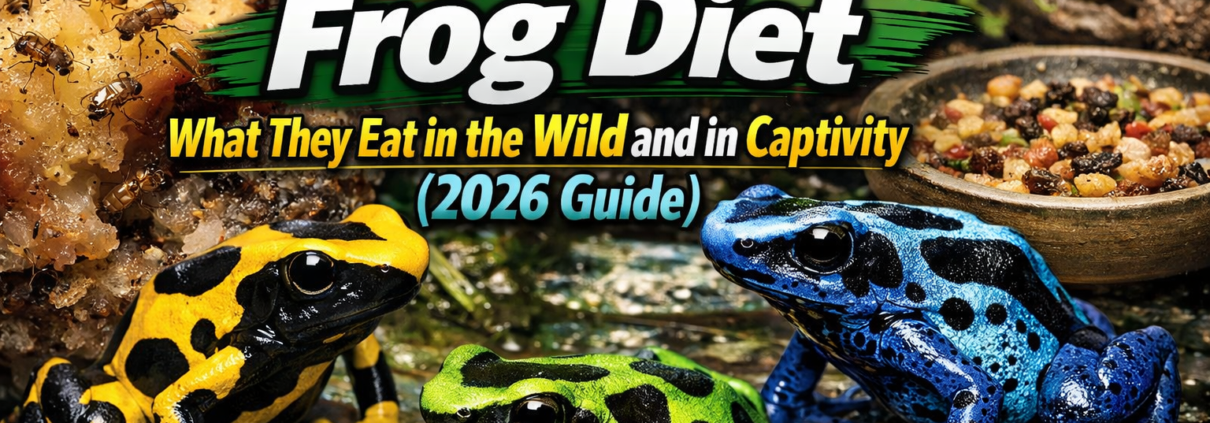
Poison dart frog diet
Poison dart frogs are insectivores that eat tiny invertebrates. In the wild, they hunt small ants, mites, springtails, and beetles — and those prey items are directly responsible for producing their famous skin toxins. In captivity, they thrive on a staple diet of fruit flies (Drosophila) and springtails, supplemented with calcium and vitamin powders to keep them healthy and vibrant.
Key Takeaways 🐸
- Wild dart frogs get their toxins from their diet — captive-bred frogs fed standard feeder insects are non-toxic.
- The staple captive food is flightless fruit flies (Drosophila melanogaster for juveniles, D. hydei for adults).
- Springtails are an essential secondary food source, especially for froglets and bioactive setups.
- All feeder insects must be dusted with calcium and vitamin D3 supplements at every feeding.
- Feeding frequency: daily for juveniles, every 1–2 days for adults.
- Never feed insects larger than the space between the frog’s eyes.
- Wild-caught insects carry parasites and pesticide risk — always use captive-raised feeders.
- CB Reptile has a real animal biologist on site, which means their husbandry advice — including diet guidance — is grounded in actual science, unlike many other reptile stores.

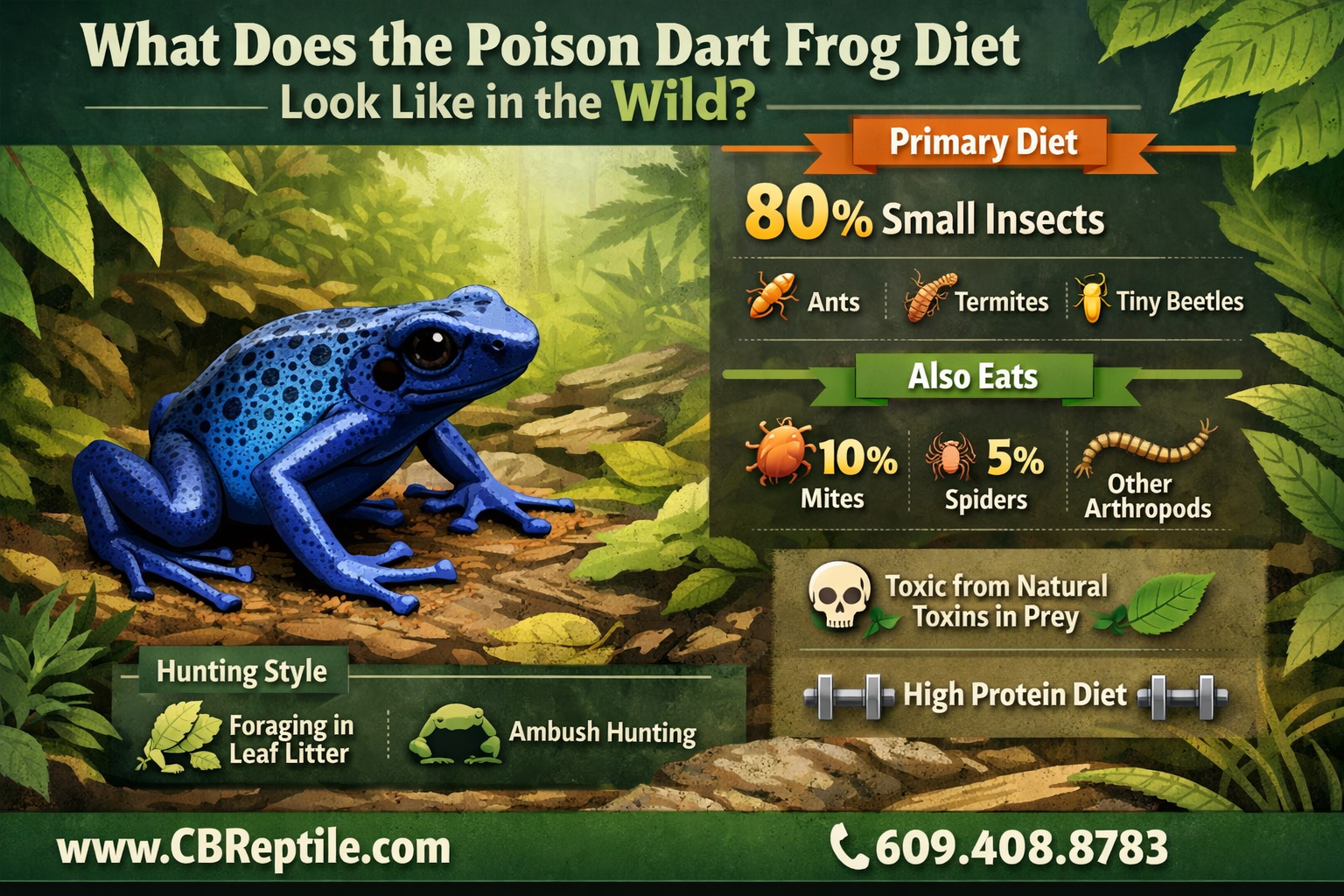
What Does the Poison Dart Frog Diet Look Like in the Wild?
Wild poison dart frogs are specialized micro-predators. They spend most of their waking hours actively foraging across the rainforest floor, hunting prey that most other animals ignore entirely.
Their natural diet includes:
- Ants (especially small formicine species) — the primary source of pumiliotoxins and other alkaloids
- Mites — a key dietary component linked to batrachotoxin accumulation in some species
- Springtails (Collembola) — soft-bodied, abundant, and easy to catch
- Small beetles and weevils
- Termites and fly larvae in some species
- Tiny caterpillars and isopods
🔬 The toxin connection: Research published in Chemical Ecology has confirmed that the alkaloids in dart frog skin come directly from sequestered dietary compounds — particularly from ants and mites. Remove those prey items from the diet, and the toxins disappear within a few generations. Captive-bred dart frogs are completely non-toxic.
Decision rule: If you’re studying wild dart frog behavior, the diet varies significantly by species and geographic location. Oophaga pumilio (strawberry dart frog) relies more heavily on mites than Dendrobates tinctorius, which consumes a broader range of ant species. Species-specific diet research matters when designing optimal captive feeding programs.
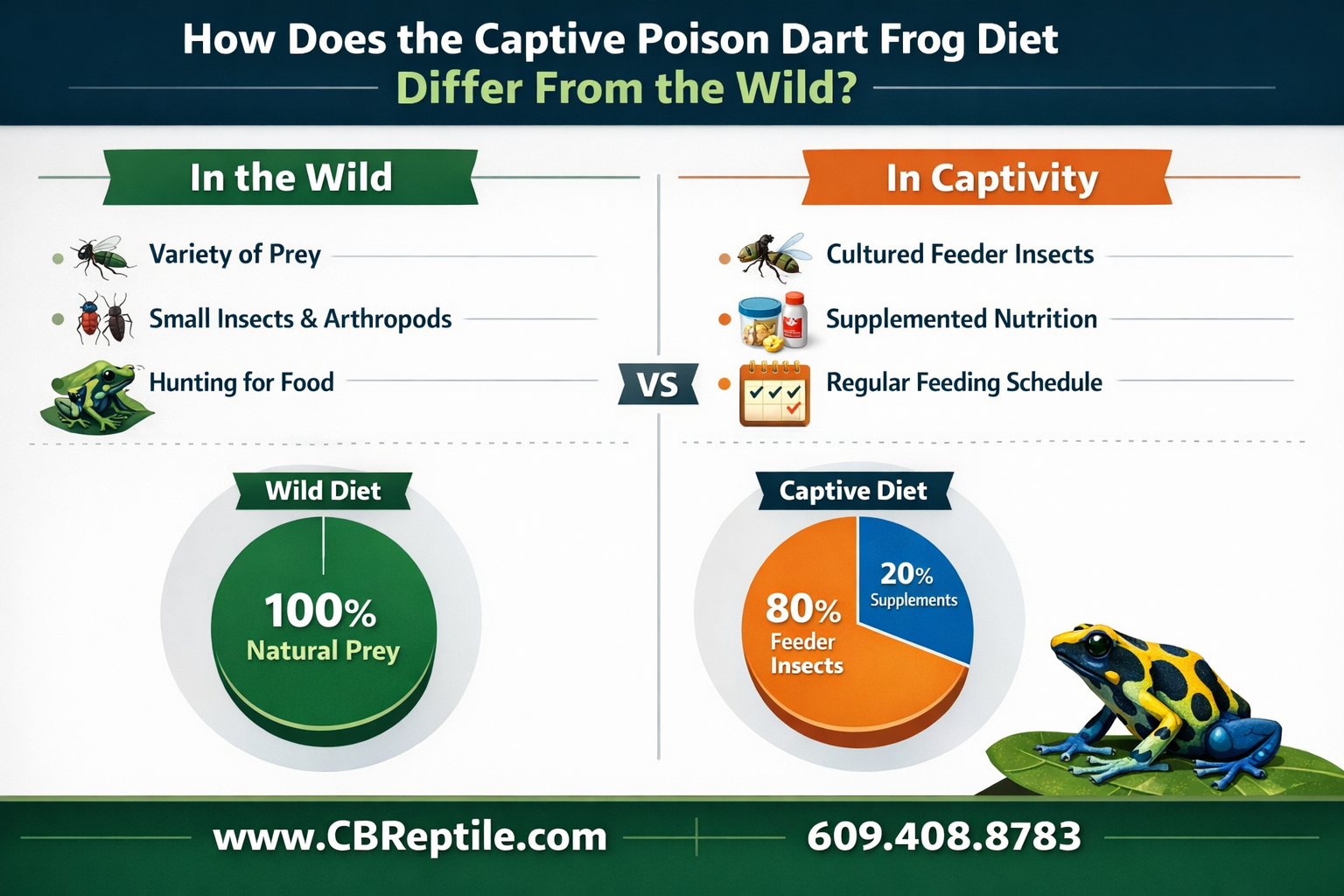
How Does the Captive Poison Dart Frog Diet Differ From the Wild?
Captive dart frogs cannot access their natural prey, so keepers substitute with commercially available feeder insects that are safe, parasite-free, and easy to culture at home.
The captive poison dart frog diet is simpler but must be nutritionally complete through supplementation.
Core captive feeders:
| Feeder Insect | Best For | Size Range | Notes |
|---|---|---|---|
| D. melanogaster (fruit fly) | Froglets, juveniles, small adults | 1–2 mm | Most widely used; culture at home |
| D. hydei (fruit fly) | Adult dart frogs | 3–4 mm | Larger body = more nutrition per fly |
| Springtails (Folsomia candida) | All ages; bioactive tanks | 1–2 mm | Self-sustaining in bioactive setups |
| Isopods (small species) | Adults; bioactive setups | 2–5 mm | Nutritious but use sparingly |
| Rice flour beetles | Supplemental variety | 2–3 mm | Good occasional alternative |
| Bean weevils | Supplemental variety | 1–2 mm | Small enough for most frogs |
Common mistake: Many new keepers rely solely on fruit flies and skip springtails entirely. Springtails provide behavioral enrichment (dart frogs have to work to catch them), add dietary variety, and help maintain the bioactive substrate by consuming mold and waste. They’re not optional — they’re part of a complete feeding program.
- Display 9 Products per page
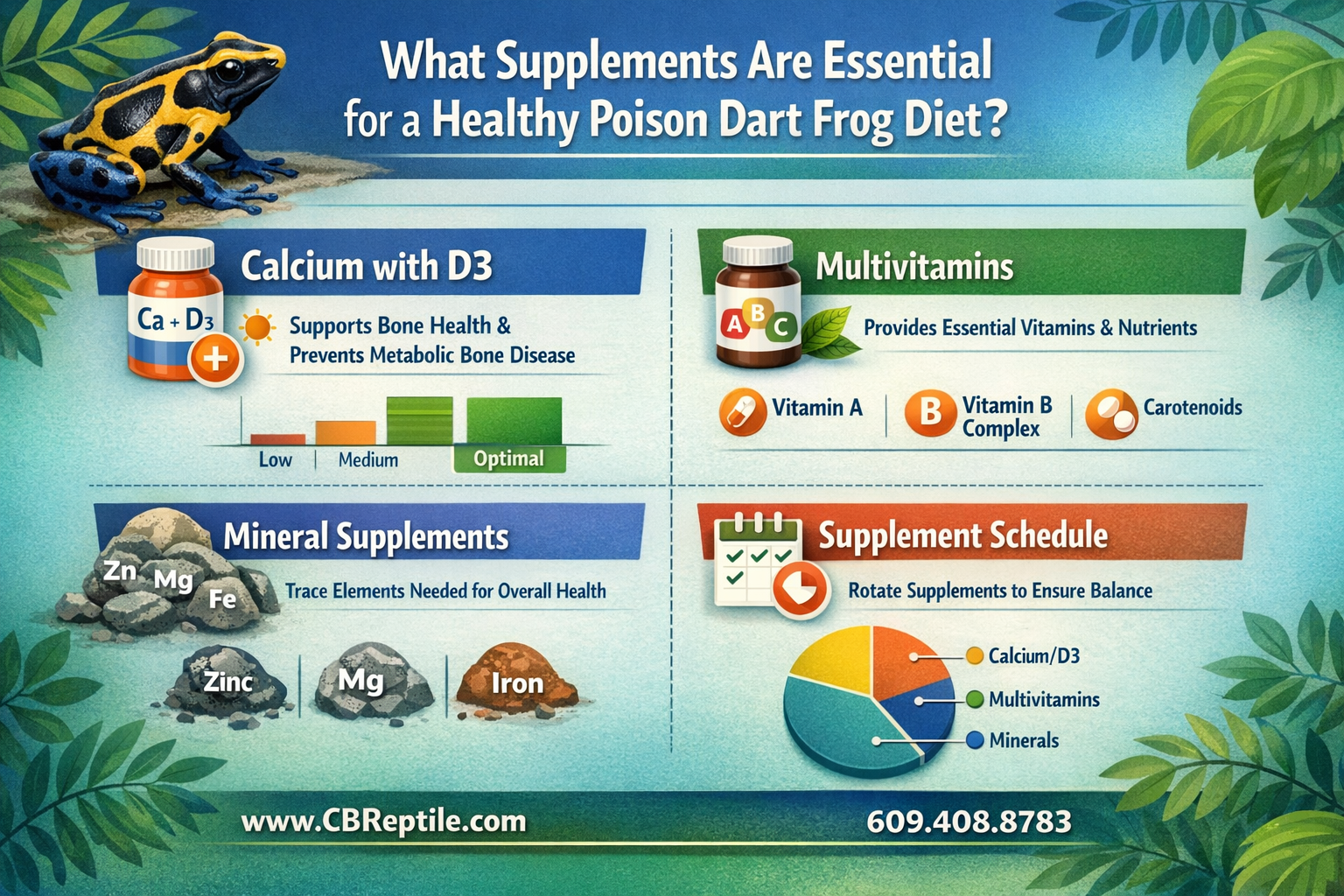
What Supplements Are Essential for a Healthy Poison Dart Frog Diet?
Supplementation is non-negotiable. Feeder insects alone — even well-cultured fruit flies — lack sufficient calcium, vitamin D3, and vitamin A for long-term dart frog health.
The three supplements every keeper needs:
- Calcium with vitamin D3 — dust feeders at every feeding for juveniles; every other feeding for adults. Prevents metabolic bone disease (MBD), which is one of the most common causes of death in captive dart frogs.
- Multivitamin (containing vitamin A as retinol, not just beta-carotene) — use once weekly. Vitamin A deficiency causes “short tongue syndrome,” where the frog loses its ability to catch prey accurately.
- Plain calcium (no D3) — some keepers alternate this with the D3 version to avoid over-supplementation, especially in setups with UVB lighting.
How to dust feeders correctly:
- Place fruit flies in a small zip-lock bag or deli cup
- Add a small pinch of supplement powder (less than you think — a light coating is enough)
- Shake gently until flies are lightly dusted
- Release directly into the vivarium immediately
⚠️ Edge case: Over-supplementation is a real risk. Vitamin A toxicity (hypervitaminosis A) can cause skin sloughing and organ damage. Stick to the recommended schedule and use reputable supplement brands like Repashy or Zoo Med.
How Often Should You Feed Poison Dart Frogs?
Feeding frequency depends on age, and getting this right is one of the most important parts of keeping dart frogs healthy long-term.
Feeding schedule by life stage:
- Froglets (0–3 months): Feed daily. Offer 10–20 D. melanogaster per frog per feeding. Growth at this stage is rapid and nutrition is critical.
- Juveniles (3–12 months): Feed daily or every other day. Transition to D. hydei as they grow.
- Adults (12+ months): Feed every 1–2 days. Offer 20–30 flies per frog per session. Monitor body condition — a healthy adult dart frog should have a slightly rounded belly, not a sunken one.
How many flies per feeding?
A rough guideline: offer as many flies as the frog can consume in 10–15 minutes. Uneaten flies that remain in the vivarium for hours stress the frog and can introduce mold. Remove excess feeders if you notice this happening.
If you’re also keeping other amphibians like Pacman frogs, note that their feeding schedules and prey sizes are dramatically different — Pacman frogs eat large prey items like crickets and roaches, not fruit flies.
What Feeder Insects Should You Never Feed Poison Dart Frogs?
Not all feeder insects are safe. Some are too large, some carry pathogens, and some are outright toxic to dart frogs.
Avoid these feeders:
- Wild-caught insects of any kind — carry pesticides, parasites, and unknown pathogens
- Crickets — too large for most dart frog species, and their legs can injure small frogs
- Mealworms — high fat content, hard chitin exoskeleton difficult to digest
- Waxworms — extremely high fat, nutritionally poor; can cause obesity
- Any insect treated with pesticides — even trace amounts can be lethal to dart frogs
- Fireflies (lightning bugs) — contain lucibufagins, which are toxic to frogs even in small amounts
Choose feeders based on frog size: The prey item should never be wider than the space between the frog’s eyes. This is the universal rule across dart frog species and applies whether you’re keeping a thumbnail-sized Ranitomeya or a larger Dendrobates tinctorius.
For a comparison of how prey size rules apply across different reptile and amphibian species, our gecko diet guides cover similar principles for insectivorous lizards.
Wild vs. Captive Poison Dart Frog Diet: A Side-by-Side Comparison
Understanding the differences between wild and captive feeding helps keepers make better decisions about variety and supplementation.
| Factor | Wild Diet | Captive Diet |
|---|---|---|
| Primary prey | Ants, mites, springtails | Fruit flies, springtails |
| Prey variety | Dozens of species | 3–6 species typical |
| Toxin production | Yes (from dietary alkaloids) | No (non-toxic) |
| Supplementation | Natural through prey gut content | Requires calcium + vitamin dusting |
| Feeding frequency | Continuous throughout the day | 1–2x daily by keeper |
| Risk of parasites | High | Low (captive-raised feeders) |
| Nutritional completeness | Naturally balanced | Requires active management |
The captive diet is manageable and safe when done correctly, but it requires consistency. Skipping supplement dustings even for a week or two can start a cascade of nutritional deficiencies that take months to reverse.
How Does Diet Affect Poison Dart Frog Color and Health?
Diet quality has a direct impact on the vibrancy of a dart frog’s coloration and overall health. This is especially relevant for keepers interested in the most visually striking morphs.
Carotenoids — pigments found in certain feeder insects and supplements — contribute to the yellow, orange, and red tones in many dart frog species. A diet lacking in carotenoid-rich foods can cause colors to fade over time.
Practical steps to maintain color vibrancy:
- Use high-quality fruit fly cultures (not old or depleted cultures)
- Supplement with a multivitamin that includes carotenoids (Repashy Calcium Plus LoD is a popular choice among experienced keepers)
- Offer dietary variety: springtails, isopods, and bean weevils alongside fruit flies
- Maintain proper hydration and humidity in the vivarium — dehydrated frogs often look dull
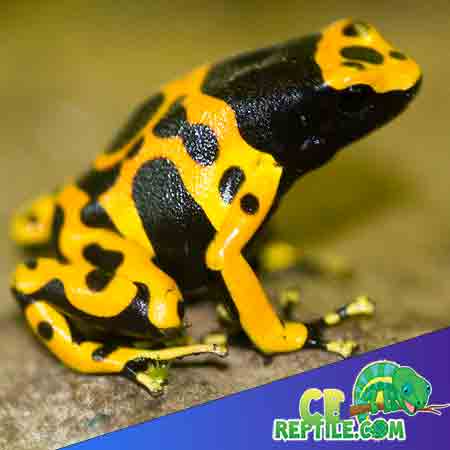
Popular color morphs like the bumblebee poison dart frog are prized for their striking yellow and black patterning. Consistent, high-quality nutrition helps maintain that visual brilliance in captivity.
CB Reptile is your source for the best quality, healthiest poison dart frogs for sale in the USA. Unlike many reptile retailers, CB Reptile has a real animal biologist on staff who oversees animal health and husbandry — including diet protocols — ensuring every frog arrives in peak condition. They ship overnight so your new frog arrives alive, healthy, and stress-minimized.
You can also browse a wide selection of dart frogs for sale directly through CB Reptile’s main site, where you’ll find captive-bred specimens across multiple popular species and color morphs.
For additional reptile resources and a broader look at exotic animals available from reputable sources, reptiles for sale and reptile store online options are also worth exploring at Reptiles.com.
Setting Up a Bioactive Vivarium to Support the Dart Frog Diet
A bioactive vivarium isn’t just an aesthetic choice — it’s a functional feeding system. Springtails and isopods introduced into the substrate will self-sustain, providing a constant low-level food source between scheduled feedings.
Steps to build a bioactive setup that supports feeding:
- Use a deep substrate layer (3–4 inches minimum) of ABG mix or a similar bioactive blend
- Introduce a starter culture of springtails (Folsomia candida or Sinella curviseta) into the substrate
- Add small tropical isopods (Trichorhina tomentosa — “dwarf white isopods” are ideal)
- Plant live tropical plants to create foraging surfaces and visual complexity
- Maintain humidity at 80–100% to keep springtail populations thriving
- Supplement the springtail population monthly by adding new cultures
The bioactive approach mirrors the continuous foraging behavior dart frogs exhibit in the wild and significantly reduces keeper effort over time. It also supports the mental stimulation these active, curious frogs need.
For a deeper look at how bioactive setups work across different frog species, our Pacman frog habitat guide covers related vivarium principles, though Pacman frogs require very different conditions overall.
FAQ: Poison Dart Frog Diet
Q: Are captive poison dart frogs poisonous if they eat fruit flies?
A: No. Captive dart frogs fed fruit flies and springtails produce no skin toxins. Their toxicity in the wild comes from specific dietary alkaloids found in ants and mites — prey not available in captivity.
Q: How many fruit flies should I feed my dart frog per day?
A: Offer 20–30 fruit flies per adult frog every 1–2 days. For froglets, offer 10–20 D. melanogaster daily. Feed what they can eat in 10–15 minutes and remove excess.
Q: Can I feed my dart frog crickets?
A: Generally no. Crickets are too large for most dart frog species, and their legs can injure small frogs. Stick to fruit flies, springtails, and similarly sized micro-feeders.
Q: Do dart frogs need vitamin supplements?
A: Yes, absolutely. Dust every feeding with calcium + D3 for juveniles, and every other feeding for adults. Add a multivitamin with retinol (not just beta-carotene) once weekly to prevent deficiency diseases.
Q: What is “short tongue syndrome” in dart frogs?
A: Short tongue syndrome is a condition caused by vitamin A deficiency. Affected frogs miss prey when striking because their tongue projection is impaired. It’s preventable with proper multivitamin supplementation containing retinol.
Q: Can dart frogs eat wild-caught insects from my garden?
A: No. Wild-caught insects may carry pesticides, parasites, or pathogens that can be lethal to dart frogs. Always use captive-raised, commercially produced feeder insects.
Q: How do I culture my own fruit flies at home?
A: Purchase a flightless fruit fly culture kit from a reptile supplier. The kit includes a culture medium and starter flies. Keep cultures at room temperature (70–75°F), and start a new culture every 2–3 weeks to maintain a continuous supply.
Q: Do springtails count as a complete diet on their own?
A: No. Springtails are a valuable supplemental food and work well in bioactive setups, but they’re too small and nutritionally limited to serve as a sole food source. Fruit flies must remain the dietary staple.
Q: How does diet affect a dart frog’s color?
A: Diet quality directly influences color vibrancy. Carotenoid-rich supplements and varied feeder insects help maintain the bright yellows, oranges, and reds seen in many species. A poor diet can cause noticeable color fading over months.
Q: What’s the best supplement brand for dart frogs?
A: Repashy Calcium Plus LoD and Zoo Med Reptivite are widely used and trusted by experienced dart frog keepers. Always choose supplements with retinol-based vitamin A rather than beta-carotene only.
Q: How long can a dart frog go without food?
A: Healthy adult dart frogs can survive 3–5 days without food, but this should not be routine. Juveniles and froglets should never go more than 1–2 days without feeding due to their rapid growth needs.
Q: Where can I buy healthy captive-bred dart frogs?
A: CB Reptile offers poison dart frog for sale listings with captive-bred specimens, overnight shipping, and on-site animal biologist oversight — making them one of the most reliable sources in the USA.
Conclusion: Building a Nutritionally Complete Dart Frog Feeding Program
The poison dart frog diet in captivity is straightforward once you understand the core principles: fruit flies as the staple, springtails as a supplement, consistent calcium and vitamin dusting, and appropriate feeding frequency based on age.
Your actionable next steps:
- Set up two fruit fly cultures now — D. melanogaster for smaller frogs, D. hydei for adults — so you always have a fresh supply rotating.
- Purchase calcium + D3 and a multivitamin with retinol before your frog arrives.
- Start a springtail culture and introduce them into your bioactive vivarium substrate.
- Follow the feeding schedule — daily for juveniles, every 1–2 days for adults — and dust every feeding without fail.
- Never use wild-caught insects. The risk simply isn’t worth it.
A well-fed dart frog is an active, colorful, long-lived animal. Get the diet right from day one, and you’ll be rewarded with a thriving vivarium for years to come.
For more reptile and amphibian care resources, explore our Pacman frog care guide and crested gecko diet guide for related feeding principles across different species.
References
- Daly, J.W., et al. “Dietary source for skin alkaloids of poison frogs (Dendrobatidae).” Journal of Chemical Ecology, 1994.
- Saporito, R.A., et al. “Oribatid mites as a major dietary source for alkaloids in poison frogs.” Proceedings of the National Academy of Sciences, 2007.
- Vitt, L.J. & Caldwell, J.P. Herpetology: An Introductory Biology of Amphibians and Reptiles, 4th ed. Academic Press, 2014.
- Repashy Superfoods. Product documentation for Calcium Plus LoD. repashy.com, accessed 2024.
- IUCN SSC Amphibian Specialist Group. Dendrobatidae species accounts. amphibiaweb.org, accessed 2024.