
Poison Dart Frog Habitat
Last updated: April 14, 2026
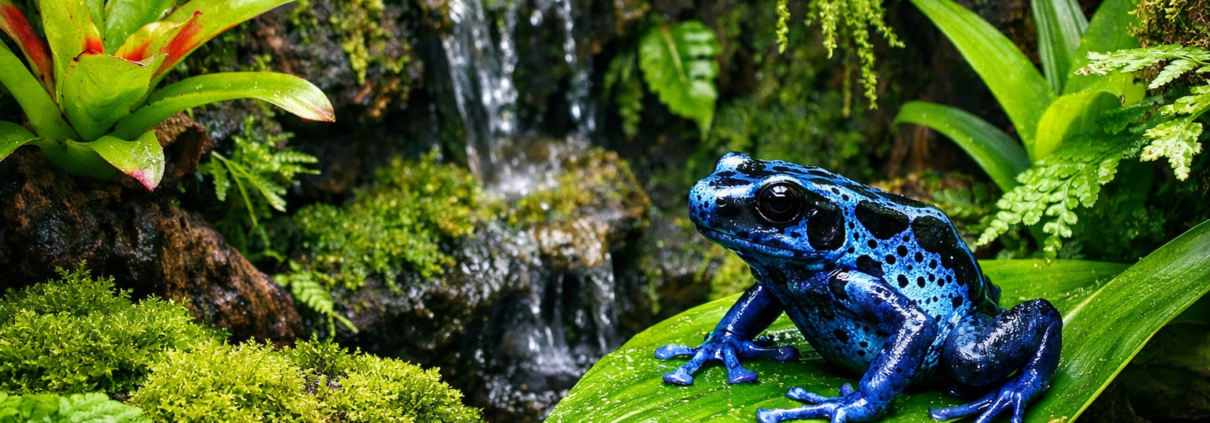
Poison dart frogs need a tropical vivarium that replicates their native Central and South American rainforest environment. That means high humidity (80–100%), warm temperatures (72–80°F), live plants, a drainage layer, and plenty of hiding spots. Get these conditions right, and dart frogs thrive in captivity for 10–15 years.
- Display 9 Products per page
Key Takeaways
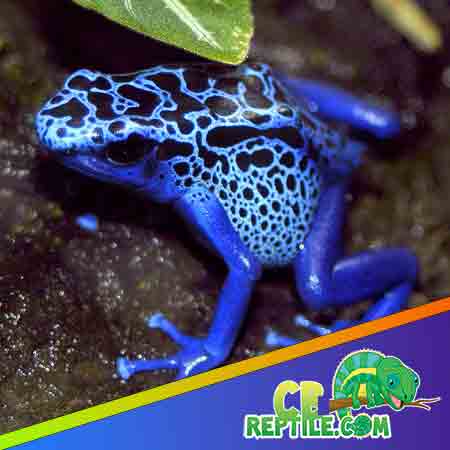
- 🐸 Poison dart frogs are native to Central and South American rainforests and need a tropical vivarium to stay healthy.
- 💧 Humidity must stay between 80–100%; daily misting or an automated misting system is essential.
- 🌡️ Ideal temperature range is 72–80°F during the day, dropping no lower than 65°F at night.
- 🌿 Live plants (bromeliads, pothos, mosses) are strongly recommended — they regulate humidity and provide natural cover.
- 🪨 A proper drainage layer (hydroballs or leca) under the substrate prevents root rot and standing water issues.
- 🔆 12–14 hours of low-intensity UVB or full-spectrum lighting daily supports their natural cycle.
- 🐜 In the wild, dart frogs get their toxins from eating certain insects — captive-bred frogs are non-toxic.
- 🏠 A 10-gallon tank works for one or two small species; larger or group setups need 20+ gallons.
- 🔬 CB Reptile has a real animal biologist on site, which sets them apart from most reptile stores online.
- 🛒 Sourcing captive-bred frogs from a reputable breeder is the safest and most ethical choice in 2026.
What Does a Poison Dart Frog Habitat Look Like in the Wild?
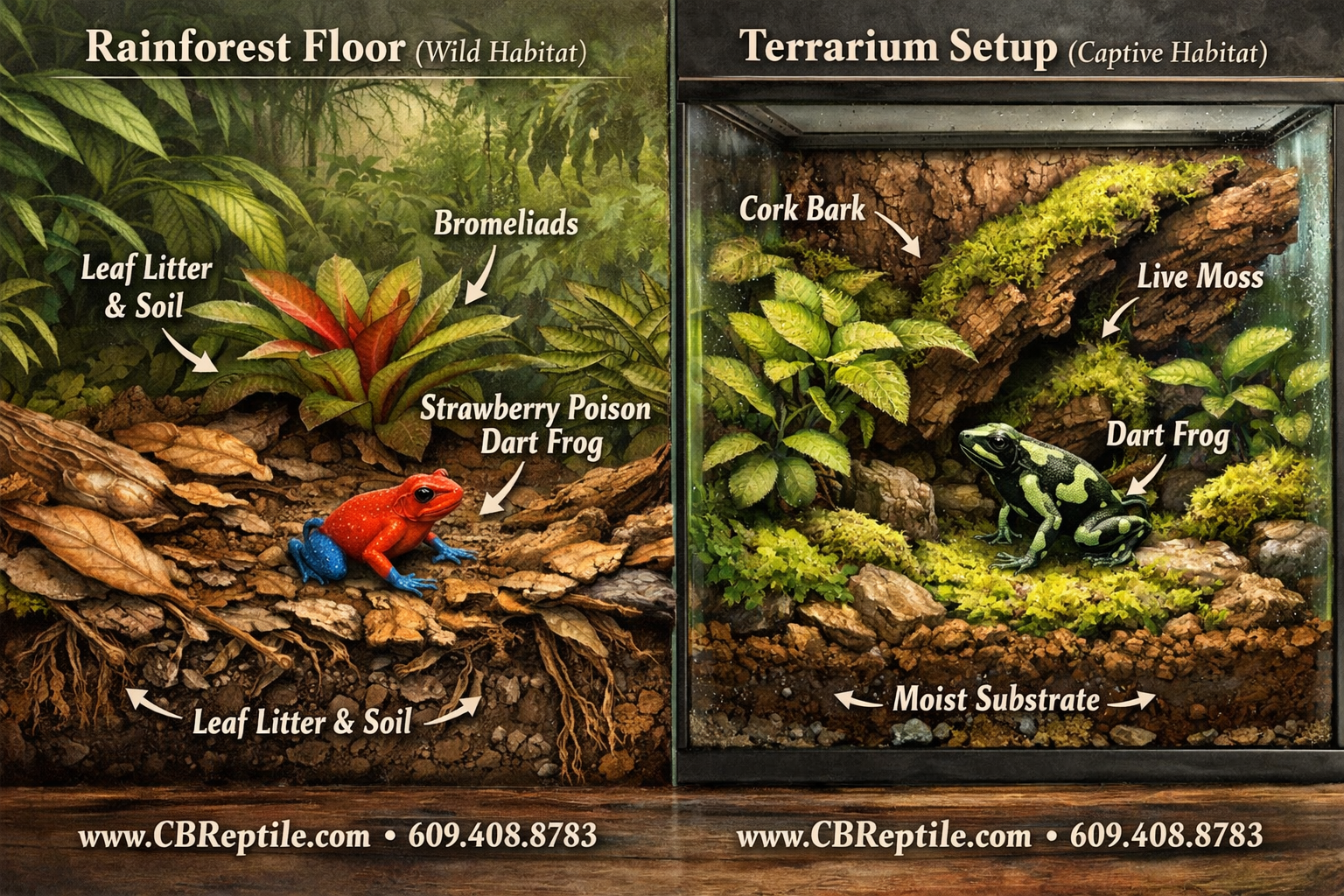
Poison dart frogs live on the forest floors and lower canopy layers of tropical rainforests in Central and South America — from Nicaragua down through Panama, Colombia, Ecuador, Peru, and Brazil. Their wild habitat is defined by constant warmth, near-saturated humidity, dense leaf litter, and an abundance of tiny insects.
Key features of their natural environment include:
- Dense leaf litter on the forest floor for hiding and egg-laying
- Bromeliads and other epiphytes that collect water in their leaf axils (dart frogs use these as nurseries)
- Dappled, indirect light filtered through a thick rainforest canopy
- Year-round temperatures between 70–82°F with very little seasonal variation
- Rainfall almost daily, keeping humidity near 100%
Why this matters for keepers: Every element of a captive poison dart frog habitat should mirror these wild conditions as closely as possible. Cutting corners on humidity or substrate will cause stress, illness, and shortened lifespans.
Different species occupy slightly different microhabitats. Dendrobates tinctorius (the dyeing dart frog) tends to stay on the ground, while Ranitomeya species are more arboreal and prefer elevated perches. Knowing your specific species’ wild niche helps you design a better enclosure.
How Do You Set Up the Ideal Poison Dart Frog Habitat?
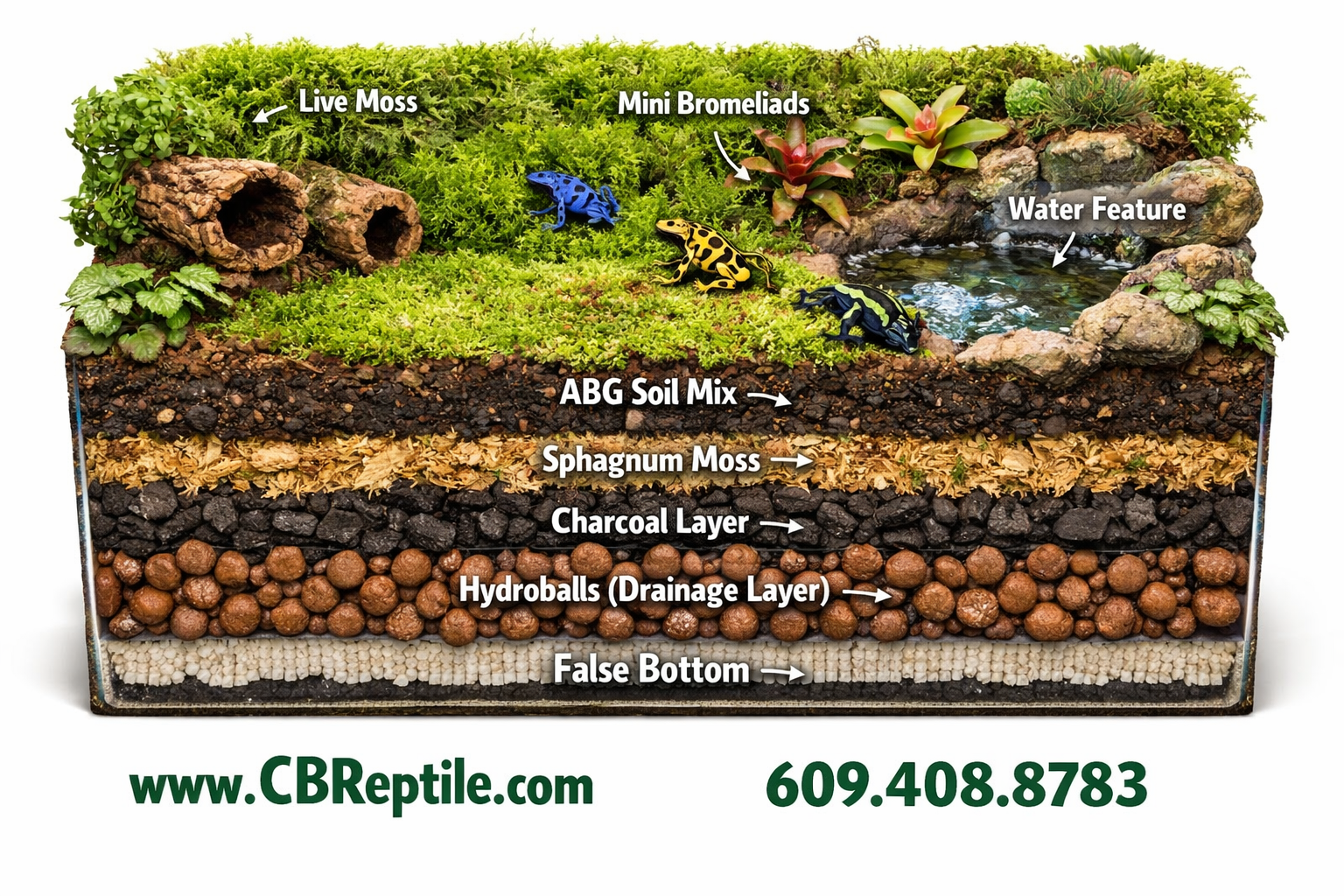
A proper poison dart frog habitat setup follows a layered approach inside a glass vivarium. Each layer serves a specific function, and skipping one creates problems down the line.
Step-by-Step Vivarium Build
1. Choose the right enclosure size
| Species | Minimum Tank Size | Notes |
|---|---|---|
| Dendrobates auratus | 10–20 gallons | Ground-dwelling, pairs or trios |
| Dendrobates tinctorius | 20 gallons | Larger frog, needs floor space |
| Ranitomeya spp. | 10–20 gallons | Arboreal; height matters more |
| Phyllobates terribilis | 20–30 gallons | Active, social, needs room |
| Oophaga pumilio (Strawberry) | 10–20 gallons | Territorial; limit group size |
2. Build the drainage layer
Place 1.5–2 inches of hydroballs (LECA — lightweight expanded clay aggregate) at the bottom. This prevents the substrate above from becoming waterlogged. Add a mesh screen (fiberglass or plastic) on top to separate it from the soil.
3. Add the substrate
The ABG mix (Atlanta Botanical Garden mix) is the gold standard for dart frog vivariums. It typically contains:
- Tree fern fiber
- Long-fiber sphagnum moss
- Orchid bark
- Peat moss
- Charcoal
Apply 2–3 inches of this mix on top of the mesh layer.
4. Plant the vivarium
Live plants are not optional — they actively regulate humidity, provide cover, and make the enclosure self-sustaining over time. Good choices include:
- Bromeliads (Neoregelia spp.) — doubles as breeding sites
- Pothos and philodendron — fast-growing, hardy, great coverage
- Mosses (Fissidens, Vesicularia) — ground cover and moisture retention
- Ficus pumila (creeping fig) — covers backgrounds naturally
5. Add hardscape and hides
Cork bark rounds, cork flats, coconut huts, and driftwood give frogs places to hide, climb, and breed. Dart frogs are shy animals — they need cover to feel secure.
6. Install lighting and misting
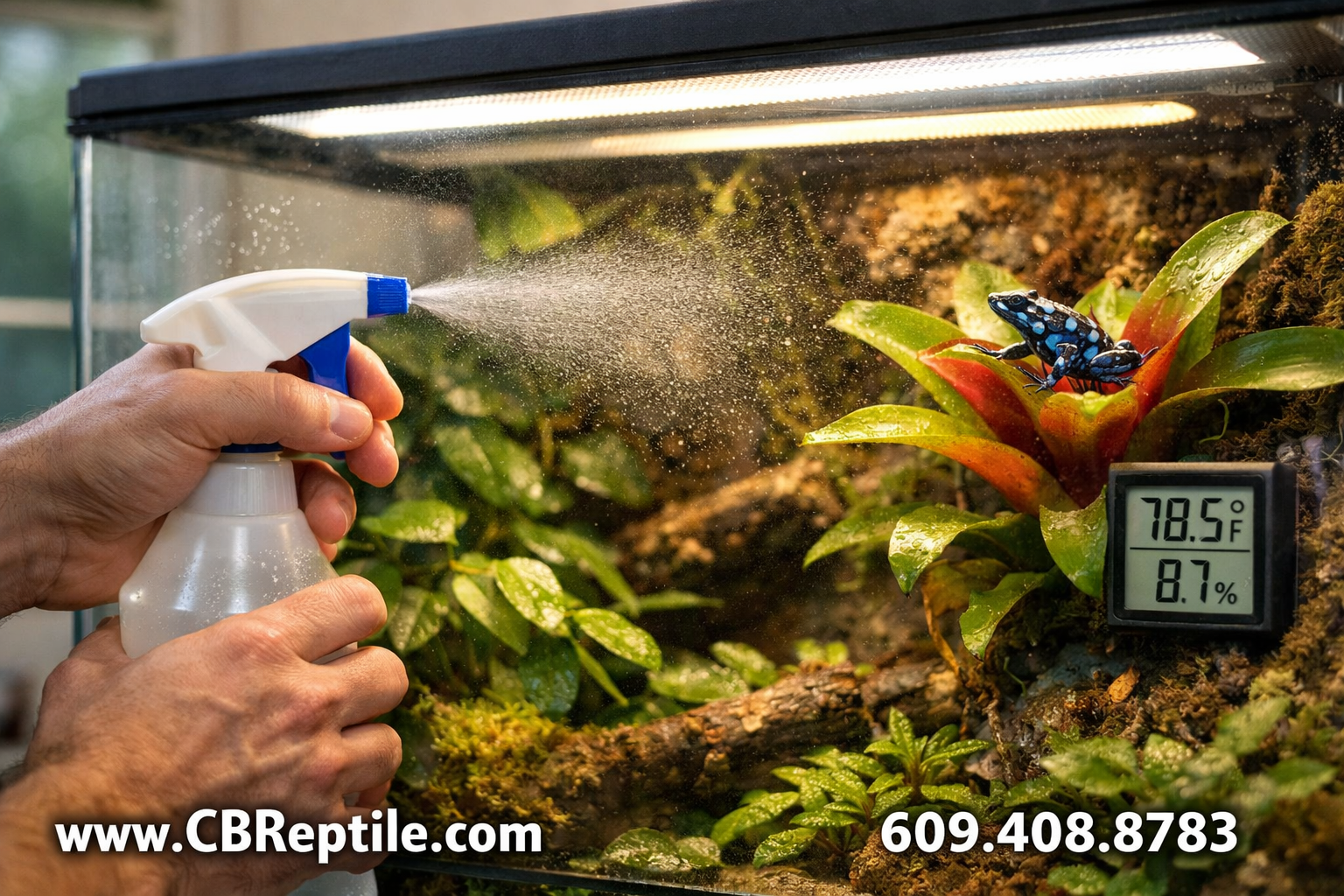
A full-spectrum or UVB bulb on a 12–14 hour timer handles the light cycle. For misting, a reptile misting system running 2–4 times daily keeps humidity in the 80–100% range without manual effort.
What Temperature and Humidity Do Poison Dart Frogs Need?
Dart frogs are sensitive to temperature swings. Their ideal range is narrow, and going outside it — even briefly — causes stress that opens the door to disease.
Temperature:
- Daytime: 72–80°F (22–27°C)
- Nighttime: 65–72°F (18–22°C)
- Never exceed 85°F — heat stress sets in quickly
Humidity:
- Target: 80–100% relative humidity
- Measure with a digital hygrometer placed mid-enclosure
- Mist 2–4 times daily, or use an automated system
Common mistake: Many beginners focus on temperature and neglect humidity. A dart frog at 75°F but 50% humidity will decline far faster than one at 80°F with proper moisture levels.
If your home runs dry (especially in winter), a fogger or ultrasonic mister can supplement your misting schedule. Just make sure there’s adequate ventilation — stagnant, overly wet air causes bacterial and fungal issues.
Which Poison Dart Frog Color Morphs Are Most Popular?
Poison dart frogs are among the most visually stunning amphibians on Earth. Their bright colors are a biological warning to predators — a phenomenon called aposematism. In captivity, dozens of color morphs are available, each with its own look and personality.
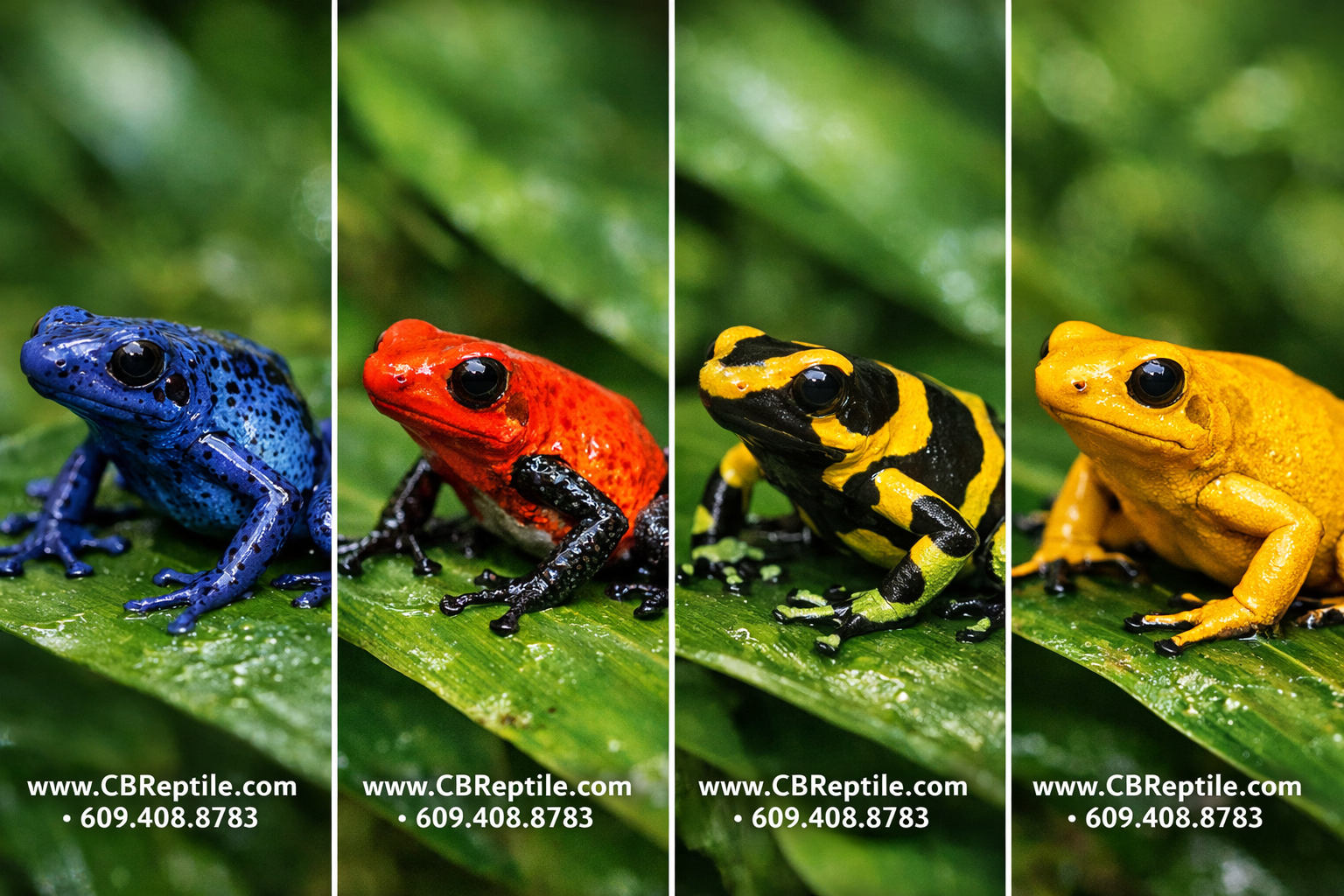
Here are the most sought-after morphs in 2026:
Dendrobates tinctorius morphs:
- Azureus — brilliant sky blue with black spots; one of the most iconic dart frogs
- Patricia — yellow and black, bold patterning
- Powder Blue — pale blue with dark reticulated pattern
- Cobalt — deep blue, nearly solid coloration
- Alanis — striking yellow and black banding
Dendrobates auratus morphs:
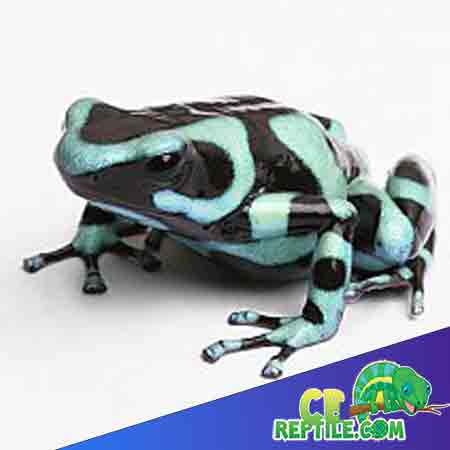
- Green and Black — classic look, great for beginners
- Blue and Black — metallic blue sheen with black
- Mint Terribilis — pale green, large-bodied
Oophaga pumilio (Strawberry dart frog) morphs:
- Bastimentos — red with black spots
- Blue Jeans — red body, blue legs; wildly popular
- Almirante — orange and black
Phyllobates terribilis morphs:
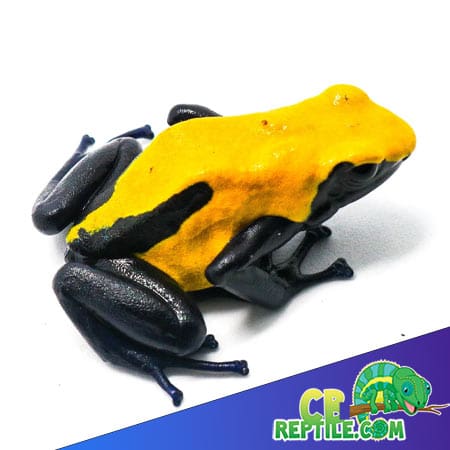
- Golden — solid yellow-gold, the largest dart frog species
- Mint — pale green coloration
- Orange — warm orange tones
Ranitomeya morphs:
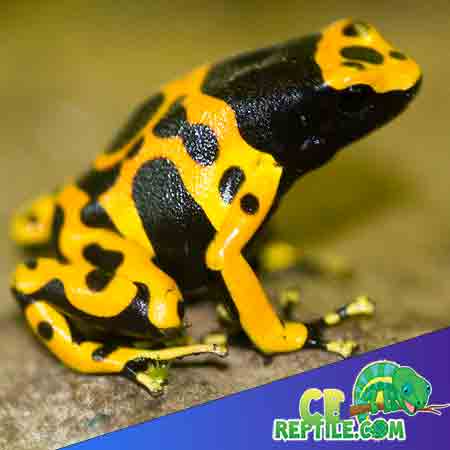
- Bumblebee dart frog (R. imitator) — yellow and black striping, small and active (see our Bumblebee Poison Dart Frog for availability)
- Uakarii — red and black, stunning contrast
- Fantastica — bold yellow and black striping
Choose X if… You want a beginner-friendly species: Dendrobates auratus (Green and Black) is hardy, tolerant of minor humidity fluctuations, and widely available. If you want maximum visual impact and have some experience, D. tinctorius Azureus is hard to beat.
What Substrate and Plants Work Best in a Dart Frog Vivarium?
The substrate is the foundation of a healthy poison dart frog habitat. It needs to hold moisture without becoming anaerobic (oxygen-deprived), support live plant roots, and allow beneficial microfauna to colonize it.
Best substrate options:
- ABG mix — the most widely used and recommended choice
- Coco fiber + sphagnum blend — affordable and effective
- Pure long-fiber sphagnum — great for smaller enclosures or temporary setups
Microfauna (cleanup crew):
Adding springtails (Folsomia candida) and isopods (Porcellio laevis or Trichorhina tomentosa) to the vivarium creates a self-cleaning ecosystem. They break down waste, mold, and uneaten food — critical for a sealed, high-humidity environment.
Plants that thrive in dart frog setups:
| Plant | Function | Care Level |
|---|---|---|
| Bromeliads | Breeding sites, water pools | Moderate |
| Pothos | Fast coverage, humidity buffer | Easy |
| Ficus pumila | Background coverage | Easy |
| Peperomia spp. | Ground cover, variety | Easy |
| Mosses | Moisture retention, aesthetics | Easy–Moderate |
| Orchids (miniature) | Visual interest, naturalistic | Moderate–Hard |
You can find quality terrarium habitat decor to complement your live plants and hardscape.
How Does the Poison Dart Frog Habitat Differ Between Species?
Not all dart frogs need identical setups. Species differences in wild habitat translate directly into captive care requirements.
Terrestrial vs. arboreal species:
- Dendrobates and Phyllobates species are primarily ground-dwellers. Their enclosures should prioritize floor space, leaf litter depth, and ground-level hides.
- Ranitomeya and Epipedobates species spend more time elevated. Taller enclosures with vertical cork bark, vines, and elevated bromeliads suit them better.
Social structure:
- Phyllobates terribilis is social and can be kept in groups of 4–6 in a large enclosure.
- Oophaga pumilio (Strawberry) is highly territorial — pairs are safer than groups, especially females together.
- Dendrobates tinctorius can be kept in pairs or trios but watch for aggression.
Edge case: Epipedobates tricolor (Phantasmal poison frog) prefers slightly cooler temperatures (68–74°F) than most dart frogs. Keeping them too warm causes chronic stress even if all other parameters look correct.
For comparison, if you’ve kept other tropical amphibians, the setup principles are similar to a Pacman frog habitat but with significantly higher humidity requirements and a greater emphasis on live plants.
Where Should You Buy Poison Dart Frogs in 2026?
Source matters more with dart frogs than almost any other exotic pet. Wild-caught frogs carry parasites, stress poorly, and their collection harms wild populations. Captive-bred animals are healthier, better acclimated to captive conditions, and non-toxic (since their toxins come from wild diet).
CB Reptile is one of the leading sources for poison dart frogs for sale in the USA in 2026. What sets CB Reptile apart:
- Real animal biologist on site — unlike most reptile stores, CB Reptile employs a credentialed animal biologist who oversees animal health, husbandry protocols, and breeding programs. This isn’t a claim most competitors can make.
- Overnight shipping — frogs are shipped with heat or cold packs as needed, arriving alive and healthy the next morning. Live arrival is guaranteed.
- Captive-bred only — every frog is bred in-house or sourced from vetted captive breeders, never wild-caught.
- Wide morph selection — from Azureus and Bumblebee to Strawberry Blue Jeans and Golden Terribilis, their inventory covers the most popular morphs year-round.
You can also browse their full selection of dart frogs for sale and compare morphs side by side. For a broader look at the exotic pet market, reptiles for sale at Reptiles.com is another resource worth bookmarking, and their reptile store online listings include care resources alongside animal listings.
Choose CB Reptile if: You want a captive-bred poison dart frog for sale backed by biological expertise, overnight shipping, and a live arrival guarantee.
What Are the Most Common Poison Dart Frog Habitat Mistakes?
Even experienced keepers make setup errors that cost them healthy animals. Here are the most frequent problems and how to avoid them.
1. Insufficient humidity
The single most common issue. Dart frogs need 80–100% humidity — not 60–70%. Use a digital hygrometer, not an analog dial gauge (they’re notoriously inaccurate).
2. Wrong substrate depth
Less than 2 inches of substrate dries out too fast and doesn’t support plant roots. Aim for 2–3 inches minimum.
3. No drainage layer
Without a drainage layer, excess water pools in the substrate, turns anaerobic, and kills plants and microfauna. Always use hydroballs or a false bottom.
4. Overcrowding
More frogs = more waste = more disease risk. Follow species-specific stocking guidelines and don’t assume bigger is always better.
5. Using toxic plants or materials
Some common houseplants (pothos is fine, but philodendron varieties vary) can be mildly irritating. Avoid any wood or decor treated with pesticides or preservatives. Stick to vivarium-safe materials.
6. Skipping the cleanup crew
Without springtails and isopods, mold and waste build up fast in a sealed, humid enclosure. Add microfauna at setup, not after problems appear.
For a sense of how similar layered habitat builds work for other species, our crested gecko habitat setup guide covers overlapping principles in bioactive vivarium design.
Poison Dart Frog Habitat FAQ
Q: What size tank do I need for poison dart frogs?
A 10-gallon tank works for one or two small species like Ranitomeya. Most keepers prefer 20 gallons for Dendrobates pairs, and 30+ gallons for groups or larger species like Phyllobates terribilis.
Q: Can I use fake plants instead of live plants?
You can, but live plants are strongly recommended. They actively regulate humidity, support microfauna, and create a more stable environment. Fake plants require more manual maintenance to keep conditions stable.
Q: How often should I mist a dart frog vivarium?
Mist 2–4 times daily, or use an automated misting system on a timer. The goal is to keep humidity between 80–100% at all times without leaving standing water on the substrate surface.
Q: Do captive dart frogs have toxins?
No. Poison dart frogs produce their toxins from specific wild insects in their diet. Captive-bred frogs fed on fruit flies and captive-raised insects are completely non-toxic.
Q: What lighting do poison dart frogs need?
A low-intensity UVB or full-spectrum fluorescent/LED bulb on a 12–14 hour cycle is ideal. Avoid intense basking lights — dart frogs don’t thermoregulate by basking the way reptiles do.
Q: Can dart frogs live with other species?
Generally, no. Dart frogs should be housed only with other dart frogs of the same species (and sometimes not even that, depending on the species). Mixing species risks disease transmission, stress, and predation.
Q: How long do poison dart frogs live in captivity?
With proper care, most species live 10–15 years in captivity. Some Dendrobates and Phyllobates individuals have reportedly reached 20+ years under optimal conditions.
Q: What do poison dart frogs eat in captivity?
Captive dart frogs eat primarily fruit flies (Drosophila melanogaster for juveniles, D. hydei for adults), springtails, and small crickets. All feeder insects should be dusted with vitamin and calcium supplements.
Q: Is a bioactive vivarium hard to maintain?
A well-established bioactive vivarium with live plants and microfauna is actually easier to maintain long-term than a sterile setup. The cleanup crew handles waste, and plants stabilize humidity. The initial build takes more effort, but ongoing maintenance is minimal.
Q: What’s the best beginner dart frog species?
Dendrobates auratus (Green and Black) is the most recommended beginner species — it’s hardy, forgiving of minor husbandry lapses, and widely available as captive-bred animals.
Q: Can I keep dart frogs in a reptile enclosure?
Standard reptile enclosures are usually too well-ventilated and too dry for dart frogs. Front-opening glass vivariums with screen top portions (not full screen tops) work best to hold humidity while allowing some airflow.
Q: How do I know if my dart frog habitat humidity is correct?
Use a digital hygrometer placed at mid-enclosure height. Readings should stay between 80–100%. If it drops below 70% regularly, increase misting frequency or add a fogger.
Conclusion: Building the Right Poison Dart Frog Habitat
Getting a poison dart frog habitat right isn’t complicated, but it does require attention to detail from day one. The core formula is straightforward: a glass vivarium with a drainage layer, ABG substrate, live plants, proper humidity (80–100%), stable temperatures (72–80°F), and a cleanup crew of springtails and isopods.
Your actionable next steps:
- Choose your species based on experience level and space — D. auratus for beginners, D. tinctorius or Ranitomeya for those ready for more.
- Source a glass vivarium with front-opening doors and partial screen ventilation.
- Build your layers — drainage, mesh separator, ABG substrate, hardscape, plants.
- Set up your lighting and misting on timers before adding any animals.
- Add microfauna (springtails and isopods) and let the vivarium establish for 2–4 weeks.
- Purchase captive-bred frogs from a reputable source like CB Reptile, where a real animal biologist oversees every animal’s health and shipping protocols.
Whether you’re setting up your first vivarium or expanding an existing collection, CB Reptile is your source for the healthiest, highest-quality captive-bred dart frogs in the USA — with overnight shipping and a live arrival guarantee.
For more vivarium inspiration and related care guides, explore our crested gecko habitat guide and gargoyle gecko habitat pages, which share many bioactive setup principles with dart frog enclosures.
References
- Caldwell, J. P. (1996). The evolution of myrmecophagy and its correlates in poison frogs (Family Dendrobatidae). Journal of Zoology, 240(1), 75–101.
- Daly, J. W., Spande, T. F., & Garraffo, H. M. (2005). Alkaloids from amphibian skin: A tabulation of over eight-hundred compounds. Journal of Natural Products, 68(10), 1556–1575.
- Vitt, L. J., & Caldwell, J. P. (2014). Herpetology: An Introductory Biology of Amphibians and Reptiles (4th ed.). Academic Press.
- Zimmermann, H., & Zimmermann, E. (1994). Ethological investigations on maintenance and breeding of poison-dart frogs. Herpetological Journal, 4, 1–9.