
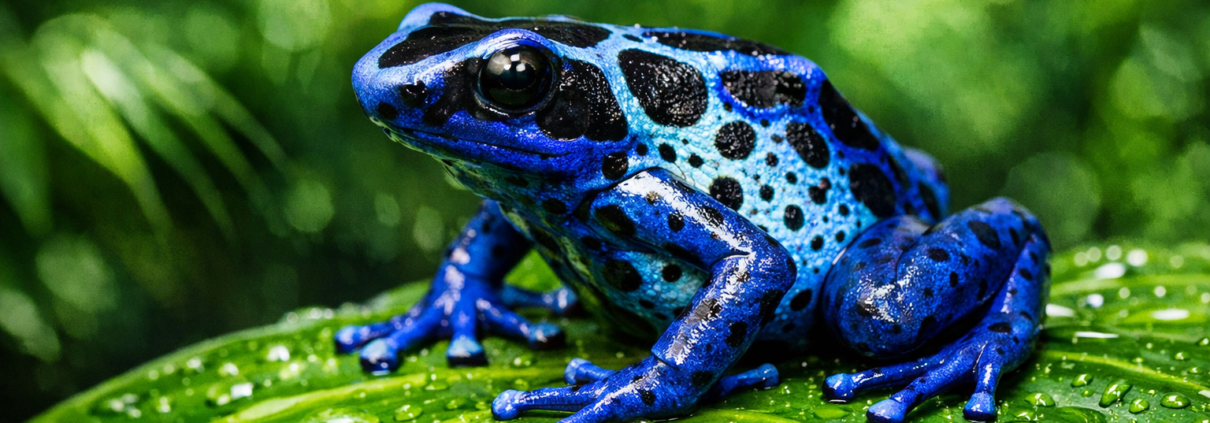
Poison Dart Frog
Last updated: April 14, 2026
Quick Answer: A poison dart frog is a small, brilliantly colored amphibian from Central and South America. Captive-bred dart frogs are non-toxic, legal to own in most U.S. states, and make fascinating pets for hobbyists willing to maintain a humid, planted vivarium. They thrive at 72–80°F with high humidity, a live-culture insect diet, and a bioactive enclosure setup.
No products found which match your selection.
Key Takeaways
- 🐸 Poison dart frogs get their toxicity from wild insects — captive-bred specimens are completely non-toxic and safe to handle occasionally.
- 🎨 Dozens of captive color morphs exist, from electric blue to strawberry red to bumblebee yellow — each with distinct care needs.
- 🌿 A bioactive vivarium with live plants, proper humidity (80–100%), and UVB lighting is essential for long-term health.
- 🦟 Fruit flies (Drosophila) and springtails are the primary diet staples for most dart frog species in captivity.
- 📦 CB Reptile ships captive-bred poison dart frogs overnight across the USA, with a real animal biologist on staff to ensure each animal’s health before shipping.
- ⚖️ Always verify local laws — a few states and municipalities have specific amphibian ownership regulations.
- 💰 Prices range from roughly $30 for common morphs to $150+ for rare or specialty morphs.
- 🔬 Lifespan in captivity can reach 10–15 years with proper husbandry.
- 🌡️ These frogs do not tolerate temperatures above 85°F — overheating is a leading cause of captive death.
- 🐸 Beginners should start with Dendrobates leucomelas (bumblebee dart frog) or Dendrobates tinctorius — both are hardy and widely available.
What Is a Poison Dart Frog and Why Do People Keep Them as Pets?
A poison dart frog is any member of the family Dendrobatidae, a group of small, diurnal frogs native to the tropical rainforests of Central and South America. They’re best known for their striking aposematic (warning) coloration and, in the wild, their potent skin toxins derived from their natural insect diet.
In captivity, the story changes completely. Captive-bred dart frogs produce zero toxins because they never consume the wild mites, ants, and beetles that fuel their chemical defenses. This makes them safe, legal, and genuinely rewarding pets.
People keep dart frogs for several reasons:
- Visual impact: Few animals match their color intensity. A vivarium of dart frogs is essentially living art.
- Diurnal behavior: Unlike most reptiles, dart frogs are active during the day, so you actually see them.
- Manageable size: Most species reach 1–2 inches, making space requirements modest.
- Longevity: With good care, a dart frog can live 10–15 years — a serious long-term companion.
- Breeding potential: Many hobbyists progress into breeding, which is both scientifically interesting and financially rewarding.
“Captive-bred dart frogs are among the most visually stunning amphibians you can legally own in the United States — and they’re far more manageable than most people expect.”
What Are the Most Popular Poison Dart Frog Color Morphs?
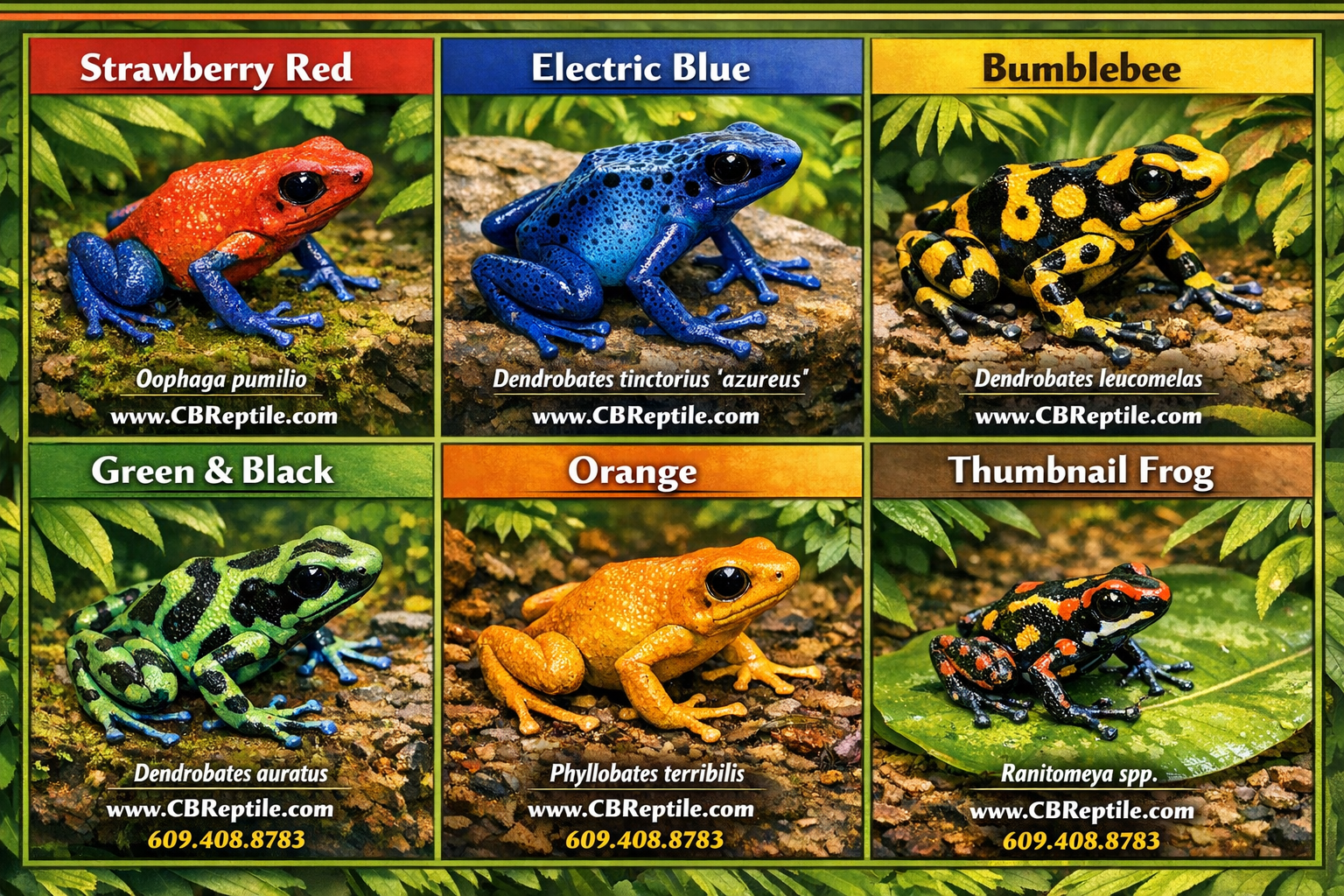
The sheer variety of poison dart frog morphs is one of the biggest draws for collectors. Here’s a breakdown of the most sought-after species and morphs available in 2026.
Dendrobates tinctorius (Dyeing Dart Frog)
One of the largest and most variable dart frog species. Popular morphs include:
| Morph Name | Primary Colors | Difficulty |
|---|---|---|
| Azureus | Electric blue + black | Beginner |
| Powder Blue | Pale sky blue + black | Beginner |
| Patricia | Yellow + black | Intermediate |
| Nominat | Blue, yellow, black | Intermediate |
| Oyapock | Black + white | Intermediate |
Dendrobates leucomelas (Bumblebee Dart Frog)
Bold yellow-and-black banding makes this one of the most recognizable morphs. Hardy, vocal, and excellent for beginners. CB Reptile carries the bumblebee poison dart frog as one of its flagship offerings.
Oophaga pumilio (Strawberry Dart Frog)
Found in dozens of naturally occurring color variants (called “morphs” by hobbyists), including:
- Bastimentos (blue jeans — red body, blue legs)
- Almirante (orange-red with black spots)
- Bocas (bright red, minimal spotting)
- Cristobal (yellow-green)
Ranitomeya (Thumbnail Dart Frogs)
Tiny (under 1 inch), intensely patterned frogs. Popular species include R. imitator, R. variabilis, and R. amazonica. These are best for intermediate to advanced keepers due to their small size and specific humidity needs.
Phyllobates terribilis (Golden Poison Frog)
The most toxic frog species in the wild — but again, captive-bred specimens are completely non-toxic. Available in three color morphs: orange, yellow, and mint green. Surprisingly bold and personable in captivity.
Dendrobates auratus (Green-and-Black Dart Frog)
A classic beginner species with metallic green and black patterning. Several locale variants exist, including the popular Microspot and Costa Rican forms.
How Do You Set Up the Ideal Poison Dart Frog Habitat?
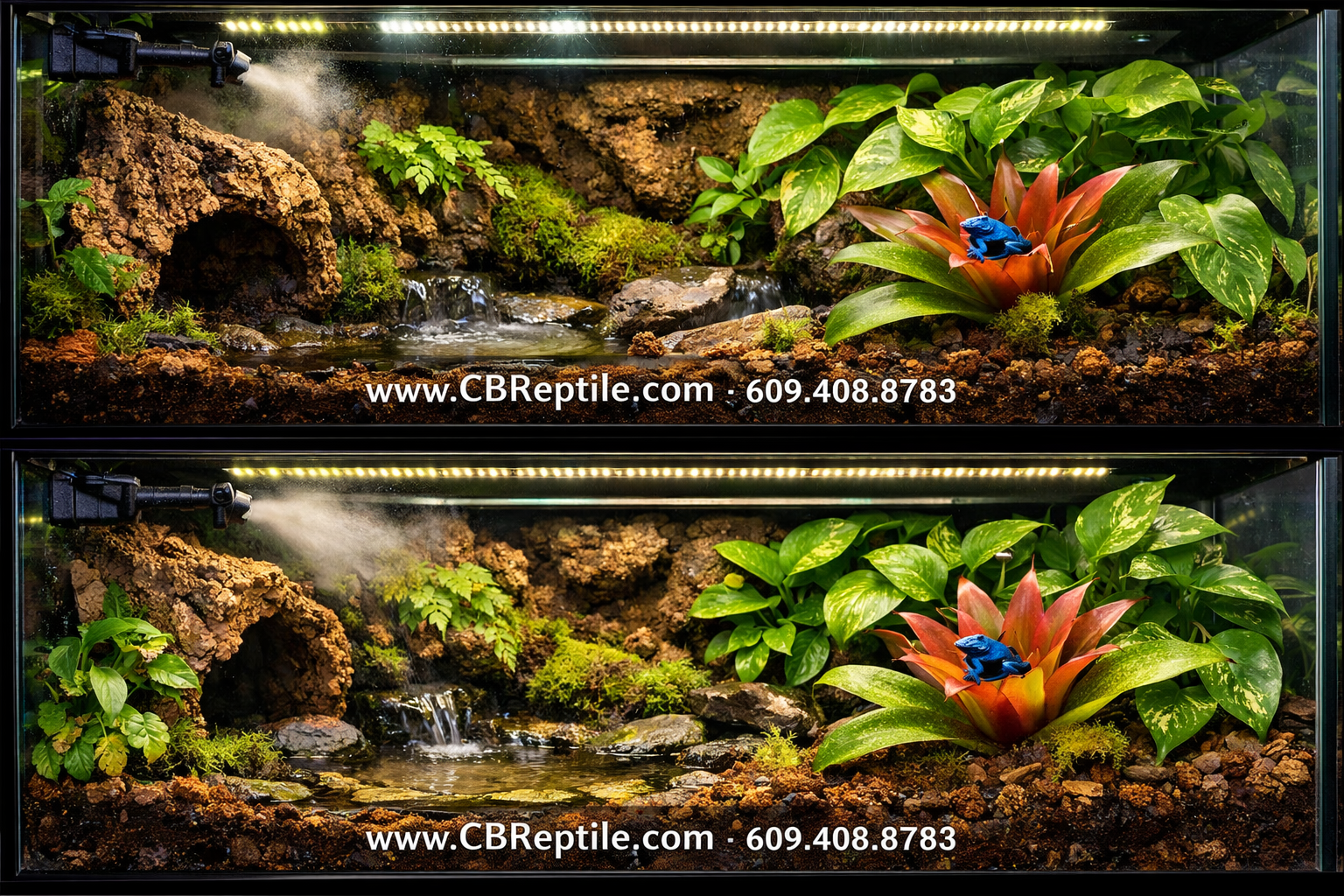
A proper poison dart frog habitat mimics the humid rainforest floor. The enclosure type, substrate, plants, and humidity system all work together — cutting corners on any one element leads to stress and health problems.
Enclosure size: A minimum 10-gallon tank works for a single small species, but a 20-gallon vertical (tall) enclosure is the standard recommendation for a pair. Larger species like D. tinctorius do best in 29-gallon or larger setups.
Substrate and Drainage
Use a false bottom drainage layer beneath your substrate to prevent waterlogging:
- Add 2–3 inches of drainage layer (LECA balls or hydroballs).
- Place a fine mesh screen over the drainage layer.
- Add 3–4 inches of ABG mix (tree fern fiber, long-fiber sphagnum moss, orchid bark, charcoal, peat).
- Top-dress with live moss (sheet moss or pillow moss).
This bioactive approach supports microfauna like springtails and isopods, which clean waste and maintain the vivarium ecosystem. For more vivarium design inspiration, check out our terrarium habitat decor guide.
Temperature and Humidity
- Daytime temp: 72–78°F
- Nighttime temp: 65–72°F (a slight drop is beneficial)
- Humidity: 80–100% at all times
- Misting: 2–3 times daily, or use an automated misting system
⚠️ Critical mistake: Never let temps exceed 85°F. Dart frogs have no heat tolerance buffer — even brief overheating can be fatal.
Lighting
A 12-hour light cycle using a full-spectrum LED or T5 UVB bulb supports plant growth and the frog’s natural circadian rhythm. Low-wattage bulbs prevent overheating. You can reference our Pacman frog lighting guide for general amphibian lighting principles that apply here as well.
Plants and Decor
Live plants are not optional — they’re functional. Good choices include:
- Bromeliads (provide water pools for egg-laying)
- Pothos and philodendron (fast-growing, humidity-loving)
- Ficus pumila (creeping fig for background coverage)
- Orchids (adds visual interest)
- Cork bark tubes and rounds (hides and climbing surfaces)
What Do Poison Dart Frogs Eat in Captivity?
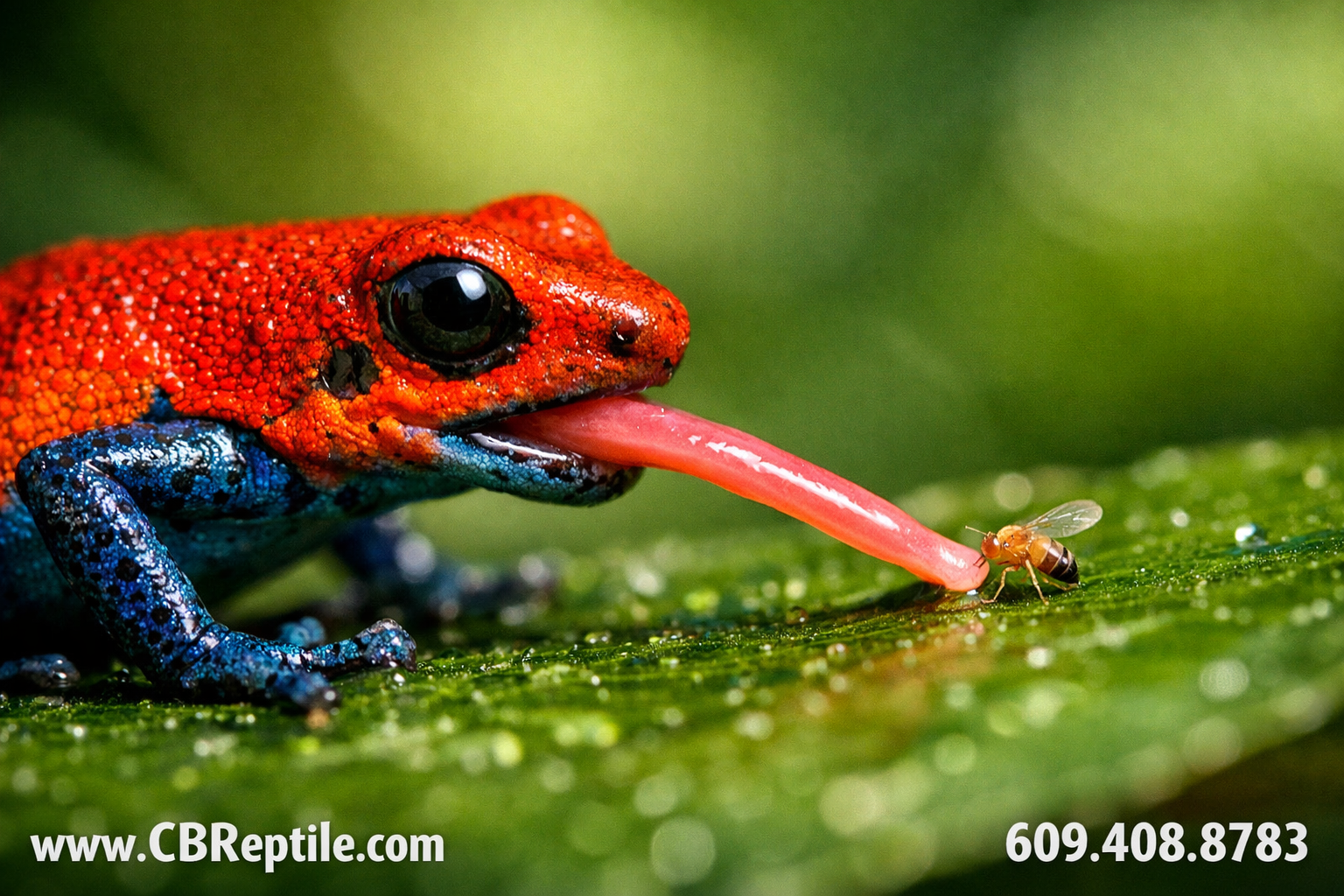
Captive dart frogs eat small live insects — primarily fruit flies — supplemented with other micro-prey as the frogs grow. Feeding the right prey at the right size, dusted with the right supplements, is the single most important factor in long-term health.
Primary Feeders by Frog Size
| Frog Size | Primary Feeder | Secondary Feeder |
|---|---|---|
| Under 0.75 in (thumbnails) | D. melanogaster fruit flies | Springtails |
| 0.75–1.5 in (most species) | D. hydei fruit flies | Springtails, small isopods |
| 1.5 in+ (tinctorius, terribilis) | D. hydei + small crickets | Waxworms (occasional treat) |
Supplementation Schedule
Dust feeders with supplements at every feeding:
- Calcium without D3: 4–5 times per week
- Calcium with D3: 1–2 times per week
- Multivitamin (Repashy or similar): Once per week
Feeding Frequency
- Juveniles (under 6 months): Daily
- Adults: Every other day, or 4–5 times per week
Common mistake: Overfeeding adult dart frogs leads to obesity, which shortens lifespan. If your frog’s abdomen looks bloated or round, reduce feeding frequency.
Are Poison Dart Frogs Toxic and Safe to Handle?
Captive-bred poison dart frogs are non-toxic. Their wild counterparts sequester alkaloid toxins from specific dietary insects (particularly mites, ants, and beetles) that simply don’t exist in a captive diet. Without those dietary precursors, no toxins are produced.
That said, handling should still be minimal:
- Dart frogs are display animals, not handling pets.
- Stress from frequent handling can suppress their immune system.
- Always wash hands before and after any contact to avoid transferring oils, lotions, or pathogens.
- Reserve handling for health checks, enclosure transfers, or brief observation.
For anyone comparing amphibian pets, dart frogs are significantly more hands-off than something like a Pacman frog, which tolerates occasional handling better. Both are rewarding in their own ways.
Where Can You Buy Healthy Captive-Bred Poison Dart Frogs?
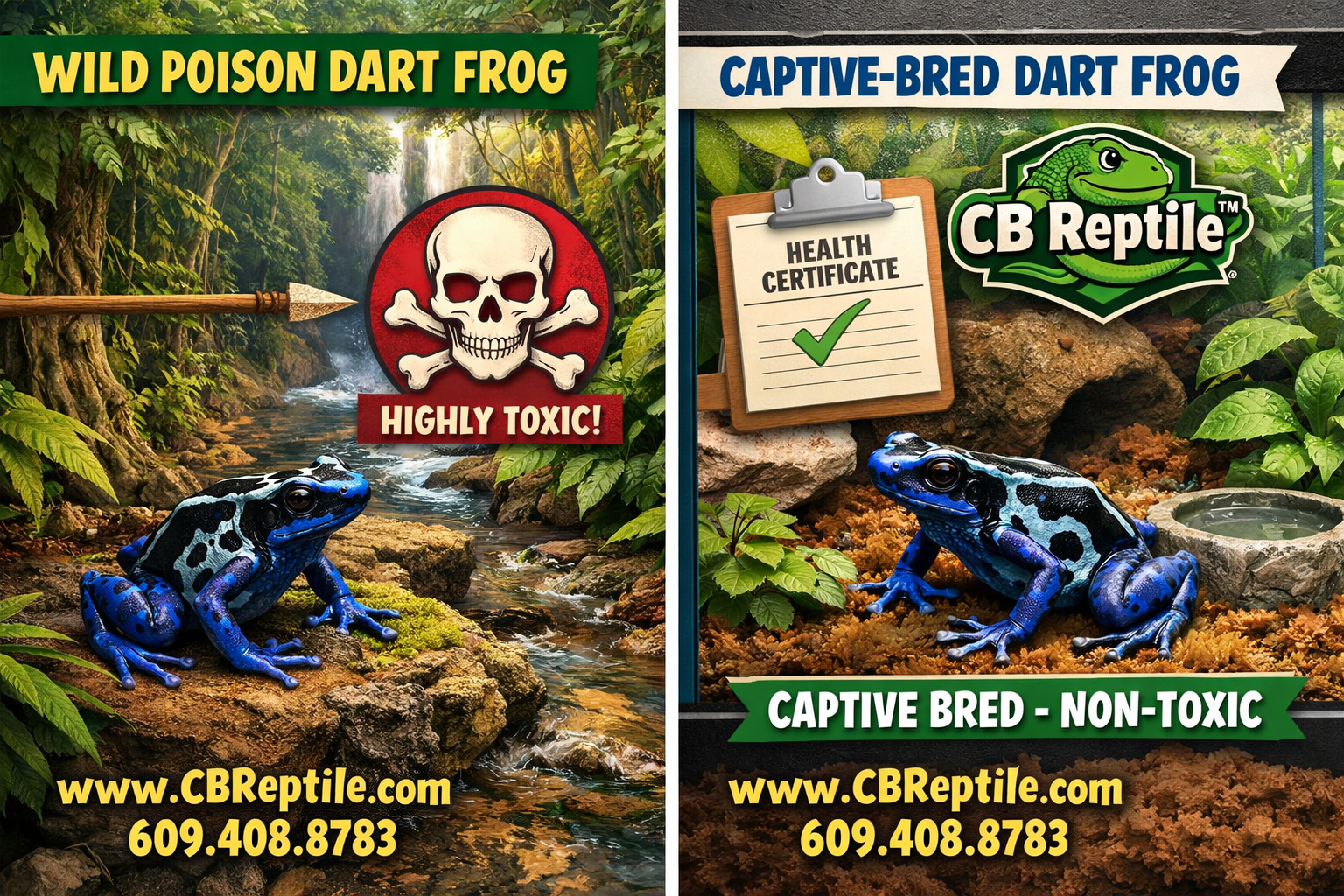
Always buy captive-bred (CB) dart frogs from a reputable source. Wild-caught specimens carry parasites, stress poorly, and contribute to wild population pressure. In 2026, there’s simply no reason to buy wild-caught when high-quality CB animals are widely available.
CB Reptile is one of the top sources for poison dart frogs for sale in the United States. What sets CB Reptile apart:
- ✅ Real animal biologist on staff — unlike most reptile stores, CB Reptile employs a credentialed animal biologist who oversees health protocols, breeding programs, and pre-shipment health checks. This is a genuine differentiator in the hobby.
- ✅ Overnight shipping — all dart frogs ship via overnight courier with insulated packaging and heat/cold packs as needed, minimizing transit stress.
- ✅ Captive-bred guarantee — every animal is CB, never wild-caught.
- ✅ Wide morph selection — from beginner leucomelas to rare Ranitomeya thumbnails.
You can also browse their full selection of dart frogs for sale alongside other exotic reptiles and amphibians.
For broader reptile shopping options, reptiles for sale at Reptiles.com is another established reptile store online worth bookmarking.
Choose CB Reptile if:
- You want a health-checked, biologist-verified animal.
- You’re in the continental U.S. and need overnight delivery.
- You want access to rare morphs with expert guidance.
Price range to expect:
- Common morphs (leucomelas, auratus): $30–$60
- Mid-tier morphs (tinctorius locales, pumilio variants): $60–$100
- Rare morphs (Ranitomeya species, rare tinctorius locales): $100–$200+
When your dart frog arrives, have the vivarium fully cycled and at proper temperature and humidity before the animal ships. A prepared enclosure reduces acclimation stress significantly. You can also explore our gecko habitats for sale page for enclosure ideas that translate well to dart frog setups.
What Are Common Health Problems in Poison Dart Frogs?
Most dart frog health issues stem from husbandry errors rather than infectious disease. Here are the most common problems and how to address them.
Chytrid Fungus (Batrachochytrium dendrobatidis)
A serious fungal infection affecting amphibians worldwide. Symptoms include lethargy, skin sloughing, and loss of righting reflex. Prevention: quarantine all new animals for 30–60 days, maintain clean water sources, and source only from reputable CB breeders.
Metabolic Bone Disease (MBD)
Caused by calcium or vitamin D3 deficiency. Signs include limb deformities, inability to jump, and jaw abnormalities. Prevention: consistent supplementation schedule (see feeding section above).
Toxic Out Syndrome
A stress response where frogs excrete waste toxins through their skin, effectively poisoning themselves. Triggered by chemical contamination (cleaning products, pesticides, treated tap water). Prevention: use only dechlorinated or RO water; never use chemical cleaners near the vivarium.
Bacterial Infections
Red-leg syndrome (reddening of the abdomen and legs) indicates bacterial septicemia, often linked to poor water quality or injury. Treatment: veterinary-prescribed antibiotics; improve enclosure hygiene immediately.
FAQ: Poison Dart Frog Questions Answered
Q: Can poison dart frogs live together?
Many species can be kept in same-species pairs or small groups, but mixing species is risky due to competition and disease transmission. D. leucomelas and D. tinctorius are generally tolerant of conspecifics.
Q: How long do dart frogs live in captivity?
With proper care, most species live 10–15 years. Some Phyllobates and Dendrobates specimens have reportedly exceeded 20 years in well-maintained collections.
Q: Do dart frogs need UVB lighting?
UVB is beneficial and increasingly recommended, though not universally considered mandatory. It supports vitamin D3 synthesis and natural behavior. A low-output T5 UVB (5.0 or 6%) on a 12-hour cycle is a safe choice.
Q: Can I breed poison dart frogs at home?
Yes. Many species breed readily in captivity when provided with proper conditions, including egg-laying sites (film canisters, bromeliad axils), stable humidity, and a slight seasonal temperature variation.
Q: Are dart frogs legal to own in all U.S. states?
Most states allow dart frog ownership with no permit required. A few states (California, Hawaii) have stricter amphibian import regulations. Always verify your state and local ordinances before purchasing.
Q: What’s the best beginner dart frog species?
Dendrobates leucomelas (bumblebee dart frog) is the top recommendation for beginners — hardy, bold, vocal, and widely available. Dendrobates tinctorius azureus is a close second.
Q: How often should I mist the vivarium?
At minimum twice daily (morning and evening). Automated misting systems set to 2–3 cycles per day at 30–60 seconds each are the most consistent solution.
Q: Do dart frogs need a water dish?
A shallow water dish (no deeper than the frog’s chin) is helpful but not required if the vivarium maintains high humidity and has a water feature. Always use dechlorinated or RO water.
Q: Can dart frogs eat crickets?
Larger species (D. tinctorius, P. terribilis) can eat pinhead crickets. However, fruit flies remain the staple because they’re the right size, easy to culture, and can’t escape and stress the frogs.
Q: How do I know if my dart frog is healthy?
A healthy dart frog is active during the day, has bright, even coloration, a slightly rounded (not bloated or sunken) abdomen, clear eyes, and moves with coordinated jumps. Lethargy and color fading are early warning signs.
Conclusion: Your Next Steps With Poison Dart Frogs
Poison dart frogs are among the most rewarding exotic pets available in 2026 — visually stunning, behaviorally interesting, and genuinely manageable once you understand their core needs. The key points to act on:
- Choose your species wisely. Start with D. leucomelas or D. tinctorius if you’re new to the hobby. Research the specific morph’s humidity and temperature preferences before buying.
- Build the vivarium first. Cycle your bioactive setup for 2–4 weeks before your frog arrives. Stable humidity and established microfauna make a huge difference in acclimation.
- Source from a reputable breeder. CB Reptile’s on-site animal biologist, overnight shipping, and captive-bred guarantee make them the strongest choice for buyers in the USA. Browse their current poison dart frog for sale listings to see available morphs.
- Commit to the supplementation schedule. Calcium and vitamin dusting is non-negotiable for long-term health.
- Join the community. Forums like Dendroboard connect you with experienced keepers who can troubleshoot problems and share breeding tips.
Whether you’re setting up your first vivarium or expanding an existing collection, the dart frog hobby rewards patience and attention to detail. Get the setup right, source healthy animals, and these tiny jewels of the rainforest will thrive for a decade or more.
References
- Caldwell, J.P. (1996). The evolution of myrmecophagy and its correlates in poison frogs (Family Dendrobatidae). Journal of Zoology, 240(1), 75–101.
- Daly, J.W., Garraffo, H.M., & Spande, T.F. (1999). Alkaloids from frog skin: The discovery of epibatidine and the potential for developing novel non-opioid analgesics. Natural Product Reports, 16(5), 547–568.
- Vitt, L.J., & Caldwell, J.P. (2014). Herpetology: An Introductory Biology of Amphibians and Reptiles (4th ed.). Academic Press.
- Lotters, S., Jungfer, K.H., Henkel, F.W., & Schmidt, W. (2007). Poison Frogs: Biology, Species & Captive Husbandry. Edition Chimaira.
🐸 Poison Dart Frog Species Finder
Answer 3 quick questions to find your ideal dart frog match.