
Poison dart frogs for sale
Last updated: April 14, 2026
Quick Answer: Captive-bred poison dart frogs are legal, safe to handle (they lose toxicity in captivity), and available from reputable breeders like CB Reptile, which ships overnight across the USA. Prices typically range from $40 to $250+ depending on the morph. Before buying, you need to understand housing, diet, legal requirements, and which morph fits your experience level.
No products found which match your selection.
Key Takeaways
- 🐸 Captive-bred dart frogs are non-toxic — their poison comes from wild diet, not genetics
- 💰 Entry-level morphs start around $40–$60; rare morphs can exceed $200 per frog
- 🏠 A 10–20 gallon bioactive vivarium is the minimum for a pair
- 🌡️ Dart frogs need 70–80°F temperatures and 80–100% humidity
- 🚚 CB Reptile ships overnight with live arrival guarantees across the USA
- 🔬 CB Reptile has a real animal biologist on site — a major advantage over most online reptile stores
- 📋 Most US states allow dart frogs without permits, but always verify local laws
- 🍽️ Fruit flies (Drosophila) are the primary food source for most species
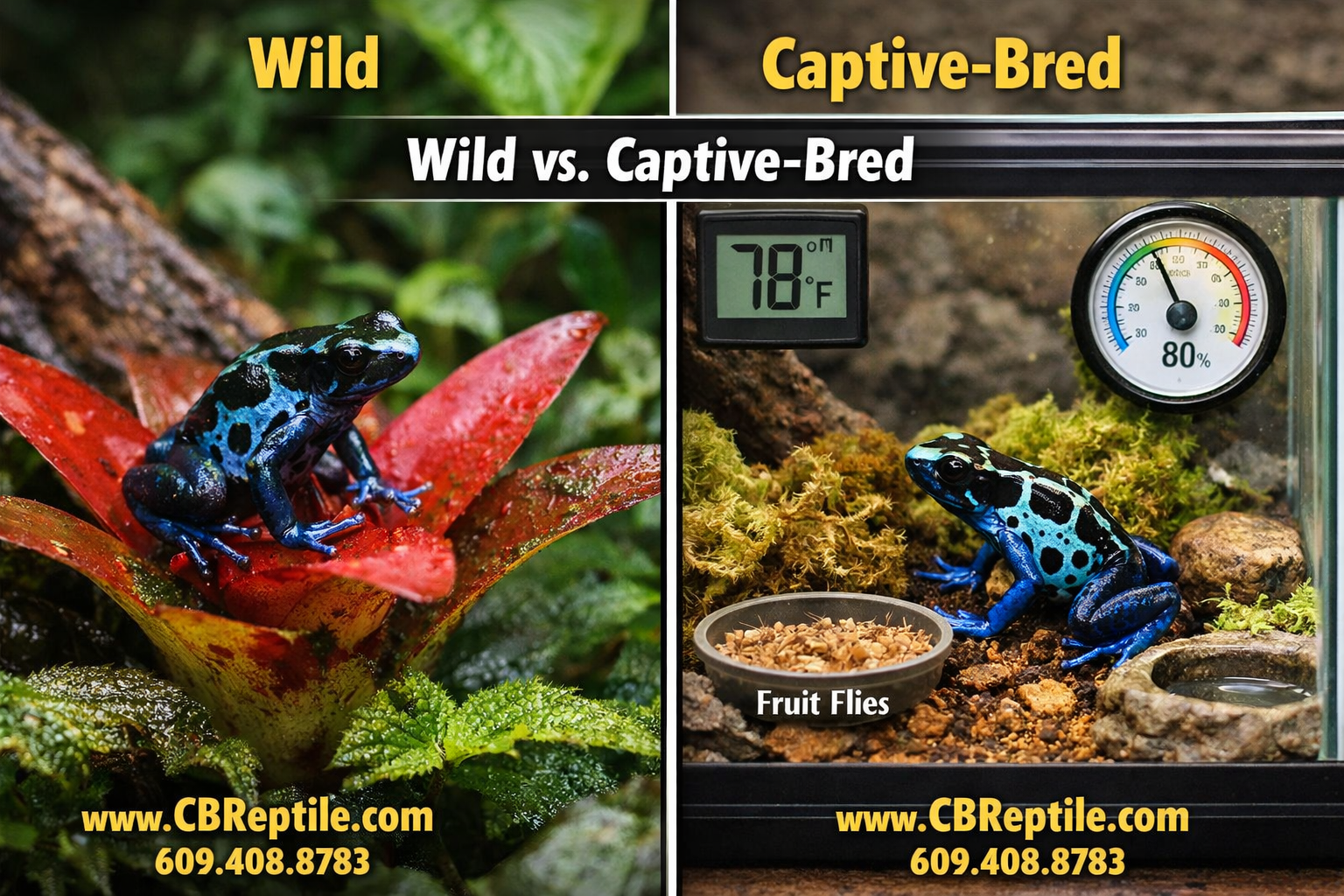
- 🐣 Captive-bred frogs are healthier, less stressed, and better adapted to captivity than wild-caught animals
- 🔗 Always buy from USARK-compliant breeders who provide health guarantees
What Are Poison Dart Frogs and Are They Safe to Keep?
Captive-bred poison dart frogs are completely safe to keep as pets. In the wild, these frogs (family Dendrobatidae) accumulate alkaloid toxins from eating specific insects found in their native Central and South American habitats. In captivity, fed a diet of cultured fruit flies and other feeder insects, they produce zero toxins.
Here’s what makes them so appealing:
- Stunning colors: Blues, reds, yellows, greens, and complex pattern combinations
- Diurnal behavior: Unlike most amphibians, dart frogs are active during the day
- Small footprint: Most species are under 2 inches long
- Long lifespan: Many species live 10–20 years in captivity with proper care
- No venom risk: Captive-bred animals are completely harmless
“The toxicity of poison dart frogs is entirely diet-dependent. A captive-bred frog raised on fruit flies has never produced alkaloid toxins and poses no chemical risk to its keeper.” — widely accepted principle in herpetological husbandry
Choose dart frogs if: You want a visually spectacular, low-odor, small-space pet that thrives in a planted vivarium. Avoid them if: You want a hands-on pet — dart frogs are best observed, not regularly handled.
Where to Find Poison Dart Frogs for Sale in the USA
The best source for poison dart frogs for sale is a captive-bred specialist with verifiable health standards and overnight shipping. CB Reptile is widely recognized as one of the top sources in the USA, offering a broad selection of morphs, live arrival guarantees, and the backing of an on-site animal biologist — something most reptile stores simply don’t have.
Why the breeder source matters:
| Source Type | Health Guarantee | CB Status | Expert Support | Overnight Shipping |
|---|---|---|---|---|
| CB Reptile | ✅ Yes | ✅ Always CB | ✅ Biologist on site | ✅ Yes |
| Local pet store | ❌ Rarely | ❌ Often WC | ❌ Rarely | N/A |
| Reptile expos | ⚠️ Sometimes | ⚠️ Mixed | ⚠️ Varies | N/A |
| Random online sellers | ❌ Rarely | ❌ Unknown | ❌ No | ❌ Varies |
CB Reptile ships overnight to all 48 contiguous states, meaning your frog arrives in under 24 hours and isn’t stressed by multi-day transit. This is critical for amphibians, which are far more sensitive to temperature swings and dehydration than reptiles.
You can also browse dart frogs for sale alongside other exotic amphibians and reptiles on the CB Reptile main site. For additional research and comparing breeders, reptiles for sale listings at reptiles.com provide a useful reference point for the broader market.
Common mistake: Buying from a seller who can’t confirm captive-bred status. Always ask for the generation (F1, F2, etc.) and the breeding pair’s history.
Popular Poison Dart Frog Morphs and Color Varieties
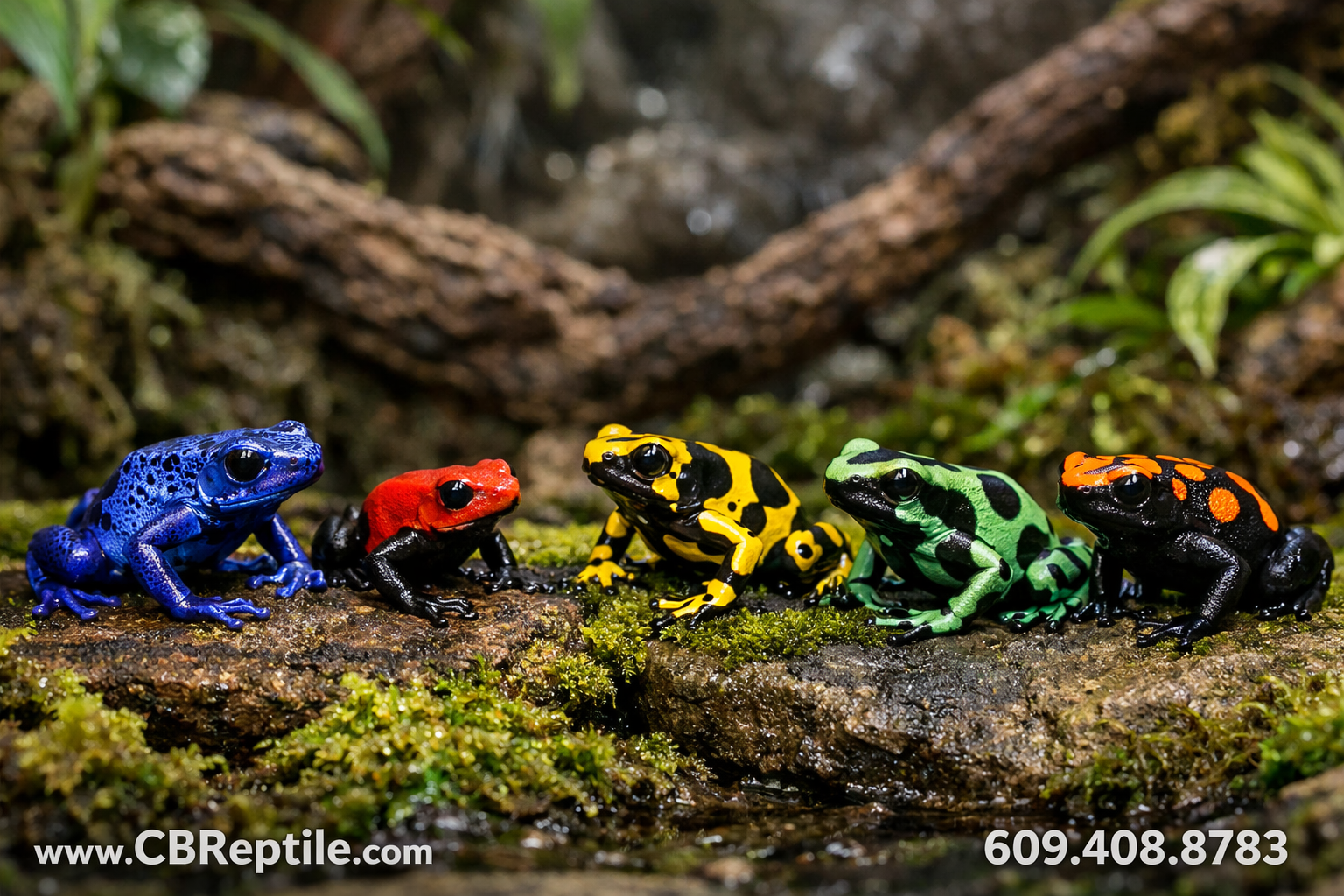
There are over 170 recognized species in family Dendrobatidae, but the hobby focuses on roughly a dozen that breed reliably in captivity. Here’s a breakdown of the most sought-after morphs available as poison dart frogs for sale from CB Reptile:
Dendrobates tinctorius (Dyeing Poison Dart Frog)
The most diverse species in terms of color morphs. Popular varieties include:
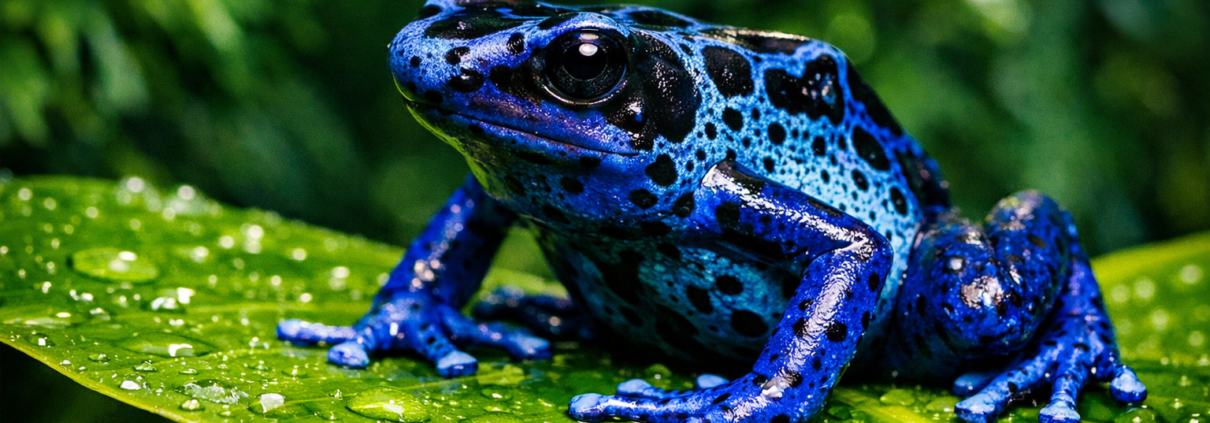
- Azureus: Electric blue body with black spots — the “classic” dart frog look
- Patricia: Yellow and black, highly sought after
- Cobalt: Deep blue with minimal patterning
- Powder Blue: Pale blue with fine black spotting
- Citronella: Bright yellow with black markings
- Bumblebee: Bold yellow and black striping — you can view the Bumblebee Poison Dart Frog specifically on CB Reptile’s product page
Dendrobates leucomelas (Bumblebee Dart Frog)
Bold yellow and black bands. Hardy, beginner-friendly, and one of the most active species. Excellent starter morph.
Oophaga pumilio (Strawberry Poison Dart Frog)
Famous for the “Blue Jeans” morph (red body, blue legs) and the all-red “Bastimentos” form. More challenging to keep but stunning.
Ranitomeya imitator (Mimic Poison Frog)
Thumbnail-sized frogs that mimic other toxic species. Morphs include:
- Varadero: Red and black
- Tarapoto: Orange and black
- Intermedius: Yellow-striped
Ranitomeya variabilis (Splendid Poison Frog)
Green and black with intricate reticulated patterning. One of the most beautiful thumbnail species.
Phyllobates terribilis (Golden Poison Frog)
The most toxic frog species in the wild — but captive-bred individuals are completely safe. Available in orange, yellow, and mint morphs. Larger than most dart frogs at around 2 inches.
Adelphobates galactonotus (Splash-Back Poison Frog)
Orange, red, or yellow “splash” pattern on a black body. Striking and increasingly popular in the hobby.
Epipedobates tricolor (Phantasmal Poison Frog)
Red with white stripes. Historically significant — a compound derived from its skin inspired research into non-opioid pain relievers (per a 1992 study by John Daly at NIH).
How to Set Up a Poison Dart Frog Vivarium
A proper vivarium is the foundation of dart frog health. These frogs don’t tolerate dry conditions, poor ventilation, or temperature extremes.
Minimum Tank Requirements
| Parameter | Requirement |
|---|---|
| Tank size (pair) | 10 gallons minimum; 20 gallons preferred |
| Temperature | 72–80°F (22–27°C) |
| Humidity | 80–100% |
| Lighting | 10–12 hours/day (no direct sunlight) |
| Substrate | Bioactive mix: ABG or coconut fiber + sphagnum moss |
| Ventilation | Cross-ventilation; avoid stagnant air |
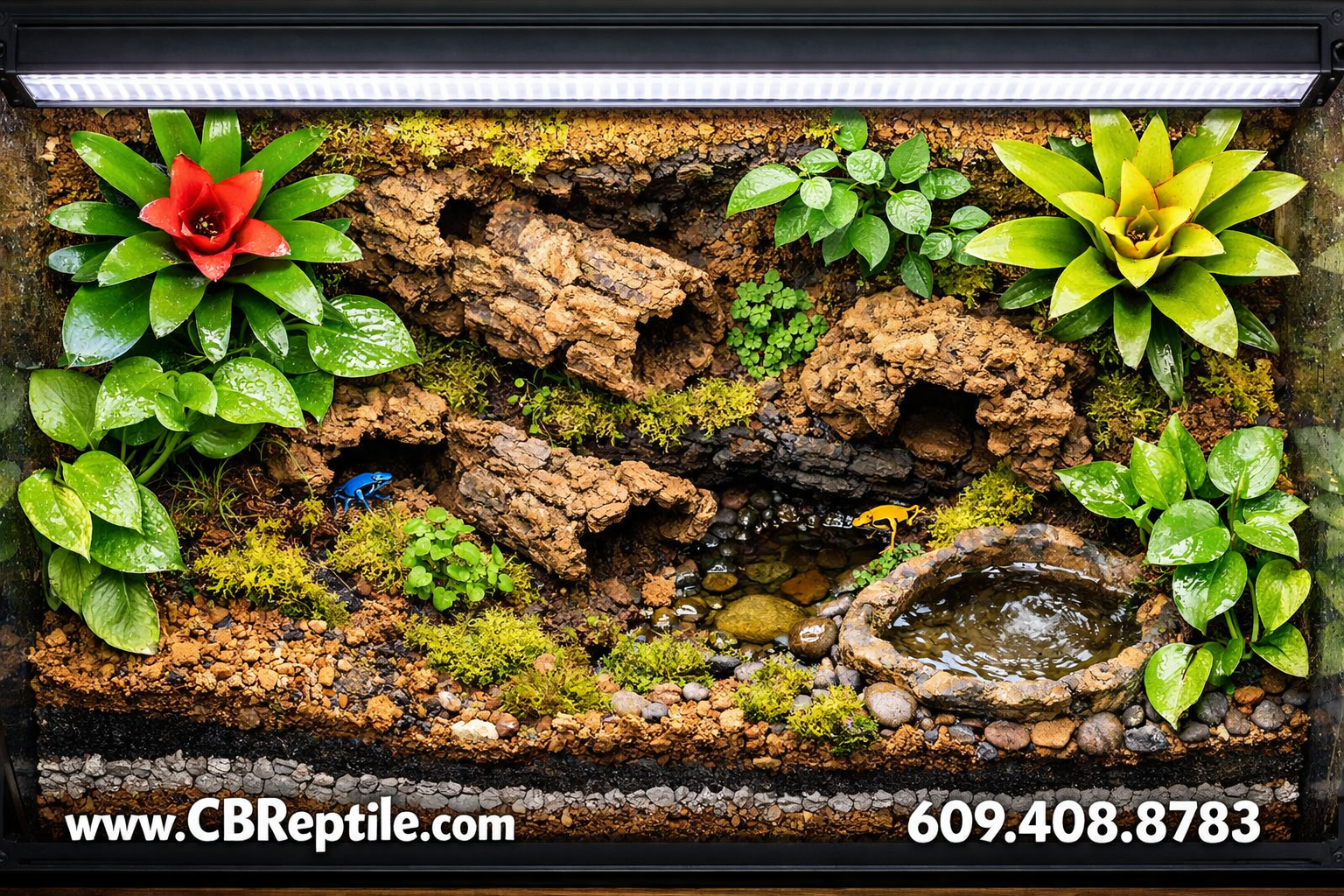
Step-by-Step Vivarium Build
- Choose a front-opening glass terrarium (easier access, better humidity retention)
- Install a drainage layer — LECA (lightweight expanded clay aggregate) or false bottom
- Add a substrate barrier — fine mesh to separate drainage from substrate
- Fill with bioactive substrate — ABG mix or coconut fiber with sphagnum moss
- Plant live plants — pothos, bromeliads, ficus pumila, and peperomia work well
- Add cork bark and leaf litter for hides and humidity retention
- Install lighting — 6500K LED or T5 fluorescent, 10–12 hours daily
- Set up a misting system — automatic misters 2–3 times daily keep humidity stable
A reptile misting system is one of the most useful investments you can make for dart frog keeping — manual misting is inconsistent and time-consuming.
Edge case: If you’re keeping Phyllobates or larger tinctorius, go with at least a 20-gallon tank. Thumbnail species like Ranitomeya can thrive in a 10-gallon but appreciate more vertical space.
What Do Poison Dart Frogs Eat?
Dart frogs are insectivores that require live, moving prey. In captivity, the primary food source is flightless fruit flies (Drosophila melanogaster for smaller frogs, D. hydei for larger species).
Core diet:
- Drosophila melanogaster (melanogaster flies) — for thumbnails and juveniles
- Drosophila hydei (hydei flies) — for adult tinctorius and larger species
- Springtails (Collembola) — excellent supplemental food and vivarium cleanup crew
- Isopods — secondary food and vivarium maintenance
- Pinhead crickets — occasional treat for larger species
Supplementation Schedule
All feeder insects must be dusted with vitamins and calcium before feeding. A typical schedule:
- Every feeding: Calcium without D3
- Every 3rd feeding: Vitamin supplement (Repashy Calcium Plus or similar)
- Every 6th feeding: Calcium with D3
Feeding frequency: Juveniles eat daily. Adults eat every 1–2 days. Offer as many flies as the frog can consume in 15–20 minutes.
Common mistake: Skipping supplementation. Metabolic bone disease is preventable but irreversible once advanced.
How to Buy Poison Dart Frogs for Sale Online Safely
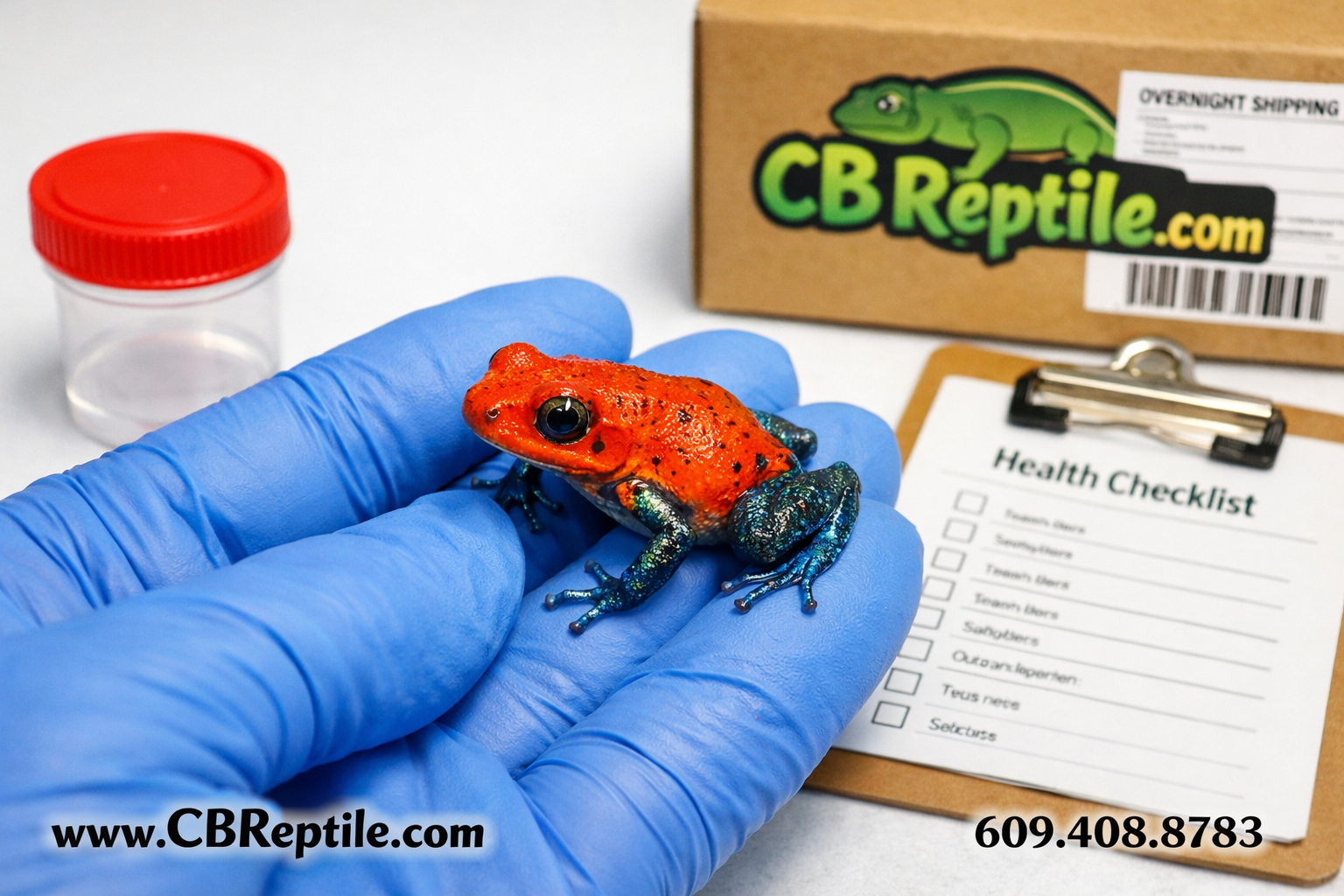
Buying live animals online is safe when you follow a few clear rules. CB Reptile makes the process straightforward with overnight shipping and a live arrival guarantee, but here’s what every buyer should verify before purchasing.
Pre-Purchase Checklist
- Confirm captive-bred status (ask for generation if unsure)
- Verify the seller ships overnight with insulated packaging
- Check that a live arrival guarantee is offered in writing
- Confirm the morph and species match what’s advertised
- Ask about the feeding history and current food size
- Verify your state/local laws allow the species you want
- Have your vivarium fully set up and cycled before the frog arrives
What CB Reptile Does Differently
CB Reptile’s on-site animal biologist reviews animals before they ship. This means health checks go beyond a visual inspection — behavioral assessments, feeding confirmation, and parasite screening are part of the process. Most online reptile stores don’t offer this level of oversight.
When your frog arrives, acclimate it slowly: open the shipping container in a quiet room, let the temperature equalize for 20–30 minutes, and introduce the frog to its vivarium without handling.
If you’re also interested in other exotic pets, CB Reptile carries a wide range of species. For example, pacman frogs for sale are another popular amphibian choice for beginners, and geckos for sale online covers a broad range of gecko species for reptile enthusiasts.
Poison Dart Frog Legal Status and Regulations
In the USA, most captive-bred poison dart frog species are legal to own without a permit at the federal level. However, state and local laws vary.
Key legal points:
- CITES Appendix II covers many wild dart frog species — but captive-bred animals bred in the USA are generally exempt from import restrictions
- Hawaii, California, and a few other states have stricter exotic animal laws — always verify with your state’s Department of Fish and Wildlife before purchasing
- Wild-caught animals face much stricter import regulations; buying CB avoids this entirely
- No federal permit is required for most hobbyist species in most states
Always keep your purchase receipt and any CB documentation. If you’re ever questioned about your animals, proof of captive-bred origin is your best protection.
Poison Dart Frog Care Mistakes to Avoid
Even experienced keepers make these errors. Knowing them in advance saves your frog’s life.
Top 7 mistakes:
- Buying wild-caught animals — stressed, parasite-loaded, and ethically problematic
- Skipping the drainage layer — stagnant water causes bacterial growth and kills frogs
- Using tap water for misting — chlorine and chloramines harm amphibians; use RO or dechlorinated water
- Mixing incompatible species — never house different dart frog species together
- Overfeeding — obesity is a real problem; follow the 15-minute feeding rule
- Ignoring humidity drops — even brief drops below 70% cause stress and respiratory issues
- Handling too often — dart frogs are display animals; frequent handling causes chronic stress
For keepers who also maintain reptiles, similar attention to environmental detail applies across species. Whether you’re setting up a dart frog vivarium or a veiled chameleon habitat, the principle is the same: replicate the animal’s natural environment as closely as possible.
FAQ: Poison Dart Frogs for Sale
Q: Are captive-bred poison dart frogs actually poisonous?
No. Captive-bred dart frogs fed on fruit flies and cultured insects produce no toxins. Their poison in the wild comes entirely from their diet of wild ants, mites, and beetles.
Q: How much do poison dart frogs cost?
Common morphs like D. leucomelas start around $40–$60. Mid-range morphs like D. tinctorius azureus run $80–$130. Rare morphs like R. imitator Varadero or P. terribilis mint can exceed $200 per frog.
Q: How many dart frogs can I keep together?
A 10-gallon tank comfortably houses 2 frogs of the same species. A 20-gallon can house 3–4. Never mix species.
Q: Do poison dart frogs need UVB lighting?
UVB is beneficial but not strictly required if supplementation is consistent. Many successful keepers use 6500K LED lighting and rely on vitamin D3 supplementation instead.
Q: How long do dart frogs live in captivity?
Most species live 10–15 years with proper care. Some tinctorius have been documented living over 20 years in captivity.
Q: Can I handle my dart frog?
Occasional, brief handling is possible but not recommended as routine. Dart frogs are stressed by handling and are best kept as display animals.
Q: What’s the easiest dart frog species for beginners?
Dendrobates leucomelas (bumblebee dart frog) and Dendrobates tinctorius morphs are the most forgiving for beginners. They’re hardy, active, and adapt well to captive conditions.
Q: Do dart frogs need a water dish?
Most dart frogs absorb water through their skin from the humid substrate and misting. A very shallow water dish (no deeper than 0.5 cm) can be offered but isn’t essential if humidity is maintained.
Q: What’s the difference between thumbnails and standard dart frogs?
“Thumbnail” frogs (Ranitomeya and Allobates species) are under 1.5 cm long. They’re more delicate, require smaller food (melanogaster flies), and are generally recommended for intermediate to advanced keepers.
Q: Does CB Reptile offer a live arrival guarantee?
Yes. CB Reptile ships overnight with insulated packaging and offers a live arrival guarantee on all animals, backed by their on-site animal biologist’s pre-shipment health review.
Q: Can dart frogs be kept with other vivarium animals?
Generally, no. Dart frogs should be kept in species-only setups. Mixing with other amphibians or reptiles risks disease transmission, stress, and predation.
Q: Is a bioactive vivarium required?
It’s strongly recommended. Bioactive setups with live plants, springtails, and isopods maintain humidity naturally, reduce waste, and create a far more stable environment than sterile paper-towel setups.
Conclusion: Your Next Steps
Poison dart frogs are among the most visually spectacular pets available in the hobby today — and in 2026, the captive-bred supply has never been better. Here’s how to move forward:
- Choose your morph based on your experience level (start with leucomelas or tinctorius if you’re new)
- Build your vivarium first — have it planted and stabilized for at least 2 weeks before your frog arrives
- Source from CB Reptile for captive-bred, biologist-vetted animals with overnight shipping and live arrival guarantees
- Set up your feeder insect cultures (melanogaster and hydei flies) before your frog arrives
- Verify your local laws — most states are fine, but confirm before ordering
Whether you’re setting up your first bioactive vivarium or adding a rare morph to an established collection, the key is starting with a healthy, captive-bred animal from a source you can trust. CB Reptile’s combination of expert oversight, overnight shipping, and broad morph selection makes them the go-to source for the best quality dart frogs in the USA.
For those exploring other exotic pets alongside dart frogs, CB Reptile also carries leopard geckos for sale, chameleons for sale, and ball pythons for sale — all captive-bred, all shipped overnight. And if you want to compare options across the broader market, reptile store online resources at reptiles.com can help you research additional species and pricing benchmarks.
References
- Daly, J.W., et al. (1992). “Dietary source for skin alkaloids of poison frogs (Dendrobatidae).” Journal of Chemical Ecology, 18(7), 1025–1039.
- Saporito, R.A., et al. (2009). “Oribatid mites as a major dietary source for alkaloids in poison frogs.” PNAS, 106(22), 8998–9003.
- CITES. (2023). Appendix II Species Listing: Dendrobatidae. cites.org
- Summers, K., & Clough, M.E. (2001). “The evolution of coloration and toxicity in the poison frog family (Dendrobatidae).” PNAS, 98(11), 6227–6232.
* { box-sizing: border-box; margin: 0; padding: 0; }
body { font-family: ‘Segoe UI’, Arial, sans-serif; background: #f0f7f0; color: #222; }
.cg-selector-wrap {
max-width: 720px;
margin: 24px auto;
background: #fff;
border-radius: 14px;
box-shadow: 0 4px 24px rgba(0,80,40,0.10);
padding: 28px 24px 32px;
}
.cg-selector-title {
font-size: 1.35rem;
font-weight: 700;
color: #1a5c2e;
margin-bottom: 6px;
text-align: center;
}
.cg-selector-subtitle {
font-size: 0.97rem;
color: #555;
text-align: center;
margin-bottom: 22px;
}
.cg-form-row {
display: flex;
flex-wrap: wrap;
gap: 14px;
margin-bottom: 18px;
}
.cg-form-group {
flex: 1 1 200px;
display: flex;
flex-direction: column;
gap: 5px;
}
.cg-form-group label {
font-size: 0.88rem;
font-weight: 600;
color: #1a5c2e;
text-transform: uppercase;
letter-spacing: 0.04em;
}
.cg-form-group select {
padding: 9px 12px;
border-radius: 7px;
border: 1.5px solid #b2d8b2;
font-size: 0.97rem;
color: #222;
background: #f6fff6;
outline: none;
transition: border-color 0.2s;
}
.cg-form-group select:focus { border-color: #1a5c2e; }
.cg-btn {
display: block;
width: 100%;
padding: 13px;
background: #1a5c2e;
color: #fff;
font-size: 1.05rem;
font-weight: 700;
border: none;
border-radius: 8px;
cursor: pointer;
margin-top: 4px;
transition: background 0.2s;
}
.cg-btn:hover { background: #145023; }
.cg-result {
display: none;
margin-top: 22px;
border-radius: 10px;
background: #f0fff4;
border: 1.5px solid #7ec89e;
padding: 18px 20px;
}
.cg-result.cg-visible { display: block; }
.cg-result-name {
font-size: 1.18rem;
font-weight: 700;
color: #1a5c2e;
margin-bottom: 4px;
}
.cg-result-species {
font-size: 0.88rem;
color: #555;
font-style: italic;
margin-bottom: 10px;
}
.cg-result-grid {
display: grid;
grid-template-columns: 1fr 1fr;
gap: 8px 18px;
margin-bottom: 10px;
}
.cg-result-item { font-size: 0.93rem; }
.cg-result-item span { font-weight: 600; color: #1a5c2e; }
.cg-result-desc { font-size: 0.93rem; color: #333; margin-top: 6px; line-height: 1.5; }
.cg-badge {
display: inline-block;
background: #1a5c2e;
color: #fff;
font-size: 0.78rem;
font-weight: 700;
border-radius: 20px;
padding: 2px 11px;
margin-bottom: 8px;
letter-spacing: 0.03em;
}
.cg-badge.cg-badge-mid { background: #e07b00; }
.cg-badge.cg-badge-adv { background: #b0001a; }
.cg-no-match {
display: none;
margin-top: 18px;
color: #b0001a;
font-size: 0.97rem;
text-align: center;
padding: 12px;
background: #fff0f0;
border-radius: 8px;
border: 1px solid #f0b2b2;
}
.cg-no-match.cg-visible { display: block; }
@media (max-width: 500px) {
.cg-selector-wrap { padding: 16px 8px 20px; }
.cg-result-grid { grid-template-columns: 1fr; }
}
Beginner (first frog)
Intermediate (some experience)
Advanced (multiple species kept)
Tiny (thumbnail, under 1.5cm)
Medium (1.5–3cm)
Larger (3cm+)
Blue / Teal
Yellow / Gold
Red / Orange
Green / Black
No preference
var cgMorphs = [
{
experience: [“beginner”],
size: [“medium”,”large”],
color: [“yellow”,”any”],
name: “Bumblebee Dart Frog”,
species: “Dendrobates leucomelas”,
level: “Beginner”,
levelClass: “”,
temp: “72–80°F”,
humid: “80–100%”,
frogSize: “~3.5 cm”,
price: “$40–$70”,
desc: “The classic beginner dart frog. Bold yellow and black banding, very active during the day, and one of the hardiest species in captivity. Tolerates minor husbandry errors better than most. Highly recommended as a first dart frog.”
},
{
experience: [“beginner”,”intermediate”],
size: [“medium”,”large”],
color: [“blue”,”any”],
name: “Azureus (Blue) Dart Frog”,
species: “Dendrobates tinctorius ‘Azureus'”,
level: “Beginner–Intermediate”,
levelClass: “”,
temp: “72–80°F”,
humid: “80–100%”,
frogSize: “~4 cm”,
price: “$80–$130”,
desc: “The iconic electric-blue dart frog. Bold black spots on vivid blue skin make this one of the most recognizable frogs in the hobby. Hardy and active, suitable for keepers who have a stable vivarium ready.”
},
{
experience: [“beginner”,”intermediate”],
size: [“medium”,”large”],
color: [“green”,”any”],
name: “Green and Black Dart Frog”,
species: “Dendrobates auratus”,
level: “Beginner”,
levelClass: “”,
temp: “70–78°F”,
humid: “80–95%”,
frogSize: “~3.5 cm”,
price: “$45–$80”,
desc: “A classic species with green-on-black or turquoise-on-black patterning. Very adaptable and widely bred in captivity. Good choice for beginners who want a naturalistic vivarium look.”
},
{
experience: [“intermediate”,”advanced”],
size: [“small”],
color: [“red”,”orange”,”any”],
name: “Strawberry Dart Frog (Blue Jeans)”,
species: “Oophaga pumilio”,
level: “Intermediate”,
levelClass: “cg-badge-mid”,
temp: “74–82°F”,
humid: “85–100%”,
frogSize: “~1.7 cm”,
price: “$80–$160”,
desc: “Brilliant red body with blue legs — one of the most striking thumbnail-adjacent species. Requires stable, high humidity and a well-established vivarium with live plants. Best for keepers with some dart frog experience.”
},
{
experience: [“intermediate”,”advanced”],
size: [“small”],
color: [“red”,”yellow”,”any”],
name: “Mimic Poison Frog (Varadero)”,
species: “Ranitomeya imitator ‘Varadero'”,
level: “Intermediate”,
levelClass: “cg-badge-mid”,
temp: “72–80°F”,
humid: “80–100%”,
frogSize: “~1.5 cm”,
price: “$100–$180”,
desc: “A stunning thumbnail frog with red and black patterning. Requires melanogaster fruit flies and a tightly controlled vivarium. Pairs bond and engage in interesting parental care behaviors — rewarding for attentive keepers.”
},
{
experience: [“advanced”],
size: [“large”,”medium”],
color: [“yellow”,”any”],
name: “Golden Poison Frog (Yellow)”,
species: “Phyllobates terribilis ‘Yellow'”,
level: “Advanced”,
levelClass: “cg-badge-adv”,
temp: “74–82°F”,
humid: “80–100%”,
frogSize: “~4.5 cm”,
price: “$120–$220”,
desc: “The largest and most toxic dart frog in the wild — but captive-bred animals are completely safe. Vivid solid yellow coloration and impressive size. Best for experienced keepers who want a showpiece species.”
},
{
experience: [“intermediate”,”advanced”],
size: [“medium”,”large”],
color: [“red”,”orange”,”any”],
name: “Splash-Back Poison Frog (Orange)”,
species: “Adelphobates galactonotus”,
level: “Intermediate”,
levelClass: “cg-badge-mid”,
temp: “74–80°F”,
humid: “80–100%”,
frogSize: “~3 cm”,
price: “$90–$160”,
desc: “Bold orange or red ‘splash’ on a jet-black body. Increasingly popular in the hobby for its dramatic contrast. Requires a well-planted vivarium and consistent humidity. A great step up from beginner species.”
}
];
function cgFindMorph() {
  var exp = document.getElementById('cg-experience').value;
  var sz = document.getElementById('cg-size').value;
  var col = document.getElementById('cg-color').value;
  var resultEl = document.getElementById('cg-result');
  var noMatchEl = document.getElementById('cg-no-match');

  resultEl.classList.remove('cg-visible');
  noMatchEl.classList.remove('cg-visible');

  if (!exp || !sz || !col) {
    noMatchEl.classList.add('cg-visible');
    return;
  }

  var matches = cgMorphs.filter(function(m) {
    var expMatch = m.experience.indexOf(exp) > -1;
    var sizeMatch = m.size.indexOf(sz) > -1;
    var colorMatch = m.color.indexOf(col) > -1 || m.color.indexOf('any') > -1 || col === 'any';
    return expMatch && sizeMatch && colorMatch;
  });

  if (matches.length === 0) {
    matches = cgMorphs.filter(function(m) {
      return m.experience.indexOf(exp) > -1;
    });
  }

  if (matches.length === 0) {
    noMatchEl.textContent = "No exact match found. Try adjusting your selections — all dart frogs are rewarding with proper care!";
    noMatchEl.classList.add('cg-visible');
    return;
  }

  var pick = matches[Math.floor(Math.random() * matches.length)];
  var badge = document.getElementById('cg-level-badge');
  badge.className = 'cg-badge ' + (pick.levelClass || '');
  badge.textContent = pick.level;
  document.getElementById('cg-morph-name').textContent = pick.name;
  document.getElementById('cg-morph-species').textContent = pick.species;
  document.getElementById('cg-temp').textContent = pick.temp;
  document.getElementById('cg-humid').textContent = pick.humid;
  document.getElementById('cg-frog-size').textContent = pick.frogSize;
  document.getElementById('cg-price').textContent = pick.price;
  document.getElementById('cg-desc').textContent = pick.desc;
  resultEl.classList.add('cg-visible');
}