
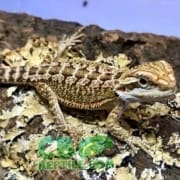
Bearded Dragon Care Guide: Habitat, UVB, Diet and Morphs
The inland bearded dragon (Pogona vitticeps) is one of the most popular pet lizards in the world, and for good reason. Bearded dragons are diurnal, interactive, tolerant of handling and endlessly entertaining to watch. Meeting their needs, however, requires attention to heat, lighting and diet. This guide covers the essentials and introduces the captive-bred bearded dragons raised by our team at www.CbReptile.com.
Natural History
Bearded dragons are native to the arid and semi-arid interior of eastern and central Australia, where they inhabit open woodlands, scrublands and desert edges. They spend their mornings basking on fallen logs, fence posts and rocks, then forage across the ground for insects, flowers and leaves. Australia has prohibited the export of its native wildlife for decades, so every bearded dragon in the pet trade today descends from captive breeding.
The name comes from the spiny throat pouch, which darkens and flares during displays of dominance, courtship or stress. Bearded dragons also communicate through head bobbing and arm waving, behaviors that are fascinating to observe in captivity.
Appearance and Morphs
Wild-type beardies are sandy tan to brown with subtle patterning. Selective breeding has produced a wide variety of colors and scale types, including red, orange, citrus, translucent and hypomelanistic lines. Some popular traits are:

- Hypomelanistic – reduced dark pigment, clear nails and brighter colors.
- Translucent – semi-transparent scales and often dark eyes. Our Hypo Trans Bearded Dragon combines both traits for a strikingly clean look.
- Leatherback – reduced spikes and a smoother body.
- Silkback – the homozygous form of leatherback, with almost no scales. A Silkie Bearded Dragon needs a little extra care, including careful UVB placement and humidity to keep its delicate skin healthy.
Size and Lifespan
Hatchlings are about 3 to 4 inches long. Adults typically measure 16 to 24 inches including the tail and weigh between roughly 350 and 600 grams. A well-kept bearded dragon commonly lives 10 to 15 years.
Temperament
Bearded dragons are generally calm, curious and tolerant. Many seem to enjoy time outside their enclosure and will relax on a keeper’s lap or shoulder. Juveniles can be skittish, but they usually settle with consistent, gentle handling.
Enclosure Setup
Babies can start in a smaller enclosure, but adults need a minimum of 4 x 2 x 2 feet (about 120 gallons). Front-opening enclosures make access easier and reduce stress compared with reaching in from above. Include:
- A sturdy basking platform under the heat source.
- Hides on both the warm and cool sides.
- Climbing branches and rocks for enrichment.
- A safe substrate such as a tile, a bioactive soil and sand mix, or a solid liner for young dragons.
Heat, UVB and Humidity
Bearded dragons need a strong thermal gradient. Aim for a basking surface of roughly 100 to 110°F for adults, a warm-side air temperature in the 80s, and a cool side around 75 to 80°F. Night temperatures can safely drop into the mid to upper 60s.

UVB is essential. Without it, dragons cannot synthesize vitamin D3, and metabolic bone disease follows. Use a high-output linear T5 tube of 10 to 12 percent, spanning one half to two thirds of the enclosure, mounted at the manufacturer’s recommended distance. A ReptiSun T5 HO fixture is a dependable choice. Replace bulbs according to the manufacturer’s schedule, since UVB output declines well before the light stops glowing. Keep humidity around 30 to 40 percent.
Diet
Bearded dragons are omnivores, and their nutritional needs shift with age:
- Juveniles: roughly 70 to 80 percent insects and the rest plants, with insects offered daily.
- Adults: roughly 70 to 80 percent leafy greens and vegetables, with insects a few times per week.
Good staple greens include collards, mustard and turnip greens, dandelion and endive. Squash, bell pepper and edible flowers add variety. Dubia roaches, crickets, black soldier fly larvae and silkworms make excellent feeders. Dust insects with calcium most feedings and use a multivitamin weekly. Avoid feeding insects wider than the space between your dragon’s eyes.
Handling
Approach from the side rather than from above, slide a hand under the chest and support the hind legs and tail. Short, frequent sessions build trust. Always wash hands after handling, as with any reptile.
Why Captive-Bred Matters
Because all bearded dragons in the trade are captive-bred, the real question is how they are raised. Animals hatched and grown under proper UVB, diet and temperatures develop strong bones and confident temperaments. Our captive-bred bearded dragons are handled frequently by our team, including a staff biologist, so they arrive well socialized.

Frequently Asked Questions
Do bearded dragons need UVB lighting?
Yes. A quality linear UVB tube is non-negotiable for calcium metabolism and long-term health.
How often should I feed my bearded dragon?
Juveniles eat insects daily plus fresh greens. Adults should have fresh greens daily and insects two to three times per week.
Why is my bearded dragon not eating?
Common reasons include low basking temperatures, an upcoming shed, a recent move or brumation, a seasonal slowdown many adults experience in cooler months. Check temperatures and UVB first, and see a reptile vet if weight drops.
Can bearded dragons live together?
They are best housed alone. Cohabitation often leads to stress, competition for basking spots and injuries.
Curious about hypo, translucent or silkback dragons? Meet our captive-bred bearded dragons at www.CbReptile.com.