
Bumblebee Dart Frog Care Guide: Vivarium, Humidity, Feeding and Behavior
The bumblebee dart frog, also called the yellow-banded poison dart frog (Dendrobates leucomelas), is one of the most popular dart frogs in the hobby. Its bright yellow to orange bands on a jet black body make it easy to recognize, and its bold, visible nature makes it a great display animal. It is also one of the more forgiving dart frogs, which makes it a good choice for keepers building their first vivarium. You can meet our captive-bred bumblebee dart frog at www.CbReptile.com.
Natural History
Bumblebee dart frogs are native to northern South America, mainly Venezuela, with populations extending into parts of Guyana, Colombia and northern Brazil. They live on humid forest floors among leaf litter, rocks and fallen logs. In some areas they experience a drier season and become less active until rains return. In the wild, dart frogs gain their toxins from the small ants and mites they eat. Captive-bred frogs raised on fruit flies and other feeder insects do not develop those toxins.
Appearance
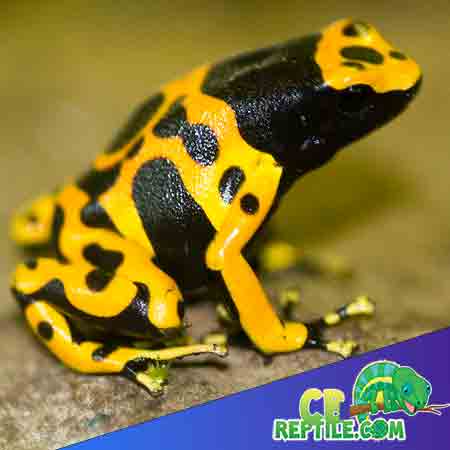
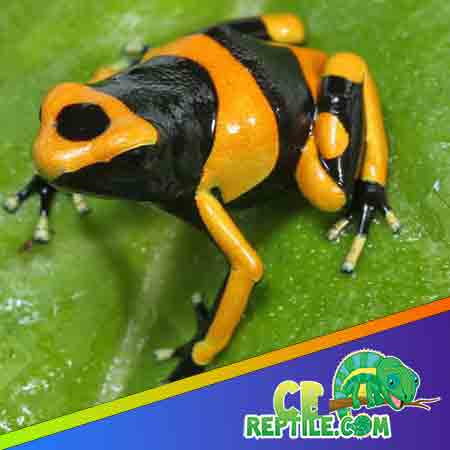
Each frog carries broad yellow, yellow-orange or orange bands crossed and spotted with black. The pattern is unique to each individual, so you can often recognize your frogs by sight. Juveniles may look paler and their colors usually intensify as they mature. Like other Dendrobates, they have slender limbs and toe pads suited to climbing low branches and leaves.
Size and Lifespan
Adults are small, usually about 1.25 to 1.5 inches long, with females often slightly larger and more rounded. With good care, bumblebee dart frogs commonly live 10 years or more in captivity, so they are a long-term commitment despite their size.
Temperament
This species is bold, active by day and often seen exploring the vivarium, which is part of its appeal. Males call with a pleasant buzzing trill. They can be kept as a pair or small group in a well-planted vivarium, but watch for bullying, especially between females, and separate any frog that is not getting food.

Vivarium Setup
An 18 by 18 by 18 inch glass vivarium is a good size for a pair, with larger enclosures for groups. A bioactive setup works best: a drainage layer, a mesh barrier, an ABG-style or tropical substrate mix, and a thick layer of leaf litter. Add cork bark, low branches, broad-leaf plants such as bromeliads and pothos, and several hiding spots. Springtails and isopods help break down waste and mold. Use a tight-fitting lid, since young frogs and feeder insects can escape through small gaps.
Temperature, Humidity and Lighting
Keep daytime temperatures around 72 to 80°F, with a slight drop at night. Avoid temperatures above the low 80s, which can be dangerous. Humidity should stay high, generally 70 to 100 percent, maintained by misting once or twice a day with dechlorinated or RO water. A small amount of airflow helps prevent stagnant air. A plant-grow LED provides light for plants and a natural day cycle; many keepers also add low-level UVB, which is generally considered beneficial when frogs can choose shade.
Diet and Supplements
Bumblebee dart frogs eat tiny live insects. Flightless fruit flies (Drosophila melanogaster or D. hydei) are the staple, supplemented with springtails, isopods and pinhead crickets for juveniles and adults. Feed juveniles daily and adults every day or every other day. Dust most feedings with a quality calcium powder and use a multivitamin that includes vitamin A on a regular schedule. Proper supplementation helps prevent common issues such as metabolic bone disease and spindly leg syndrome in froglets.
Handling
Dart frogs are display animals, not pets for handling. Their skin is delicate and absorbs substances easily, so avoid touching them except when moving them. Use a clean container or deli cup to guide a frog rather than grabbing it, and always wash your hands before and after working in the vivarium.
Why Captive-Bred Matters
Common Health Concerns
Most dart frog problems are linked to supplements, temperature or hygiene. Weak legs, trouble catching flies or a bent spine can point to a calcium or vitamin shortfall. Overheating is a serious risk, so check temperatures near the top of the vivarium on warm days. Thin frogs, frogs that hide constantly or frogs with cloudy eyes or skin sores should be separated and seen by a vet experienced with amphibians. Quarantine new frogs before adding them to an established vivarium.
Captive-bred bumblebee dart frogs are adapted to captive diets, typically carry fewer parasites and are non-toxic. Choosing captive-bred frogs protects wild populations and gives you a healthier start.
Bumblebee Dart Frog FAQ
Are bumblebee dart frogs poisonous?
Captive-bred bumblebee dart frogs are not toxic, because their toxins come from wild prey that they do not eat in captivity.
Can they live with other dart frog species?
Mixing species is not recommended. It can cause stress, competition and unwanted hybrids. Keep each species in its own vivarium.
Are they good for beginners?
Yes. They are hardy, bold and tolerant of slightly warmer temperatures than many dart frogs.
How often should I mist?
Usually once or twice daily, adjusting so the leaf litter stays moist but the substrate never becomes waterlogged.
Meet Our Bumblebee Dart Frogs
If you love bright colors, take a look at our other dart frogs such as the citronella dart frog, blue dart frog and green and black dart frog. Learn more and meet our bumblebee dart frog at www.CbReptile.com.