

Budgett’s Frog Care Guide: The Hippo Frog Explained
With a huge mouth, upturned eyes and a grumpy, sulking expression, Budgett’s frog (Lepidobatrachus laevis) is among the most characterful amphibians in the hobby. Often nicknamed the hippo frog, it is a semi-aquatic ambush predator that is surprisingly simple to keep when its water and temperature are right. This guide covers everything from housing to feeding. You can meet the Budgetts Frog raised by our team at www.CbReptile.com.
Natural History
Budgett’s frogs live in the Gran Chaco, a hot, semi-arid region spanning Paraguay, Argentina and Bolivia. They spend much of the year buried in the soil in a cocoon of shed skin and emerge during heavy rains to breed in temporary pools. They are opportunistic predators that eat almost anything that fits in their wide mouths, including insects, fish and other frogs.
Appearance and Size
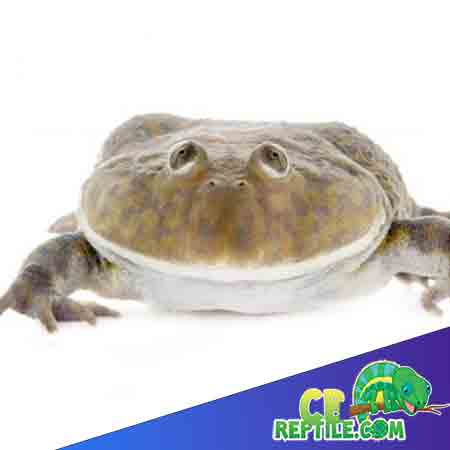
These frogs are broad and flat-headed with olive, brown or gray skin and a round, squat body. Adults are typically 4 to 5 inches in length, with females often larger. They can live 15 years or more in good care, and some have been recorded living longer.
Temperament
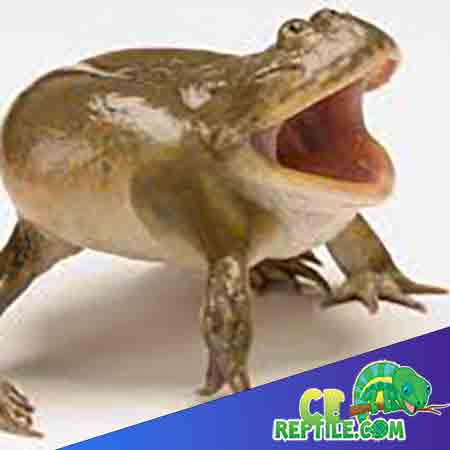
Budgett’s frogs are well known for their defensive display. If startled, they may inflate their bodies, open their mouths wide and even let out a loud scream. They bite readily, so this is a hands-off species and the cage should be serviced carefully. Their behavior is part of the fun when observed from a safe distance.
Enclosure
A single adult needs a 10 to 20 gallon tank with a secure lid. Because the species is largely aquatic, a good setup uses shallow water, about 2 to 4 inches deep, so the frog can rest on the bottom with its nostrils near the surface. Provide a land area or a partially submerged hide where the frog can leave the water if desired. Keep them as solitary animals, as they can eat tank mates.
- Substrate: Bare bottom, smooth river stones too large to swallow, or a thin layer of fine sand.
- Water: Dechlorinated and cleaned regularly.
- Decor: Silk plants, floating plants and smooth hides.
Water Quality and Temperature
Use a dechlorinator on tap water, and consider a gentle filter or frequent partial water changes, since these frogs are messy eaters. Keep water between 78 and 82 degrees Fahrenheit using a submersible heater with a guard, and keep the room air warm and humid. Strong currents can stress the frog, so choose low flow. Test for ammonia and nitrite if you use a filter, and change water if it turns cloudy.
Diet and Feeding
Feed juveniles every day or two and adults two or three times a week. Good staples include earthworms, nightcrawlers, crickets, dubia roaches and occasional pinky mice or feeder fish. Do not overfeed, because these frogs are enthusiastic eaters and obesity is a common problem. Use feeding tongs to avoid accidental bites, and vary the diet for balanced nutrition. Dust insects with calcium and a vitamin supplement.
Health and Maintenance
Healthy frogs look plump but not bloated, and they feed enthusiastically. Watch for red skin, cloudy eyes or lethargy and clean the water immediately if these appear. Shed skin may be eaten or discarded; it is normal. Wash your hands before and after handling water, and use a clean net for each tank.
Why Captive-Bred Matters
Captive-bred frogs adapt readily to prepared feeders and are free of the stress and parasites of wild collection. Our team at www.CbReptile.com focuses on captive-bred animals.
Related Frogs
If you love big-mouthed amphibians, the Pixie frog and the Pacman Frog have similar ambush habits, though they need drier, more terrestrial setups. For a completely different frog look, see the Dumpy Tree Frog.
Frequently Asked Questions
Can a Budgett’s frog live in a bare tank?
Yes. A bare-bottom tank makes cleaning easier, although some keepers add smooth stones or sand for a natural look.
Do they need UVB?
Not strictly, but low-level UVB lighting can be helpful for some keepers, and a regular day and night cycle is beneficial.
Can I handle my frog?
It is best to avoid it. Their skin is delicate and they can bite hard.
How often should I change the water?
Clean or partially replace water often, usually every few days for unfiltered setups, or whenever it looks dirty.
Estivation and Natural Behavior
In the wild, Budgett’s frogs survive dry seasons by burying themselves and forming a cocoon of shed skin that slows water loss. In captivity, a healthy frog in warm water has no reason to do this, but you may occasionally see a frog sit motionless for long periods or produce a layer of shed skin. This is a normal behavior, not a sign of illness, as long as the water stays clean and warm. Do not remove a frog from its water to dig out a cocoon.
Setting Up Step by Step
Rinse any rocks, fill the tank with dechlorinated water, and run the heater for a day to check stability. Add a floating plant and smooth hides, then introduce the frog without handling by gently tipping a container into the water. Wait a day or two before feeding so it can settle, and use a thermometer in the water to confirm the temperature.
Want to explore more amphibians? Visit www.CbReptile.com. Another option is the Budgetts Frog page to learn what is currently available.