Tag Archive for: captive bred lizards

Red Uromastyx Care Guide: Heat, UVB and a Plant-Based Diet

Uromastyx, often called spiny-tailed lizards or simply “uros,” are sun-loving, plant-eating desert lizards with calm personalities and spectacular colors. The red phase in particular turns heads, with fiery backs that glow brighter as the lizard warms up. This guide explains how to give a uromastyx the intense heat, strong UVB and plant-based diet it needs, and introduces the captive-raised Red Uromastyx at www.CbReptile.com.

Natural History

Uromastyx is a genus of agamid lizards found across North Africa, the Middle East and southwestern Asia. The red and yellow lizards widely known in the hobby as “Niger uros” are generally attributed to the Saharan spiny-tailed lizard, Uromastyx geyri, of the central Sahara in Algeria, Mali and Niger, where both red and yellow color phases occur. Several closely related species exist, so names and labels vary among keepers.

In the wild, uros live in rocky desert and stony plains, sheltering in deep burrows and rock crevices that buffer them from extreme heat and cold. Each morning they emerge to bask until they reach a high body temperature, then forage on leaves, flowers and seeds. Much of their water comes from the plants they eat, and they conserve moisture efficiently, even excreting excess salt through nasal glands.

Appearance

Uros have a flattened body, a rounded head and a thick, heavily spiked tail used as a defensive club and to plug burrow entrances. Red phase animals show orange-red to deep red backs, while yellow phase lizards like our Yellow Niger Uromastyx display lemon to golden tones. Coloration intensifies with warmth, maturity and good lighting, and is usually duller when the lizard is cool or stressed.

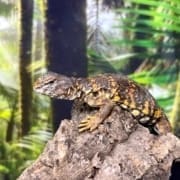
Red uromastyx standing on a rocky surface, a plant-eating desert lizard

Size and Lifespan

These are among the smaller uromastyx, with adults typically reaching 10 to 16 inches in total length. With proper husbandry, uromastyx are long-lived, commonly 15 to 20 years and sometimes longer.

Temperament

Uros are relaxed, curious and often bold once settled. They spend much of the day basking and foraging and can become quite tolerant of handling. Many keepers find them more personable than expected, especially at feeding time.

Enclosure Setup

An adult uromastyx does best in an enclosure of at least 4 x 2 x 2 feet. Key elements include:

  • A substrate that allows digging, such as a sand and soil mix that holds a burrow shape when lightly moistened at the bottom.
  • Stacked flat rocks or slate under the basking light, firmly secured so they cannot shift onto the lizard.
  • A hide or burrow on the cooler end.
  • Good ventilation to keep the air dry.

Heat, UVB and Humidity

Uromastyx need more heat than most pet lizards. Provide a basking surface of roughly 115 to 130°F, a warm-side air temperature in the 90s and a cool side around 75 to 80°F. Nights can drop into the upper 60s or low 70s. Measure surfaces with an infrared thermometer rather than guessing.

Reptisun T5 hood used to provide strong UVB in red uromastyx care

Strong UVB is essential. Use a high-output T5 linear tube of 12 to 14 percent, or a 10 to 12 percent tube mounted closer, spanning much of the enclosure. A ReptiSun T5 HO fixture is a reliable choice. Replace bulbs on schedule. Humidity should stay low, around 15 to 30 percent, with a slightly more humid microclimate deep in the burrow.

Diet

Uromastyx are primarily herbivores, and diet is the most important part of their care:

Spineless cactus pads, a fibrous staple in a red uromastyx plant-based diet
  • Staple greens: dandelion greens, endive, escarole, collards, turnip greens and mustard greens.
  • Vegetables: squash, bell pepper and green beans in moderation.
  • Flowers: hibiscus, dandelion and rose petals.
  • Seeds and lentils: dry split lentils, millet and bird seed blends offered in a dish.

Avoid iceberg lettuce and keep fruit to rare treats. Insects, if offered at all, should be occasional and small. Dust food with calcium several times per week. Most uros do not drink much from a bowl, since they obtain moisture from their food; a light misting of greens helps juveniles stay hydrated.

Handling

Allow a new uromastyx a week or two to settle. Approach slowly from the side, scoop the lizard from below and support its body and tail. Short, calm sessions after the lizard has warmed up work best.

Why Captive-Bred Matters

Many uromastyx in the trade have historically been wild-collected, which often means dehydration, parasites and high stress. Captive-raised animals adapt more readily, eat a captive diet and do not deplete wild populations. Our red uromastyx are raised by our team, including a staff biologist.

Frequently Asked Questions

How hot should a uromastyx basking spot be?

Aim for a basking surface of about 115 to 130°F with a cooler side near 75 to 80°F.

Do uromastyx need water?

They get most of their water from food. Offer a shallow dish occasionally and lightly mist greens, especially for juveniles.

Are uromastyx good pets?

Yes, for keepers who can provide strong heat, UVB and a fresh plant-based diet. They are calm, long-lived and colorful.

Why does my uromastyx change color?

Color brightens with warmth and good health and dulls when the lizard is cool, stressed or about to shed.

Meet our red and yellow uromastyx at www.CbReptile.com.
Red-Eyed Crocodile Skink Care Guide: Humidity, Habitat and Diet

With armored, ridged scales and bright orange rings around its eyes, the red-eyed crocodile skink (Tribolonotus gracilis) looks like a miniature dragon from another age. This shy, rainforest-dwelling lizard is a favorite among keepers who enjoy naturalistic, humid enclosures and fascinating behavior. This guide covers its care and introduces the captive-bred red-eyed crocodile skinks raised at www.CbReptile.com.

Natural History

Red-eyed crocodile skinks are native to New Guinea and nearby islands, where they inhabit humid lowland rainforests. They live on the forest floor among leaf litter, rotting logs, coconut husks and areas near streams and swamps. They are mostly crepuscular, becoming active at dawn and dusk to hunt insects, worms and other small invertebrates.

These skinks have some unusual behaviors. They are one of the few lizards known to vocalize, producing soft squeaks or chirps when stressed. When threatened, they may freeze and play dead. Females typically lay a single egg at a time and have been observed staying with the egg, an uncommon behavior among lizards.

Appearance

The species is dark brown with four rows of raised, keeled scales running down the back, giving it the crocodile-like look that inspired its common name. The head is triangular with bony projections, and the eyes are surrounded by a vivid orange ring. Males and females look similar, though males often have pores on the underside of the feet and are slightly larger.

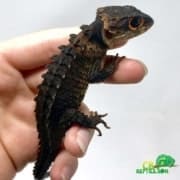
Red-eyed crocodile skink in close-up, a humid-forest lizard with a triangular head

Size and Lifespan

Adults typically reach 7 to 10 inches in total length, with a significant portion of that being tail. With proper care they generally live 10 to 15 years.

Temperament

Crocodile skinks are shy and easily stressed. They are best appreciated as display animals in a lush, naturalistic setup rather than as frequently handled pets. Given plenty of cover, they become more confident and will often emerge to explore and hunt in view.

Enclosure Setup

A single adult or pair can be housed in an enclosure of about 24 x 18 x 18 inches, with more floor space always appreciated. These skinks are terrestrial, so prioritize ground space over height. Key features include:

Eco Earth coconut substrate used to hold humidity in red-eyed crocodile skink care
  • A deep, moisture-retaining substrate such as coco fiber, organic soil and leaf litter. A bioactive setup with springtails and isopods is ideal.
  • A large, shallow water area. Crocodile skinks love to soak and often sit in water for long periods.
  • Plenty of hides, such as cork bark flats and tubes. A cork round makes a natural, humid retreat.
  • Live plants and a layer of moss to hold humidity. New Zealand sphagnum moss works well in hides and corners.

Heat, UVB and Humidity

These skinks prefer moderate temperatures. Keep the enclosure between 75 and 80°F, with a gentle warm spot of about 80 to 82°F. Avoid temperatures above about 85°F, as they are prone to heat stress. Night temperatures in the low 70s are fine.

Humidity is the most important parameter. Aim for 70 to 90 percent. Mist the enclosure regularly and keep part of the substrate damp. A Reptile Fogger System can help maintain humidity in drier homes. Low-level UVB (around 2 to 5 percent) with plenty of shaded areas mimics the dappled light of the forest floor and supports natural behavior.

Diet

Red-eyed crocodile skinks are insectivores. Offer a varied diet of appropriately sized prey:

  • Dubia roaches and other small roaches.
  • Crickets.
  • Earthworms, which are a favorite and closely resemble their natural diet.
  • Black soldier fly larvae and occasional waxworms as treats.

Feed juveniles daily or every other day and adults every two to three days. Dust insects with calcium and use a multivitamin about once a week. Offering food in a shallow dish or leaving prey to roam at dusk encourages natural hunting behavior.

Handling

Keep handling to a minimum. When it is necessary, gently scoop the skink from below and keep it close to a soft surface. Never grab the tail. Crocodile skinks can drop their tails when stressed, and while the tail will regrow, it is a significant energy loss.

Why Captive-Bred Matters

Wild-collected crocodile skinks often arrive dehydrated, stressed and heavily parasitized, and they can be difficult to establish. Captive-bred animals are healthier, already feeding well and more tolerant of their surroundings. Our captive-bred red-eyed crocodile skinks are raised by our team, including a staff biologist.

Captive-bred red-eyed crocodile skink with clear red eye rings and a full tail

Frequently Asked Questions

Do red-eyed crocodile skinks like to be handled?

Not especially. They are shy and do best with minimal handling, making them better display animals than hands-on pets.

What humidity do crocodile skinks need?

Aim for 70 to 90 percent, with a large water dish and damp areas of substrate.

Can crocodile skinks live together?

Pairs or one male with females can be housed together in a large enclosure with plenty of hides. Two males should not be kept together.

Why does my crocodile skink squeak?

Vocalizing is a natural defensive behavior when the skink feels threatened. Give it space and more cover.

Meet our captive-bred red-eyed crocodile skinks at www.CbReptile.com.

Bearded Dragon Care Guide: Habitat, UVB, Diet and Morphs

The inland bearded dragon (Pogona vitticeps) is one of the most popular pet lizards in the world, and for good reason. Bearded dragons are diurnal, interactive, tolerant of handling and endlessly entertaining to watch. Meeting their needs, however, requires attention to heat, lighting and diet. This guide covers the essentials and introduces the captive-bred bearded dragons raised by our team at www.CbReptile.com.

Natural History

Bearded dragons are native to the arid and semi-arid interior of eastern and central Australia, where they inhabit open woodlands, scrublands and desert edges. They spend their mornings basking on fallen logs, fence posts and rocks, then forage across the ground for insects, flowers and leaves. Australia has prohibited the export of its native wildlife for decades, so every bearded dragon in the pet trade today descends from captive breeding.

The name comes from the spiny throat pouch, which darkens and flares during displays of dominance, courtship or stress. Bearded dragons also communicate through head bobbing and arm waving, behaviors that are fascinating to observe in captivity.

Appearance and Morphs

Wild-type beardies are sandy tan to brown with subtle patterning. Selective breeding has produced a wide variety of colors and scale types, including red, orange, citrus, translucent and hypomelanistic lines. Some popular traits are:

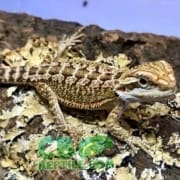
Young bearded dragon, a typical captive-bred hatchling used in bearded dragon care
  • Hypomelanistic – reduced dark pigment, clear nails and brighter colors.
  • Translucent – semi-transparent scales and often dark eyes. Our Hypo Trans Bearded Dragon combines both traits for a strikingly clean look.
  • Leatherback – reduced spikes and a smoother body.
  • Silkback – the homozygous form of leatherback, with almost no scales. A Silkie Bearded Dragon needs a little extra care, including careful UVB placement and humidity to keep its delicate skin healthy.

Size and Lifespan

Hatchlings are about 3 to 4 inches long. Adults typically measure 16 to 24 inches including the tail and weigh between roughly 350 and 600 grams. A well-kept bearded dragon commonly lives 10 to 15 years.

Temperament

Bearded dragons are generally calm, curious and tolerant. Many seem to enjoy time outside their enclosure and will relax on a keeper’s lap or shoulder. Juveniles can be skittish, but they usually settle with consistent, gentle handling.

Enclosure Setup

Babies can start in a smaller enclosure, but adults need a minimum of 4 x 2 x 2 feet (about 120 gallons). Front-opening enclosures make access easier and reduce stress compared with reaching in from above. Include:

  • A sturdy basking platform under the heat source.
  • Hides on both the warm and cool sides.
  • Climbing branches and rocks for enrichment.
  • A safe substrate such as a tile, a bioactive soil and sand mix, or a solid liner for young dragons.

Heat, UVB and Humidity

Bearded dragons need a strong thermal gradient. Aim for a basking surface of roughly 100 to 110°F for adults, a warm-side air temperature in the 80s, and a cool side around 75 to 80°F. Night temperatures can safely drop into the mid to upper 60s.

Reptisun T5 terrarium hood providing UVB lighting for bearded dragon care

UVB is essential. Without it, dragons cannot synthesize vitamin D3, and metabolic bone disease follows. Use a high-output linear T5 tube of 10 to 12 percent, spanning one half to two thirds of the enclosure, mounted at the manufacturer’s recommended distance. A ReptiSun T5 HO fixture is a dependable choice. Replace bulbs according to the manufacturer’s schedule, since UVB output declines well before the light stops glowing. Keep humidity around 30 to 40 percent.

Diet

Bearded dragons are omnivores, and their nutritional needs shift with age:

  • Juveniles: roughly 70 to 80 percent insects and the rest plants, with insects offered daily.
  • Adults: roughly 70 to 80 percent leafy greens and vegetables, with insects a few times per week.

Good staple greens include collards, mustard and turnip greens, dandelion and endive. Squash, bell pepper and edible flowers add variety. Dubia roaches, crickets, black soldier fly larvae and silkworms make excellent feeders. Dust insects with calcium most feedings and use a multivitamin weekly. Avoid feeding insects wider than the space between your dragon’s eyes.

Handling

Approach from the side rather than from above, slide a hand under the chest and support the hind legs and tail. Short, frequent sessions build trust. Always wash hands after handling, as with any reptile.

Why Captive-Bred Matters

Because all bearded dragons in the trade are captive-bred, the real question is how they are raised. Animals hatched and grown under proper UVB, diet and temperatures develop strong bones and confident temperaments. Our captive-bred bearded dragons are handled frequently by our team, including a staff biologist, so they arrive well socialized.

Captive-bred bearded dragon with a full, healthy body and clear markings

Frequently Asked Questions

Do bearded dragons need UVB lighting?

Yes. A quality linear UVB tube is non-negotiable for calcium metabolism and long-term health.

How often should I feed my bearded dragon?

Juveniles eat insects daily plus fresh greens. Adults should have fresh greens daily and insects two to three times per week.

Why is my bearded dragon not eating?

Common reasons include low basking temperatures, an upcoming shed, a recent move or brumation, a seasonal slowdown many adults experience in cooler months. Check temperatures and UVB first, and see a reptile vet if weight drops.

Can bearded dragons live together?

They are best housed alone. Cohabitation often leads to stress, competition for basking spots and injuries.

Curious about hypo, translucent or silkback dragons? Meet our captive-bred bearded dragons at www.CbReptile.com.