
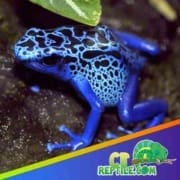
Blue Poison Dart Frog Care Guide: Vivarium, Humidity and Fruit Fly Diet
Few animals are as eye-catching as a blue poison dart frog. The cobalt skin, dotted with black spots, looks like jewelry on a leaf, and these frogs are bold, diurnal and active in a planted vivarium. Despite the name, captive-bred frogs are not toxic because they do not eat the wild insects that supply their defensive chemicals. This guide explains how to set up a vivarium, maintain humidity and feed a thriving group. You can learn more about the captive-bred blue poison dart frog at www.CbReptile.com.
Natural History
The blue dart frog (Dendrobates tinctorius “azureus”) comes from small, isolated patches of rainforest in southern Suriname. It lives on the forest floor among leaf litter, moss and fallen wood, where humidity is high and temperatures stay stable. Males call and defend territories, and parents care for tadpoles by carrying them to small pools of water in plants.
Appearance
The skin is a rich blue shade that ranges from sky blue to deep cobalt, with an arrangement of black spots on the back and legs that is unique to each frog. The belly and legs are often darker. This bright color is a warning signal in the wild, and it also makes the frogs easy to observe in a bright vivarium.

Size and Lifespan
Adults are small, about 1.5 to 2 inches, and can live 10 years or more with careful care. Their small size means a modest tank can hold a group, but stable conditions and good water quality are essential.
Temperament and Group Housing
Dart frogs are usually housed in pairs or small groups, and a well-planted tank gives each animal a territory. Two males may squabble, so a proven pair or a group introduced carefully tends to work better. They are not meant to be handled; skin oils and handling stress can harm them. Watching their behavior through glass is half the pleasure.
Enclosure Setup
A 18 by 18 by 18 inch front-opening terrarium suits a pair, and larger sizes allow more complex planting. Build the vivarium with layers:

- A drainage layer of clay balls or similar material, covered by a mesh barrier
- A soil substrate and leaf litter for foraging and hiding
- Moss patches and live plants such as bromeliads and pothos to hold humidity and give visual cover
- Cork bark and branches, with a few small film canisters or cups as egg sites
- A tight-fitting but ventilated top, with a small water feature or shallow dish
A bioactive setup with springtails and isopods helps break down waste and keep the habitat clean.
Heat, Light and Humidity
Keep temperatures between about 72 and 80°F, avoiding spikes above the low 80s°F. Humidity should remain around 80 to 100 percent through misting or an automatic system, with some airflow to prevent stagnation. A full-spectrum LED supports live plants, and low-level UVB can be beneficial when combined with shade. Use a thermometer and hygrometer to monitor conditions.

Diet
Feed flightless fruit flies, such as Drosophila melanogaster and hydei, dusted with calcium and vitamin supplements a few times per week. Springtails offer a natural cleanup crew that frogs also snack on, and larger frogs can take pinhead crickets. Feed small amounts daily or every other day and clean up any extras. A healthy dart frog has a rounded body without prominent ribs.
If you like the look of a different frog, compare this species with the citronella dart frog, the green and black dart frog or the bumblebee dart frog. All are relatively hardy for the group and share similar basic needs.
Maintenance
Check the water source daily and mist as needed. Prune plants, replace the leaf litter occasionally and keep the glass clean for viewing. Quarantine any new frog before adding it to an established group and use only dechlorinated water for misting.
Culturing Feeder Insects
A dependable fruit fly culture is the backbone of dart frog care. Start two or three cultures at a time so a fresh one is always ready, and rotate them every couple of weeks. Supplementing with springtails and, for larger frogs, pinhead crickets adds variety and helps nutrition. Dust feeders lightly and consistently, because heavy dusting can be stressful.
Why Captive-Bred Matters
Captive-bred dart frogs are used to cultured insects and tank life, and they reduce the pressure on wild populations. Starting with a healthy blue poison dart frog makes the early weeks much more successful.
Frequently Asked Questions
Are captive-bred dart frogs poisonous?
No. Their toxins come from wild prey, so captive-bred frogs fed cultured insects are not toxic.
Can I keep more than one frog?
Yes, but use a large enough tank and introduce animals carefully, as males can be territorial.
How often do I mist?
Often enough to keep humidity high and leaves wet, either by hand or through an automated system.
What is the biggest mistake beginners make?
Overheating or letting the tank stay stagnant and dirty; good ventilation and stable temperatures are key.
Explore more captive-bred amphibians at www.CbReptile.com.