
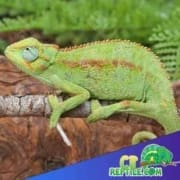
Elliot’s Chameleon Care Guide: Highland Setup, Humidity and Diet
Elliot’s chameleon (Trioceros ellioti) is a small, slender chameleon from the cool highlands of East and Central Africa. It is less famous than the panther or veiled chameleon, yet it rewards careful keepers with a calm temperament, graceful movement and a surprisingly subtle palette of greens, tans and browns. This guide walks through temperature, humidity, lighting, feeding and daily routine so you can judge whether this species fits your home. You can read about the captive-bred Elliot’s chameleon alongside other species at www.CbReptile.com.
Natural History
Elliot’s chameleon lives in montane forest edges, bamboo, scrub and farmland margins across parts of Uganda, Rwanda, Burundi, eastern Congo, Kenya and Tanzania. These areas are higher in elevation than the lowland habitats of many popular chameleons, which means cooler nights, frequent mist and regular rainfall. In captivity, that translates to a cooler, airier setup than you would give a veiled chameleon. Overheating is a bigger risk than chill, so a thermostat-controlled basking spot and a clear drop at night matter.
Appearance and Color
Adults are slim with a laterally compressed body, a modest casque, and a long prehensile tail. Typical coloring is a mix of green and brown with pale flank markings, and animals shift tone with mood, temperature and light. A relaxed chameleon usually looks even and bright, while stress often brings dark, muddy patterns. Learning your animal’s normal look is one of the best ways to catch health or comfort problems early.
Size and Lifespan
Most adults reach roughly 7 to 9 inches in total length including the tail, with males usually a little larger than females. With good care, a lifespan in the range of three to five years is realistic. Females can produce infertile eggs even without a male, so strong calcium intake, hydration and a proper lay bin (when she shows digging behavior) are part of long-term care.
Temperament
Chameleons are display animals, not cuddle pets. Elliot’s chameleons tend to be calm and relatively tolerant, but all chameleons are stressed by frequent handling, reflective surfaces and other chameleons in view. Keep each animal alone, place the enclosure in a quiet area, and let the chameleon come to you at feeding and misting time.
Enclosure Setup
A screen enclosure gives the ventilation chameleons need. For one adult, aim for at least 24 inches wide, 24 inches deep and 36 to 48 inches tall; taller is better because chameleons climb and use vertical thermal gradients. Furnish it with:

- Densely branched climbing structure at several diameters so feet grip comfortably
- Live or silk foliage that creates visual cover and leaves for drinking droplets
- A basking branch within easy reach but not too close to the lamp
- A simple drainage floor or bioactive layer that handles water without staying soggy
Avoid mirrors and shiny decor, and cover part of the front panel while the animal settles in.
Heat, UVB and Humidity
Provide a basking area around 80 to 85°F, with the rest of the enclosure in the low to mid 70s°F and nights in the low to mid 60s°F. A quality linear T5 HO UVB fixture covering much of the enclosure length, mounted according to the manufacturer’s distance guidance, supports calcium metabolism. Replace UVB tubes on the schedule the brand recommends, even if they still glow.
Humidity should swing: higher in the morning and after misting, drier in the afternoon. Mist several times a day or use a timed system until leaves drip, and add a slow dripper so the chameleon can drink moving water. Good ventilation prevents respiratory issues.
Diet
Chameleons are insectivores. Rotate feeders such as crickets, dubia roaches, black soldier fly larvae, silkworms and occasional hornworms. Gut-load every insect and dust with calcium most feedings, using a multivitamin with preformed vitamin A once or twice a month and a beta-carotene based product otherwise. Juveniles eat daily; adults often do well on a measured portion every day or every other day to avoid obesity. Variety keeps feeding engaging and nutrition balanced. If you also keep other insect eaters such as a bearded dragon or a leopard gecko, remember that chameleon feeding requires more precise dusting and hydration management.

Handling and Daily Routine
Treat the animal as a quiet observer. Check eyes, appetite, droppings and color daily, wash hands before and after contact, and avoid grabbing from above. Any move out of the enclosure, such as a vet trip, should be brief and warm.
Why Captive-Bred Matters
Captive-bred chameleons are used to feeders, misting and enclosure life, and they avoid the stress and parasite loads associated with wild collection. Starting with a healthy, feeding, well-hydrated Elliot’s chameleon gives you a more stable foundation than trying to recover a compromised animal.
Frequently Asked Questions
Is Elliot’s chameleon good for beginners?
It is manageable for a motivated beginner who researches thoroughly, but chameleons have exacting hydration, lighting and ventilation needs, so they are better for patient keepers than for casual ones.
Why does my chameleon not drink from a bowl?
Chameleons typically drink droplets from leaves and drippers. A water bowl is usually ignored.
Can I keep two together?
No. Chameleons are solitary and stress each other even without visible fighting.
What temperature is too hot?
Sustained basking temperatures above the high 80s°F are risky for a highland species; use a thermometer and a thermostat rather than guessing.
Ready to learn more? Meet our captive-bred reptiles at www.CbReptile.com.