
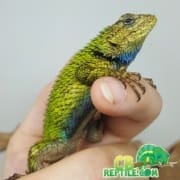
Emerald Swift Care Guide: Enclosure, Basking Heat, UVB and Diet
Overview
Few small lizards are as colorful as the emerald swift. Adult males are a metallic green, with flashes of blue on the throat and belly that seem to change with the light. They are active, alert sun-lovers that spend the day basking, climbing and chasing insects. Watching a well-kept group is a real pleasure, though they are a display animal more than a lap pet. This emerald swift care guide covers enclosure design, basking heat, UVB lighting, diet and the questions keepers ask most. You can see the animals themselves on our emerald swift page.
Natural History
The emerald swift (Sceloporus malachiticus) is a spiny lizard native to Central America, from southern Mexico down to Panama. Most populations live in mid- to high-elevation forests and forest edges, where they bask on tree trunks, stumps, fence posts and rock walls. Because of that elevation, their habitat has warm, sunny days, noticeably cooler nights and moderate humidity. Unlike many lizards, emerald swifts give birth to live young.
Appearance
The scales are keeled and pointed, which gives the lizard the rough, spiny texture typical of its genus. Mature males are the showpieces, with bright green bodies, a dark collar and blue patches on the throat and sides of the belly. Females and juveniles tend to be duller, in brown, olive or gray-green with darker mottling, and may show only a little green. Color also shifts with temperature and mood. A cold or stressed swift looks darker, and a warm, comfortable one looks bright.

Size and Lifespan
Adults usually reach about 6 to 8 inches including the tail, with males slightly bulkier than females. In captivity, a lifespan of roughly 5 years is common, and some live longer when they have strong UVB, a good basking spot and a varied, well-supplemented diet.
Temperament
Emerald swifts are quick and watchful, and their first instinct is to run for cover. Captive-bred animals usually calm down a lot once they settle in, and many will take insects from tongs. Still, they do best with a hands-off approach. Males are territorial, so keep only one male per enclosure. A single male can live with one or two females if the space is large enough and there are several basking spots.
Enclosure Setup
These are climbing lizards that like height as well as floor space. One adult or a pair should have at least a 36 x 18 x 18 inch enclosure, and taller is better. A front-opening glass or PVC terrarium with good ventilation works well.

- Climbing: stacked cork bark, sturdy branches and textured backgrounds that lead up to the basking zone.
- Substrate: a soil and sand mix or cypress mulch that holds a little moisture without staying soggy.
- Cover: live or artificial plants and at least two hides so the lizards can break line of sight.
- Water: a shallow dish plus a light morning misting. Many swifts prefer drinking droplets off leaves.
Heat, UVB and Humidity
Basking drives almost everything this lizard does. Give it a basking surface of about 95 to 100°F under a halogen or incandescent lamp, a general warm zone in the mid-80s and a cooler side in the mid-70s. At night, temperatures can drop into the 60s, much like their highland home.

Strong UVB isn’t optional for emerald swifts. A linear T5 high-output fixture such as the Reptisun T5 HO light fixture with a Reptisun 10.0 T5 HO UVB tube lets the lizard bask in both heat and UVB at the same time. Mount it over the basking branch, follow the manufacturer’s distance guidance and replace the tube on schedule. Run lights 12 to 13 hours a day. Keep humidity between 50 and 70 percent with light misting and good airflow so the enclosure doesn’t turn stagnant.
Diet and Feeding
Emerald swifts are insectivores, and their quick, visual hunting makes feeding time fun to watch. Offer a variety of gut-loaded insects:
- Medium feeder crickets and dubia roaches as staples
- Black soldier fly larvae and silkworms for variety
- Mealworms and superworms only now and then
Feed juveniles daily and adults every other day, giving as many insects as they eat in a few minutes. Dust feeders with calcium at most feedings and with a reptile multivitamin once or twice a week. Remove leftover crickets so they can’t nibble on a resting lizard.
Handling
Keep handling short and only when necessary, for example for health checks or enclosure cleaning. Guide the lizard into a cup or onto your hand instead of grabbing it, and never hold it by the tail. Like many spiny lizards, it can drop its tail to escape. Patient interaction, like tong feeding, builds trust better than frequent handling.
Why Captive-Bred Matters
Wild-caught swifts often arrive stressed, thin and carrying parasites. Captive-bred emerald swifts are used to enclosures, accept common feeder insects and adjust much more smoothly. Choosing captive-bred animals also takes pressure off wild populations.
Frequently Asked Questions
Do emerald swifts need UVB?
Yes. Strong UVB combined with a hot basking spot is essential for calcium metabolism, color, appetite and activity.
Can I keep two male emerald swifts together?
No. Males are territorial and will fight. Keep one male per enclosure, either alone or with females in a roomy setup.
Why does my emerald swift look dark or brown?
Dark coloring usually means the lizard is cool, stressed or about to shed. Check basking temperatures and UVB output first.
Are emerald swifts good for beginners?
They suit keepers who are comfortable setting up strong lighting and who enjoy watching more than handling.
Meet our captive-bred emerald swifts and explore more colorful lizards at www.CbReptile.com.