
Emperor Scorpion Care Guide for Beginners
The emperor scorpion (Pandinus imperator) is the classic beginner scorpion. It is large, calm and surprisingly easy to keep once you understand its need for warmth and humidity. This guide covers the basics so you can build a safe, comfortable home for one. You can meet the emperor scorpion raised by our team at www.CbReptile.com.
Natural History
Emperor scorpions come from the rainforests and savannas of West Africa, including Ghana, Togo, Sierra Leone and the Ivory Coast. They live in burrows, under logs and in termite mounds, coming out at night to hunt insects and small prey. They are social for a scorpion, and in nature you can find several animals living near each other.
Appearance
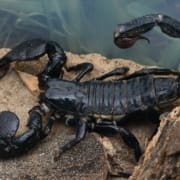
Adults are glossy black with large, thick claws (pedipalps) and a relatively slender tail with a stinger. Young animals can look paler or brownish. Under a blacklight, the exoskeleton glows blue-green, a trait shared by all scorpions. Adults reach about 5 to 8 inches in length, making them among the largest scorpions on earth.

Lifespan and Growth
With good care, emperor scorpions commonly live 6 to 8 years. Young scorpions molt several times in their first years, and adults molt rarely. During a molt the animal looks dull or swollen, hides, and refuses food. Never disturb it; the new exoskeleton is soft for several days.
Temperament and Venom
This species relies mainly on its heavy claws rather than its stinger. Keepers describe it as docile, but it is still a venomous animal and should be treated as a display pet, not a handling pet. The sting is generally compared with a bee sting, though individuals react differently and allergic people should be especially careful. Use long tweezers or tongs for feeding and maintenance.
Enclosure
A 10 to 20 gallon tank or a plastic terrarium with a locked, ventilated lid works well for one adult. Scorpions climb surprisingly well, so keep decor low and the lid secure. Floor space is more important than height.
- Substrate: 3 to 4 inches of coconut fiber or a topsoil mix that holds burrows.
- Hides: Cork bark flats or half logs to provide shelter. Add more than one.
- Water: A shallow dish with a small rock for safety.
Heat and Humidity
Aim for a daytime temperature of 78 to 85 degrees Fahrenheit, with a small drop at night. An under-tank heat mat on one side, controlled by a thermostat, is a gentle way to achieve this. Humidity should stay around 70 to 80 percent. Dampen one side of the substrate regularly rather than misting the entire tank, so there is always a drier area. A hygrometer helps you avoid guesswork.
Diet and Feeding
Emperor scorpions eat crickets, roaches, mealworms and superworms. Feed juveniles two or three times a week and adults once a week or every 10 days. Offer prey about as long as the scorpion’s body width. Remove uneaten live insects, as they can stress a molting animal. A well-fed scorpion often has a plump abdomen, but a very swollen one signals overfeeding.
Cohabitation
Although these scorpions can be kept in groups, keeping them together requires a large space with several hides and plenty of food, and cannibalism can occur. For beginners, a single scorpion is the simplest and safest approach.
Why Captive-Bred Matters
Captive-bred scorpions are healthier, free of parasites that wild-caught specimens may carry and do not draw from wild populations. Pandinus imperator is protected under CITES, so choosing a captive-bred animal is the best practice. Our team at www.CbReptile.com focuses on captive-bred animals for this reason.
Related Species
If you enjoy invertebrates, you may also like the Asian forest scorpion, another burrower with similar humidity needs, or a calm terrestrial spider such as the Peruvian green velvet tarantula.

Frequently Asked Questions
Are emperor scorpions good for beginners?
Yes. They are hardy, slow-moving and tolerant of small husbandry mistakes, as long as humidity and heat stay in range.
How often should I clean the enclosure?
Spot clean waste weekly and replace the substrate every few months, or sooner if it grows moldy.
Do they need light?
No special lighting is required. They are nocturnal, so keep the enclosure out of direct sun and provide a normal day and night cycle in the room.
Why is my scorpion hiding and not eating?
This is usually a pre-molt behavior. Leave the scorpion alone, maintain humidity, and resume feeding after the molt has hardened.
Setting Up Step by Step
Start by mixing the substrate with warm water until it holds a burrow when squeezed, then pack it firmly so tunnels will not collapse. Add the hide, set up the water dish and place the thermometer and hygrometer at scorpion level, not near the lid. Let the setup run for a day to check that temperature and humidity are stable before the animal goes in. Once your emperor scorpion is settled, watch for burrowing in the first few days, which is a normal sign that it is comfortable.
During maintenance, always use long tongs, work slowly and keep the lid secure. Never use a bare hand to move the animal. With a stable routine of warmth, damp substrate and weekly feeding, this species is one of the easiest scorpions to keep.
Want to learn more? Meet our captive-bred invertebrates at www.CbReptile.com.