
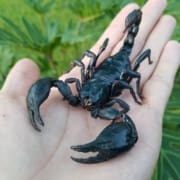
Asian Forest Scorpion Care Guide: Housing, Humidity and Feeding
Asian forest scorpions (Heterometrus species) are large, glossy and surprisingly calm scorpions that are popular with beginners because of their sturdy build and relatively mild venom compared to size. Their big pincers, slow movements and active burrowing make them engaging to watch. This guide explains the enclosure, humidity, feeding and safety practices that keep them healthy. You can read about the Asian forest scorpion at www.CbReptile.com.
Natural History
These scorpions come from tropical forests across South and Southeast Asia, where they live under logs, in leaf litter and in burrows. They prefer warm, humid conditions, and they spend much of the day hidden before emerging at night to hunt. Their large claws do most of the work in catching prey, with the stinger used when needed.
Appearance
Adults are shiny, black to deep green-black animals with thick claws and a curved tail ending in a stinger. Juveniles may appear paler and more delicate. A fresh molt can look slightly dull before the exoskeleton hardens and regains its sheen.

Size and Lifespan
Many adults reach about 4 to 5 inches in body length, and well-kept animals commonly live 5 to 8 years or more, depending on species. Growth involves a series of molts, during which the scorpion is vulnerable.
Temperament and Safety
Asian forest scorpions are known for being relatively calm, but they are still venomous and can pinch or sting if threatened. Handling is not recommended, and long tongs should be used during maintenance. Be mindful of individual sensitivity to venom, and keep the enclosure secure and away from children.
Enclosure Setup
A 10 to 20-gallon enclosure suits an adult or a small group, with a secure lid and ventilation. Include:

- 3 to 5 inches of coconut fiber and soil that holds a burrow
- Cork bark slabs or half-logs for shelter
- A shallow water dish with pebbles to prevent drowning
- A moist area with sphagnum moss and a drier area for a humidity gradient
Adding a few hides gives each scorpion a place to retreat. Keep the lid tightly closed, because scorpions can climb smooth surfaces more easily than expected.
Heat and Humidity
Keep temperatures in the high 70s to mid 80s°F with a mild night drop. Humidity of around 70 to 80 percent is usually appropriate, achieved by dampening part of the substrate and keeping good airflow to prevent stagnation. A low-wattage heat mat on one side of the enclosure can maintain warmth, controlled by a thermostat.
Diet
Offer crickets, dubia roaches or mealworms sized to the scorpion every one to two weeks. Feed juveniles a bit more often. Remove uneaten prey after a day to avoid stress or mold, and keep fresh water available. If you enjoy comparing species, the emperor scorpion is another popular, relatively docile option with similar husbandry.

Molting
Before a molt, a scorpion may stop eating, hide and appear dull. Leave it alone and keep humidity steady. After the molt, wait several days before feeding so the new exoskeleton can harden. Never remove the old skin yourself.
Daily and Weekly Routine
A simple routine keeps scorpions comfortable. Each evening, look for the animal at the burrow mouth and note whether it is active. Once a week, refill the water dish, spot-clean old prey and check that the damp side of the substrate is still moist while the dry side is not soggy. Replace the leaf litter and top layer of substrate when needed, and wipe condensation from the glass to maintain ventilation. Handle nothing with bare hands: use long soft-tipped tongs to move hides or prey, and be especially careful when opening the lid.
Common Mistakes
New keepers often keep the enclosure too dry or too wet, give a hide that is too large, or feed oversized prey that stresses the animal. Keep humidity steady, choose hides that fit the scorpion snugly, and offer prey roughly the size of the animal’s body. Avoid bright lights, strong vibrations and frequent rearranging, which can stress a nocturnal species. Patience and consistency usually produce the best results.
If you plan to keep more than one scorpion over time, record each animal’s molt dates, feeding and temperament in a notebook; it makes patterns obvious and helps you plan upgrades to the enclosure before crowding becomes an issue.
Why Captive-Bred Matters
Captive-bred scorpions ease the pressure on wild populations and have known conditions from the start. A healthy Asian forest scorpion is a rewarding animal for keepers who enjoy behavior-focused invertebrates.
Frequently Asked Questions
Are Asian forest scorpions dangerous?
They are venomous, though generally considered less dangerous than many scorpions, and should never be handled.
Can I keep several together?
Some keepers house groups with abundant space and hides, but cannibalism is possible, so single housing is safest.
Do they need heat?
They like warmth; a gentle heat source can help if the room is cool.
How often should I feed?
Adults eat about once a week or every other week.
See more captive-bred invertebrates at www.CbReptile.com.