
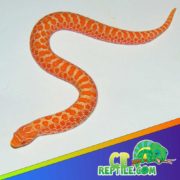
Western Hognose Snake Care Guide: Albino, Anaconda, Arctic and More
With its upturned snout, dramatic bluffing displays and compact size, the western hognose snake (Heterodon nasicus) has become one of the most beloved small snakes in the hobby. It packs a huge personality into a body that rarely exceeds three feet. In this guide we cover the natural history and husbandry of this charismatic species, with a closer look at the Albino Western Hognose Snake and other morphs raised by our team at www.CbReptile.com.
Natural History
Western hognose snakes inhabit the Great Plains of North America, from southern Canada through the central United States and into northern Mexico. They favor sandy or gravelly prairies, scrubland and floodplains where loose soil allows them to burrow. The keeled, upturned rostral scale that gives the snake its name is a digging tool, used to push through sand and unearth buried prey.
In the wild, hognose snakes are famous for their toad-eating habits, though they also take frogs, lizards, small rodents, reptile eggs and ground-nesting birds. They are diurnal and most active in the morning and late afternoon, retreating underground during the heat of the day.
The Famous Bluff
When threatened, a hognose snake will flatten its neck like a miniature cobra, hiss loudly and make dramatic mock strikes, usually with its mouth closed. If that fails, it may roll onto its back, open its mouth, let its tongue hang out and play dead. This theatrical defense is harmless and typically fades as young snakes become used to gentle handling.
Hognose snakes are rear-fanged and produce a mild oral secretion designed to subdue amphibian prey. It is not considered dangerous to people, although an occasional feeding-response bite can cause minor local swelling. Using tongs at feeding time prevents most mix-ups.
Appearance and Morphs
Wild-type western hognoses are tan to olive with dark brown blotches and a striking black-and-white or black-and-orange belly. Popular morphs include:
- Albino – a recessive trait removing black pigment, leaving warm cream, orange and pink tones with red eyes.
- Anaconda – an incomplete dominant trait that reduces the dorsal pattern. Our Anaconda Western Hognose Snake shows the clean, reduced look.
- Arctic – an incomplete dominant trait with high-contrast gray and black coloration. Take a look at our Arctic Western Hognose Snake.
- Axanthic – a recessive trait removing yellow and red, producing silver and charcoal snakes like our Axanthic Western Hognose Snake.
These genes can be combined into dozens of designer combinations, which is part of what makes hognose breeding so exciting.
Size and Lifespan
Hognose snakes show strong sexual size dimorphism. Males typically reach 15 to 24 inches, while females usually grow to 24 to 36 inches and are noticeably heavier. With good care they live 15 to 20 years.
Temperament
Once past the bluffing stage, most western hognoses are calm, inquisitive and easy to handle. Their small size and slow, deliberate movements make them a favorite for keepers who want an interactive snake that is manageable in any home.
Enclosure Setup
A single adult male does well in a 20-gallon long enclosure, while females are best in a 36 x 18 inch or 40-gallon enclosure. Hognoses love to dig, so provide 3 to 4 inches of burrowing substrate such as aspen or a sand-and-soil mix. Add at least two hides, flat cork or wood for cover and a shallow water dish. A secure lid is essential.
Heat, UVB and Humidity
Create a basking area of about 90 to 95°F with the cool side between 75 and 80°F. Nighttime temperatures can drop into the low 70s. Use a thermostat with any heat source. Low-level UVB is optional but beneficial for this diurnal species, provided there are shaded retreats. Keep humidity around 30 to 50 percent; the substrate should stay dry on the surface, though a slightly damp layer deeper down can help with sheds.
Diet and Feeding
Captive-bred hognoses are generally raised on frozen-thawed rodents, which provide complete nutrition and avoid the parasites and toxins associated with wild amphibians.
- Hatchlings: one small pinky every 4 to 6 days.
- Juveniles: pinkies to fuzzies every 5 to 7 days.
- Adults: appropriately sized mice every 7 to 10 days, with females typically taking larger meals.
Some hatchlings are hesitant feeders. Offering prey in the evening, leaving it overnight near a hide or briefly scenting it can help. Hognoses can also be prone to obesity, so resist the urge to overfeed adults. A supply of frozen pinky mice makes feeding young snakes simple.
Handling
Let a new hognose settle for about a week and take a couple of meals before regular handling. Scoop the snake from below rather than reaching down from above, keep sessions short at first and avoid handling for 48 hours after a meal. Most individuals quickly learn that hands are not a threat.
Why Captive-Bred Matters
Wild-caught hognoses often arrive stressed, parasitized and fixated on amphibian prey that is difficult to provide. Captive-bred snakes are already established on rodents, accustomed to people and produced without removing animals from wild prairie populations. Our albino western hognose snakes are handled early and often by our team, including a staff biologist.
Frequently Asked Questions
Are western hognose snakes venomous?
They have a mild oral secretion used on amphibian prey, but they are not considered medically significant to humans. Bites are rare and usually happen when a snake mistakes fingers for food.
Do hognose snakes need a large enclosure?
No. Their compact size means a 20 to 40 gallon setup with deep substrate is enough, which makes them ideal for smaller spaces.
Why does my hognose play dead?
Death-feigning is a natural defensive behavior. Leave the snake alone for a few minutes and it will right itself. The behavior usually becomes less frequent with gentle routine handling.
Do hognose snakes brumate?
Adults often slow down or refuse food in late fall and winter. This is normal for a temperate species; monitor weight and consult a reptile veterinarian if your snake loses condition.
Meet our captive-bred western hognose snakes in albino, anaconda, arctic and axanthic at www.CbReptile.com.