Florida Blue Centipede Care Guide: Substrate, Humidity and Safety
The Florida blue centipede (Hemiscolopendra marginata) is a compact, fast-moving predator that looks like a miniature dragon. Its dark body, banded legs and blue-green tint make it a favorite among invertebrate keepers who want a small but dramatic animal. This guide explains how to house it safely, keep humidity right and feed it, along with the safety precautions every centipede keeper should understand. You can read about the Florida blue centipede at www.CbReptile.com.
Natural History
This species lives in the southeastern United States, including Florida, where it hides under logs, bark and leaf litter and hunts at night. It prefers humid microhabitats and stays in tight crevices during the day. Like other centipedes, it uses venom delivered through modified front legs to subdue insects.
Appearance
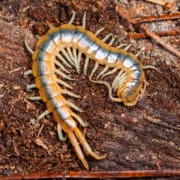
The body is flattened and segmented, with a dark brown to blue-black top and legs that often show a blue or greenish tint. Antennae and the forcipules near the head are used to sense and grab prey. The color can look more vivid right after a molt. A healthy animal moves smoothly and keeps its antennae active.

Size and Lifespan
This is a small centipede, generally reaching about 3 to 4 inches. With good care, many individuals live several years, although exact lifespans vary and are not as well documented as for common reptiles.
Temperament and Safety
Centipedes are fast, defensive and venomous. A bite can be painful and cause swelling, and sensitivity varies from person to person, so this is a strictly hands-off animal. Always use long tongs and a deep container for maintenance, never handle with bare hands and keep the enclosure out of reach of children and pets. Know where the nearest medical care is, and seek help if a bite leads to a severe reaction.
Enclosure Setup
A small, escape-proof enclosure with a locking lid is essential. A 5 to 10-gallon terrarium or a secure plastic container with ventilation holes works well. Include:

- 3 to 4 inches of slightly damp coconut fiber and soil for burrowing and humidity
- Pieces of cork bark and a leaf litter layer for cover
- A small, shallow water dish that is easy to clean
- A moist corner with sphagnum moss to give a humidity gradient
Use tight ventilation screens and secure all gaps, because centipedes are excellent escape artists. Avoid overly wet substrate, which can trigger mold or mites.
Heat and Humidity
Keep the enclosure in the mid 70s to low 80s°F, with a modest drop at night. Humidity of 60 to 80 percent is typically appropriate, maintained by dampening part of the substrate. No special lighting is needed, and direct sunlight should be avoided.
Diet
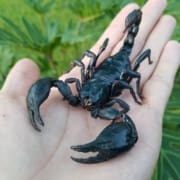
Offer gut-loaded insects such as crickets, dubia roaches or mealworms sized to the centipede. Juveniles eat every few days and adults about once a week, with portions adjusted to appetite. Remove uneaten prey to prevent stress. As with scorpions and tarantulas, a plump but not swollen body and steady activity suggest a healthy feeding routine. For comparison with other defensive invertebrates, see the Vietnamese orange-legged centipede or the emperor scorpion.

Molting and Health
Before a molt, a centipede may hide, stop eating and appear dull. Leave it undisturbed with humidity steady and avoid live prey during the process. After molting, allow time for the exoskeleton to harden before offering food. Watch for mites, mold and dehydration, and correct humidity issues promptly.
Setting Up Safely
Because this animal is fast and defensive, plan every maintenance step before opening the enclosure. Use a deep bin or the enclosure itself as the working space, keep tongs within reach and work calmly in a well-lit area. Choose decor that is easy to lift out with tongs, avoid complicated layouts that make the animal hard to locate, and keep a simple, secure place to move the centipede temporarily if the enclosure needs deep cleaning.
Observing Behavior
Normal behavior includes burrowing, lingering near the moist side of the enclosure and hunting at night. Reduced activity before molts is normal, but constant wandering and pacing along the glass can indicate that humidity, temperature or space needs adjustment. A red-light flashlight at night reveals feeding and exploring without disturbing the animal.
Why Captive-Bred Matters
Captive-bred invertebrates reduce the pressure of wild collection and are generally acclimated to enclosure life. A healthy Florida blue centipede gives keepers a fascinating, low-footprint animal with a clear care pathway.
Frequently Asked Questions
Is a Florida blue centipede dangerous?
It can deliver a painful bite, so it should never be handled and requires careful, tool-based maintenance.
Can I keep more than one together?
No. Centipedes are cannibalistic and should be housed alone.
How humid should the enclosure be?
Moderately humid, with a damp area and a drier area so the animal can choose.
What is the best way to prevent escapes?
Use a locking lid, small ventilation holes and a smooth, tall enclosure.
Browse more captive-bred invertebrates at www.CbReptile.com.