
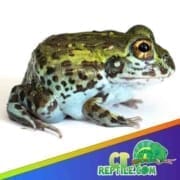
Pixie Frog Care Guide: Housing a Giant African Bullfrog
The pixie frog (Pyxicephalus adspersus), also called the African bullfrog, is one of the largest frogs commonly kept in captivity. Despite the cute name, adults are big, heavy ambush predators with a ravenous appetite and a sturdy personality. This care guide explains the space they need, how to heat and humidify an enclosure, and how to feed a growing frog without overfeeding. Learn more about our captive-bred pixie frog at www.CbReptile.com.
Natural History
Pixie frogs come from the savannas and scrublands of southern and eastern Africa. They spend dry seasons buried in the soil, forming a cocoon of shed skin, and emerge with seasonal rains to feed and breed. That burrowing instinct explains why substrate depth matters more than floor space in captivity.
Appearance
Adults are stocky and olive green with a lighter underside. Males are noticeably larger and develop yellow throat coloring. Both sexes have pronounced tooth-like projections on the lower jaw, so avoid hand-feeding. Juveniles are rounder and more camouflaged with mottled patterns.

Size and Lifespan
Males can approach 9 to 10 inches and females stay a bit smaller. With excellent care, a lifespan of 15 to 20 years is commonly reported, which makes a pixie frog a long-term commitment.
Temperament
This is a look-but-do-not-touch animal. Pixie frogs will bite when startled or when they mistake a hand for food, and their jaws are powerful. Observe, feed with long tongs, and keep handling to essential moves only. They also absorb substances through their skin, so wash hands thoroughly before any contact and avoid lotions or soaps.
Enclosure Setup
A 20-gallon long can house a juvenile, while an adult does best in a 40-gallon breeder or larger. Include:

- 4 to 6 inches of moisture-holding substrate such as coconut fiber, with sphagnum moss patches for humidity
- A shallow, heavy water bowl that is easy to climb out of and cleaned daily
- A hide made of cork bark or a half log
- A secure lid; pixies are strong and will push on loose tops
Spot-clean waste promptly and replace the substrate as it fouls to prevent skin and bacterial problems.
Heat, UVB and Humidity
Keep daytime temperatures in the mid to upper 70s°F, with a slight drop at night, and avoid hot spots. Humidity around 60 to 70 percent suits most animals. Low-level UVB lighting is considered beneficial for many amphibians by some keepers, but it is not required if the diet is well supplemented; if used, give shade and moderate output.
Diet
Juveniles eat appropriately sized insects such as crickets, dubia roaches and worms, dusted with calcium. As they grow, adults eat larger prey like roaches, large worms and the occasional pinky mouse, though rodents should be a minor part of the diet to avoid obesity. Feed juveniles every day or every other day and adults about once or twice a week, adjusting to body condition. Never house two together: pixie frogs readily eat tankmates, even those of similar size. If you enjoy keeping other big-mouthed amphibians, compare this species with the Budgett’s frog.

Handling and Maintenance
Use dechlorinated water, avoid chemical cleaners, and watch for lethargy, weight loss, red skin or repeated shedding trouble. An experienced exotics veterinarian is best for any health concern.
Water Quality and Hygiene
Pixie frogs sit in and absorb moisture through their skin, so water quality directly affects health. Use dechlorinated or treated water in the dish, change it daily, and scrub the bowl weekly with hot water only. Replace the top layer of substrate whenever you see waste, and do a full substrate change every few months. Keep the enclosure damp but never swampy; a gradient from moist deep layers to a slightly drier surface lets the frog choose. Avoid heavy fertilizers, scented products and aerosol sprays near the tank, and quarantine any new amphibian before it shares a room with an existing one. Watch the skin for redness or cloudiness, and note unusual changes in posture or appetite so you can share clear information with a veterinarian.
Why Captive-Bred Matters
Captive-bred frogs are accustomed to prepared feeders and enclosure conditions, and they reduce collection pressure on wild populations. Starting with a healthy pixie frog that is feeding well makes the first months far easier.
Frequently Asked Questions
How big is a pixie frog tank for an adult?
A 40-gallon breeder is a practical minimum, with more floor space and substrate depth providing better comfort.
Do pixie frogs hibernate?
They aestivate in the wild; in captivity, steady conditions usually prevent it, but a frog that buries itself and forms a cocoon is a reason to review humidity and temperature.
Can I keep a pixie frog with other animals?
No. They are predatory and will eat anything that fits in the mouth.
Is it a good beginner frog?
It is hardy and straightforward when the basics are right, but its size, bite and longevity suit committed keepers.
Curious about more amphibians? Meet our captive-bred reptiles and amphibians at www.CbReptile.com.