
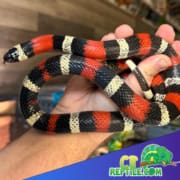
Pueblan Milk Snake Care Guide and Color Morphs
Bold red, black and white bands make the Pueblan milk snake one of the most recognizable colubrids in the hobby. It is a hardy, manageable and active snake that ranges from a feisty hatchling to a relaxed adult. This guide covers natural history, morphs, enclosure and feeding so you can plan confidently. You can see the Pueblan Milk Snake raised by our team at www.CbReptile.com.
Natural History
Pueblan milk snakes (Lampropeltis triangulum campbelli) come from the highlands of Puebla and Oaxaca in Mexico. They live in dry forests, rocky hillsides and farmland edges, where they shelter under rocks and logs and hunt rodents, lizards and other snakes. The name “milk snake” came from an old myth about them drinking from cows, which is untrue.
Appearance and Morphs
The classic pattern is wide red bands bordered by black and separated by thin white or cream bands. Breeders have developed many color and pattern variants, including:
- Albino: Replaces black with white, leaving bright red, orange and cream bands. See the Albino Milk Snake.
- Apricot: A softer, lighter orange look. Check out the Apricot Pueblan Milk Snake.
- Tangerine and Black Honduran: Related subspecies with their own palettes, including the Tangerine Honduran Milk Snake.
Be careful not to confuse milk snakes with venomous coral snakes. The old rhyme about red touching yellow only applies in parts of North America, and the best practice is simply to identify species by name.
Size and Lifespan
Pueblan milk snakes are slender and usually reach 3 to 4 feet, with 20 years or more in good care. Hatchlings are around 8 to 10 inches.
Temperament
Hatchlings can be nippy and skittish, but they generally settle with calm, regular handling. They are active and curious, and they are excellent escape artists, so a secure lid is essential. Milk snakes can musk when frightened, but most calm down quickly.
Enclosure
A hatchling can live in a small tub or 10 gallon tank, while adults do well in a 3 by 2 foot enclosure or a 40 gallon breeder tank. Use secure, locking lids. Provide:
- Aspen shavings, cypress mulch or coconut fiber as substrate.
- At least two snug hides: one warm, one cool.
- A water bowl large enough to soak in, cleaned often.
- Branches or cork bark for enrichment.
Temperature and Humidity
Keep a warm side with a surface temperature of 85 to 88 degrees Fahrenheit and a cool side in the mid 70s. Use a thermostat to control heat sources such as a heat mat or ceramic heat emitter. Humidity of 40 to 60 percent is typically ideal and rises during shedding. Special UVB is not required, though low-level UVB can be a helpful enrichment.
Feeding
Feed appropriately sized frozen-thawed mice. Hatchlings eat every 5 to 7 days, juveniles every 7 days and adults every 10 to 14 days. Prey should not be larger than the thickest part of the snake. Milk snakes are known for being enthusiastic eaters, and some can be cannibalistic, so house them separately.
Handling
Handle gently with confident, supportive movements, and avoid handling for 48 hours after feeding. Wash your hands afterward. Short, frequent sessions help a snake become more comfortable.
Why Captive-Bred Matters
Captive-bred snakes feed readily on frozen-thawed prey and are free from the parasites and stress of wild collection. Our team at www.CbReptile.com focuses on captive-bred animals.
Frequently Asked Questions
Are milk snakes good for beginners?
Yes. They are hardy and easy to feed, though they are escape-prone and can be nippy as babies.
Can I house two milk snakes together?
It is best not to, because they sometimes eat other snakes, including their own kind.
How often do milk snakes shed?
Young snakes shed every month or so, and adults every few months. Keep humidity slightly higher during shed.
How long do they live?
Commonly 15 to 20 years in captivity.
Setting Up and Settling In
Run the heat source and thermostat for a day before moving the snake in, and check both ends of the enclosure with a temperature gun. Hatchlings are secretive and should have a snug hide and cover on all sides. Give a new snake several days to settle before the first feeding, and keep handling to a minimum until it has eaten reliably two or three times. When you are ready, the Pueblan Milk Snake at www.CbReptile.com is a classic banded choice to begin with.
Shedding and Health
A healthy milk snake sheds in one piece. Cloudy, blue-looking eyes signal that a shed is coming, and the snake may refuse a meal during this period. If skin or an eye cap stays on after a shed, raise humidity for a day and offer a damp hide. Regular weighing, clean water and a tidy enclosure are the best preventives. Watch for mites, wheezing, bubbles at the nose or regurgitation, and see an experienced reptile veterinarian if anything seems off.
Find your favorite banded morph, or read more, at www.CbReptile.com.