
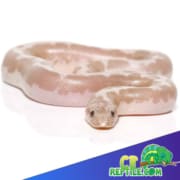
Kenyan Sand Boa Care Guide: Snow, Striped and Anery Morphs
Small, sturdy and endlessly charming, the Kenyan sand boa (Eryx colubrinus) is one of the best snakes for keepers who want a low-maintenance, easy-to-handle species. These little burrowers spend most of their lives just beneath the sand, waiting to ambush passing prey, and they adapt beautifully to life in captivity. This guide covers their care and highlights the Snow Striped Kenyan Sand Boa raised by our team at www.CbReptile.com.
Natural History
Kenyan sand boas are found across the dry regions of northeastern and eastern Africa, including Kenya, Tanzania, Ethiopia, Somalia and parts of Sudan and Egypt. They inhabit semi-desert scrub, dry savanna and rocky areas with loose, sandy soil. Some taxonomists place the species in the genus Gongylophis, so you may see either name used.
Sand boas are classic ambush predators. They bury themselves with only the eyes and the top of the head exposed, then strike and constrict small rodents, lizards and ground-dwelling birds that pass by. Their eyes sit high on the head, and the snout is slightly shovel-shaped to help them move through sand. Like other boas, they give birth to live young.
Appearance and Morphs
Wild-type Kenyan sand boas are cream to yellow with bold orange to brown blotches and a thick body with a short, blunt tail. Popular morphs include:
- Albino – removes black pigment for bright orange and cream tones.
- Anerythristic (anery) – removes red and orange pigment, leaving a crisp black-and-white or gray snake. See our Anery Kenyan Sand Boa.
- Snow – combines albino and anery for a soft white-and-pale-pink appearance.
- Stripe – a recessive pattern trait that fuses the blotches into a dorsal stripe.
The snow striped combination pairs the gentle pastel tones of snow with the clean lines of the stripe pattern, one of the most attractive sand boa combinations available.
Size and Lifespan
Kenyan sand boas show strong sexual dimorphism. Males usually reach only 15 to 18 inches, while females commonly grow to 24 to 32 inches and are much heavier. Babies are born at roughly 8 to 10 inches. With good care, these hardy snakes live 15 to 20 years, and some exceed that.
Temperament
Sand boas are generally docile and slow-moving. Babies can be nippy at first, mostly out of a strong feeding response, but they tend to calm down quickly with regular handling. Adults are typically relaxed and enjoy burrowing through a keeper’s fingers.
Enclosure Setup
Because they spend most of their time underground, sand boas do not need tall or elaborate enclosures. Floor space and substrate depth matter more than height.
- Males: a 10 to 20 gallon enclosure is sufficient.
- Females: a 20 to 30 gallon enclosure or similar footprint.
- Substrate: 2 to 4 inches of burrowing substrate, such as fine aspen or a washed play sand and soil mix. Avoid calcium-based sands.
- Decor: a flat rock or piece of cork on the warm side, a hide and a small, shallow water dish.
A secure lid is essential. Sand boas are strong for their size and can push through loose tops.
Heat, UVB and Humidity
Belly heat is ideal for a burrowing snake. Provide a warm area of 90 to 95°F at the substrate surface, with the cool side in the upper 70s. Night temperatures can drop into the low 70s. An under-tank heater such as the Zilla Reptile Heat Mat, always controlled by a thermostat, works very well.
UVB is not required, though some keepers offer low-level UVB with plenty of cover. Keep humidity low, around 30 to 40 percent. Too much moisture can cause skin issues, so keep the substrate dry and place the water dish on the cool side.
Diet and Feeding
Captive-bred sand boas readily take frozen-thawed rodents. Feed prey that is about the same width as the widest part of the snake.
- Babies: a small pinky every 5 to 7 days. Frozen pinky mice are ideal for young boas.
- Juveniles: pinkies to fuzzies every 7 to 10 days.
- Adults: appropriately sized mice every 10 to 14 days, with males taking smaller meals than females.
Offer food with tongs at the surface; many sand boas strike from just beneath the substrate. Avoid overfeeding adults, as sand boas gain weight easily.
Handling
Let a new boa settle in and eat a couple of meals before handling. Lift from below, support the body and let the snake move through your hands. Avoid handling for 48 hours after feeding. Because they are slow and compact, sand boas are among the easiest snakes to handle.
Why Captive-Bred Matters
Captive-bred sand boas are healthier, established on frozen-thawed food and accustomed to people. Captive breeding is also what makes beautiful morph combinations possible. Our snow striped Kenyan sand boas are hand-tamed from birth by our team, including a staff biologist.
Frequently Asked Questions
Are Kenyan sand boas good for beginners?
Yes. Their small size, simple setup and calm nature make them an excellent first snake.
Why is my sand boa always buried?
Burrowing is completely normal. Sand boas spend most of their time under the substrate and emerge mainly to feed or explore at dusk.
Do sand boas need a heat lamp?
Belly heat from a thermostatically controlled heat mat is generally preferred because it warms the substrate where the snake rests.
How can I tell males and females apart?
Adult females are much larger. Males have a longer, thicker tail base and more prominent pelvic spurs.
Meet our captive-bred snow striped and anery Kenyan sand boas at www.CbReptile.com.