
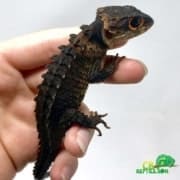
Red-Eyed Crocodile Skink Care Guide: Humidity, Habitat and Diet
With armored, ridged scales and bright orange rings around its eyes, the red-eyed crocodile skink (Tribolonotus gracilis) looks like a miniature dragon from another age. This shy, rainforest-dwelling lizard is a favorite among keepers who enjoy naturalistic, humid enclosures and fascinating behavior. This guide covers its care and introduces the captive-bred red-eyed crocodile skinks raised at www.CbReptile.com.
Natural History
Red-eyed crocodile skinks are native to New Guinea and nearby islands, where they inhabit humid lowland rainforests. They live on the forest floor among leaf litter, rotting logs, coconut husks and areas near streams and swamps. They are mostly crepuscular, becoming active at dawn and dusk to hunt insects, worms and other small invertebrates.
These skinks have some unusual behaviors. They are one of the few lizards known to vocalize, producing soft squeaks or chirps when stressed. When threatened, they may freeze and play dead. Females typically lay a single egg at a time and have been observed staying with the egg, an uncommon behavior among lizards.
Appearance
The species is dark brown with four rows of raised, keeled scales running down the back, giving it the crocodile-like look that inspired its common name. The head is triangular with bony projections, and the eyes are surrounded by a vivid orange ring. Males and females look similar, though males often have pores on the underside of the feet and are slightly larger.

Size and Lifespan
Adults typically reach 7 to 10 inches in total length, with a significant portion of that being tail. With proper care they generally live 10 to 15 years.
Temperament
Crocodile skinks are shy and easily stressed. They are best appreciated as display animals in a lush, naturalistic setup rather than as frequently handled pets. Given plenty of cover, they become more confident and will often emerge to explore and hunt in view.
Enclosure Setup
A single adult or pair can be housed in an enclosure of about 24 x 18 x 18 inches, with more floor space always appreciated. These skinks are terrestrial, so prioritize ground space over height. Key features include:

- A deep, moisture-retaining substrate such as coco fiber, organic soil and leaf litter. A bioactive setup with springtails and isopods is ideal.
- A large, shallow water area. Crocodile skinks love to soak and often sit in water for long periods.
- Plenty of hides, such as cork bark flats and tubes. A cork round makes a natural, humid retreat.
- Live plants and a layer of moss to hold humidity. New Zealand sphagnum moss works well in hides and corners.
Heat, UVB and Humidity
These skinks prefer moderate temperatures. Keep the enclosure between 75 and 80°F, with a gentle warm spot of about 80 to 82°F. Avoid temperatures above about 85°F, as they are prone to heat stress. Night temperatures in the low 70s are fine.
Humidity is the most important parameter. Aim for 70 to 90 percent. Mist the enclosure regularly and keep part of the substrate damp. A Reptile Fogger System can help maintain humidity in drier homes. Low-level UVB (around 2 to 5 percent) with plenty of shaded areas mimics the dappled light of the forest floor and supports natural behavior.
Diet
Red-eyed crocodile skinks are insectivores. Offer a varied diet of appropriately sized prey:
- Dubia roaches and other small roaches.
- Crickets.
- Earthworms, which are a favorite and closely resemble their natural diet.
- Black soldier fly larvae and occasional waxworms as treats.
Feed juveniles daily or every other day and adults every two to three days. Dust insects with calcium and use a multivitamin about once a week. Offering food in a shallow dish or leaving prey to roam at dusk encourages natural hunting behavior.
Handling
Keep handling to a minimum. When it is necessary, gently scoop the skink from below and keep it close to a soft surface. Never grab the tail. Crocodile skinks can drop their tails when stressed, and while the tail will regrow, it is a significant energy loss.
Why Captive-Bred Matters
Wild-collected crocodile skinks often arrive dehydrated, stressed and heavily parasitized, and they can be difficult to establish. Captive-bred animals are healthier, already feeding well and more tolerant of their surroundings. Our captive-bred red-eyed crocodile skinks are raised by our team, including a staff biologist.

Frequently Asked Questions
Do red-eyed crocodile skinks like to be handled?
Not especially. They are shy and do best with minimal handling, making them better display animals than hands-on pets.
What humidity do crocodile skinks need?
Aim for 70 to 90 percent, with a large water dish and damp areas of substrate.
Can crocodile skinks live together?
Pairs or one male with females can be housed together in a large enclosure with plenty of hides. Two males should not be kept together.
Why does my crocodile skink squeak?
Vocalizing is a natural defensive behavior when the skink feels threatened. Give it space and more cover.
Meet our captive-bred red-eyed crocodile skinks at www.CbReptile.com.