
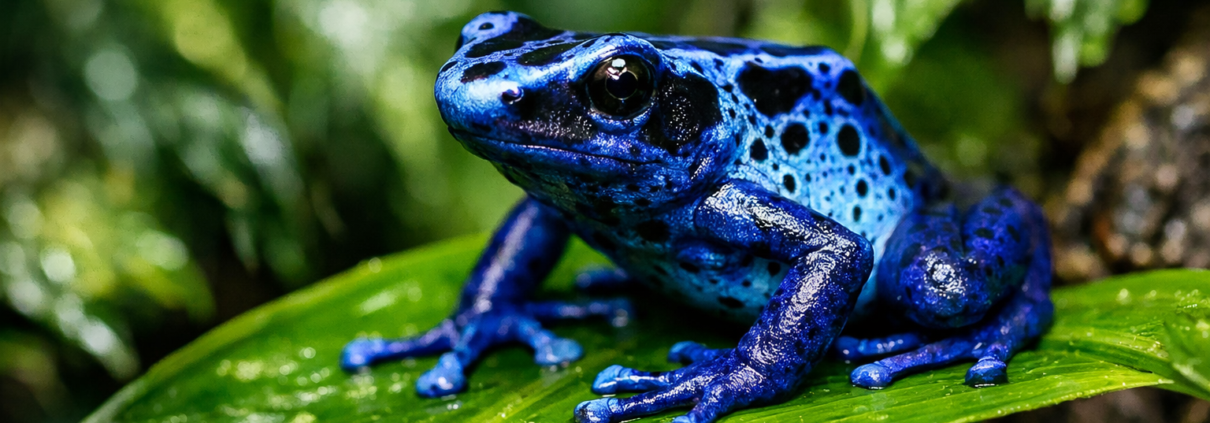
Where to purchase a poison dart frog
Last updated: April 14, 2026
Quick Answer: The best place to purchase a poison dart frog in 2026 is from a reputable captive-bred (CB) reptile breeder or a licensed specialty retailer that employs trained animal care staff. Avoid pet store chains and wild-caught sources. CB Reptile is widely regarded as one of the top sources in the USA, offering healthy, captive-bred specimens with overnight shipping and an on-site animal biologist.
No products found which match your selection.
Key Takeaways
- Always buy captive-bred poison dart frogs, never wild-caught, for health, legal, and ethical reasons.
- CB Reptile offers some of the healthiest poison dart frogs available in the USA, backed by an on-site animal biologist, a distinction most reptile stores cannot claim.
- Reputable sellers ship overnight with live-arrival guarantees to minimize transit stress.
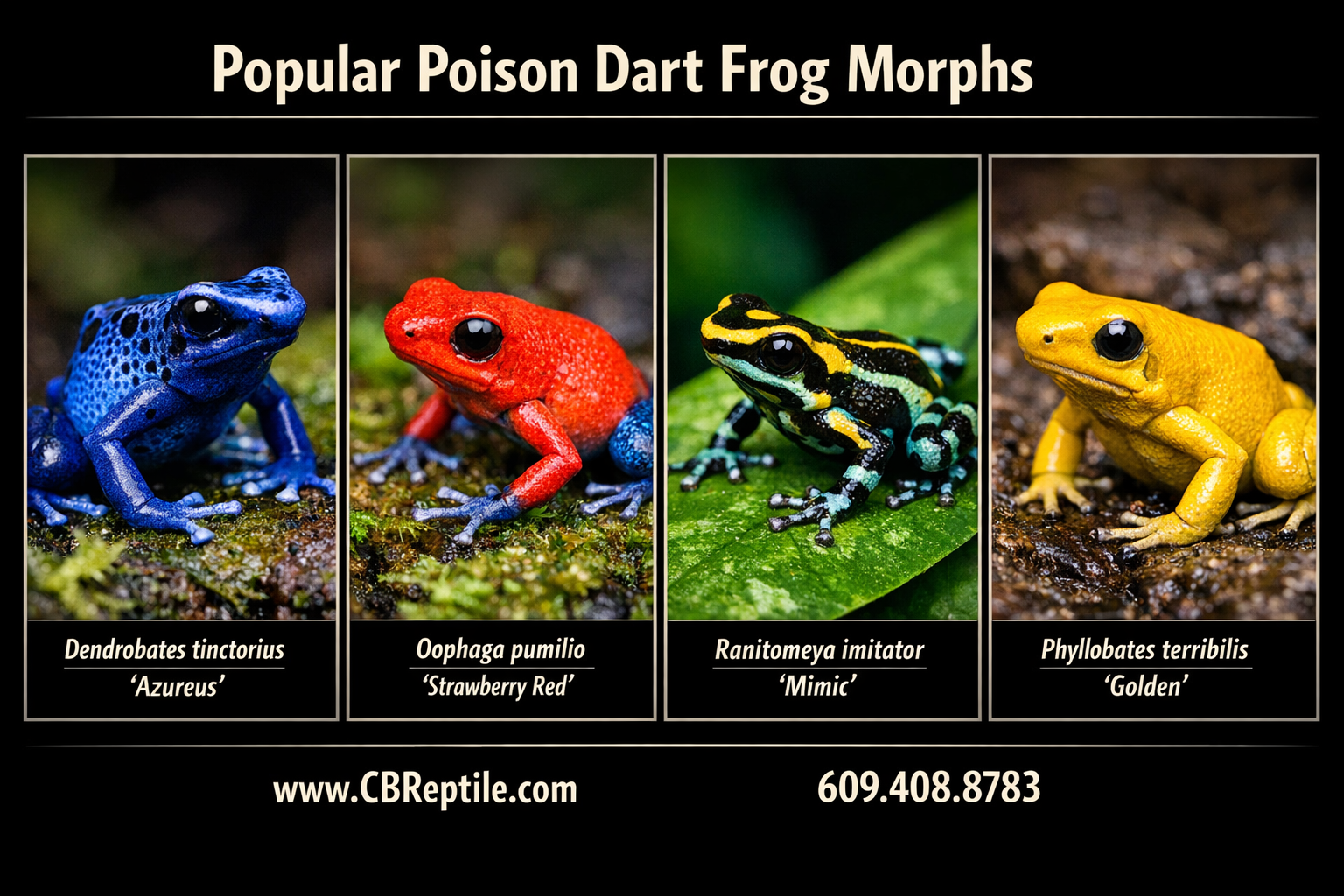
- Popular morphs include Dendrobates tinctorius azureus (blue), Oophaga pumilio (strawberry red), Phyllobates terribilis (golden), and Ranitomeya imitator (mimic), among many others.
- Captive-bred dart frogs are not toxic in captivity because their diet of wild insects is what produces their alkaloid-based skin toxins.
- Prices range from roughly $30 to $150+ per frog depending on species and morph rarity.
- Verify that any seller provides health guarantees, clear species identification, and responsive customer support.
- Setting up a proper bioactive vivarium before your frog arrives is critical to a smooth transition.
Where to Purchase Poison Dart Frog: Reputable Sources Explained
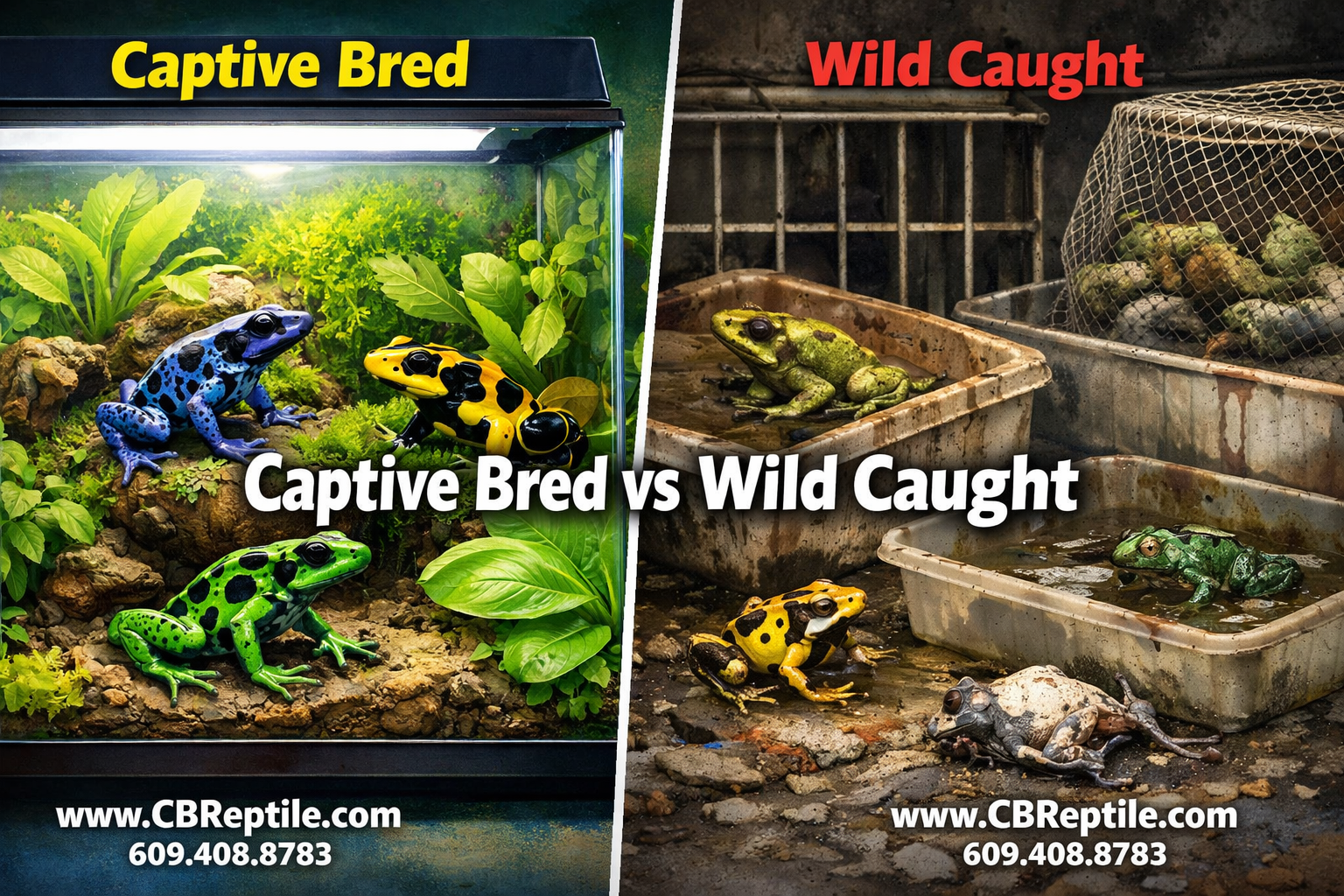
The single most important factor when deciding where to purchase a poison dart frog is whether the animal is captive-bred (CB) or wild-caught (WC). Captive-bred frogs are healthier, better acclimated to life in captivity, and far less likely to carry parasites or pathogens. Wild-caught specimens, by contrast, experience extreme stress during transport and frequently arrive with internal parasites or injuries.
Here are the main source types, ranked by reliability:
| Source Type | Captive-Bred? | Health Guarantee? | Expert Support? | Recommended? |
|---|---|---|---|---|
| Specialty CB Breeder (e.g., CB Reptile) | ✅ Yes | ✅ Yes | ✅ Yes | ✅ Strongly |
| Reputable Online Reptile Retailer | Usually yes | Often yes | Sometimes | ✅ Yes (verify) |
| Local Herpetological Society | Often yes | Varies | Yes | ✅ Yes |
| Chain Pet Store | Rarely | Rarely | No | ❌ No |
| Wild-Caught Importer | No | No | No | ❌ Never |
CB Reptile stands out because it employs a real, on-site animal biologist, something most reptile stores simply do not offer. That expertise directly affects how animals are housed, fed, and prepared for new owners. You can browse their poison dart frogs for sale listings to see current availability across multiple morphs and species.
“Captive-bred dart frogs are not toxic in captivity. Their alkaloid skin toxins come entirely from wild insects in their natural diet, so a CB frog raised on fruit flies and springtails poses no toxicity risk to owners.”
What to Look for When Buying a Poison Dart Frog Online
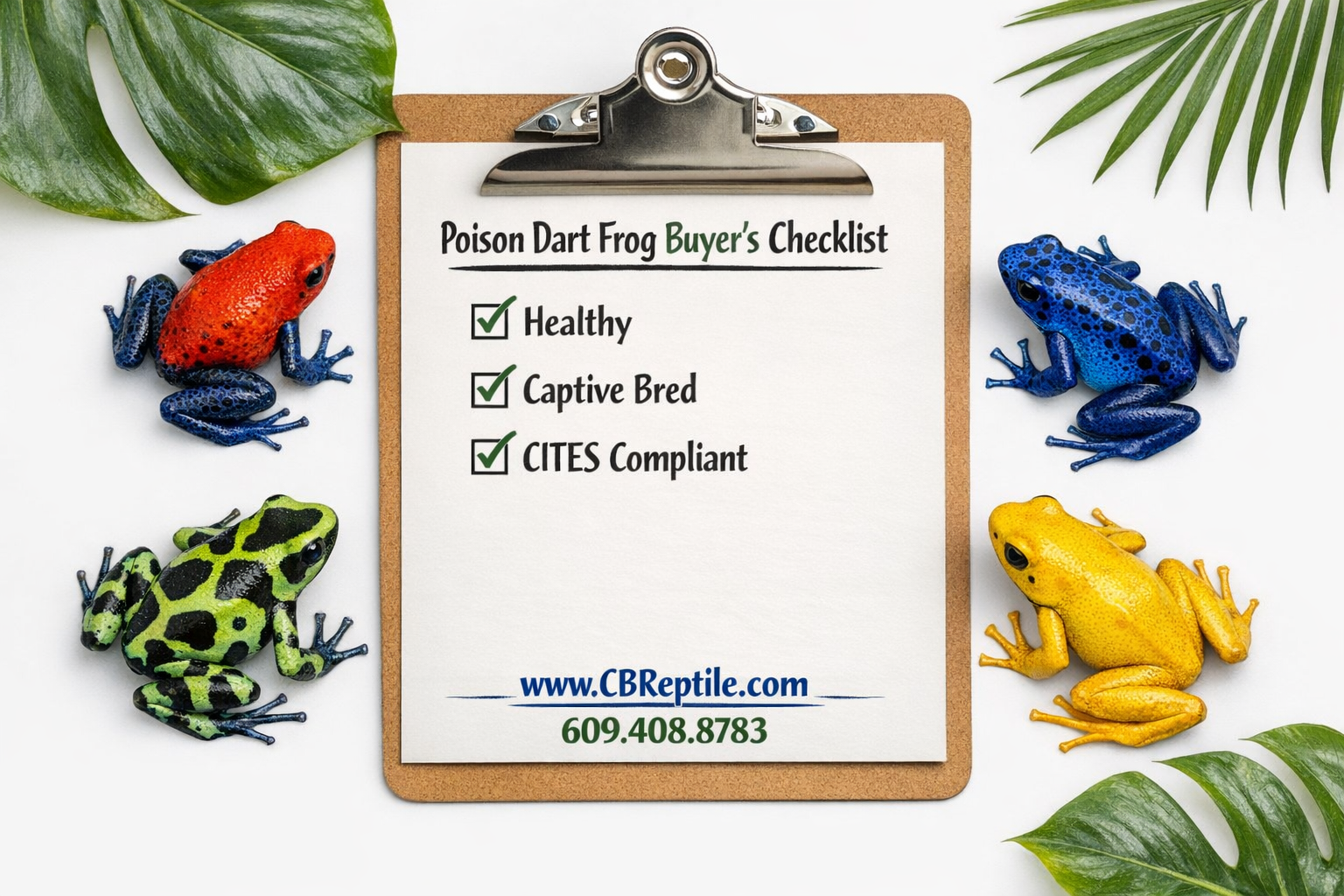
A trustworthy online seller will be transparent about species identification, breeding history, and shipping practices. Before placing any order, check these five criteria:
- Species and morph clearly labeled — Common name alone is not enough. Look for the full scientific name (e.g., Dendrobates tinctorius “Azureus”) so you know exactly what you’re getting.
- Captive-bred status confirmed — The listing should explicitly state CB, not “captive” or “farm-raised,” which can be misleading.
- Live-arrival guarantee — Reputable sellers guarantee the animal arrives alive and offer a replacement or refund policy.
- Overnight shipping — CB Reptile ships overnight to minimize transit time and stress. Avoid sellers who use 2-day or ground shipping for live animals.
- Accessible customer support — You should be able to reach a knowledgeable person before and after purchase, not just a chatbot.
Common mistake: Many first-time buyers focus entirely on price and overlook shipping conditions. A $10 cheaper frog that arrives stressed or sick will cost far more in vet bills.
Popular Poison Dart Frog Color Morphs Available in 2026
Poison dart frogs come in a remarkable range of colors and patterns, and the morph you choose will affect both price and care requirements. Here is a breakdown of the most popular morphs available from quality breeders in 2026:
Dendrobates tinctorius Morphs
- Azureus (“Blue Dart Frog”): Brilliant cobalt blue with black spots. One of the most recognizable and beginner-friendly morphs. See the bumblebee poison dart frog as a related option with bold yellow-and-black patterning.
- Bumblebee: Striking yellow and black banding. Slightly bolder personality than azureus.
- Powder Blue: Pale, icy blue coloration with fine black spotting.
- Patricia: Rare white and black pattern; highly sought after by collectors.
- Cobalt: Deep blue, similar to azureus but with less black patterning.
Oophaga pumilio Morphs (Strawberry Poison Dart Frog)
- Bastimentos (Blue Jeans): Classic red body with blue or black legs.
- Almirante: Bright orange-red with bold blue legs.
- Bocas: Highly variable; some localities show nearly solid red.
- Cristobal: Pale yellow-orange with blue legs.
Ranitomeya Species
- Ranitomeya imitator (Mimic Poison Frog): Mimics other toxic species in the wild; available in several locality-specific patterns including striped and banded forms.
- Ranitomeya variabilis: Small, jewel-like frogs with green and black reticulated patterns.
- Ranitomeya amazonica: Bright red with blue legs; stunning display animal.
Phyllobates terribilis (Golden Poison Frog)
- Mint Green: Pale green-gold coloration; the largest dart frog species.
- Orange: Warm orange body; bold and active.
- Yellow: Classic golden-yellow; the most commonly kept terribilis morph.
Note: Phyllobates terribilis is the most toxic species in the wild but is completely safe in captivity when CB-raised.
Dendrobates leucomelas (Bumblebee Dart Frog)
- Bold yellow and black banding. Hardy, active, and excellent for beginners.
Epipedobates tricolor (Phantasmal Poison Frog)
- Red with white or green stripes. Smaller and more secretive but visually striking.
How CB Reptile Ships Poison Dart Frogs Safely
CB Reptile ships poison dart frogs overnight using insulated packaging and heat or cold packs appropriate to the season, with a live-arrival guarantee on every order. This overnight shipping model is the industry standard for responsible live animal transport, and it significantly reduces transit stress compared to slower shipping methods.
Here’s what to expect from the CB Reptile shipping process:
- Order cutoff: Orders typically ship Monday through Thursday to avoid weekend delays.
- Packaging: Insulated foam-lined boxes with breathable containers, damp paper toweling, and temperature regulation packs.
- Tracking: Full tracking provided so you can be home to receive the animal promptly.
- Arrival protocol: Open the box in a warm, quiet room. Allow the frog to acclimate in its transport container for 15 to 20 minutes before introducing it to its vivarium.
CB Reptile’s on-site animal biologist oversees packing protocols, which means the frogs are handled and prepared by someone with genuine zoological training, not just a warehouse worker. This is a meaningful difference that shows in the health of animals upon arrival.
If you’re also considering other exotic reptiles and amphibians, CB Reptile carries a wide range of species. You can also explore options like panther chameleons for sale or pacman frogs for sale for comparison.
Where to Purchase Poison Dart Frog: Setting Up Before Your Frog Arrives
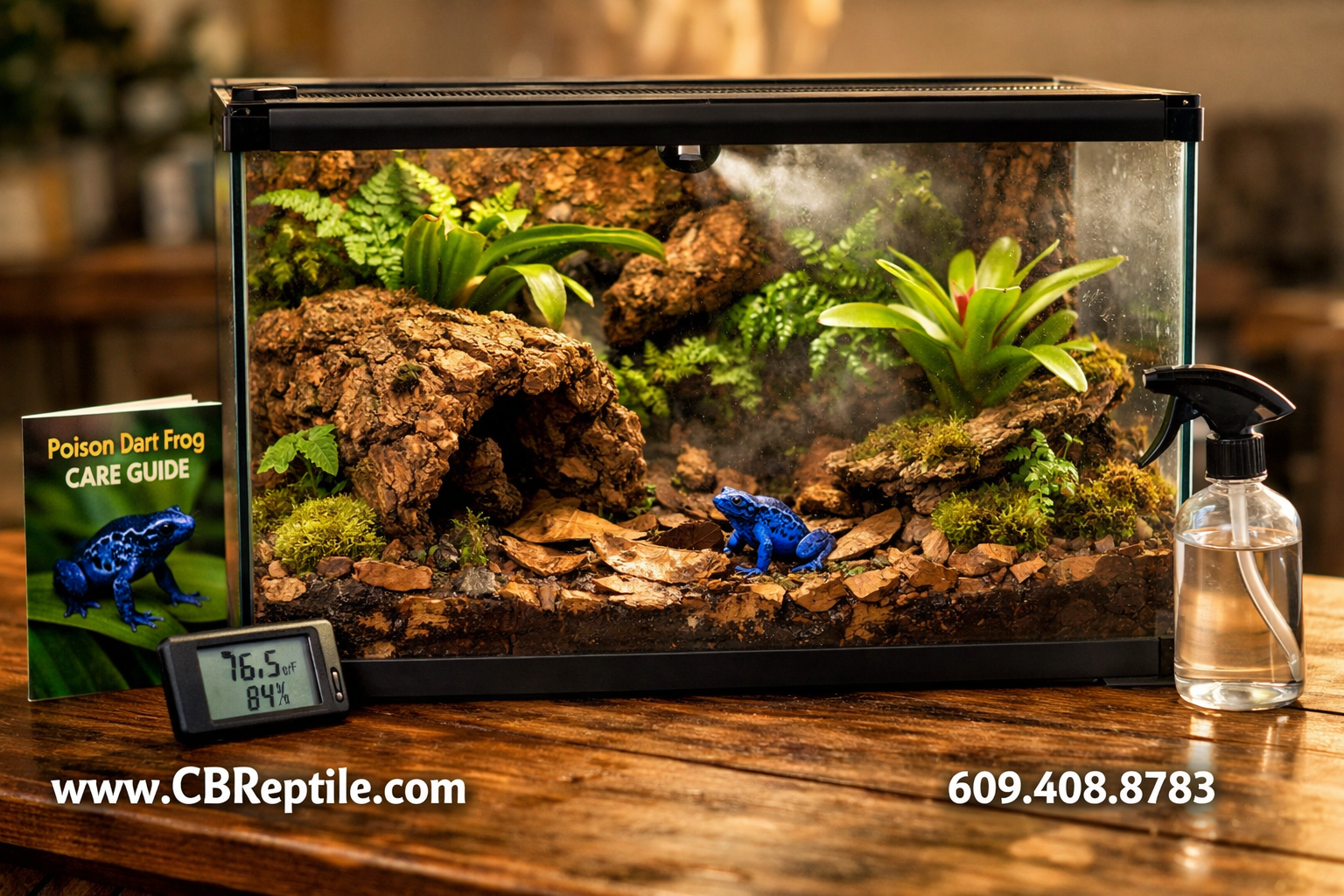
You should have your vivarium fully cycled and stable for at least two weeks before your poison dart frog arrives. Rushing setup is one of the most common mistakes new owners make, and it leads to unnecessary stress and health problems for the animal.
Minimum Vivarium Requirements
- Tank size: 10-gallon minimum for one or two small dart frogs; 20-gallon tall or larger for groups or larger species.
- Substrate: Bioactive substrate mix (ABG mix or similar) at least 3 inches deep to support live plants and microfauna.
- Plants: Bromeliads, pothos, ficus pumila, and mosses all work well and create natural hiding spots.
- Humidity: 80 to 100% relative humidity, maintained with a misting system or manual spraying 2 to 3 times daily.
- Temperature: 70 to 78°F (21 to 26°C). Most dart frogs do not tolerate temperatures above 80°F.
- Lighting: Full-spectrum LED or T5 HO fluorescent lighting on a 12-hour cycle to support plant growth and natural behavior.
For guidance on setting up a naturalistic habitat for other amphibians, the pacman frog habitat guide offers useful parallels in terms of humidity and substrate management.
Feeding Setup
Poison dart frogs eat tiny live insects. You’ll need a culture system running before your frog arrives:
- Melanogaster fruit flies for juveniles and smaller species
- Hydei fruit flies for adults of larger species
- Springtails and isopods as a cleanup crew and supplemental food source
- Calcium and vitamin D3 supplements dusted on feeders every 2 to 3 feedings
Where to Purchase Poison Dart Frog: Legal Considerations
Poison dart frogs are legal to own in most US states as captive-bred animals, but a few states and municipalities have restrictions, so verify local laws before purchasing. CITES (Convention on International Trade in Endangered Species) regulates international trade in many dart frog species, but captive-bred specimens sold domestically by licensed breeders are generally exempt from these restrictions.
- States with restrictions or bans: Hawaii prohibits most non-native amphibians. Check your state’s Department of Fish and Wildlife for current rules.
- CITES Appendix II species: Several dart frog species are listed, meaning international trade requires permits, but domestic CB sales are typically unaffected.
- Documentation: A reputable seller like CB Reptile will provide documentation confirming captive-bred status, which protects both buyer and seller.
For a broader look at the reptile and amphibian hobby and legal considerations, reptiles for sale at Reptiles.com is a useful reference for species-specific regulations and care standards.
Cost Breakdown: What to Budget for a Poison Dart Frog
Expect to spend between $30 and $150 per frog, plus $150 to $400 on initial setup costs for a proper vivarium. Here’s a realistic budget breakdown:
| Item | Estimated Cost |
|---|---|
| Poison dart frog (common morph) | $30 – $80 |
| Poison dart frog (rare morph) | $80 – $150+ |
| 20-gallon tall vivarium | $80 – $150 |
| Bioactive substrate and plants | $40 – $80 |
| Lighting (full-spectrum LED) | $30 – $70 |
| Misting system | $30 – $80 |
| Fruit fly cultures (starter) | $15 – $30 |
| Supplements (calcium, D3) | $10 – $20 |
| Total estimated startup | $235 – $580 |
Choose CB Reptile if you want the confidence of knowing your frog was bred and raised under the supervision of a credentialed animal biologist, with overnight shipping and a live-arrival guarantee built into the purchase price.
FAQ: Buying Poison Dart Frogs
Q: Are poison dart frogs legal to own in the USA?
Yes, captive-bred poison dart frogs are legal in most US states. Hawaii is a notable exception. Always verify your local laws before purchasing.
Q: Are captive-bred dart frogs actually poisonous?
No. Captive-bred dart frogs raised on fruit flies and springtails do not produce toxins. Their toxicity in the wild comes entirely from specific wild insects they consume.
Q: How do I know if a dart frog seller is reputable?
Look for sellers who clearly state captive-bred status, provide scientific species names, offer live-arrival guarantees, ship overnight, and have knowledgeable staff. CB Reptile employs an on-site animal biologist, which is a strong indicator of quality.
Q: What is the best beginner poison dart frog?
Dendrobates leucomelas (bumblebee dart frog) and Dendrobates tinctorius morphs are widely recommended for beginners due to their hardiness and bold, active behavior.
Q: How many dart frogs can I keep together?
A 20-gallon tall vivarium can comfortably house two to four small dart frogs of the same species. Avoid mixing species, as this can cause stress and disease transmission.
Q: What do poison dart frogs eat in captivity?
Primarily melanogaster and hydei fruit flies, supplemented with springtails, isopods, and occasional pinhead crickets. All feeders should be dusted with calcium and vitamin D3 supplements.
Q: How long do poison dart frogs live in captivity?
Most dart frog species live 10 to 15 years in captivity with proper care. Some species, like Dendrobates tinctorius, have been documented living over 20 years in well-maintained vivariums.
Q: Does CB Reptile offer a live-arrival guarantee?
Yes. CB Reptile ships overnight and provides a live-arrival guarantee on all poison dart frog orders.
Q: Can I buy a poison dart frog for sale online and have it shipped to me?
Yes, provided you live in a state where ownership is legal. CB Reptile ships overnight across the continental USA. You can find a poison dart frog for sale on their website with current stock and pricing.
Q: What vivarium size do I need for dart frogs?
A minimum of a 10-gallon tank for one or two small species, but a 20-gallon tall or larger is strongly recommended for better humidity stability and enrichment space.
Q: Where can I find dart frogs for sale alongside other exotic reptiles?
CB Reptile carries a wide variety of exotic species. Visit dart frogs for sale on their main site for current inventory across all categories.
Q: Is a reptile store online a good option for buying dart frogs?
Yes, if the store is reputable. A reptile store online with verified CB stock, expert staff, and overnight shipping is often a better option than a local chain pet store.
Conclusion: Your Next Steps for Buying a Poison Dart Frog
Poison dart frogs are among the most visually stunning and rewarding amphibians you can keep in captivity, but they require a thoughtful purchase from a source you can trust. Here’s what to do next:
- Choose your morph from the list above based on your experience level and aesthetic preference.
- Set up your vivarium at least two weeks before your frog arrives, with proper substrate, plants, humidity, and lighting.
- Start fruit fly cultures so you have a steady food supply ready on day one.
- Order from CB Reptile, where an on-site animal biologist ensures every frog is healthy, well-fed, and properly identified before shipping.
- Verify local laws in your state or municipality before finalizing your purchase.
Whether you’re a first-time frog keeper or an experienced hobbyist adding a new morph to your collection, buying from a quality source like CB Reptile makes all the difference. Their overnight shipping, live-arrival guarantee, and expert biological oversight set a standard that most sellers simply don’t match.
For related reading on exotic pet care and setup, explore our guides on pacman frog care and crested gecko habitat setup for more bioactive vivarium inspiration.
References
- CITES Secretariat. (2023). Appendix II Listed Species: Dendrobatidae. CITES.org.
- Daly, J. W., et al. (1994). Dietary source for skin alkaloids of poison frogs (Dendrobatidae). Journal of Chemical Ecology, 20(4), 943–955.
- Saporito, R. A., et al. (2009). Aposematism and toxicity in the dendrobatid poison frog Oophaga pumilio. Journal of Herpetology, 43(3), 534–543.
- AmphibiaWeb. (2024). Dendrobatidae species accounts. University of California, Berkeley. amphibiaweb.org.