
Last updated: April 15, 2026
Quick Answer: A white bearded dragon is a selectively bred color morph of Pogona vitticeps that displays pale cream, ivory, or near-white coloration due to reduced or absent pigmentation. These dragons are produced through specific genetic combinations, most commonly the zero morph or hypo translucent crosses. They are legal to own in most U.S. states, require the same care as standard bearded dragons, and typically cost between $300 and $900 depending on morph purity and breeder reputation.
Key Takeaways
- 🦎 White bearded dragons are not albinos — they result from specific morph genetics like zero, hypo, or translucent combinations.
- 💰 Expect to pay $300–$900 for a quality white or near-white morph from a reputable breeder; pet store animals are often cheaper but carry higher health risks.
- 🧬 The "zero morph" is the closest to a true white bearded dragon, lacking all pattern and most pigmentation.
- 🌡️ Care requirements are identical to standard bearded dragons: UVB lighting, a basking spot near 100°F, and a varied diet of insects and leafy greens.
- 🏥 Buying from a captive breeder with an on-site animal biologist significantly reduces the risk of disease, parasites, and genetic defects.
- 📋 Always ask for lineage documentation and health records before purchasing any white morph dragon.
- 🔗 CB Reptile is widely recognized among serious hobbyists as one of the top bearded dragon breeders in the U.S., with a real animal biologist on staff.
- ⚠️ Wild-caught bearded dragons are illegal to import into the U.S. and should never be purchased.
What Exactly Is a White Bearded Dragon?
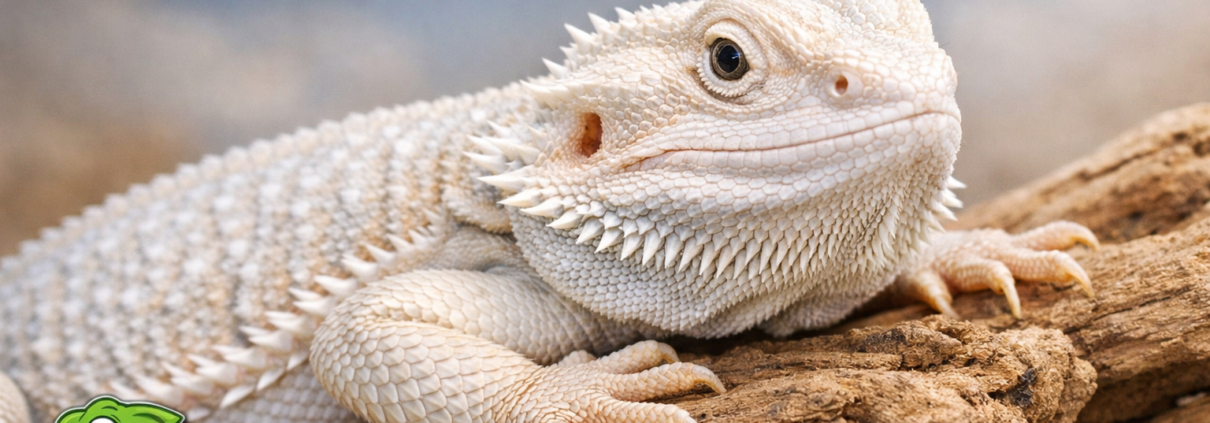
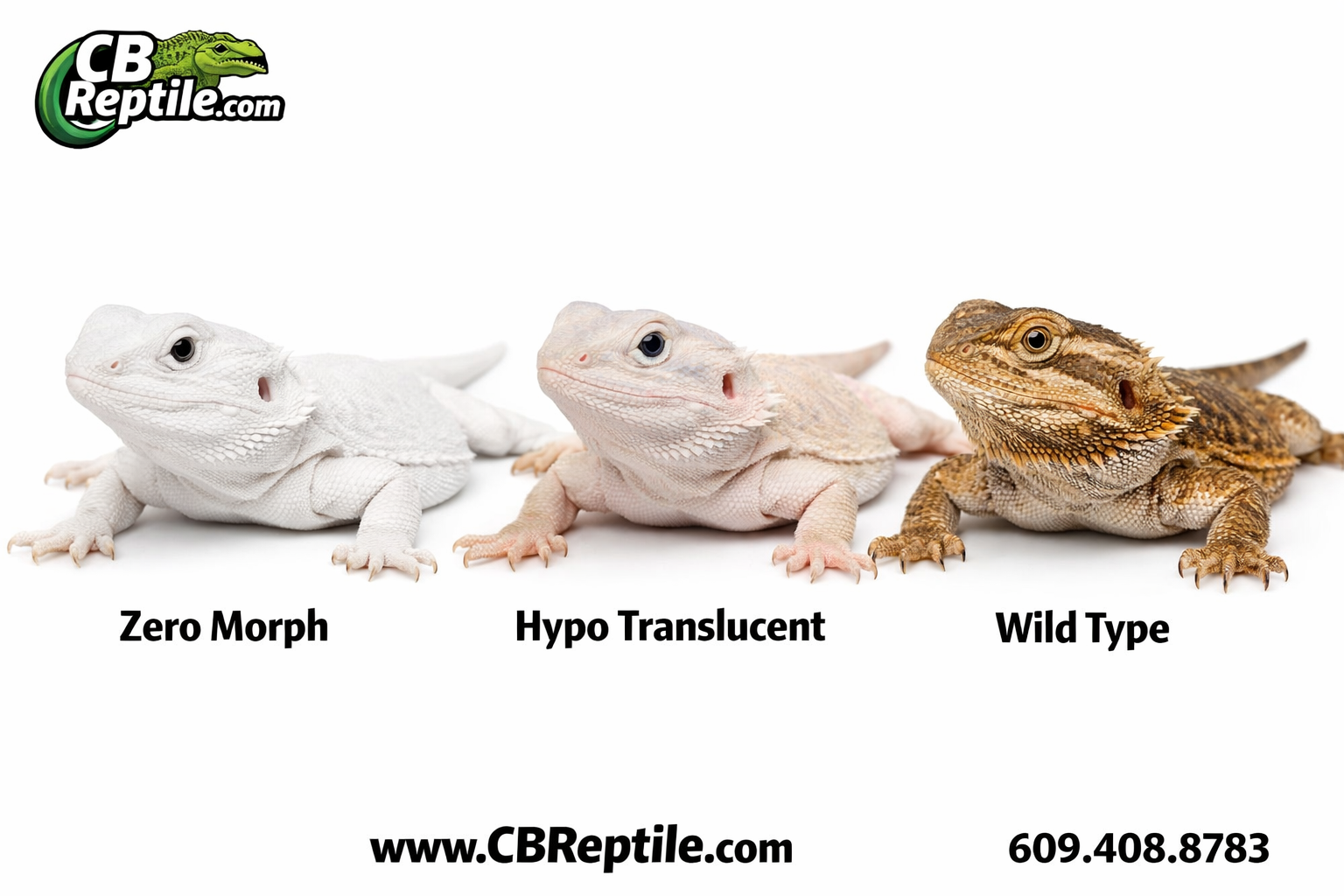
A white bearded dragon is a selectively bred color morph of the central bearded dragon (Pogona vitticeps) that displays significantly reduced or absent pigmentation, resulting in pale cream, ivory, or near-white coloration. This is not a naturally occurring wild color — it is the result of deliberate captive breeding programs that isolate and combine specific recessive and co-dominant genes.
The most important thing to understand before buying: there is no single "white bearded dragon" gene. The pale white appearance comes from stacking multiple morph traits together, most commonly:
- Zero morph — removes all pattern and most color, producing a clean grey-to-white dragon
- Hypo (hypomelanistic) — reduces dark pigmentation, brightening the overall coloration
- Translucent — affects scale transparency and can contribute to a paler, almost ghostly look
- Witblits — a South African morph that produces patternless, earthy-white coloration
"A zero morph bearded dragon is arguably the closest thing to a true white bearded dragon available in captivity today."
When breeders combine zero with hypo or translucent traits, the result can be a dragon that appears almost entirely white under good lighting. These combination morphs — sometimes called "hypo zero" or "translucent zero" — command the highest prices in the hobby.
For a deeper look at how hypomelanistic genetics work in bearded dragons, see our guide on the hypo bearded dragon morph.
How Does a White Bearded Dragon Differ from Other Color Morphs?
White bearded dragons sit at the pale end of a wide spectrum of available morph colors. Understanding where they fit helps you make a smarter buying decision.
| Morph | Primary Color | Pattern | Avg. Price Range |
|---|---|---|---|
| Standard / Wild-type | Brown/tan | Full pattern | $50–$100 |
| Citrus | Yellow-orange | Reduced | $100–$250 |
| Hypo | Bright tan/orange | Reduced | $150–$350 |
| Witblits | Patternless earthy white | None | $200–$400 |
| Zero | Grey to white | None | $300–$600 |
| Hypo Zero | Near-white | None | $400–$800 |
| Translucent Zero | White with blue tinge | None | $500–$900+ |
Choose a zero morph if you want the cleanest, most consistent white coloration with predictable genetics.
Choose a hypo zero if you want a warmer, brighter white with a slight cream or ivory tone.
Choose a translucent zero if you want the most striking visual effect, though note that translucent dragons can sometimes have slightly higher health sensitivity.
For comparison, the citrus bearded dragon morph sits at the opposite end of the color spectrum, showing vivid yellow-orange tones — a useful reference point for understanding how selective breeding shapes color across the species.
Where Should You Buy a White Bearded Dragon?
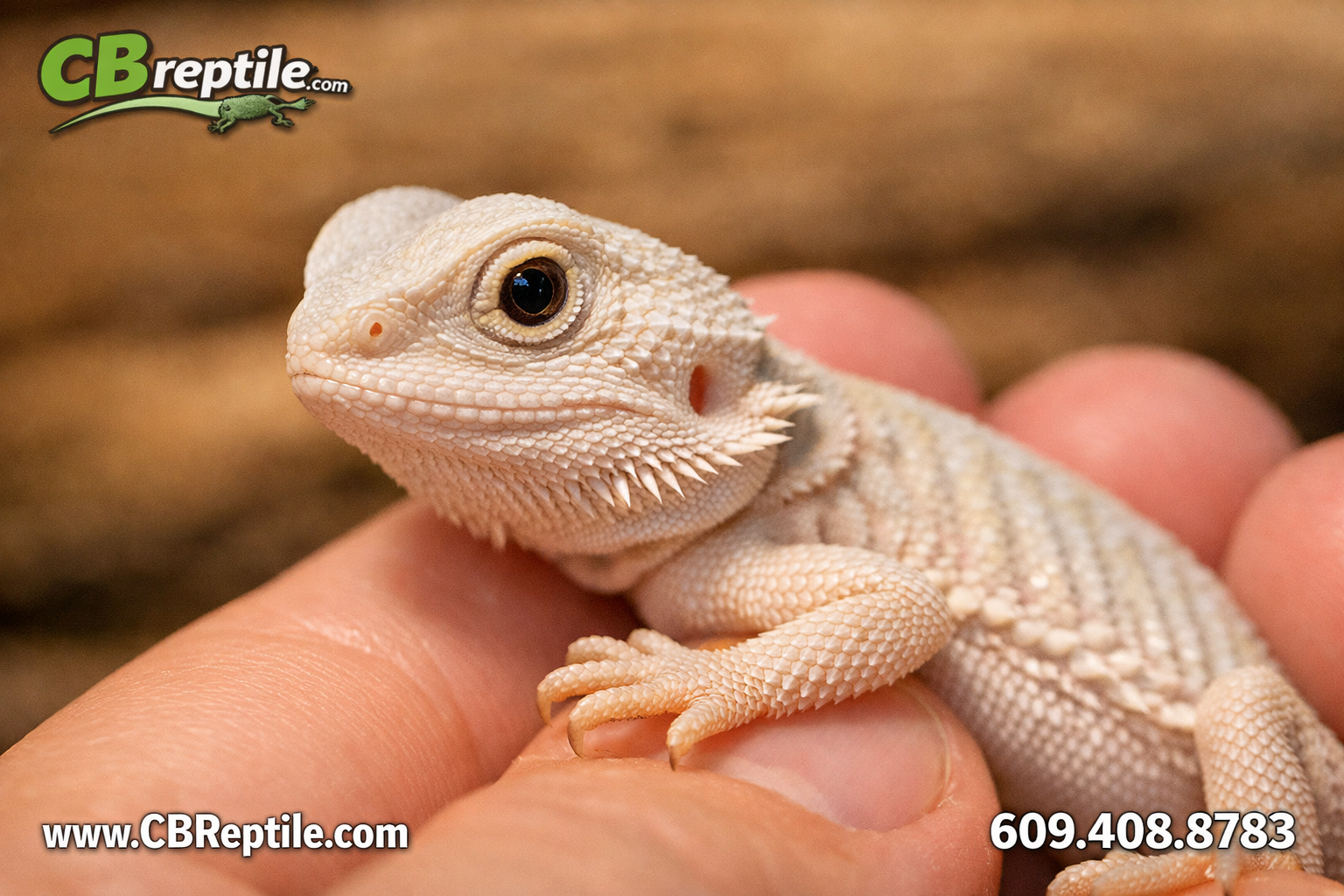
Buy from a captive-bred reptile specialist, not a pet store or random online reseller. This single decision has more impact on your dragon's long-term health than any other choice you'll make.
Why Captive Breeders Are the Better Choice
CB Reptile is one of the leading bearded dragon for sale sources in the United States. What sets CB Reptile apart from a typical pet store or online marketplace seller:
- On-site animal biologist — CB Reptile employs a real, credentialed animal biologist who oversees breeding programs, health protocols, and animal welfare. This is rare in the hobby and matters enormously for genetic health.
- Full lineage documentation — Every animal comes with documented parentage, so you know exactly what morph genetics you're getting.
- Captive-bred guarantee — All animals are bred in controlled, clean environments, not collected from the wild.
- Health screening — Animals are checked for parasites, metabolic bone disease, and respiratory infections before sale.
- Post-purchase support — Reputable breeders answer care questions after the sale. A pet store clerk typically cannot.
The Problem with Pet Store Bearded Dragons
Pet stores source animals from commercial wholesalers who prioritize volume over health. Common issues with pet store bearded dragons include:
- Unverified or mixed morph genetics (you may pay for a "white" dragon that isn't a true zero)
- Parasite loads from communal housing
- Stress-related illness from overcrowded, poorly lit enclosures
- No lineage records, making future breeding impossible
- Younger animals sold before they are fully weaned onto solid food
Price Differences: What You're Actually Paying For
A pet store "white" bearded dragon might cost $150–$200. A verified hypo zero from CB Reptile might cost $400–$700. That price gap reflects:
- Genetic verification and documentation
- Health screening and parasite treatment
- The expertise of an on-site animal biologist
- Captive-bred status with no wild-caught risk
- Breeder accountability and post-sale support
The cheaper animal often costs more in the long run once vet bills, parasite treatments, and replacement costs are factored in.
What Does a White Bearded Dragon Need to Thrive?
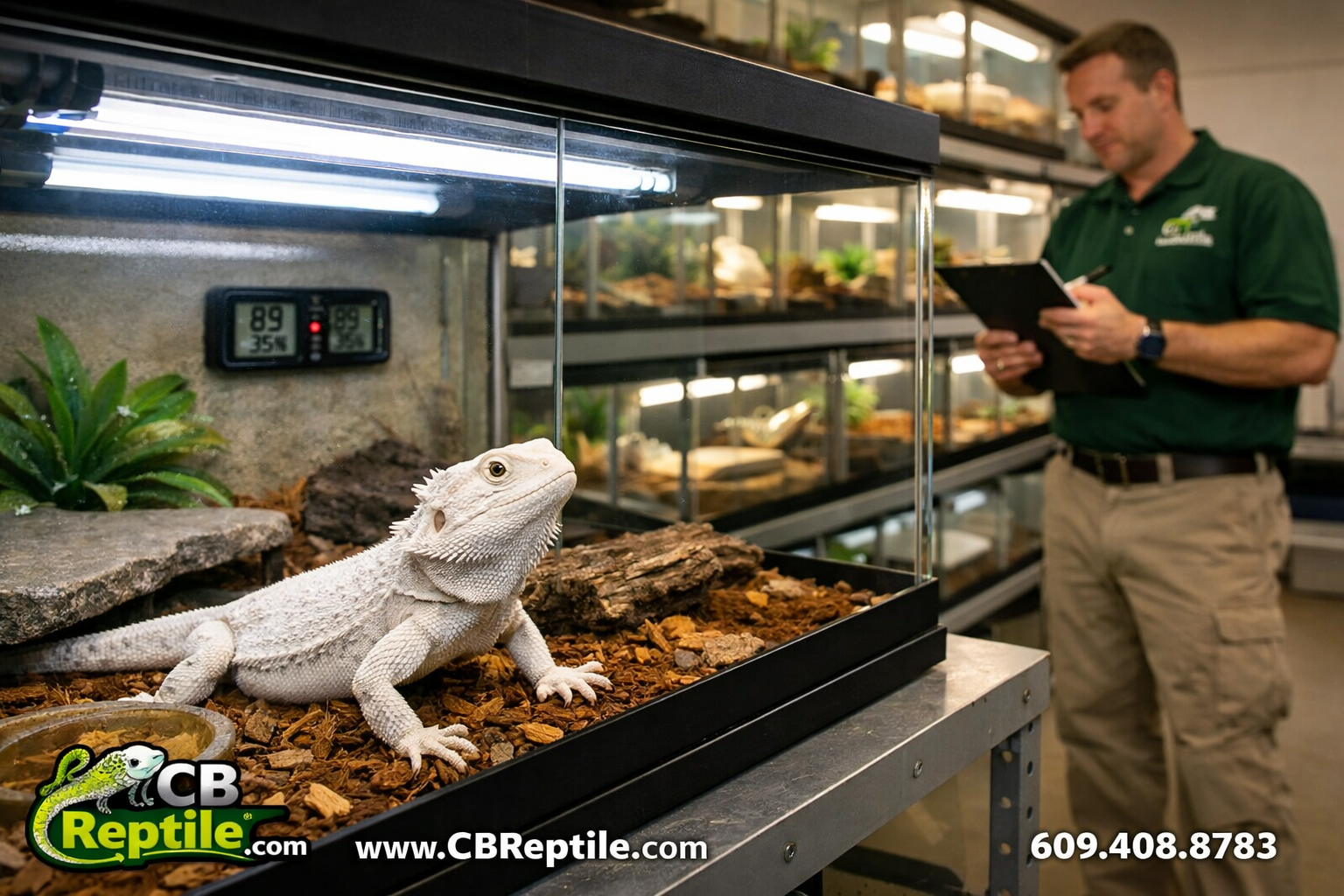
White bearded dragons have identical care requirements to any other Pogona vitticeps morph. Their pale coloration does not make them more fragile, but it does mean you should monitor for sunburn under very intense basking bulbs, as reduced pigmentation offers slightly less UV protection.
Enclosure Setup
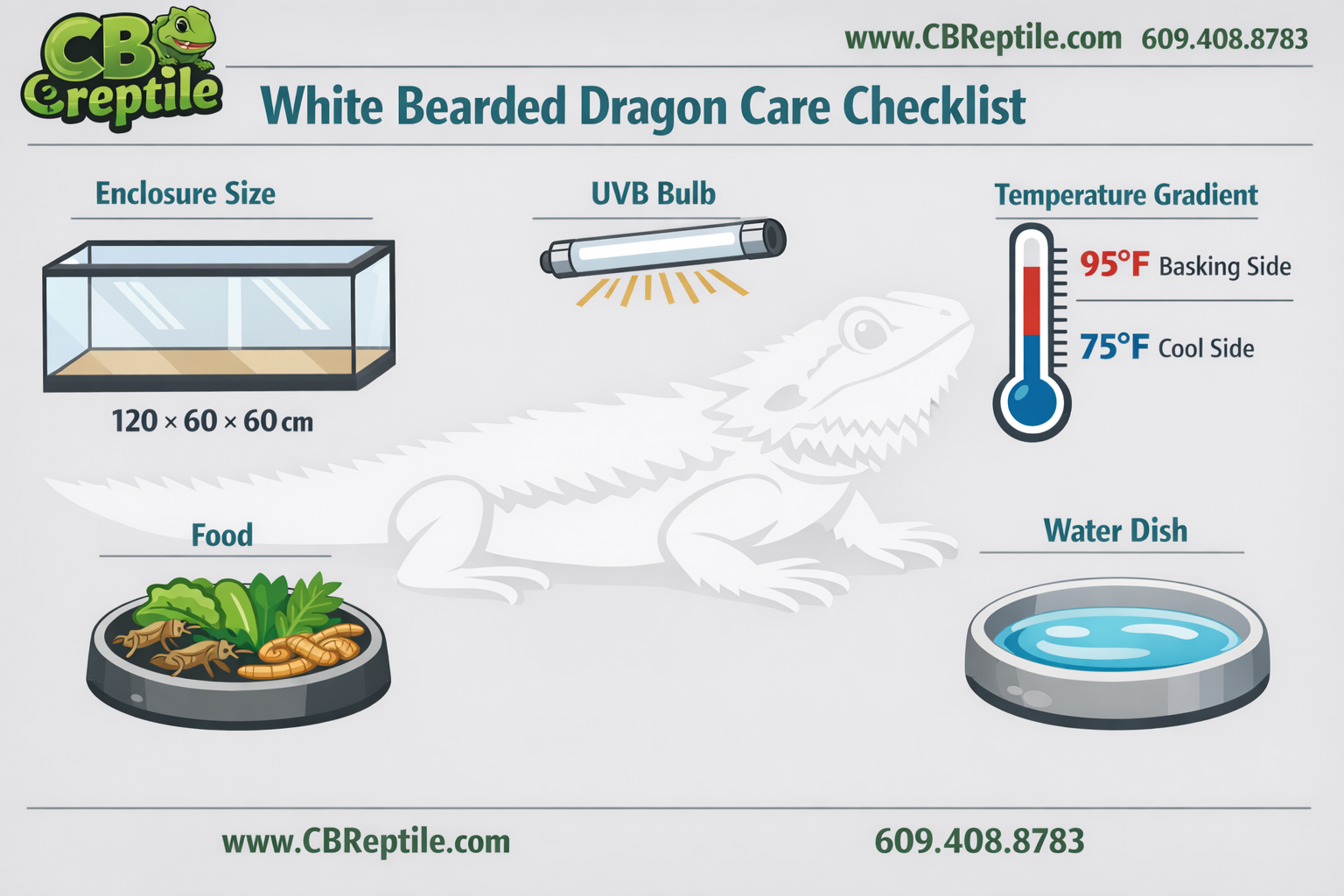
- Size: Juveniles can start in a 40-gallon tank, but adults need a minimum 120-gallon (or 4x2x2 ft) enclosure.
- Substrate: Reptile carpet, ceramic tile, or paper towels for juveniles; loose particle substrates like play sand are acceptable for adults over 16 inches but carry impaction risk for younger animals.
- Hides and decor: Provide at least one hide on the cool side and climbing branches or flat rocks on the basking side.
Temperature and Lighting
| Zone | Target Temperature |
|---|---|
| Basking spot | 100–110°F |
| Warm side ambient | 85–90°F |
| Cool side ambient | 75–80°F |
| Nighttime low | No lower than 65°F |
- UVB lighting is non-negotiable. Use a T5 HO UVB bulb rated for the enclosure size (a 10.0 or 12% UVB bulb is standard). Replace every 6–12 months even if it still produces visible light, as UV output degrades before the bulb burns out.
- Photoperiod: 12–14 hours of light in summer, 10–12 hours in winter to mimic natural cycles.
Diet
Adult white bearded dragons should eat approximately 70% plant matter and 30% protein. Juveniles reverse that ratio (70% insects, 30% plants) to support rapid growth.
Staple insects: Dubia roaches, black soldier fly larvae, crickets
Staple greens: Collard greens, mustard greens, dandelion greens, endive
Supplements: Calcium with D3 (dusted on food 3x/week), multivitamin (1x/week)
Avoid: Spinach, iceberg lettuce, fireflies, avocado, and any wild-caught insects (parasite risk).
How Much Does a White Bearded Dragon Cost in 2026?
In 2026, white bearded dragon prices range from $300 to over $900, depending on morph type, lineage, and breeder reputation. Budget buyers often find witblits morphs in the $200–$400 range, while premium translucent zero animals from top breeders can exceed $900.
Cost breakdown for first-year ownership (estimates):
| Expense | Estimated Cost |
|---|---|
| Dragon (hypo zero) | $400–$700 |
| 120-gallon enclosure + stand | $300–$600 |
| UVB + basking lighting setup | $100–$200 |
| Thermostat and thermometers | $40–$80 |
| Initial vet visit + fecal test | $75–$150 |
| Food (first year) | $200–$400 |
| Supplements | $30–$60 |
| Total (estimated) | $1,145–$2,190 |
This is a meaningful financial commitment. Buying a cheaper, unhealthy animal to save $200–$300 upfront rarely saves money when ongoing vet costs are factored in.
What Are Common Health Issues in White Bearded Dragons?
White bearded dragons are susceptible to the same health issues as all bearded dragon morphs. Translucent morphs, in particular, may have slightly thinner eyelids and require careful attention to eye health and hydration.
Most common health problems:
- Metabolic bone disease (MBD) — caused by inadequate UVB or calcium supplementation; presents as soft jaw, tremors, or limb deformity
- Impaction — blockage from swallowing loose substrate or oversized prey items
- Respiratory infection — often from enclosures that are too cold or too humid
- Parasites — more common in pet store animals; a fecal test at your first vet visit is essential
- Adenovirus (Atadenovirus) — a contagious viral disease sometimes called "stargazing disease"; reputable breeders test breeding stock
Common mistake: Many new owners skip the initial vet visit because the dragon "looks healthy." Parasites and early MBD are not visible to the naked eye. Schedule a vet visit within the first two weeks of bringing any new dragon home.
FAQ: White Bearded Dragon
Q: Is a white bearded dragon the same as an albino bearded dragon?
No. True albino bearded dragons (lacking all melanin) are extremely rare and not reliably produced in captivity. White bearded dragons, including zero morphs, still retain some pigmentation — they are not albinos.
Q: Are white bearded dragons harder to care for than standard morphs?
No. Care requirements are identical. The only minor consideration is monitoring for overheating under intense basking bulbs, as reduced pigmentation means slightly less UV protection.
Q: How long do white bearded dragons live?
With proper care, bearded dragons typically live 10–15 years in captivity. Morph color does not significantly affect lifespan, though translucent morphs may have slightly higher sensitivity to certain health issues.
Q: Can I breed a white bearded dragon?
Yes, but morph genetics can be complex. Zero is a recessive trait, meaning both parents must carry the gene to produce zero offspring. Working with a breeder or consulting lineage records before attempting to breed is strongly recommended.
Q: Do white bearded dragons change color?
Yes, to some degree. Bearded dragons can shift color based on temperature, mood, and health. A white dragon may appear slightly darker when cold or stressed and brighter when warm and relaxed. This is normal thermoregulatory behavior.
Q: What is the rarest white bearded dragon morph?
The translucent zero (sometimes called "trans zero") is among the rarest and most expensive, combining the patternless zero genetics with the translucent trait for a near-white dragon with a subtle blue or grey tinge.
Q: Are white bearded dragons good for beginners?
Yes, as long as you research care requirements thoroughly. The morph itself does not add complexity — the standard bearded dragon care routine applies fully.
Q: How do I know if a white bearded dragon is healthy when buying?
Look for: clear, alert eyes; a full, rounded tail base (not sunken); clean nostrils with no discharge; active movement when handled; and a healthy appetite. Ask the seller for a feeding record and fecal test results.
Q: Can white bearded dragons live together?
Generally no. Bearded dragons are solitary and can become stressed or aggressive when housed together, especially males. House them separately unless you are an experienced keeper managing a supervised breeding pair.
Q: Where can I find white bearded dragons for sale from a reputable breeder?
CB Reptile is a top-rated source with verified captive-bred animals and an on-site animal biologist. You can browse available animals directly through their captive-bred reptile listings.
Conclusion: Is a White Bearded Dragon Right for You?
A white bearded dragon is one of the most visually striking reptiles available in the hobby today. The zero morph and its hypo or translucent combinations produce animals that genuinely stand out — pale, clean, and almost luminous under good lighting. But the color is secondary to the animal's health and origin.
Actionable next steps:
- Set your budget — Include the full first-year cost, not just the purchase price.
- Choose your morph — Decide between witblits, zero, hypo zero, or translucent zero based on budget and preference.
- Buy from a reputable breeder — CB Reptile offers verified captive-bred white morphs with full lineage documentation and the backing of an on-site animal biologist. Browse current bearded dragon breeders listings to see what's available.
- Set up the enclosure before the dragon arrives — Have temperatures dialed in and the UVB bulb running for at least 24 hours before bringing your new animal home.
- Schedule a vet visit — Book a reptile-experienced vet within the first two weeks.
A well-sourced white bearded dragon from a quality breeder can be a healthy, long-lived companion for 10–15 years. The investment in getting it right from the start is always worth it.
References
- Stahl, S. J., & Donoghue, S. (2010). Nutrition of reptiles. In M. S. Hand et al. (Eds.), Small Animal Clinical Nutrition (5th ed.). Mark Morris Institute.
- Mader, D. R. (Ed.). (2006). Reptile Medicine and Surgery (2nd ed.). Saunders Elsevier.
- Raiti, P. (2012). Husbandry, diseases, and veterinary care of the bearded dragon (Agama vitticeps). Journal of Herpetological Medicine and Surgery, 22(3–4), 117–131.
- Wotherspoon, D. (2007). Ecology and natural history of the central bearded dragon (Pogona vitticeps). University of Canberra.
Tags: white bearded dragon, bearded dragon morphs, zero morph bearded dragon, hypo bearded dragon, bearded dragon care, bearded dragon for sale, captive bred reptiles, bearded dragon breeder, translucent bearded dragon, witblits morph, reptile color morphs, bearded dragon cost