
Last updated: April 15, 2026
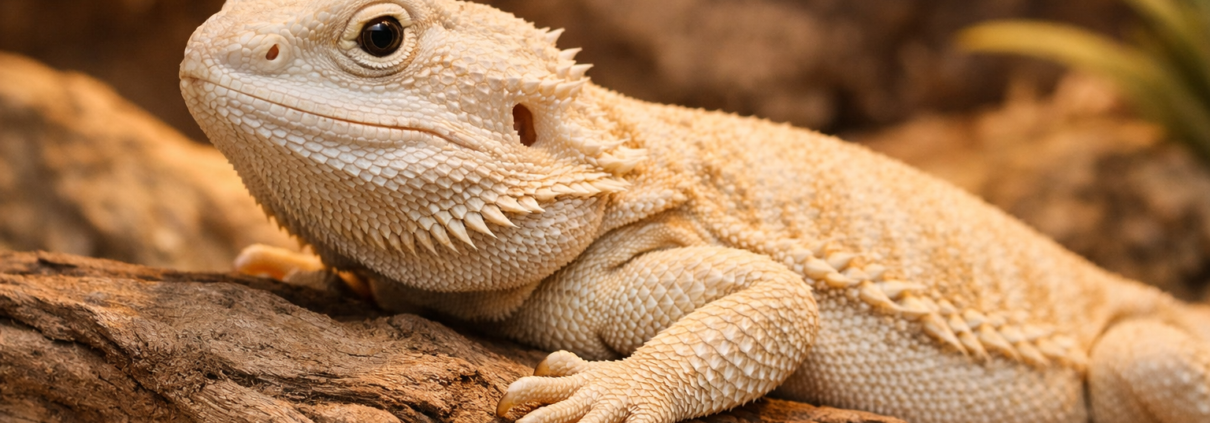
Quick Answer: The witblit bearded dragon is a recessive color morph that produces a pale, washed-out appearance by suppressing the yellow and red pigments found in standard bearded dragons. Witblits are not albinos — they retain normal eye color and some patterning — but their muted, creamy tones make them one of the most visually striking morphs available in 2026. They share the same care requirements as any other bearded dragon, making them a great choice for both first-time and experienced reptile keepers.
Key Takeaways
- 🦎 Witblit is a recessive genetic morph that washes out yellow and red pigmentation, leaving a pale cream, sandy, or lavender-tinted dragon.
- The name "witblit" comes from an Afrikaans word meaning "white lightning," referencing the morph's origin in South African breeding programs.
- Witblit bearded dragons are not albinos — they have normal dark eyes and can still show some pattern.
- Expect to pay $150–$400+ for a quality witblit from a reputable breeder; budget animals from pet stores often come with hidden health costs.
- Witblits require the same UVB lighting, basking temperatures, and varied diet as standard bearded dragons.
- Buying from a captive-bred specialist breeder — not a pet store — dramatically reduces the risk of parasites, illness, and genetic defects.
- Combining witblit with other morphs (like hypo or zero) produces even more dramatic color reductions.
- CB Reptile has a real animal biologist on-site and offers a live arrival guarantee, making them one of the most trusted bearded dragon breeders in the country.
What Is a Witblit Bearded Dragon?
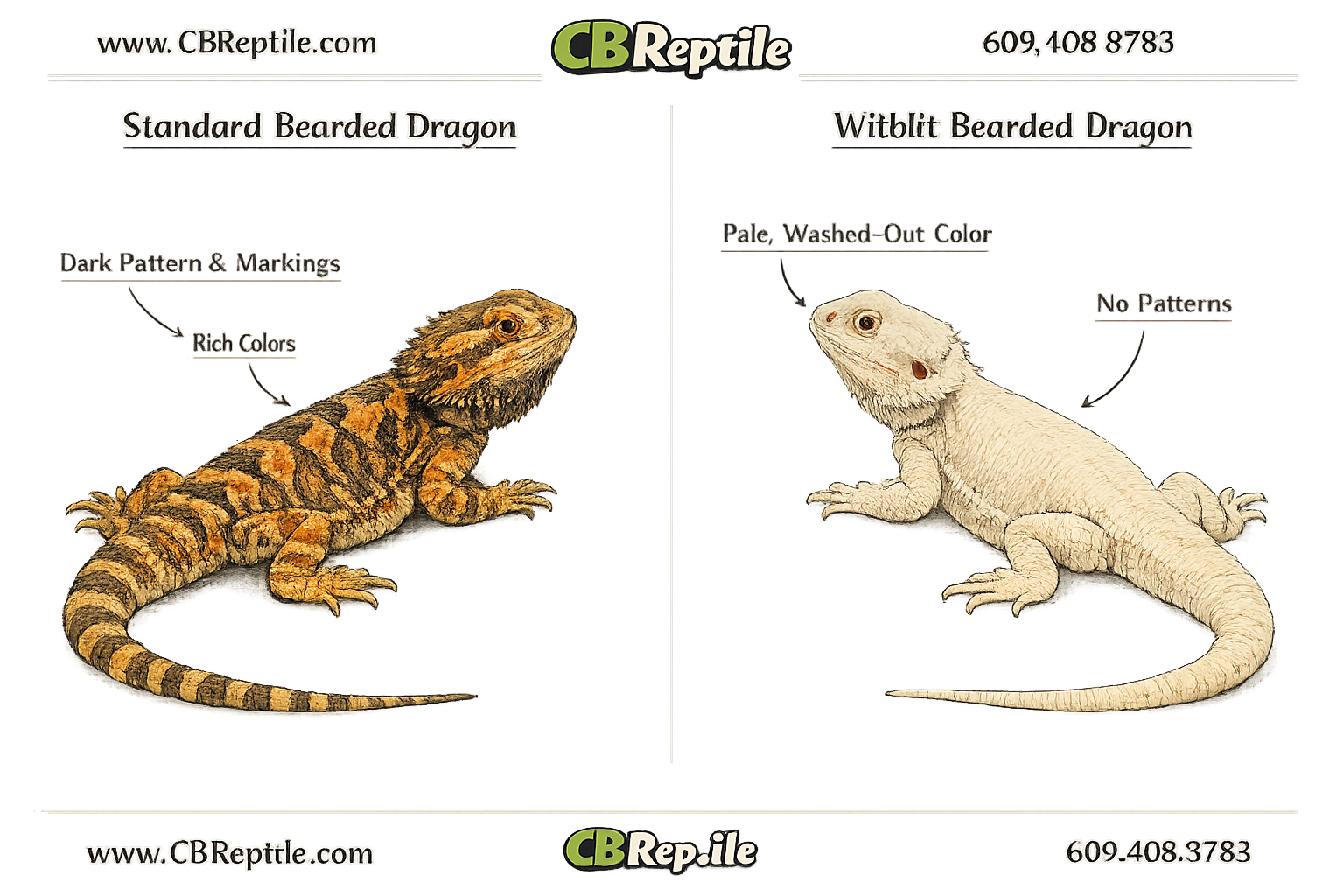
A witblit bearded dragon is a Pogona vitticeps carrying two copies of the recessive witblit gene, which reduces or eliminates the yellow and red pigment channels in the skin. The result is a dragon that appears pale cream, sandy beige, or softly lavender — depending on what other genes it carries.
The morph originated in South Africa, and the name "witblit" is Afrikaans for "white lightning." South African breeders first isolated the gene and began exporting witblit animals to the U.S. and European markets in the early 2010s. Since then, the morph has become a staple in the designer bearded dragon hobby.
Key genetic facts:
- Witblit is a simple recessive trait — a dragon must inherit one copy from each parent to express the morph visually.
- Dragons carrying only one copy are called "het witblit" (heterozygous) and look completely normal but can pass the gene to offspring.
- Witblit is a separate gene from zero, hypo, or leatherback, but it can be combined with all of them.
"Witblit is one of the cleanest pigment-reduction genes in the hobby — it doesn't muddy the base color, it simply removes the warm tones, leaving a cool, pale canvas."
How Does the Witblit Morph Differ from Other Bearded Dragon Color Morphs?
Witblit is one of several pigment-reduction morphs, but it works differently from the others. Understanding the differences helps you choose the right morph for your taste and budget.
| Morph | Pigment Affected | Eyes | Pattern | Avg. Price Range |
|---|---|---|---|---|
| Witblit | Yellow + red reduced | Normal (dark) | Faint to none | $150–$400 |
| Zero | All pattern/color removed | Normal | None | $300–$600 |
| Hypo | Dark pigment reduced | Normal | Reduced | $100–$300 |
| Albino | Melanin absent | Red/pink | Variable | $200–$500 |
| Leatherback | Texture (not color) | Normal | Variable | $100–$350 |
| Citrus | Enhanced yellow/orange | Normal | Variable | $75–$250 |
The witblit morph is often confused with the zero morph because both produce pale animals. The critical difference: zero dragons have no pattern at all and tend toward a pure white or silver appearance, while witblit dragons may still show faint ghost patterning and often carry a warmer cream or lavender undertone.
If you want to learn more about other pigment-reduction morphs, our guide to the hypo bearded dragon morph covers how reduced melanin interacts with base coloration — a useful read before deciding between witblit and hypo animals.
Choose witblit if you want: A pale, cool-toned dragon with subtle visual depth and a unique origin story.
Choose zero if you want: The cleanest, most pattern-free white/silver appearance possible.
Choose hypo if you want: A brighter, more saturated animal at a lower price point.
What Does a Witblit Bearded Dragon Look Like?
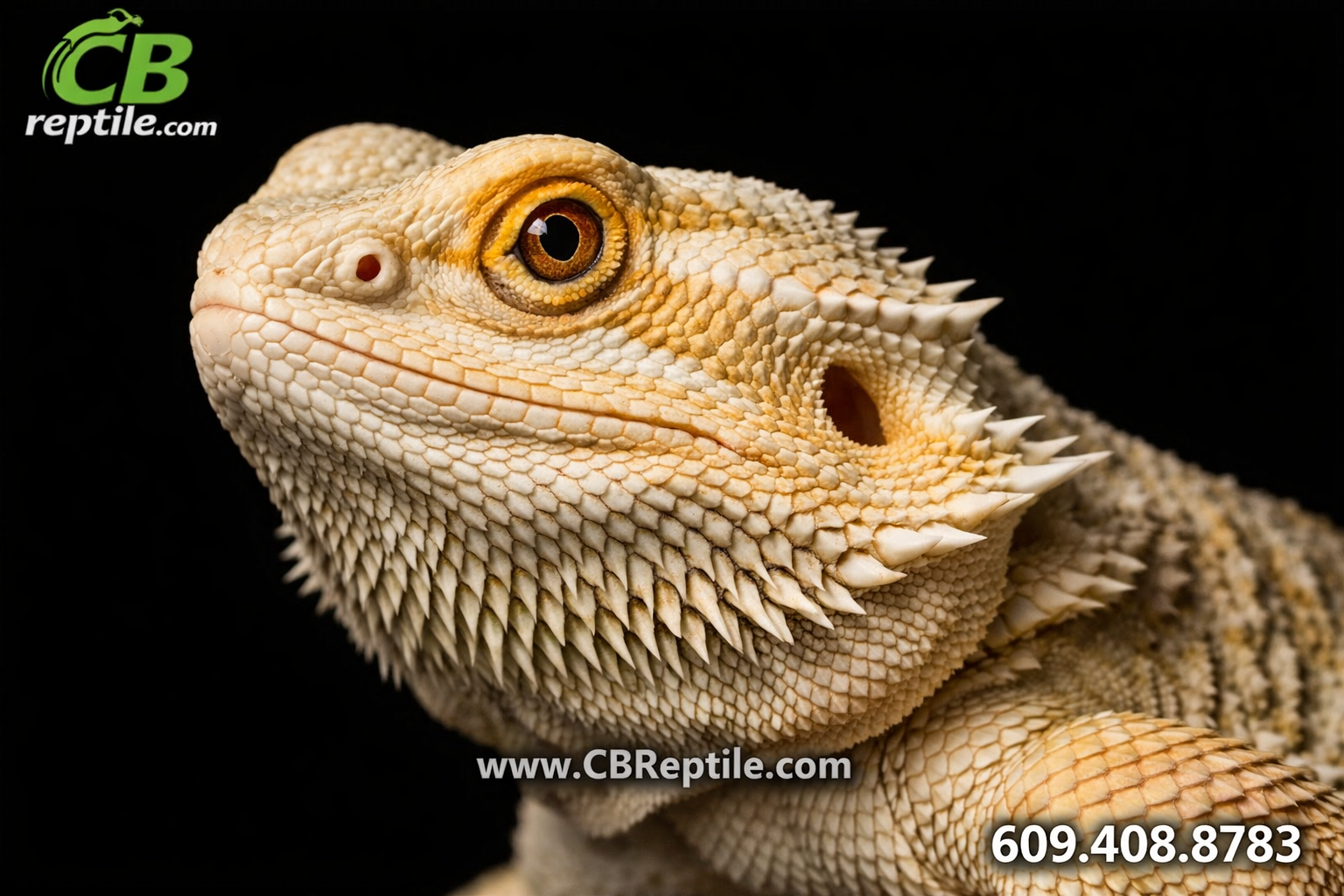
Witblit bearded dragons display a pale, muted coloration that sets them apart from the warm oranges and yellows typical of standard bearded dragons. The base color ranges from creamy white and sandy beige to soft lavender or light gray, depending on the animal's other genetic traits.
Visual characteristics of a witblit bearded dragon:
- Body color: Pale cream, sandy tan, or lavender-gray
- Pattern: Faint ghost banding or no visible pattern
- Eyes: Normal dark coloration (not red or pink like albinos)
- Beard: Can darken when stressed or displaying, but lighter than standard dragons
- Scales: Standard texture unless combined with leatherback or silkback genes
When witblit is combined with other morphs, the results get even more striking:
- Witblit + Hypo = Very pale animal with reduced dark scales and bright nails
- Witblit + Zero = Near-white dragon with minimal color and no pattern (sometimes called a "snow" type)
- Witblit + Leatherback = Smooth-scaled pale dragon with enhanced color visibility
- Witblit + Citrus = A subtle warm-cream animal with faint yellow tones
For comparison, the citrus bearded dragon morph works in the opposite direction — enhancing yellow and orange rather than suppressing it — which makes witblit x citrus combinations particularly interesting to breeders.
How Much Does a Witblit Bearded Dragon Cost?
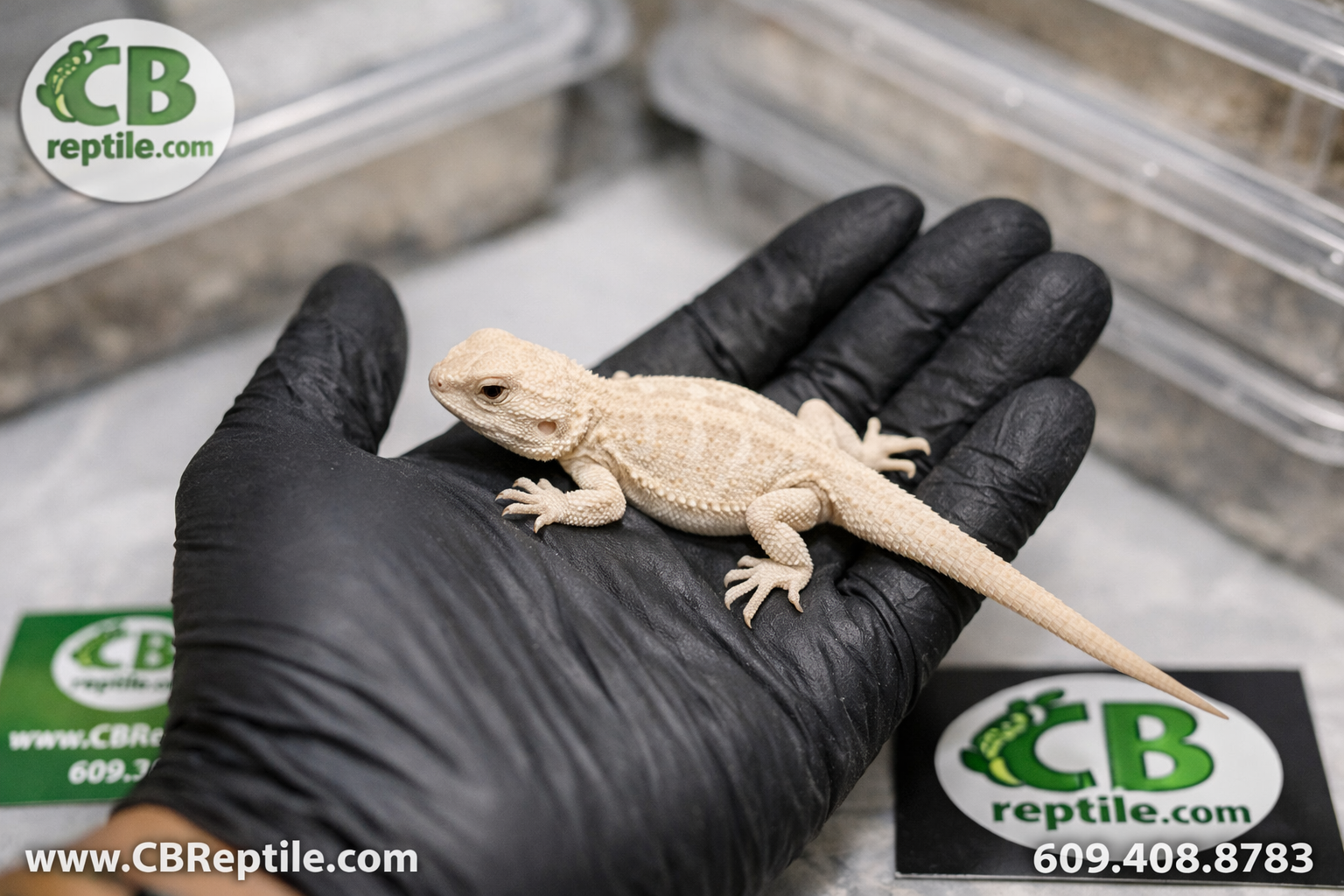
A quality witblit bearded dragon from a reputable captive breeder typically costs between $150 and $400, with high-end combos (witblit x zero, witblit x leatherback) reaching $500 or more.
Price breakdown by source:
| Source | Typical Price | Quality Risk |
|---|---|---|
| Reputable captive breeder | $150–$500+ | Low |
| Reptile expo | $100–$350 | Low to moderate |
| Pet store | $50–$150 | High |
| Random online reseller | $60–$200 | High |
Pet store prices look attractive, but the hidden costs are real. Animals sourced from large-scale distributors often arrive with internal parasites, metabolic bone disease from poor UVB exposure, or respiratory infections. A single vet visit can cost $150–$300, quickly erasing any savings.
What drives witblit pricing up:
- Combo morphs (witblit + zero, witblit + hypo, etc.)
- Proven lineage from quality breeding stock
- Age and sex (adult females are often priced higher due to breeding potential)
- Breeder reputation and health guarantees
What drives pricing down:
- Single-gene witblit without combo traits
- Juvenile animals (more risk, lower price)
- Buying directly from a breeder vs. a middleman
Why Buy a Witblit Bearded Dragon from a Reputable Breeder?
Buying from a specialist captive breeder is the single most important decision you'll make when purchasing a witblit bearded dragon. The difference between a healthy, well-socialized animal and a sick one often comes down entirely to where it was raised.
CB Reptile is one of the most respected bearded dragon for sale sources in the United States. What sets them apart is that they have a real animal biologist on-site who oversees breeding programs, health protocols, and genetic record-keeping. That's not something you'll find at a big-box pet store or from a random online listing.
Benefits of buying from CB Reptile or a comparable specialist breeder:
- ✅ Animals are captive-bred, not wild-caught or mass-distributed
- ✅ Genetic lineage is tracked and documented
- ✅ Animals are feeding consistently before sale
- ✅ Parasite screening is standard practice
- ✅ Live arrival guarantee protects your purchase
- ✅ Expert support is available after the sale
- ✅ You know exactly what morph you're getting
Common problems with pet store bearded dragons:
- Unknown genetic background (you may not actually be getting a true witblit)
- Exposure to communal housing, which spreads parasites and disease
- Stress from frequent handling and transport
- Inadequate UVB and nutrition before purchase
- No health guarantee or post-sale support
The reptile hobby has a well-documented problem with mislabeled morphs at the retail level. A dragon sold as a "witblit" at a pet store may simply be a pale-looking standard animal — not a true genetic witblit. A breeder with a biologist on-site can verify genetics and provide documentation.
How Do You Care for a Witblit Bearded Dragon?
Witblit bearded dragons have identical care requirements to any other Pogona vitticeps. The morph affects color only — not behavior, temperament, or physiology.
Enclosure:
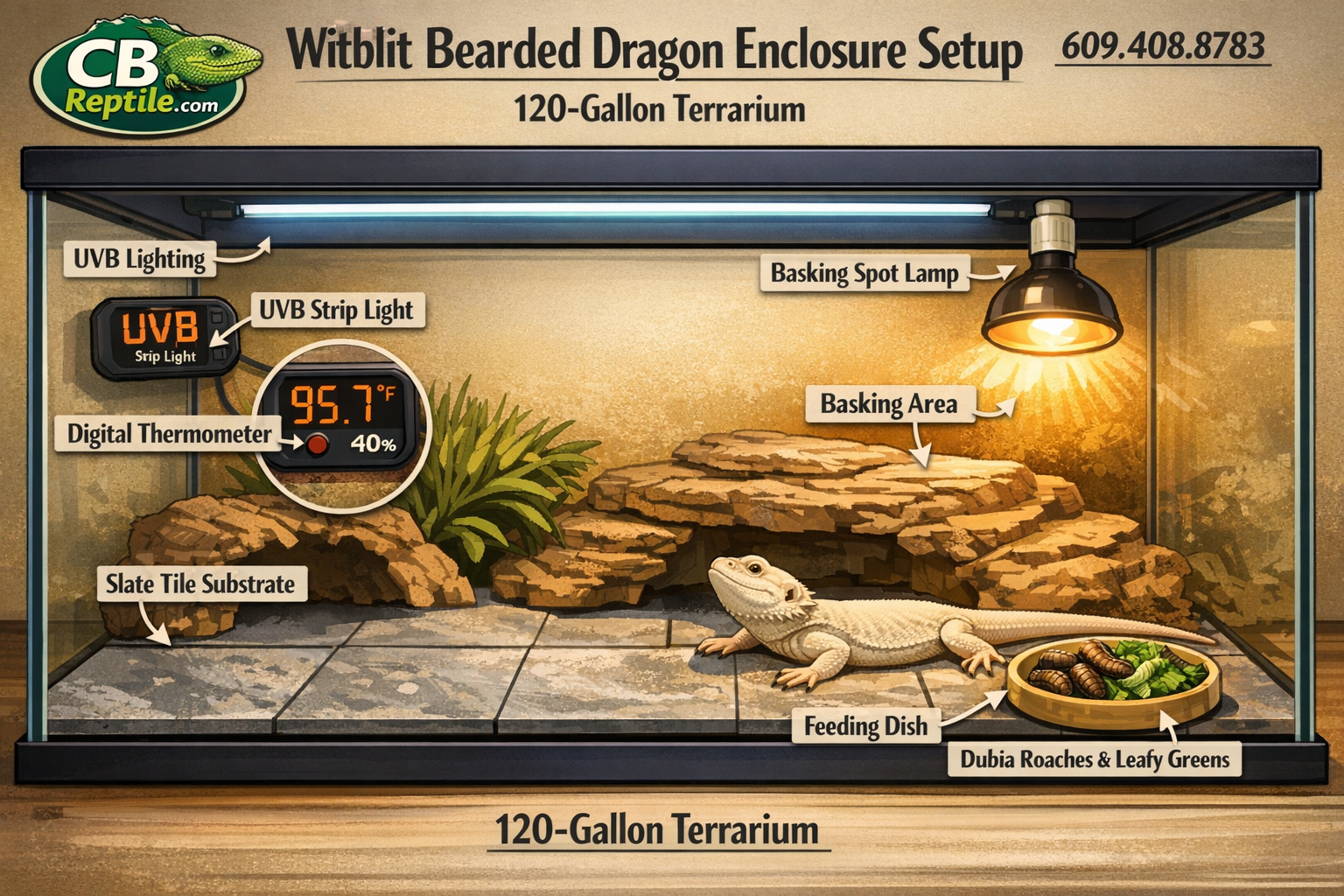
- Juveniles (under 6 months): 40-gallon tank minimum
- Adults: 120-gallon tank recommended for optimal health
- Screen top for ventilation; front-opening enclosures are ideal
Temperature and lighting:
- Basking spot: 100–110°F
- Cool side: 80–85°F
- Nighttime low: No lower than 65°F
- UVB: T5 HO 10.0 or 12% UVB tube, replaced every 6 months
Diet by age:
| Age | Insects | Vegetables |
|---|---|---|
| 0–3 months | 80% | 20% |
| 3–12 months | 60% | 40% |
| 12+ months | 30% | 70% |
Feeding tips:
- Dust insects with calcium (without D3) at every feeding for juveniles, every other feeding for adults
- Dust with a multivitamin twice per week
- Staple insects: dubia roaches, black soldier fly larvae, crickets
- Staple greens: collard greens, mustard greens, dandelion greens, arugula
For enclosure setup ideas, our terrarium habitat decor guide covers substrate choices, hides, and enrichment items that work well for bearded dragons specifically.
Common care mistakes to avoid:
- Using sand or loose substrate with juveniles (impaction risk)
- Skipping UVB entirely (causes metabolic bone disease)
- Feeding spinach, lettuce, or fireflies (toxic or nutritionally poor)
- Housing two males together (territorial aggression)
What Are the Best Witblit Bearded Dragon Morph Combinations?
Experienced breeders and collectors often seek witblit combination morphs because the witblit gene layers cleanly onto most other traits. Here are the most sought-after combos in 2026.
Top witblit combo morphs:
-
Witblit Zero — Combines the witblit pigment reduction with the zero pattern-elimination gene. The result is a near-white or pale silver dragon with virtually no visible color or pattern. These are among the most expensive bearded dragons on the market.
-
Witblit Hypo — Hypo reduces dark (melanin-based) pigment while witblit reduces warm pigment. Together, they produce a very clean, pale animal with bright nails and minimal dark scaling.
-
Witblit Leatherback — The leatherback gene reduces scale size, giving the skin a smoother appearance. On a witblit animal, this makes the pale coloration appear more vivid and uniform.
-
Witblit Translucent — Translucent dragons have semi-transparent scales and dark eyes as hatchlings. Combined with witblit, the result is a ghostly, almost ethereal appearance.
-
Witblit Dunner — The dunner gene changes scale orientation and pattern distribution. On a witblit, this creates unusual color flow patterns across the pale base.
Collector's note: Witblit combo animals are best purchased from breeders who can provide both parents' genetic documentation. Without lineage records, you're guessing at the genetics — and guessing gets expensive fast.
Frequently Asked Questions About Witblit Bearded Dragons
Q: Is a witblit bearded dragon a good pet for beginners?
A: Yes. Witblit bearded dragons are just as handleable and manageable as standard bearded dragons. The morph affects color only, not temperament. Beginners should focus on sourcing a captive-bred animal from a reputable breeder and setting up proper UVB and heating before bringing one home.
Q: How do I know if a bearded dragon is a true witblit?
A: A true witblit must carry two copies of the recessive witblit gene. Visual identification is possible — pale, washed-out coloration with normal dark eyes — but the only way to confirm genetics is to buy from a breeder who tracks lineage and can provide documentation of both parents.
Q: Can witblit bearded dragons live together?
A: No. Bearded dragons are solitary animals and should be housed individually. Two males will fight. Even a male-female pair should only be housed together temporarily for breeding purposes under supervision.
Q: How long do witblit bearded dragons live?
A: With proper care, bearded dragons typically live 10–15 years in captivity. The witblit morph does not affect lifespan.
Q: Do witblit bearded dragons need special lighting?
A: No special lighting beyond what any bearded dragon requires. A high-output T5 HO 10.0 or 12% UVB tube is essential for calcium metabolism and overall health. Replace the bulb every 6 months even if it still appears to emit visible light, because UVB output degrades before the visible light does.
Q: What is the difference between witblit and zero?
A: Both are pale morphs, but zero removes all pattern and color more completely, often producing a pure white or silver animal. Witblit retains subtle ghost patterning and often shows cream or lavender undertones. Zero is generally more expensive.
Q: Are witblit bearded dragons more fragile than standard morphs?
A: No. Witblit is a color-only gene with no known health complications tied to the morph itself. Some combo morphs — particularly silkback (scaleless) animals — do have additional care requirements, but a standard witblit does not.
Q: What should I feed a witblit bearded dragon?
A: The same diet as any bearded dragon: a mix of live feeder insects (dubia roaches, crickets, black soldier fly larvae) and fresh leafy greens (collard greens, mustard greens, dandelion greens). Juveniles eat more insects; adults eat more vegetables. Always dust feeders with calcium supplement.
Q: How much does it cost to set up a witblit bearded dragon enclosure?
A: A complete adult setup — 120-gallon enclosure, T5 HO UVB fixture, basking bulb, thermostat, digital thermometer, and basic decor — typically runs $400–$700 for quality equipment. Budget setups using smaller tanks cost less upfront but often require upgrades as the dragon grows.
Q: Where can I buy a witblit bearded dragon?
A: The safest option is a specialist captive breeder like CB Reptile, which has a biologist on-site and offers a live arrival guarantee. Reptile expos are another solid option. Avoid pet stores and unverified online listings where morph labeling is unreliable.
Conclusion: Is a Witblit Bearded Dragon Right for You?
The witblit bearded dragon is one of the most visually distinctive morphs in the hobby — a pale, cool-toned animal with a fascinating genetic origin and a clean, elegant appearance. It's not a niche collector's item reserved for experts; it's a fully manageable pet that suits beginners and experienced keepers alike.
Your actionable next steps:
-
Research your enclosure setup first. Have the tank, UVB lighting, and thermometers ready before you bring an animal home. A 120-gallon setup with a T5 HO 10.0 UVB tube is the gold standard for adults.
-
Choose a captive breeder over a pet store. The price difference is smaller than most people expect, and the health and genetic certainty you get from a specialist breeder is worth every dollar. CB Reptile's on-site animal biologist and live arrival guarantee make them a top choice.
-
Decide on a single-gene witblit or a combo morph. Single-gene witblits are more affordable and still stunning. Combo morphs like witblit x hypo or witblit x zero are more expensive but produce extraordinary animals.
-
Ask for lineage documentation. Any reputable breeder should be able to tell you the genetics of both parents. If they can't, walk away.
-
Plan your long-term care budget. Factor in feeder insects, fresh produce, calcium supplements, annual vet checkups, and eventual UVB bulb replacements.
The witblit bearded dragon rewards careful preparation with years of rewarding ownership. Start with a healthy, well-documented animal from a trusted source, and you'll have a companion that's as unique as it is resilient.
References
- Reptile Systems. (2021). UVB lighting and reptile health: A practical guide for keepers. Reptile Systems Technical Documentation.
- Ferguson, G. W., et al. (2010). "Ultraviolet exposure and vitamin D synthesis in reptiles." Journal of Herpetological Medicine and Surgery, 20(1), 37–52.
- Stahl, S. J. (2013). "Metabolic bone disease in captive reptiles." Veterinary Clinics of North America: Exotic Animal Practice, 16(3), 605–621.
- Doneley, B. (2009). Reptile Medicine and Surgery in Clinical Practice. Wiley-Blackwell.
- CB Reptile. (2024). Bearded dragon care and morph information. https://www.cbreptile.com/captive-bred-reptile-blog/
Tags: witblit bearded dragon, bearded dragon morphs, bearded dragon care, bearded dragon for sale, captive bred bearded dragon, bearded dragon color morphs, witblit morph, bearded dragon breeder, zero bearded dragon, hypo bearded dragon, reptile morphs, Pogona vitticeps