
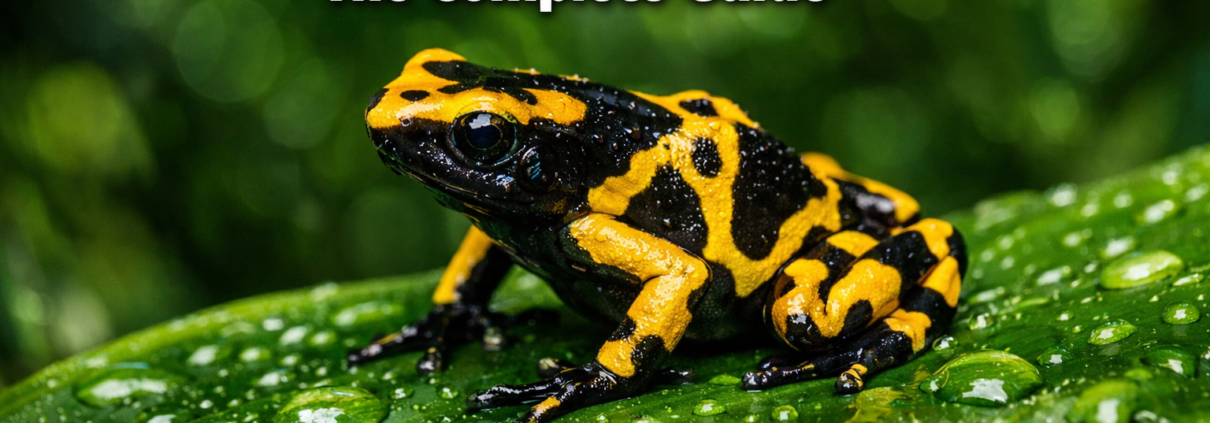
Yellow Dart Frog
Last updated: April 14, 2026
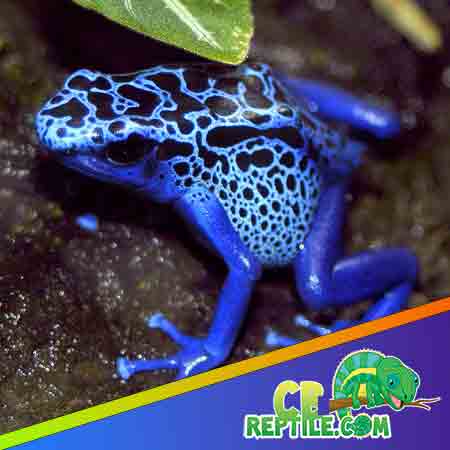
Quick Facts: A “yellow dark frog” most commonly refers to yellow-patterned poison dart frogs, particularly Dendrobates leucomelas (the bumblebee dart frog) and related species featuring bold yellow and black coloration. These small, captive-bred amphibians are popular exotic pets known for their striking aposematic coloring, diurnal activity, and manageable care requirements. Captive-raised individuals are non-toxic and safe to keep.
- Display 9 Products per page
Key Takeaways
- 🐸 The yellow dart frog label covers several species, most notably Dendrobates leucomelas, which displays vivid yellow and black banding
- Yellow poison dart frogs lose their toxicity in captivity when not feeding on wild invertebrates
- Captive-bred specimens are strongly preferred over wild-caught for health, legality, and ethical reasons
- These frogs require a humid, bioactive vivarium with temperatures between 72–80°F and 80–100% humidity
- Diet consists primarily of cultured fruit flies (Drosophila) dusted with calcium and vitamin D3 supplements
- Lifespan in captivity ranges from 10 to 15 years with proper care
- CB Reptile has a real animal biologist on site, unlike most reptile stores, ensuring expert-level husbandry for every animal
- Yellow morphs exist across multiple dart frog genera including Dendrobates, Phyllobates, and Oophaga
- Overnight shipping is available through CB Reptile, ensuring live arrival of healthy animals
- Beginner-friendly species include D. leucomelas and D. tinctorius yellow morphs
What Exactly Is a Yellow Dark Frog?
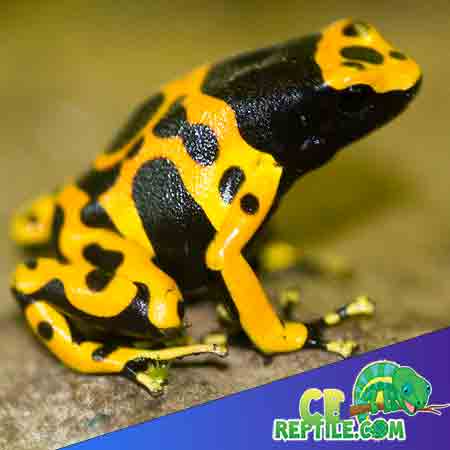
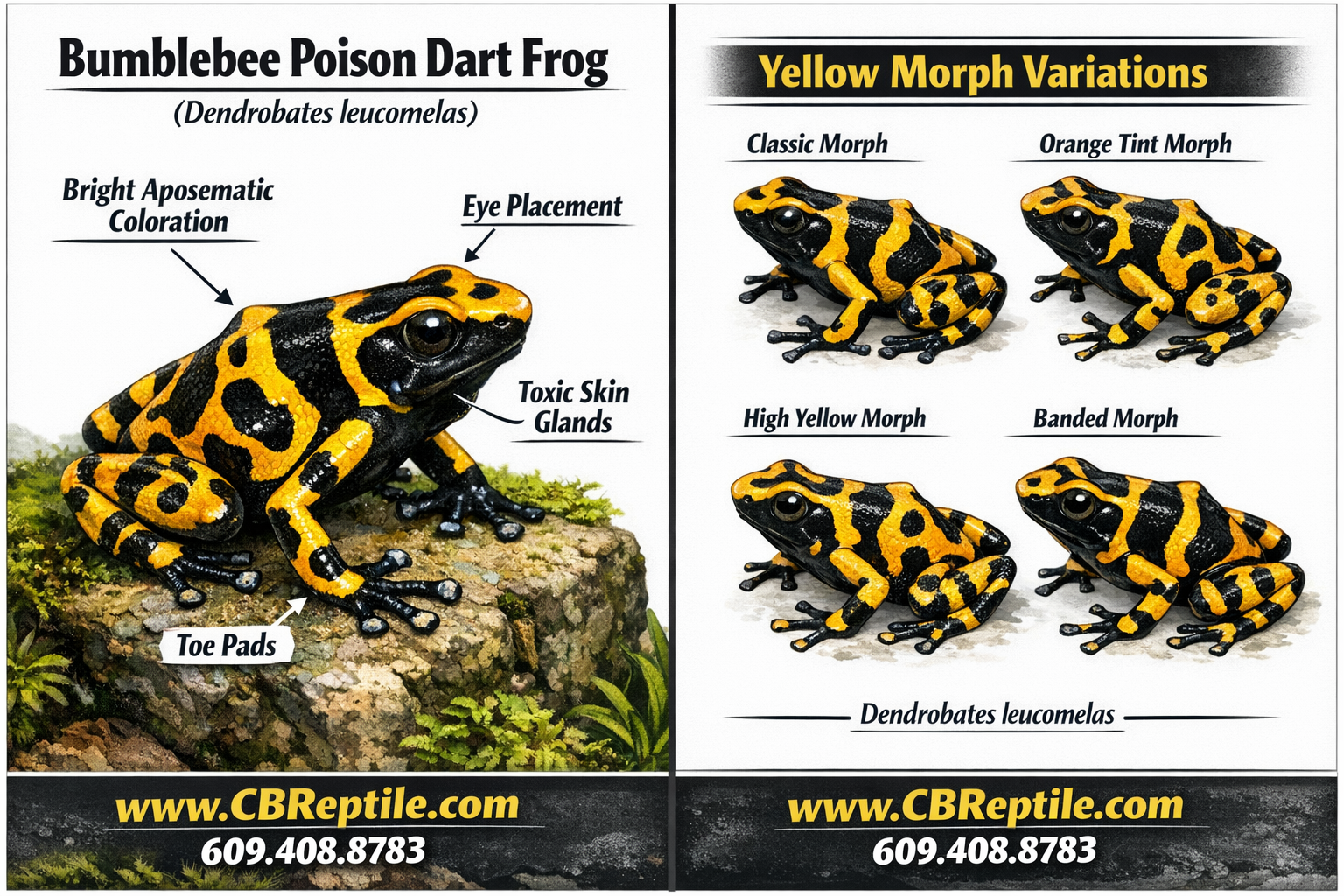
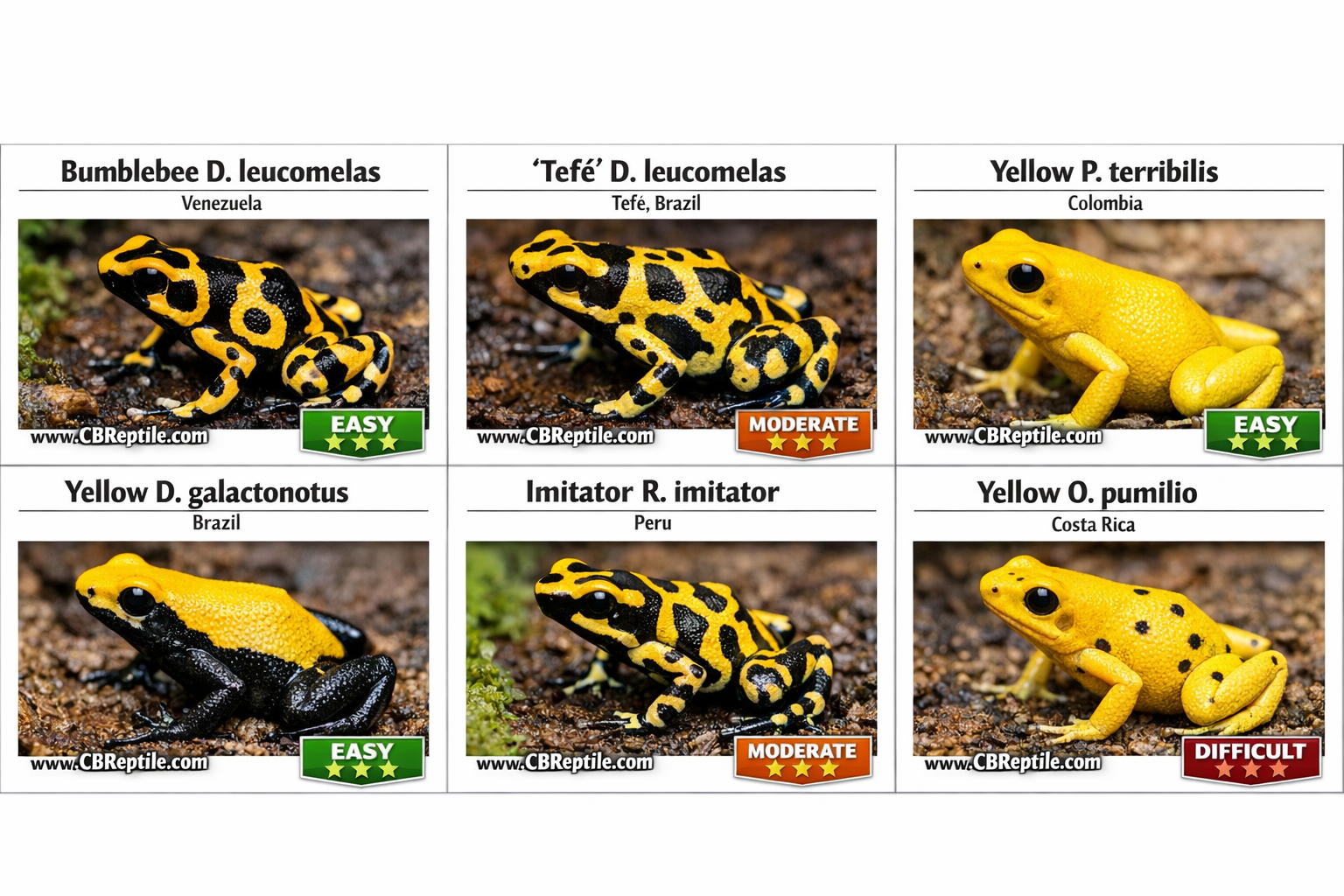
The term “yellow dark frog” is a common search phrase used by hobbyists and first-time buyers to describe poison dart frogs with yellow and dark (usually black) coloration. The most representative species is Dendrobates leucomelas, widely known as the bumblebee poison dart frog, which features bright yellow banding over a jet-black body.
Other species that fit the yellow dark frog description include:
- Phyllobates terribilis (yellow morph): The most toxic dart frog species in the wild, but completely safe when captive-bred
- Dendrobates tinctorius (yellow/black morphs): Larger dart frog with regional color variations
- Oophaga pumilio (yellow variants): Strawberry dart frog with yellow color forms from specific populations
- Ranitomeya imitator (yellow morph): Mimic poison frog with stunning yellow patterning
Important distinction: “Dark” in this context refers to the contrasting dark pigmentation (usually black) paired with the yellow, not a separate species category. All of these frogs belong to the family Dendrobatidae.
Choose D. leucomelas if you’re a beginner — it’s hardy, widely available, and one of the most forgiving dart frog species in captivity.
Why Do Yellow Poison Dart Frogs Have Such Vivid Coloring?
Yellow dart frogs are brightly colored as a warning signal to predators, a phenomenon called aposematism. The bold yellow and black pattern communicates toxicity in the wild, which deters birds, snakes, and other predators from eating them.
In the wild, these frogs obtain their toxins (alkaloids) from specific mites, ants, and other invertebrates in their diet. In captivity, dart frogs fed on cultured fruit flies and other non-toxic feeders do not produce or accumulate these toxins. This makes captive-bred yellow dark frogs completely safe to handle with normal precautions.
Key facts about dart frog coloration:
| Species | Primary Colors | Wild Toxicity Level | Captive Toxicity |
|---|---|---|---|
| D. leucomelas | Yellow + Black | Moderate | None |
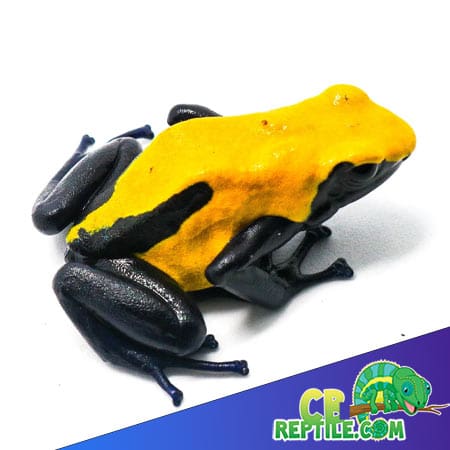
| P. terribilis (yellow) | Solid Yellow | Very High (batrachotoxin) | None |
| D. tinctorius (yellow) | Yellow + Black/Blue | Moderate | None |
| O. pumilio (yellow) | Yellow + Dark | Moderate | None |
| R. imitator (yellow) | Yellow + Black | Low-Moderate | None |
The coloration intensity in captive animals can vary slightly based on genetics, lighting, and age, but captive-bred specimens from quality breeders like CB Reptile consistently display vibrant, true-to-type coloration.
Popular Yellow Dark Frog Color Morphs You Should Know
Several distinct color morphs fall under the yellow dark frog category, and understanding the differences helps you choose the right animal. Each morph has unique visual traits and sometimes slightly different care needs.
Dendrobates leucomelas (Bumblebee Dart Frog)
The classic yellow dark frog. Standard D. leucomelas shows alternating yellow and black bands across the body. The “Tefe” locale variant features more yellow with reduced black patterning. This is the most commonly available yellow dart frog in the US hobby.
Phyllobates terribilis Yellow Morph
Solid golden-yellow with minimal dark patterning. Slightly larger than D. leucomelas at around 45–55mm. Despite its fearsome wild reputation, the captive-bred yellow terribilis is a calm, active, and relatively easy frog to keep.
Dendrobates tinctorius Yellow Morphs
D. tinctorius produces numerous locale-specific morphs. Yellow-dominant variants include the “Nominat” and “Oyapock” morphs. These frogs are larger and slightly more territorial than D. leucomelas.
Oophaga pumilio Yellow Variants
Less common in the hobby but visually striking. Yellow O. pumilio variants come from specific populations in Panama and Costa Rica. They require slightly higher temperatures and more specialized care than D. leucomelas.
Ranitomeya imitator Yellow Morph
A thumbnail-sized dart frog with intricate yellow and black patterning. The “Varadero” and “Tarapoto” locale morphs show the most yellow. These are intermediate-level frogs best suited to keepers with some dart frog experience.
You can find captive-bred bumblebee poison dart frogs for sale through CB Reptile, where every animal is bred and raised under the supervision of an on-site animal biologist.
How Do You Set Up a Vivarium for a Yellow Dark Frog?
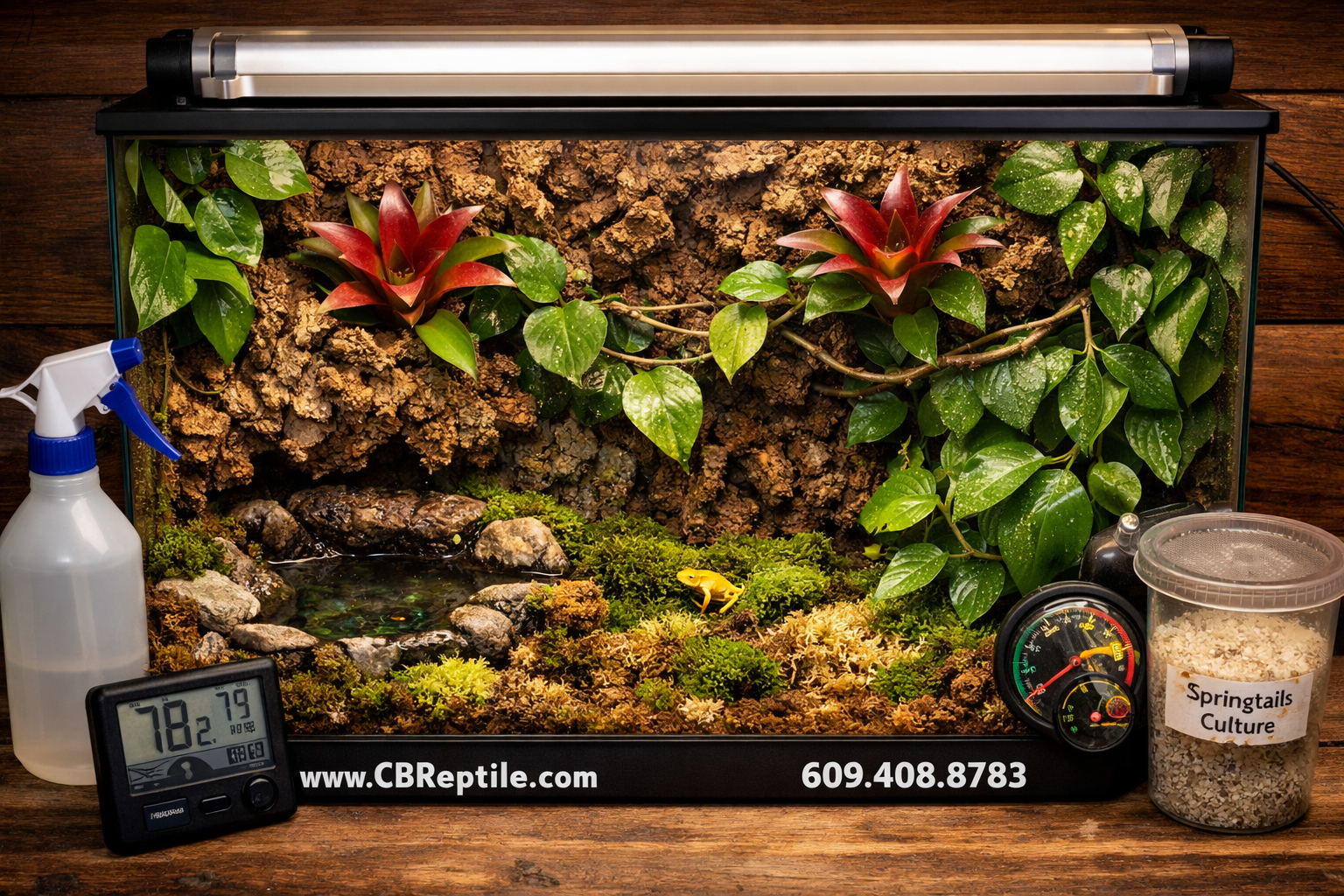
A proper vivarium for yellow poison dart frogs replicates the humid, warm, bioactive conditions of a South American or Central American rainforest floor. Get this right and your frogs will thrive for over a decade.
Enclosure size recommendations:
- 1–2 frogs: 10-gallon vertical or 12x12x18 glass terrarium minimum
- 3–4 frogs: 18x18x24 or larger
- Breeding pairs: 18x18x24 with visual barriers and egg-laying sites
Core vivarium components:
- Substrate: False bottom drainage layer + ABG mix (tree fern fiber, long-fiber sphagnum, orchid bark, charcoal, peat)
- Plants: Bromeliads, pothos, ficus pumila, peperomia, small ferns — live plants maintain humidity and provide cover
- Hardscape: Cork bark tubes, driftwood, coconut huts for hiding and egg-laying
- Misting system: Automatic misting 2–3 times daily to maintain 80–100% humidity
- Lighting: Full-spectrum LED or T5 HO fluorescent, 10–12 hours per day on a timer
- Ventilation: Cross-flow ventilation to prevent stagnant air while retaining humidity
Temperature and humidity targets:
- Daytime temperature: 72–78°F
- Nighttime drop: 65–72°F (beneficial, mimics natural conditions)
- Humidity: 80–100% at all times
Common mistake: Using a screen-top enclosure without modification. Screen tops cause humidity to drop too fast. Use glass or foam-sealed tops with controlled ventilation panels instead.
For broader vivarium inspiration, our crested gecko habitat guide covers many of the same bioactive principles that apply to dart frog setups.
What Do Yellow Poison Dart Frogs Eat in Captivity?
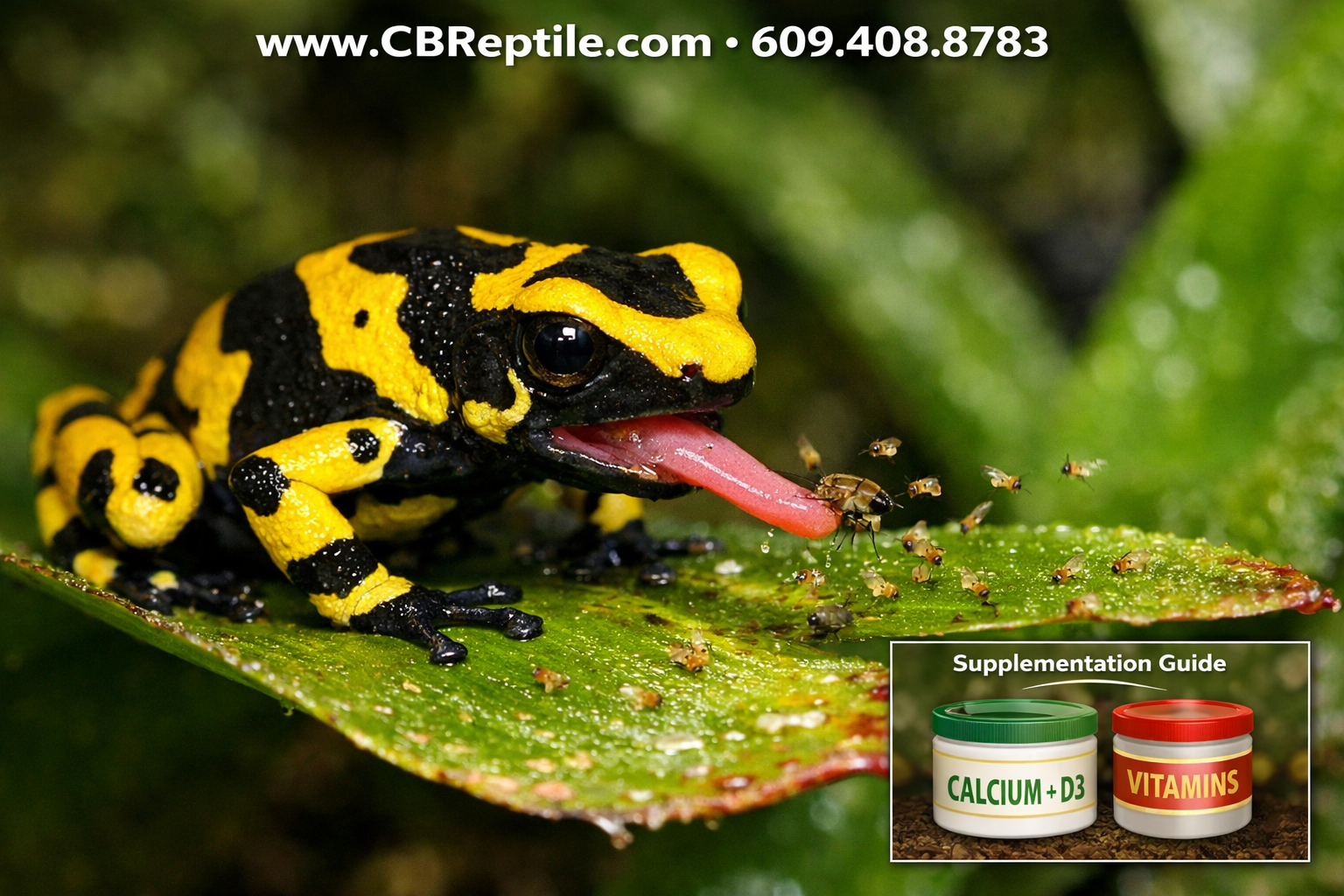
Yellow dart frogs are insectivores that eat small live invertebrates in captivity. The primary staple feeder is Drosophila melanogaster (melanogaster fruit flies) for juveniles and smaller species, and Drosophila hydei (hydei fruit flies) for adults and larger species.
Feeding schedule and portions:
- Juveniles (under 6 months): Feed daily, 20–30 melanogaster fruit flies per frog
- Adults: Feed every 1–2 days, 30–50 hydei fruit flies per frog per feeding
- Supplementation: Dust feeders with calcium + vitamin D3 powder every feeding, rotating with a multivitamin supplement every 3rd feeding
Feeder variety (beyond fruit flies):
- Springtails and isopods (also serve as vivarium cleanup crew)
- Pinhead crickets (for larger species like P. terribilis)
- Bean beetles (Callosobruchus maculatus)
- Waxworms (occasional treat only — high fat)
Supplementation is non-negotiable. Dart frogs kept without proper calcium and vitamin D3 supplementation develop metabolic bone disease, which is irreversible at advanced stages.
Common feeding mistake: Releasing too many fruit flies at once. Excess flies hide in substrate and die, fouling the enclosure. Feed in controlled amounts and observe that frogs are actively hunting.
Is a Yellow Dark Frog Right for You? Honest Pros and Cons
Yellow poison dart frogs are rewarding pets, but they’re not the right fit for everyone. Here’s an honest breakdown.
Pros:
- Diurnal (active during the day) — you’ll actually see them
- Stunning visual impact in a planted vivarium
- Non-toxic in captivity, safe for responsible handling
- Long lifespan (10–15 years) for a committed keeper
- Relatively quiet compared to tree frogs or toads
- Fascinating breeding and parental care behaviors
Cons:
- Not a “hands-on” pet — frequent handling causes stress
- Vivarium setup cost can be $200–$600+ for a quality build
- Fruit fly cultures must be maintained continuously
- Sensitive to temperature spikes and low humidity
- Require daily or near-daily feeding attention
- Finding a qualified exotic vet can be difficult in some areas
Choose a yellow dark frog if you enjoy vivarium building, observational pet keeping, and have time for daily feeding and maintenance.
Consider an alternative if you want a hands-on pet or prefer lower daily maintenance. Other colorful options include high yellow leopard geckos or yellow leopard geckos, which tolerate more handling and have simpler feeding schedules.
Where Can You Buy Healthy Yellow Dark Frogs in 2026?
Buying from a reputable captive breeder is the single most important decision you’ll make as a dart frog keeper. Wild-caught frogs carry parasites, experience extreme shipping stress, and contribute to population decline. Always buy captive-bred.
CB Reptile is your source for the best quality, healthiest poison dart frogs for sale in the USA. What sets CB Reptile apart from other reptile stores is the presence of a real, credentialed animal biologist on site who oversees the health, feeding, and breeding protocols for every animal. This means the frogs you receive have been properly socialized, fed on a proven diet, and health-checked before shipping.
CB Reptile’s shipping policy:
- Overnight shipping on all live animals
- Live arrival guarantee on every order
- Animals are packed with heat or cold packs appropriate to the season
- You can review the full guarantee policy here
For a broader selection of exotic reptiles and amphibians, reptiles for sale and general reptile store online browsing at Reptiles.com is also worth exploring for comparison and research.
When evaluating any seller, ask these questions:
- Are animals captive-bred (not wild-caught)?
- What is the feeding history and current diet?
- Has the animal been checked by a biologist or vet?
- What is the live arrival guarantee?
- How are animals shipped and what are the weather hold policies?
You can also find a wide variety of other vivid exotic pets at CB Reptile, including dart frogs for sale and other stunning amphibians and reptiles.
How Do You Breed Yellow Poison Dart Frogs?
Breeding yellow dart frogs in captivity is achievable for intermediate keepers and is one of the most rewarding aspects of the hobby. Most yellow dart frog species breed readily in a well-maintained vivarium.
Triggering breeding behavior:
- Simulate a dry season by reducing misting to once daily for 2–4 weeks
- Then resume full misting to simulate the onset of the rainy season
- Temperature fluctuations (slightly cooler nights) also stimulate breeding
- Ensure frogs are well-fed and in peak condition before attempting conditioning
Egg care and tadpole raising:
- D. leucomelas and P. terribilis lay eggs on land (leaves, cork bark) and males transport tadpoles to water
- Eggs hatch in approximately 14–16 days
- Tadpoles can be raised communally in shallow water with algae wafers and fish flakes
- Metamorphosis occurs at 60–90 days depending on species and temperature
- Froglets should be moved to a grow-out enclosure and fed melanogaster fruit flies immediately
Common breeding mistake: Separating a breeding pair too early. Allow the male to complete tadpole transport before intervening. Interrupting this process can cause egg and tadpole loss.
Frequently Asked Questions About Yellow Dark Frogs
Q: Are yellow dark frogs poisonous to touch?
A: Captive-bred yellow dart frogs are not toxic. They only produce alkaloid toxins in the wild by consuming specific invertebrates. CB Reptile’s captive-bred frogs are completely safe with normal handling precautions.
Q: How big do yellow poison dart frogs get?
A: Most yellow dart frog species reach 1 to 2 inches (25–50mm) as adults. Phyllobates terribilis is on the larger end at up to 2.2 inches, while Ranitomeya imitator stays under 1 inch.
Q: Can yellow dart frogs live with other species?
A: Generally, no. Mixing dart frog species risks stress, competition, disease transmission, and hybridization. Keep species separate unless you have expert guidance.
Q: How long do yellow dart frogs live?
A: With proper care, 10 to 15 years in captivity is typical. Some individuals have been documented living over 20 years in optimal conditions.
Q: How often should I mist a yellow dart frog vivarium?
A: Two to three times per day using an automatic misting system. Maintain 80–100% humidity at all times. Manual misting works but requires consistent daily attention.
Q: What temperature is too hot for a yellow dart frog?
A: Sustained temperatures above 82°F cause heat stress and can be fatal. Keep daytime highs at 72–78°F. Use an air-conditioned room or a vivarium fan to manage summer heat.
Q: Do yellow dart frogs need UVB lighting?
A: Current research suggests low-level UVB (2.0 or 5.0 index) is beneficial, though not strictly required if vitamin D3 is supplemented in the diet. Providing UVB is best practice in 2026.
Q: Can I keep a single yellow dart frog?
A: Yes. Many keepers maintain single frogs successfully. However, D. leucomelas and P. terribilis are social species that often do better in same-sex groups or pairs.
Q: What is the best beginner yellow dart frog?
A: Dendrobates leucomelas (bumblebee dart frog) is the top recommendation for beginners. It’s hardy, active, widely available, and forgiving of minor husbandry inconsistencies.
Q: How much does a yellow dart frog cost?
A: Captive-bred yellow dart frogs typically range from $40 to $150+ per frog depending on species and morph. Rare morphs like R. imitator yellow variants can cost $100–$200 each.
Q: Do yellow dart frogs make noise?
A: Males of most species produce soft calls, especially during breeding season. The calls are quiet compared to tree frogs — more of a soft buzzing or chirping than a loud croak.
Q: Where can I buy a poison dart frog for sale with overnight shipping?
A: CB Reptile offers overnight shipping on all live dart frogs with a live arrival guarantee and on-site animal biologist oversight.
Conclusion: Your Next Steps With Yellow Dark Frogs
Yellow dark frogs, especially Dendrobates leucomelas and related yellow-patterned species, are among the most visually stunning and behaviorally interesting amphibians available in the hobby today. They reward patient, observant keepers with years of activity, color, and even complex breeding behaviors.
Here’s what to do next:
- Research your species — decide between D. leucomelas, P. terribilis yellow, or another yellow morph based on your experience level and vivarium size
- Build your vivarium first — have the enclosure stable and cycled for at least 2 weeks before adding frogs
- Source your feeders — set up fruit fly cultures before your frogs arrive so you have food ready on day one
- Buy captive-bred only — from a reputable source like CB Reptile, where an on-site animal biologist ensures every animal is healthy before shipping
- Join the community — forums like Dendroboard and local dart frog societies are invaluable for ongoing support
Whether you’re drawn to the bold yellow and black banding of a bumblebee dart frog or the solid golden glow of a P. terribilis yellow, these frogs are a long-term commitment that pays off in beauty and fascination every single day.
Interactive Yellow Dart Frog Species Selector
Use the tool below to find the best yellow dark frog species for your experience level and setup:
* {
box-sizing: border-box;
margin: 0;
padding: 0;
}
body {
font-family: ‘Segoe UI’, Arial, sans-serif;
background: #f4f9f4;
color: #222;
padding: 20px;
}
.ydf-container {
max-width: 680px;
margin: 0 auto;
background: #fff;
border-radius: 12px;
box-shadow: 0 4px 24px rgba(0,0,0,0.10);
overflow: hidden;
}
.ydf-header {
background: linear-gradient(135deg, #f5c400 0%, #1a1a1a 100%);
color: #fff;
padding: 28px 28px 20px;
text-align: center;
}
.ydf-header h2 {
font-size: 1.5rem;
font-weight: 700;
margin-bottom: 6px;
letter-spacing: -0.5px;
}
.ydf-header p {
font-size: 0.95rem;
opacity: 0.88;
}
.ydf-body {
padding: 28px;
}
.ydf-question {
margin-bottom: 22px;
}
.ydf-question label {
display: block;
font-weight: 600;
margin-bottom: 8px;
font-size: 0.97rem;
color: #333;
}
.ydf-question select {
width: 100%;
padding: 10px 14px;
border: 2px solid #e0e0e0;
border-radius: 7px;
font-size: 0.95rem;
background: #fafafa;
color: #222;
appearance: none;
cursor: pointer;
transition: border-color 0.2s;
}
.ydf-question select:focus {
outline: none;
border-color: #f5c400;
}
.ydf-btn {
width: 100%;
padding: 13px;
background: #f5c400;
color: #1a1a1a;
font-size: 1.05rem;
font-weight: 700;
border: none;
border-radius: 8px;
cursor: pointer;
transition: background 0.2s, transform 0.1s;
margin-top: 4px;
}
.ydf-btn:hover {
background: #e0b000;
transform: translateY(-1px);
}
.ydf-result {
display: none;
margin-top: 24px;
padding: 20px;
background: #fffbe6;
border: 2px solid #f5c400;
border-radius: 10px;
}
.ydf-result.ydf-show {
display: block;
}
.ydf-result h3 {
font-size: 1.15rem;
color: #1a1a1a;
margin-bottom: 8px;
}
.ydf-result .ydf-species-name {
font-size: 1.3rem;
font-weight: 800;
color: #b08000;
margin-bottom: 10px;
}
.ydf-result p {
font-size: 0.93rem;
line-height: 1.6;
color: #444;
margin-bottom: 6px;
}
.ydf-result .ydf-badge {
display: inline-block;
padding: 3px 12px;
border-radius: 20px;
font-size: 0.82rem;
font-weight: 700;
margin-right: 6px;
margin-bottom: 8px;
}
.ydf-badge-beginner { background: #d4edda; color: #155724; }
.ydf-badge-intermediate { background: #fff3cd; color: #856404; }
.ydf-badge-advanced { background: #f8d7da; color: #721c24; }
.ydf-badge-small { background: #d1ecf1; color: #0c5460; }
.ydf-badge-large { background: #e2d9f3; color: #3d1a78; }
.ydf-reset {
background: none;
border: none;
color: #888;
font-size: 0.85rem;
cursor: pointer;
margin-top: 10px;
text-decoration: underline;
}
.ydf-reset:hover { color: #333; }
@media (max-width: 480px) {
.ydf-body { padding: 18px; }
.ydf-header { padding: 20px 18px 16px; }
.ydf-header h2 { font-size: 1.2rem; }
}
🐸 Yellow Dark Frog Species Selector
Answer 3 quick questions to find your ideal yellow dart frog match.
Beginner (first dart frog)
Intermediate (kept dart frogs before)
Advanced (experienced keeper/breeder)
Small (10–12 gallon / 12x12x18)
Medium (18x18x24)
Large (24x18x36 or bigger)
Display animal (visual impact)
Breeding project
Community vivarium (multiple frogs)
Best match for you:
var ydfData = {
beginner: {
small: {
display: { name: “Dendrobates leucomelas (Bumblebee Dart Frog)”, level: “beginner”, size: “small”, desc: “The classic yellow dark frog and the #1 pick for beginners. Bold yellow and black banding, hardy constitution, and active daytime behavior make it ideal for a 12x12x18 vivarium.”, tip: “Tip: Start with a same-sex pair or trio to avoid breeding complexity while you learn.” },
breeding: { name: “Dendrobates leucomelas (Bumblebee Dart Frog)”, level: “beginner”, size: “small”, desc: “D. leucomelas breeds readily in captivity once established. Even in a smaller vivarium, a true pair will lay eggs on cork bark or broad leaves.”, tip: “Tip: Add a film canister or petri dish with a broad leaf for egg-laying sites.” },
community: { name: “Dendrobates leucomelas (Bumblebee Dart Frog)”, level: “beginner”, size: “small”, desc: “D. leucomelas is one of the most social yellow dart frogs and tolerates same-species groups well in a planted vivarium.”, tip: “Tip: Keep groups of 3–4 same-sex frogs in a 12x12x18 to minimize territorial conflict.” }
},
medium: {
display: { name: “Phyllobates terribilis (Yellow Morph)”, level: “beginner”, size: “large”, desc: “The solid golden-yellow P. terribilis is visually stunning and surprisingly beginner-friendly in captivity. Larger than D. leucomelas, it makes a bold display animal.”, tip: “Tip: Keep in groups of 3–5 — terribilis are social and do best with companions.” },
breeding: { name: “Dendrobates leucomelas (Bumblebee Dart Frog)”, level: “beginner”, size: “small”, desc: “For a first breeding project in a medium tank, D. leucomelas remains the safest choice. Reliable egg layers with straightforward tadpole care.”, tip: “Tip: Simulate a dry season for 3 weeks then resume full misting to trigger breeding.” },
community: { name: “Phyllobates terribilis (Yellow Morph)”, level: “beginner”, size: “large”, desc: “P. terribilis is highly social and thrives in groups of 4–6 in an 18x18x24 vivarium. Their bold yellow color creates a spectacular community display.”, tip: “Tip: Provide multiple hides and visual barriers to reduce competition.” }
},
large: {
display: { name: “Phyllobates terribilis (Yellow Morph)”, level: “beginner”, size: “large”, desc: “In a large vivarium, a group of yellow P. terribilis creates an unmatched visual impact. These active, social frogs will use every inch of space.”, tip: “Tip: Incorporate a shallow water feature — terribilis enjoy shallow pools.” },
breeding: { name: “Phyllobates terribilis (Yellow Morph)”, level: “beginner”, size: “large”, desc: “P. terribilis breeds well in larger setups with multiple egg-laying sites. Males transport tadpoles to water, making the breeding behavior fascinating to observe.”, tip: “Tip: Add multiple small film canisters filled with water as tadpole transport sites.” },
community: { name: “Phyllobates terribilis (Yellow Morph)”, level: “beginner”, size: “large”, desc: “A large vivarium with 6–8 yellow terribilis is one of the most impressive dart frog displays possible for a beginner-friendly species.”, tip: “Tip: Dense planting with bromeliads and pothos provides natural territory boundaries.” }
}
},
intermediate: {
small: {
display: { name: “Ranitomeya imitator (Yellow Morph)”, level: “intermediate”, size: “small”, desc: “Thumbnail-sized with intricate yellow and black patterning, R. imitator yellow morphs are stunning in a well-planted nano vivarium. Varadero and Tarapoto locales show the most yellow.”, tip: “Tip: Use a 12x12x18 with fine-mist nozzles — these tiny frogs need consistent high humidity.” },
breeding: { name: “Ranitomeya imitator (Yellow Morph)”, level: “intermediate”, size: “small”, desc: “R. imitator is a biparental species — both male and female participate in tadpole care, making the breeding behavior uniquely rewarding to observe.”, tip: “Tip: Provide bromeliads with water-holding axils as tadpole deposition sites.” },
community: { name: “Dendrobates tinctorius (Yellow Morph)”, level: “intermediate”, size: “small”, desc: “D. tinctorius yellow morphs are bold and active but can be territorial. A same-sex group in a heavily planted small vivarium works well.”, tip: “Tip: Introduce all frogs simultaneously to reduce established territorial behavior.” }
},
medium: {
display: { name: “Dendrobates tinctorius (Yellow Morph)”, level: “intermediate”, size: “large”, desc: “Larger than D. leucomelas with bolder yellow and black patterns, D. tinctorius yellow morphs like ‘Nominat’ and ‘Oyapock’ are showstoppers in an 18x18x24.”, tip: “Tip: These frogs are bold and active — position the vivarium at eye level for best viewing.” },
breeding: { name: “Dendrobates tinctorius (Yellow Morph)”, level: “intermediate”, size: “large”, desc: “D. tinctorius breeds well in medium setups. Males are attentive fathers and tadpole transport to water cups is easy to observe and manage.”, tip: “Tip: Use small glass jars with 1 inch of dechlorinated water as tadpole raising vessels.” },
community: { name: “Dendrobates tinctorius (Yellow Morph)”, level: “intermediate”, size: “large”, desc: “A trio of D. tinctorius yellow morphs in an 18x18x24 creates a dynamic community with visible territorial interactions and breeding behavior.”, tip: “Tip: 1 male to 2 females reduces male-male competition in a trio setup.” }
},
large: {
display: { name: “Oophaga pumilio (Yellow Variant)”, level: “intermediate”, size: “small”, desc: “Yellow O. pumilio variants are rare and visually striking. In a large vivarium, their bold yellow coloration and active personality create a premium display.”, tip: “Tip: O. pumilio requires slightly warmer temperatures (76–82°F) than most dart frogs.” },
breeding: { name: “Dendrobates tinctorius (Yellow Morph)”, level: “intermediate”, size: “large”, desc: “A large vivarium allows multiple D. tinctorius pairs to breed simultaneously, producing multiple clutches. Ideal for keepers interested in producing offspring.”, tip: “Tip: Use visual barriers (cork bark dividers) to allow multiple pairs to coexist.” },
community: { name: “Oophaga pumilio (Yellow Variant)”, level: “intermediate”, size: “small”, desc: “O. pumilio can be kept in same-sex groups or pairs in a large, densely planted vivarium. Their territorial calling adds an auditory dimension to the display.”, tip: “Tip: Dense bromeliad planting provides natural territory boundaries for pumilio groups.” }
}
},
advanced: {
small: {
display: { name: “Ranitomeya imitator (Varadero Yellow Morph)”, level: “advanced”, size: “small”, desc: “The Varadero locale R. imitator is one of the most coveted yellow dart frogs in the hobby. Intricate yellow and black patterning in a thumbnail-sized package.”, tip: “Tip: Keep pairs only — imitator pairs bond closely and mixed groups cause stress.” },
breeding: { name: “Ranitomeya imitator (Varadero Yellow Morph)”, level: “advanced”, size: “small”, desc: “Breeding R. imitator requires precision husbandry but rewards advanced keepers with biparental care behavior unlike any other dart frog species.”, tip: “Tip: Monitor tadpole deposition sites daily — imitator females deposit unfertilized eggs as tadpole food.” },
community: { name: “Ranitomeya imitator (Tarapoto Yellow Morph)”, level: “advanced”, size: “small”, desc: “The Tarapoto locale shows vivid yellow with bold black reticulation. Advanced keepers can maintain a small colony in a 18x18x24 with careful monitoring.”, tip: “Tip: Never mix imitator locales — hybridization destroys the genetic integrity of locale-specific morphs.” }
},
medium: {
display: { name: “Oophaga pumilio (Yellow Variant)”, level: “intermediate”, size: “small”, desc: “Yellow O. pumilio variants in a medium vivarium represent a premium display project. Their bold coloration, active behavior, and calling make them a centerpiece animal.”, tip: “Tip: Source only from reputable breeders — yellow pumilio variants are frequently mislabeled.” },
breeding: { name: “Oophaga pumilio (Yellow Variant)”, level: “intermediate”, size: “small”, desc: “Breeding O. pumilio requires mastery of humidity cycling, bromeliad management, and tadpole nutrition (unfertilized egg feeding). A rewarding advanced project.”, tip: “Tip: Female pumilio must be in peak condition — supplement heavily before attempting breeding conditioning.” },
community: { name: “Dendrobates tinctorius (Oyapock Yellow Morph)”, level: “intermediate”, size: “large”, desc: “The Oyapock morph features striking yellow and black with blue leg flashes. An advanced keeper can maintain a breeding colony in a medium vivarium.”, tip: “Tip: Document all breeding pairs and offspring — tinctorius morphs should not be hybridized.” }
},
large: {
display: { name: “Multi-Species Yellow Dart Frog Biotope Display”, level: “advanced”, size: “large”, desc: “Advanced keepers can create a stunning biotope display featuring multiple yellow dart frog species from the same geographic region in a large, divided vivarium.”, tip: “Tip: Never house different dart frog species together in a shared space — use divided or separate enclosures within a display cabinet.” },
breeding: { name: “Oophaga pumilio (Yellow Variant) Breeding Colony”, level: “advanced”, size: “small”, desc: “A dedicated breeding colony of yellow O. pumilio in a large vivarium is the pinnacle of yellow dart frog keeping. Requires advanced husbandry and significant time investment.”, tip: “Tip: Maintain detailed records of all clutches, tadpole deposition, and froglet production for responsible breeding documentation.” },
community: { name: “Phyllobates terribilis (Yellow) + D. leucomelas Display”, level: “advanced”, size: “large”, desc: “Note: Never house different species together. Instead, create adjacent large vivariums with yellow terribilis and D. leucomelas for a stunning side-by-side yellow dart frog display.”, tip: “Tip: Use identical lighting and misting schedules across adjacent tanks for a cohesive display wall effect.” }
}
}
};
function ydfGetResult() {
  var exp = document.getElementById('ydf-experience').value;
  var tank = document.getElementById('ydf-tank').value;
  var goal = document.getElementById('ydf-goal').value;
  if (!exp || !tank || !goal) {
    alert('Please answer all three questions to get your recommendation.');
    return;
  }
  var tankKey = (tank === 'small') ? 'small' : (tank === 'medium') ? 'medium' : 'large';
  var result = ydfData[exp][tankKey][goal];
  document.getElementById('ydf-species').textContent = result.name;
  var badges = '';
  var levelClass = 'ydf-badge-' + result.level;
  var sizeClass = 'ydf-badge-' + (result.size === 'small' ? 'small' : 'large');
  badges += '<span class="ydf-badge ' + levelClass + '">' + result.level.charAt(0).toUpperCase() + result.level.slice(1) + ' Friendly</span>';
  badges += '<span class="ydf-badge ' + sizeClass + '">' + (result.size === 'small' ? 'Compact Setup' : 'Larger Setup') + '</span>';
  document.getElementById('ydf-badges').innerHTML = badges;
  document.getElementById('ydf-desc').textContent = result.desc;
  document.getElementById('ydf-tip').textContent = result.tip;
  var resultEl = document.getElementById('ydf-result');
  resultEl.classList.add('ydf-show');
  resultEl.scrollIntoView({ behavior: 'smooth', block: 'nearest' });
}

function ydfReset() {
  document.getElementById('ydf-experience').value = '';
  document.getElementById('ydf-tank').value = '';
  document.getElementById('ydf-goal').value = '';
  var resultEl = document.getElementById('ydf-result');
  resultEl.classList.remove('ydf-show');
}
References
- Caldwell, J.P. (1996). The evolution of myrmecophagy and its correlates in poison frogs (Family Dendrobatidae). Journal of Zoology, 240(1), 75–101.
- Daly, J.W., Spande, T.F., & Garraffo, H.M. (2005). Alkaloids from amphibian skin: A tabulation of over eight-hundred compounds. Journal of Natural Products, 68(10), 1556–1575.
- Vences, M., & Glaw, F. (2003). Phylogeography, systematics and conservation status of poison frogs in the Dendrobates genus. Salamandra, 39(3–4), 181–206.
- Summers, K., & Clough, M.E. (2001). The evolution of coloration and toxicity in the poison frog family (Dendrobatidae). Proceedings of the National Academy of Sciences, 98(11), 6227–6232.
- Reptiles Magazine Staff. (2018). Poison Dart Frog Care Sheet. Reptiles Magazine. https://www.reptilesmagazine.com/poison-dart-frog-care/