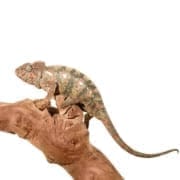
Oustalet’s Chameleon Care Guide: Housing a Giant from Madagascar

Oustalet’s chameleon (Furcifer oustaleti) is one of the longest chameleons in the world and a true showpiece for experienced keepers. Native to Madagascar, it combines impressive size with a reputation for hardiness, adaptability and a big appetite. It is not a beginner’s first chameleon simply because of the space it needs, but for keepers ready to provide a large, well-ventilated enclosure it is a rewarding species to watch. You can learn more about the captive-bred Oustalet’s chameleon at www.CbReptile.com.

Natural History

Oustalet’s chameleon is found across much of Madagascar, from dry deciduous forest and scrub to humid forest edges, plantations and even village gardens. That wide range explains its adaptability: it tolerates warm days, cooler nights and seasonal changes in humidity better than many specialists. In the wild it spends most of its time in shrubs and trees, hunting insects and occasionally larger prey.

Appearance and Color

This is a long, laterally compressed chameleon with a low casque, a toothed dorsal crest and a long prehensile tail. Males are usually gray, brown or olive with lighter bands and can look almost prehistoric at full size. Females are smaller and often show more color, including green, rust, orange or pink tones, especially when gravid or responding to a male. Like all chameleons, color shifts with temperature, mood and light, so learning your animal’s relaxed coloring helps you spot stress early.

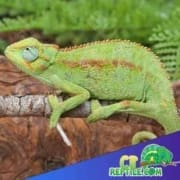
Oustalet's chameleon perched on a mossy stump among green plants, a natural setup idea for Oustalet's chameleon care

Size and Lifespan

Adult males commonly reach 20 inches or more in total length, and exceptional animals approach 27 inches. Females are noticeably smaller, often in the 12 to 16 inch range. With good husbandry a lifespan of roughly five to eight years is a reasonable expectation, with females generally shorter-lived because of the demands of egg production. Females can lay large clutches even without a male, so a proper lay bin and strong calcium support are essential.

Temperament

Oustalet’s chameleons are bold and often less shy than smaller species, but they are still solitary display animals. Some individuals become calm with a steady routine, while others puff, hiss or gape when approached. Always house them alone, keep other chameleons out of view, and avoid placing the enclosure in a busy walkway.

Enclosure

Size is the defining part of Oustalet’s chameleon care. A juvenile can start in a 24 x 24 x 48 inch screen enclosure, but an adult male needs considerably more room, ideally 36 x 36 x 72 inches or a custom setup. Screen or hybrid enclosures such as the ReptiBreeze chameleon cage provide the airflow chameleons need. Inside, provide:

Zoo Med ReptiBreeze XL screen chameleon cage, the tall, ventilated enclosure style used in Oustalet's chameleon care
  • Sturdy horizontal and diagonal branches thick enough for a large animal to grip
  • Dense live plants such as pothos, ficus or schefflera for cover and drinking droplets
  • Open basking perches near the top, away from direct contact with the lamp
  • A deep, moist lay bin for adult females, offered when digging behavior appears

Heat, UVB and Humidity

Offer a basking spot of about 85 to 95°F for adults, with the rest of the enclosure in the mid 70s to low 80s°F. Nights can safely fall into the 60s°F. Use a thermostat or dimmer on the heat lamp and check temperatures at perch level.

A linear T5 HO UVB tube, such as the Reptisun 10.0 T5 HO, mounted across the top of the enclosure supports calcium metabolism; follow the manufacturer’s distance guidance and replace tubes on schedule. Keep humidity around 50 to 70 percent, mist two or three times daily until leaves drip, and add a dripper. Chameleons rarely drink from bowls, so moving water is important.

Diet

Oustalet’s chameleons are hearty eaters. Rotate crickets, dubia roaches, black soldier fly larvae, silkworms, superworms and hornworms, sized no longer than the space between the eyes. Gut-load insects 24 hours before feeding, dust with calcium most meals, and use a multivitamin once or twice a month. Juveniles eat daily; adult males do well every other day, and females need careful portioning to avoid overly large clutches.

Feeder cricket, one of the gut-loaded insects in a varied Oustalet's chameleon care diet

Handling

Limit handling to necessary moves and health checks. Let the chameleon walk onto your hand from below rather than grabbing from above, and never pull it off a branch while it is gripping. Short, calm sessions help a bold individual tolerate routine care.

Why Captive-Bred Matters

Captive-bred chameleons arrive free of the heavy parasite loads and shipping stress common in wild-caught animals, and they are already used to captive feeders and misting routines. Supporting captive breeding also reduces pressure on wild Madagascar populations. Keepers who enjoy large species may also like the rainbow Jackson’s chameleon, which suits cooler setups.

Oustalet’s Chameleon Care FAQ

How big does an Oustalet’s chameleon get?

Males often exceed 20 inches including the tail and can approach 27 inches, while females are smaller.

Is an Oustalet’s chameleon good for beginners?

It is hardy, but its size and space needs make it better for keepers with some chameleon experience.

Do Oustalet’s chameleons need UVB?

Yes. A quality T5 HO UVB tube is essential for bone health and calcium use.

How often should I mist?

Two or three times daily, plus a dripper, keeps humidity in range and gives the chameleon water to drink.

Meet our captive-bred Oustalet’s chameleons at www.CbReptile.com and plan a spacious, airy home for one of Madagascar’s giants.
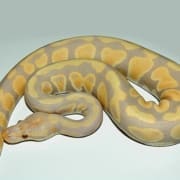
Candy Ball Python Care Guide: Recessive Morph, Setup and Feeding

The candy ball python is a recessive color morph of Python regius, one of the most popular pet snakes in the world. Candy animals trade the normal dark brown and black of a ball python for softer, warmer tones, giving them a gentle, washed-out look that many keepers love. Underneath the color they are still ball pythons: calm, manageable in size and long-lived. This guide covers husbandry from setup to feeding, and you can learn more about our captive-bred candy ball python at www.CbReptile.com.

Natural History

Ball pythons are native to the grasslands, savannas and open forests of West and Central Africa. They spend much of the day hiding in rodent burrows and termite mounds, coming out at dusk to hunt. Their nickname comes from the way a nervous ball python curls into a tight ball with its head tucked inside. These habits explain two key care points: they need snug hiding spots and stable warmth.

Appearance and Genetics

Candy is a recessive trait, which means a snake must inherit the gene from both parents to show the look. Animals that carry one copy look normal but are called “het candy” and can produce candy offspring when paired correctly. Hobbyists often discuss candy alongside toffee, a related reduced-pigment line, and combine it with other morphs to create new looks.

Normal ball python with dark brown and tan markings, shown for comparison with the lighter candy ball python

A typical candy ball python shows caramel, tan, lavender-tinged or pale yellow tones where a normal would be dark, and the exact shade varies between individuals and often shifts as the snake matures. Compare that with the classic normal ball python, which has rich brown blotches on a tan to gold background.

Size and Lifespan

Hatchlings are around 10 to 17 inches long. Adult males usually reach 3 to 4 feet, while females commonly reach 4 to 5 feet and are heavier bodied. Ball pythons are famously long-lived; 20 to 30 years is common with good care, and some live longer. Plan for a commitment that may last decades.

Temperament

Ball pythons are among the most docile snakes available. Most tolerate gentle handling well once settled. Young snakes can be shy and may ball up or hide frequently at first. A quiet room, secure hides and a consistent routine help them settle quickly.

Enclosure Setup

A hatchling can live in an enclosure around 20 gallons, while an adult does best in a 4 x 2 x 2 foot enclosure (about 120 gallons). Larger snakes appreciate the extra room to explore. Include:

  • Two snug hides, one on the warm side and one on the cool side
  • A substrate that holds some humidity, such as cypress mulch, coconut husk or a soil mix
  • A sturdy water bowl large enough for soaking
  • Branches, cork bark and artificial plants for cover and light climbing
  • A locking lid, since ball pythons are strong and persistent escape artists

Heat, Light and Humidity

Create a warm side with a surface hot spot of about 88 to 92°F and a cooler side in the mid to upper 70s°F. Night temperatures should not drop below about 72°F. Use a thermostat on every heat source to prevent burns. Many keepers now add a low-output UVB light and a regular day-night cycle, which can encourage natural activity.

Keep humidity around 55 to 70 percent, raising it slightly before a shed. Mist the substrate or add a humid hide with damp sphagnum moss if sheds come off in pieces.

Diet

Feed frozen-thawed rodents sized roughly as wide as the thickest part of the snake’s body. Hatchlings typically start on frozen pinky mice or hoppers and move up to larger mice and small rats as they grow. Feed young snakes every 5 to 7 days and adults every 10 to 14 days. Thaw prey fully, warm it slightly, and offer it with tongs. Healthy adults sometimes skip meals during cooler months or breeding season; monitor weight rather than worrying about a single refusal.

Pack of frozen pinky mice, the frozen-thawed prey used for young snakes in candy ball python care

Handling

Give a new snake about a week to settle before handling, and wait 48 hours after a meal. Support the body with both hands and let the snake move through your fingers. Keep early sessions short, and avoid handling during shed when vision is cloudy.

Why Captive-Bred Matters

Captive-bred ball pythons are typically healthier, parasite-free and already feeding on frozen-thawed prey, avoiding the feeding problems common in imported animals. Captive breeding is also what makes morphs like candy possible. If you are comparing beginner snakes, the albino California kingsnake is another hardy option with a more active personality.

Candy Ball Python Care FAQ

Is a candy ball python harder to keep than a normal?

No. Candy is a color trait, and care is the same as for any ball python.

What does het candy mean?

A het candy carries one copy of the recessive gene. It looks normal but can produce candy offspring when bred to another carrier or a visual candy.

Why won’t my ball python eat?

Check temperatures, hides and stress first. Ball pythons often fast during shed, after a move, or in cooler months.

How big of an enclosure does an adult need?

A 4 x 2 x 2 foot enclosure is a good standard for most adults, especially females.

Meet our captive-bred candy ball pythons at www.CbReptile.com and give one a secure, warm home for decades to come.

Axolotl Care Guide: Cool Water, Tank Setup, Diet and Daily Care

The axolotl (Ambystoma mexicanum) is a salamander that never leaves the water. Instead of transforming into a land-dwelling adult, it keeps its feathery external gills, finned tail and aquatic lifestyle for life, a trait called neoteny. That permanent baby face has made it one of the most recognizable amphibians in the world. Axolotls are hardy when their few core needs are met, and the most important of those is cool, clean water. This guide covers everything a new keeper should know, and you can learn more about our captive-bred axolotl at www.CbReptile.com.

Natural History

Wild axolotls come from the lake and canal system of Xochimilco near Mexico City. Their native habitat has shrunk dramatically because of urban growth, pollution and introduced fish, and the species is considered critically endangered in the wild. Nearly every axolotl in the pet trade is the product of generations of captive breeding, which is one reason they adapt so well to aquariums. Their natural water is cool, slow-moving and rich in plants, and that is the environment we try to recreate at home.

Appearance and Color Morphs

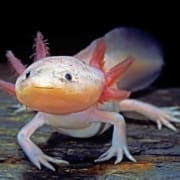
An axolotl has a broad, flat head, small lidless eyes, three pairs of feathery gill stalks, and a long dorsal fin that runs from the back of the head to the tail. Healthy gills are full and fluffy; gills that curl forward are often an early sign of warm or poor-quality water.

Front view of a pale leucistic axolotl showing its external gills and wide smile, a key feature covered in axolotl care

Captive breeding has produced several color forms, including:

  • Wild type – olive, brown or nearly black with gold flecks
  • Leucistic – pale pink-white body with dark eyes and red gills
  • Golden albino – yellow to peach body with light eyes
  • White albino – white body with pink eyes
  • Melanoid and copper – very dark or warm brown variations

Size and Lifespan

Most adults reach about 9 to 10 inches in length, and some grow up to 12 inches. Young axolotls grow quickly in their first year when fed well. With good water quality and stable temperatures, a lifespan of 10 to 15 years is common, so an axolotl is a long-term commitment.

Temperament and Tank Mates

Axolotls are calm, curious and active at dawn and dusk, often “walking” along the bottom or hovering mid-water. They are best kept alone or with other axolotls of similar size. Fish tend to nip at the delicate gills, and axolotls will try to swallow anything that fits in their mouths, including small tank mates. Young axolotls of mixed sizes may also bite each other’s limbs, which can regenerate but cause unnecessary stress.

Three young axolotls side by side in clear water, showing why axolotl care keeps same-size animals apart from fish

Tank Setup

A single adult needs a minimum of a 20-gallon long aquarium, and a larger footprint is better because axolotls use floor space rather than height. Add roughly 10 gallons for each additional adult. Key points:

White axolotl in a planted aquarium with fine sand and a rock hide, an example of a calm axolotl care tank setup
  • Cycle the tank first. Establish beneficial bacteria before adding the animal so ammonia and nitrite stay at zero.
  • Gentle filtration. A sponge filter or a filter with a baffled outflow keeps water clean without strong currents, which stress axolotls. If you use a filter such as the Tetra ReptoFilter, diffuse the flow.
  • Safe substrate. Use a bare bottom, large flat stones, or fine sand. Avoid gravel, which axolotls can swallow and become impacted.
  • Hides and plants. Caves, PVC tubes and live or silk plants give shade and security.
  • Secure lid. Axolotls rarely jump, but a lid keeps out debris and slows evaporation.

Water Temperature and Quality

Temperature is the single most important factor in axolotl care. Aim for 60 to 64°F, and keep the tank below 68 to 70°F. Warmer water lowers oxygen levels, increases stress and invites fungal and bacterial problems. Never add a heater. In warm homes, place the tank in a cool room away from windows, or use a fan or aquarium chiller.

Use a water conditioner to remove chlorine and chloramine, keep pH between about 6.5 and 8, and test regularly. Ammonia and nitrite should read zero and nitrate should stay low. Weekly partial water changes of 20 to 30 percent keep the system stable. Lighting is optional; axolotls prefer dim conditions and do not need UVB.

Diet

Axolotls are carnivores. Earthworms such as nightcrawlers are an excellent staple because they are nutritious and widely accepted. Quality sinking axolotl or carnivore pellets, frozen bloodworms for juveniles, and occasional brine shrimp add variety. Juveniles eat daily, while adults do well on a meal every two to three days. Remove uneaten food within a few hours so it does not foul the water, and avoid feeder fish, which can carry parasites.

Handling

Axolotls have soft, permeable skin, a cartilage-based skeleton and a protective slime coat, so they are look-but-do-not-touch pets. When you need to move one, guide it into a fine mesh net or a clean container with tank water. Always wash your hands before and after working in the tank.

Why Captive-Bred Matters

With wild populations in steep decline, choosing a captive-bred axolotl protects the remaining wild animals and gives you a pet already accustomed to aquarium life and prepared foods. Captive-bred animals also come with a known age and color line, which helps you plan tank size and long-term care. If you enjoy aquatic amphibians, the Budgett’s frog is another fascinating species with very different needs. Before bringing one home, check local rules, since a few states and cities restrict axolotl ownership.

Axolotl Care FAQ

Do axolotls need a heater?

No. Axolotls are cold-water animals and do best at 60 to 64°F. A heater usually does more harm than good.

Can axolotls live with fish?

It is not recommended. Fish nip gills, and axolotls will eat small fish, which can also introduce disease.

Why are my axolotl’s gills curled forward?

Forward-curled gills often signal stress from warm water, strong current or poor water quality. Test the water and check the temperature first.

How often should I feed an adult axolotl?

Every two to three days is typical for adults, with juveniles fed daily. Adjust if your axolotl becomes noticeably thin or overweight.

Is sand safe for axolotls?

Fine, smooth aquarium sand is generally safe for adults. Avoid gravel and any pieces small enough to swallow.

Meet our captive-bred axolotls at www.CbReptile.com and set up a cool, calm tank they will thrive in for years.

Red Chilean Rose Hair Tarantula Care Guide: A Calm, Long-Lived Classic

Few tarantulas have earned as loyal a following as the Chilean rose hair. The red color phase, with its warm pinkish-copper carapace and darker legs, is a classic that stays calm, hardy and endlessly watchable. This guide explains how to house, feed and understand this species, including its famous fasting spells. You can meet the red Chilean rose hair tarantula at www.CbReptile.com.

Natural History

The Chilean rose hair tarantula (usually sold as Grammostola rosea, with the red form often associated with this name) comes from the arid scrublands and desert margins of northern Chile and neighboring regions. It is a terrestrial burrower that shelters under rocks and in shallow tunnels. The dry, seasonal climate explains why it is more tolerant of lower humidity than many tarantulas.

Appearance

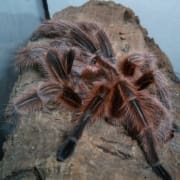
Adults have a heavy-bodied, broad build with a pinkish to copper cast on the carapace and abdomen, and long bristles that can show a reddish sheen after a fresh molt. The legs are usually darker. Coloration varies by individual and molt cycle, and some animals are noticeably more vivid than others.

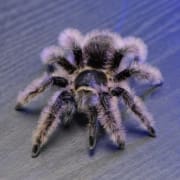
Red Chilean rose hair tarantula displaying the rosy coloration described in red Chilean rose hair tarantula care

Size and Lifespan

Adult females reach roughly 5 to 6 inches in leg span and can live 15 to 20 years or more, while males live far shorter lives. Growth is slow, so patience is part of owning one.

Temperament

Rose hairs are famously docile, but individual animals vary. They tend to react to disturbance by backing away or flicking urticating hairs rather than biting. Handling is still discouraged because a fall can be fatal, and hairs can cause irritation. Observation and careful maintenance make the best pet experience.

Enclosure Setup

A floor-focused enclosure around 10 gallons is plenty for an adult. Provide:

Coconut fiber substrate suited to a red Chilean rose hair tarantula enclosure
  • 3 to 5 inches of dry coconut fiber or a sand and soil blend for burrowing
  • A secure hide such as a cork half-round
  • A small, shallow water dish
  • Cross-ventilation to avoid stale, damp air

Keep decor low and stable to avoid falls. Spot-clean prey remains promptly.

Heat and Humidity

Ordinary room temperatures from about 70 to 80°F work well. Keep humidity around 50 to 60 percent and avoid constantly wet substrate. A slightly moist corner can be created occasionally, especially before a molt, but a clean water dish is usually enough.

Diet and Fasting

Offer crickets, dubia roaches or other appropriately sized feeders. Spiderlings eat a couple of times per week, juveniles weekly, and adults every one to three weeks. Chilean rose hairs can fast for months with no ill effects, often around molts or seasonal changes. Remove uneaten prey, keep water fresh and monitor abdomen size and activity instead of forcing food. Compare feeding behavior with the curious curly hair tarantula or the Mexican rose grey tarantula, which can be more eager eaters.

Small feeder crickets for red Chilean rose hair tarantula feeding

Molting

Pre-molt signs include fasting, reduced activity and a darkened abdomen. A tarantula may lie on its back during the molt, which can look alarming but is normal. Do not disturb it, and wait several days before feeding afterward.

Common Mistakes to Avoid

Most problems with this species come from too much care rather than too little. Overly damp substrate invites mold and mites, constant rehousing stresses the spider, and forcing food during a fast can cause injuries or refusal to eat. Tall climbing decor creates fall risks, and heat lamps are usually unnecessary and can dry out the enclosure. Keep the setup simple: a deep layer of substrate, a secure hide, a clean water dish and good ventilation.

Handling and Safety

Although docile, this species still has urticating hairs that can irritate skin, eyes and airways. Wash your hands after maintenance, avoid touching your face and use slow, deliberate movements when changing water. If the spider flicks hairs, give it space and leave it alone for a while. Tarantulas are fragile animals, so a fall from even a short height can be dangerous; it is much safer to enjoy this species through observation and routine care rather than regular handling.

Because adult females live so long, record keeping pays off: a simple notebook of molt dates, feeding responses and weight impressions gives you a personal baseline for this individual, which makes it much easier to tell a normal fast from a genuine problem years down the road.

Why Captive-Bred Matters

This species has historically been heavily collected from the wild. Captive-bred spiders reduce that pressure and give keepers an animal that is acclimated to enclosure life. A healthy red Chilean rose hair tarantula can be a companion for decades.

Frequently Asked Questions

Why is my tarantula not eating?

Fasting is normal, especially before a molt. Make sure temperature and water are right, and avoid worrying unless the abdomen shrinks significantly.

Do rose hairs need high humidity?

No, moderate humidity is enough, and constantly damp substrate can cause problems.

Is it safe to handle?

Handling is discouraged because falls can be fatal and urticating hairs irritate skin.

How long can it live?

Females often live 15 to 20 years or longer.

Learn more about tarantulas at www.CbReptile.com.

Pixie Frog Care Guide: Housing a Giant African Bullfrog

The pixie frog (Pyxicephalus adspersus), also called the African bullfrog, is one of the largest frogs commonly kept in captivity. Despite the cute name, adults are big, heavy ambush predators with a ravenous appetite and a sturdy personality. This care guide explains the space they need, how to heat and humidify an enclosure, and how to feed a growing frog without overfeeding. Learn more about our captive-bred pixie frog at www.CbReptile.com.

Natural History

Pixie frogs come from the savannas and scrublands of southern and eastern Africa. They spend dry seasons buried in the soil, forming a cocoon of shed skin, and emerge with seasonal rains to feed and breed. That burrowing instinct explains why substrate depth matters more than floor space in captivity.

Appearance

Adults are stocky and olive green with a lighter underside. Males are noticeably larger and develop yellow throat coloring. Both sexes have pronounced tooth-like projections on the lower jaw, so avoid hand-feeding. Juveniles are rounder and more camouflaged with mottled patterns.

Close view of a young pixie frog showing the broad head and stout body described in pixie frog care

Size and Lifespan

Males can approach 9 to 10 inches and females stay a bit smaller. With excellent care, a lifespan of 15 to 20 years is commonly reported, which makes a pixie frog a long-term commitment.

Temperament

This is a look-but-do-not-touch animal. Pixie frogs will bite when startled or when they mistake a hand for food, and their jaws are powerful. Observe, feed with long tongs, and keep handling to essential moves only. They also absorb substances through their skin, so wash hands thoroughly before any contact and avoid lotions or soaps.

Enclosure Setup

A 20-gallon long can house a juvenile, while an adult does best in a 40-gallon breeder or larger. Include:

Terrarium moss used to hold humidity in a pixie frog enclosure
  • 4 to 6 inches of moisture-holding substrate such as coconut fiber, with sphagnum moss patches for humidity
  • A shallow, heavy water bowl that is easy to climb out of and cleaned daily
  • A hide made of cork bark or a half log
  • A secure lid; pixies are strong and will push on loose tops

Spot-clean waste promptly and replace the substrate as it fouls to prevent skin and bacterial problems.

Heat, UVB and Humidity

Keep daytime temperatures in the mid to upper 70s°F, with a slight drop at night, and avoid hot spots. Humidity around 60 to 70 percent suits most animals. Low-level UVB lighting is considered beneficial for many amphibians by some keepers, but it is not required if the diet is well supplemented; if used, give shade and moderate output.

Diet

Juveniles eat appropriately sized insects such as crickets, dubia roaches and worms, dusted with calcium. As they grow, adults eat larger prey like roaches, large worms and the occasional pinky mouse, though rodents should be a minor part of the diet to avoid obesity. Feed juveniles every day or every other day and adults about once or twice a week, adjusting to body condition. Never house two together: pixie frogs readily eat tankmates, even those of similar size. If you enjoy keeping other big-mouthed amphibians, compare this species with the Budgett’s frog.

Small feeder crickets suitable for juvenile pixie frog feeding

Handling and Maintenance

Use dechlorinated water, avoid chemical cleaners, and watch for lethargy, weight loss, red skin or repeated shedding trouble. An experienced exotics veterinarian is best for any health concern.

Water Quality and Hygiene

Pixie frogs sit in and absorb moisture through their skin, so water quality directly affects health. Use dechlorinated or treated water in the dish, change it daily, and scrub the bowl weekly with hot water only. Replace the top layer of substrate whenever you see waste, and do a full substrate change every few months. Keep the enclosure damp but never swampy; a gradient from moist deep layers to a slightly drier surface lets the frog choose. Avoid heavy fertilizers, scented products and aerosol sprays near the tank, and quarantine any new amphibian before it shares a room with an existing one. Watch the skin for redness or cloudiness, and note unusual changes in posture or appetite so you can share clear information with a veterinarian.

Why Captive-Bred Matters

Captive-bred frogs are accustomed to prepared feeders and enclosure conditions, and they reduce collection pressure on wild populations. Starting with a healthy pixie frog that is feeding well makes the first months far easier.

Frequently Asked Questions

How big is a pixie frog tank for an adult?

A 40-gallon breeder is a practical minimum, with more floor space and substrate depth providing better comfort.

Do pixie frogs hibernate?

They aestivate in the wild; in captivity, steady conditions usually prevent it, but a frog that buries itself and forms a cocoon is a reason to review humidity and temperature.

Can I keep a pixie frog with other animals?

No. They are predatory and will eat anything that fits in the mouth.

Is it a good beginner frog?

It is hardy and straightforward when the basics are right, but its size, bite and longevity suit committed keepers.

Curious about more amphibians? Meet our captive-bred reptiles and amphibians at www.CbReptile.com.

Florida Blue Centipede Care Guide: Substrate, Humidity and Safety

The Florida blue centipede (Hemiscolopendra marginata) is a compact, fast-moving predator that looks like a miniature dragon. Its dark body, banded legs and blue-green tint make it a favorite among invertebrate keepers who want a small but dramatic animal. This guide explains how to house it safely, keep humidity right and feed it, along with the safety precautions every centipede keeper should understand. You can read about the Florida blue centipede at www.CbReptile.com.

Natural History

This species lives in the southeastern United States, including Florida, where it hides under logs, bark and leaf litter and hunts at night. It prefers humid microhabitats and stays in tight crevices during the day. Like other centipedes, it uses venom delivered through modified front legs to subdue insects.

Appearance

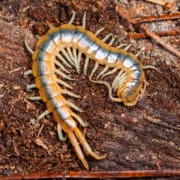
The body is flattened and segmented, with a dark brown to blue-black top and legs that often show a blue or greenish tint. Antennae and the forcipules near the head are used to sense and grab prey. The color can look more vivid right after a molt. A healthy animal moves smoothly and keeps its antennae active.

Florida blue centipede showing the segmented body and blue-green legs described in Florida blue centipede care

Size and Lifespan

This is a small centipede, generally reaching about 3 to 4 inches. With good care, many individuals live several years, although exact lifespans vary and are not as well documented as for common reptiles.

Temperament and Safety

Centipedes are fast, defensive and venomous. A bite can be painful and cause swelling, and sensitivity varies from person to person, so this is a strictly hands-off animal. Always use long tongs and a deep container for maintenance, never handle with bare hands and keep the enclosure out of reach of children and pets. Know where the nearest medical care is, and seek help if a bite leads to a severe reaction.

Enclosure Setup

A small, escape-proof enclosure with a locking lid is essential. A 5 to 10-gallon terrarium or a secure plastic container with ventilation holes works well. Include:

Sphagnum moss used to keep moist pockets in a Florida blue centipede enclosure
  • 3 to 4 inches of slightly damp coconut fiber and soil for burrowing and humidity
  • Pieces of cork bark and a leaf litter layer for cover
  • A small, shallow water dish that is easy to clean
  • A moist corner with sphagnum moss to give a humidity gradient

Use tight ventilation screens and secure all gaps, because centipedes are excellent escape artists. Avoid overly wet substrate, which can trigger mold or mites.

Heat and Humidity

Keep the enclosure in the mid 70s to low 80s°F, with a modest drop at night. Humidity of 60 to 80 percent is typically appropriate, maintained by dampening part of the substrate. No special lighting is needed, and direct sunlight should be avoided.

Diet

Offer gut-loaded insects such as crickets, dubia roaches or mealworms sized to the centipede. Juveniles eat every few days and adults about once a week, with portions adjusted to appetite. Remove uneaten prey to prevent stress. As with scorpions and tarantulas, a plump but not swollen body and steady activity suggest a healthy feeding routine. For comparison with other defensive invertebrates, see the Vietnamese orange-legged centipede or the emperor scorpion.

Small feeder crickets used for Florida blue centipede feeding

Molting and Health

Before a molt, a centipede may hide, stop eating and appear dull. Leave it undisturbed with humidity steady and avoid live prey during the process. After molting, allow time for the exoskeleton to harden before offering food. Watch for mites, mold and dehydration, and correct humidity issues promptly.

Setting Up Safely

Because this animal is fast and defensive, plan every maintenance step before opening the enclosure. Use a deep bin or the enclosure itself as the working space, keep tongs within reach and work calmly in a well-lit area. Choose decor that is easy to lift out with tongs, avoid complicated layouts that make the animal hard to locate, and keep a simple, secure place to move the centipede temporarily if the enclosure needs deep cleaning.

Observing Behavior

Normal behavior includes burrowing, lingering near the moist side of the enclosure and hunting at night. Reduced activity before molts is normal, but constant wandering and pacing along the glass can indicate that humidity, temperature or space needs adjustment. A red-light flashlight at night reveals feeding and exploring without disturbing the animal.

Why Captive-Bred Matters

Captive-bred invertebrates reduce the pressure of wild collection and are generally acclimated to enclosure life. A healthy Florida blue centipede gives keepers a fascinating, low-footprint animal with a clear care pathway.

Frequently Asked Questions

Is a Florida blue centipede dangerous?

It can deliver a painful bite, so it should never be handled and requires careful, tool-based maintenance.

Can I keep more than one together?

No. Centipedes are cannibalistic and should be housed alone.

How humid should the enclosure be?

Moderately humid, with a damp area and a drier area so the animal can choose.

What is the best way to prevent escapes?

Use a locking lid, small ventilation holes and a smooth, tall enclosure.

Browse more captive-bred invertebrates at www.CbReptile.com.

Elliot’s Chameleon Care Guide: Highland Setup, Humidity and Diet

Elliot’s chameleon (Trioceros ellioti) is a small, slender chameleon from the cool highlands of East and Central Africa. It is less famous than the panther or veiled chameleon, yet it rewards careful keepers with a calm temperament, graceful movement and a surprisingly subtle palette of greens, tans and browns. This guide walks through temperature, humidity, lighting, feeding and daily routine so you can judge whether this species fits your home. You can read about the captive-bred Elliot’s chameleon alongside other species at www.CbReptile.com.

Natural History

Elliot’s chameleon lives in montane forest edges, bamboo, scrub and farmland margins across parts of Uganda, Rwanda, Burundi, eastern Congo, Kenya and Tanzania. These areas are higher in elevation than the lowland habitats of many popular chameleons, which means cooler nights, frequent mist and regular rainfall. In captivity, that translates to a cooler, airier setup than you would give a veiled chameleon. Overheating is a bigger risk than chill, so a thermostat-controlled basking spot and a clear drop at night matter.

Appearance and Color

Adults are slim with a laterally compressed body, a modest casque, and a long prehensile tail. Typical coloring is a mix of green and brown with pale flank markings, and animals shift tone with mood, temperature and light. A relaxed chameleon usually looks even and bright, while stress often brings dark, muddy patterns. Learning your animal’s normal look is one of the best ways to catch health or comfort problems early.

Size and Lifespan

Most adults reach roughly 7 to 9 inches in total length including the tail, with males usually a little larger than females. With good care, a lifespan in the range of three to five years is realistic. Females can produce infertile eggs even without a male, so strong calcium intake, hydration and a proper lay bin (when she shows digging behavior) are part of long-term care.

Temperament

Chameleons are display animals, not cuddle pets. Elliot’s chameleons tend to be calm and relatively tolerant, but all chameleons are stressed by frequent handling, reflective surfaces and other chameleons in view. Keep each animal alone, place the enclosure in a quiet area, and let the chameleon come to you at feeding and misting time.

Enclosure Setup

A screen enclosure gives the ventilation chameleons need. For one adult, aim for at least 24 inches wide, 24 inches deep and 36 to 48 inches tall; taller is better because chameleons climb and use vertical thermal gradients. Furnish it with:

Tall chameleon enclosure with climbing branches, an example of the setup style used in Elliot's chameleon care
  • Densely branched climbing structure at several diameters so feet grip comfortably
  • Live or silk foliage that creates visual cover and leaves for drinking droplets
  • A basking branch within easy reach but not too close to the lamp
  • A simple drainage floor or bioactive layer that handles water without staying soggy

Avoid mirrors and shiny decor, and cover part of the front panel while the animal settles in.

Heat, UVB and Humidity

Provide a basking area around 80 to 85°F, with the rest of the enclosure in the low to mid 70s°F and nights in the low to mid 60s°F. A quality linear T5 HO UVB fixture covering much of the enclosure length, mounted according to the manufacturer’s distance guidance, supports calcium metabolism. Replace UVB tubes on the schedule the brand recommends, even if they still glow.

Humidity should swing: higher in the morning and after misting, drier in the afternoon. Mist several times a day or use a timed system until leaves drip, and add a slow dripper so the chameleon can drink moving water. Good ventilation prevents respiratory issues.

Diet

Chameleons are insectivores. Rotate feeders such as crickets, dubia roaches, black soldier fly larvae, silkworms and occasional hornworms. Gut-load every insect and dust with calcium most feedings, using a multivitamin with preformed vitamin A once or twice a month and a beta-carotene based product otherwise. Juveniles eat daily; adults often do well on a measured portion every day or every other day to avoid obesity. Variety keeps feeding engaging and nutrition balanced. If you also keep other insect eaters such as a bearded dragon or a leopard gecko, remember that chameleon feeding requires more precise dusting and hydration management.

Small feeder crickets, a staple insect for Elliot's chameleon care and gut-loaded feeding

Handling and Daily Routine

Treat the animal as a quiet observer. Check eyes, appetite, droppings and color daily, wash hands before and after contact, and avoid grabbing from above. Any move out of the enclosure, such as a vet trip, should be brief and warm.

Why Captive-Bred Matters

Captive-bred chameleons are used to feeders, misting and enclosure life, and they avoid the stress and parasite loads associated with wild collection. Starting with a healthy, feeding, well-hydrated Elliot’s chameleon gives you a more stable foundation than trying to recover a compromised animal.

Frequently Asked Questions

Is Elliot’s chameleon good for beginners?

It is manageable for a motivated beginner who researches thoroughly, but chameleons have exacting hydration, lighting and ventilation needs, so they are better for patient keepers than for casual ones.

Why does my chameleon not drink from a bowl?

Chameleons typically drink droplets from leaves and drippers. A water bowl is usually ignored.

Can I keep two together?

No. Chameleons are solitary and stress each other even without visible fighting.

What temperature is too hot?

Sustained basking temperatures above the high 80s°F are risky for a highland species; use a thermometer and a thermostat rather than guessing.

Ready to learn more? Meet our captive-bred reptiles at www.CbReptile.com.

Curly Hair Tarantula Care Guide: Calm, Hardy and Beginner-Friendly

The curly hair tarantula (Tliltocatl albopilosus, formerly Brachypelma albopilosum) is a favorite first spider because of its calm temperament, hardiness and forgiving care requirements. Its dense, curled golden hairs give it a distinct teddy-bear look. This guide explains how to set up its home, how to feed and hydrate it, and what to expect from molting. You can see the curly hair tarantula at www.CbReptile.com.

Natural History

Curly hair tarantulas come from Central America, including Honduras and Costa Rica. They are burrowing and ground-dwelling spiders found in moderately humid forest and scrub, where they use tunnels and hollows for shelter. They tolerate a wide range of conditions, which is part of what makes them dependable for newcomers.

Appearance

Adults have a dark, charcoal body covered with long, pale to golden curly bristles that stand out against the legs. The abdomen can show a reddish hue. Spiderlings are smaller and plainer but develop the hairy look with each molt. The bristles are also part of the defense system, since the spider can flick urticating hairs from its abdomen when disturbed, which can irritate skin and eyes.

Curly hair tarantula showing the dense curled bristles described in curly hair tarantula care

Size and Lifespan

Adult females commonly reach a leg span of about 5 to 6 inches, with males slightly smaller. Females can live 15 to 20 years, while males tend to live much shorter lives, often 5 to 8 years.

Temperament

This species is known for being calm and slow-moving, but it is still a wild animal. It is best treated as an observation pet. Handling carries risks for both the keeper and the spider, since a fall from even a short height can seriously injure a tarantula. Use a catch cup and slow movements for maintenance, and keep faces and eyes away from the enclosure during rehousing.

Enclosure Setup

A small terrarium or plastic enclosure with good cross-ventilation suits one adult. Floor space matters more than height because this is a terrestrial species. Include:

Eco Earth coconut substrate, a deep burrowing medium suited to curly hair tarantula care
  • 4 to 6 inches of dry-to-slightly-damp substrate such as coconut fiber for burrowing
  • A cork bark half-tube or other secure hide
  • A shallow water dish that is cleaned frequently
  • Ventilation holes on the sides and a snug lid

Avoid tall decor that could cause a dangerous fall, and keep the lid secure.

Heat, Humidity and Lighting

Room temperatures in the mid 70s to low 80s°F are generally comfortable, with no special lighting required. Keep humidity moderate, around 60 to 70 percent, by lightly dampening one side of the substrate rather than soaking the entire floor. Excess moisture combined with poor airflow can cause mold and mites.

Diet

Feed prey that is roughly the size of the spider’s body: crickets, dubia roaches, mealworms or other safe feeders. Spiderlings eat every few days, juveniles about weekly, and adults every one to two weeks. Remove uneaten prey within a day, especially when the spider is preparing to molt. A fat abdomen and steady appetite are signs of good health. If you enjoy comparing species, the Peruvian green velvet tarantula and the red Chilean rose hair tarantula are other popular, relatively hardy choices.

Small feeder crickets, a common prey item for curly hair tarantula feeding

Molting

Before a molt, a tarantula may refuse food, hide and become sluggish. Leave it alone, keep water available and avoid feeding live prey that could injure it. After molting, wait several days before offering food so the fangs can harden.

Day-to-Day Maintenance

A simple weekly routine keeps a curly hair tarantula healthy. Refill the water dish, spot-clean webbing, old prey and waste, and check the substrate for mold. Rehouse only when necessary, such as when the spider has outgrown the enclosure or the substrate has become fouled; use a catch cup and slow movements. Keep a note of feeding dates, molts and any behavior changes so you can predict molts and recognize problems early. A small enclosure at room temperature requires little equipment, which keeps costs low and the setup easy to manage. Because this species is hardy and forgiving, it is an excellent way to learn tarantula husbandry before moving to more demanding species.

Finally, remember that tarantulas are solitary. Never house two together, because even calm spiders will eat one another, and keep the enclosure away from direct sun, drafts and household chemicals such as aerosol sprays.

Why Captive-Bred Matters

Captive-bred tarantulas avoid the loss of wild populations and are accustomed to enclosure life. A healthy, well-fed curly hair tarantula is a rewarding long-term companion and a great way to learn invertebrate husbandry.

Frequently Asked Questions

Is a curly hair tarantula good for a first spider?

Yes, it is widely recommended for beginners because of its calm demeanor and tolerant care requirements.

How often should I feed it?

Adults usually eat once every one to two weeks; younger spiders eat more often.

Does it bite?

Bites are rare but possible, and the venom is generally considered mild for healthy people; urticating hairs are the more common nuisance.

Do I need a heat lamp?

Not typically if the room stays comfortably warm.

Explore more tarantulas and keep learning at www.CbReptile.com.

Caiman Lizard Care Guide: Space, Water and Snail-Based Diet

The caiman lizard (Dracaena guianensis) looks like a miniature dinosaur: heavy, armored and built for life near water. It is one of the most specialized lizards in the hobby, with strong jaws designed for crushing snails and a body that thrives only in a large, warm, humid, water-rich enclosure. This guide explains the space, heat, water and diet requirements honestly so you can decide whether it fits your resources. You can read about the captive-bred caiman lizard at www.CbReptile.com.

Natural History

Caiman lizards live in flooded forests, swamps and slow rivers across northern South America. They spend much of their time in or near water, basking on logs and branches overhead and diving when threatened. Their wild diet is dominated by snails, along with crabs, crayfish and some other prey, and their broad molar-like teeth are an adaptation for crushing shells.

Appearance

Adults carry a thick body with heavy, keeled scales on the back and tail and a bold green-and-brown palette. Males often have a broader, more powerful head. The tail is flattened, which helps with swimming, and the strong limbs suit both climbing and paddling. Juveniles are brighter green and look more delicate.

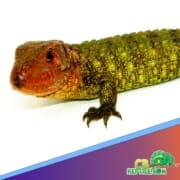
Caiman lizard showing the muscular build and keeled scales described in caiman lizard care

Size and Lifespan

Adults commonly reach around 3 to 4 feet, and lifespans in captivity can reach 10 years or more with correct care. They grow quickly in their first years, so plan the adult enclosure from the start instead of upgrading repeatedly.

Temperament

Captive-bred caiman lizards can become calm and tolerant of routine, but they are powerful animals with a strong bite and a wary nature. Handling should be limited and confident, with respect for the head and tail. They are best treated as display animals that you can interact with during feeding and maintenance.

Young caiman lizard looking alert, showing how calm individuals behave during routine care

Enclosure Setup

This species needs a lot of room and a lot of water. An adult needs an enclosure on the scale of a custom cabinet or room-sized setup, ideally 8 feet long by 4 feet wide by 4 feet tall or more, with a deep water section it can fully submerge in. Include:

  • A large, sturdy water area with a ramp and a reliable filtration system
  • Basking logs and a dry land zone with moisture-holding substrate
  • Plenty of visual cover from plants and bark
  • A secure, ventilated top to hold humidity while allowing airflow

Water quality is the heart of success: a strong filter, regular partial changes and daily spot cleaning reduce skin and eye problems.

Heat, UVB and Humidity

Provide a basking spot around 90 to 95°F with an ambient range in the low to mid 80s°F and water temperature in the mid 70s to low 80s°F. A strong linear UVB fixture, such as a T5 HO tube over the basking area, helps calcium use, and bulbs should be replaced on the manufacturer’s schedule. Humidity should stay in the 70 to 80 percent range, supported by the large water surface and regular misting.

Reptile UVB terrarium hood, the type of lighting fixture used in caiman lizard care

Diet

Caiman lizards eat snails, so a reliable supply of safe, parasite-free snails is the cornerstone of feeding. Supplement with crayfish or other appropriate invertebrates, and use gut-loaded insects and occasional lean protein sources as part of a rotation recommended by an experienced keeper or exotics veterinarian. Dust feeders with calcium and a multivitamin on a measured schedule. Juveniles eat frequently, while adults can eat several times a week, with portions adjusted to body condition. Because the diet is specialized, compare it with more general-purpose lizards such as the savannah monitor, which also needs ample space but accepts a broader menu.

Routine Care

Water should be tested and cleaned regularly. Watch for swelling around the eyes, skin lesions and loss of appetite, which are signs to review water quality and seek veterinary guidance. Keep a notebook of feeding and shedding records to catch trends early.

Planning Before You Commit

Before bringing a caiman lizard home, budget for the entire system: the enclosure or room build, a canister filter rated well above the water volume, heating and lighting, a dependable snail source and a veterinarian comfortable with large reptiles. Check local regulations, and be honest about whether you can maintain the setup for a decade. Many problems seen with this species come from undersized housing and neglected water rather than from the animal itself, so building the habitat first is the safest path.

Why Captive-Bred Matters

Wild-caught caiman lizards often arrive with heavy parasite loads and difficulty adjusting to captivity, and many refuse to feed on anything other than snails. A feeding, captive-bred caiman lizard is a better starting point and reduces pressure on wild populations.

Frequently Asked Questions

Are caiman lizards good pets for beginners?

No. Their space, filtration and feeding needs are demanding, so they suit experienced keepers with room and budget.

Do they really need snails?

Snails are the natural staple and are strongly recommended as a core part of the diet; consult an experienced keeper or veterinarian for safe sourcing.

How much water do they need?

Enough to submerge fully and swim, with a depth that suits the animal’s size and a powerful filter.

Can I house two together?

It is safest to house them individually, especially adults.

Explore more specialized lizards and keep learning at www.CbReptile.com.

Blue Poison Dart Frog Care Guide: Vivarium, Humidity and Fruit Fly Diet

Few animals are as eye-catching as a blue poison dart frog. The cobalt skin, dotted with black spots, looks like jewelry on a leaf, and these frogs are bold, diurnal and active in a planted vivarium. Despite the name, captive-bred frogs are not toxic because they do not eat the wild insects that supply their defensive chemicals. This guide explains how to set up a vivarium, maintain humidity and feed a thriving group. You can learn more about the captive-bred blue poison dart frog at www.CbReptile.com.

Natural History

The blue dart frog (Dendrobates tinctorius “azureus”) comes from small, isolated patches of rainforest in southern Suriname. It lives on the forest floor among leaf litter, moss and fallen wood, where humidity is high and temperatures stay stable. Males call and defend territories, and parents care for tadpoles by carrying them to small pools of water in plants.

Appearance

The skin is a rich blue shade that ranges from sky blue to deep cobalt, with an arrangement of black spots on the back and legs that is unique to each frog. The belly and legs are often darker. This bright color is a warning signal in the wild, and it also makes the frogs easy to observe in a bright vivarium.

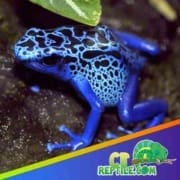
Blue poison dart frog sitting on a leaf, showing the cobalt blue and black spotting described in blue poison dart frog care

Size and Lifespan

Adults are small, about 1.5 to 2 inches, and can live 10 years or more with careful care. Their small size means a modest tank can hold a group, but stable conditions and good water quality are essential.

Temperament and Group Housing

Dart frogs are usually housed in pairs or small groups, and a well-planted tank gives each animal a territory. Two males may squabble, so a proven pair or a group introduced carefully tends to work better. They are not meant to be handled; skin oils and handling stress can harm them. Watching their behavior through glass is half the pleasure.

Enclosure Setup

A 18 by 18 by 18 inch front-opening terrarium suits a pair, and larger sizes allow more complex planting. Build the vivarium with layers:

Terrarium moss used as a humid ground layer in a blue poison dart frog vivarium
  • A drainage layer of clay balls or similar material, covered by a mesh barrier
  • A soil substrate and leaf litter for foraging and hiding
  • Moss patches and live plants such as bromeliads and pothos to hold humidity and give visual cover
  • Cork bark and branches, with a few small film canisters or cups as egg sites
  • A tight-fitting but ventilated top, with a small water feature or shallow dish

A bioactive setup with springtails and isopods helps break down waste and keep the habitat clean.

Heat, Light and Humidity

Keep temperatures between about 72 and 80°F, avoiding spikes above the low 80s°F. Humidity should remain around 80 to 100 percent through misting or an automatic system, with some airflow to prevent stagnation. A full-spectrum LED supports live plants, and low-level UVB can be beneficial when combined with shade. Use a thermometer and hygrometer to monitor conditions.

Sphagnum moss used to hold humidity in a blue poison dart frog enclosure

Diet

Feed flightless fruit flies, such as Drosophila melanogaster and hydei, dusted with calcium and vitamin supplements a few times per week. Springtails offer a natural cleanup crew that frogs also snack on, and larger frogs can take pinhead crickets. Feed small amounts daily or every other day and clean up any extras. A healthy dart frog has a rounded body without prominent ribs.

If you like the look of a different frog, compare this species with the citronella dart frog, the green and black dart frog or the bumblebee dart frog. All are relatively hardy for the group and share similar basic needs.

Maintenance

Check the water source daily and mist as needed. Prune plants, replace the leaf litter occasionally and keep the glass clean for viewing. Quarantine any new frog before adding it to an established group and use only dechlorinated water for misting.

Culturing Feeder Insects

A dependable fruit fly culture is the backbone of dart frog care. Start two or three cultures at a time so a fresh one is always ready, and rotate them every couple of weeks. Supplementing with springtails and, for larger frogs, pinhead crickets adds variety and helps nutrition. Dust feeders lightly and consistently, because heavy dusting can be stressful.

Why Captive-Bred Matters

Captive-bred dart frogs are used to cultured insects and tank life, and they reduce the pressure on wild populations. Starting with a healthy blue poison dart frog makes the early weeks much more successful.

Frequently Asked Questions

Are captive-bred dart frogs poisonous?

No. Their toxins come from wild prey, so captive-bred frogs fed cultured insects are not toxic.

Can I keep more than one frog?

Yes, but use a large enough tank and introduce animals carefully, as males can be territorial.

How often do I mist?

Often enough to keep humidity high and leaves wet, either by hand or through an automated system.

What is the biggest mistake beginners make?

Overheating or letting the tank stay stagnant and dirty; good ventilation and stable temperatures are key.

Explore more captive-bred amphibians at www.CbReptile.com.