
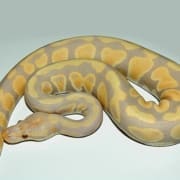
Candy Ball Python Care Guide: Recessive Morph, Setup and Feeding

The candy ball python is a recessive color morph of Python regius, one of the most popular pet snakes in the world. Candy animals trade the normal dark brown and black of a ball python for softer, warmer tones, giving them a gentle, washed-out look that many keepers love. Underneath the color they are still ball pythons: calm, manageable in size and long-lived. This guide covers husbandry from setup to feeding, and you can learn more about our captive-bred candy ball python at www.CbReptile.com.

Natural History

Ball pythons are native to the grasslands, savannas and open forests of West and Central Africa. They spend much of the day hiding in rodent burrows and termite mounds, coming out at dusk to hunt. Their nickname comes from the way a nervous ball python curls into a tight ball with its head tucked inside. These habits explain two key care points: they need snug hiding spots and stable warmth.

Appearance and Genetics

Candy is a recessive trait, which means a snake must inherit the gene from both parents to show the look. Animals that carry one copy look normal but are called “het candy” and can produce candy offspring when paired correctly. Hobbyists often discuss candy alongside toffee, a related reduced-pigment line, and combine it with other morphs to create new looks.

Normal ball python with dark brown and tan markings, shown for comparison with the lighter candy ball python

A typical candy ball python shows caramel, tan, lavender-tinged or pale yellow tones where a normal would be dark, and the exact shade varies between individuals and often shifts as the snake matures. Compare that with the classic normal ball python, which has rich brown blotches on a tan to gold background.

Size and Lifespan

Hatchlings are around 10 to 17 inches long. Adult males usually reach 3 to 4 feet, while females commonly reach 4 to 5 feet and are heavier bodied. Ball pythons are famously long-lived; 20 to 30 years is common with good care, and some live longer. Plan for a commitment that may last decades.

Temperament

Ball pythons are among the most docile snakes available. Most tolerate gentle handling well once settled. Young snakes can be shy and may ball up or hide frequently at first. A quiet room, secure hides and a consistent routine help them settle quickly.

Enclosure Setup

A hatchling can live in an enclosure around 20 gallons, while an adult does best in a 4 x 2 x 2 foot enclosure (about 120 gallons). Larger snakes appreciate the extra room to explore. Include:

  • Two snug hides, one on the warm side and one on the cool side
  • A substrate that holds some humidity, such as cypress mulch, coconut husk or a soil mix
  • A sturdy water bowl large enough for soaking
  • Branches, cork bark and artificial plants for cover and light climbing
  • A locking lid, since ball pythons are strong and persistent escape artists

Heat, Light and Humidity

Create a warm side with a surface hot spot of about 88 to 92°F and a cooler side in the mid to upper 70s°F. Night temperatures should not drop below about 72°F. Use a thermostat on every heat source to prevent burns. Many keepers now add a low-output UVB light and a regular day-night cycle, which can encourage natural activity.

Keep humidity around 55 to 70 percent, raising it slightly before a shed. Mist the substrate or add a humid hide with damp sphagnum moss if sheds come off in pieces.

Diet

Feed frozen-thawed rodents sized roughly as wide as the thickest part of the snake’s body. Hatchlings typically start on frozen pinky mice or hoppers and move up to larger mice and small rats as they grow. Feed young snakes every 5 to 7 days and adults every 10 to 14 days. Thaw prey fully, warm it slightly, and offer it with tongs. Healthy adults sometimes skip meals during cooler months or breeding season; monitor weight rather than worrying about a single refusal.

Pack of frozen pinky mice, the frozen-thawed prey used for young snakes in candy ball python care

Handling

Give a new snake about a week to settle before handling, and wait 48 hours after a meal. Support the body with both hands and let the snake move through your fingers. Keep early sessions short, and avoid handling during shed when vision is cloudy.

Why Captive-Bred Matters

Captive-bred ball pythons are typically healthier, parasite-free and already feeding on frozen-thawed prey, avoiding the feeding problems common in imported animals. Captive breeding is also what makes morphs like candy possible. If you are comparing beginner snakes, the albino California kingsnake is another hardy option with a more active personality.

Candy Ball Python Care FAQ

Is a candy ball python harder to keep than a normal?

No. Candy is a color trait, and care is the same as for any ball python.

What does het candy mean?

A het candy carries one copy of the recessive gene. It looks normal but can produce candy offspring when bred to another carrier or a visual candy.

Why won’t my ball python eat?

Check temperatures, hides and stress first. Ball pythons often fast during shed, after a move, or in cooler months.

How big of an enclosure does an adult need?

A 4 x 2 x 2 foot enclosure is a good standard for most adults, especially females.

Meet our captive-bred candy ball pythons at www.CbReptile.com and give one a secure, warm home for decades to come.

Ball Python Picture Gallery

Ball python morphs

Ball Python Morphs  ball python morphs

Pet ball pythons for sale are available in endless amounts of colors also known as ball python color morphs, or ball python morphs.  These “morphs” are basically different color genes, many of which are combinations of these genes to create ball python morphs that are actually inclusive of up to 50+ characteristics expressed phenotypically thru color.  Before purchasing your new baby ball python and finding the right ball python breeder offering only captive bred ball pythons for sale, usually ball pythons for sale online, explore the different ball python colors available and pick your favorites!


Albino Ball Python  albino ball python for sale

The albino ball python was the first proven recessive ball python mutation. Being albino, this python has no dark pigments, leaving this snake bright white and yellow with pink/red eyes.

Butter Ball Python

The butter ball python is very similar in appearance to the lesser ball python, but they come from a complete different bloodline.

Axanthic ball python

The axanthic ball python is a recessive mutation that produces a snake that has varying shades of silver/grey, white, black, and brown. As axanthic’s age, they develop more of a brown color to them.

Bumblebee Ball Python

The bumblebee ball python is a beautiful yellow and black snake. To get this beauty, you must breed a spider ball python with a pastel ball python.

Blue Eyed Leucistic Ball Python  blue eyed leucistic ball python for sale

The blue eyed leucistic ball python, also known as the ‘Blue Eyed Lucy’ is a very rare ball python to come across in the pet trade. This beautiful snake is solid white with piercing blue eyes.

Coral Glow Ball Python

The coral ball python is a co-dominant gene that has purple and orange colors. The colors on this snake are almost unbelievable.

Cinnamon Ball Python

The cinnamon ball python is a dark brown snake, with darker colored markings around its body.

Fire Ball Python

The fire ball python is a co-dominant gene that can make up a super fire ball python which is also known as the black eyed leucistic. 

Ivory Ball Python

The ivory ball python is a proven co-dominant morph. It’s produced by mating yellow bellies together, which in turn produces a super yellow belly ball python, also known as an ivory ball python.

Mojave Ball Python

The mojave ball python is a co-dominant mutation. One trait that mojaves have which anyone can see, is that they tend to have a complete white underside.

Pastel Ball Python

The pastel ball python is one of the most popular ball python morphs bought today. A lot of breeders use the pastel to breed with other morphs to help intensify the yellow pigmentation of the offspring.

Pinstripe Ball Python

The pinstripe ball python is a dominate gene that does well when bred with other morphs. The name suits this snake well in terms of its stripe all along is backside.

Piebald Ball Python

The piebald ball python is a very wanted snake in the ball python world, only because of it’s amazing colors and markings. The piebald is a recessive trait that is partially un-pigmented with variable color and pattern mutation

Candino Ball Python

The candino ball python is similar to the albino ball python in appearance (using albino genes), but is made with other genes apart from albino.

Yellow Belly Ball Python

The yellow belly ball python is a co-dominant gene. More information coming soon!

Champagne Ball Python

The champagne ball python is a light tan/orange colored snake with irregular dorsal stripes and circles.

Super Blast Ball Python

The super blast ball python (a.k.a killer blast ball python) is a super pastel pinstripe. It is a bright yellow snake with a light lavender head

Ghost Ball Python

The ghost ball python is a recessive mutation that reduces the black pigmentation.

Spider Ball Python

The spider ball python is a co-dominant gene. It’s colors are light brown, black, and white. This snake is widely used in breeding projects for it’s back pattern that it portrays.

ball pythons for sale online

We have some fantastic ball pythons for sale online including pie ball python for sale, albino ball pythons for sale, piebald python for sale, albino enchi ball python for sale. We have a wide variety of ball python morphs for sale mostly baby ball pythons for sale as well as well started babies, juveniles and young adults.  Our selection of captive bred ball pythons includes, but is not limited to:  banana ball python for sale, banana pastel ball python, spinner ball python for sale, albino ball python for sale, spinner ball python for sale, yellow belly ball python for sale, pied bald ball python for sale, pie bald python for sale, pastel ball python for sale, honeybee ball python for sale, banana ball pythons for sale, blue eyed leucistic ball python for sale, honeybee ball python for sale online.

With a Biologist ON SITE, shop with confidence that each baby albino ball python for sale comes with our full live arrival and 7 day health guarantee!  When considering a ball pythons for sale online or at a pet store, PLEASE make sure you are only purchasing a captive bred python for sale and not a wild caught specimen.  At CBreptile.com, we ONLY work with 100% captive bred reptiles for sale online and do not carry ANY wild caught also known  as “field collected” animals.  We guarantee you 100% healthy pet ball pythons for sale 100% of the time and offer free lifetime support for any questions our customers may have concerning proper care of their new pet albino ball pythons for sale.