ambilobe panther chameleon
The Ultimate Ambilobe Panther Chameleon Guide: Everything You Need to Know in 2025
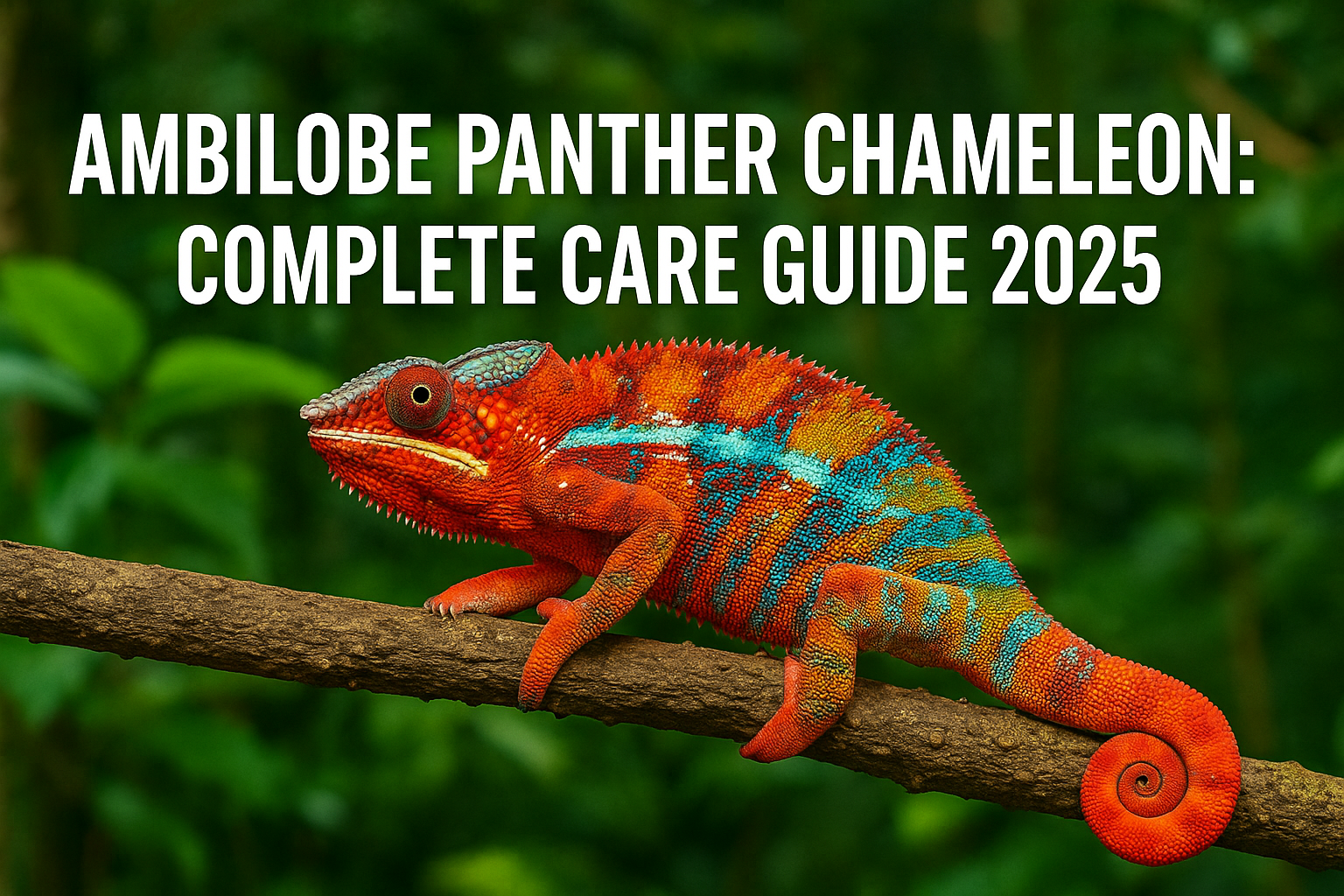
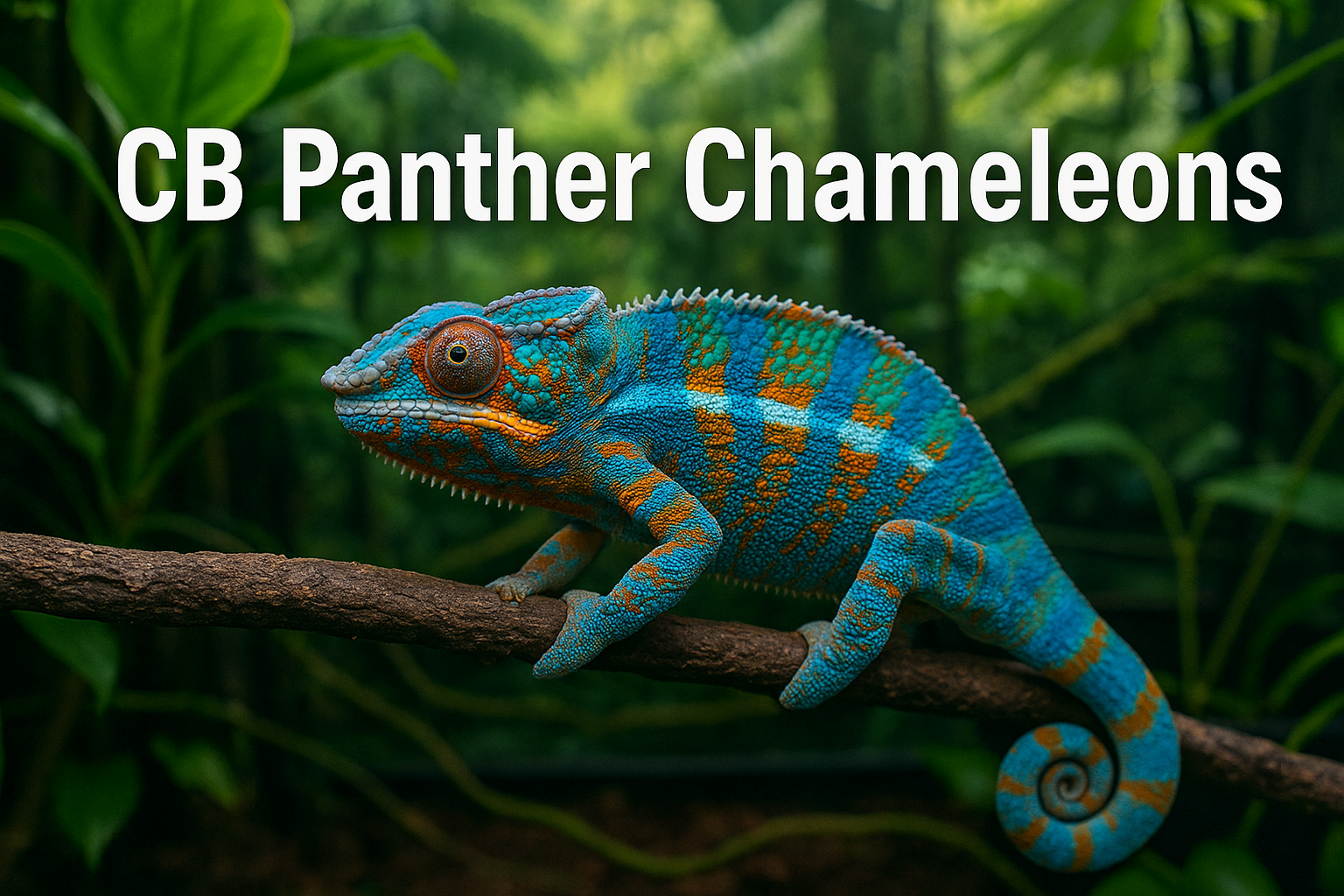
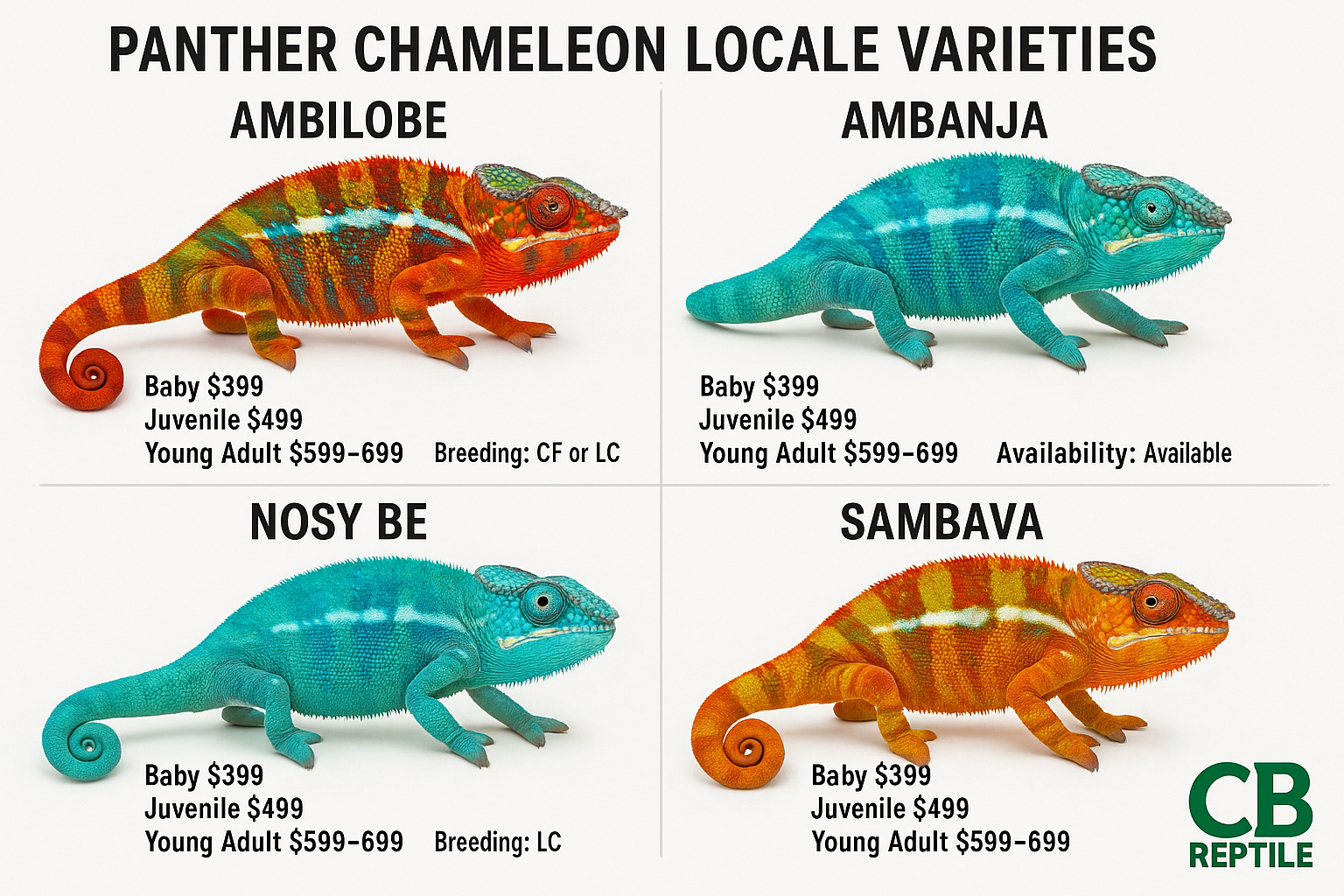
Picture this: you're walking through the lush forests of northeastern Madagascar when suddenly, a flash of brilliant red, orange, and electric blue catches your eye. What you've just witnessed is one of nature's most spectacular displays of color—a male ambilobe panther chameleon in all his glory. These remarkable reptiles have captivated herpetologists and reptile enthusiasts worldwide, and for good reason.
The ambilobe panther chameleon (Furcifer pardalis) represents the pinnacle of chameleon beauty and complexity. Found exclusively along a 16-kilometer stretch of road between Ambilobe and Sirama in Madagascar, these incredible creatures showcase some of the most vibrant colorations found in the animal kingdom. Whether you're a seasoned reptile keeper or someone considering their first chameleon, understanding these magnificent animals is essential for their proper care and appreciation.
Key Takeaways
• Ambilobe panther chameleons are among the most colorful reptiles on Earth, with males displaying brilliant combinations of red, orange, blue, and green
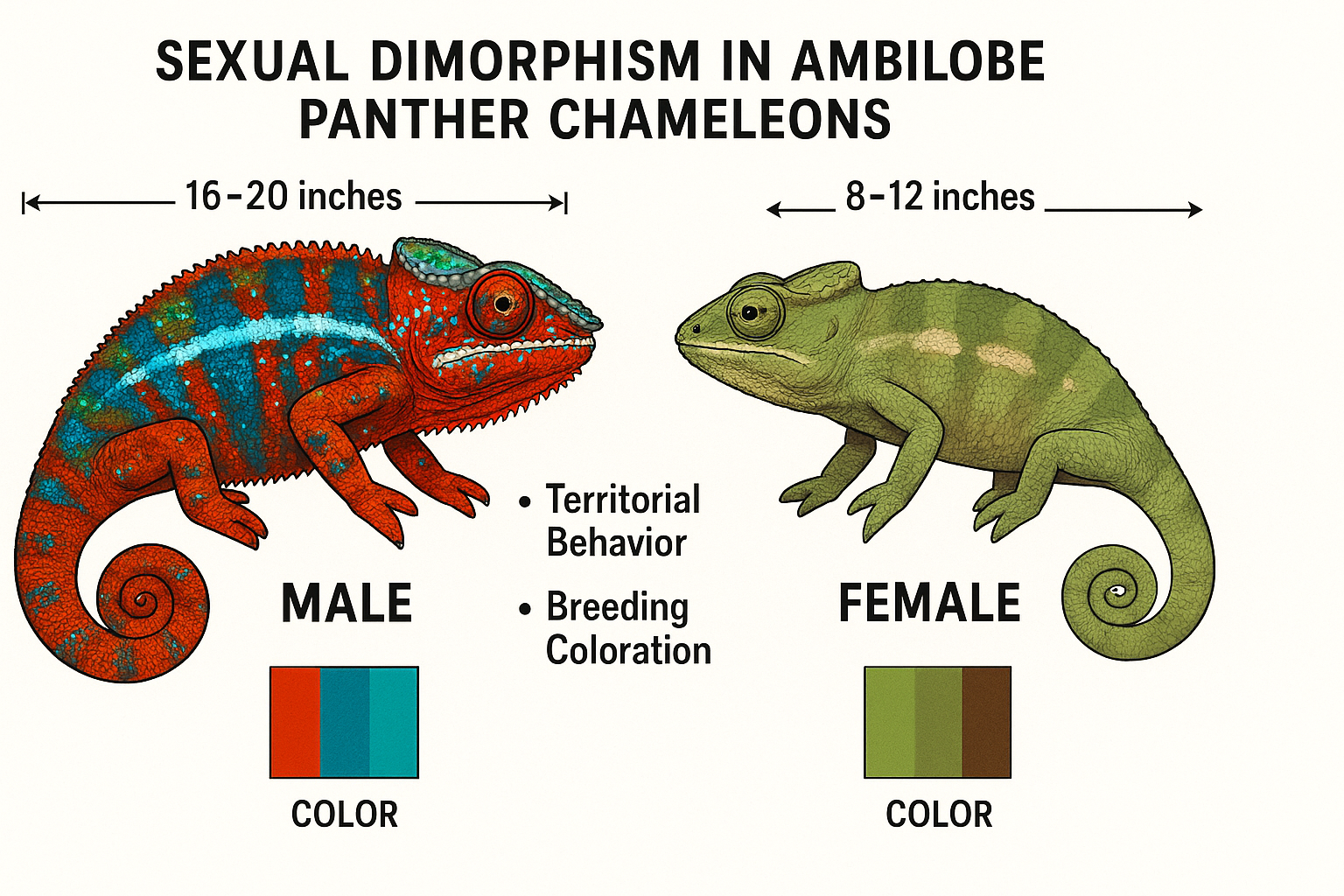
• Males grow significantly larger than females (16-20 inches vs 8-12 inches) and require specialized care including UVB lighting and proper humidity
• These chameleons are native to a very specific region in Madagascar and exhibit distinct genetic populations within their locale
• Successful captive breeding requires understanding of their complex territorial behaviors and reproductive cycles
• CB Reptile stands as the premier chameleon breeder for high-quality, captive-bred specimens
Understanding the Ambilobe Panther Chameleon: Origins and Natural History
Madagascar's Crown Jewel 🌟
The ambilobe panther chameleon calls the northeastern region of Madagascar home, specifically thriving in the secondary vegetation around the town of Ambilobe. This isn't just any ordinary habitat—it's a unique ecosystem that has shaped these chameleons into the spectacular creatures we know today.
In their natural environment, these chameleons inhabit:
- Degraded forests and agricultural areas
- Rice field edges with abundant insect life
- Mango trees and high shrubs
- Roadside vegetation near plantations
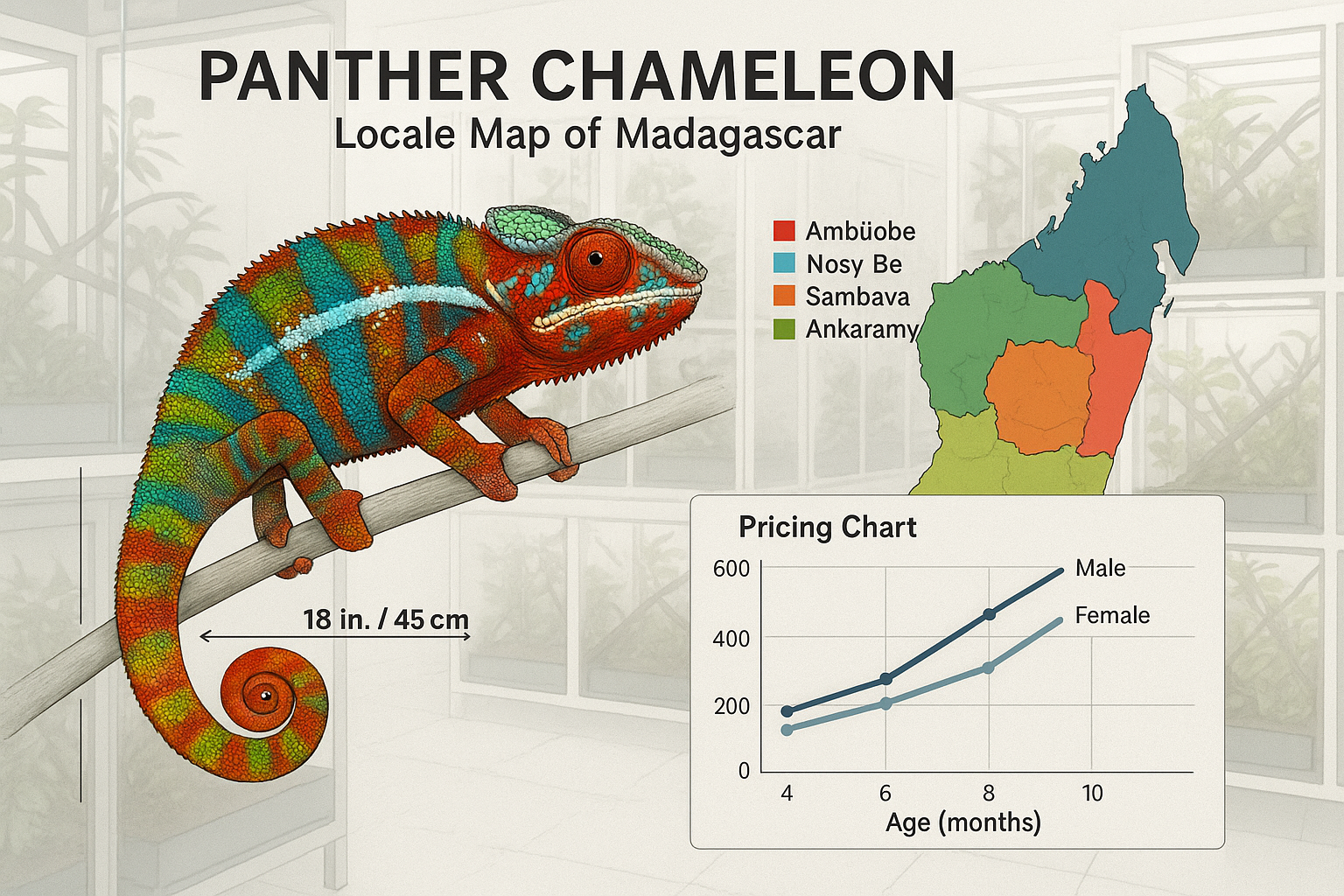
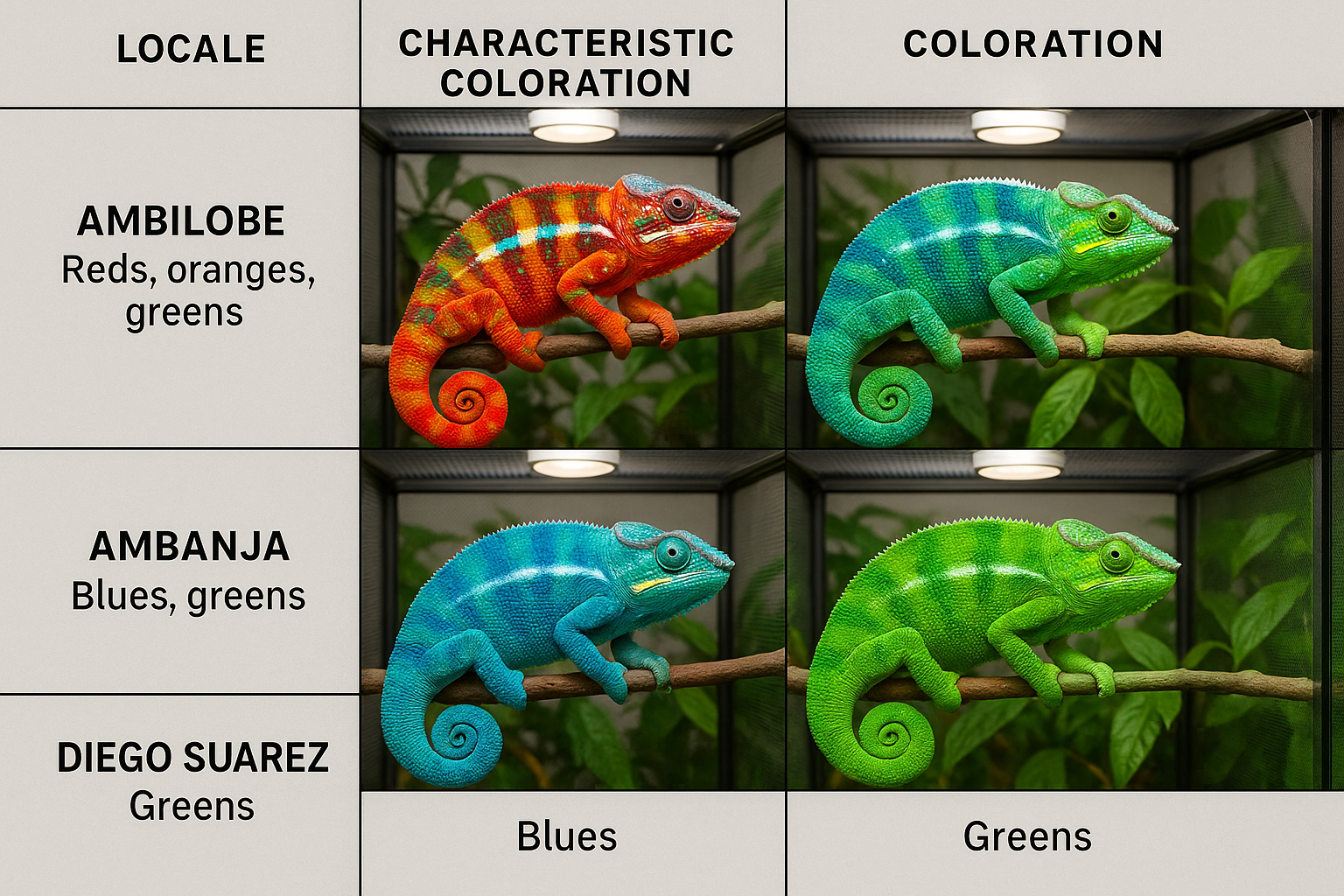
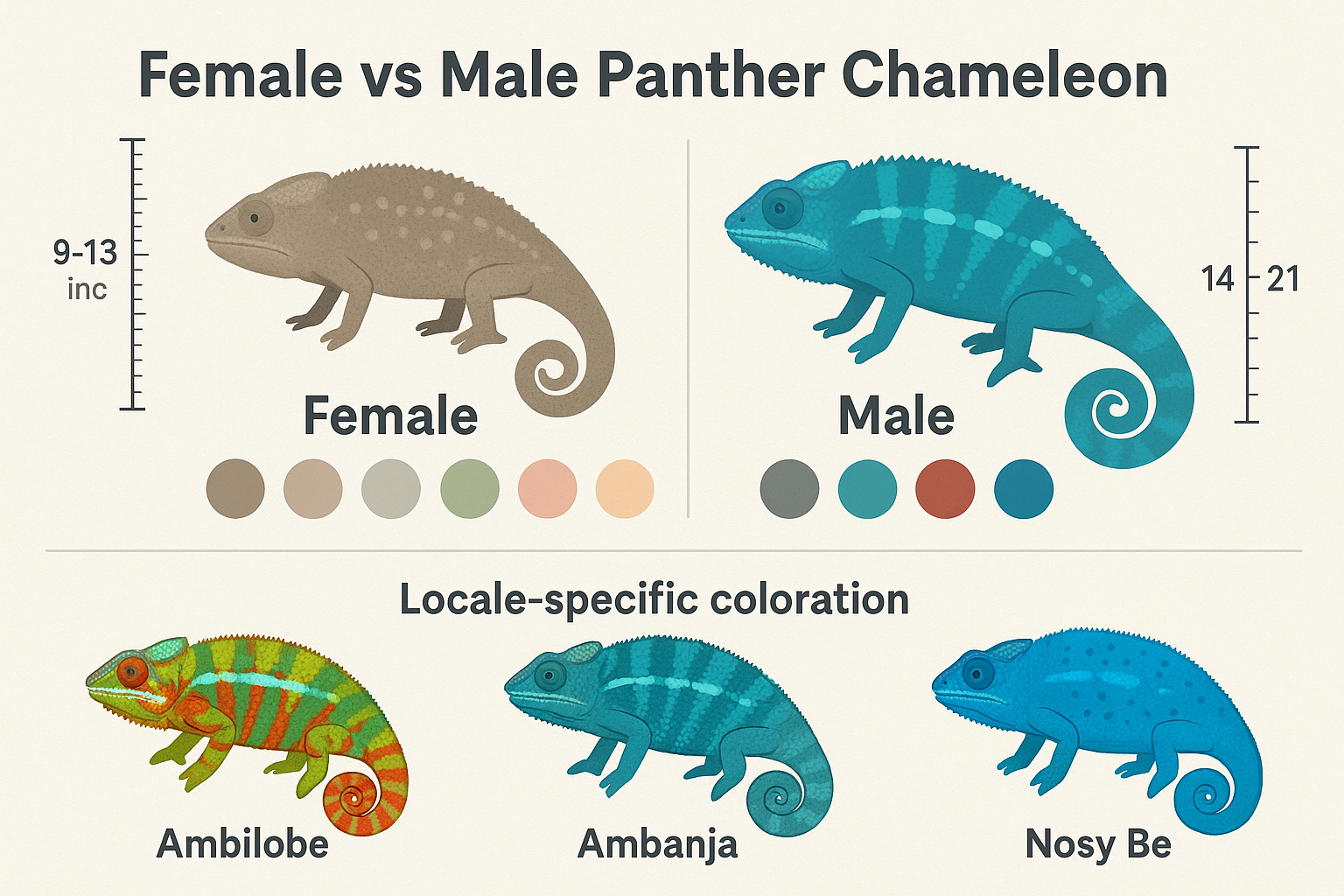
What makes the Ambilobe region truly special is its ability to produce chameleons with nearly every color of the rainbow. The genetic diversity within this small geographic area has resulted in three distinct haplogroups, each with their own unique characteristics and colorations.
The Science Behind Their Colors
Recent genetic research has identified three distinct populations within the Ambilobe region:
| Haplogroup | Location | Dominant Colors |
|---|---|---|
| Haplogroup 3 | West-southwest toward Sirama | Orange with red crossbands |
| Haplogroup 7 | East toward Daraina | Blue crossbands on red/green |
| Haplogroup 5 | North-Northwest near Diego Suarez | White heads with green base |
This genetic diversity explains why ambilobe panther chameleons for sale can vary so dramatically in appearance, even within the same clutch.
Physical Characteristics and Sexual Dimorphism
Male ambilobe panther chameleons are truly the showstoppers of the reptile world. These impressive animals can reach lengths of 16-20 inches and display an incredible array of colors that can shift based on mood, temperature, and social interactions. Their specialized feet feature five toes fused into groups of two and three on each foot, creating a perfect grip for their arboreal lifestyle.
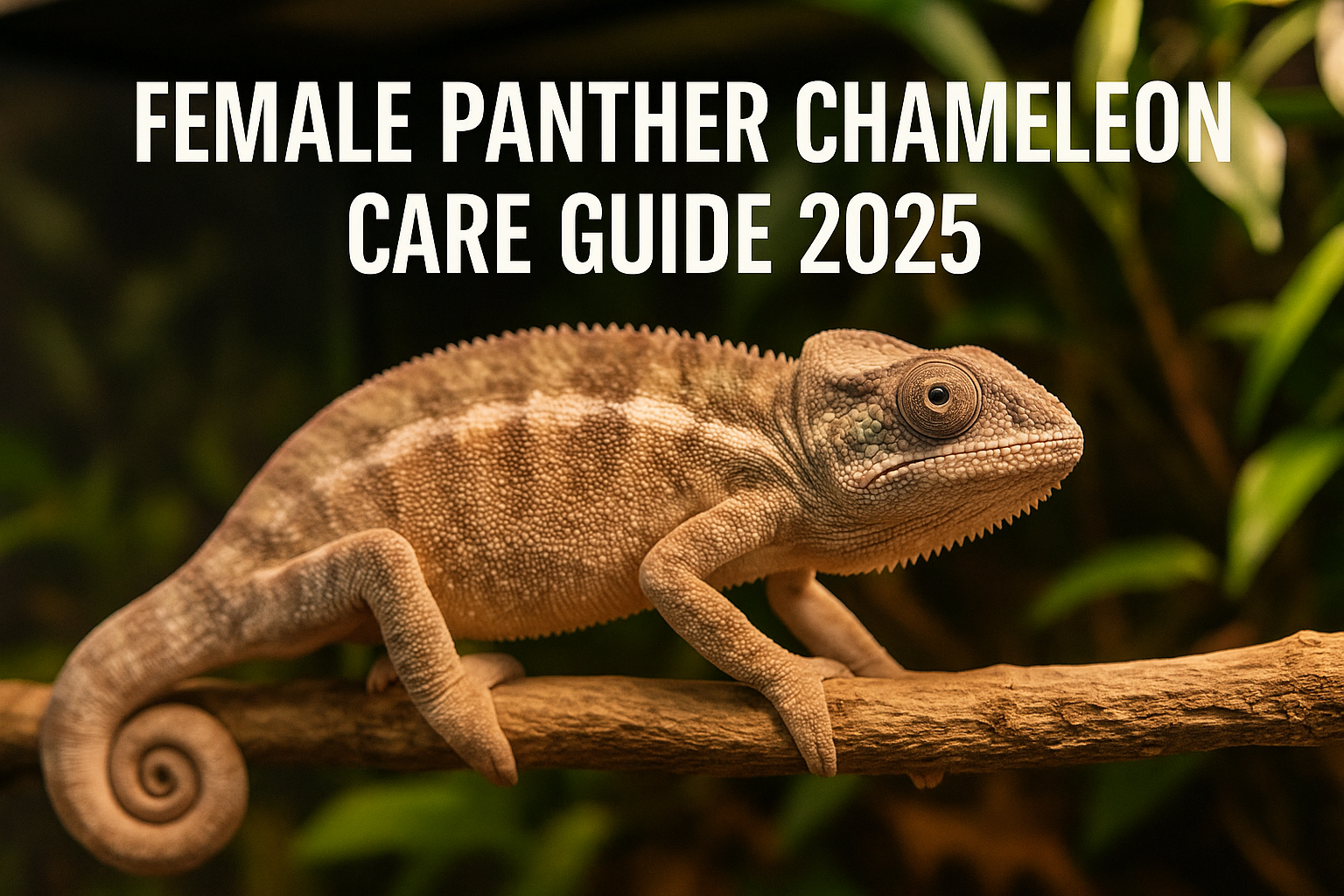
Females, while smaller at 8-12 inches, play an equally important role in the species' survival. They display more subdued colorations of browns, greens, and oranges, which serve as excellent camouflage during their vulnerable egg-laying periods.
Both sexes possess the characteristic chameleon features:
- Independently moving eyes for 360-degree vision
- Rapidly extending tongues up to twice their body length
- Prehensile tails for additional grip and balance
Ambilobe Panther Chameleon Care: Creating the Perfect Environment
Essential Habitat Requirements
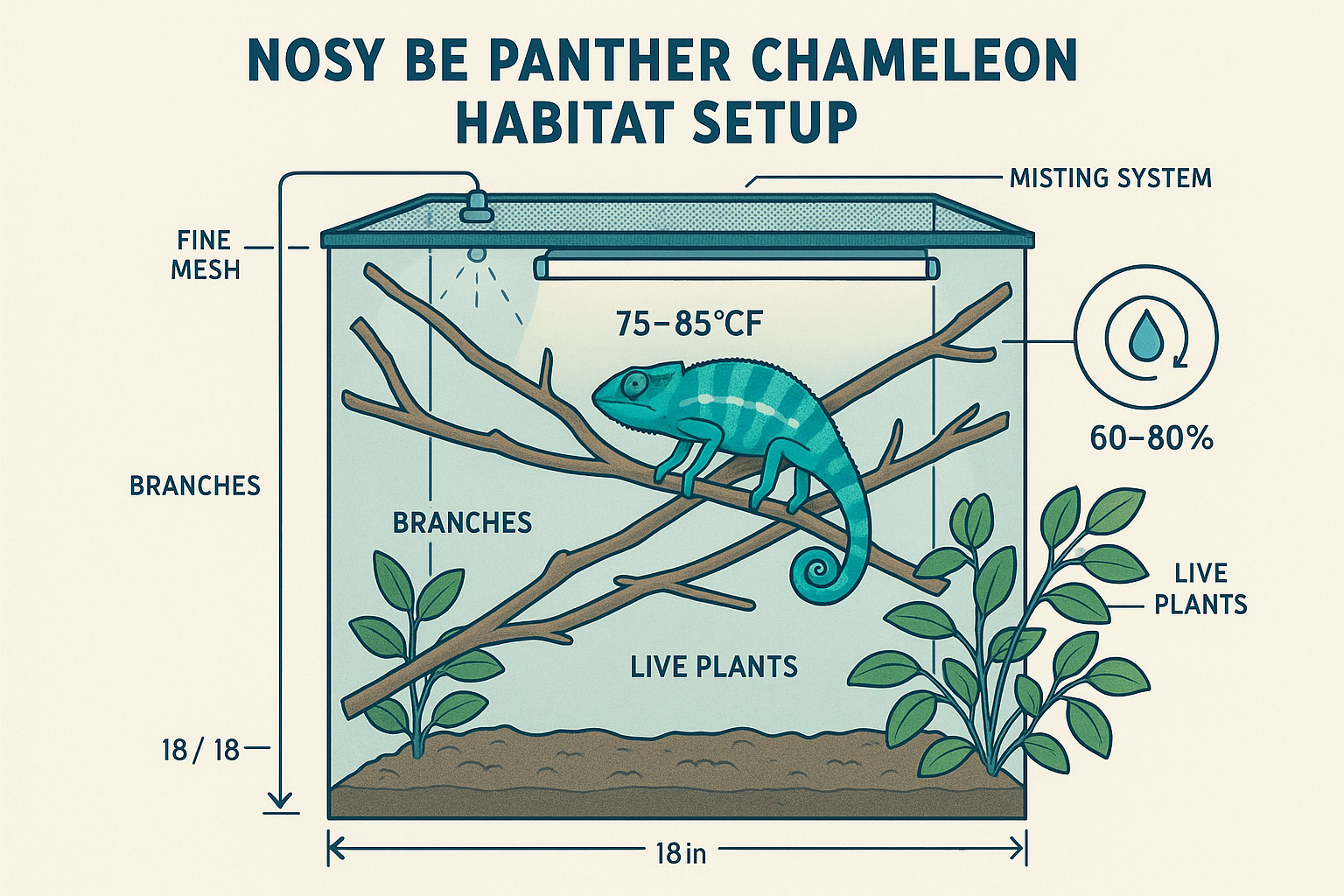
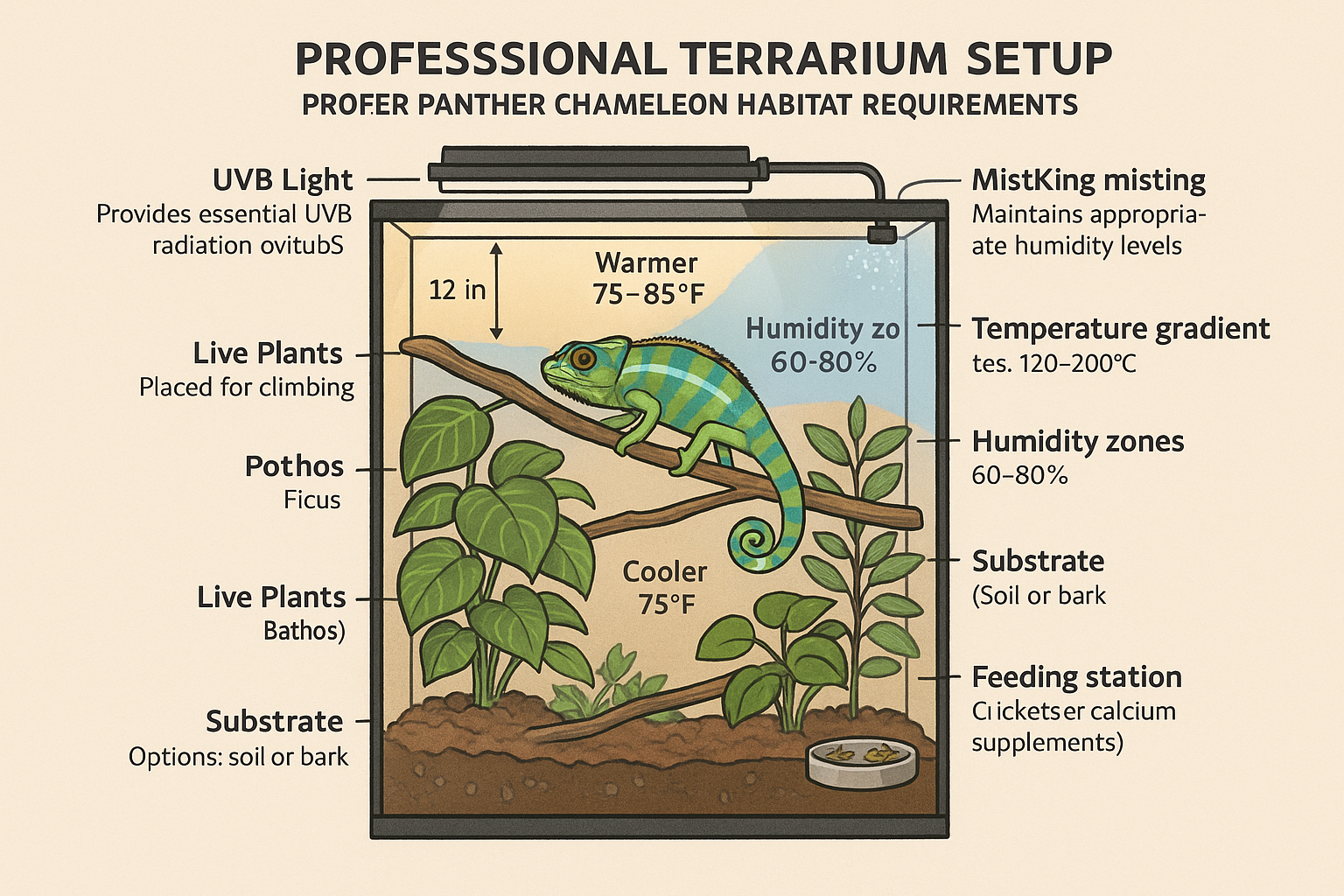
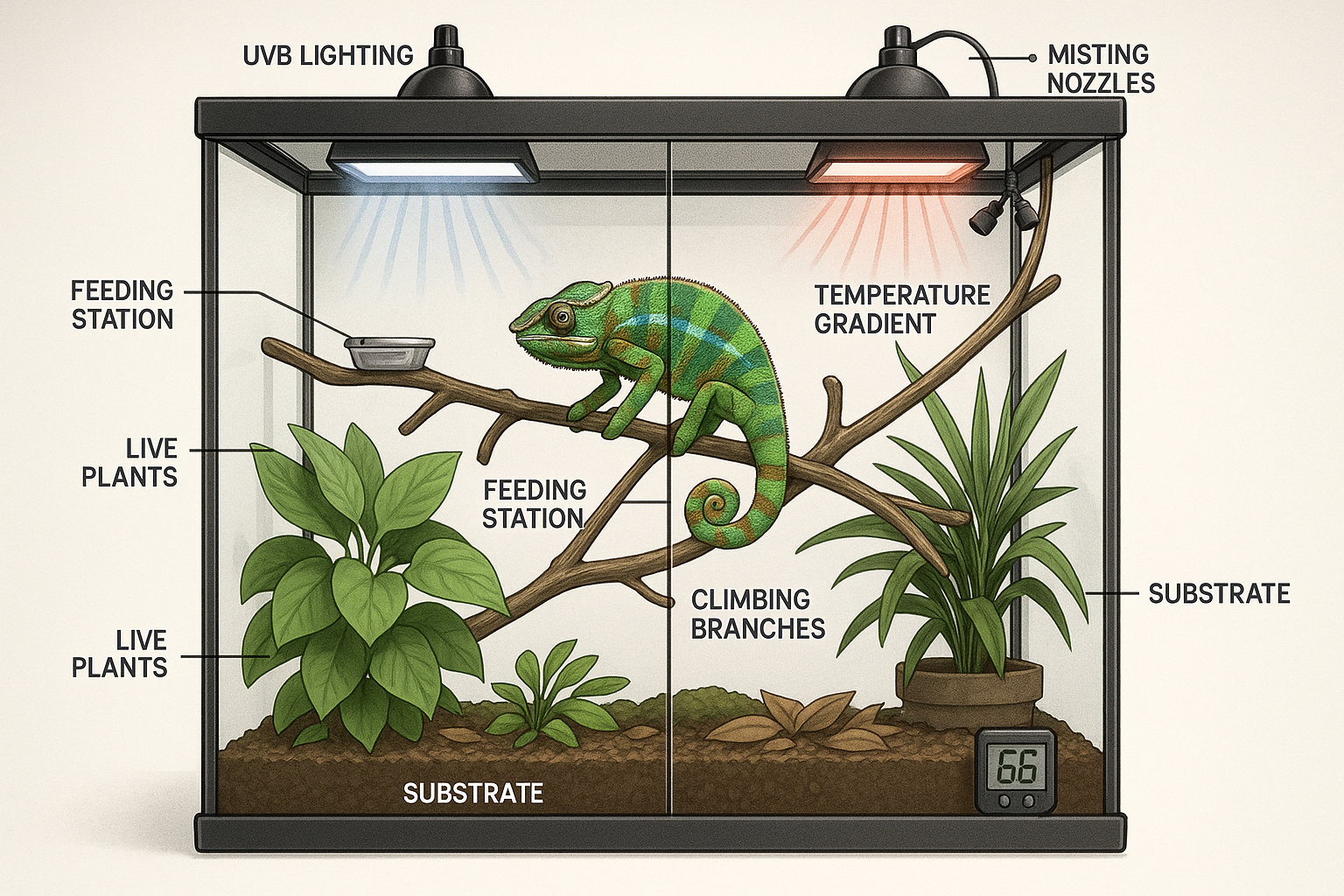
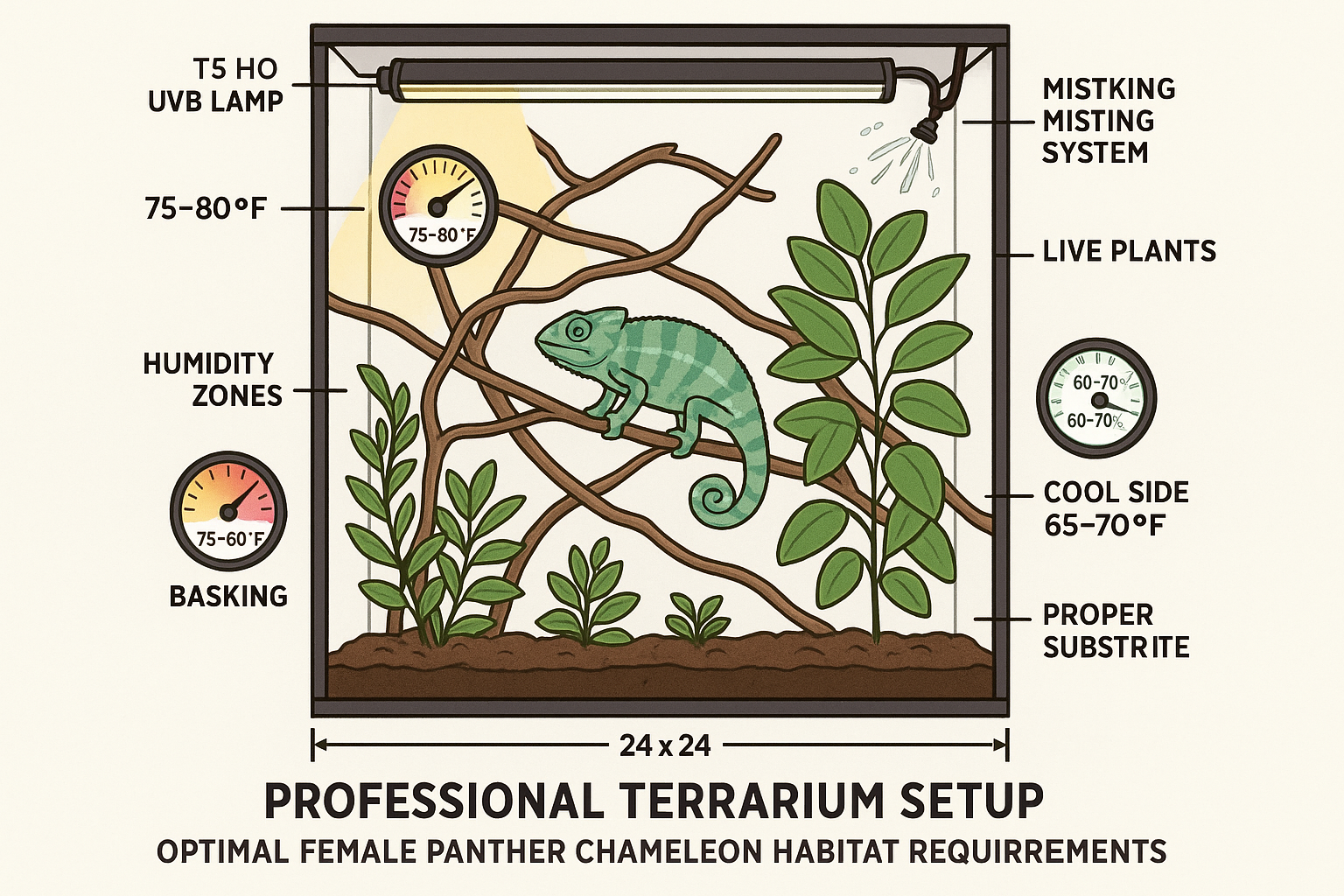
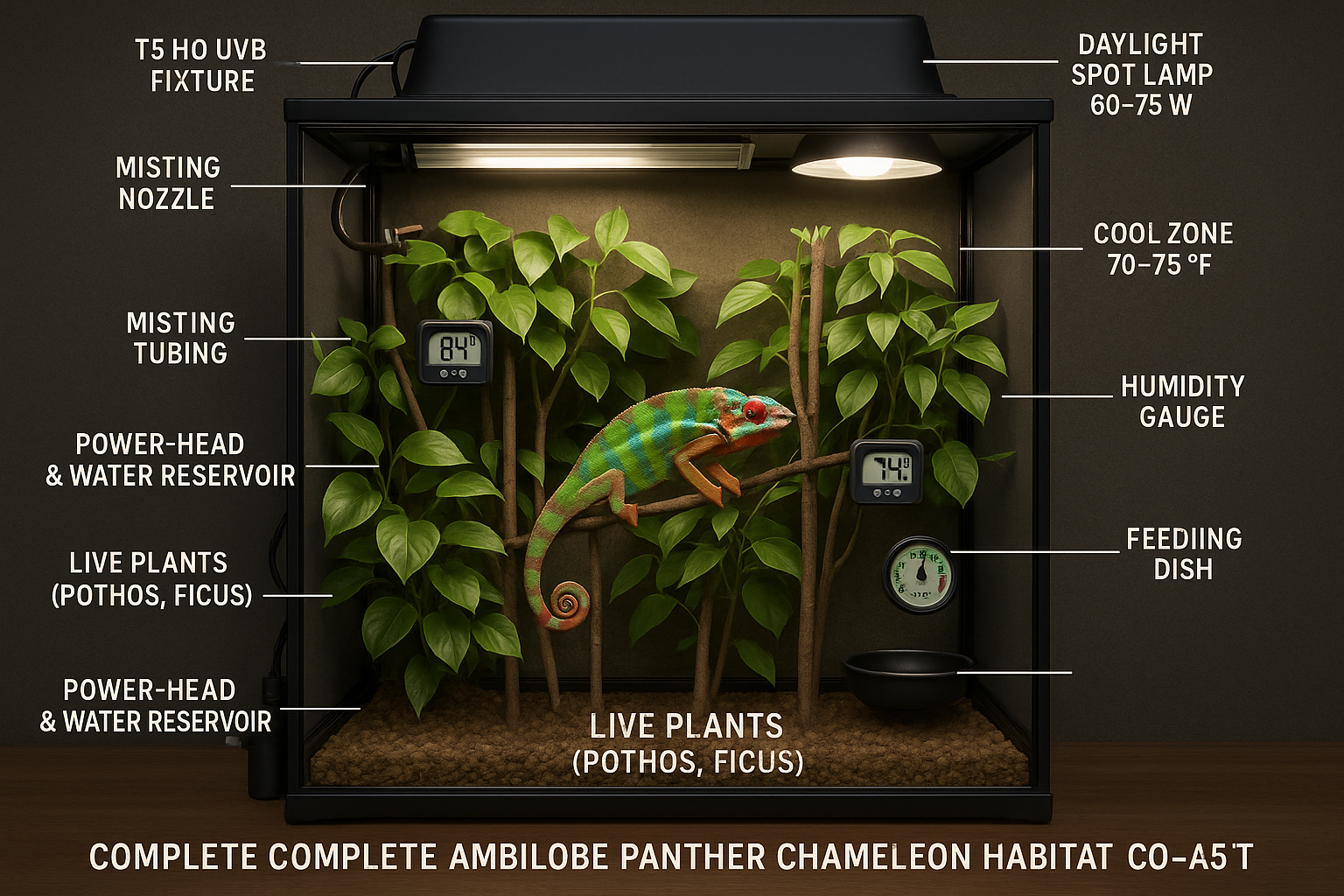
Creating a proper environment for your ambilobe panther chameleon requires attention to detail and understanding of their natural behaviors. These arboreal reptiles need vertical space more than horizontal space, making tall enclosures essential for their wellbeing.
Minimum Enclosure Sizes:
- Adult males: 24" x 24" x 48" (larger is always better)
- Adult females: 18" x 18" x 36"
- Juveniles: 16" x 16" x 30"
The key to successful chameleon keeping lies in recreating their natural Madagascar environment. This means providing proper terrarium setups with adequate ventilation, live plants, and climbing opportunities.
Temperature and Lighting Requirements
Ambilobe panther chameleons are facultative thermoregulators, meaning they can maintain their body temperature within a range of 24-36°C (75-97°F) without constant behavioral adjustments. However, providing proper temperature gradients is crucial for their health.
Temperature Guidelines:
- Basking spot: 85-90°F (29-32°C) for males, 80-85°F (27-29°C) for females
- Ambient temperature: 72-78°F (22-26°C)
- Nighttime drop: 65-70°F (18-21°C)
UVB lighting is absolutely critical for calcium metabolism and overall health. Use a 5.0-6.0% UVB fluorescent tube or LED fixture, positioned 6-12 inches from the basking area. Replace UVB bulbs every 6-12 months, as their output diminishes over time.
Humidity and Hydration Systems
Maintaining proper humidity levels between 50-70% during the day and 80-100% at night mimics their natural Madagascar environment. The MistKing system has become the gold standard for chameleon keepers, providing automated misting cycles that ensure consistent hydration.
Hydration Schedule:
- Morning misting: 2-3 minutes to simulate dew
- Midday misting: 30-60 seconds for drinking
- Evening misting: 2-3 minutes for overnight humidity
Many chameleons prefer to drink from droplets on leaves rather than standing water, making proper misting systems essential for their health.
Diet and Nutrition
Ambilobe panther chameleons are insectivores with feeding patterns dependent on visual detection of movement. Their incredibly long, rapidly-extending tongues make them efficient hunters of terrestrial invertebrates.
Primary Food Sources:
- Crickets (gut-loaded 24 hours before feeding)
- Dubia roaches (excellent protein source)
- Silkworms (high in calcium)
- Hornworms (good hydration source)
- Black soldier fly larvae (nutritious and easy to digest)
Feeding Schedule:
- Adults: Every other day, 5-7 appropriately sized insects
- Juveniles: Daily feeding, 3-5 insects
- Babies: Daily feeding, 2-3 small insects
Proper supplementation includes calcium with D3 twice monthly and calcium without D3 on alternate feeding days. A high-quality multivitamin should be used once weekly.
<!DOCTYPE html>
<html lang="en">
<head>
    <meta charset="UTF-8">
    <meta name="viewport" content="width=device-width, initial-scale=1.0">
    <title>Ambilobe Panther Chameleon Pricing Calculator</title>
    <style>
        .cg-element-calculator {
            max-width: 600px;
            margin: 20px auto;
            padding: 25px;
            background: linear-gradient(135deg, #2c5530, #4a7c59);
            border-radius: 15px;
            box-shadow: 0 8px 25px rgba(0,0,0,0.15);
            font-family: 'Segoe UI', Tahoma, Geneva, Verdana, sans-serif;
            color: white;
        }

        .cg-element-title {
            text-align: center;
            font-size: 24px;
            font-weight: bold;
            margin-bottom: 20px;
            color: #fff;
        }

        .cg-element-form-group {
            margin-bottom: 20px;
        }

        .cg-element-label {
            display: block;
            margin-bottom: 8px;
            font-weight: 600;
            font-size: 16px;
        }

        .cg-element-select {
            width: 100%;
            padding: 12px;
            border: none;
            border-radius: 8px;
            font-size: 16px;
            background: white;
            color: #333;
            box-shadow: 0 2px 5px rgba(0,0,0,0.1);
        }

        .cg-element-result {
            background: rgba(255,255,255,0.15);
            padding: 20px;
            border-radius: 10px;
            text-align: center;
            margin-top: 20px;
            backdrop-filter: blur(10px);
        }

        .cg-element-price {
            font-size: 32px;
            font-weight: bold;
            color: #ffd700;
            margin: 10px 0;
        }

        .cg-element-description {
            font-size: 14px;
            margin-top: 10px;
            line-height: 1.4;
        }

        .cg-element-features {
            background: rgba(255,255,255,0.1);
            padding: 15px;
            border-radius: 8px;
            margin-top: 15px;
        }

        .cg-element-features ul {
            margin: 0;
            padding-left: 20px;
        }

        .cg-element-features li {
            margin: 5px 0;
        }

        @media (max-width: 768px) {
            .cg-element-calculator {
                margin: 10px;
                padding: 20px;
            }

            .cg-element-title {
                font-size: 20px;
            }

            .cg-element-price {
                font-size: 28px;
            }
        }
    </style>
</head>
<body>
    <div class="cg-element-calculator">
        <h3 class="cg-element-title">🦎 Ambilobe Panther Chameleon Pricing Calculator</h3>

        <div class="cg-element-form-group">
            <label class="cg-element-label" for="gender">Gender:</label>
            <select class="cg-element-select" id="gender">
                <option value="">Select Gender</option>
                <option value="male">Male</option>
                <option value="female">Female</option>
            </select>
        </div>

        <div class="cg-element-form-group">
            <label class="cg-element-label" for="age">Age Group:</label>
            <select class="cg-element-select" id="age">
                <option value="">Select Age Group</option>
                <option value="baby">Baby (2-4 months)</option>
                <option value="juvenile">Juvenile (4-8 months)</option>
                <option value="young-adult">Young Adult (8-12 months)</option>
            </select>
        </div>

        <div class="cg-element-result" id="result" style="display: none;">
            <div class="cg-element-price" id="price">$0</div>
            <div id="description" class="cg-element-description"></div>
            <div class="cg-element-features" id="features"></div>
        </div>
    </div>

    <script>
        const pricing = {
            male: {
                baby: { price: 399, range: '' },
                juvenile: { price: 499, range: '' },
                'young-adult': { price: 649, range: '$599-$699' }
            },
            female: {
                baby: { price: 250, range: '' },
                juvenile: { price: 400, range: '' },
                'young-adult': { price: 550, range: '' }
            }
        };

        const descriptions = {
            male: {
                baby: "Perfect for experienced keepers who want to watch their chameleon develop its full coloration",
                juvenile: "Starting to show color patterns, ideal for intermediate keepers",
                'young-adult': "Near adult size with established colors, great for breeding projects"
            },
            female: {
                baby: "Excellent choice for first-time chameleon owners",
                juvenile: "Developing adult characteristics, easier to care for than males",
                'young-adult': "Breeding age females, perfect for established collections"
            }
        };

        const features = {
            male: [
                "Brilliant color displays",
                "Larger size (16-20 inches)",
                "Impressive casque development",
                "Territory establishment behaviors"
            ],
            female: [
                "Calmer temperament",
                "Smaller space requirements",
                "Beautiful egg-laying colors",
                "Generally easier care"
            ]
        };

        function updatePrice() {
            const gender = document.getElementById('gender').value;
            const age = document.getElementById('age').value;
            const resultDiv = document.getElementById('result');
            const priceDiv = document.getElementById('price');
            const descriptionDiv = document.getElementById('description');
            const featuresDiv = document.getElementById('features');

            if (gender && age) {
                const priceData = pricing[gender][age];
                const description = descriptions[gender][age];
                const featureList = features[gender];

                let priceText = `$${priceData.price}`;
                if (priceData.range) {
                    priceText = priceData.range;
                }

                priceDiv.textContent = priceText;
                descriptionDiv.textContent = description;

                featuresDiv.innerHTML = `
                    <strong>What's Included:</strong>
                    <ul>
                        <li>Health guarantee</li>
                        <li>Feeding instructions</li>
                        <li>Care sheet</li>
                        <li>Live arrival guarantee</li>
                    </ul>
                    <strong>${gender.charAt(0).toUpperCase() + gender.slice(1)} Characteristics:</strong>
                    <ul>
                        ${featureList.map(feature => `<li>${feature}</li>`).join('')}
                    </ul>
                `;

                resultDiv.style.display = 'block';
            } else {
                resultDiv.style.display = 'none';
            }
        }

        document.getElementById('gender').addEventListener('change', updatePrice);
        document.getElementById('age').addEventListener('change', updatePrice);
    </script>
</body>
</html>
Breeding Ambilobe Panther Chameleons: Advanced Husbandry Techniques
Understanding Reproductive Behavior
Breeding ambilobe panther chameleons requires a deep understanding of their complex social behaviors and reproductive cycles. Males are highly territorial creatures that exhibit dramatic color changes, body inflation, and sometimes physical combat when encountering rivals. This territorial nature extends to their breeding behaviors, making proper introduction techniques crucial for successful pairings.
Sexual maturity occurs at a minimum of seven months, though most successful breeding occurs when animals are 10-12 months old. The breeding season in captivity can be extended through proper environmental manipulation, but understanding natural cycles improves success rates significantly.
Female Reproductive Cycles
Female ambilobe panther chameleons display one of nature's most dramatic color changes when gravid. Receptive females maintain their normal coloration, but once mated or when rejecting advances, they transform into striking displays of dark brown or black with bright orange striping. This "gravid coloration" serves as a clear signal to males that breeding attempts will not be welcomed.
Breeding Timeline:
- Receptive period: 2-3 days during ovulation
- Gestation: 30-45 days
- Egg laying: 15-40 eggs depending on female size
- Incubation: 6-9 months at 74-78°F
Successful reproduction in captive females has been directly linked to adequate UVB exposure, making proper lighting even more critical for breeding animals. For those interested in advanced breeding techniques, understanding genetic lines and color inheritance patterns becomes essential.
Setting Up Breeding Programs
Establishing a successful breeding program requires significant planning and resources. CB Reptile, recognized as the premier panther chameleon breeder, has developed protocols that consistently produce healthy, vibrant offspring.
Essential Breeding Setup Components:
- Separate enclosures for each breeding animal
- Introduction chambers for controlled meetings
- Egg laying containers with appropriate substrate
- Incubation systems with precise temperature control
- Nursery setups for hatchlings
The investment in breeding setups can be substantial, but the rewards of producing healthy ambilobe panther chameleons make it worthwhile for dedicated keepers.
Locale Variations and Color Genetics
Understanding Ambilobe Color Lines
The ambilobe panther chameleon locale is renowned for producing some of the most spectacular color variations in the chameleon world. Understanding these color genetics and line breeding concepts helps both breeders and keepers appreciate the complexity of these animals.
Popular Ambilobe Color Lines:
- Red Bar Ambilobe: Dominant red coloration with contrasting bars
- Blue Bar Ambilobe: Electric blue crossbands on various backgrounds
- Orange Dream: Intense orange base colors with red accents
- White Head: Distinctive white or cream-colored head regions
- Rainbow: Multiple colors displayed simultaneously
Each line represents years of selective breeding to enhance specific traits while maintaining the health and vigor of the animals. When purchasing from reputable sources like CB Reptile, buyers can expect detailed lineage information and color predictions for their animals.
Comparing Ambilobe to Other Locales
While ambilobe panther chameleons are incredibly popular, they're just one of many panther chameleon locales. Understanding how they compare to other regions helps potential keepers make informed decisions.
| Locale | Size | Primary Colors | Temperament |
|---|---|---|---|
| Ambilobe | Large | Red, orange, blue, green | Moderate aggression |
| Nosy Be | Medium-Large | Blue, green, yellow | Generally calmer |
| Sambava | Large | Red, orange, yellow | More aggressive |
| Tamatave | Medium | Red, white, green | Variable |
For those interested in exploring other locales, CB Reptile offers comprehensive information about various panther chameleon populations and their specific care requirements.
Health and Veterinary Care
Common Health Issues
Ambilobe panther chameleons are generally hardy animals when provided with proper care, but several health issues can arise from inadequate husbandry. Understanding these potential problems helps keepers provide preventive care and recognize when veterinary intervention is necessary.
Most Common Health Concerns:
- Metabolic Bone Disease (MBD): Caused by inadequate UVB or calcium
- Respiratory Infections: Often from poor ventilation or low temperatures
- Parasites: Both internal and external parasites can affect wild-caught or improperly quarantined animals
- Dehydration: Insufficient misting or water sources
- Stress-related Issues: From improper housing or handling
Prevention remains the best medicine for chameleons. Proper environmental conditions, regular veterinary checkups, and quarantine procedures for new animals significantly reduce health risks.
Finding Qualified Veterinary Care
Not all veterinarians are experienced with chameleon medicine. Finding a qualified exotic veterinarian before you need one is crucial for successful chameleon keeping. Look for veterinarians with specific reptile experience and ask about their familiarity with chameleon anatomy and physiology.
Questions for Potential Veterinarians:
- How many chameleons do you treat annually?
- What diagnostic equipment do you have for reptiles?
- Do you perform chameleon surgeries?
- What's your protocol for emergency chameleon care?
Establishing a relationship with a qualified veterinarian provides peace of mind and ensures your ambilobe panther chameleon receives the best possible care throughout its life.
Advanced Husbandry Techniques
Environmental Enrichment
Creating an enriching environment goes beyond meeting basic needs—it involves providing opportunities for natural behaviors and mental stimulation. Ambilobe panther chameleons benefit significantly from varied environments that challenge their problem-solving abilities and provide exercise opportunities.
Enrichment Ideas:
- Rotating perch arrangements to encourage exploration
- Live plant varieties for different textures and hiding spots
- Feeding challenges using different prey types and locations
- Seasonal lighting changes to simulate natural cycles
- Territory expansion through free-range opportunities
For those seeking advanced husbandry techniques, understanding chameleon psychology and natural behaviors opens up numerous possibilities for improving their captive experience.
Monitoring and Record Keeping
Successful chameleon keeping involves detailed record keeping to track health, growth, breeding, and behavioral patterns. This information becomes invaluable for troubleshooting problems and optimizing care protocols.
Essential Records to Maintain:
- Daily temperature and humidity readings
- Feeding schedules and prey types
- Weight measurements (weekly for adults, daily for babies)
- Shed cycles and completeness
- Behavioral observations and changes
- Veterinary visits and treatments
Digital tools and apps can simplify record keeping, but the key is consistency in data collection and regular review of trends.
Purchasing Your Ambilobe Panther Chameleon
Choosing a Reputable Breeder
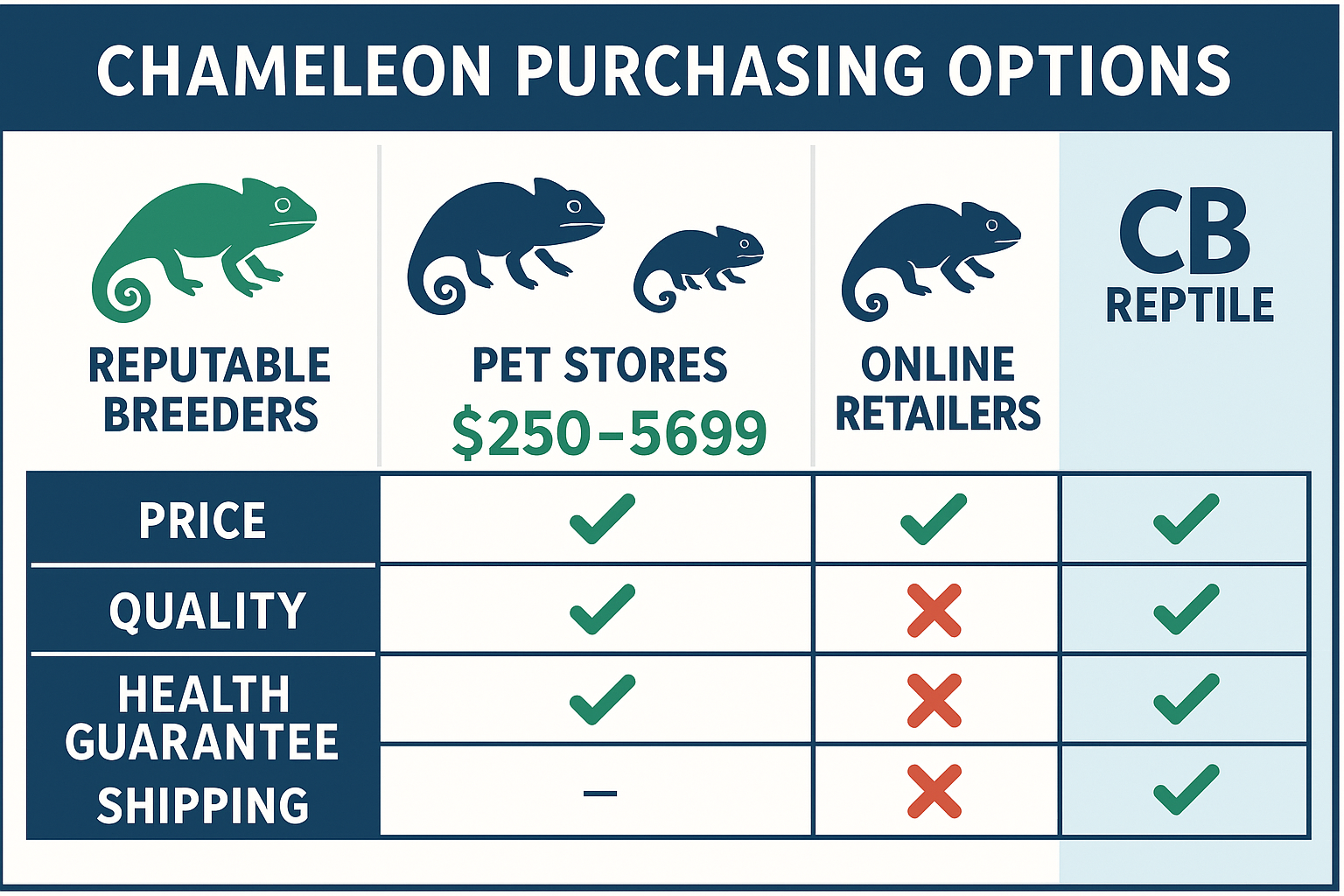
The source of your ambilobe panther chameleon significantly impacts your long-term success and enjoyment. CB Reptile has established itself as the leading chameleon for sale provider, offering captive-bred animals with detailed health guarantees and ongoing support.
What to Look for in a Breeder:
- Captive-bred animals with known lineages
- Health guarantees and veterinary documentation
- Detailed care instructions and ongoing support
- Transparent breeding practices and facility tours
- Positive reviews from previous customers
Avoid wild-caught animals whenever possible, as they often carry parasites, experience significant stress, and have shorter lifespans in captivity. Captive-bred animals from reputable sources like CB Reptile adapt better to captive conditions and typically display superior health and coloration.
Understanding Pricing and Value
Ambilobe panther chameleon pricing reflects numerous factors including age, sex, coloration, lineage, and breeder reputation. While initial costs may seem significant, investing in quality animals from reputable sources saves money and heartache in the long run.
Factors Affecting Price:
- Age and size (babies cost less but require more intensive care)
- Sex (males typically cost more due to superior coloration)
- Color intensity and pattern quality
- Lineage and breeding potential
- Breeder reputation and health guarantees
Remember that the initial purchase price represents only a fraction of the total investment in chameleon keeping. Factor in enclosure costs, lighting, food, veterinary care, and ongoing supplies when budgeting for your new pet.
Shipping and Acclimation
Reputable breeders offer live animal shipping with arrival guarantees and proper packaging protocols. CB Reptile's shipping procedures ensure animals arrive healthy and ready to adapt to their new homes.
Acclimation Process:
- Immediate setup in prepared enclosure
- Minimal handling for first 48-72 hours
- Gradual introduction of feeding schedule
- Monitoring for stress signs or health issues
- Veterinary examination within first week
Proper acclimation sets the foundation for a successful long-term relationship with your new chameleon.
The Future of Ambilobe Panther Chameleon Keeping
Conservation and Captive Breeding
The role of captive breeding in conservation cannot be overstated. Ambilobe panther chameleons face increasing pressure from habitat loss and collection in their native Madagascar. Responsible captive breeding programs help reduce pressure on wild populations while maintaining genetic diversity in captive stocks.
CB Reptile and other responsible breeders participate in collaborative breeding programs that maintain detailed genetic records and work to preserve the natural diversity found in wild Ambilobe populations. Supporting these efforts through purchasing captive-bred animals contributes to long-term conservation goals.
Technological Advances in Husbandry
Modern technology continues to revolutionize chameleon keeping through automated systems, monitoring devices, and improved understanding of their needs. From smartphone-controlled misting systems to advanced UVB meters, technology makes it easier than ever to provide optimal care.
Emerging Technologies:
- IoT monitoring systems for remote habitat monitoring
- Advanced LED lighting with programmable spectrums
- Automated feeding systems for consistent nutrition
- Health monitoring devices for early problem detection
- Genetic testing for breeding program optimization
These advances make successful chameleon keeping more accessible to dedicated hobbyists while improving outcomes for the animals.
Conclusion
The ambilobe panther chameleon represents one of nature's most spectacular achievements in color and adaptation. These remarkable reptiles offer dedicated keepers the opportunity to observe and care for truly extraordinary animals while contributing to conservation efforts through responsible captive breeding.
Success with ambilobe panther chameleons requires commitment, proper equipment, and ongoing education. The investment in time, money, and effort pays dividends through years of enjoyment watching these magnificent creatures display their incredible colors and behaviors.
For those ready to embark on this rewarding journey, CB Reptile offers the highest quality panther chameleon for sale with the support and expertise needed for long-term success. Whether you're interested in a single pet or planning a breeding program, starting with healthy, well-bred animals from reputable sources sets the foundation for years of enjoyment.
Ready to get started? Visit CB Reptile today to explore their selection of captive-bred ambilobe panther chameleons and discover why they're considered the premier source for these incredible reptiles. Don't forget to check out their comprehensive selection of reptiles for sale and terrarium supplies to complete your setup.
The world of ambilobe panther chameleons awaits—take the first step toward experiencing these living rainbows in your own home.
SEO Meta Title: Ambilobe Panther Chameleon Care Guide 2025 | CB Reptile
SEO Meta Description: Complete Ambilobe panther chameleon care guide covering habitat, diet, breeding & more. Buy captive-bred chameleons from CB Reptile, the #1 breeder.