
Last updated: April 15, 2026
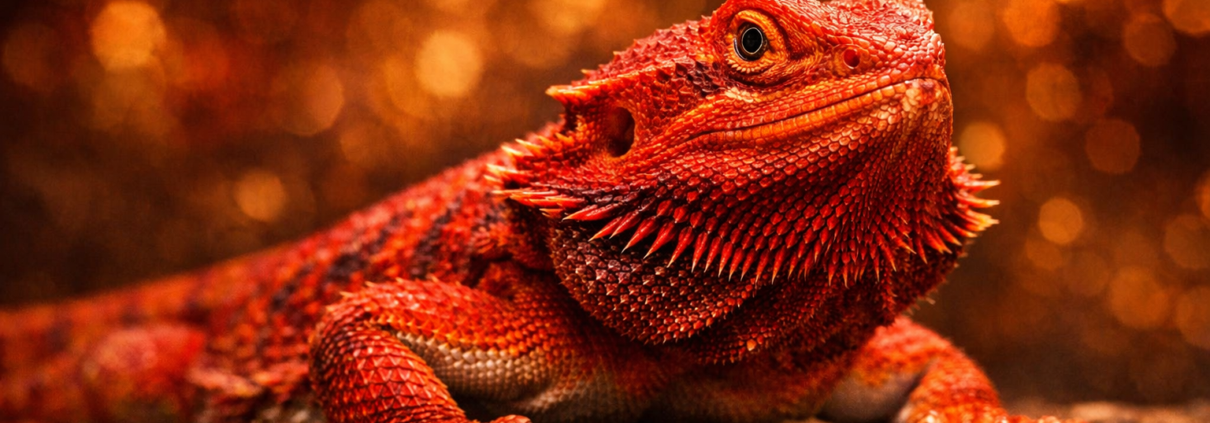
Quick Answer: A red bearded dragon is a selectively bred color morph of Pogona vitticeps that displays rich red, ruby, or deep orange pigmentation across its scales and body. These animals are produced through generations of careful breeding, not found in the wild. Expect to pay $150–$600+ for a quality red morph from a reputable breeder, depending on lineage, intensity, and age.
Key Takeaways
- 🦎 Red bearded dragons are a color morph, not a separate species — they're Pogona vitticeps selectively bred for red pigmentation.
- 💰 Quality red morphs from reputable breeders typically cost $150–$600+; ultra-red or "blood red" lines can exceed $800.
- 🧬 Color intensity varies — terms like "red," "ruby red," "blood red," and "super red" indicate increasing depth of pigmentation.
- 🏥 Buying from a captive breeder (not a pet store) dramatically reduces the risk of parasites, disease, and stress-related illness.
- 🌡️ Red bearded dragons need the same care as standard morphs: a 120-gallon enclosure, UVB lighting, basking temps of 100–110°F, and a varied diet.
- 📋 Always ask for feeding records, hatch dates, and parent lineage before purchasing any morph.
- 🔬 CB Reptile employs an on-site animal biologist, making them one of the most credible sources for captive-bred color morphs in the U.S.
- ⚠️ Wild-caught or pet store bearded dragons often carry parasites and may never display consistent color — avoid them for morph purchases.
What Is a Red Bearded Dragon, and How Is the Color Produced?
A red bearded dragon is a Pogona vitticeps selectively bred to express concentrated red pigmentation throughout its scales. The color comes from selective pairing of animals that naturally carry higher concentrations of red and orange pigment cells (chromatophores), not from any genetic mutation or artificial dye.
Over multiple generations, breeders identify the reddest individuals from each clutch and breed them together. The result is a line of animals with increasingly saturated red coloration. This process is similar to how dog breeders select for coat color — it's slow, deliberate, and requires deep knowledge of the animals' lineage.
Key terms you'll see when shopping:
| Term | What It Means |
|---|---|
| Red | Base red coloration, moderate intensity |
| Ruby Red | Deeper, more saturated red tones |
| Blood Red | Very intense, dark red with minimal orange |
| Super Red | The highest intensity red available from top breeding lines |
| Hypo Red | Red morph combined with the hypo trait, which reduces dark pigment and makes colors appear brighter |
| Citrus Red | Red combined with yellow tones; related to the citrus morph lineage |
Common mistake: Many buyers assume "red" is a fixed, standardized color. It isn't. Color intensity varies between breeders, bloodlines, and even individual animals. Always ask to see photos of the parents.
How Does a Red Bearded Dragon Compare to Other Color Morphs?
Red bearded dragons are among the most sought-after morphs, but they sit within a broader spectrum of color variations. Understanding where red fits helps you make a smarter buying decision.
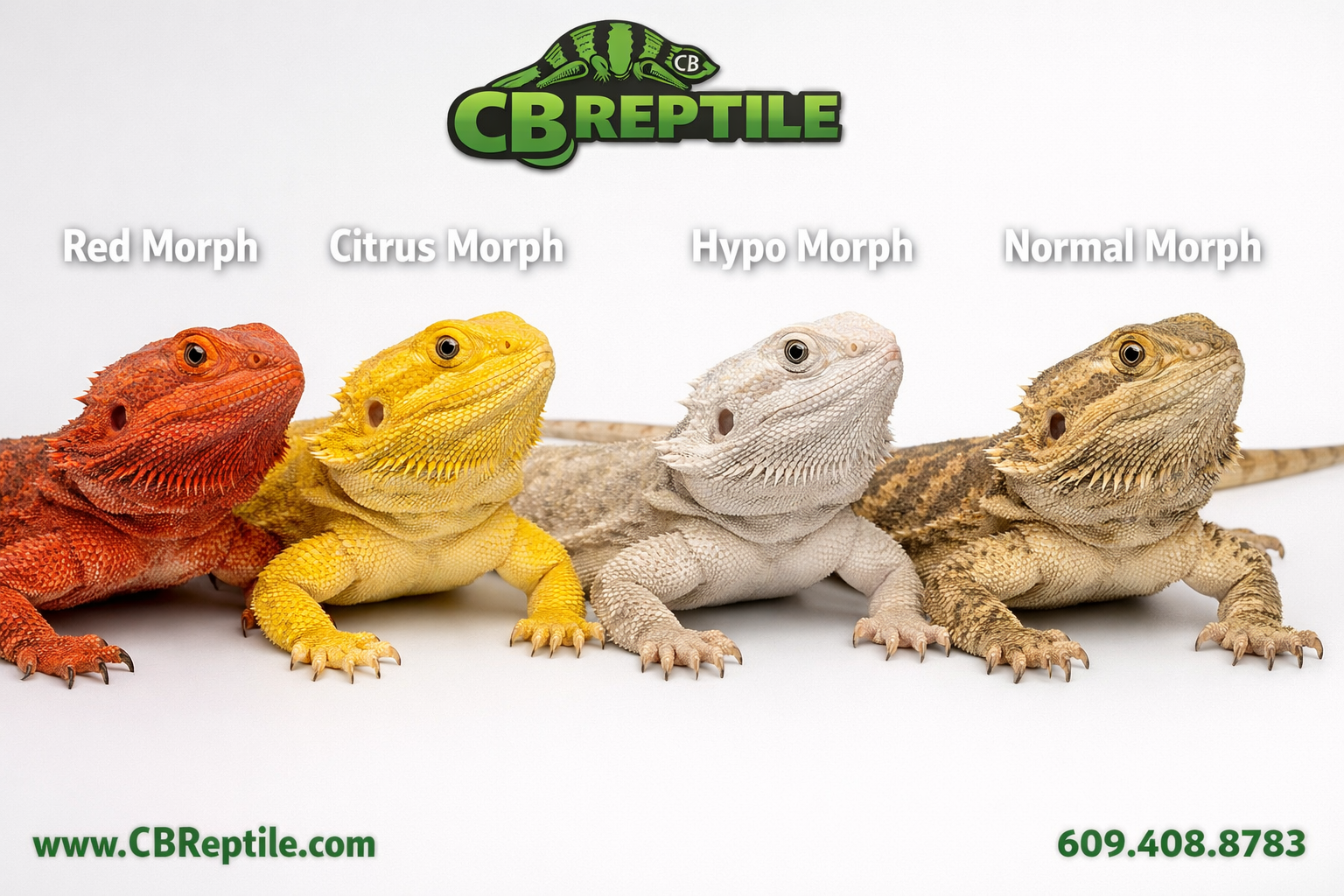
Standard (wild-type) bearded dragons display tan, brown, and yellow tones. Color morphs diverge from this baseline through selective breeding. Here's how red compares to common alternatives:
| Morph | Primary Color | Typical Price Range | Availability |
|---|---|---|---|
| Standard | Tan/Brown | $50–$100 | Very common |
| Yellow/Citrus | Yellow-orange | $100–$250 | Common |
| Red | Red-orange to deep red | $150–$600+ | Moderate |
| Hypo | Lighter, brighter base | $150–$300 | Common |
| Hypo Red | Bright, vivid red | $250–$700 | Less common |
| Zero (patternless) | White/silver | $300–$900 | Rare |
| Witblits | Earthy, pattern-free | $200–$500 | Uncommon |
Choose a red morph if: you want a visually striking animal with warm, bold coloration that tends to intensify as the dragon matures into adulthood.
Choose a hypo red if: you want maximum color brightness — the hypo gene removes dark scale edges, making the red appear almost luminous.
What Should You Look for When Buying a Red Bearded Dragon?
Buying a healthy red bearded dragon means evaluating both the animal and the source. A vivid red color means nothing if the animal is sick, malnourished, or carrying parasites.
Evaluating the Animal
Check these before committing to a purchase:
- Eyes: Clear, bright, and alert — not sunken or cloudy.
- Body weight: Ribs and hip bones should not be visible. The tail base should be plump, not pinched.
- Limbs: No trembling or twitching, which can indicate metabolic bone disease (MBD) from poor UVB or calcium deficiency.
- Beard and skin: Should be smooth and free of retained shed, mites, or discoloration unrelated to the morph.
- Behavior: A healthy juvenile is active and curious. Lethargy in a warm, alert environment is a red flag.
- Stool: Ask if the animal has been parasite-tested. Loose or bloody stool is a serious concern.
Evaluating the Breeder
- Ask for the hatch date and feeding records.
- Request photos of the parents to verify color lineage.
- Confirm the animal is captive-bred, not wild-caught or imported.
- Ask whether a live arrival guarantee or health guarantee is offered.
Why Buy a Red Bearded Dragon from a Reputable Breeder Instead of a Pet Store?
Buying from a reputable breeder versus a pet store is one of the most consequential decisions you'll make as a new reptile owner. The difference in animal quality, health, and long-term outcomes is significant.
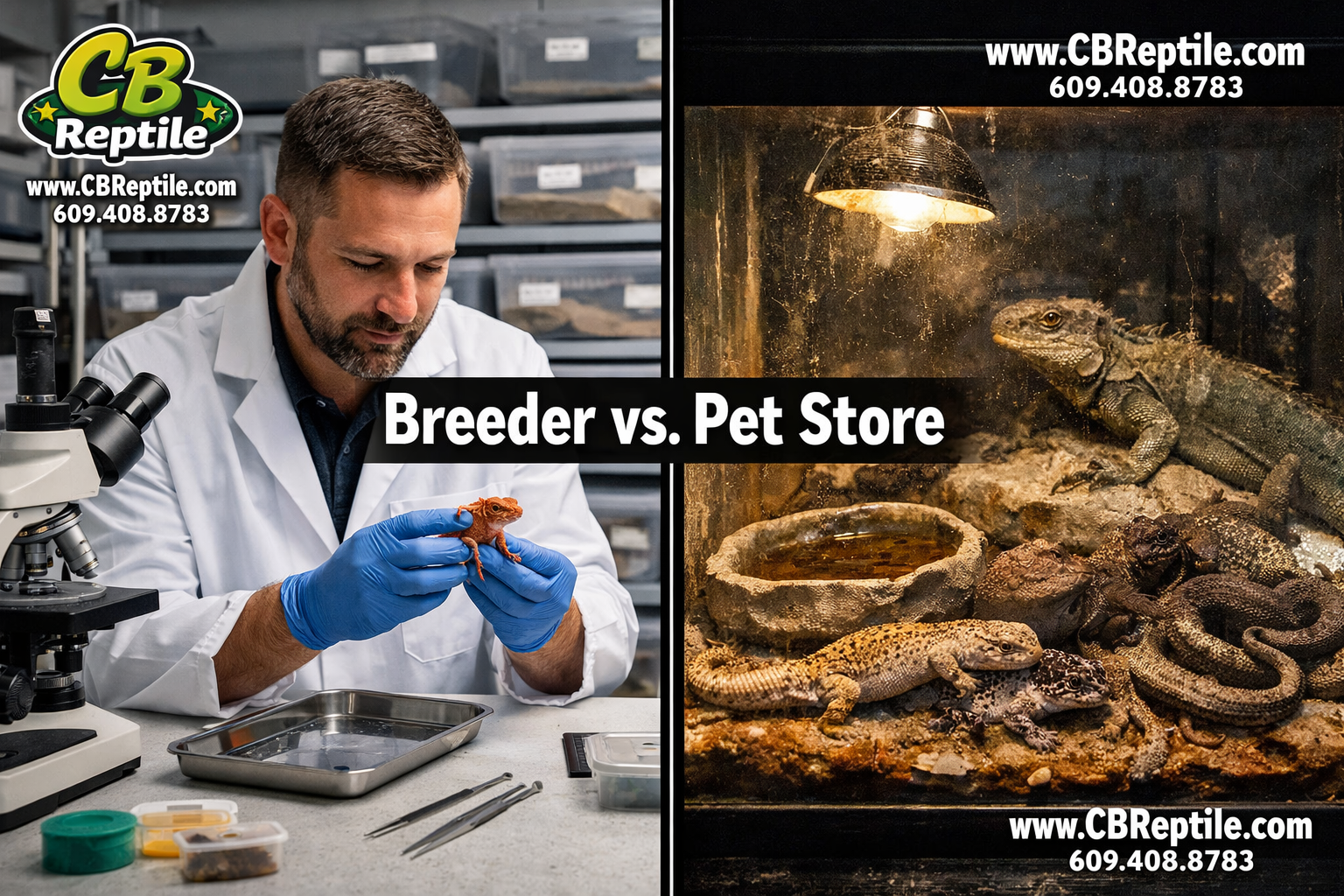
Pet store bearded dragons are typically sourced from large-scale commercial suppliers. These animals are often housed in overcrowded conditions, fed inconsistently, and rarely parasite-tested before sale. Color morphs sold in pet stores are frequently mislabeled — a "red" dragon may simply be a standard animal photographed under warm lighting.
CB Reptile stands apart as one of the most trusted bearded dragon breeders in the United States. Their facility has an on-site animal biologist who oversees breeding programs, health protocols, and husbandry standards. Every animal is captive-bred, which means:
- No wild-caught animals with unknown parasite loads
- Documented lineage and morph verification
- Animals acclimated to human handling from birth
- Consistent feeding records and health monitoring
"Captive-bred animals from specialist breeders are almost always healthier, better socialized, and more accurately represented than animals sourced through commercial pet supply chains."
When you buy a bearded dragon for sale from CB Reptile, you're not just buying a lizard — you're buying documented genetics, professional oversight, and a support system from people who genuinely understand these animals.
Price comparison: breeder vs. pet store
| Source | Typical Price | Health Guarantee | Lineage Documentation | Parasite Testing |
|---|---|---|---|---|
| Pet store | $60–$150 | Rarely | No | Rarely |
| Online reseller | $80–$200 | Sometimes | Sometimes | Rarely |
| Reputable breeder | $150–$700+ | Usually yes | Yes | Yes |
The higher upfront cost from a breeder almost always saves money on vet bills within the first year.
How Do You Set Up a Proper Habitat for a Red Bearded Dragon?
Red bearded dragons have identical care requirements to any other Pogona vitticeps morph. Their color doesn't change their biology.
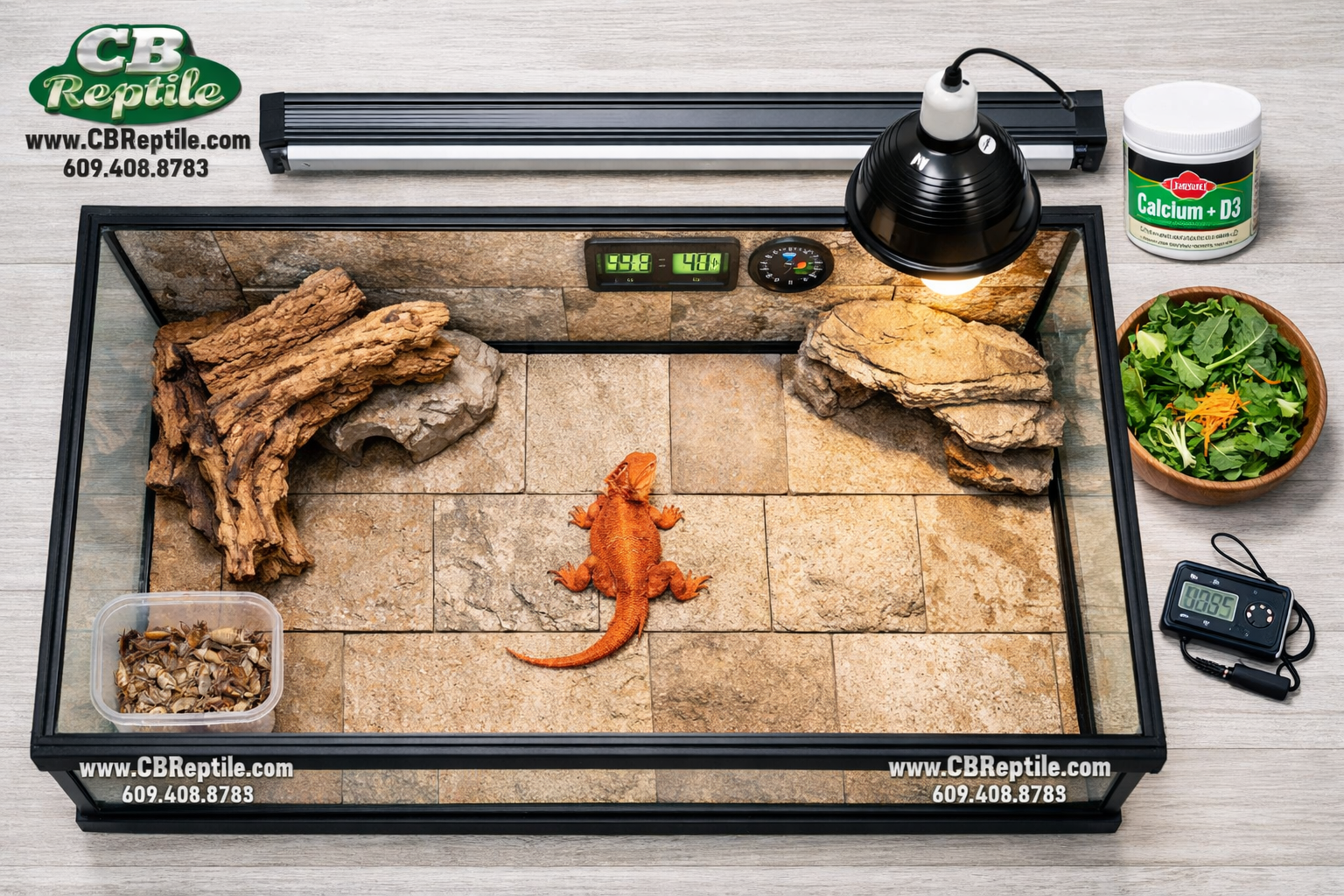
Enclosure Size
- Juveniles (under 10 inches): 40-gallon breeder minimum
- Adults (16+ inches): 120-gallon enclosure recommended — do not undersize
Temperature and Lighting
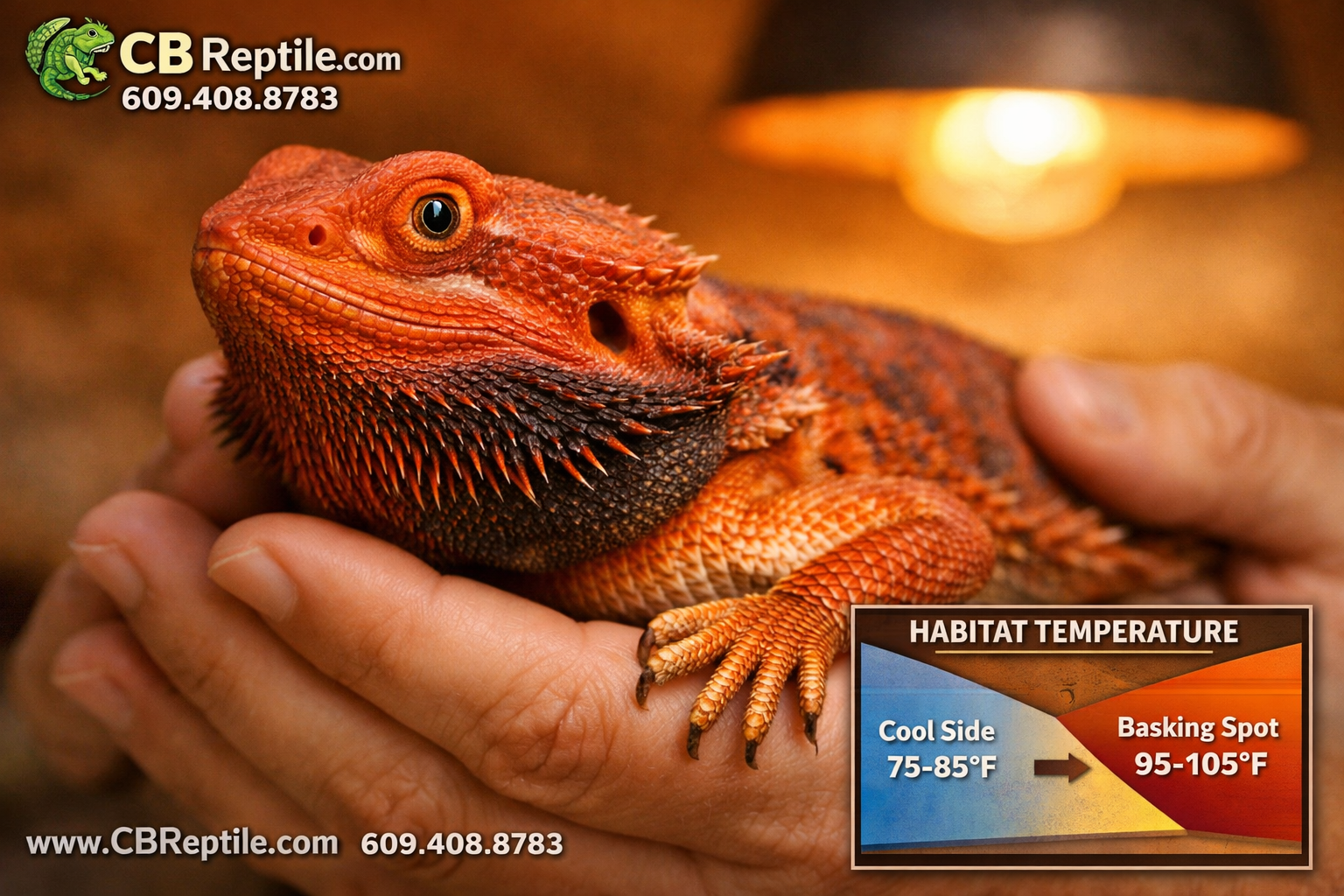
Bearded dragons are desert animals from Australia. They need a strong thermal gradient to regulate their body temperature.
- Basking spot: 100–110°F
- Cool side: 80–85°F
- Nighttime low: No lower than 65°F
- UVB lighting: A high-output UVB bulb (10.0 or T5 HO) is non-negotiable. Without UVB, bearded dragons cannot synthesize vitamin D3, which leads to metabolic bone disease.
Substrate
Tile, reptile carpet, or paper towel for juveniles. Adults can use textured ceramic tile or excavator clay. Avoid loose sand for juveniles — impaction risk is real.
Diet
Bearded dragons are omnivores. Their diet shifts with age:
- Juveniles: 70% insects (dubia roaches, crickets), 30% leafy greens
- Adults: 70% leafy greens and vegetables, 30% insects
- Supplements: Dust feeders with calcium (without D3) daily, and a multivitamin twice weekly.
For more on reptile diet strategies, the tegu diet guide offers useful context on feeding omnivorous reptiles with similar nutritional needs.
What Is the Price Range for a Red Bearded Dragon in 2026?
Red bearded dragon prices in 2026 range from $150 to over $800, depending on color intensity, morph combination, age, and breeder reputation.
Here's a realistic breakdown:
| Type | Price Range | Notes |
|---|---|---|
| Red (standard) | $150–$300 | Good color, basic red lineage |
| Ruby Red | $250–$450 | Deeper saturation, verified lineage |
| Blood Red | $400–$650 | Very intense, from proven red lines |
| Hypo Red | $350–$700 | Bright, vivid; hypo gene adds cost |
| Super Red (top line) | $600–$900+ | Highest intensity, limited availability |
Factors that increase price:
- Both parents documented as high-intensity red
- Hypo, zero, or witblits gene combined with red
- Younger animals from established breeding seasons
- Breeder reputation and health guarantee terms
Factors that lower price (and why to be cautious):
- No parent photos available
- "Red" label with no lineage documentation
- Price significantly below market average
- Sourced from a pet store or anonymous online listing
What Are Common Health Issues in Red Bearded Dragons?
Red bearded dragons are not more prone to health problems than other morphs, but new owners frequently make preventable mistakes that cause illness.
Most common issues and causes:
- Metabolic Bone Disease (MBD): Caused by insufficient UVB or calcium. Symptoms include trembling, soft jaw, and curved limbs. Fully preventable with proper lighting and supplementation.
- Parasites: More common in pet store animals and wild-caught specimens. Signs include weight loss, loose stool, and lethargy. A fecal test from a reptile vet resolves this.
- Impaction: Caused by ingesting loose substrate or feeders too large for the dragon's head. Use appropriately sized feeders and safe substrate.
- Respiratory infection: Usually caused by temperatures that are too cold or humidity that is too high. Bearded dragons need low humidity (30–40%).
- Atadenovirus (ADV): A viral disease with no cure. Reputable breeders test breeding animals for ADV. Always ask.
If you're comparing care needs across species, our blue tongue skink care sheet shows how another popular omnivorous lizard handles similar husbandry challenges.
FAQ: Red Bearded Dragon
Q: Are red bearded dragons naturally red?
No. Red bearded dragons are selectively bred for red pigmentation. Wild Pogona vitticeps display tan, brown, and yellow tones. The red coloration is a product of captive breeding programs over many generations.
Q: Do red bearded dragons stay red as they age?
Generally yes, and color often intensifies as the dragon matures. Juveniles may appear more orange; adults typically display deeper, richer red tones. Poor diet or inadequate UVB can dull coloration over time.
Q: Can I breed two red bearded dragons to get redder offspring?
Yes, but results vary. Breeding two high-quality red morphs increases the probability of deeply colored offspring, but it's not guaranteed. Lineage documentation from the breeder helps predict outcomes.
Q: How long do red bearded dragons live?
With proper care, bearded dragons typically live 10–15 years in captivity. Some well-cared-for individuals reach 15+ years.
Q: Are red bearded dragons good for beginners?
Yes. Bearded dragons as a species are one of the best reptiles for new owners — they're docile, handleable, and relatively straightforward to care for. The red morph has no additional care complexity.
Q: What's the difference between a red and a hypo red bearded dragon?
A red dragon has standard dark scale edges alongside its red pigmentation. A hypo bearded dragon carries a gene that reduces dark pigment, making the red appear brighter and more vivid. Hypo reds typically cost more.
Q: How do I know if a "red" dragon from a pet store is actually a red morph?
You often can't. Pet stores rarely document lineage, and lighting in store tanks can make standard dragons appear redder than they are. Buy from a breeder who provides parent photos and lineage records.
Q: What size tank does a red bearded dragon need?
Adults need a minimum 120-gallon enclosure. Juveniles can start in a 40-gallon breeder, but plan to upgrade within the first year as they grow quickly.
Q: Do red bearded dragons need special lighting?
No special lighting beyond what any bearded dragon requires: a high-output UVB bulb (T5 HO 10.0) and a basking lamp reaching 100–110°F. UVB is critical for vitamin D3 synthesis and long-term health.
Q: Where is the best place to buy a red bearded dragon in 2026?
From a reputable captive breeder like CB Reptile, which employs an on-site animal biologist and provides full lineage documentation, health guarantees, and parasite-tested animals.
Conclusion: Is a Red Bearded Dragon Right for You?
A red bearded dragon is one of the most visually striking reptiles you can own, and it's backed by the same proven temperament and manageable care requirements that make bearded dragons the most popular pet lizard in the U.S.
Here's what to do next:
- Set your budget realistically. A quality red morph from a reputable breeder starts around $150–$300. Budget an additional $400–$800 for a proper enclosure, UVB lighting, and initial supplies.
- Research before you buy. Ask for parent photos, hatch dates, and feeding records. If a seller can't provide these, move on.
- Choose captive-bred. Skip the pet store. The health difference between a captive-bred animal from a specialist breeder and a pet store animal is significant — and often shows up in your first vet bill.
- Buy from CB Reptile. Their on-site animal biologist, documented breeding programs, and live arrival guarantees make them one of the most trustworthy sources for red bearded dragons and other color morphs in 2026.
- Prepare your habitat before the animal arrives. Have your enclosure running, temperatures dialed in, and feeders ready before your dragon comes home.
Red bearded dragons reward attentive owners with years of personality, interaction, and stunning coloration. Start with the right animal from the right source, and you're set up for a genuinely rewarding experience.
References
- Doneley, B. (2006). Caring for the Bearded Dragon. Proceedings of the North American Veterinary Conference. https://www.ivis.org
- Stahl, S. J. (2003). Metabolic Bone Disease in Reptiles. Exotic Animal Practice, Saunders.
- Reptiles Magazine / BowTie Inc. (2012). Bearded Dragon Manual. 3rd Edition.
- CB Reptile. (2024). Hypo Bearded Dragon Morph. https://www.cbreptile.com/hypo-bearded-dragon-morph-2/
- CB Reptile. (2024). Citrus Bearded Dragon Morph. https://www.cbreptile.com/citrus-bearded-dragon-morph/
Tags: red bearded dragon, bearded dragon morphs, bearded dragon for sale, hypo red bearded dragon, blood red bearded dragon, bearded dragon care, reptile color morphs, captive bred bearded dragon, bearded dragon breeder, bearded dragon price, super red morph, Pogona vitticeps