
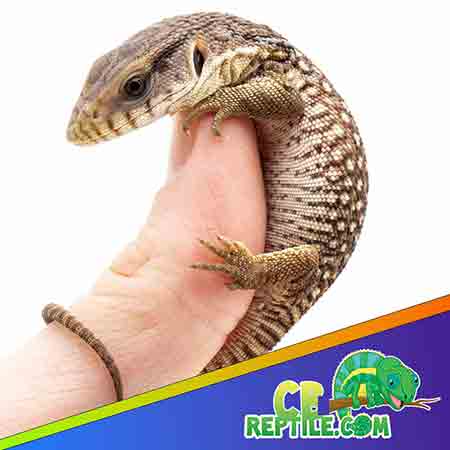
Savannah Monitor Care Guide: Housing, Heat and Diet
The savannah monitor (Varanus exanthematicus) is a sturdy, medium-sized monitor that stays smaller than many of its cousins and can become surprisingly tame. It does, however, need real space, heat and deep substrate. This guide explains how to meet those needs. You can see the Savannah Monitor raised by our team at www.CbReptile.com.
Natural History
Savannah monitors range across the dry grasslands and scrub of West and Central Africa, from Senegal to Sudan. They are terrestrial burrowers that dig tunnels to shelter from heat and predators, and they feed on invertebrates such as snails, crickets and beetles, with occasional small vertebrates. They are typically short, stocky and strong, with powerful claws.
Size and Lifespan
Adults commonly reach 2.5 to 3.5 feet in length, although many stay near the lower end. With good care, a savannah monitor may live 10 to 15 years, and sometimes more. Hatchlings are only about 6 to 8 inches, so rapid growth in the first two years should be anticipated when planning the enclosure.
Temperament
Captive-bred savannah monitors that are handled regularly often become calm and manageable. They are strong, and a stressed one can scratch or whip its tail, so always support the body and keep a firm but gentle hold. Each animal has its own personality, and patience pays off. Always wash hands after handling to reduce the risk of salmonella.
Enclosure
A juvenile can start in a 40 gallon breeder tank, but adults need much more room, ideally 6 by 3 by 3 feet or larger. Monitors love to dig, and the single most important habitat feature is a deep substrate of at least 8 to 12 inches. A mixture of topsoil, play sand and cypress mulch holds a burrow and retains a little moisture. Add a hide on the warm end and another on the cooler end, and a sturdy water dish large enough to soak in.
Heat, UVB and Humidity
- Basking spot: 125 to 140 degrees Fahrenheit on a flat rock or slate.
- Warm ambient: 90 to 95 degrees on the warm end.
- Cool end: 78 to 82 degrees.
- Night: Mid to upper 70s is fine.
- UVB: A strong, quality tube for 12 hours a day, replaced as recommended.
- Humidity: 30 to 50 percent with a damp spot in the burrow for shedding.
Diet
Feed a variety of insects including dubia roaches, crickets, superworms, hornworms and snails, and add some whole prey such as pinky mice for adults in small amounts. Juveniles eat daily, while adults eat every two to three days. Obesity is a common problem in captive monitors, so keep portions in check and encourage activity through varied feeding. Dust food with calcium and offer a multivitamin occasionally.
Handling and Enrichment
Work with your monitor several times a week for short sessions. Allow time out of the enclosure in a safe, warm space. Scatter food in the substrate, hide insects in cardboard tubes and rearrange the décor now and then to stimulate natural behaviors such as digging and searching.
Brumation
Some savannah monitors become less active in cooler months. Provide a stable setup and check weight and hydration. Persistent refusal of food, weight loss or sunken eyes should prompt a vet visit.
Why Captive-Bred Matters
Captive-bred monitors are accustomed to people, feed readily and are free of the parasites and shipping stress that affect wild-caught imports. Our team at www.CbReptile.com focuses on captive-bred animals.
Related Species
If monitors and large lizards appeal to you, the Caiman lizard is a very different, semi-aquatic animal that needs specialized housing, while the Yellow Niger Uromastyx is a more manageable herbivorous option for dry-habitat fans.
Frequently Asked Questions
Is a savannah monitor good for beginners?
It suits motivated beginners who can provide a large enclosure and deep substrate, and who are willing to handle regularly.
How big of a cage does an adult need?
At least 6 by 3 feet, though larger is better.
What do I do about shedding?
Provide a humid hide or damp area in the burrow and avoid pulling off stuck skin.
Can I feed only crickets?
Variety is much better. Use roaches, worms and snails alongside crickets for balanced nutrition.
Setting Up Step by Step
Build the enclosure in layers: pack deep substrate with a mix of damp soil and sand so burrows hold their shape, place a large flat basking stone beneath the heat source, then add the hides and water dish. Measure the basking surface with an infrared temperature gun and adjust the lamp height or wattage until the temperature is in range. Run the setup for a full day before introducing the animal.
Signs of a Healthy Monitor
A healthy savannah monitor is alert, has clear eyes, a rounded but not bulging body, and shows a strong feeding response. It basks actively and explores the enclosure. Watch for weight loss, swollen limbs or jaw, or soft bones, which can signal metabolic bone disease from poor UVB or calcium. Persistent bubbles at the nose or open-mouth breathing may signal respiratory trouble. Seek a veterinarian with reptile experience early rather than waiting.
Interested in learning more? Visit www.CbReptile.com or view the Savannah Monitor page for details.

Leave a Reply
Want to join the discussion?Feel free to contribute!