
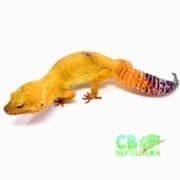
Fancy Leopard Gecko Care Guide: Patterns, Morphs and Setup
The leopard gecko is perhaps the most popular beginner lizard in the world, and the many patterns and colors available make every animal a little different. This guide explains what “fancy” means, how to set up a healthy habitat and how to keep your gecko thriving for years. You can see the Fancy Leopard gecko raised by our team at www.CbReptile.com.
Natural History
Leopard geckos (Eublepharis macularius) come from the dry grasslands and rocky deserts of Pakistan, Afghanistan, northwestern India and Iran. They are ground-dwelling, nocturnal or crepuscular and shelter in burrows and under rocks by day. Unlike many geckos they have movable eyelids and lack sticky toe pads, so they do not climb glass.
What Does “Fancy” Mean?
Fancy is a broad hobby term for leopard geckos that display unusual combinations of color and pattern beyond the classic spots on yellow. Examples include stripes, jungle bands, bold high-contrast patterns, tangerine and orange hues, and lighter or darker tones. Because each animal can be a unique mixture, the description is intentionally loose. For more specific genetics, explore options like the Tangerine Albino leopard gecko and the Mack Snow Jungle Leopard gecko.
Size and Lifespan
Adults usually reach 7 to 10 inches, and large lines like giant or super giant morphs can be bigger. Leopard geckos live 15 to 20 years with proper care, so they are a long-term commitment despite their small size. Healthy adults store fat in the tail, which should look plump but not bloated.
Temperament and Handling
Leopard geckos are calm, gentle and tolerant of regular handling. Begin with short, quiet sessions at the end of the day. Scoop the gecko from below rather than grabbing from above, and never hold the tail, which can drop as a defense. A dropped tail grows back but is usually shorter and blunter than the original.
Enclosure
A single adult is comfortable in a 20 gallon long tank, and 40 gallon breeders give more room for decor. Use a secure screen lid. Good substrate choices include a mixture of topsoil and sand that is tightly packed, tile or paper towels. Avoid loose sand in young animals, which carries an impaction risk if swallowed. Provide three hides: warm, cool and a humid hide containing moist moss or vermiculite, which helps with shedding.

Heat, Light and Humidity

- Warm side surface: 88 to 92 degrees Fahrenheit, from an overhead basking bulb or a heat mat controlled by a thermostat.
- Cool side: 73 to 77 degrees Fahrenheit.
- Night: A drop to the low 70s is fine.
- UVB: Not required but a low-output UVB can be beneficial and encourages natural behavior.
- Humidity: 30 to 40 percent in the main enclosure, with a humid hide at higher levels.
Diet
Leopard geckos are insectivores. Offer dubia roaches, crickets, mealworms, silkworms and occasional waxworms or superworms, always gut-loaded. Feed juveniles daily and adults every other day or every two days. Dust insects with calcium (with D3 if no UVB) most feedings, and with a multivitamin about once a week. Keep a shallow water dish clean and available.
Shedding and Health
Healthy geckos shed in a single piece and often eat the skin. Stuck shed around toes can restrict circulation, so soak the gecko in a shallow warm bath and gently remove the shed. Warning signs include weight loss, a thin tail, runny stools, cloudy eyes or lethargy. Call a reptile veterinarian if anything seems wrong.
Why Captive-Bred Matters
Captive-bred geckos are accustomed to feeders, tolerant of handling and do not remove any animals from wild populations. Our team at www.CbReptile.com focuses on captive-bred animals.
Frequently Asked Questions
Are leopard geckos good for beginners?
Yes. They are hardy, calm and inexpensive to feed, which is why they are so popular.
Can I keep two together?
Males should never be kept together, and even females can bully each other, so single housing is generally safest.
Do they need a heat lamp or a heat mat?
Either can work, but any heat source needs a thermostat. Overhead heat tends to give a more natural gradient.
How often do they shed?
Juveniles shed every few weeks, and adults every one to two months.
Setting Up Step by Step
Install the heat source and thermostat first and run them for a day, checking both sides with a temperature gun. Place the three hides and a shallow water dish, add enrichment such as rocks and cork, and make sure all decor is stable so that it cannot tip. Introduce the gecko to the warm hide and give it a few days to settle before handling.
Choosing a Healthy Gecko
Look for a gecko with clear eyes, a thick tail, clean vent and a strong feeding response. It should be alert and moving easily on all four feet, without a wobbling gait or swollen limbs. Ask about feeding history and hatch date, and confirm that the gecko eats readily before you take it home. A healthy gecko is a pleasure to keep, and good habits at the start lead to a lifetime of easy care.
Looking for your gecko? Visit www.CbReptile.com and the Fancy Leopard gecko page.