Tag Archive for: tortoise care

Cherry Head Tortoise Care Guide: The Colorful Red-Footed Tortoise

With bright cherry-red scales on the head and legs, the cherry head tortoise is one of the most colorful tortoises in the world. It is a form of the red-footed tortoise (Chelonoidis carbonarius) that stays a bit smaller than the standard red-foot, making it a fantastic option for keepers who want a tropical tortoise with big personality. This guide covers its care and introduces the captive-bred Cherry Head tortoises raised at www.CbReptile.com.

Natural History

Red-footed tortoises range widely across northern South America, from Colombia and Venezuela through the Guianas and into Brazil, Bolivia, Paraguay and northern Argentina, with introduced populations on several Caribbean islands. The cherry head form originates from Brazil and has long been prized for its smaller adult size and intense coloration.

Red-foots inhabit savanna edges, dry forest and humid tropical forest. They are opportunistic omnivores that forage on fallen fruit, flowers, leaves, fungi and the occasional invertebrate or carrion. They are often active after rain, when humidity is high and food is abundant.

Appearance

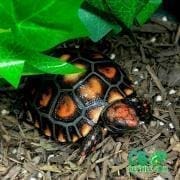
Cherry heads have a dark, elongated carapace often marked with yellow to orange areoles at the center of each scute. The head, forelimbs and tail carry scales that range from orange to deep cherry red, usually brighter and more extensive than in typical red-foots. Hatchlings are especially vivid. Adult males develop a concave plastron, a longer, thicker tail and often a slight “waist” in the shell.

Size and Lifespan

Hatchlings measure about 1.5 to 2 inches. Adult cherry heads typically reach 10 to 12 inches in shell length, a bit smaller than standard red-foots, which commonly grow to 12 to 14 inches. With good care they can live 50 years or more.

Temperament

Cherry heads are curious, active and food-motivated. Many learn to recognize their keepers and come running at mealtime. They are generally peaceful with one another, although males can be competitive and should be monitored when housed together.

Enclosure Setup

Hatchlings and juveniles do well in a closed chamber or a tub that holds humidity, about 4 x 2 feet to start. Adults need at least 8 x 4 feet of floor space, or a secure outdoor pen in warm climates. A Tortoise & Box Turtle Habitat Starter Kit is a convenient way to get a young tortoise set up. Include:

  • A deep, humid substrate such as cypress mulch, coco coir or a blend. Eco Earth substrate holds moisture well and is easy to work with.
  • Hides and plants to create sheltered, humid microclimates.
  • A shallow water dish large enough for soaking.
  • Sphagnum moss in hides to keep humidity high where the tortoise rests.

Heat, UVB and Humidity

Cherry heads are tropical animals. Keep ambient temperatures between 80 and 85°F with a basking spot of about 90 to 95°F. Night temperatures should not drop below about 70 to 75°F. Provide UVB from a linear tube across a large portion of the enclosure, with shaded areas so the tortoise can control its exposure.

Humidity is critical. Aim for 70 to 80 percent or higher, especially for hatchlings and juveniles. Proper humidity supports hydration and helps prevent pyramiding, the abnormal raised growth of shell scutes. Mist daily and keep the substrate damp beneath the surface without making it soggy.

Diet

Unlike grassland tortoises, red-foots and cherry heads are true omnivores. A balanced diet includes:

  • Greens and weeds (about 60 to 70 percent): dandelion, collards, mustard greens, endive, mulberry and hibiscus leaves.
  • Fruit (about 20 to 30 percent): papaya, mango, berries, figs, melon and prickly pear fruit.
  • Protein (about 5 percent): earthworms or a small amount of other lean animal protein, offered roughly once a week or less.
  • Extras: edible flowers, mushrooms, squash and soaked tortoise pellets.

Dust food with calcium a few times per week and provide a cuttlebone for adults to nibble.

Handling

Support the tortoise with both hands under the plastron and keep it low to the ground. Brief handling is fine, but tortoises are generally happiest exploring rather than being held. Wash your hands afterward.

Why Captive-Bred Matters

Captive-bred cherry heads are raised from hatch in proper humidity, which gives them smoother shells and stronger health than imported animals. Captive breeding also reduces collection pressure on wild populations. If you love this group, our Red Footed tortoises are another rewarding choice. Our captive-bred cherry head tortoises are raised by our team, including a staff biologist.

Frequently Asked Questions

Are cherry head tortoises a separate species?

No. They are a smaller, brightly colored form of the red-footed tortoise originating in Brazil.

How big do cherry head tortoises get?

Most adults reach 10 to 12 inches, slightly smaller than standard red-footed tortoises.

Do cherry head tortoises need high humidity?

Yes. Humidity of 70 to 80 percent or higher is important for hydration and smooth shell growth.

Can cherry head tortoises eat fruit?

Yes. As omnivores from tropical forests, fruit can make up roughly 20 to 30 percent of their diet.

Meet our captive-bred cherry head tortoises at www.CbReptile.com.
Burmese Black Mountain Tortoise Care Guide: Asia’s Largest Tortoise

The Burmese black mountain tortoise (Manouria emys phayrei) is the largest tortoise native to mainland Asia and one of the most remarkable chelonians in captivity. Dark, massive and surprisingly personable, it thrives in cool, humid conditions that set it apart from the desert and savanna tortoises most keepers know. This guide explains how to meet its unique needs and introduces the captive-bred Burmese black mountain tortoises raised at www.CbReptile.com.

Natural History

Manouria emys is found in the tropical and subtropical hill forests of Southeast Asia. Two subspecies are recognized. The northern black form, M. e. phayrei, ranges through Myanmar, northeastern India, Bangladesh and western Thailand, while the southern brown form, M. e. emys, occurs farther south through peninsular Thailand, Malaysia, Sumatra and Borneo. Our Burmese Brown Mountain tortoise represents the southern subspecies.

These tortoises live on damp forest floors, near streams and in areas with deep leaf litter. They are most active in the early morning, late afternoon and after rain. The genus Manouria is considered one of the most ancestral lineages of living tortoises, and mountain tortoises display a behavior unique among tortoises: females scrape leaf litter into a mound nest, lay their eggs inside and then actively guard the nest for days.

Wild populations face heavy pressure from habitat loss and collection for food. The species is protected under CITES Appendix II and is assessed as threatened by the IUCN, which makes responsible captive breeding especially important.

Appearance

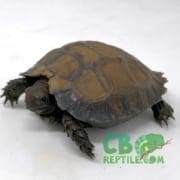
Black mountain tortoises have a broad, relatively flat, dark carapace that is nearly black in adults. Hatchlings are brown with lighter markings and darken as they mature. A distinctive feature is the divided supracaudal (tail) scute and the enlarged, pointed scales on the forelimbs, which give the legs an armored appearance. The thigh areas bear prominent spurs, which helped earn the species the alternate name Asian forest tortoise.

Size and Lifespan

Hatchlings start around 2 to 3 inches but grow quickly with proper care. Adults commonly reach carapace lengths of 18 to 24 inches and weights of 40 to 70 pounds or more, with large males of the black subspecies exceeding that. Like most large tortoises, they are long-lived, and lifespans of 50 years or more can be expected with good husbandry.

Temperament

Mountain tortoises are known for their bold, inquisitive personalities. Many recognize their keepers, approach at feeding time and enjoy gentle shell and neck scratches. Despite their size, they are generally peaceful and do well in groups when given enough space.

Enclosure Setup

Hatchlings and juveniles do best in a large indoor enclosure or closed chamber that holds humidity, such as a 4 x 2 foot setup for small juveniles, scaling upward rapidly. Adults need a very large outdoor pen in warm, humid climates or a dedicated indoor room in cooler areas. Key features include:

  • Deep, moisture-retaining substrate such as cypress mulch, coco coir and leaf litter. A forest-style blend like Zoo Med Forest Floor works well for young tortoises.
  • A large, shallow water area where the tortoise can soak fully. These tortoises spend a lot of time wallowing.
  • Plenty of shaded cover, hides and dense planting.
  • A heated shelter for outdoor animals when temperatures drop.

Heat, UVB and Humidity

Unlike sulcatas and leopards, mountain tortoises prefer moderate temperatures. Aim for daytime temperatures between 70 and 85°F with a gentle warm area of around 85 to 88°F. Avoid prolonged temperatures above 90°F, which can stress these forest-adapted animals. Nights in the mid 60s to low 70s are well tolerated.

Humidity should be high, roughly 70 to 90 percent. Mist regularly and keep the lower substrate damp but not waterlogged. Provide UVB from a linear tube over part of the enclosure, with ample shade so the tortoise can self-regulate exposure, mimicking dappled forest light. Outdoors, natural sunlight filtered through plants is ideal.

Diet

In the wild, mountain tortoises eat a broad diet of vegetation, fallen fruit, fungi and occasional invertebrates. In captivity, base the diet on:

  • Dark leafy greens, weeds and edible plants such as dandelion, mulberry leaves, hibiscus, collards and endive.
  • Vegetables such as squash and bell pepper.
  • Fruit in moderation, often around 10 to 15 percent of the diet.
  • A quality soaked tortoise pellet like Mazuri Tortoise Chow as a supplement.

Lightly dust food with calcium, especially for growing juveniles, and always provide fresh water for soaking and drinking.

Handling

Adults are heavy, so lift with both hands from the sides and keep them close to the ground. Young tortoises tolerate brief handling well, but they are happiest exploring their enclosures. Interaction through hand feeding and gentle scratches is often more rewarding than lifting.

Why Captive-Bred Matters

Wild-collected Manouria frequently arrive dehydrated and heavily parasitized, and many historically failed to adjust to captivity. Captive-bred hatchlings are healthier, already feeding and help protect vulnerable wild populations. Our captive-bred black mountain tortoises are raised by our team, including a staff biologist.

Frequently Asked Questions

How big do Burmese black mountain tortoises get?

Adults typically reach 18 to 24 inches and 40 to 70 pounds or more, making them one of the larger tortoises kept by hobbyists.

Do mountain tortoises need high heat?

No. They prefer moderate temperatures in the 70s and low 80s with high humidity. Excess heat can be harmful.

What is the difference between black and brown mountain tortoises?

They are two subspecies. The black form (phayrei) is darker and generally larger; the brown form (emys) is lighter and comes from farther south.

Can mountain tortoises live outdoors?

Yes, in warm, humid climates with heated shelter available. In cooler regions they need indoor housing for much of the year.

Meet our captive-bred Burmese black mountain tortoises at www.CbReptile.com.

Aldabra Giant Tortoise Care Guide: Raising a Living Legend

Few animals inspire awe quite like the Aldabra giant tortoise (Aldabrachelys gigantea). Among the largest tortoises on Earth and capable of living well over a century, an Aldabra is not just a pet but a multigenerational commitment. This guide covers what it takes to raise one successfully, from a palm-sized hatchling to a gentle giant, and introduces the captive-bred Aldabra tortoises raised at www.CbReptile.com.

Natural History

Aldabra tortoises are native to the Aldabra Atoll in the Seychelles, a remote ring of coral islands in the western Indian Ocean. The atoll supports one of the largest tortoise populations in the world, estimated at around 100,000 animals, and is protected as a UNESCO World Heritage Site. Introduced and rewilded populations also exist on several other Seychelles islands and on Mauritius.

On Aldabra, the tortoises are the dominant herbivores. Their constant grazing shapes the landscape, creating a short, mixed community of grasses and herbs known as “tortoise turf.” They spend hot hours resting in shade, in shallow pools or even in caves, and are most active in the cooler morning and late afternoon.

The species is listed under CITES Appendix II, and responsible captive breeding helps supply keepers without impacting wild populations.

Appearance

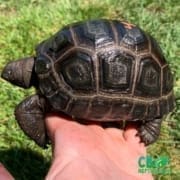
Aldabras have a high, domed, dark gray to black carapace, a long neck that allows them to browse vegetation up to a meter off the ground, and thick, column-like legs. One distinguishing feature from similar giant tortoises is the presence of a nuchal scute above the neck. Hatchlings are dark with slightly lighter scute centers.

Size and Lifespan

Hatchlings measure only about 2 to 3 inches. Growth is steady over many years. Adult males can reach roughly 4 feet in shell length and weights of 400 to over 500 pounds, while females are considerably smaller. Aldabras routinely live 80 to 100 years, and some individuals are believed to have exceeded 150. Prospective keepers should have a plan for the tortoise’s care beyond their own lifetime.

Temperament

Aldabras are famously gentle and sociable. Many enjoy having their necks scratched, will extend their legs to invite attention and recognize the people who feed them. Large males can be pushy during breeding season, but they are generally peaceful companions.

Housing Hatchlings and Juveniles

Young Aldabras are best raised indoors or in a protected greenhouse until they are large enough to be safe outdoors. Provide a spacious enclosure, at least 4 x 8 feet for juveniles, with:

  • A basking area of roughly 95 to 100°F and ambient temperatures of 80 to 85°F.
  • Night temperatures that stay above about 70°F.
  • Moderate humidity of 50 to 70 percent, with a humid hide to support smooth shell growth.
  • Strong UVB from a high-output linear fixture covering much of the enclosure.
  • A shallow water dish for soaking and drinking.

Housing Adults

Adult Aldabras need large outdoor grazing areas with secure, sturdy fencing, plenty of shade and a wallow or shallow pool. They are not cold-tolerant, so in most of the United States they require a heated, insulated barn or shelter whenever temperatures drop below about 60°F. Keep in mind that a full-grown Aldabra can push through weak fencing and dig under or move obstacles with ease.

Diet

Aldabras are grazers, and their diet should be high in fiber and calcium and low in sugar and protein:

  • Grasses and hay should form the foundation, supplemented with grazing on safe pasture.
  • Weeds and leafy greens such as dandelion, plantain, mulberry leaves, collards and endive.
  • Spineless cactus pads, an excellent source of hydration and fiber.
  • Occasional soaked Mazuri Tortoise Chow for juveniles.
  • Fruit only as an occasional treat.

Lightly dust hatchling and juvenile meals with calcium. Rapid, protein-rich growth can lead to pyramiding and skeletal problems, so slow and steady is the goal.

Handling

Hatchlings can be lifted gently with both hands, supporting the plastron. Adults are simply too heavy to lift and should be interacted with through feeding, soaking and gentle scratches. Always supervise children around large tortoises.

Why Captive-Bred Matters

Captive-bred Aldabras arrive established on a captive diet, free from the stress of collection and shipping from abroad, and they support conservation by keeping pressure off wild and rewilded populations. If you love giant tortoises but have less space, the Sulcata tortoise is another large grazing species to consider. Our captive-bred Aldabra tortoises are raised by our team, including a staff biologist.

Frequently Asked Questions

How long do Aldabra tortoises live?

They commonly live 80 to 100 years or more, and some exceed 150. Plan for multigenerational care.

How fast do Aldabra tortoises grow?

Growth depends on diet, temperature and space. They grow steadily for decades. Avoid pushing rapid growth with rich food.

Can Aldabra tortoises live outside year-round?

Only in warm climates. In most of the United States they need a heated shelter during cooler months.

Are Aldabra tortoises friendly?

Yes. They are known for their calm, social nature and often enjoy neck and shell scratches.

Meet our captive-bred Aldabra tortoises at www.CbReptile.com.